Tag Archives: orientist sculpture

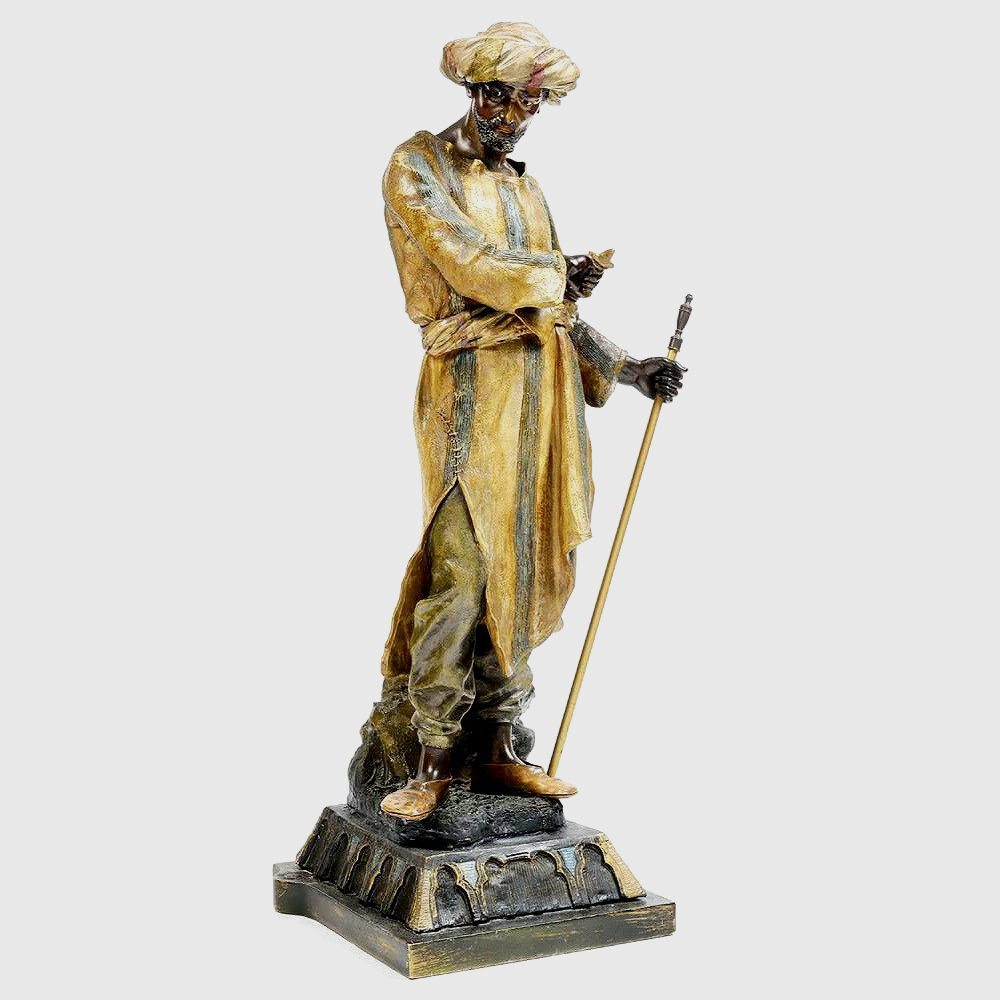
Bronze Arab Nobleman statuette with cane

1. Introduction of Arab Nobleman Statuette This sculpture depicts an Arab nobleman in an Orientalist style. The figure wears a wide turban, a layered robe cinched at the waist, and leans slightly forward with his head bowed. His other hand holds a slender cane, which rests vertically to his side, lending the posture a sense […]

View More...
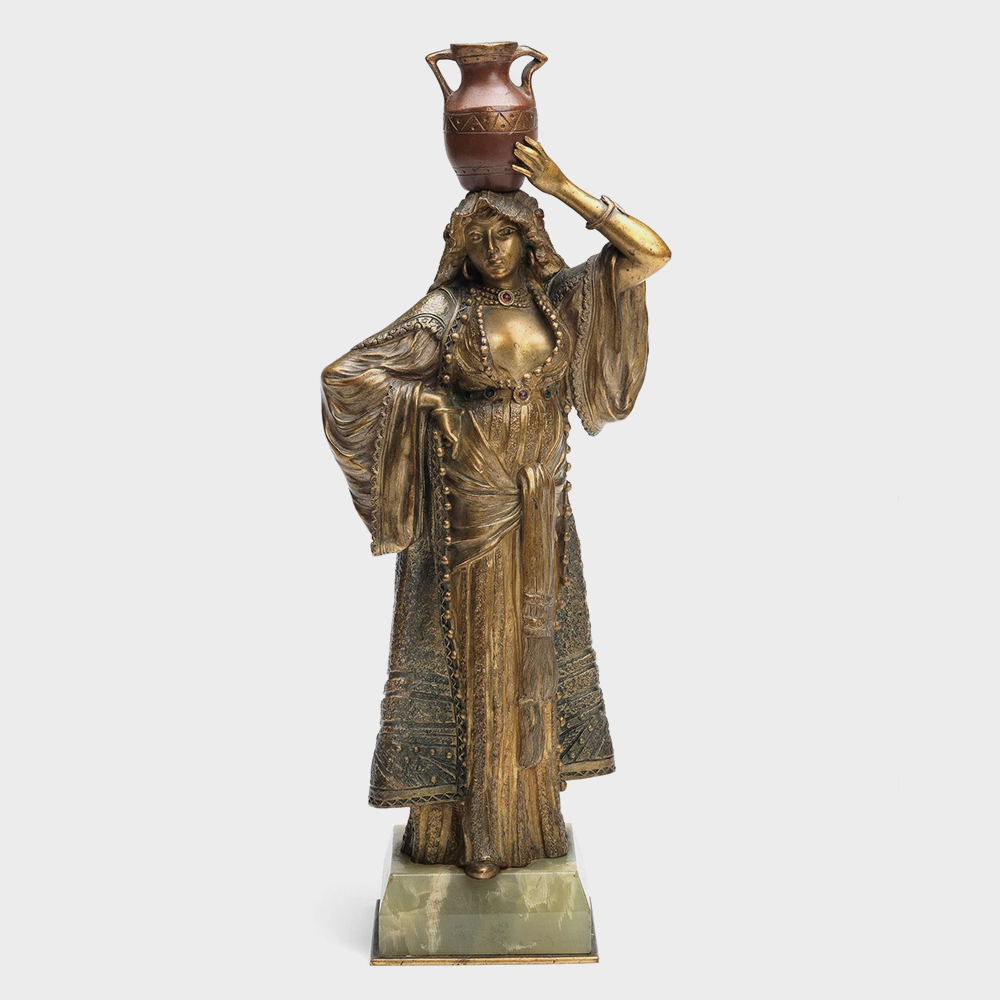
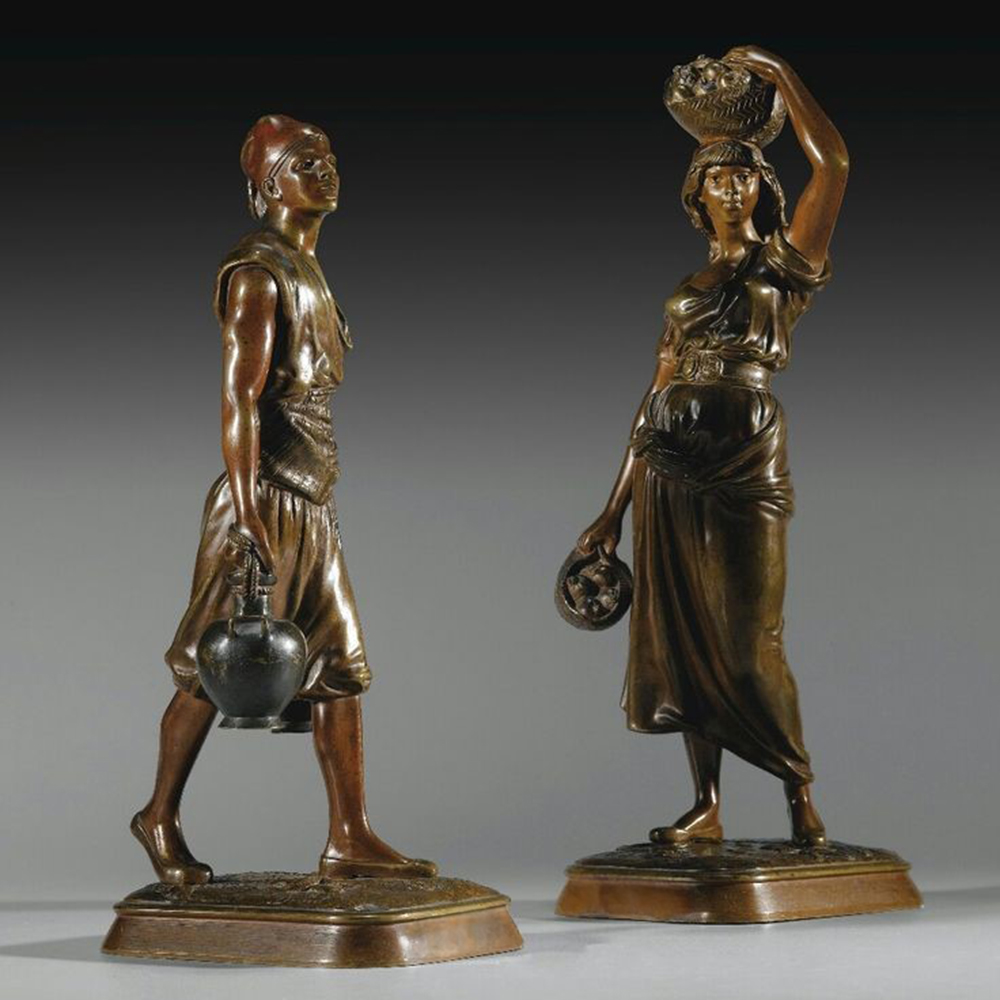
French Bronze Sculpture shows water carrier with fruits carrier

1. Introduction of French Bronze Sculpture This group of bronze sculptures, created in the style of the 19th-century French sculptor Jean-Didier Début, depicts a man carrying water and a woman carrying fruit. The French Bronze Sculpture belongs to the French Orientalist theme, showcasing the contemporary European artistic interest in exotic figures and scenes through everyday […]

View More...
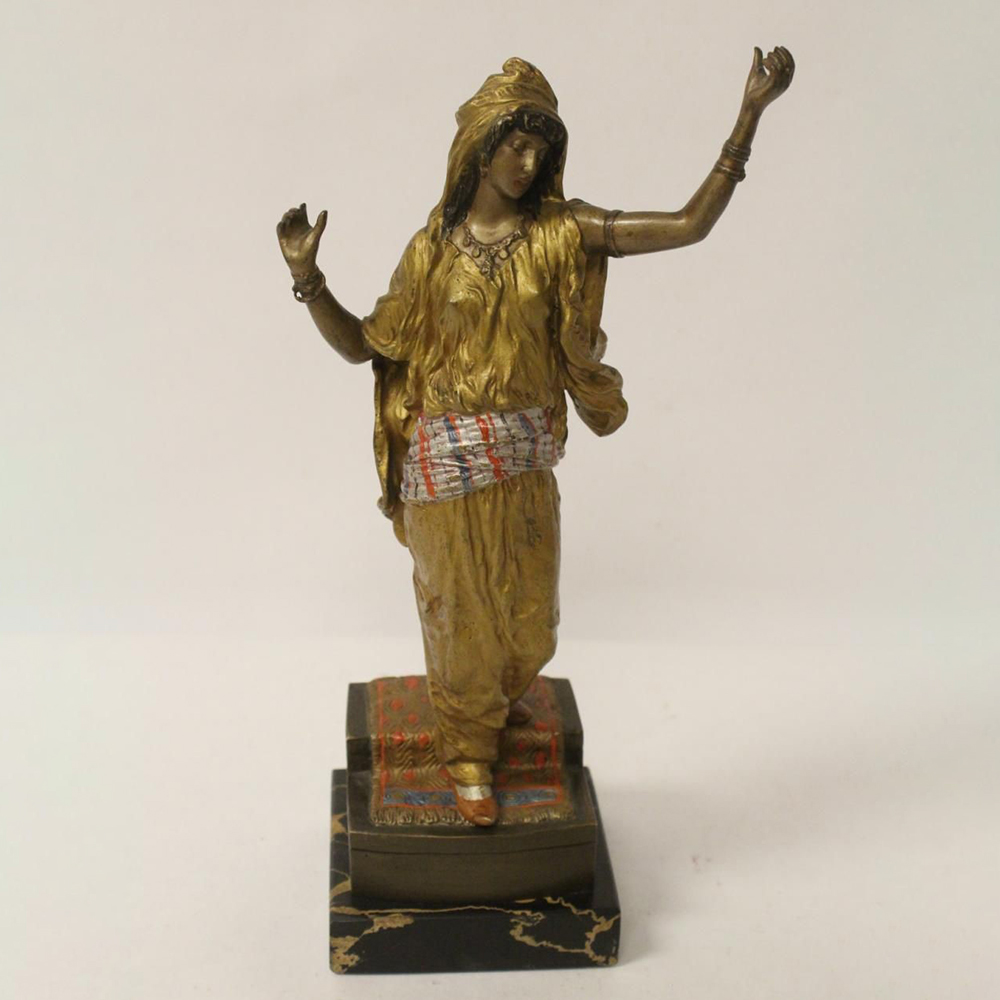
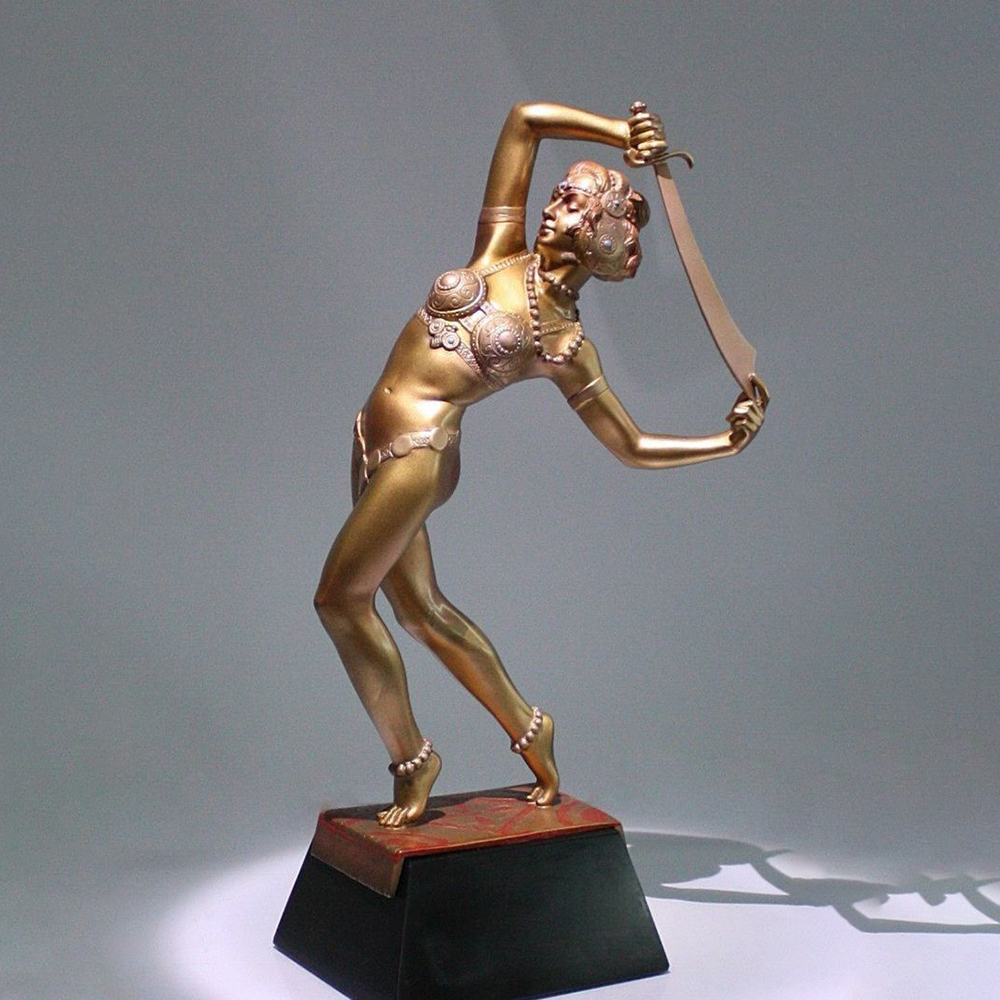
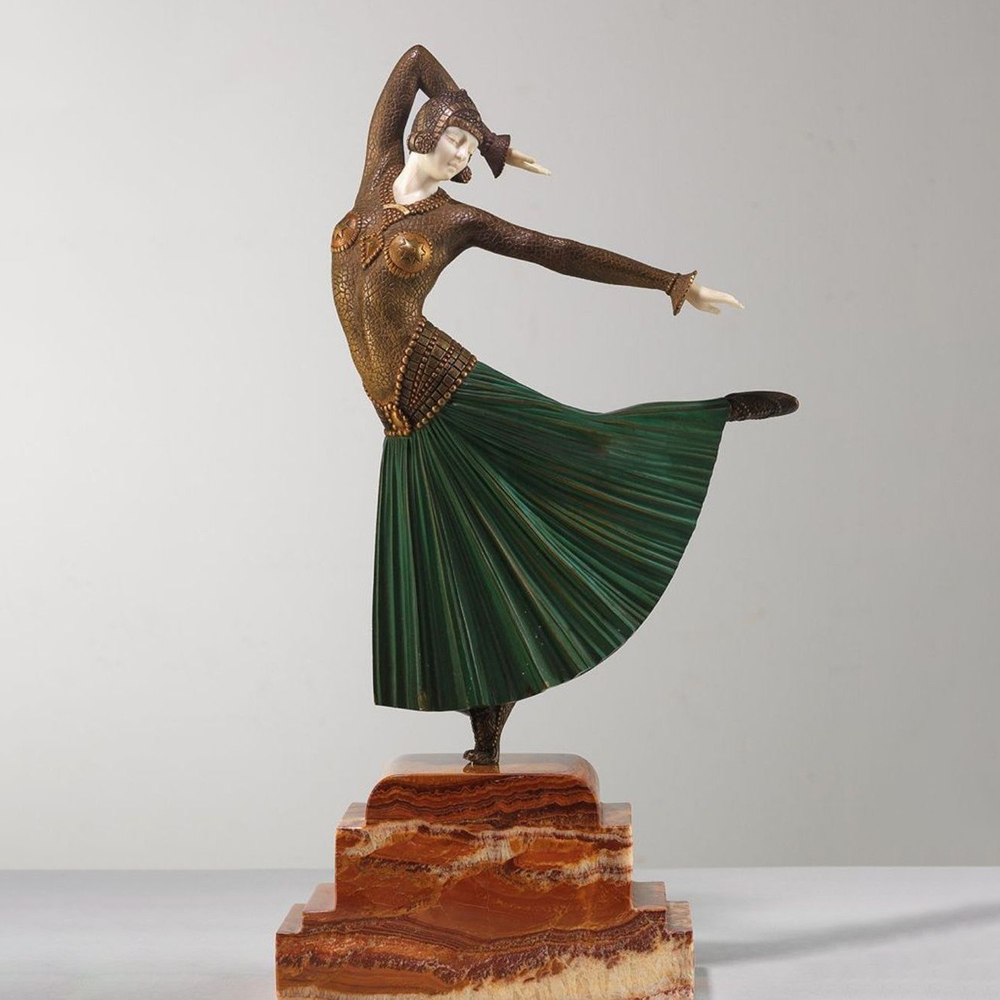
Franz Bergman Dancer Bronze Sculpture with peacock costume

1. Introduction of Dancer Bronze Sculpture This sculpture, featuring a peacock dancer, exhibits typical characteristics of early 20th-century Austrian cold-painted bronze sculpture. The figure in the Dancer Bronze Sculpture wears a towering peacock feather crest, her facial expression is gentle, and her arms are outstretched to the sides, as if maintaining a light balance in […]

View More...
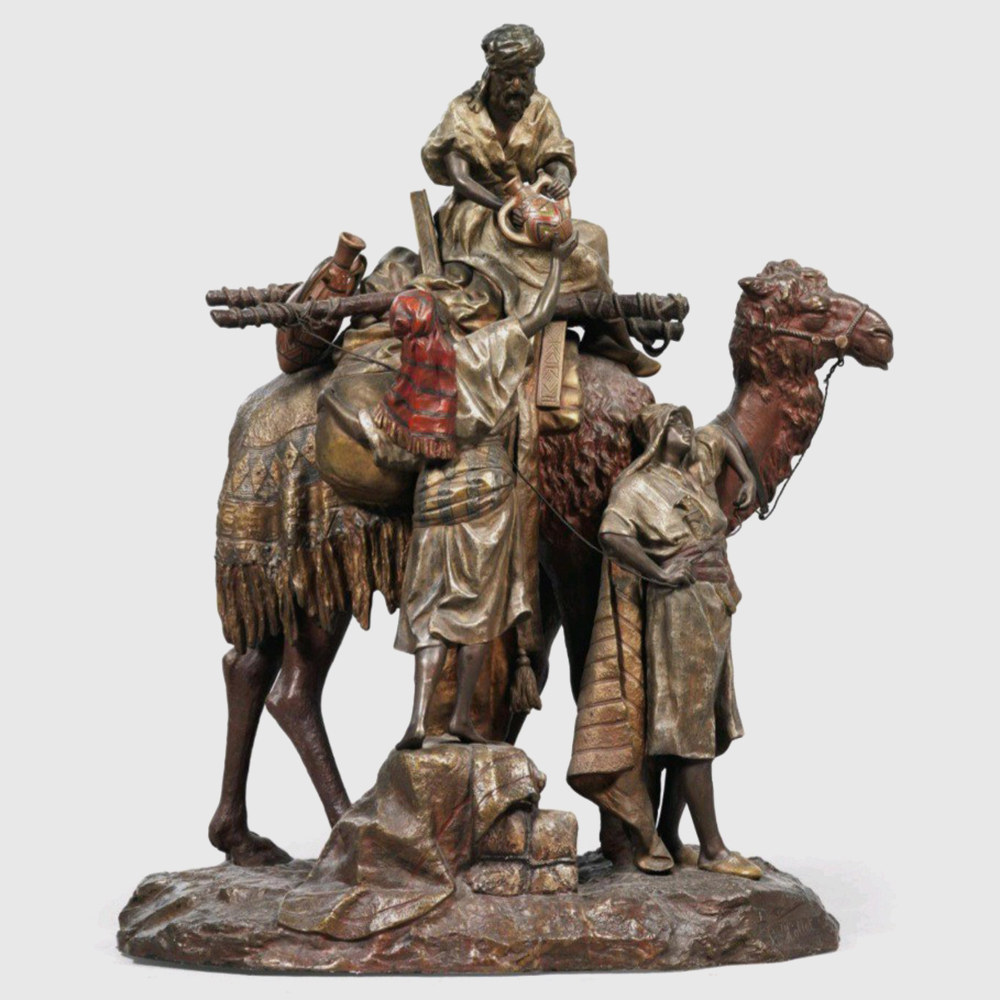
Bronze Camel Caravan Sculpture with riders

1. Introduction of Camel Caravan Sculpture Eugène Léon L’Hoëst (1874–1937) was a French sculptor active from the late 19th to the early 20th century, and a leading figure in Orientalist sculpture. He traveled extensively to North Africa. His works often focus on themes such as Arab riders, caravans, and desert life, showcasing a strong regional […]

View More...
Bronze Camel with female Rider Statue

1. Introduction of Camel Rider Statue This sculpture, themed around a camel riding scene, exhibits overall characteristics of Orientalist Art Deco. In the Camel Rider Statue, a female rider sits gracefully atop a camel, one hand raised to her ear, the other lightly holding the reins. She wears a fitted long dress, the folds of […]

View More...
Bronze Egyptian Harp Player Statue playing

1. Introduction of Egyptian Harp Player Statue This Harp Player Statue depicts a female harp player in the style of ancient Egypt, exhibiting decorative features of Art Deco and Orientalist art. The figure in this Egyptian Harp Player Statue kneels on a stone base, leaning slightly forward, her hands reaching for the strings as if […]

View More...
Bronze Water Seller Statue with loaded donkeys

1. Introduction of Water Seller Statue Eugeny Lanceray (Yevgeny Alexandrovich Lanceray, 1848–1886) was an important 19th-century Russian bronze sculptor, particularly skilled in depicting cavalry, nomadic peoples, travelers, animals, and folk scenes. This Water Seller Statue, pointing to the Algerian Kabir people, portrays the daily labor of a North African water seller. In this sculpture, the […]

View More...
bronze African Male Bust with turban detail

1. Introduction of African Male Bust This male bust depicts a North African tribal figure. The head in the African Male Bust is slightly turned to one side, the gaze upward, conveying a calm and powerful expression. The facial features, including the beard, bridge of the nose, cheekbones, and neck muscles, are clearly defined. A […]

View More...
bronze Arab Bust with turban close-up

1. Introduction of Arab Bust Max Arthur Waagen, also commonly spelled Arthur Waagen, was one of the most recognizable artists of 19th-century European Orientalist sculpture. Born in East Prussia, he spent much of his life in Paris, and his works often depicted animals, hunting figures, and North African subjects. The 19th-century European art market had […]

View More...
bronze Berber Girl Statue in cloak

1. Introduction of Berber Girl Statue Marius Joseph Saïn (1877–1961) was a French sculptor, born in Avignon, who studied and created art within the French academic art environment. His works often feature figures, historical subjects, and Orientalist imagery, frequently using clothing, posture, and surface treatment to express the figures’ identities. In the late 19th and […]

View More...
  • 1
  • 2