Tag Archives: bronze equestrian statue

Bronze General on Horse Sculpture Raising Hoof

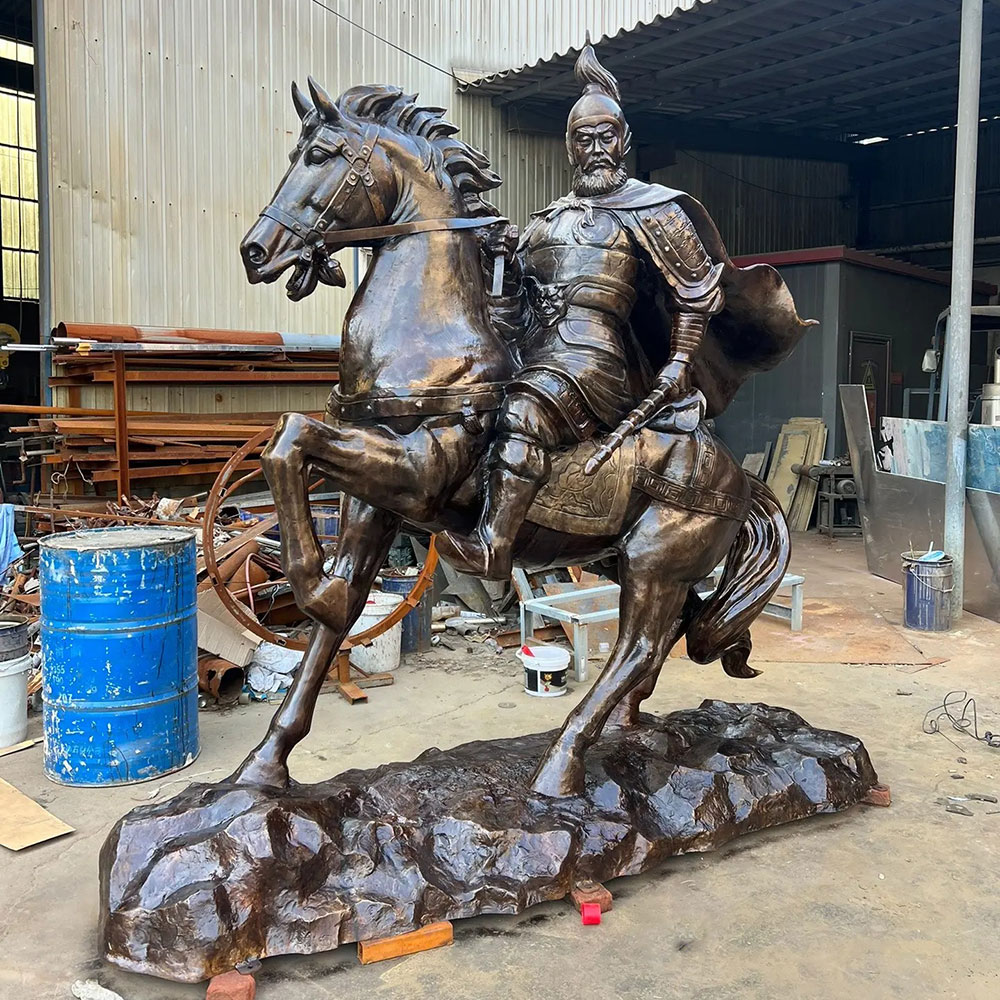
1. Introduction of General on Horse Sculpture This bronze general sculpture depicts an ancient warrior clad in armor, seated atop a warhorse. In the General on Horse Sculpture, the general wears a helmet with a high plume, his brows furrowed, and a thick beard, his expression solemn. Layers of armor cover his chest, while his […]

View More...
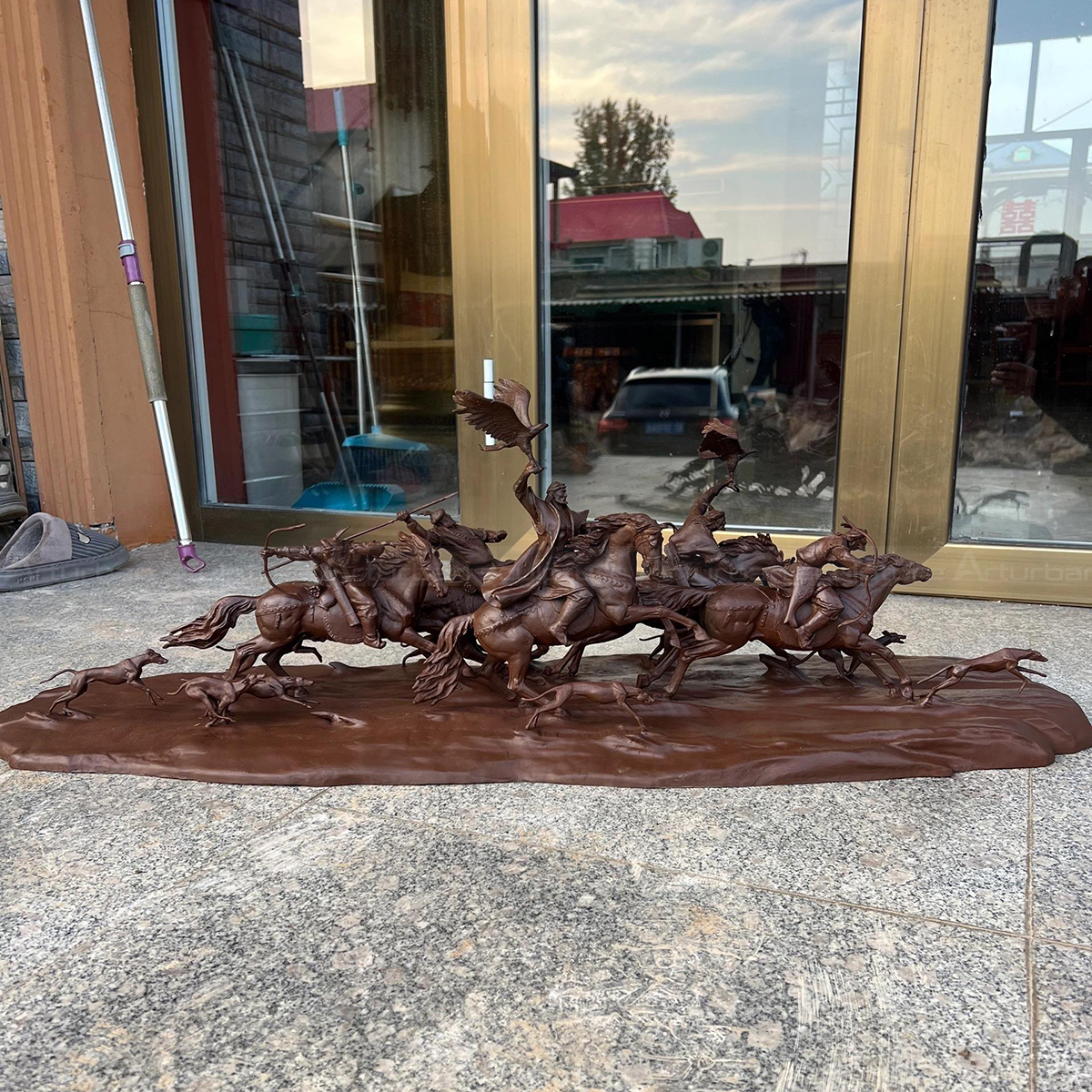
Mongolia Sculpture bronze riders chasing wild game

1. Introduction of Mongolia Sculpture This bronze sculpture depicts a traditional Mongolian grassland hunting scene, creating a dynamic and narrative image through the combination of riders, horses, falcons, hunting dogs, and running prey. Multiple riders gallop side-by-side, some with bows drawn, some with falcons raised, and others wielding long poles, each in a distinct pose. […]

View More...
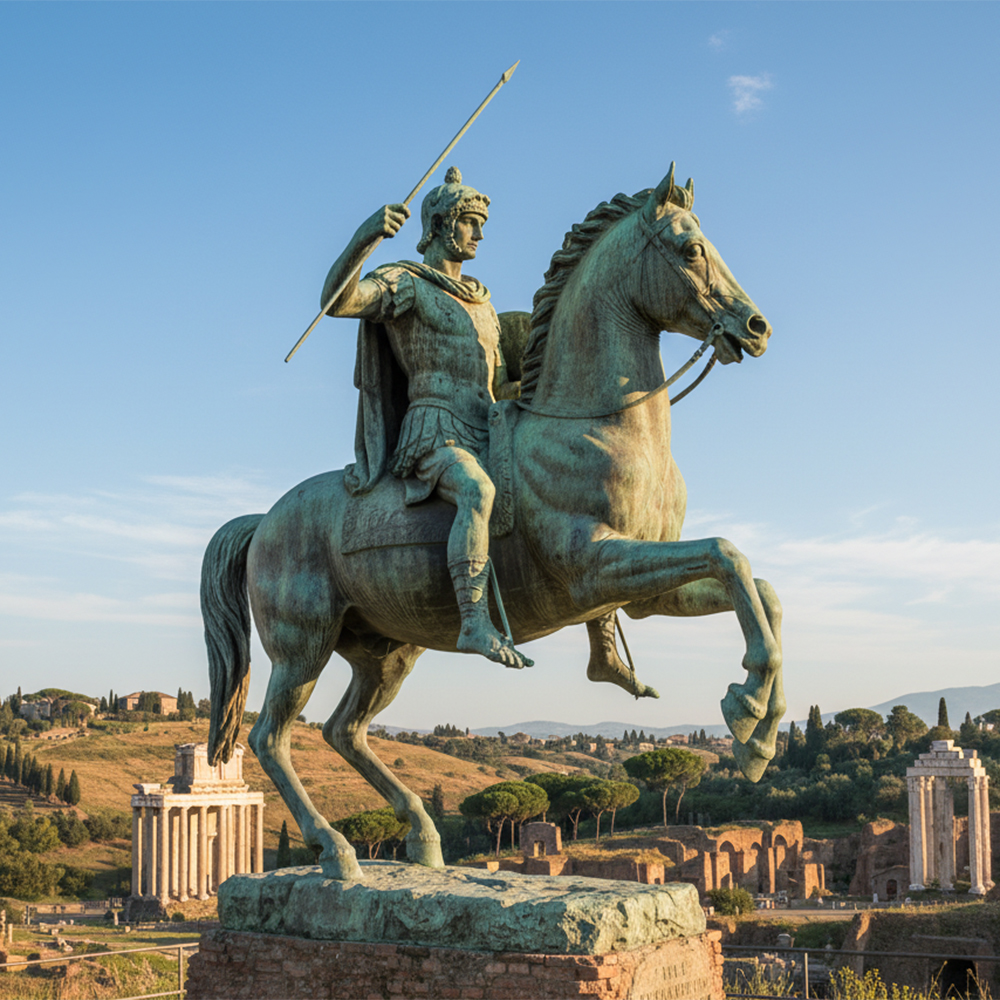
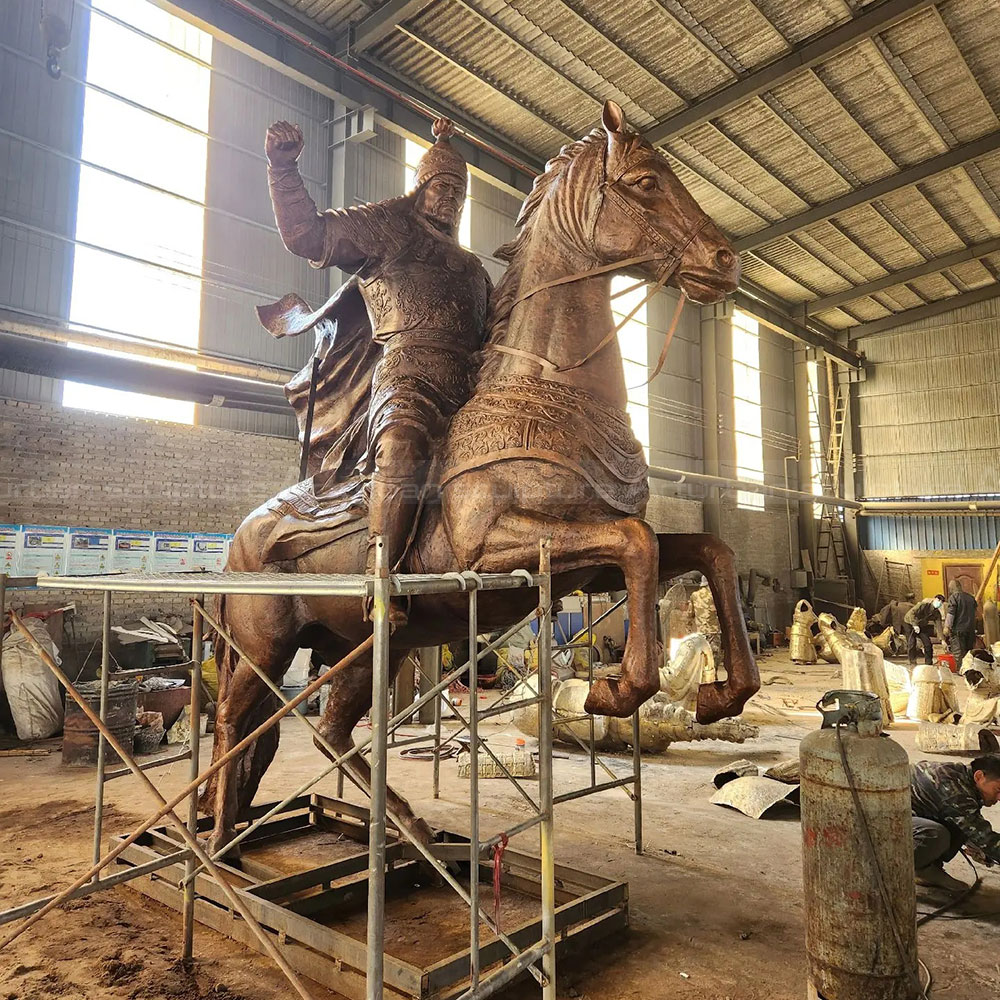
large Bronze General on Horse Statue

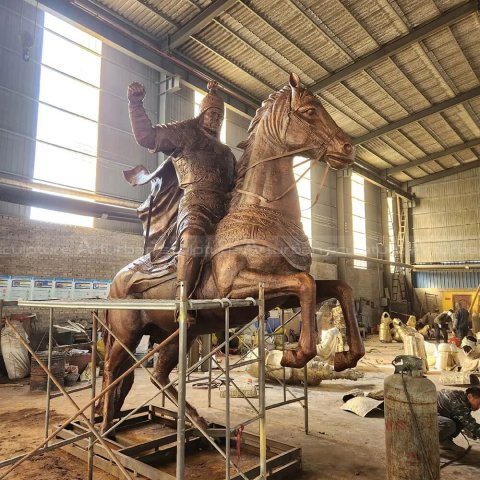
1. Introduction of General on Horse Statue This large-scale equestrian general sculpture employs a traditional commemorative composition, featuring a clad general in armor and a leaping warhorse as the main subjects. The figure in the General on Horse Statue wears a helmet and layered armor, with intricate patterns engraved on the breastplate, shoulder guards, and […]

View More...
Bronze Roman Equestrian Statue side view

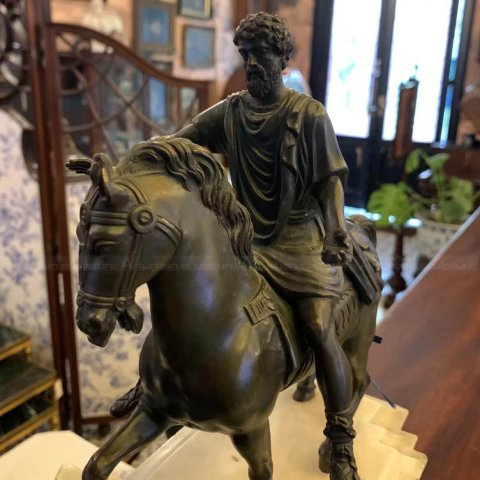
1. Introduction of Roman Equestrian Statue This sculpture, themed around a classical Roman equestrian knight, possesses a dignified and rational overall form, clearly exhibiting monumental qualities. The figure in the Roman Equestrian Statue sits upright on his warhorse, his posture restrained. The knight wears a crown, short armor, and a cloak; the folds of his […]

View More...
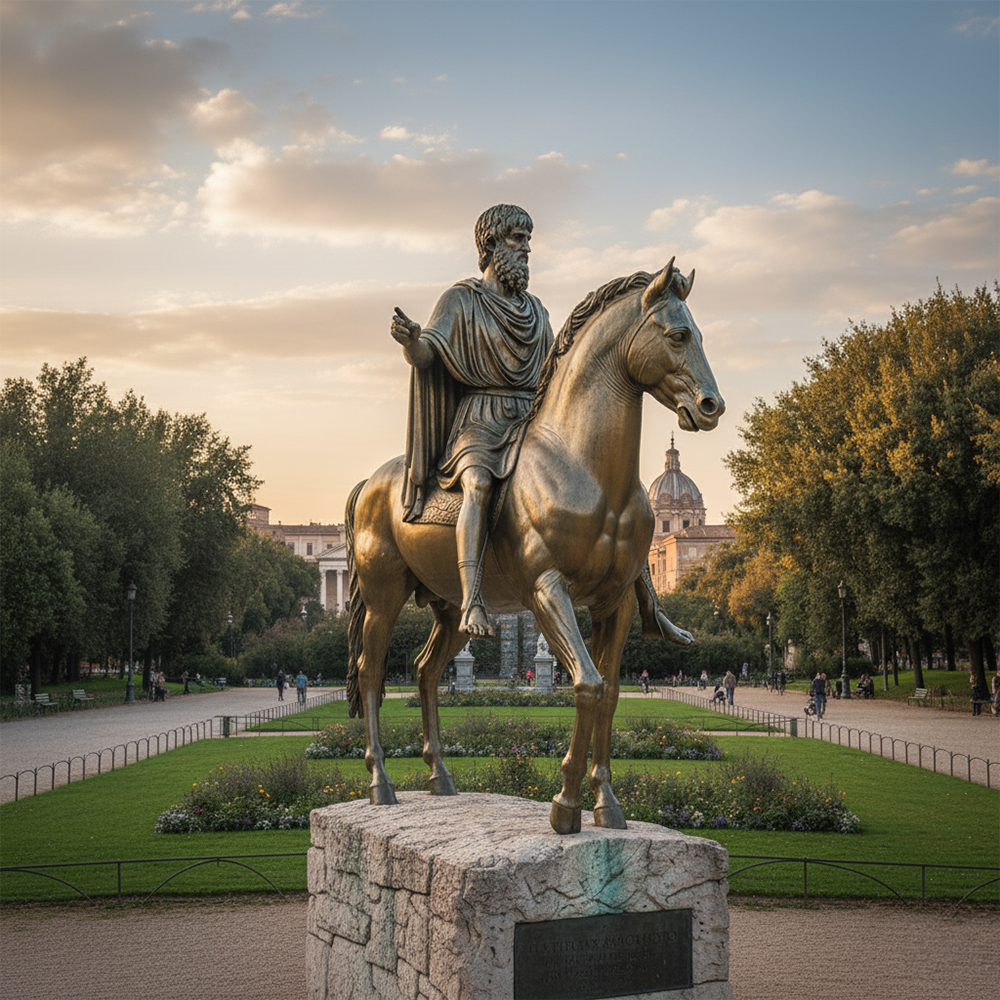
bronze Equestrian Portrait of Marcus Aurelius statue

1. Introduction of Equestrian Portrait of Marcus Aurelius Marcus Aurelius (121–180 AD) was one of the emperors of the Roman Empire and a rare figure in history widely remembered as both a ruler and a philosopher. Born into a Roman noble family, he was chosen as heir to the throne upon reaching adulthood. During his […]

View More...
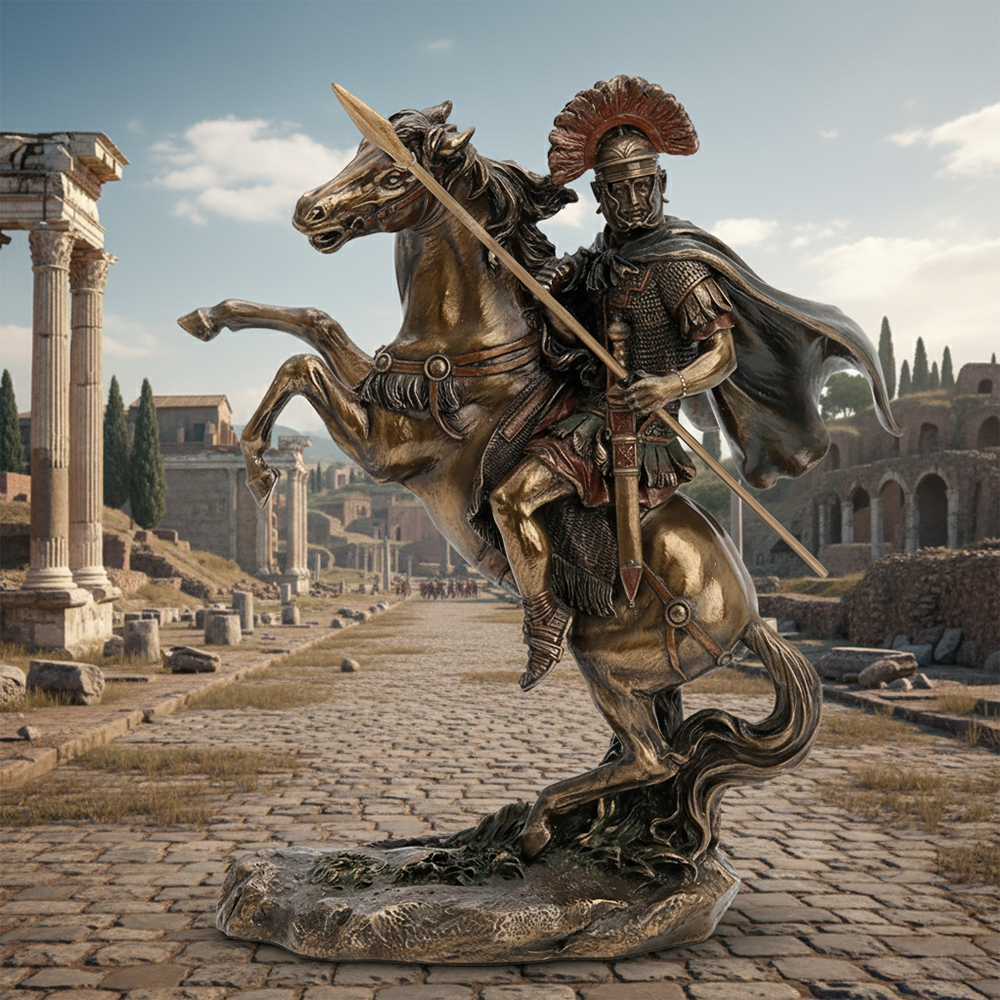
Bronze Roman Centurion on Horse Statue ourdoors

1. Introduction of Roman Centurion on Horse Statue This sculpture, themed around a Roman centurion on horseback, fully captures the imposing presence and fighting spirit of a high-ranking officer in the Roman army. The figure in the Roman Centurion on Horse Statue wears the iconic horizontal plume helmet, symbolizing the centurion’s rank and command authority; […]

View More...
Louis XIV Statue Louvre

1. Introduction of statue of Louis XIV Statue Louvre This sculpture is an equestrian statue of Louis XIV, made of bronze. The Louis XIV Statue Louvre shows the image of King Louis XIV of France wearing gorgeous armor and riding on a horse in a heroic manner, symbolizing his ruling majesty and military power. The […]

View More...
bronze equestrian statue of marcus aurelius

1. Introduction of statue of marcus aurelius This statue of Marcus Aurelius reproduces the majesty and style of the ancient Roman emperor with its exquisite carving techniques and realistic shapes. The bronze equestrian statue of marcus aurelius is made of copper, and the surface is polished, showing a deep bronze luster, adding a simple and […]

View More...
bronze equestrian statues

1.Introduction of bronze equestrian statues Bronze equestrian statues are the intersection of history and art. They carry rich cultural connotations and historical stories. Since ancient times, people have eternally engraved the heroic spirit of equestrians on bronze through sculptures. Ancient bronze equestrian statues were often national symbols, representing the power and majesty of the ruler. […]

View More...
el cid campeador statue

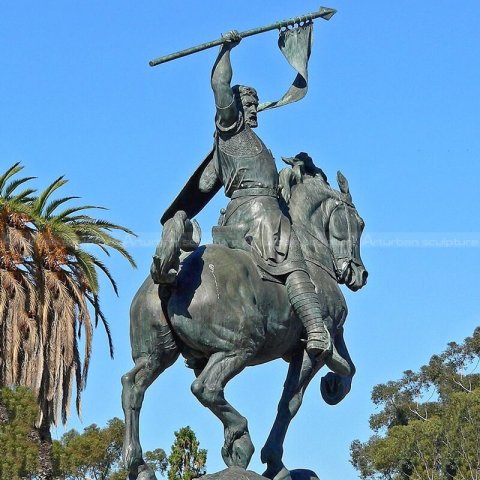
1.Introduction of El Cid Campeador Statue The El Cid Campeador Statue is an impressive outdoor equestrian sculpture depicting the Spanish knight El Cid. Created by artist Anna Hyatt Huntington, this statue is located at the entrance of Panama Square in New York City. The 23 foot high Bronze Equestrian Statue was completed on July 5, 1930. […]

View More...