
Michelangelo’s David is not only one of the most representative sculptures of the Renaissance, but also an important symbol of Florence’s urban culture. This article will begin by exploring the background of david statue michelangelo florence, the moment depicted by the figure, its unique human proportions and symbolic meaning, and then introduce the original and famous replicas that still exist in Florence. Finally, it will examine how this classic image has endured to this day through the case of a modern David Statue Replica.
What Is Michelangelo’s David?
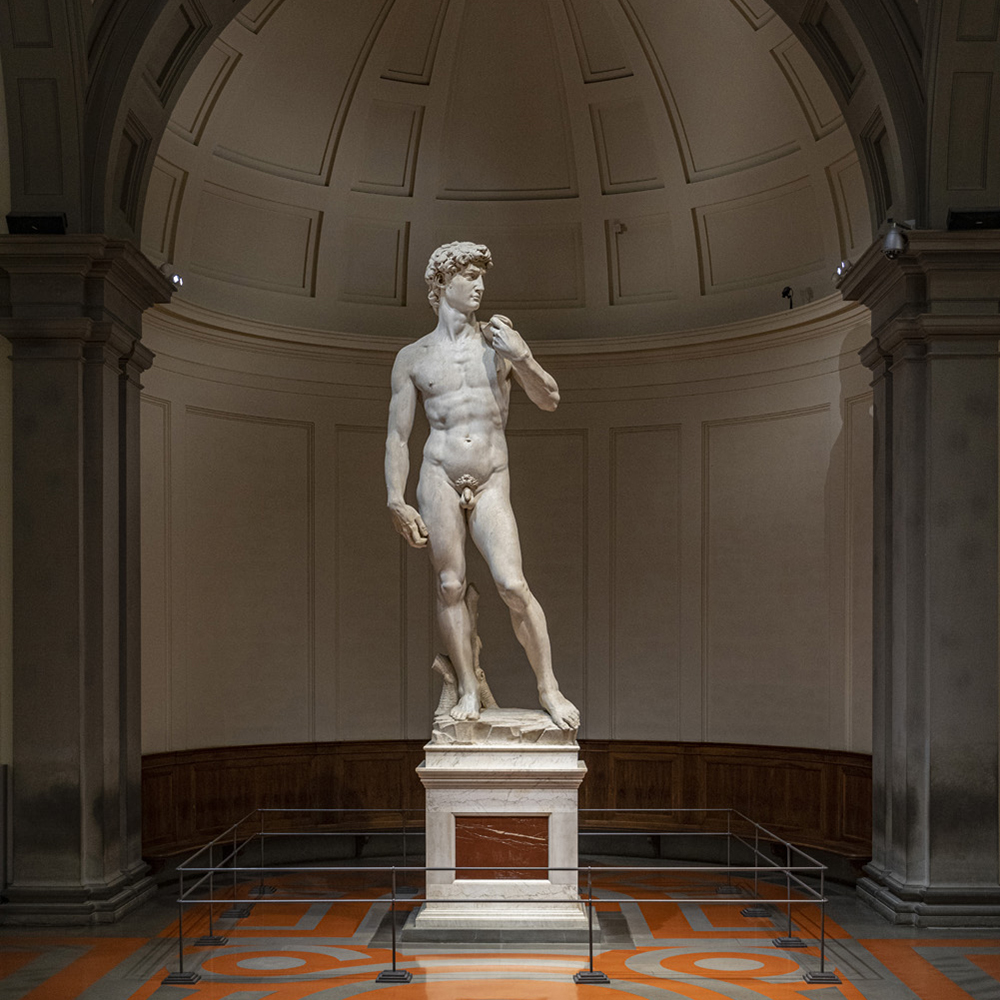
David, one of Michelangelo’s most iconic sculptures, was created between 1501 and 1504. It depicts the young hero David, who defeated the giant Goliath in the Bible. Sculpted from white marble, the statue stands approximately 5.17 meters tall and presents David as a complete male nude. The figure’s weight is primarily on one leg, while the other is relaxed, creating a typical contrapposto (opposite balance) posture, resulting in subtle variations in the shoulders, torso, and hips.
Why Did Michelangelo Create David?
David was not originally commissioned for a museum or the Piazza della Signoria, but rather as part of a sculptural project for the Santa Maria del Fiore Cathedral in Florence. As early as the mid-15th century, the Opera di Santa Maria del Fiore planned a series of large Old Testament figures, including David, to be placed on the cathedral’s exterior buttresses. The sculptor Agostino di Duccio began working on a massive Carrara marble block in 1464, but the project was unfinished; Antonio Rossellino later attempted to take over, but the already-worked stone remained unused for many years.
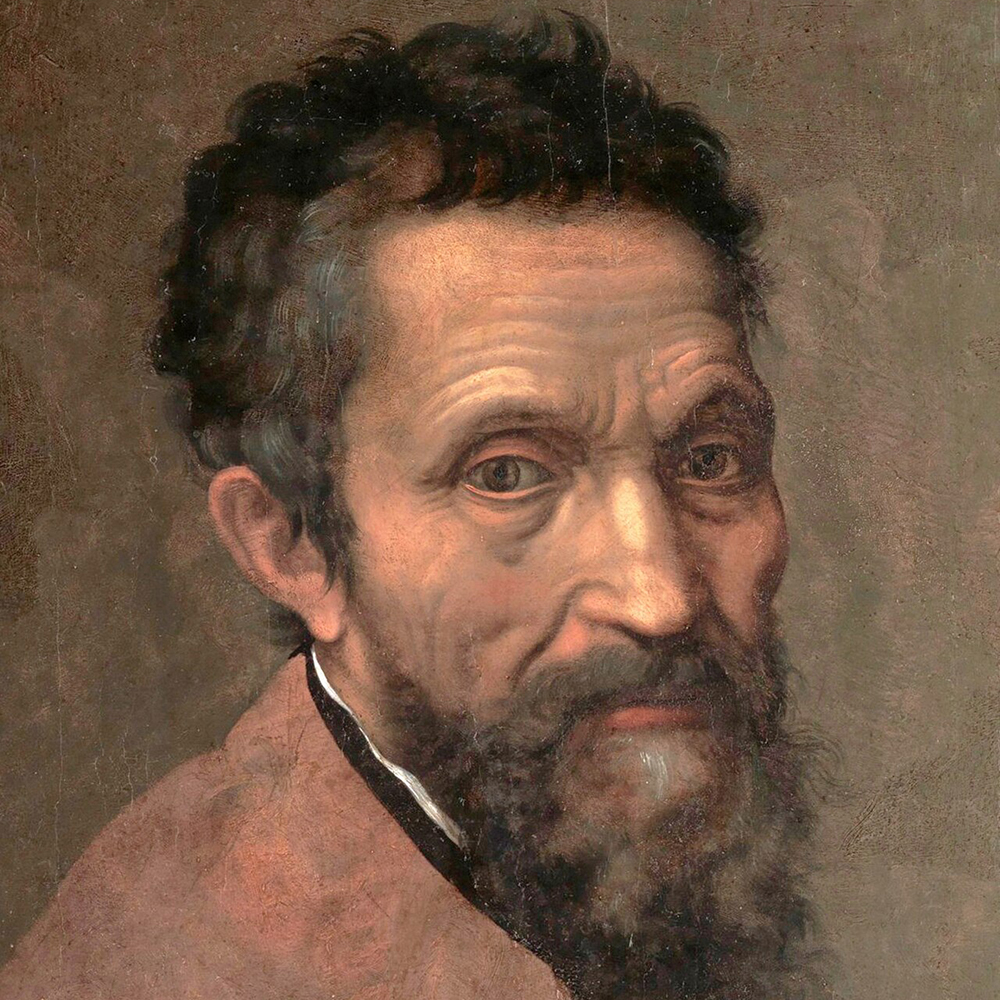
On August 16, 1501, the 26-year-old Michelangelo officially received the commission. He was not faced with a new, complete block of stone, but rather a marble block already hewn and its shape somewhat constrained by previous works. After approximately three years of carving, he completed David in 1504. The final effect of the work far exceeded its intended function as ordinary architectural decoration, so after its completion, Florence reconsidered its placement, rather than placing it atop the cathedral as originally planned.
What Moment Does Michelangelo’s David Show?
Michelangelo chose a significantly different point in time from his earlier David sculptures. While works by artists like Donatello and Verrocchio typically depict David after he has defeated Goliath, Michelangelo’s David is generally understood to be the moment just before the battle begins. Goliath is not present, and there is no enemy head at David’s feet; he is still in the observation and preparation phase.
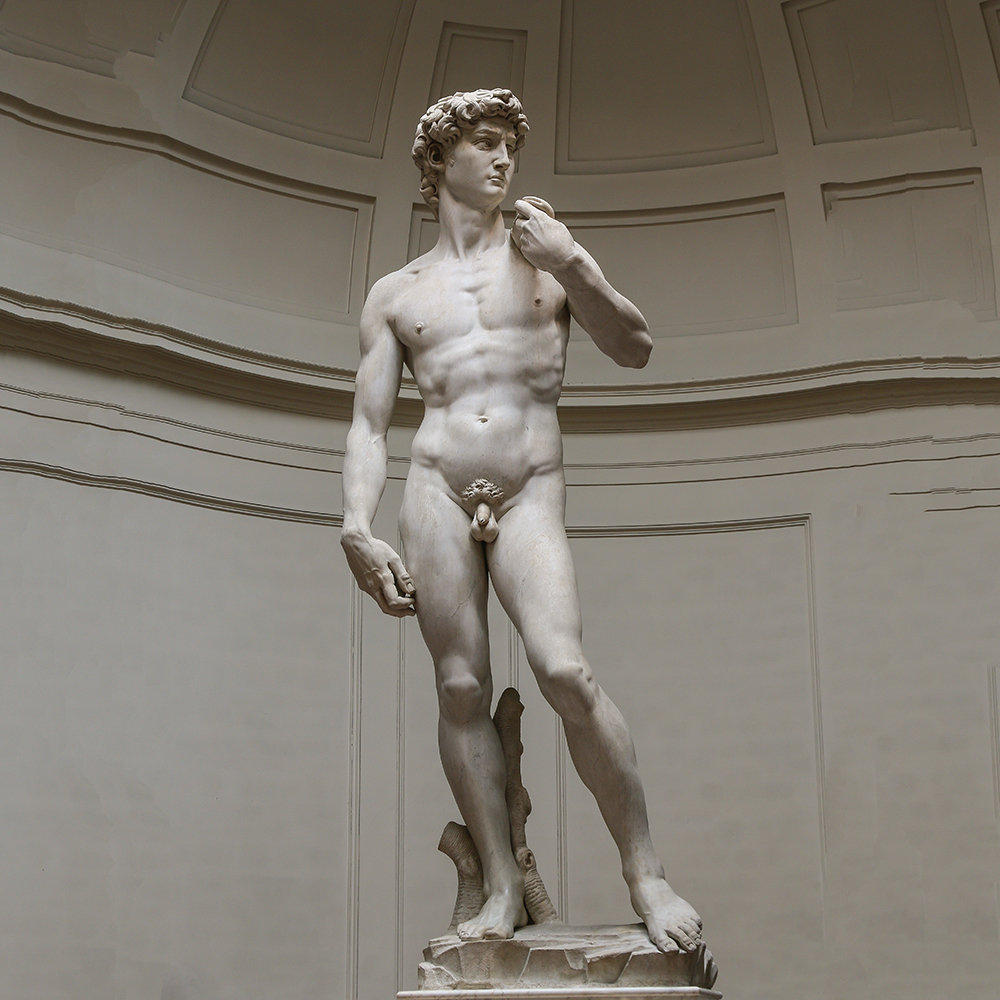
This tension is primarily conveyed through bodily details. David’s head is turned to one side, his brow is furrowed, his neck is slightly tense, and his right hand hangs naturally yet reveals prominent veins and a sense of power; the sling is placed relatively discreetly near his body. The figure does not make any violent fighting movements, but the balance of his body and the alertness of his face suggest that action is imminent.
Why Are David’s Hands and Head So Large?
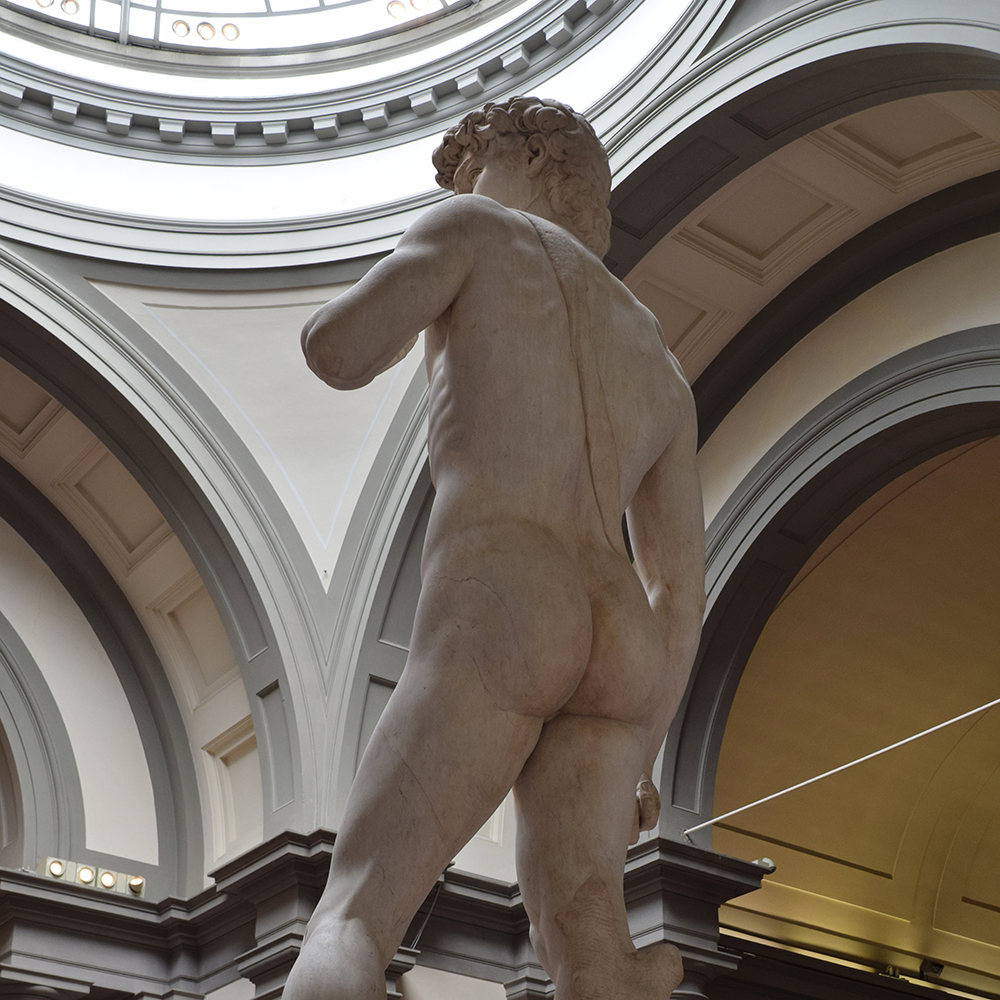
A close look at David reveals that it doesn’t entirely adhere to the natural proportions of the human body: the head is relatively large, especially the right hand, which appears particularly prominent, and there are some visual discrepancies in the proportions between the upper and lower body. Related research also indicates that this sculpture does indeed possess the characteristic of a disproportionately large head and upper body.
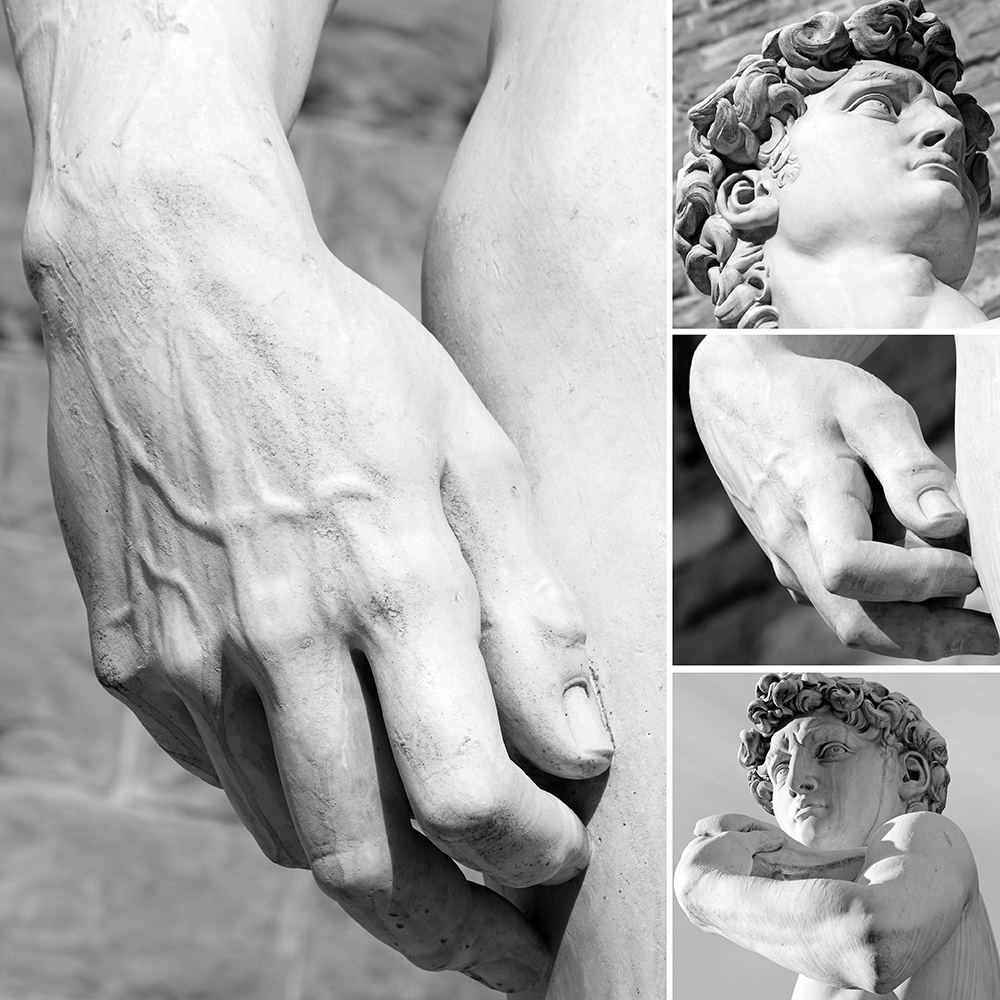
A common explanation relates to the sculpture’s initial installation plan. David was originally intended to be placed high outside the Florence Cathedral, requiring viewers to look up from below. To ensure the head, expression, and hands remained clear from a distance, some key features may have been intentionally enlarged. Therefore, simply interpreting the “large head and hands” as Michelangelo sculpting the proportions incorrectly is inaccurate. However, this explanation is usually expressed as “possibly” or “very likely,” and cannot be considered a definitive statement left by Michelangelo himself.
Furthermore, the original stone had already been processed by other sculptors, and Michelangelo needed to rearrange the entire standing human figure within the limited volume of marble, which also affected the overall proportions of the sculpture. Ultimately, the large hands, head, and relatively slender body became David’s highly recognizable stylistic features.
What Does David Statue Michelangelo Florence Symbolize?
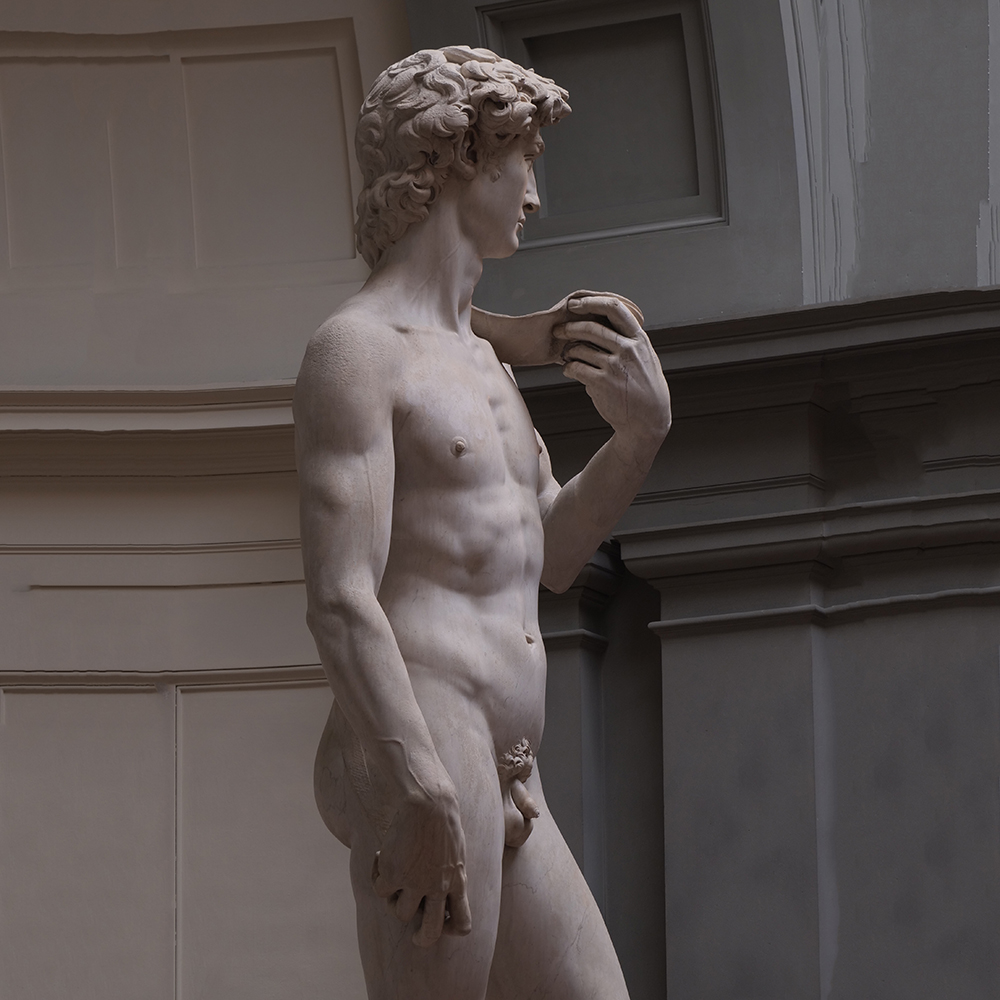
From the perspective of the biblical story itself, David represents a young man, outnumbered by force, who overcomes a powerful adversary through courage, judgment, and skill. Michelangelo did not directly depict the victory, but rather left the figure at the moment the challenge was about to begin, thus emphasizing courage, vigilance, and willpower in the face of danger.
However, David also carried a more specific political meaning in Florence. Even before Michelangelo, David was a common public symbol in Florentine art—an image of the weak resisting a strong enemy, easily associated with the limited size of the Florentine Republic, which faced long-term external political pressures. This meaning became even more pronounced after David was placed near Palazzo Vecchio—the seat of the city government at the time. Art historical studies often link it to the Florentine Republic, civil liberties, and the concept of defending the city.
Therefore, David Statue Michelangelo Florence possesses a dual identity: firstly, it is a sculpture of the biblical hero David, and secondly, in early 16th-century Florence, it was imbued with a distinct urban and republican political symbolism.
How Many Michelangelo’s David Statues Are in Florence?
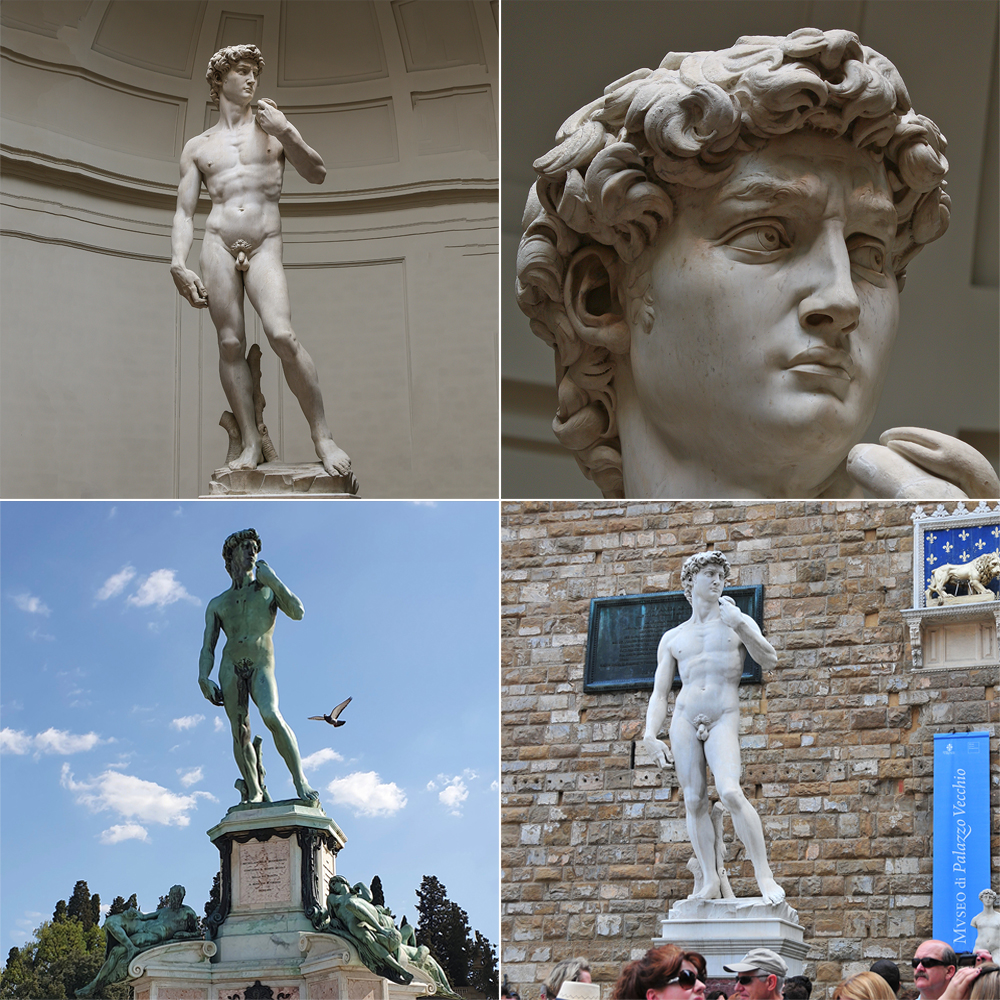
Florence primarily houses three statues of Michelangelo’s David.
Galleria dell’Accademia
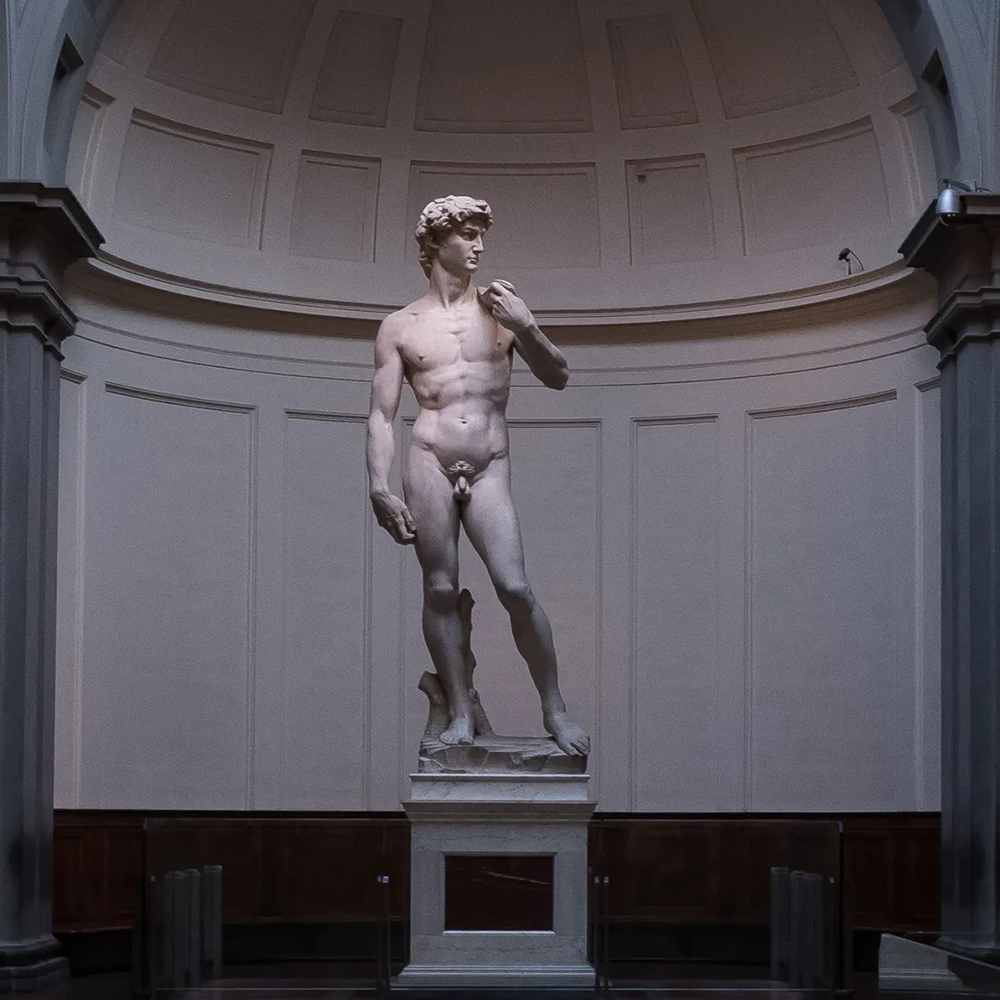
This collection holds the original marble work by Michelangelo, mainly used for indoor preservation and display.
Piazza della Signoria
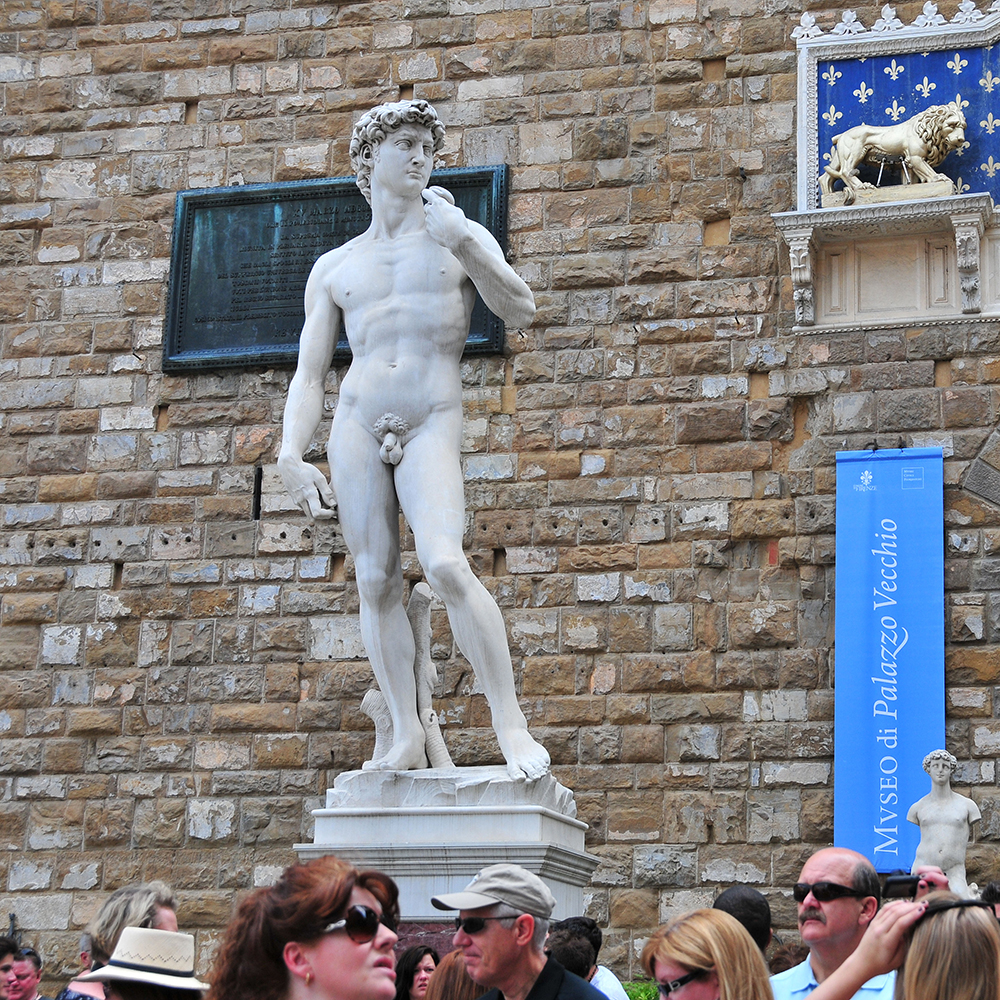
A marble replica placed in front of the Palazzo Vecchio in 1910 to preserve the historical relationship between the statue and the Palazzo Vecchio.
Piazzale Michelangelo
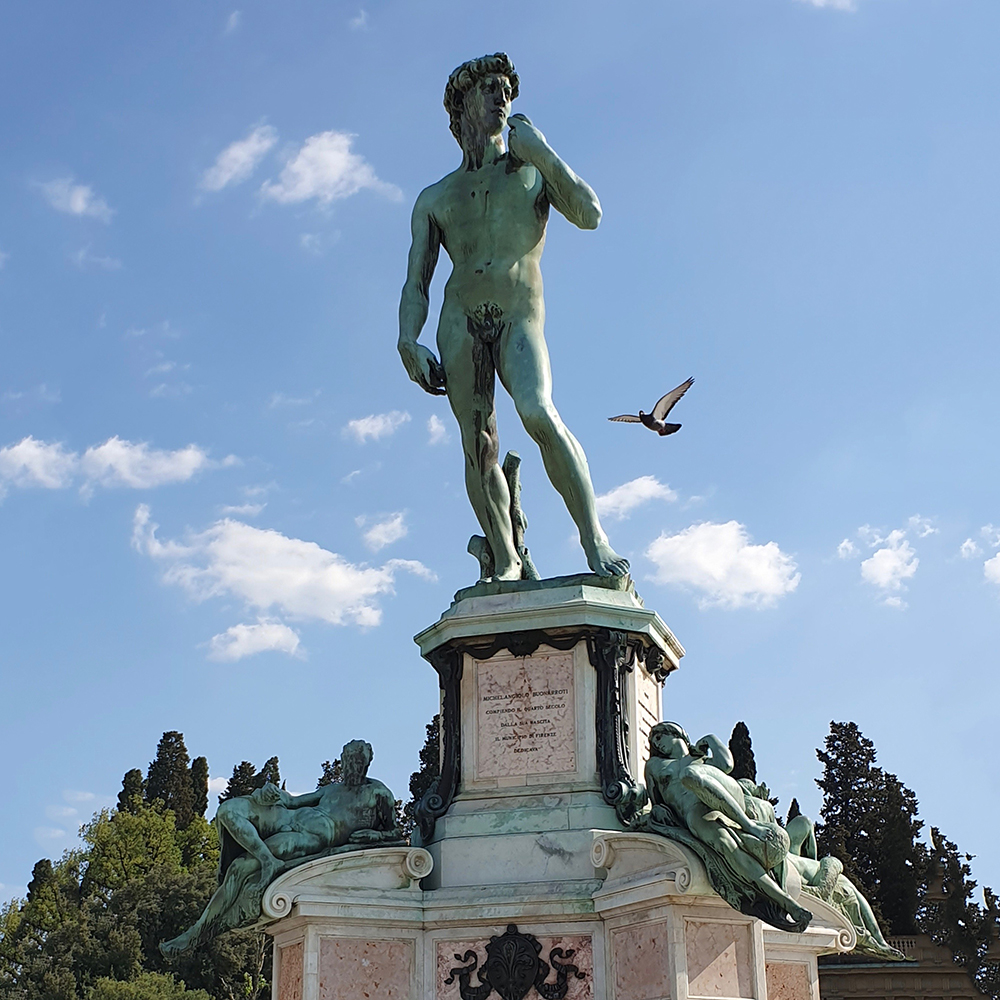
A bronze replica in the center of the square, offering panoramic views of Florence.
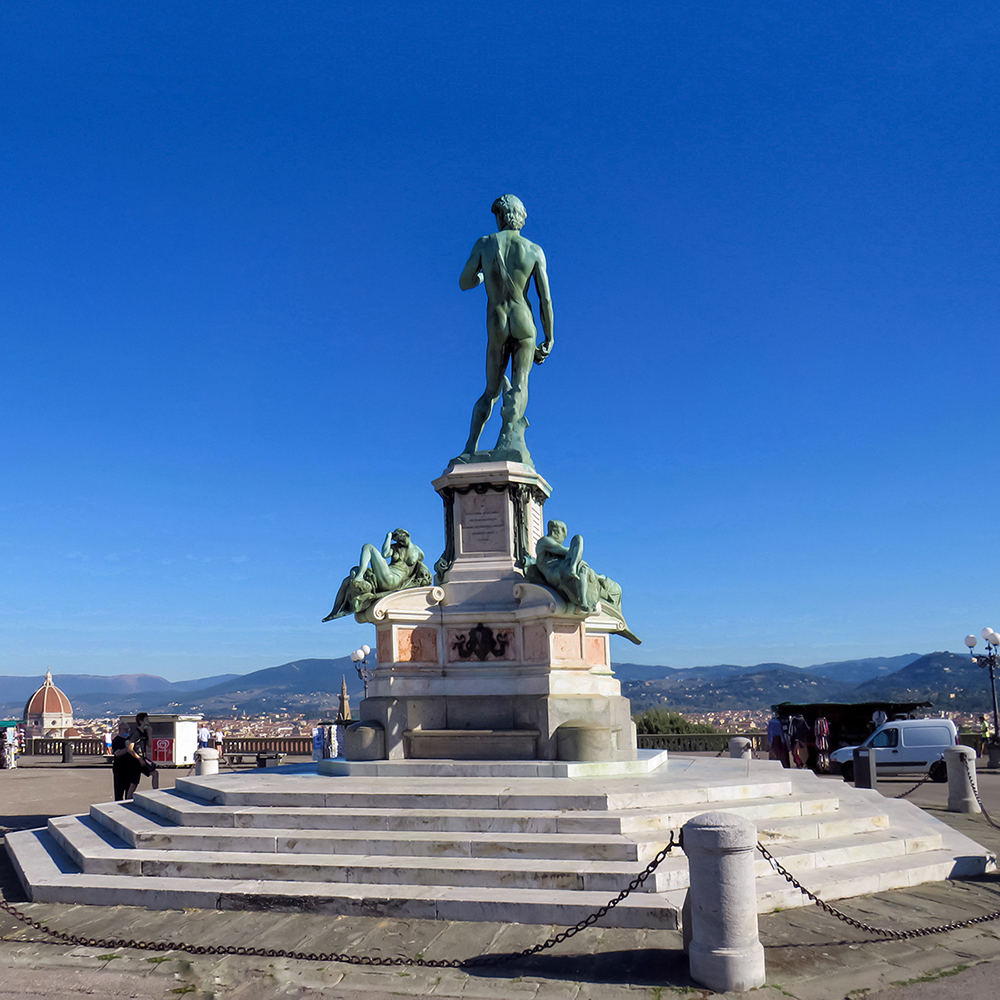
Therefore, of the three David statues visitors see in Florence, only the one in the Accademia Gallery is an original sculpted by Michelangelo himself; the other two are replicas.
Why Was David Statue Michelangelo Florence Moved From Piazza della Signoria?
David was placed near the entrance to the Palazzo Vecchio in the Piazza della Signoria in Florence in 1504, where it was displayed outdoors for over three centuries. Prolonged exposure to rain, temperature fluctuations, and the urban environment gradually exposed the marble to the risk of weathering and damage.
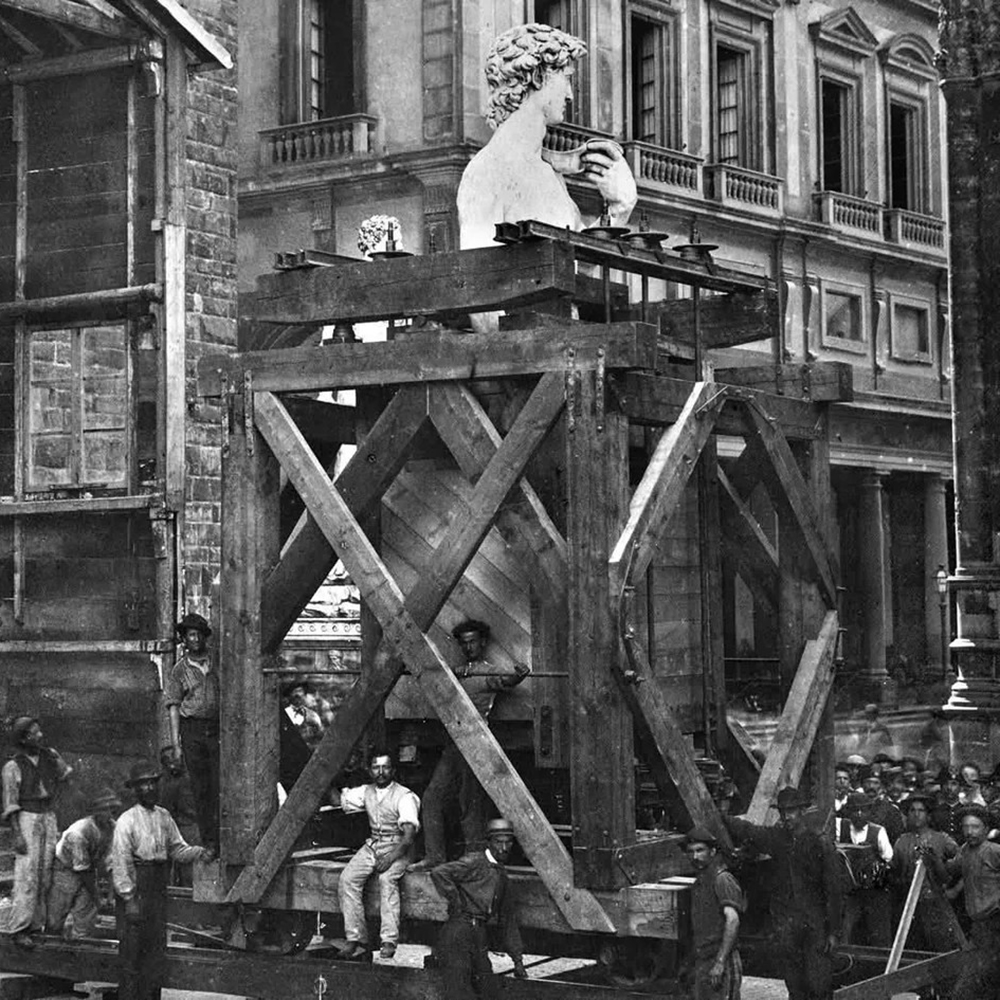
To better protect the original, David was moved indoors to the Galleria dell’Accademia in 1873. In 1910, a marble David Statue Michelangelo Florence replica was returned to its original location in the Piazza della Signoria, therefore the David seen in the square today is not Michelangelo’s original.
Our Michelangelo David Statue Replica
We have produced Michelangelo David Statue Replicas in various sizes, including large versions suitable for courtyard and villa landscapes, and small versions for indoor display. Both works reference the classic form of Michelangelo’s David, preserving the figure’s posture, proportions, and key details at different scales, while adjusting the size according to the actual placement space.
Case 1: Large David Statue for a Private Courtyard
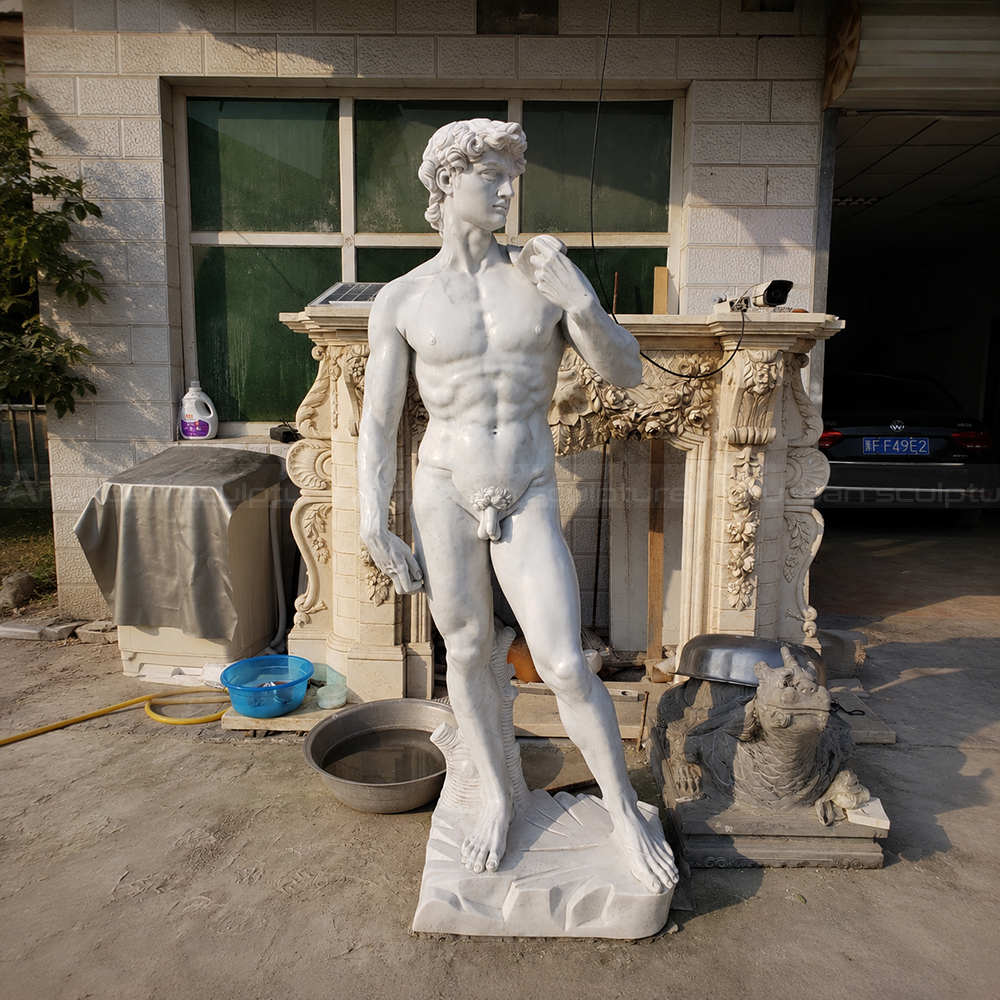
This project was for a private residential courtyard. The client desired a classically styled figure sculpture between the building and the landscape, thus Michelangelo’s David was chosen as a reference. Considering the spacious courtyard, a large, floor-standing version approximately 220 cm high was ultimately chosen, giving the sculpture a suitable size in the outdoor environment and creating a harmonious proportion with the building and surrounding landscape.
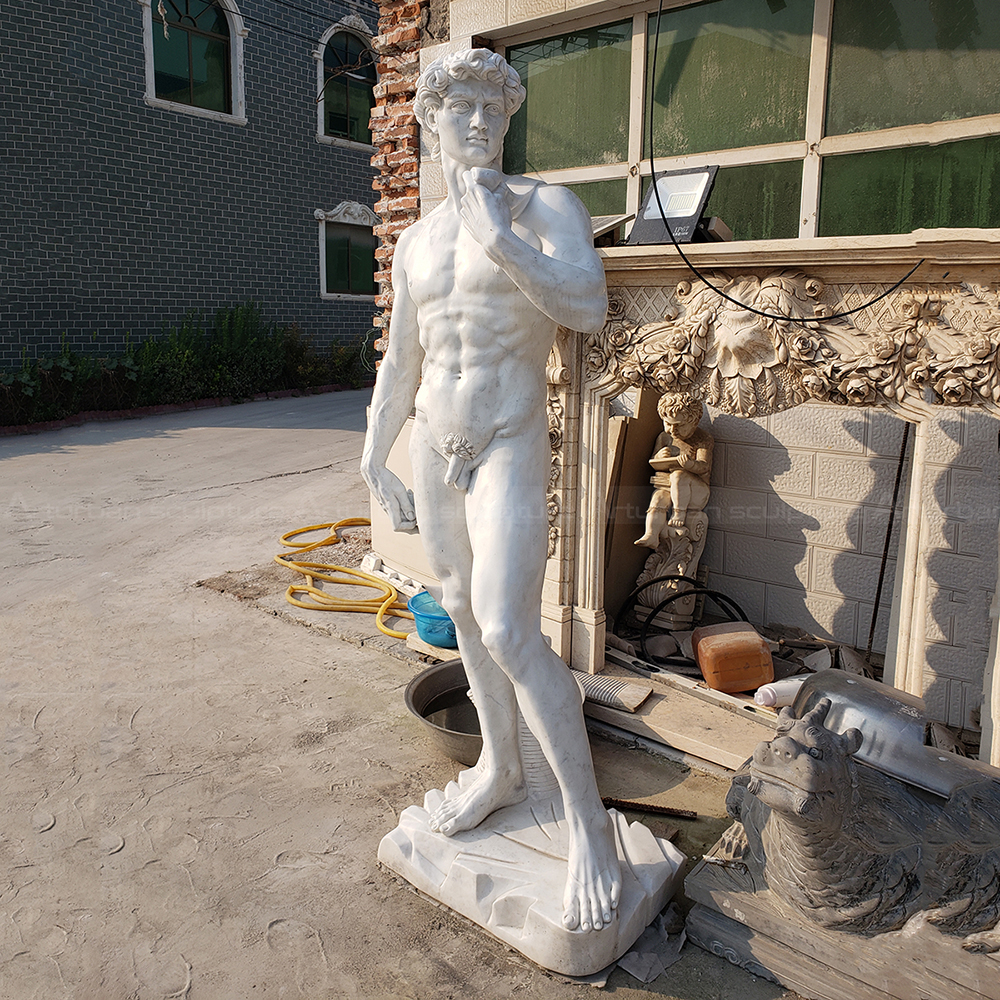
Sculpture Basic Information:
- Design: Michelangelo David Replica
- Type: Large Full-Body Statue
- Material: White Marble
- Application: Courtyard / Villa / Garden
- Size: Height 220 cm (custom sizes available)
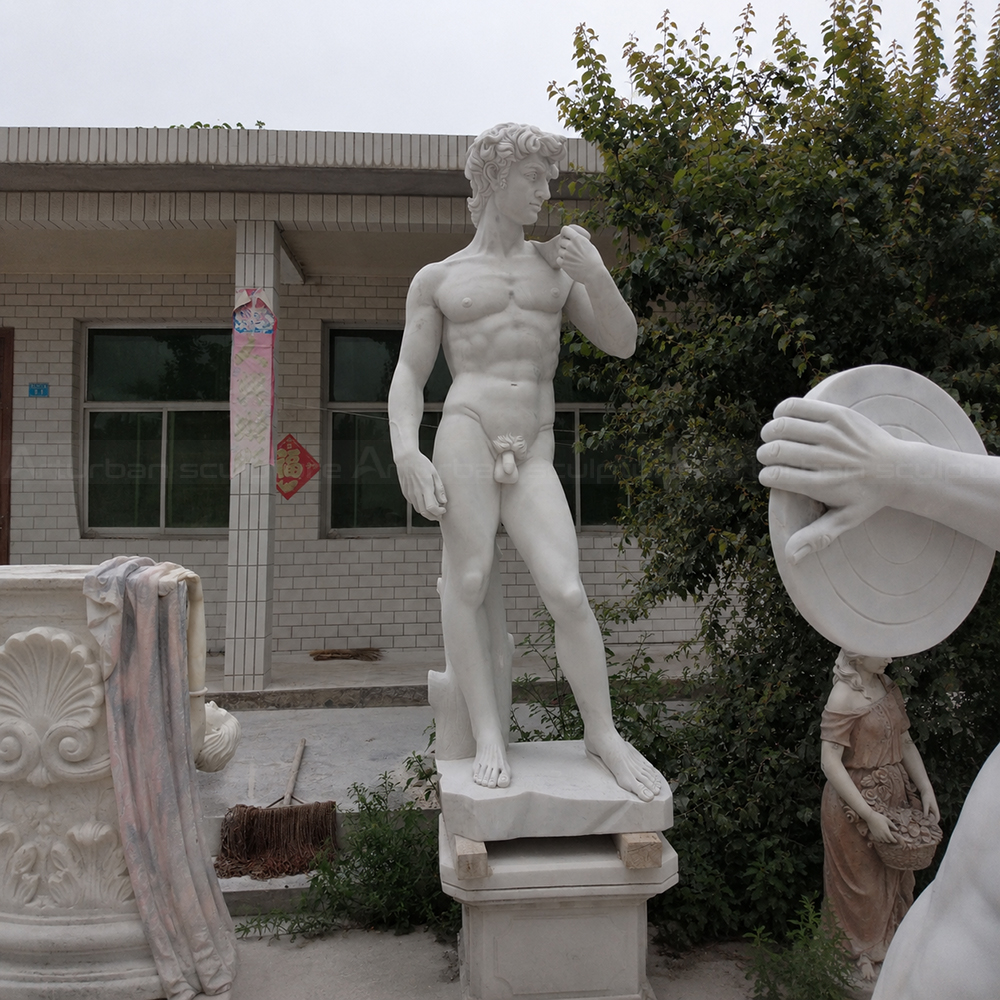
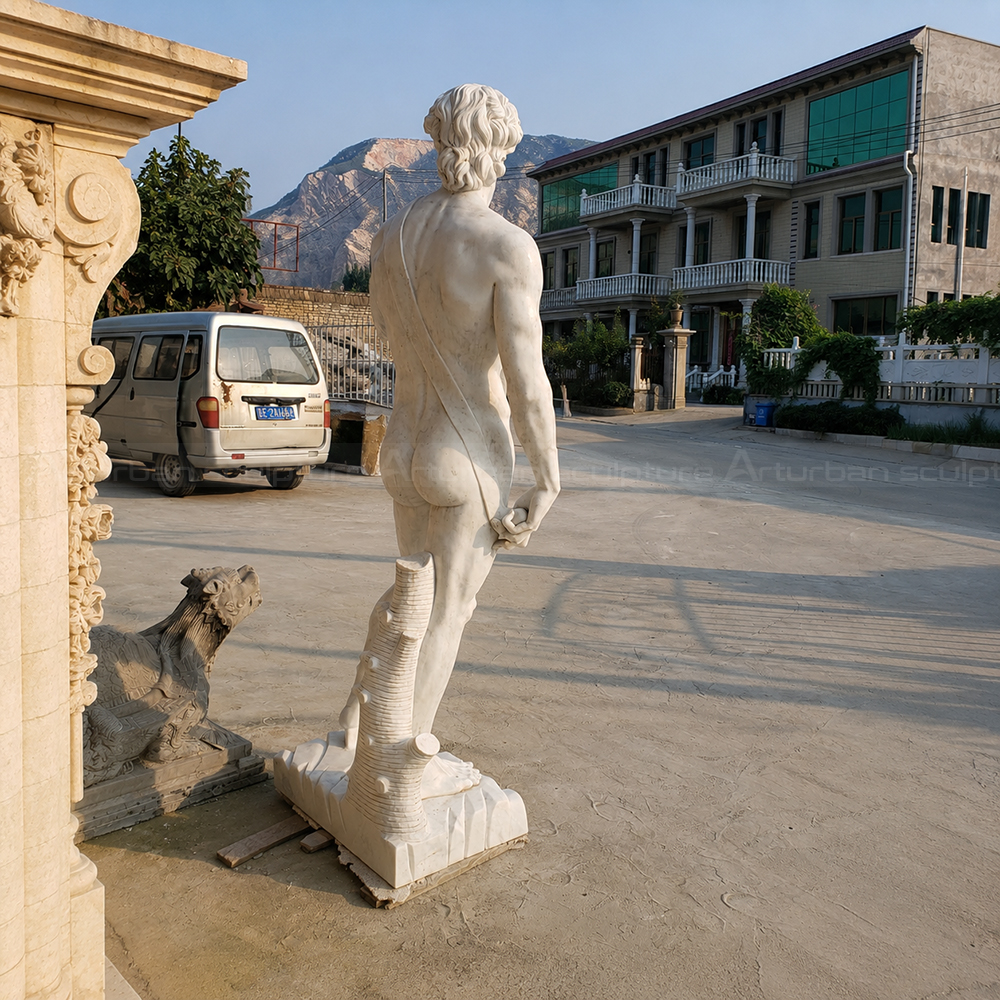
Description: This large David Replica retains the figure’s turned head gazing, left hand near the shoulder, right arm hanging naturally, and the contrapposto stance. The curly hair, chest and abdominal muscles, knees, hands, and feet are all meticulously depicted, with a clear shift in the leg’s center of gravity. The natural rock base, combined with the complete standing figure, makes it ideal for courtyards, villa entrances, and outdoor landscape spaces.
Case 2: Small David Statue for Interior Display
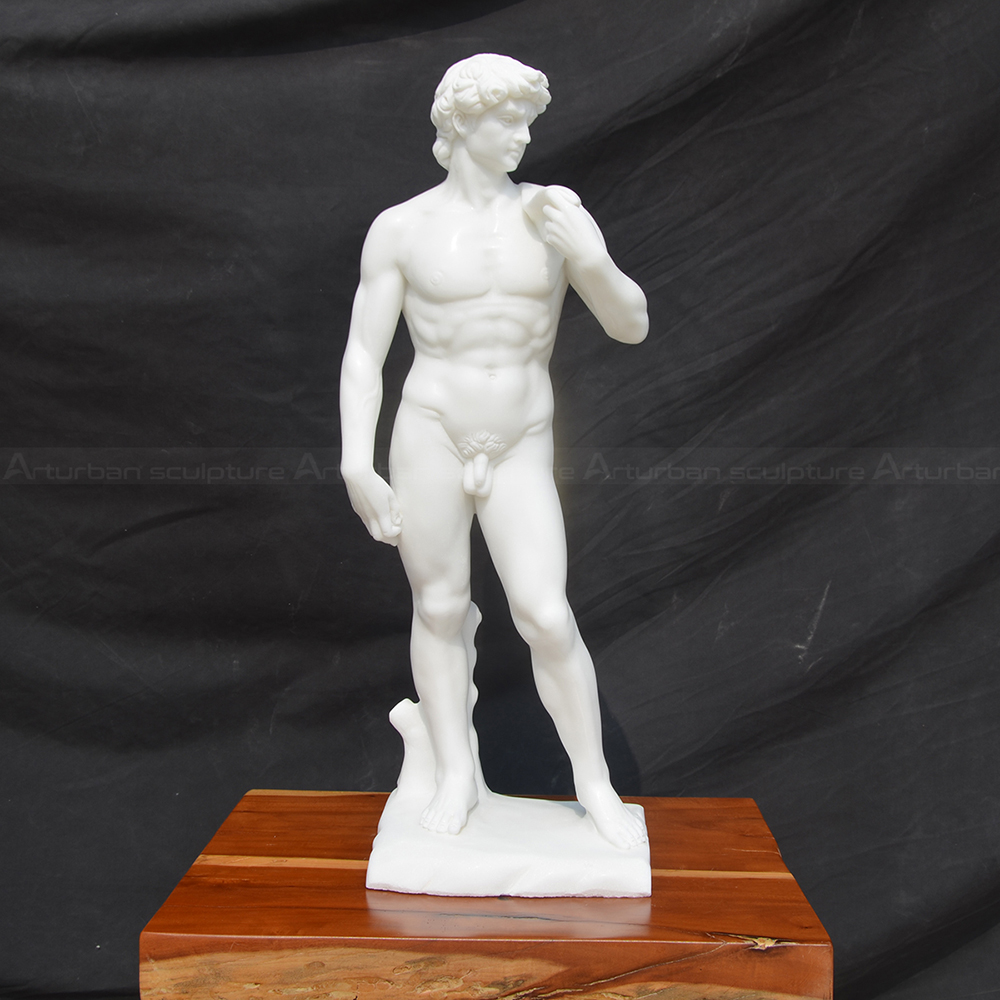
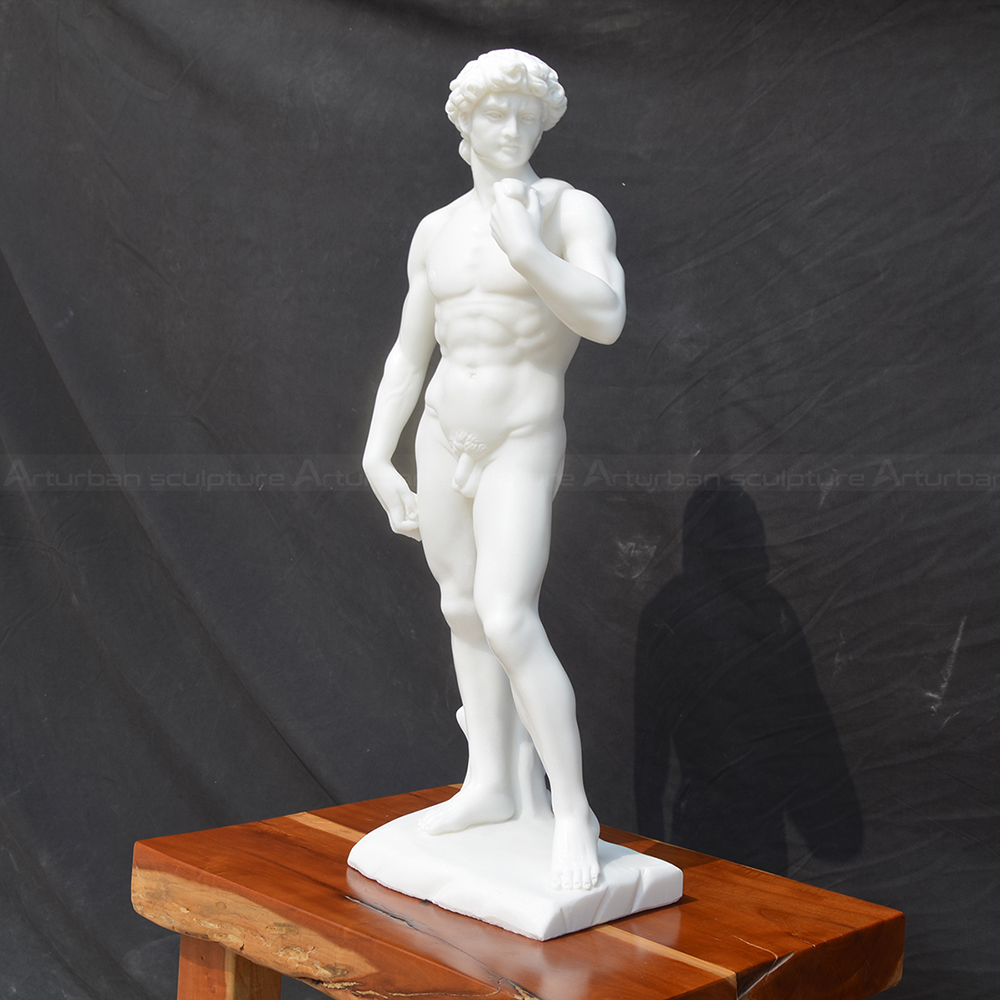
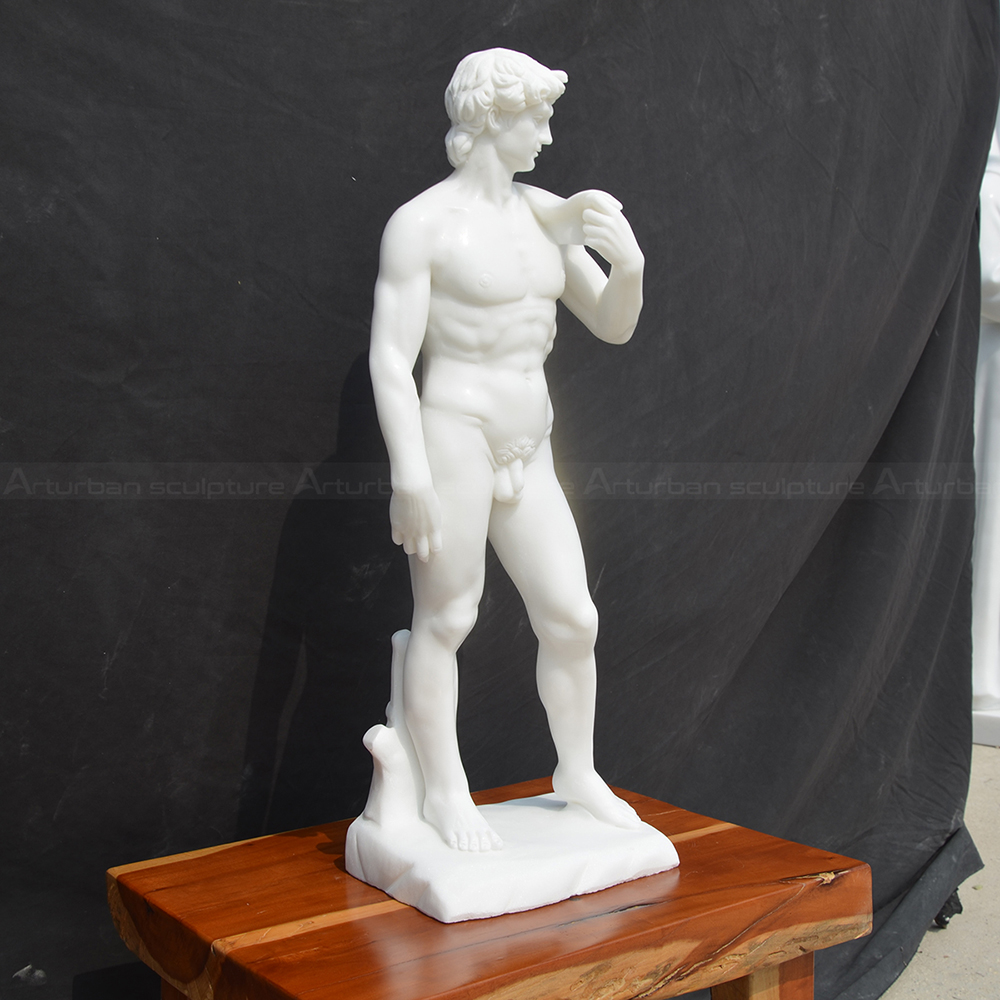
The second project was for interior art installation. The client wanted to retain the recognizable, complete figure of Michelangelo’s David while controlling the space the sculpture occupied, so an 80 cm tall scaled-down version was chosen. Compared to the large sculpture, this size is more convenient for placement in homes, offices, exhibition halls, or hotels, and is also suitable for display on a freestanding pedestal.
Sculpture Basic Information:
- Design: Michelangelo David Statue Replica
- Type: Small Decorative Statue
- Material: White Marble
- Application: Interior / Gallery / Office / Home
- Size: Height 80 cm (31.5 in), Base 25 × 25 cm (9.8 × 9.8 in)
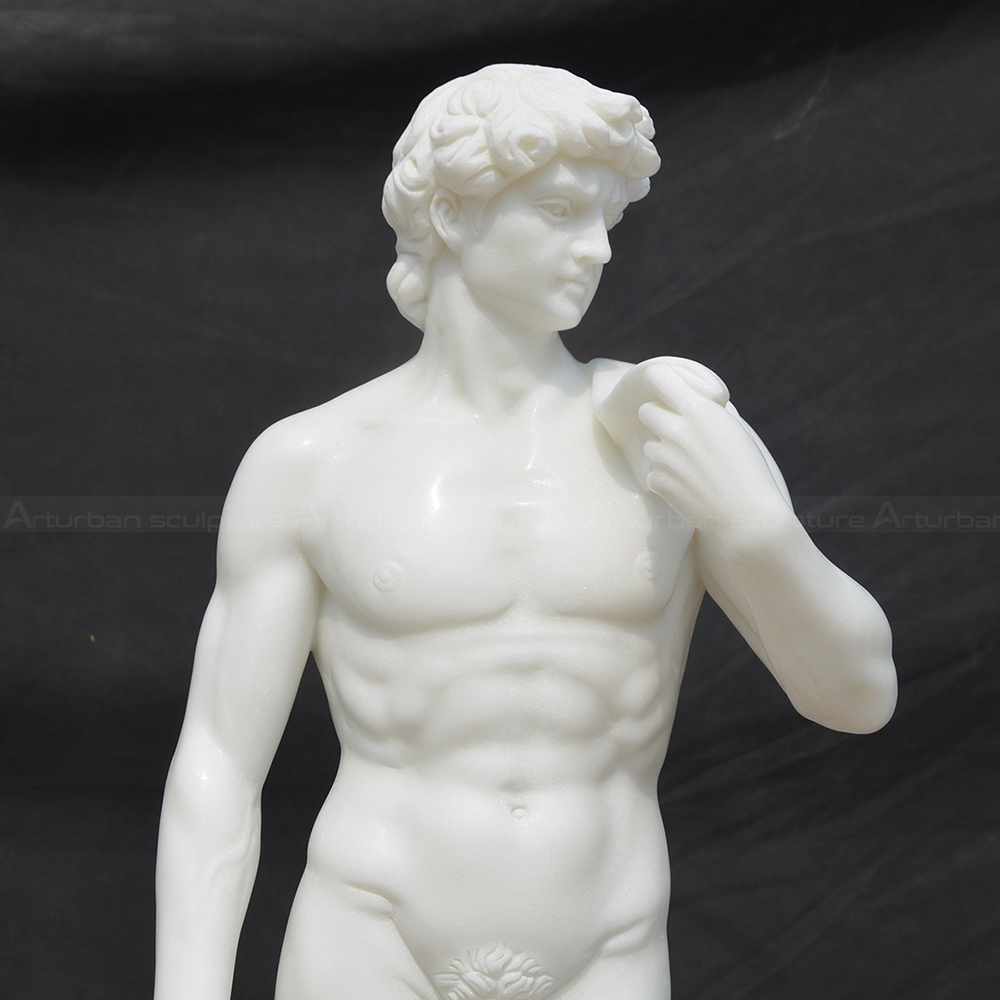
Description: This small David Statue retains the full-body composition of the original, with the head turned to one side, and the shoulders, waist, and legs naturally shifting with the body’s center of gravity. The curly hair, facial contours, chest and abdominal muscles, and limb structure remain clear even at a scaled-down size. The overall proportions are compact, making it suitable as a freestanding art installation or a pedestal sculpture.
Custom Michelangelo David Statue
In addition to the two David Replica Statues above, we also offer custom services for Michelangelo David Statue Replicas. The sculptures can be adjusted in height and overall proportion to suit courtyards, villas, hotels, exhibition halls, or indoor spaces, and the materials, base size, and surface finish can be customized. Whether it’s a small indoor display or a large outdoor David Replica, it can be made to fit the specific project dimensions and installation environment.
You may also enjoy our other articles on famous sculptures, classical art, mythology, and historical figures.
13 Michelangelo Statues in Florence: The Renaissance Masterpieces You Should Know
Muscular Greek Sculpture
Atlas Greek Mythology Statue
Alcibiades Bust: A Custom Greek Bust Statue in Marble
Auguste Rodin Hands Sculpture
Send us your requirements now, we will reply to your email within 24 hours