
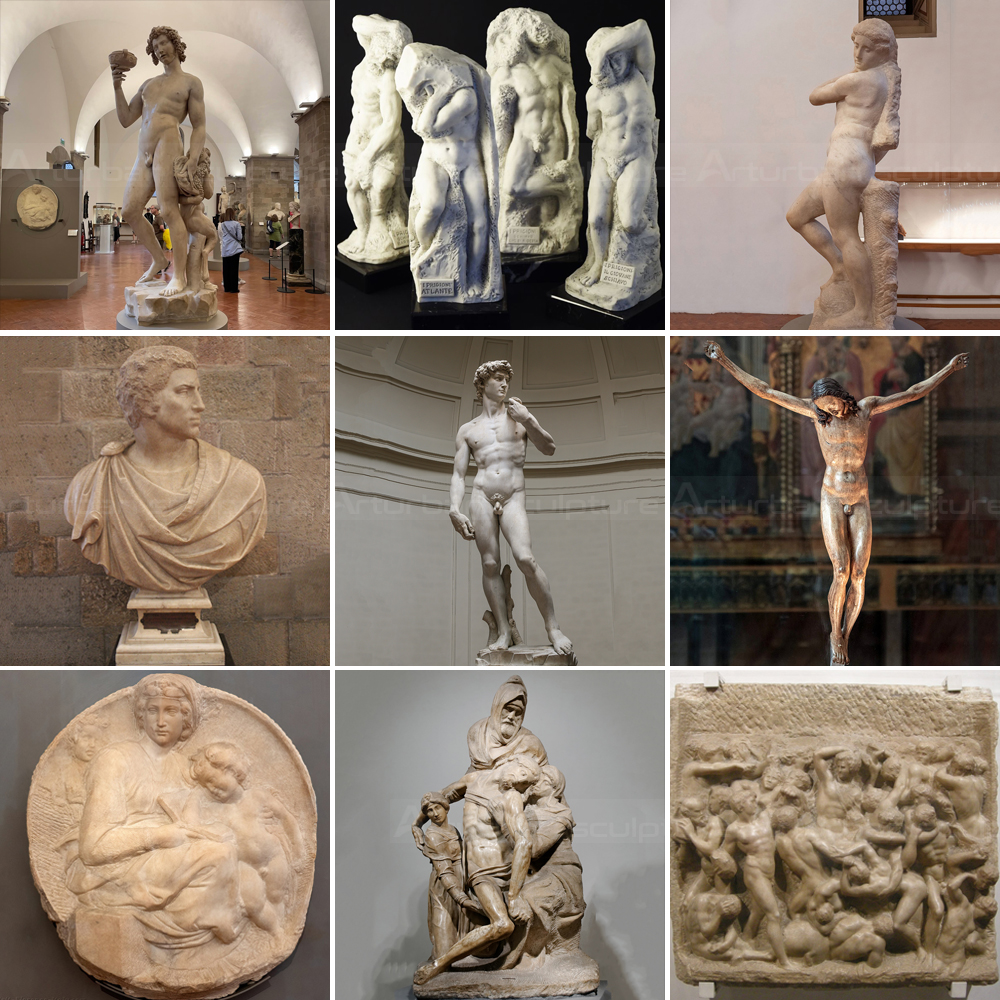
Florence houses numerous important sculptures by Michelangelo, documenting his development from his early studies of classical art to his mature works such as David and the Medici Tomb Sculpture. These sculptures are distributed throughout the Accademia Gallery, the Medici Chapel, the Bargello Museum, and other locations, encompassing themes of religious figures, mythological figures, and historical figures. This article will introduce the major Michelangelo Statue in Florence, providing information on their basic characteristics, appearance, and related history.
Introduction to Michelangelo
Michelangelo Buonarroti (1475–1564) was one of the most outstanding artists of the Italian Renaissance, often grouped with Leonardo da Vinci and Raphael as one of the “Three Masters of the Renaissance.” He excelled in sculpture, painting, and architecture, with his marble sculptures having a profound influence on the development of Western art.
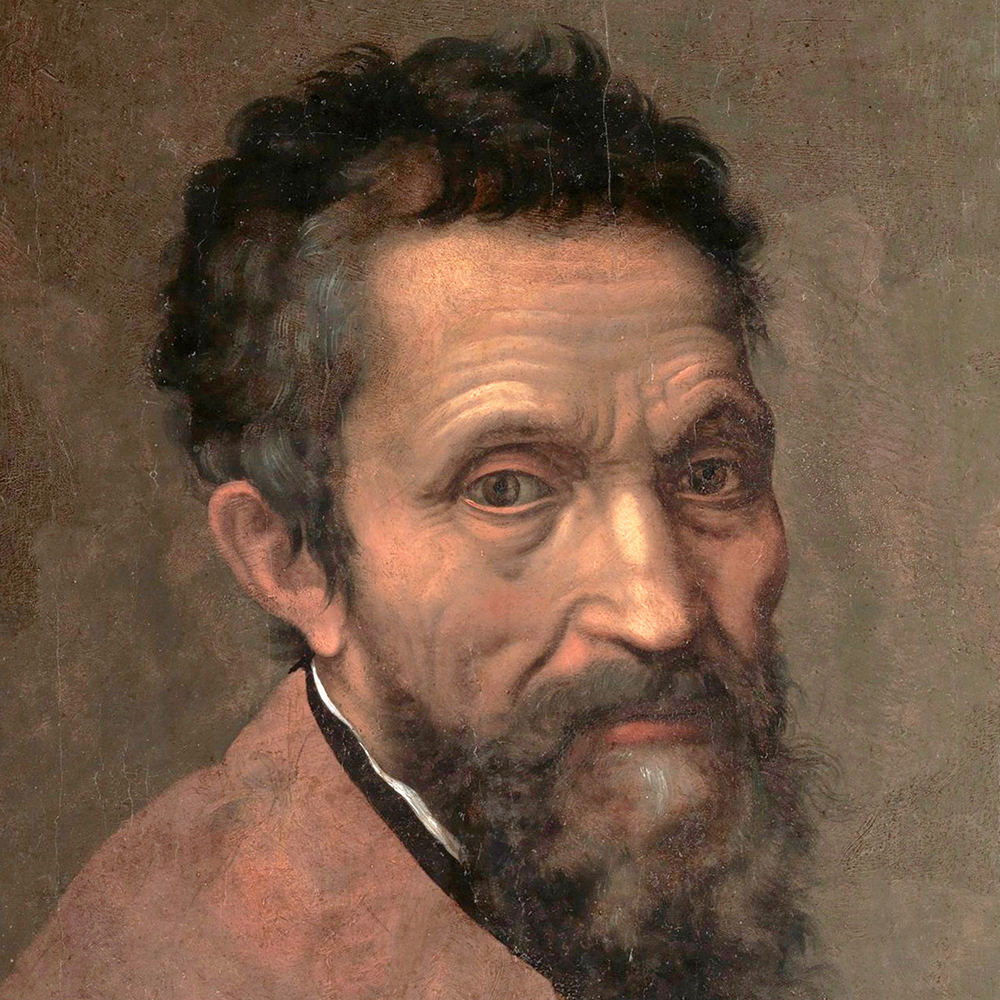
Michelangelo’s artistic career was closely intertwined with Florence. As a young man, he came to Florence to study art, receiving support from the Medici family. Here, he was exposed to ancient Greek and Roman art, deeply studying human anatomy, and gradually developing a sculptural style that emphasized power, proportion, and spiritual expression.
Florence preserves many important works by Michelangelo, including David, the Dawn, Evening, Day, and Night groups in the Medici Chapel, The Four Prisoners, and Florentine Pietà. These works showcase his exploration of the ideal human form from his youth to his later reflections on life, faith, and time.
Below are some of the most representative Michelangelo Statues in Florence.
Michelangelo David Statue
Basic Information
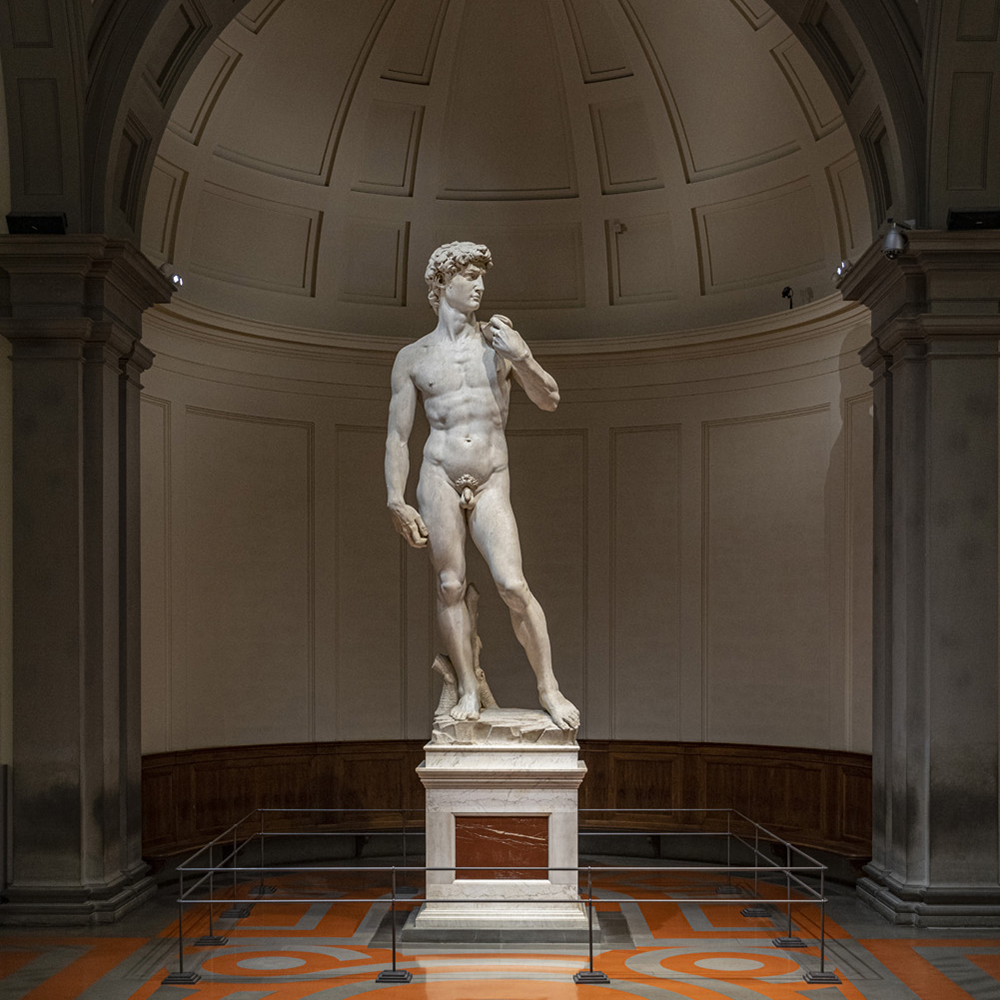
- Name: David
- Creation Time: 1501–1504
- Material: Carrara Marble
- Height: About 5.17 meters
- Style: Renaissance Sculpture
- Location: Galleria dell’Accademia, Florence, Italy
- Theme: David from the Bible before fighting Goliath
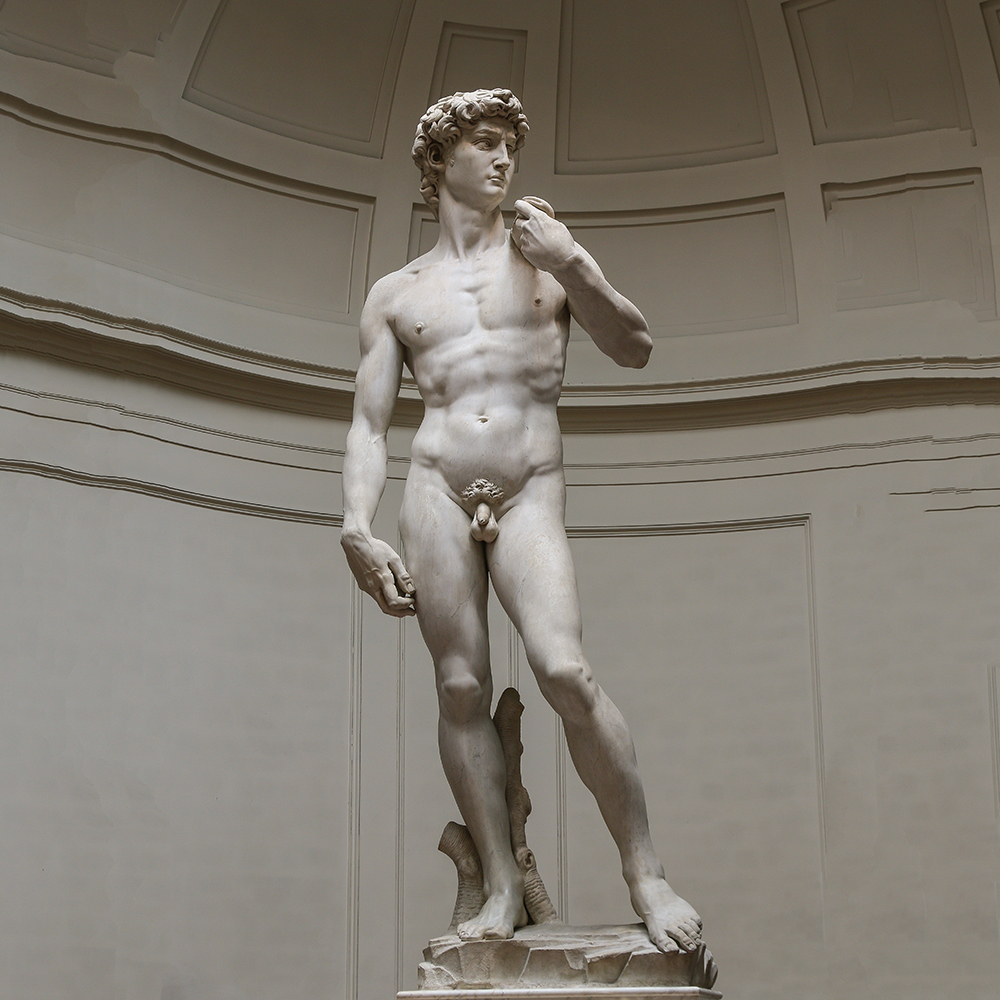
David is one of Michelangelo’s most representative sculptures and the most important cultural symbol of Florence. Carved from a single block of Carrara marble, this Michelangelo Statue in Florence demonstrates Michelangelo’s precise mastery of human anatomy, proportion, and dynamic expression.
Why is Michelangelo’s statue of David so famous?
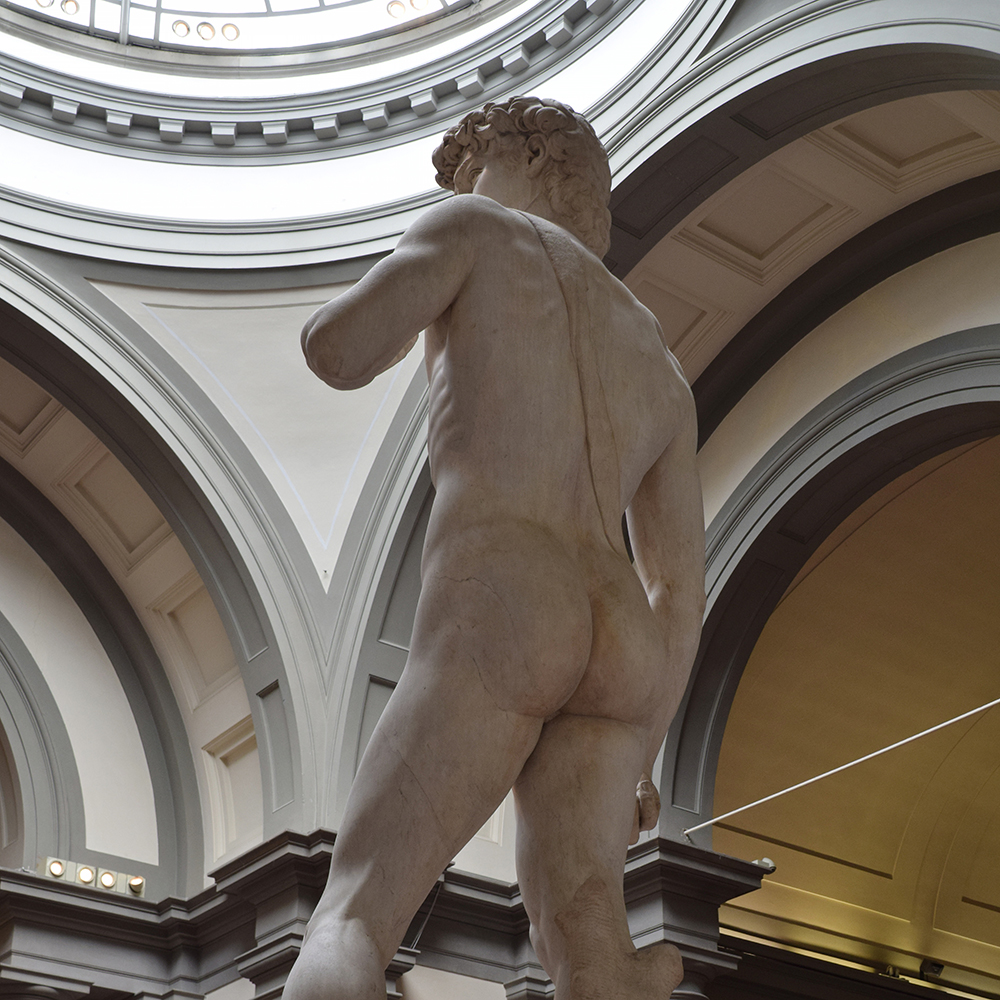
The most distinctive feature of Michelangelo’s David is that he chose to depict the moment before the battle, rather than the traditional scene of David after defeating Goliath. David’s expression is resolute, his body tense, as if he is contemplating his next move. This portrayal of his psychological state allows the work to not only showcase human strength but also the figure’s wisdom and courage.
What is David holding in his left hand?
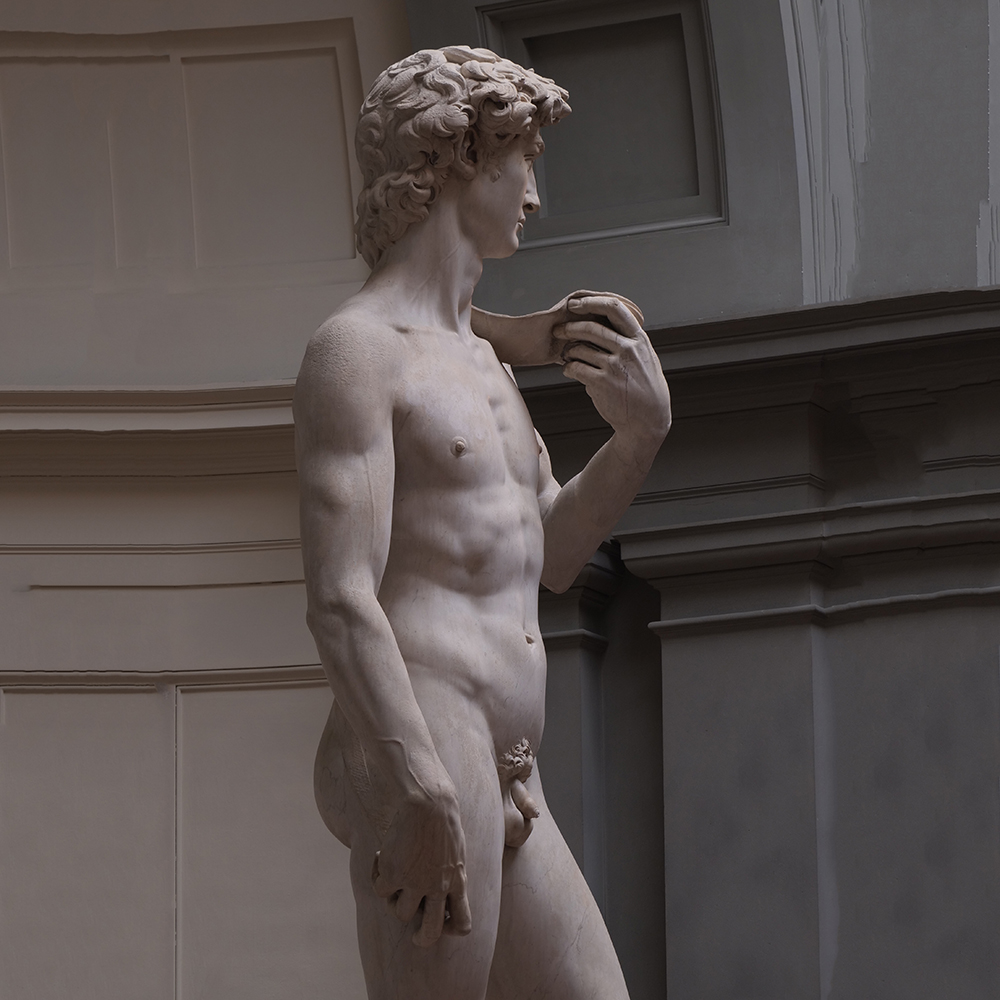
David’s left hand holds a sling.
According to the Bible, David used a sling and stones to defeat the giant Goliath. Michelangelo did not directly depict the battle itself, but rather had David hold the sling before the fight, hinting at the impending challenge.
Is the statue of David anatomically correct?
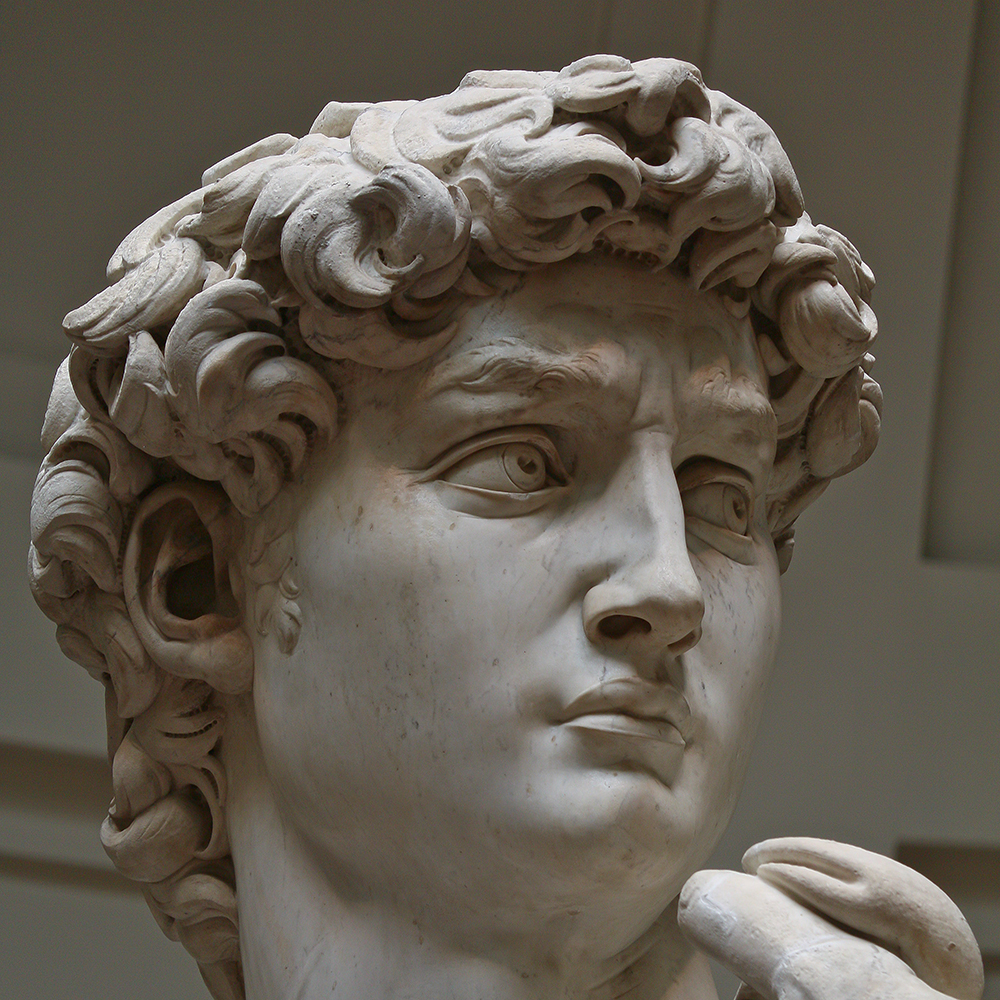
The David as a whole conforms to human anatomy; the muscles, bones, and posture were all the result of Michelangelo’s in-depth study. However, it is not entirely life-size; for example, the head and hands are slightly larger. This was to accommodate the visual effect of the statue being initially placed at a high position for viewing, and also to enhance the figure’s sense of power.
Michelangelo Day Night Dawn Dusk Statue in Florence
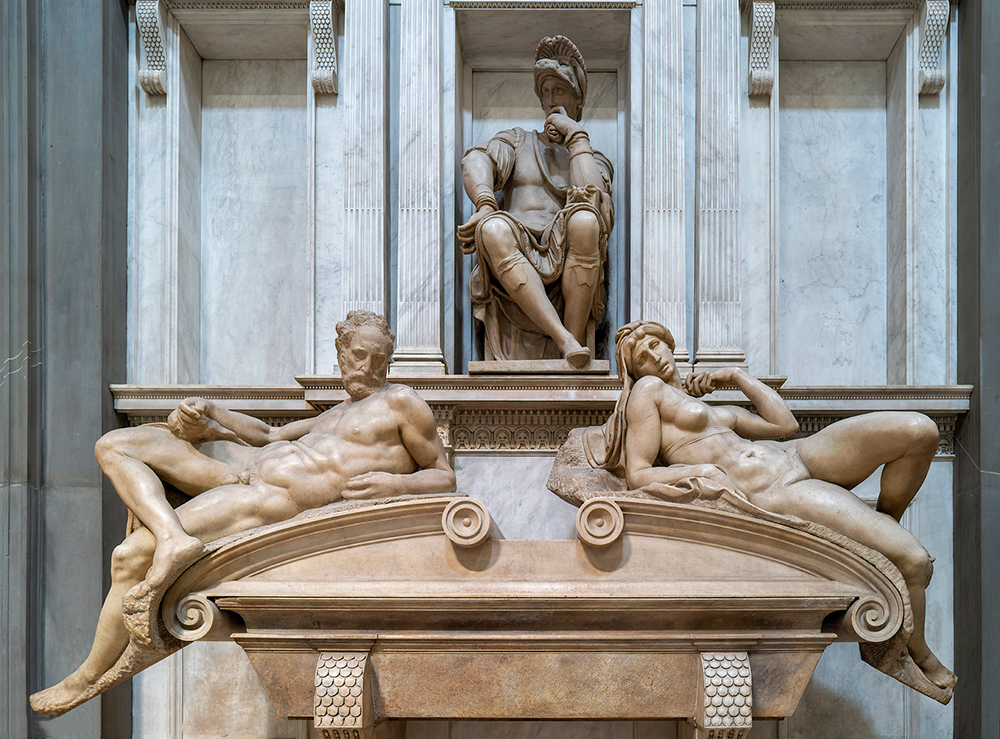
Basic Information
- Name: Day, Night, Dawn and Dusk (The Allegories of Time)
- Creation Time: 1524–1534
- Material: Carrara Marble
- Style: Renaissance Sculpture
- Location: Sagrestia Nuova (New Sacristy), Medici Chapels, Florence, Italy
- Commission: Tombs of Giuliano de’ Medici and Lorenzo de’ Medici
- Theme: The Passage of Time, Life and Death
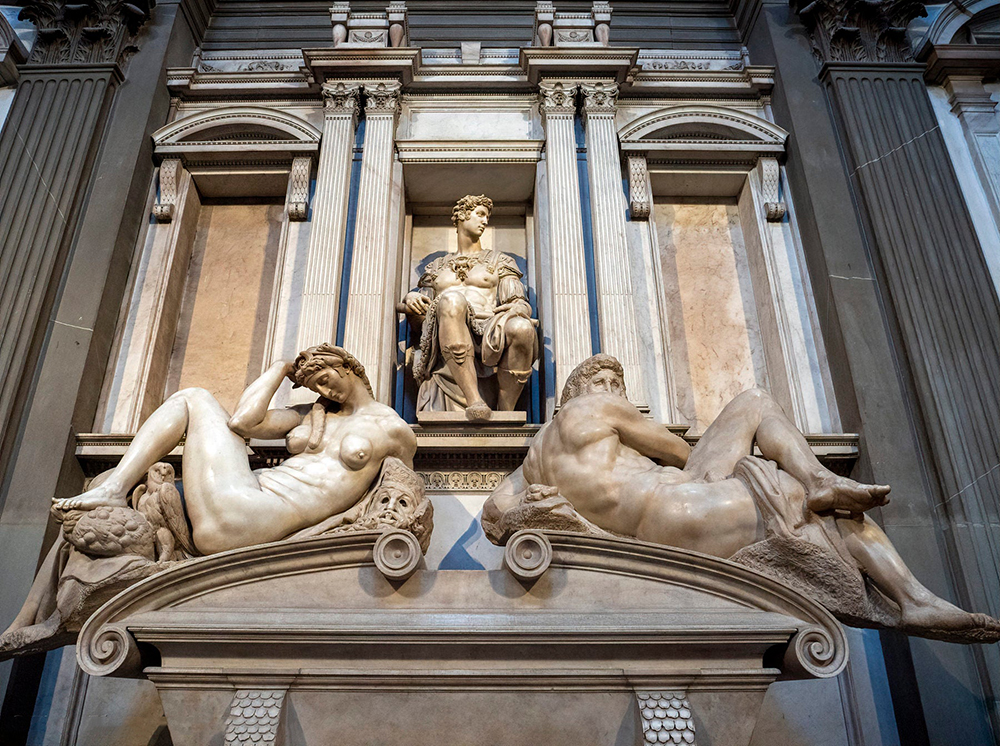
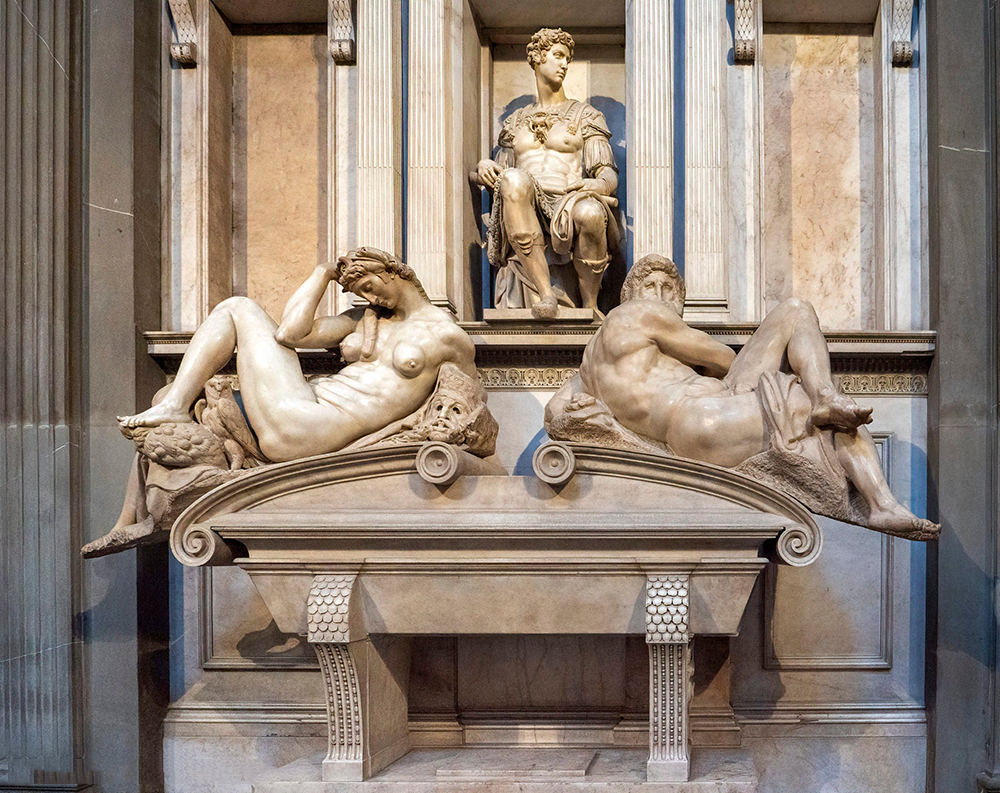
The Michelangelo Day Night Dawn Dusk is a famous group of sculptures created by Michelangelo for the Medici family tombs in Florence, also known as The Allegories of Time. These four works are located in the New Sacristy of the Medici Chapels, adorning the tombstones of Giuliano de’ Medici and Lorenzo de’ Medici.
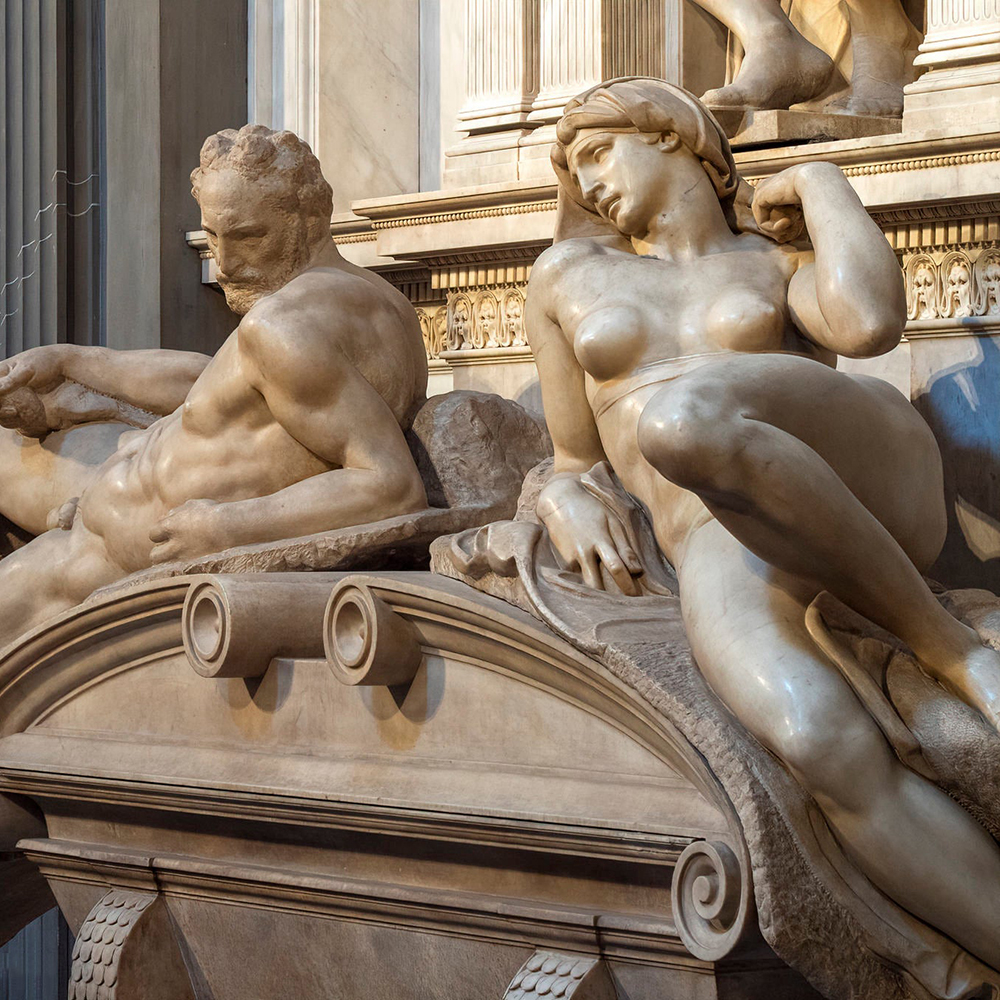
Michelangelo was originally commissioned by the Medici family to design memorial tombs for these two family members. In addition to the central statue of the tomb’s occupant, he also created four human sculptures symbolizing the passage of time, representing the cycle of “dawn, dusk, day, and night” from the beginning to the end of life.
The Four Sculptures of Michelangelo Day Night Dawn Dusk
Day (Il Giorno)
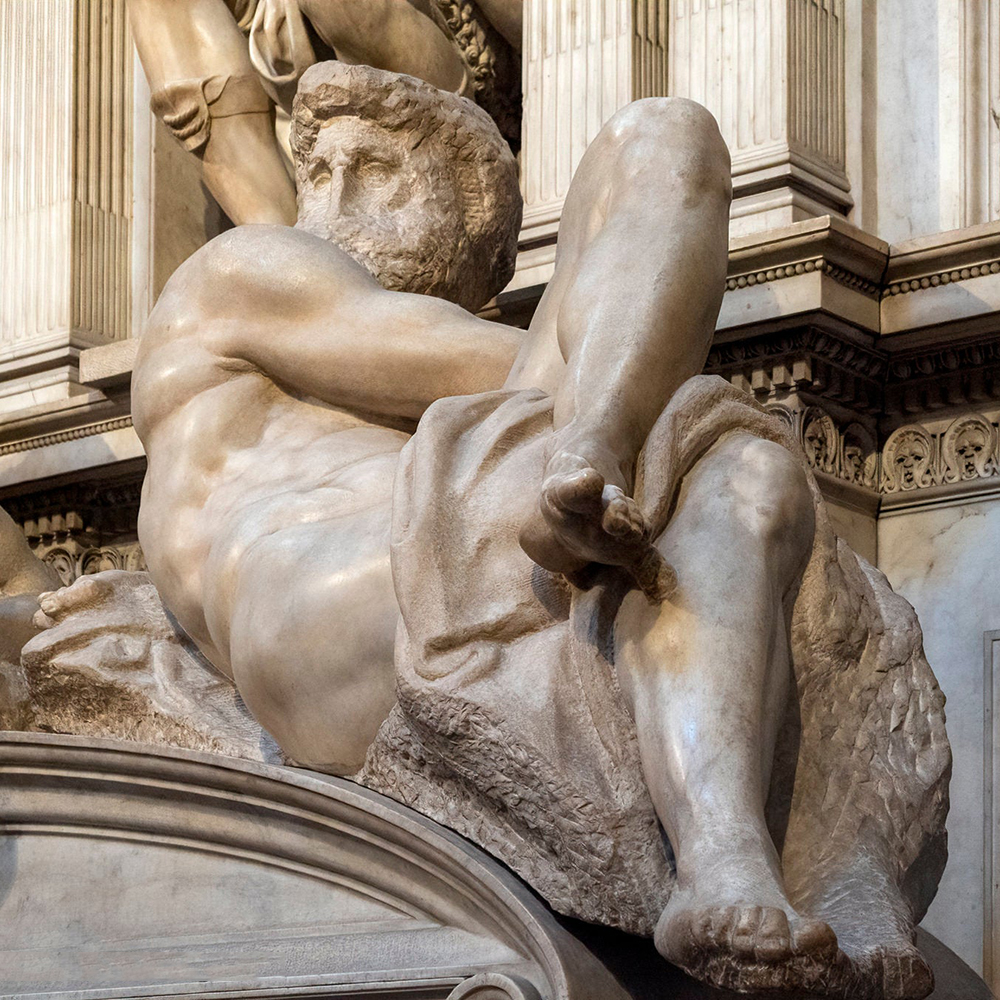
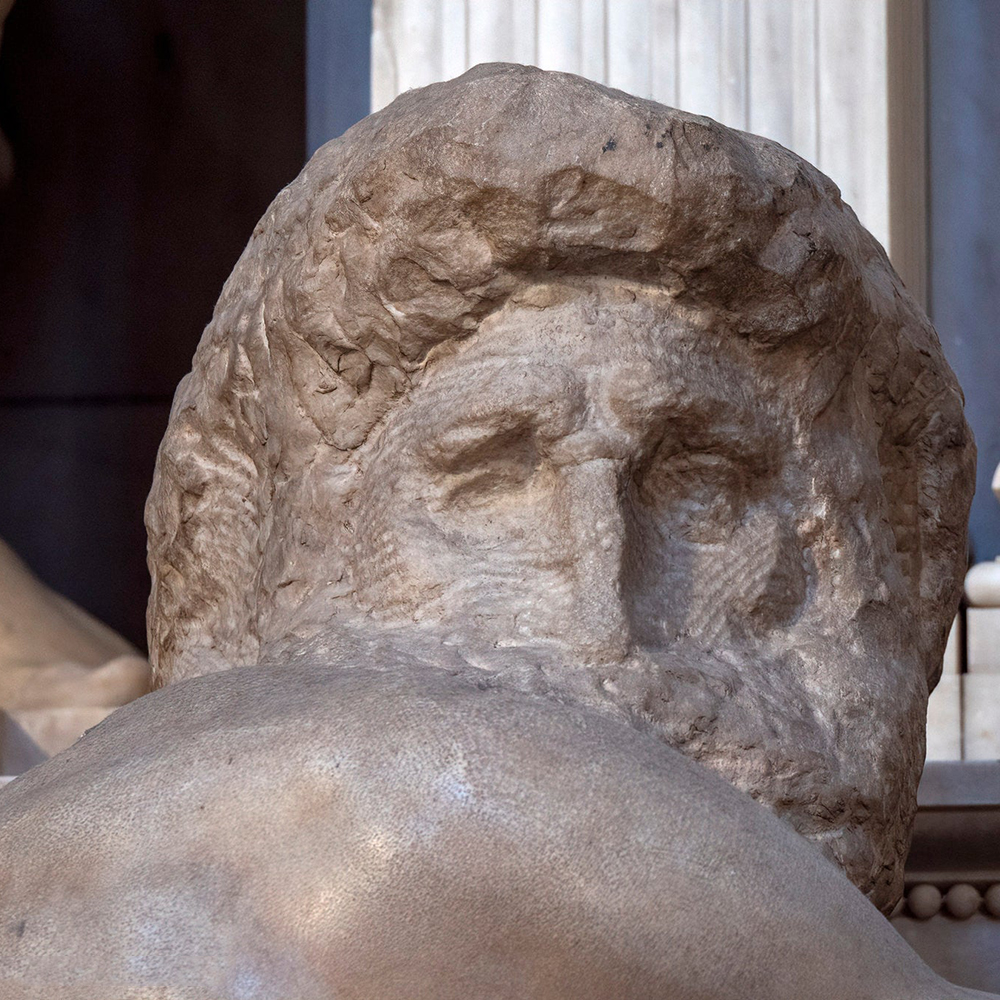
Located beside the tomb of Giuliano de’ Medici, The Sun depicts the power of daylight through a strong, male nude figure. The figure is full of tension, and although the head is not fully completed, it still demonstrates Michelangelo’s mastery of human strength and dynamic structure.
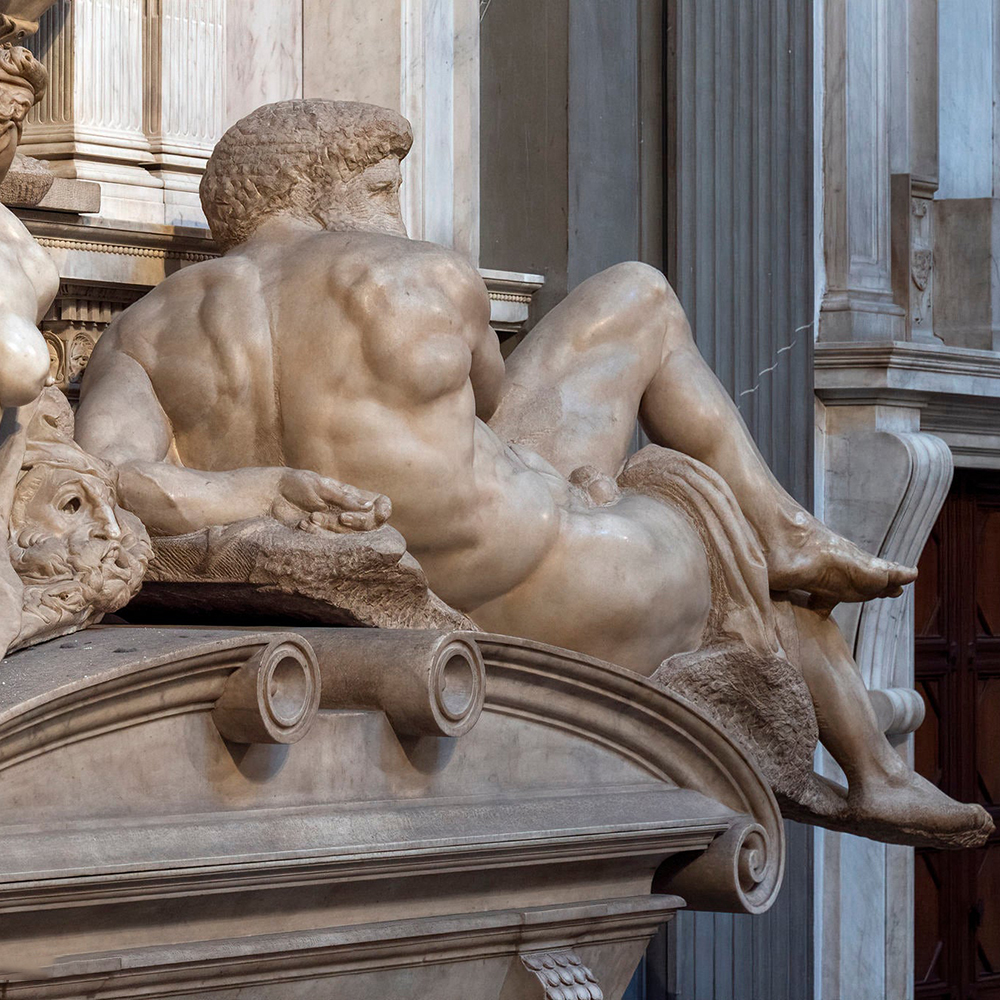
It symbolizes:
- Vitality
- Action
- Human strength
Night (La Notte)
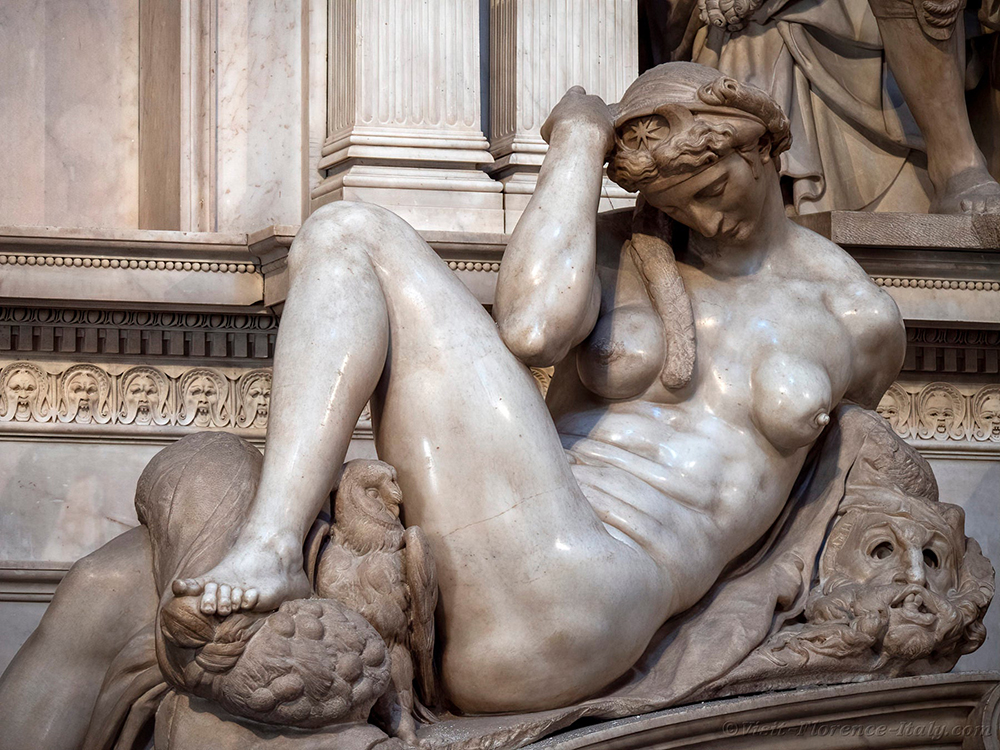
“Night” is the most famous of the four works, located on the other side of Giuliano’s tomb. The sculpture depicts a sleeping woman, her eyes closed in rest, her body displaying soft yet powerful curves.
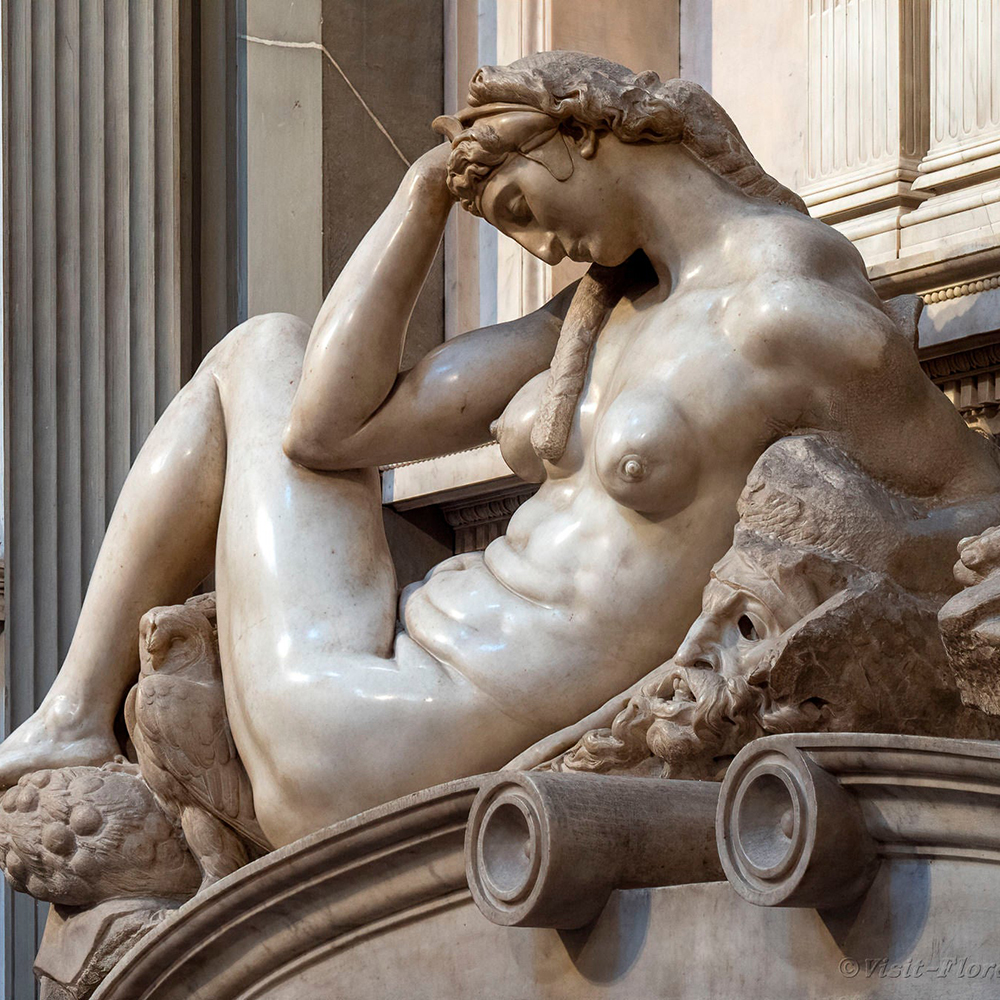
Through the state of sleep, Michelangelo connects night with rest, death, and the unknown.
It symbolizes:
- Sleep
- Tranquility
- Death and the unknown
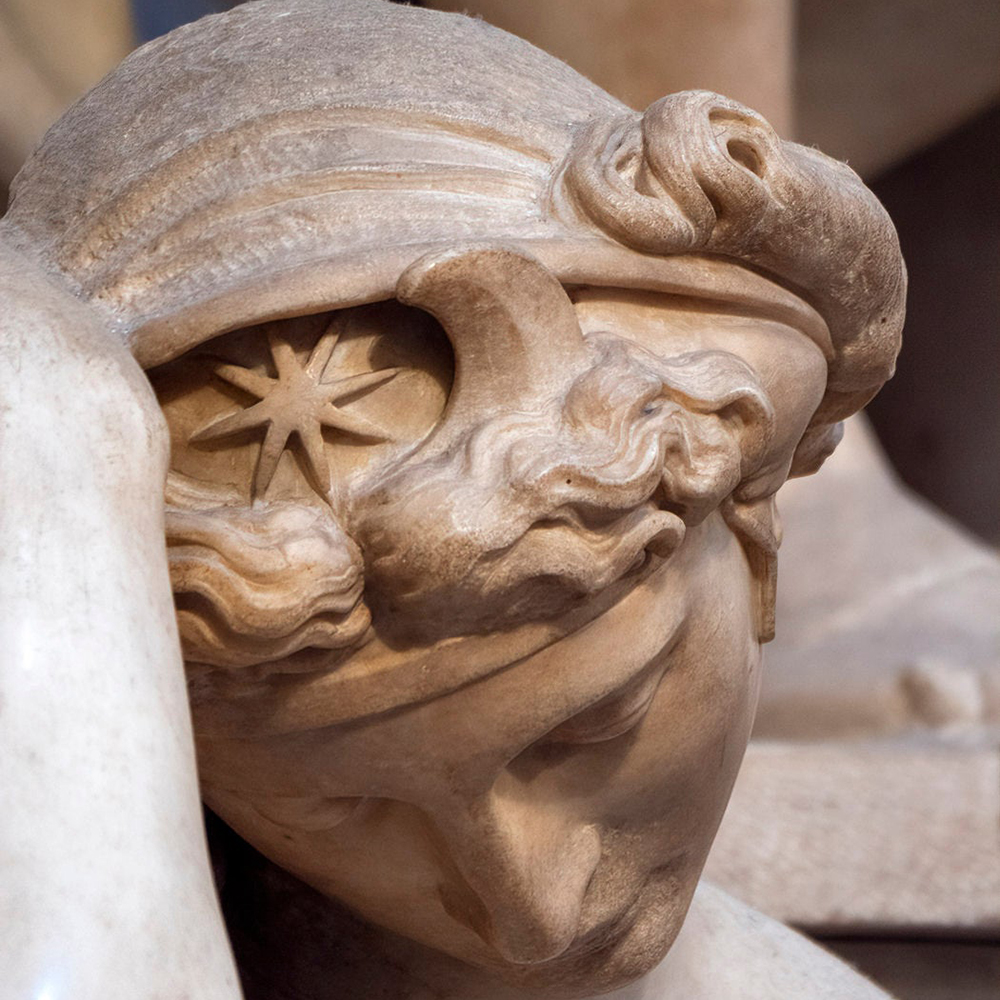
“Night” is also one of Michelangelo’s most representative female sculptures from his later period.
Dawn (L’Aurora)
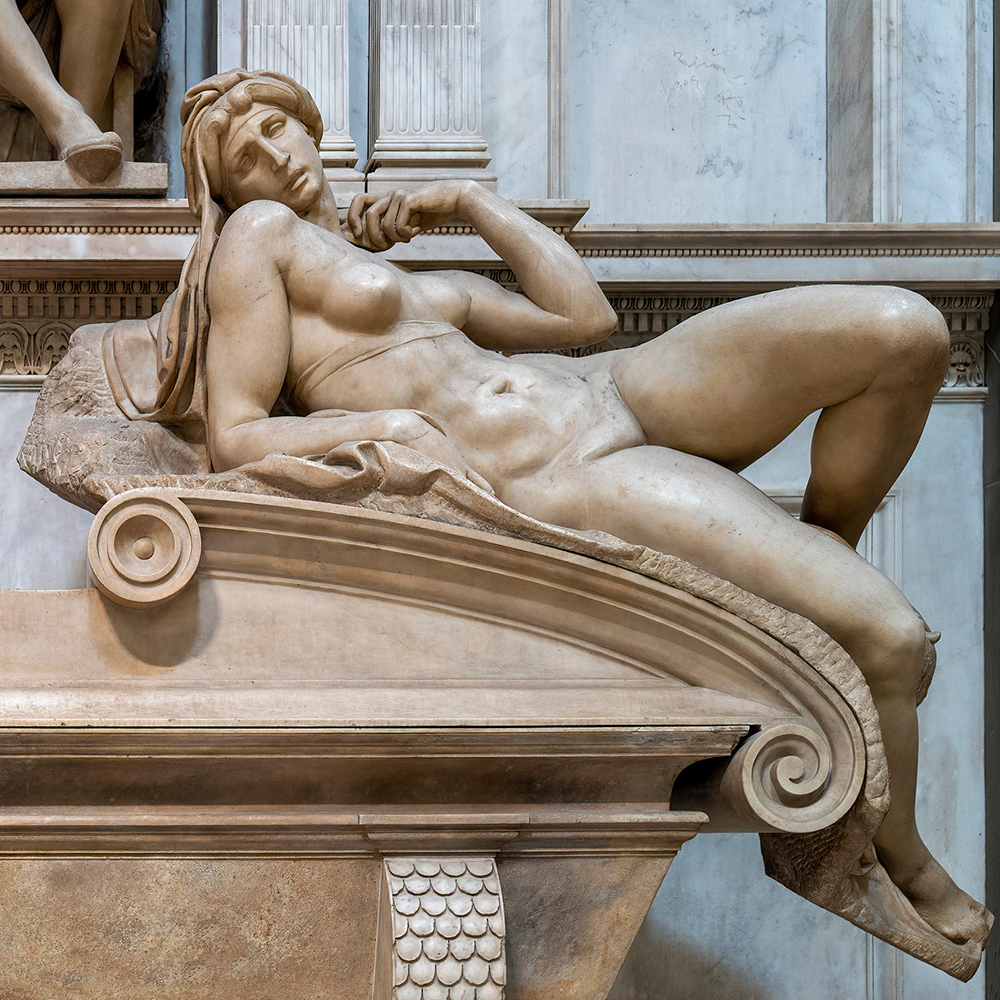
“Dawn,” located beside the tomb of Lorenzo de’ Medici, depicts a woman gradually awakening from slumber. The figure’s posture has a transitional quality, as if moving from darkness into light.
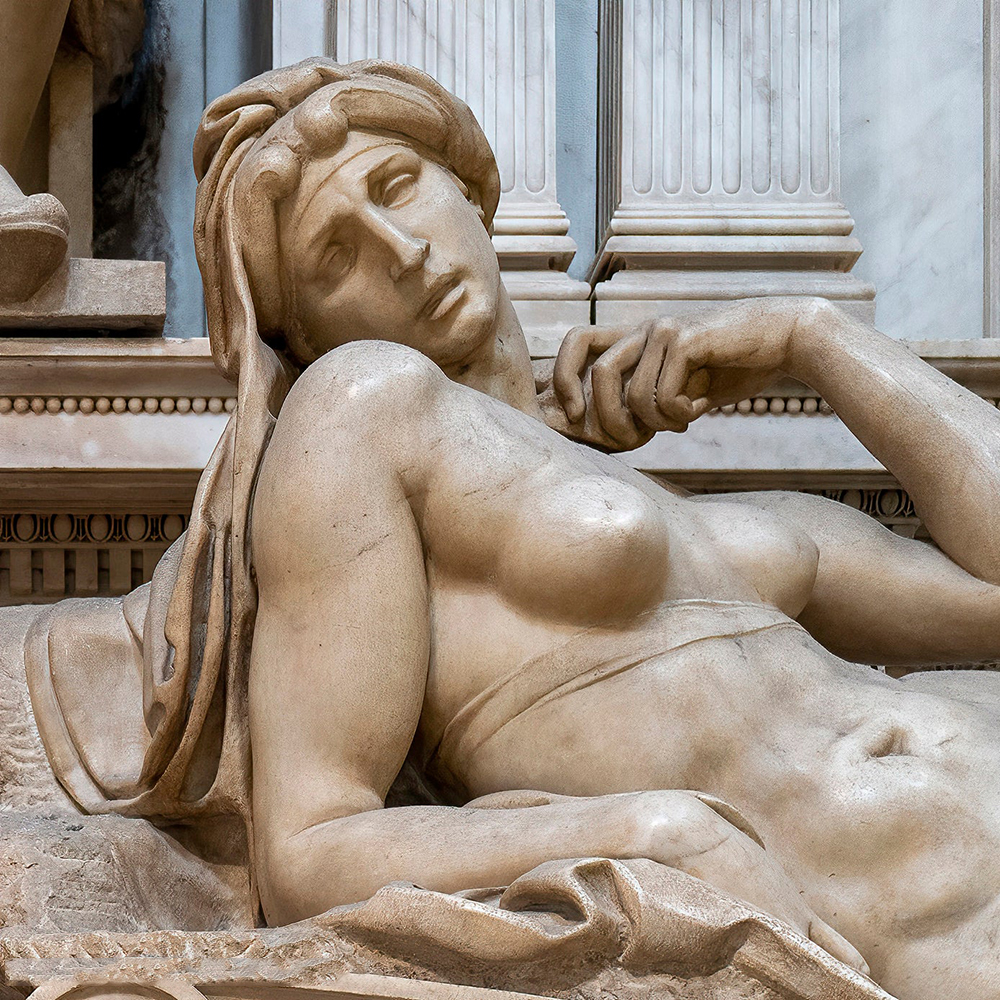
It symbolizes:
- New life
- Awakening
- The beginning of life
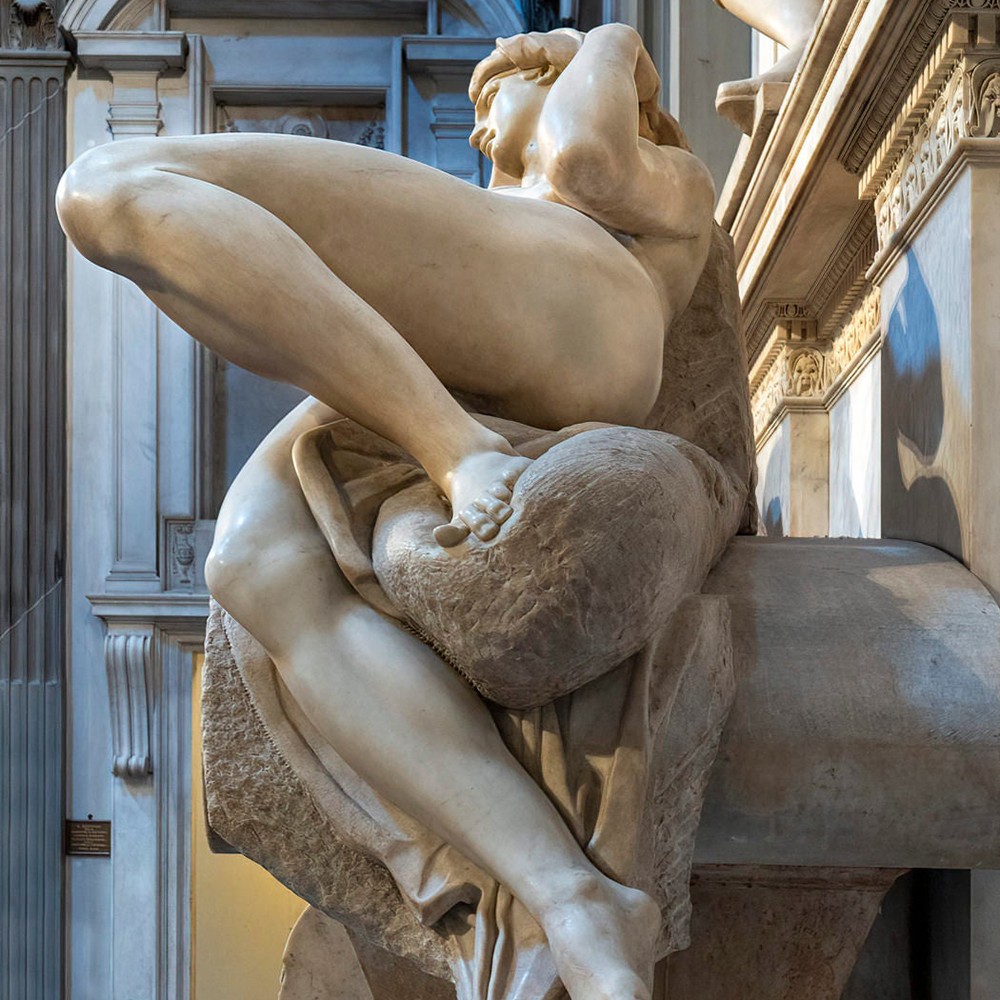
Dusk (Il Crepuscolo)
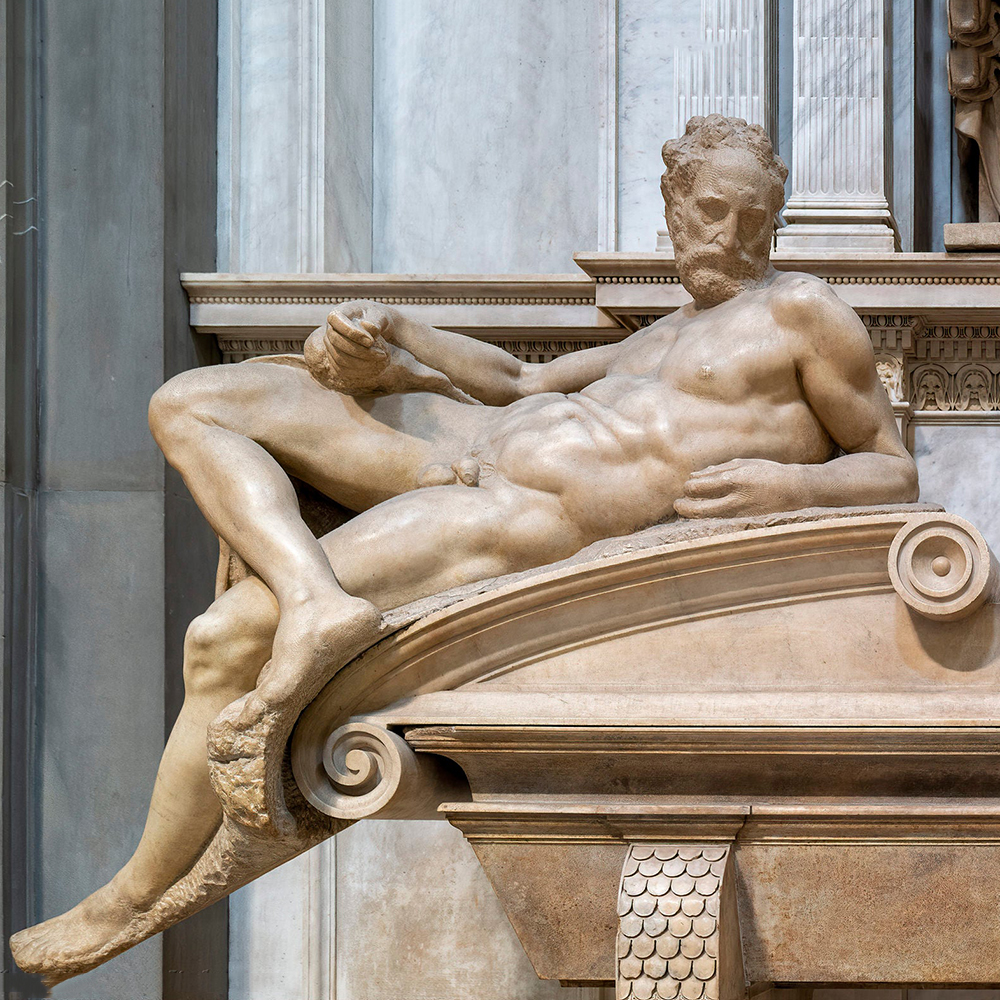
“Dusk,” corresponding to “Dawn,” is located on the other side of Lorenzo’s tomb. The work depicts a serene and relaxed male figure, representing the tranquil phase at the end of the day.
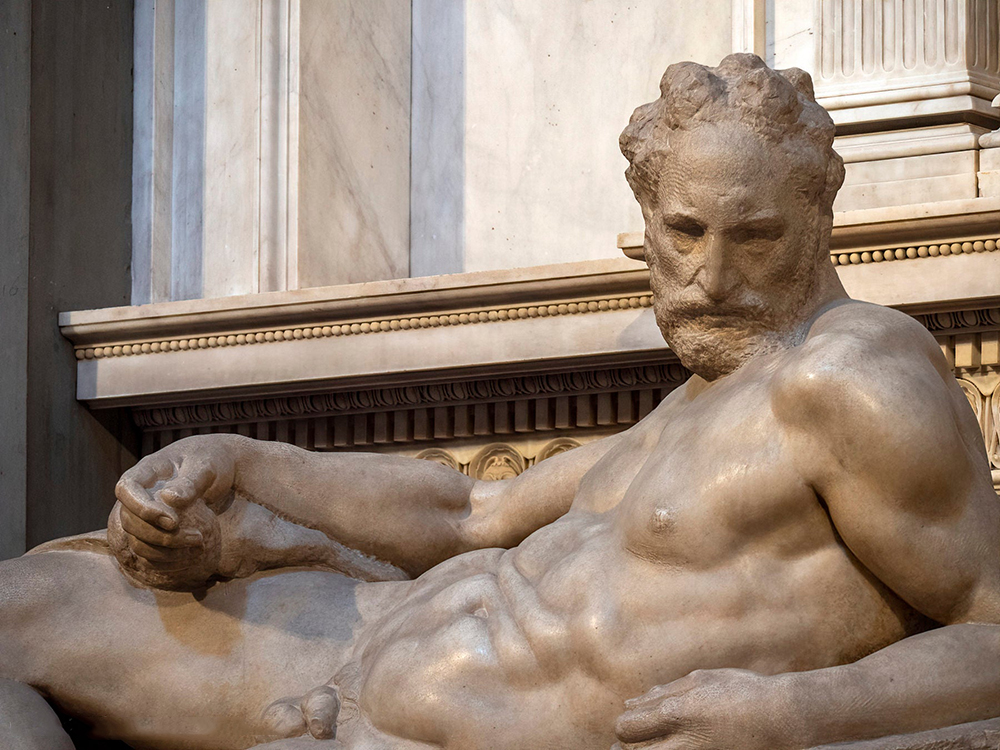
It symbolizes:
- Decline
- Contemplation
- Life nearing its end
Why did Michelangelo hide from the Medicis?
Michelangelo had a complex relationship with the Medici family. In his early years, the Medici family provided crucial support for his artistic development, enabling him to access classical art in Florence and mature into a distinguished sculptor. However, when the anti-Medic movement erupted in Florence in 1527, Michelangelo chose to support the Republic and participated in the design of the city’s defenses.
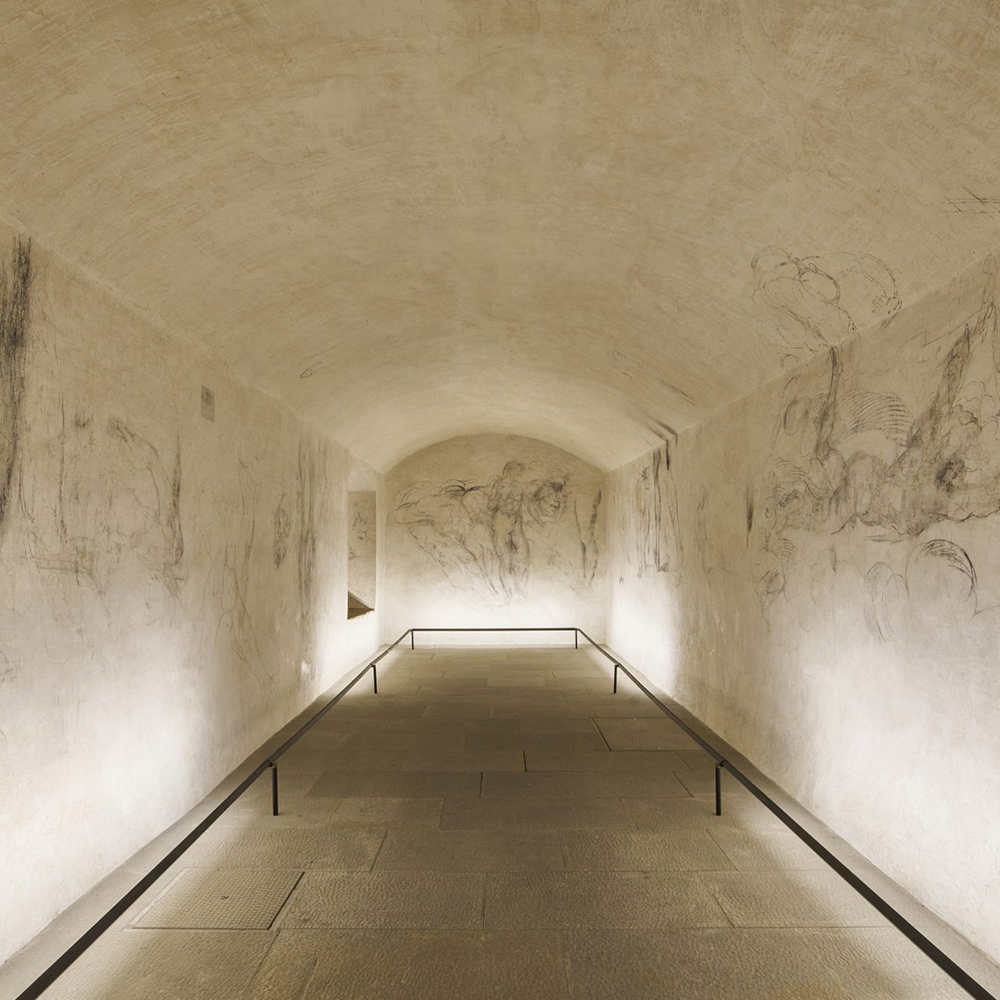
After the Medici family regained control of Florence in 1529, Michelangelo, fearing punishment for his support of the republicans, went into hiding. Later, through the mediation of Pope Clement VII (a member of the Medici family), he regained trust and continued working on the Medici tomb project in the New Sacristy.
The creation of Michelangelo’s Medici Tomb Sculptures spanned this period of tension between him and the Medici family, with most of the sculptures completed after his period of hiding.
Michelangelo Prisoners Statue in Florence
Basic Information
- Name: Prisoners (also called Slaves)
- Creation Time: Around 1513–1530
- Material: Marble
- Style: Renaissance Sculpture
- Location: Galleria dell’Accademia, Florence, Italy
- Original Purpose: Designed for the Tomb of Pope Julius II
- Theme: The struggle between human spirit and physical limitations
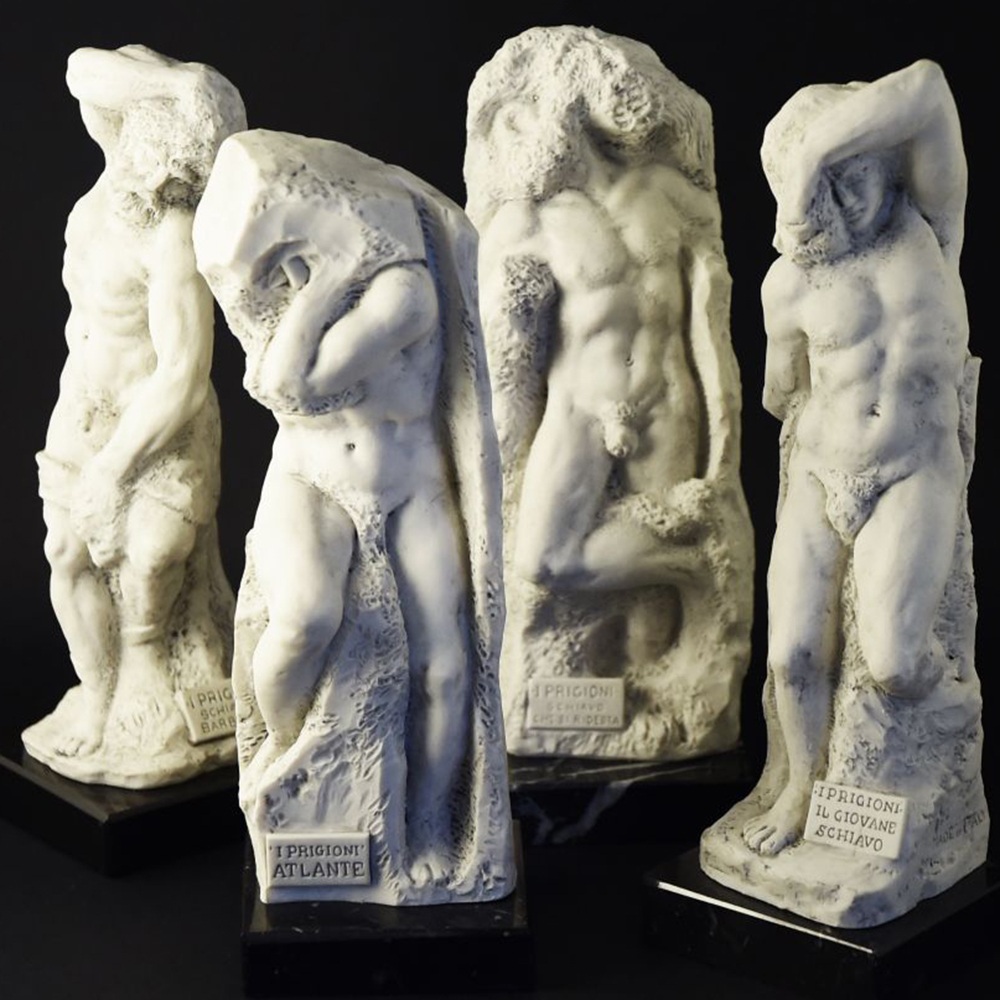
The Appearance of Michelangelo Prisoners
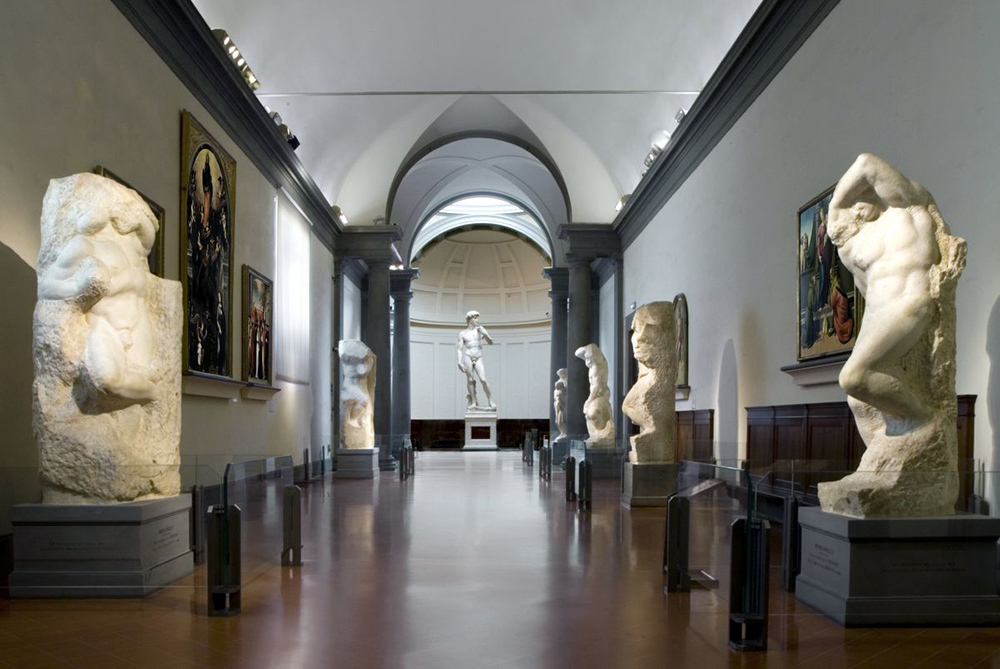
The most distinctive feature of these four sculptures is their “non-finished” state. Parts of the figures’ bodies are still surrounded by rough marble, as if struggling to break free from the stone.
Young Slave
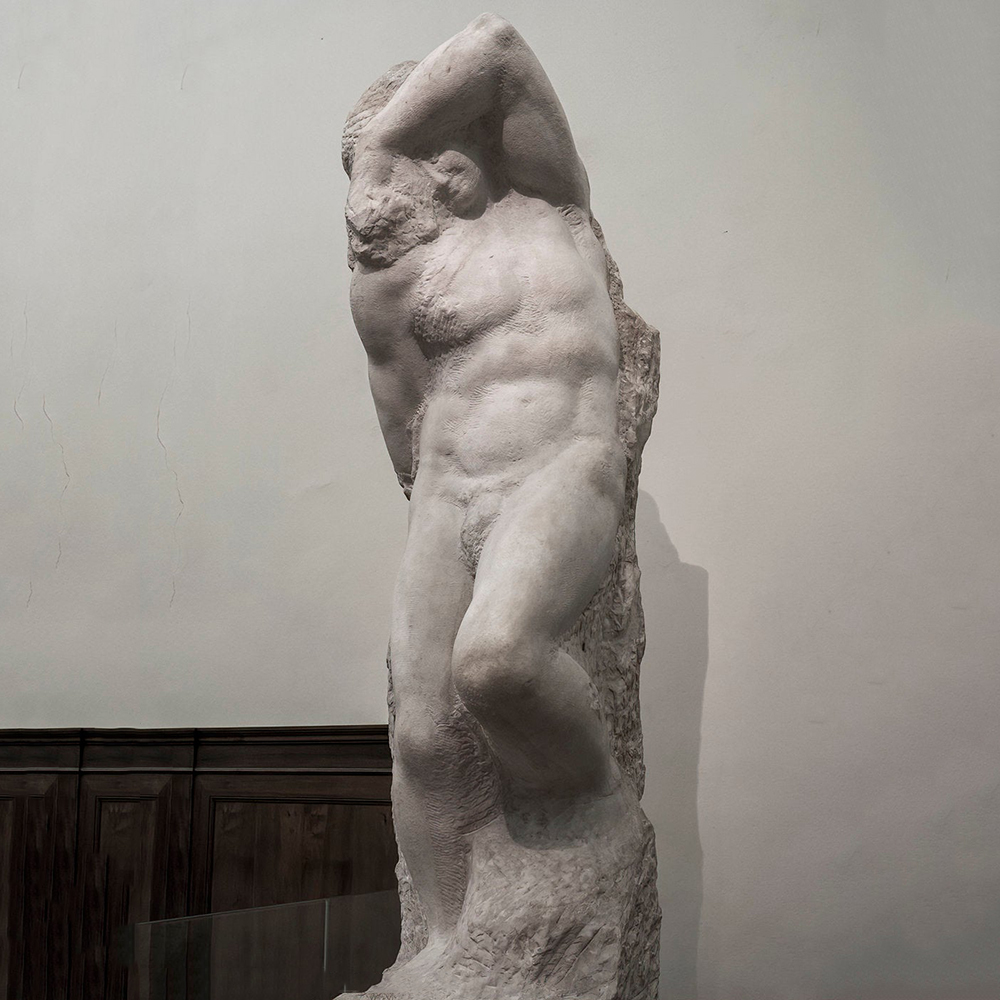
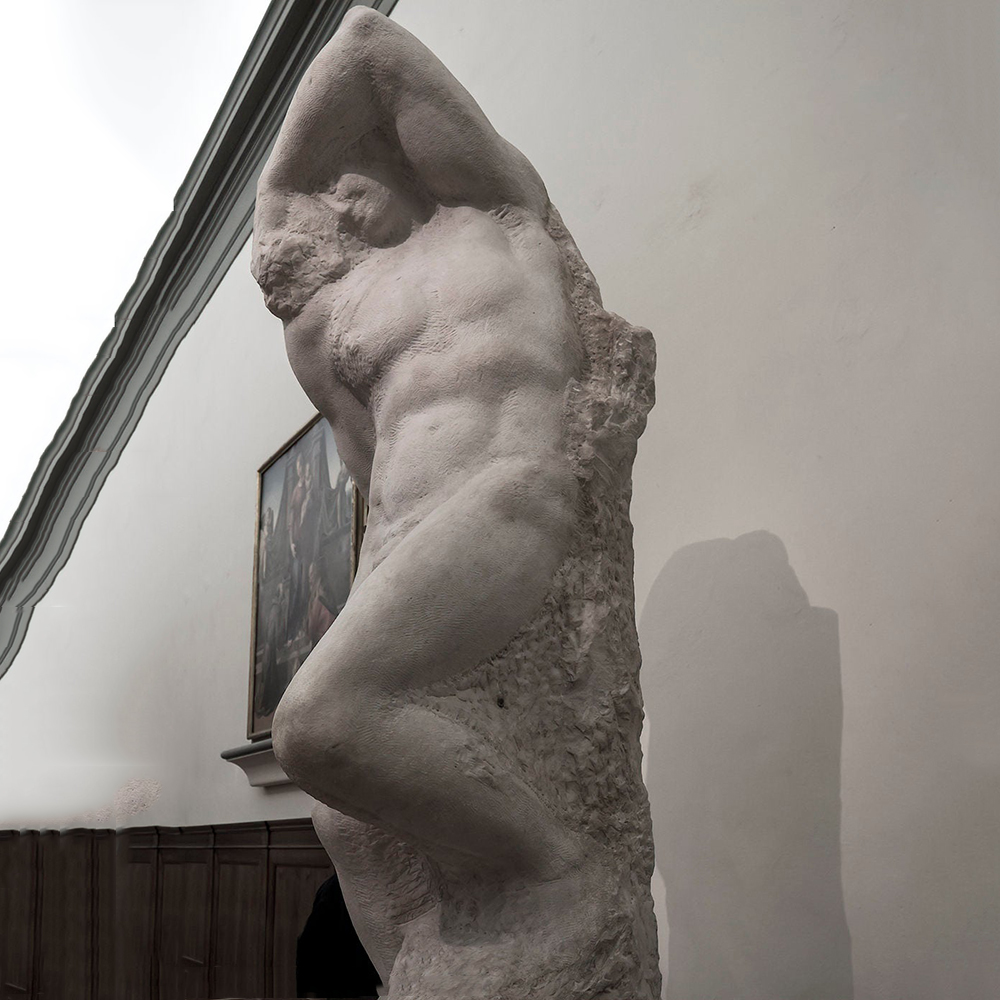
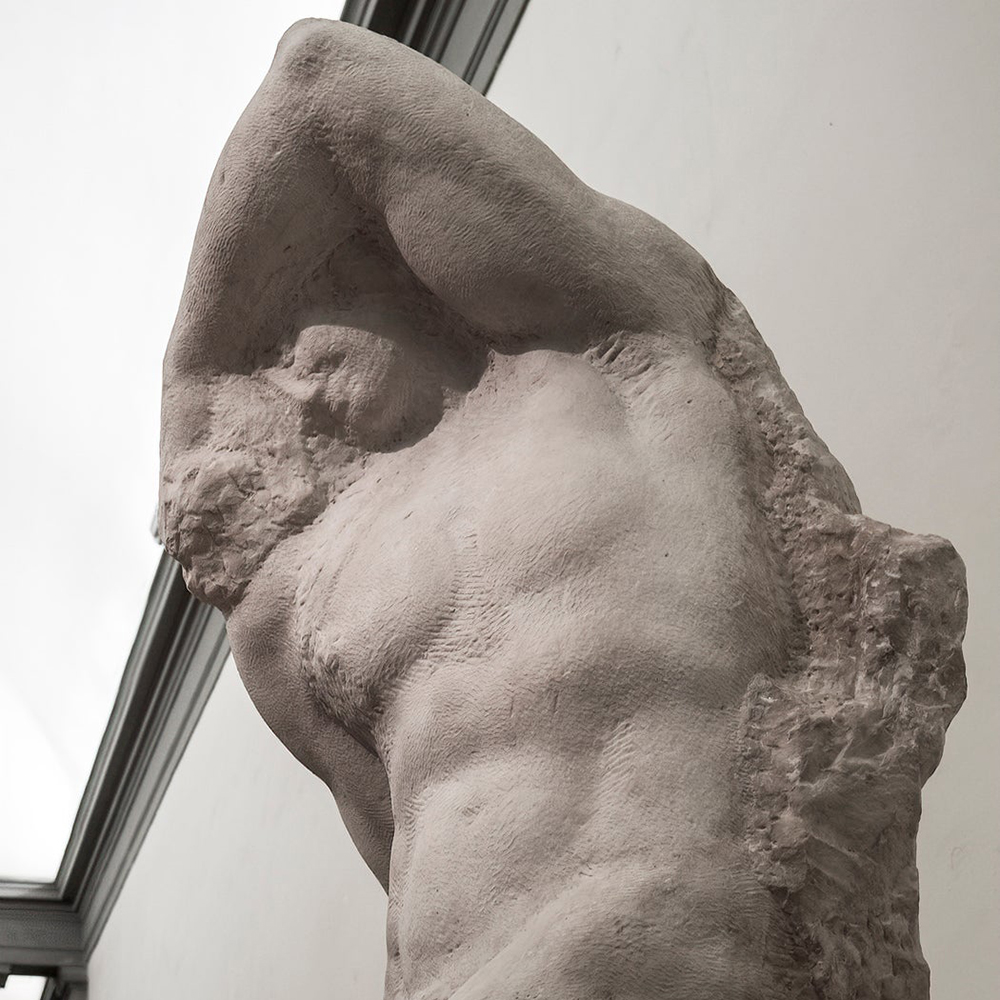
Depicts a young male figure, his body still largely covered in stone. The figure seems to be awakening from the stone, embodying a sense of life gradually emerging.
Awakening Slave
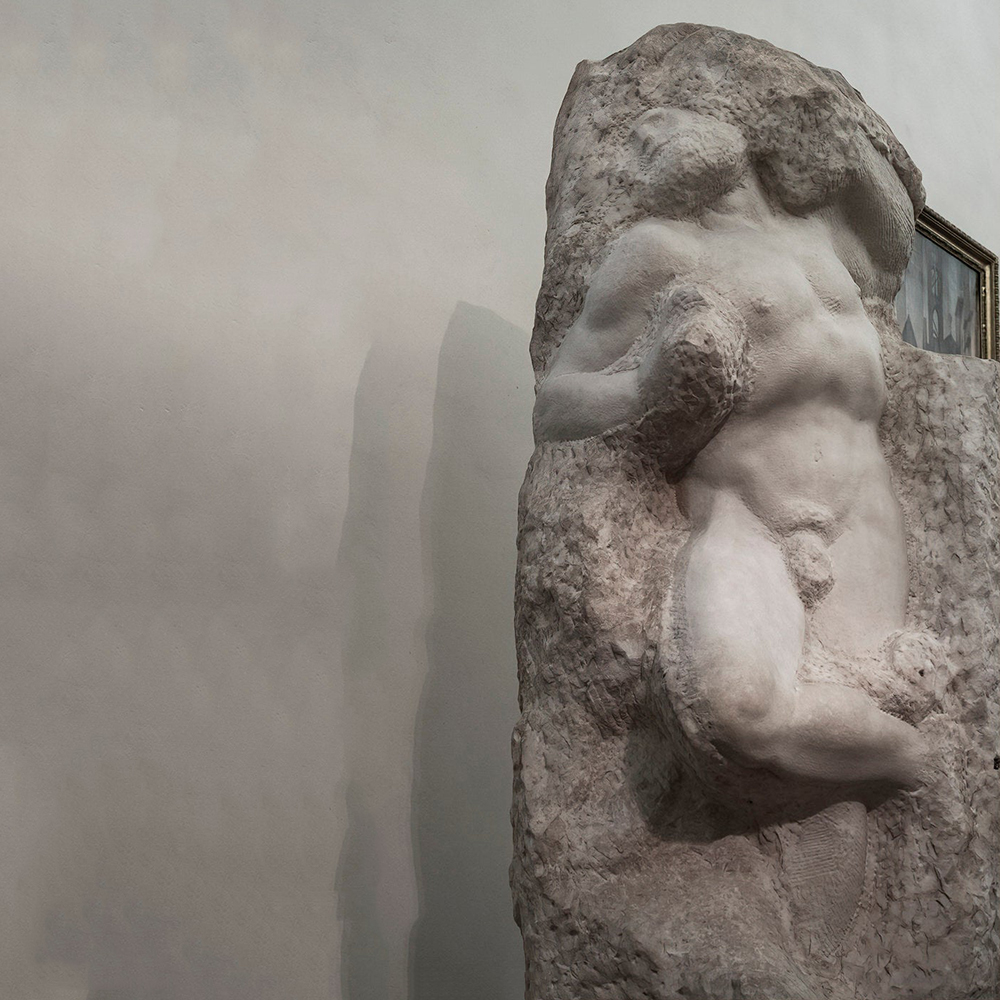
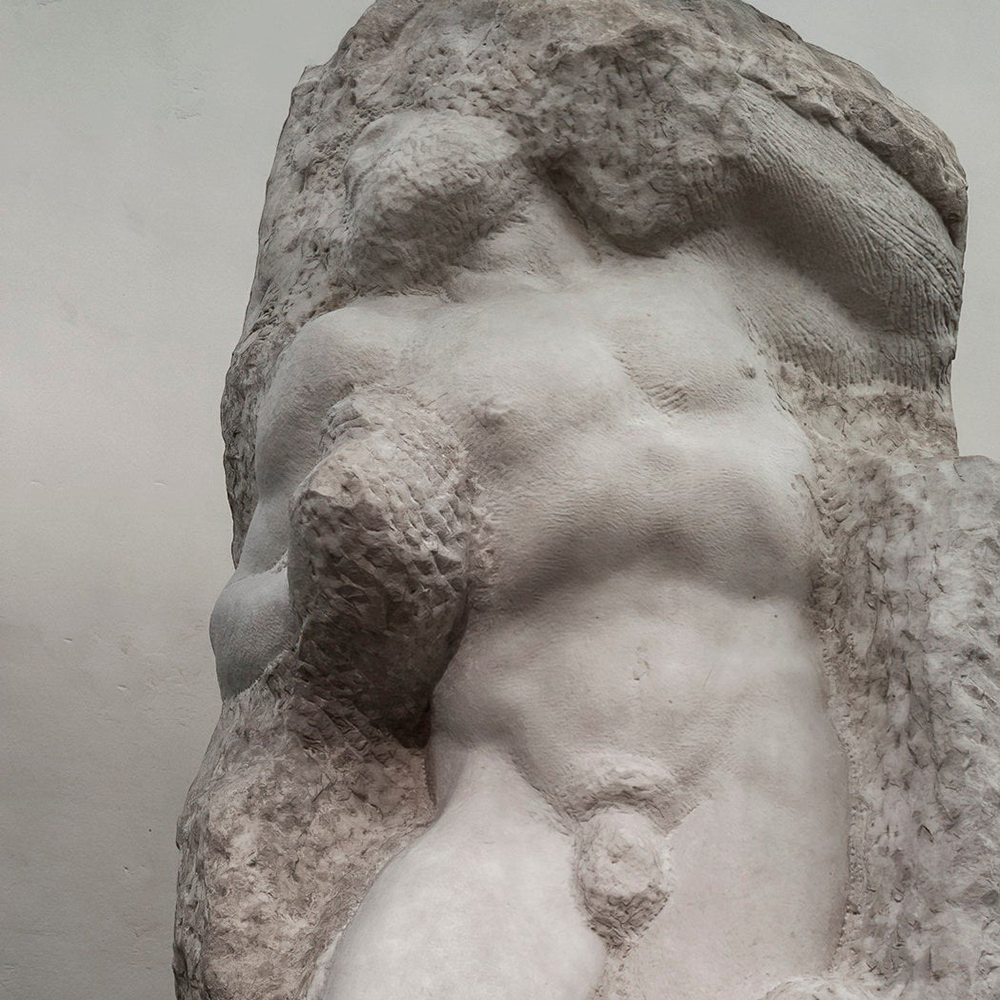
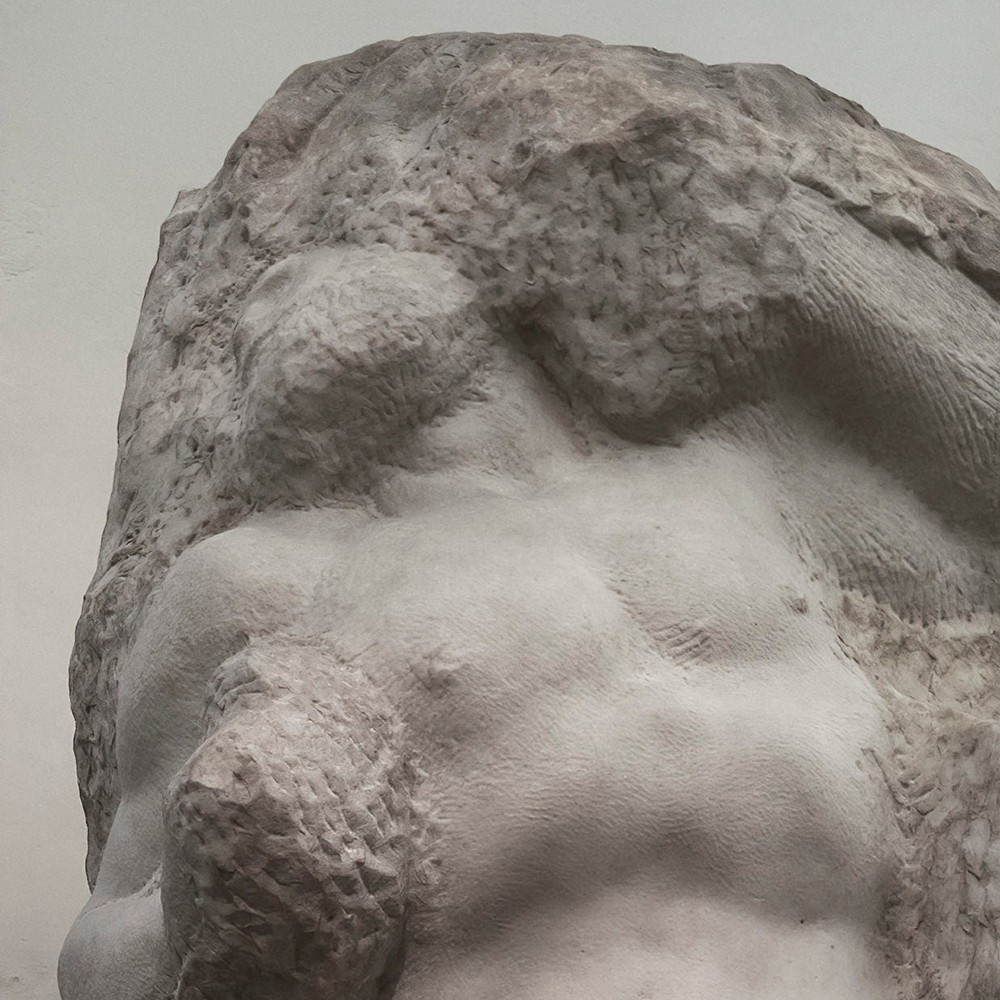
The figure struggles upwards, with a clear sense of power in the shoulders and chest, as if breaking free from constraints, expressing awakening and resistance.
Bearded Slave
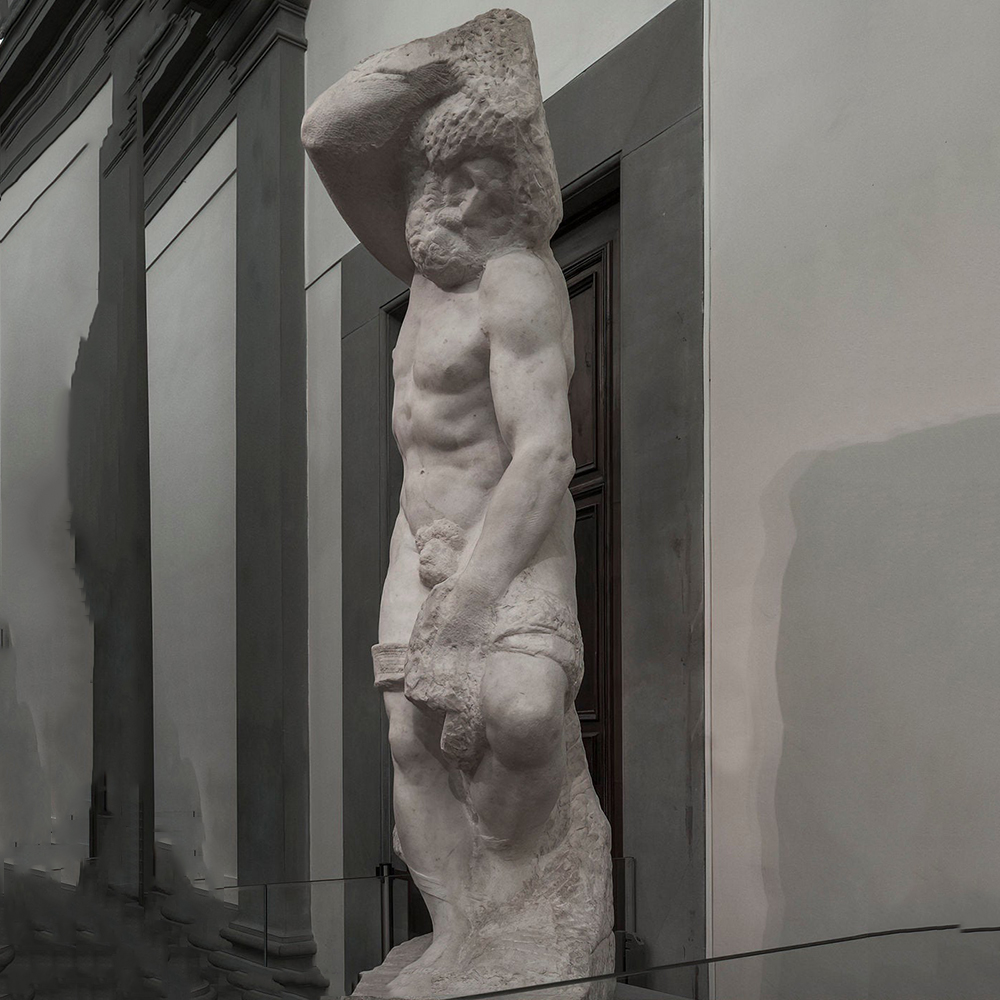
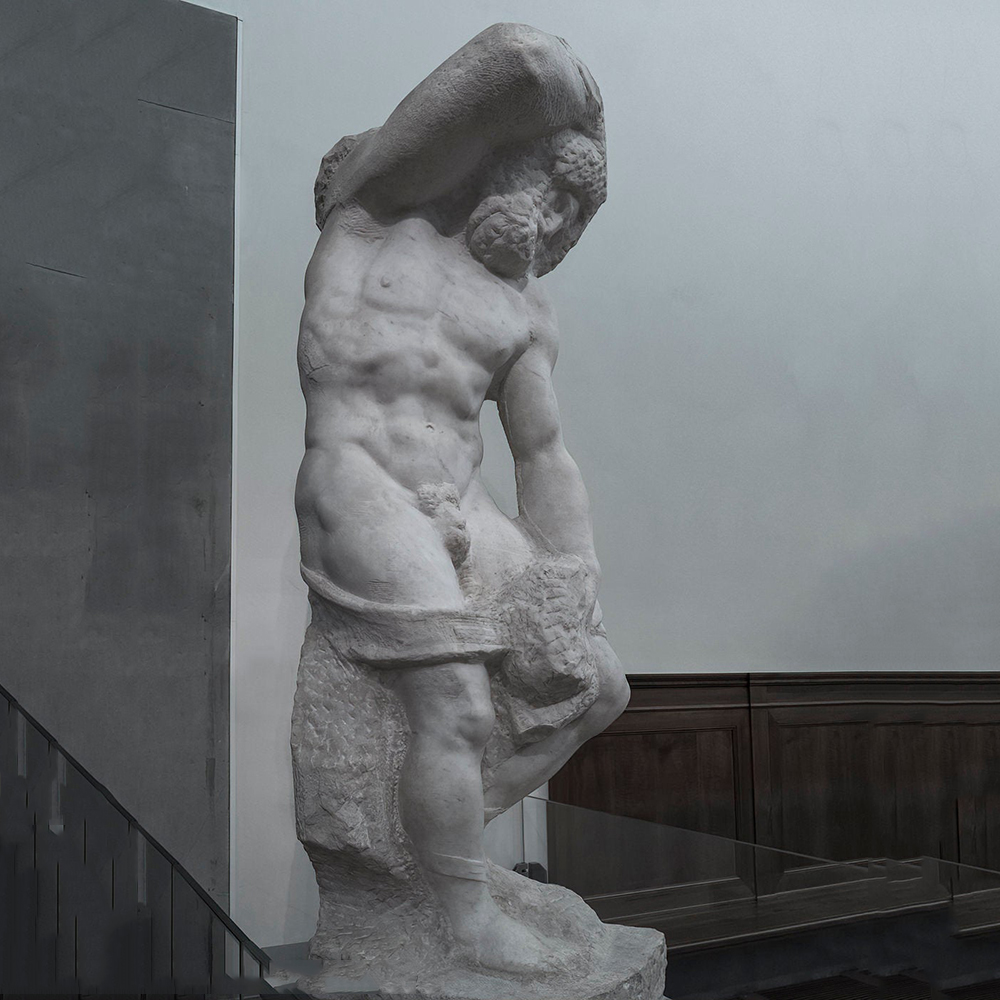
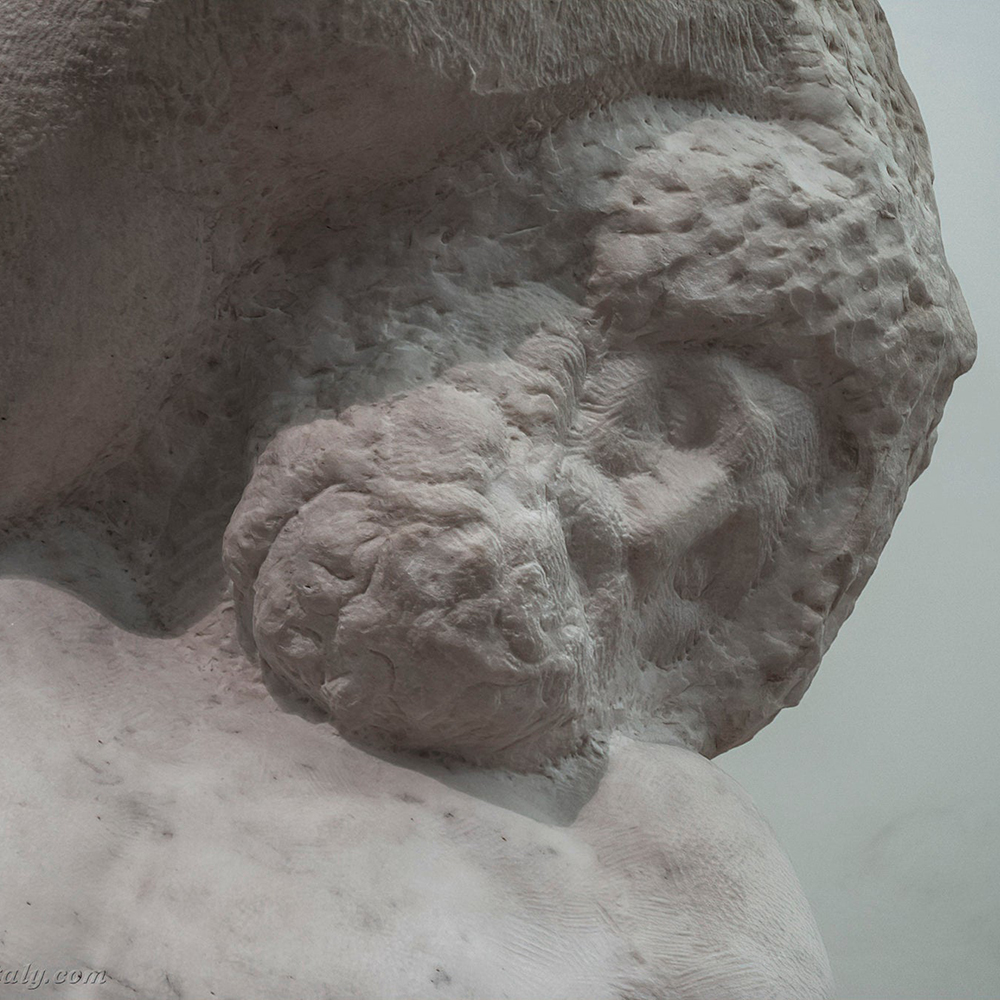
The most mature of the four Michelangelo Statues in Florence, the figure possesses a thick beard and a strong body, conveying a heavy, repressed emotion.
Atlas
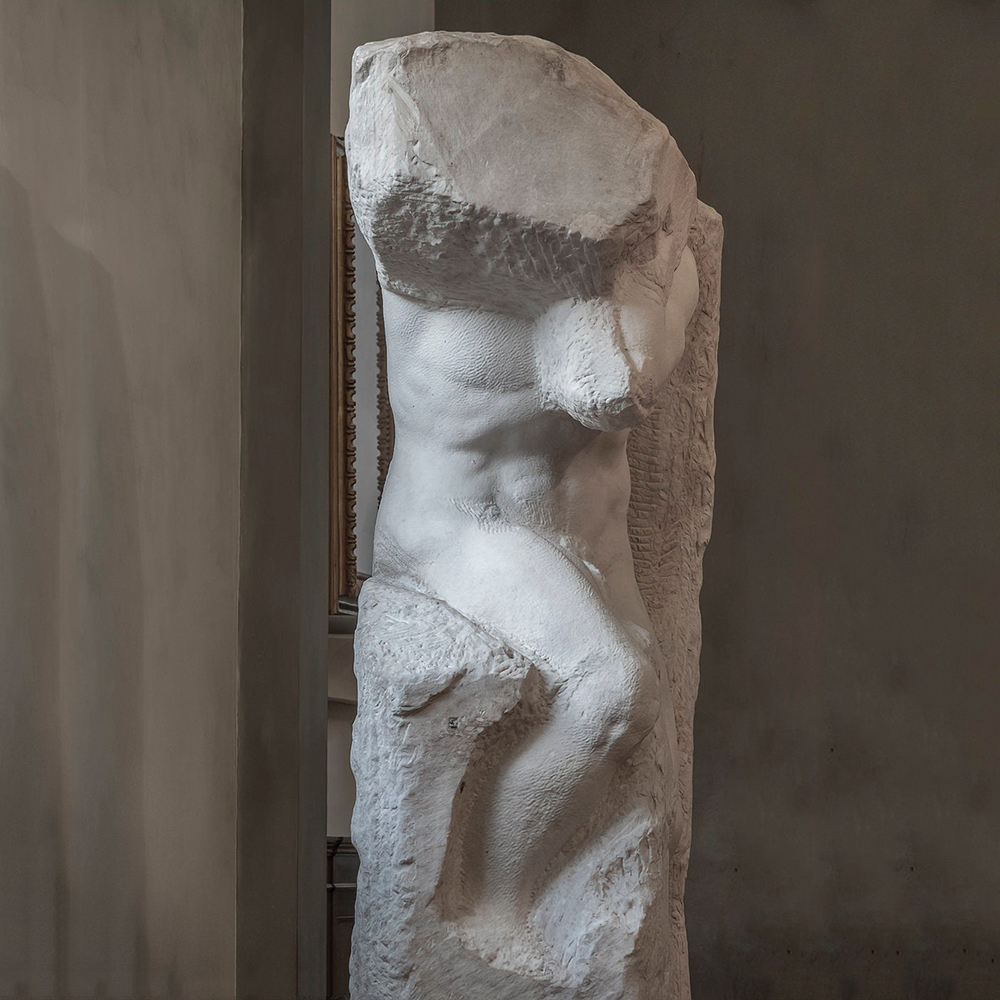
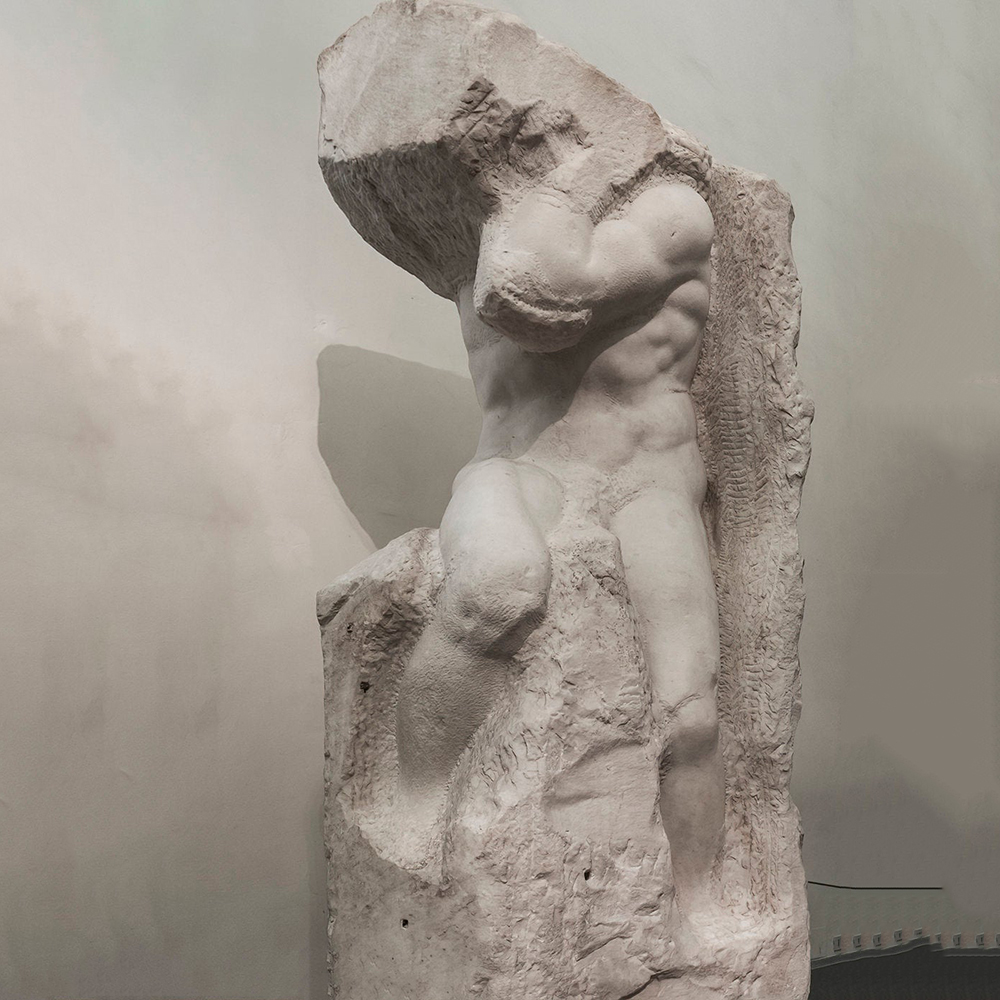
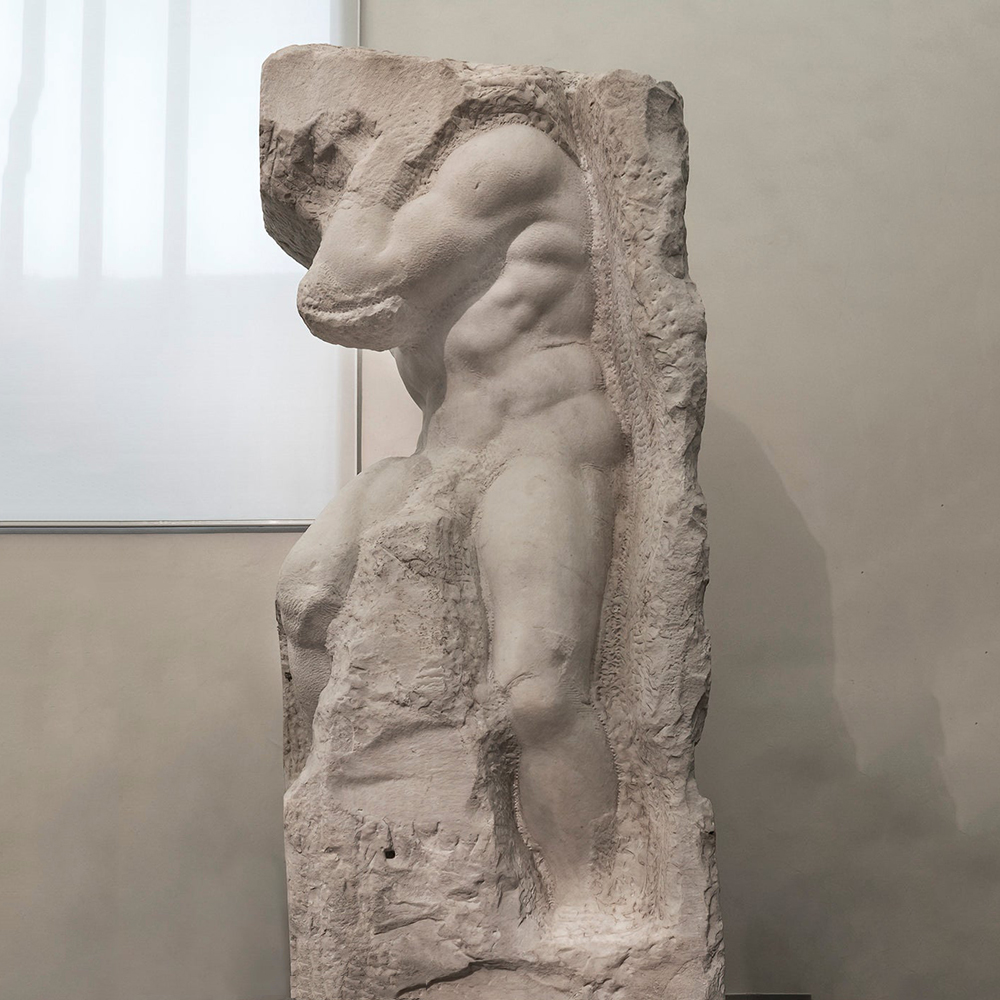
Named for the seemingly massive stone bearing on the figure’s head. The figure bows his head to bear the weight, expressing the conflict between strength and pressure.
Michelangelo’s Slaves were originally intended to be used on the tomb of whom?
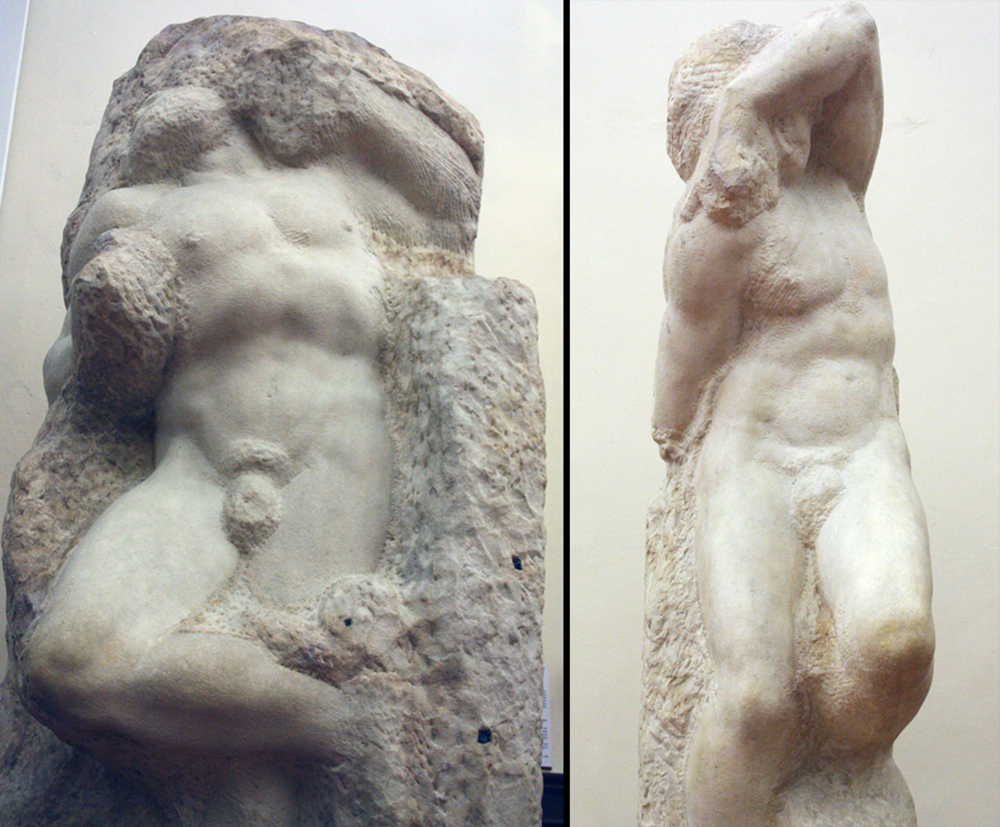
This group of sculptures was originally designed for the tomb project of Pope Julius II, but due to numerous revisions to the tomb plan, it was ultimately not used.
Why did Michelangelo not finish The Prisoners?
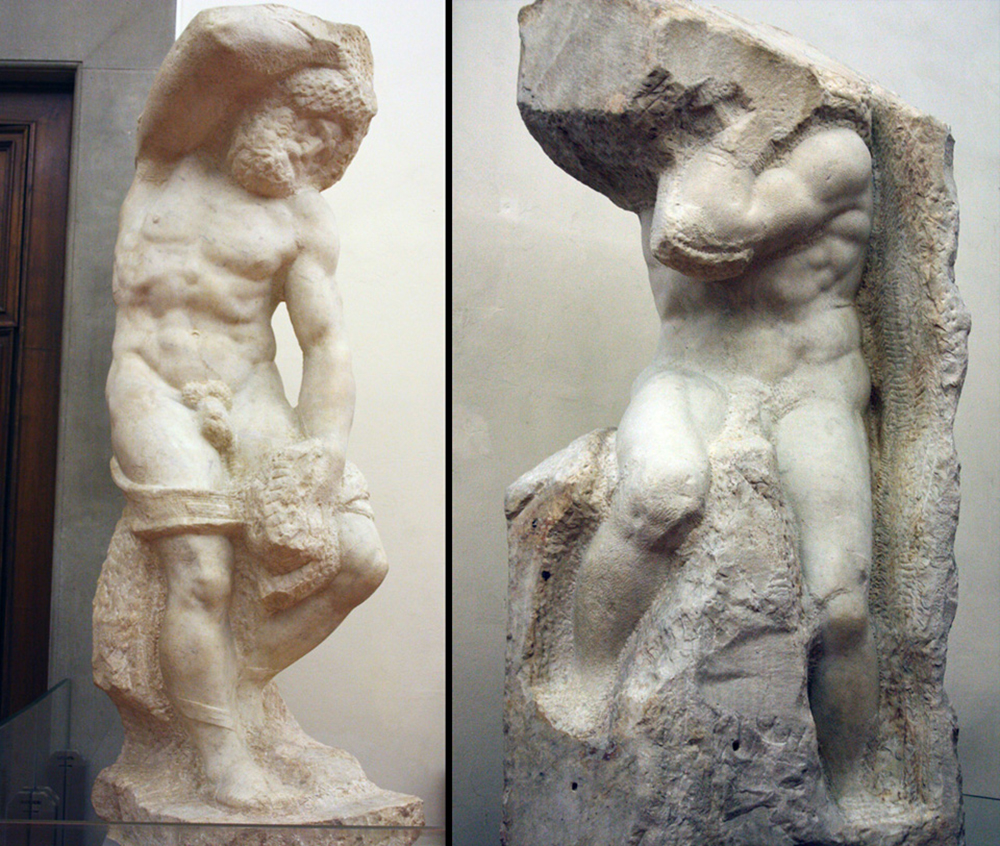
The main reason Michelangelo did not complete The Prisoner of Julius II was related to changes in the plans for Pope Julius II’s tomb. In 1505, Michelangelo was commissioned by Julius II to design a magnificent tomb, initially planned to include numerous sculptures, including the Prisoner of Julius II series.
However, due to funding, political factors, and the influence of other papal construction projects, the tomb plans were repeatedly scaled back and revised, forcing Michelangelo to adjust his creative direction. Therefore, The Prisoner of Julius II was ultimately not installed on the tomb, and some works remained unfinished.
Furthermore, Michelangelo himself had a unique understanding of “non-finished state.” He believed that sculpture was about releasing the image hidden within the stone, and retaining some rough marble traces could express the process of the figure breaking free from the stone. Therefore, the unfinished state of The Prisoner of Julius II was not merely a creative interruption, but also became part of the work’s expression.
Michelangelo Saint Matthew Statue in Florence
Basic Information
- Name: Saint Matthew (San Matteo)
- Creation Time: Around 1503–1505
- Material: Marble
- Style: Renaissance Sculpture
- Location: Galleria dell’Accademia, Florence, Italy
- Commission: Florence Cathedral (Duomo)
- Theme: Saint Matthew, one of the twelve apostles of Jesus
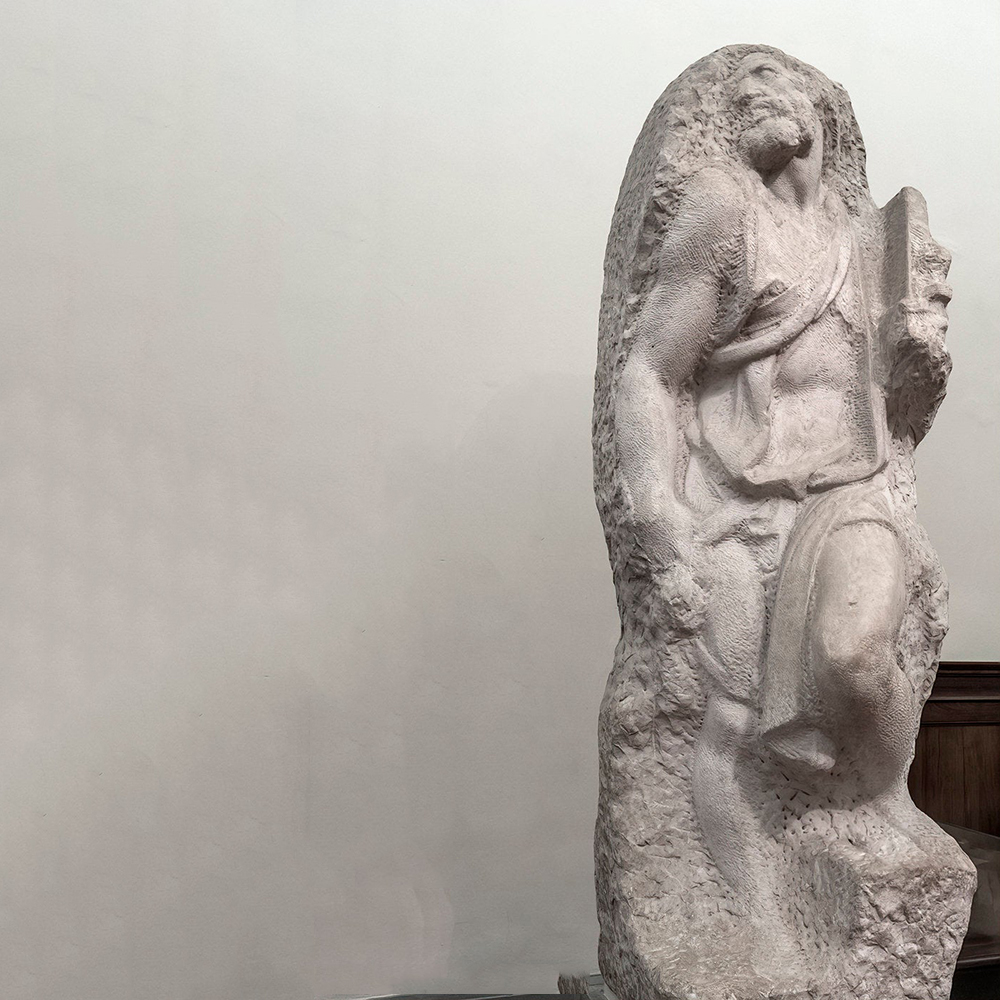
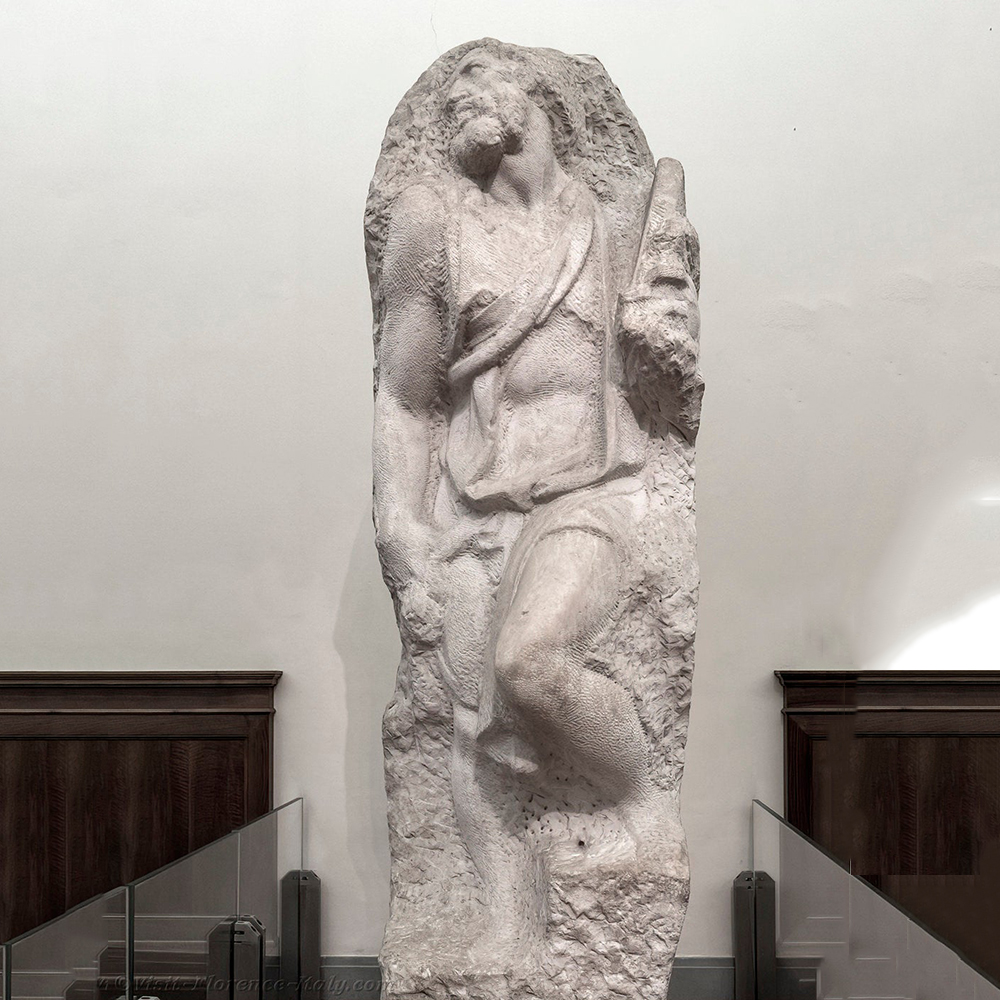
Michelangelo Saint Matthew is one of Michelangelo’s important early marble sculptures. It was originally part of a project to create statues of the twelve apostles for the Florence Cathedral, intended to decorate the cathedral’s exterior, but only a portion of the work was completed.
The Appearance of Michelangelo Saint Matthew
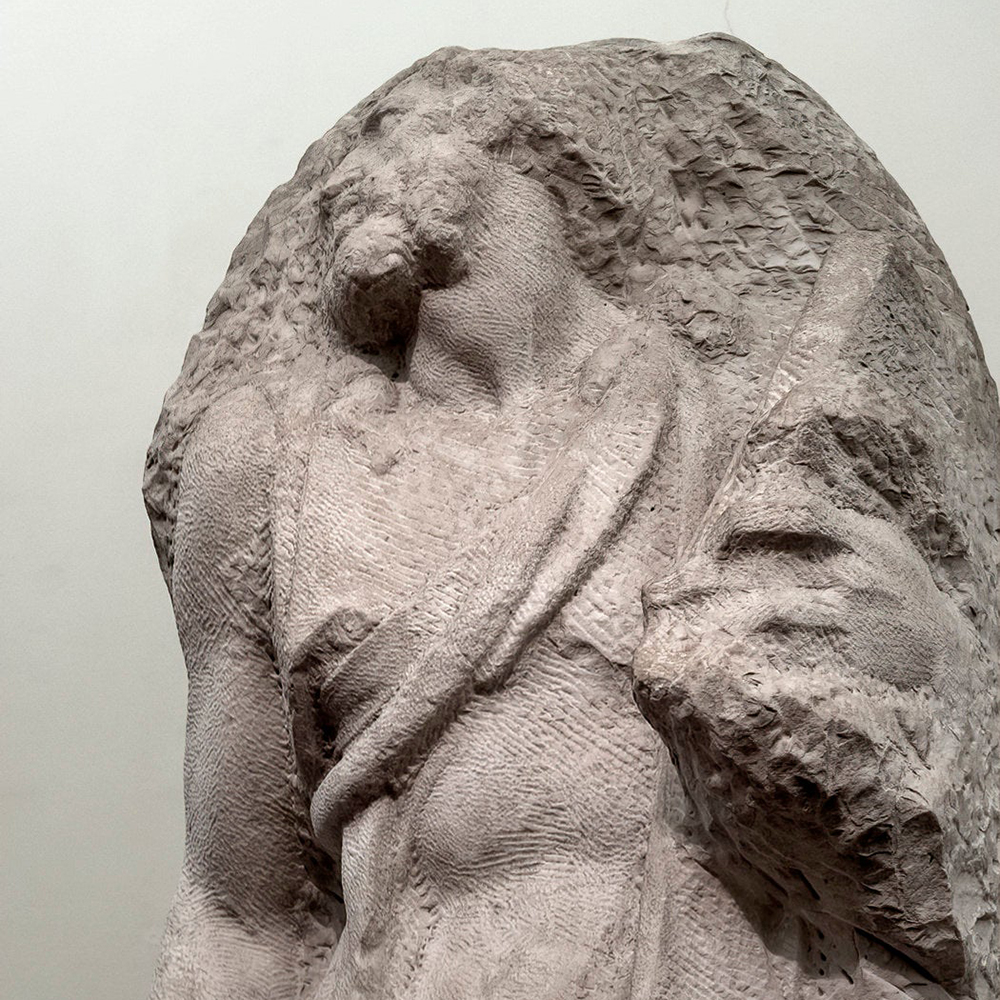
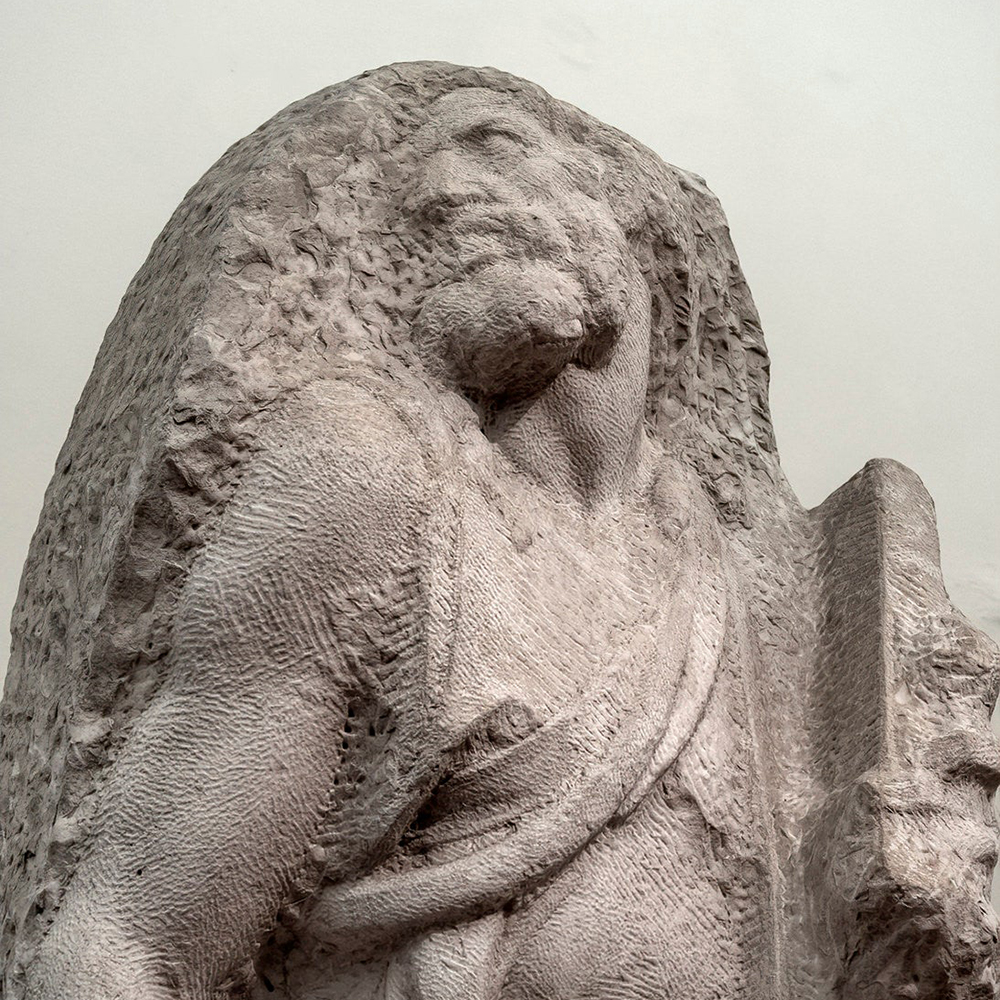
Saint Matthew is an unfinished marble sculpture depicting a tall male apostle. The figure’s body is slightly twisted, and his head is turned to one side, creating a dynamic pose.
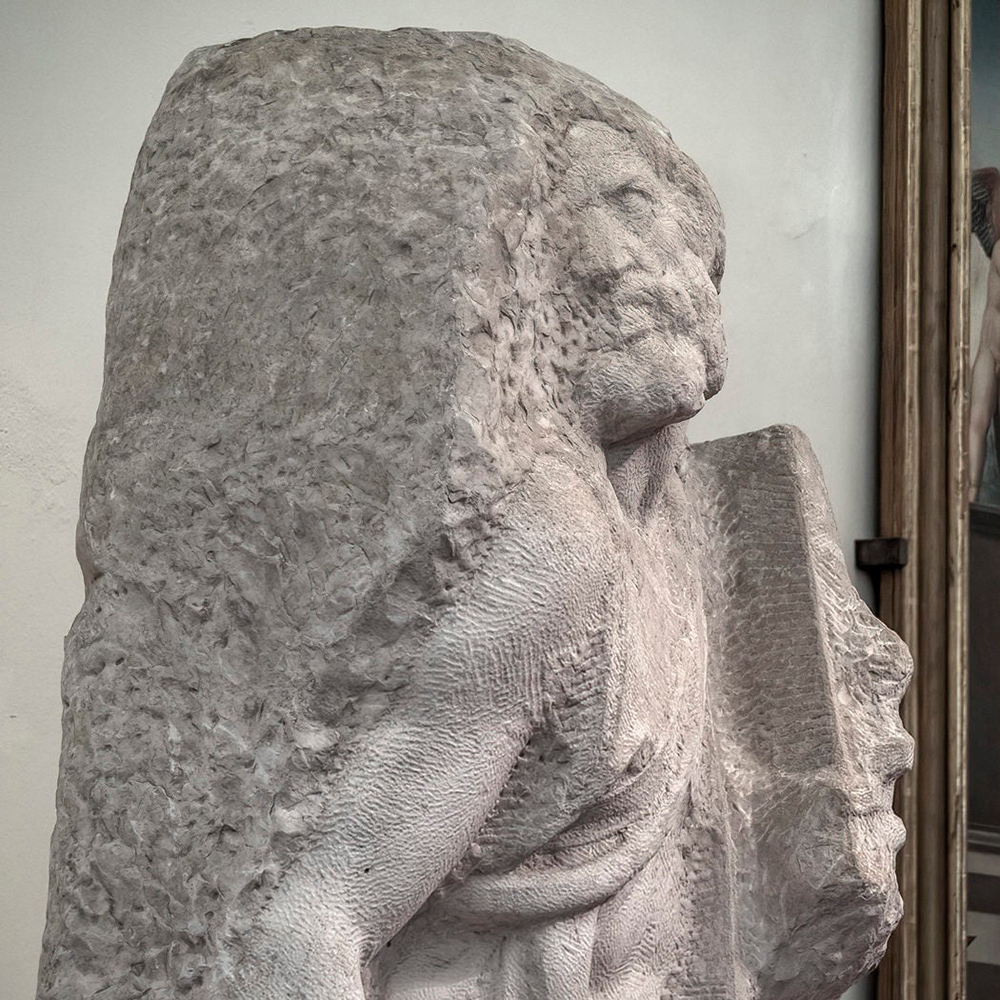
While the body is meticulously detailed, with clearly visible muscle structure and clothing folds, the back and other areas retain the rough surface of the stone, creating a strong sense of unfinishedness. The figure seems to be gradually breaking free from the marble, reflecting Michelangelo’s unique sculpting philosophy.
Bandini Pietà Michelangelo Statue in Florence
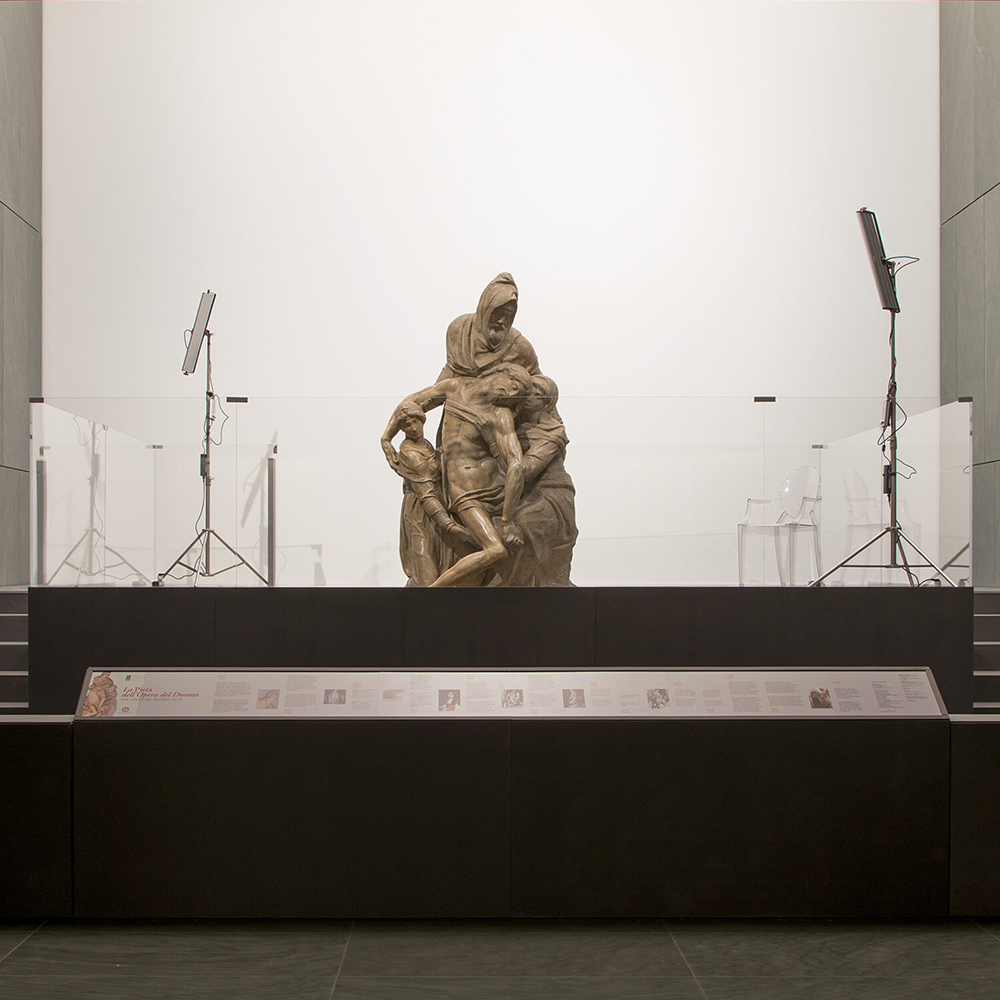
Basic Information
- Name: Bandini Pietà (also known as Florentine Pietà)
- Creation Time: Around 1547–1555
- Material: Marble
- Style: Renaissance Sculpture
- Location: Museo dell’Opera del Duomo, Florence, Italy
- Theme: The mourning of Christ after the Crucifixion
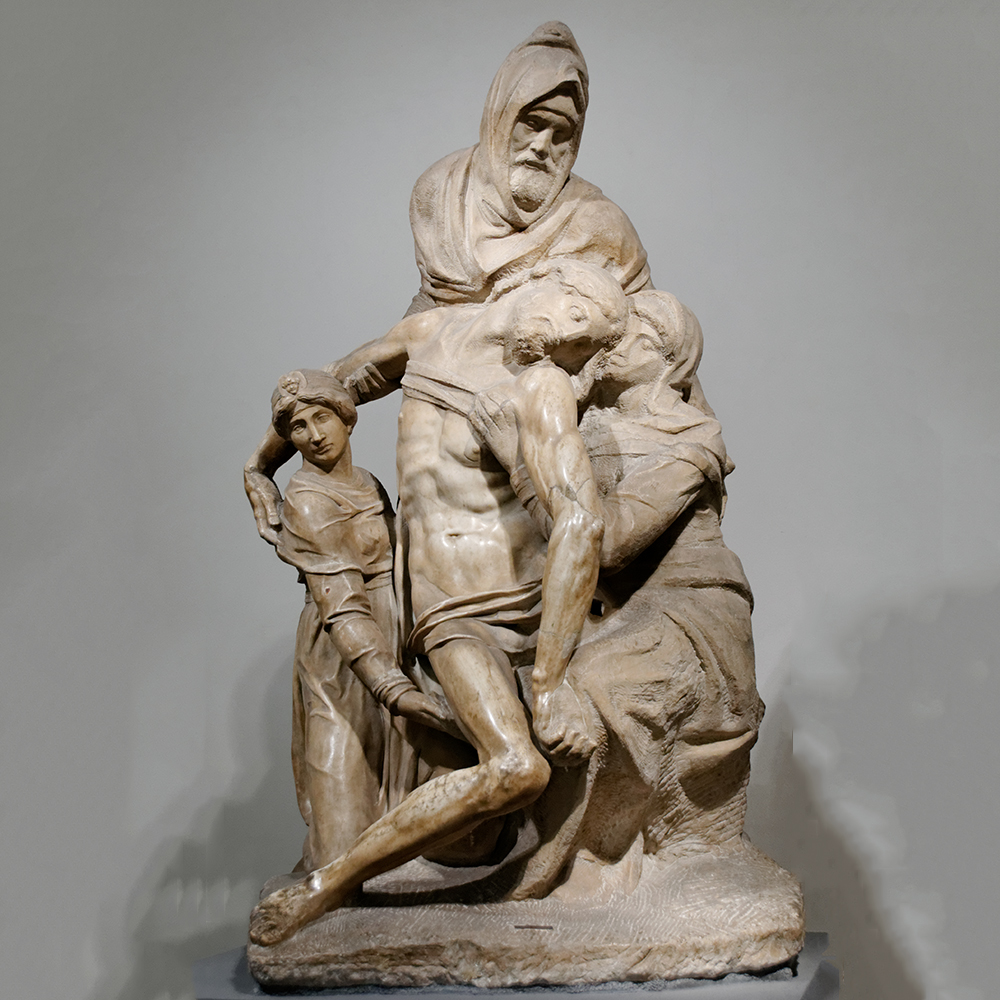
The Bandini Pietà is an important sculpture from Michelangelo’s later years and one of the representative Michelangelo sculptures preserved in Florence. Created around 1547-1555, it is now in the collection of the Florence Cathedral Museum (Museo dell’Opera del Duomo).
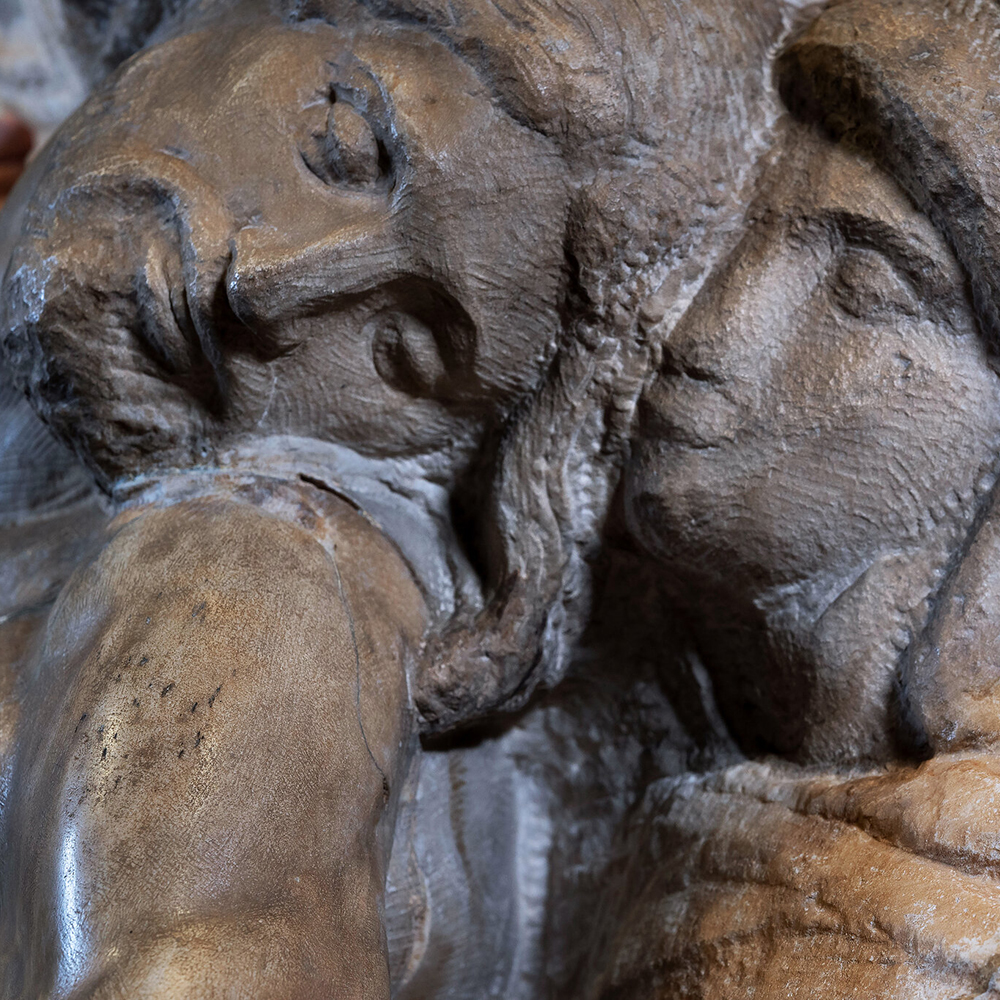
This Michelangelo Statue in Florence depicts the scene of Christ being taken from the cross, and compared to Michelangelo’s earlier work, the Vatican Pietà, this work focuses more on the themes of death, grief, and religious redemption.
The Appearance of Bandini Pietà
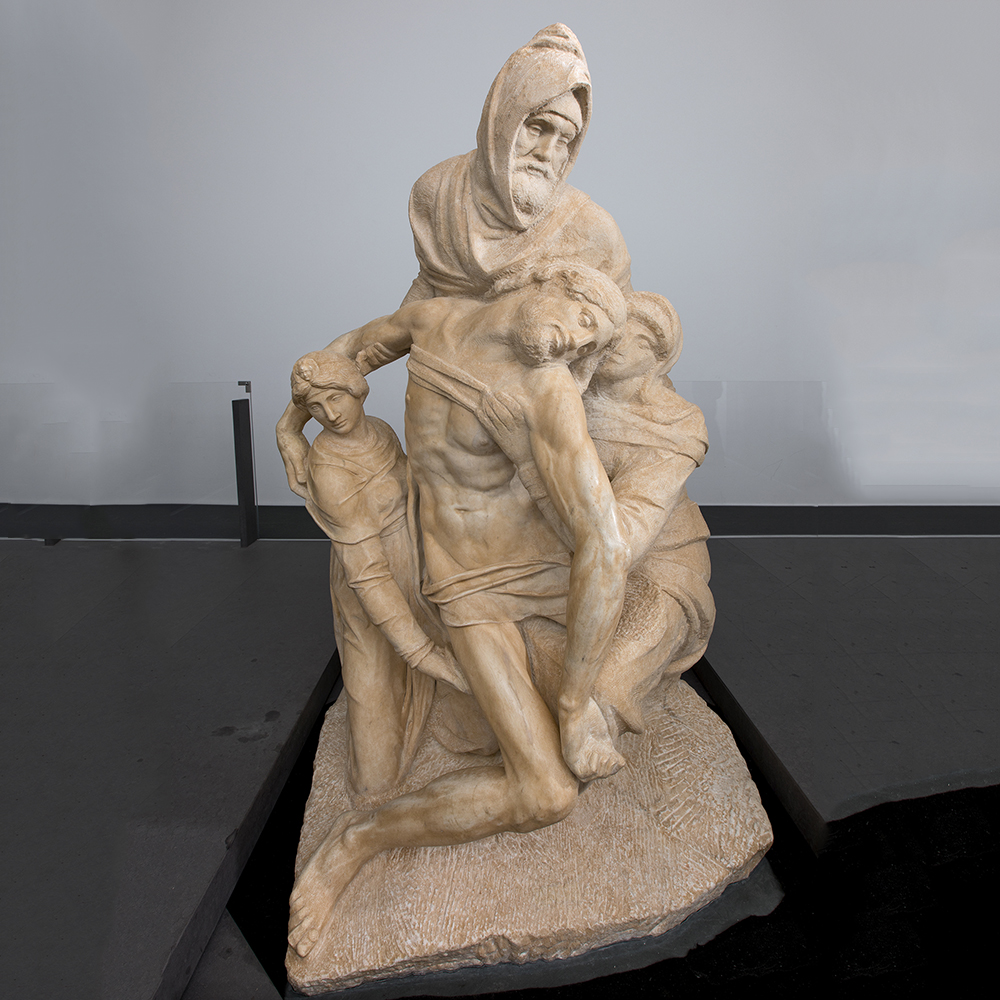
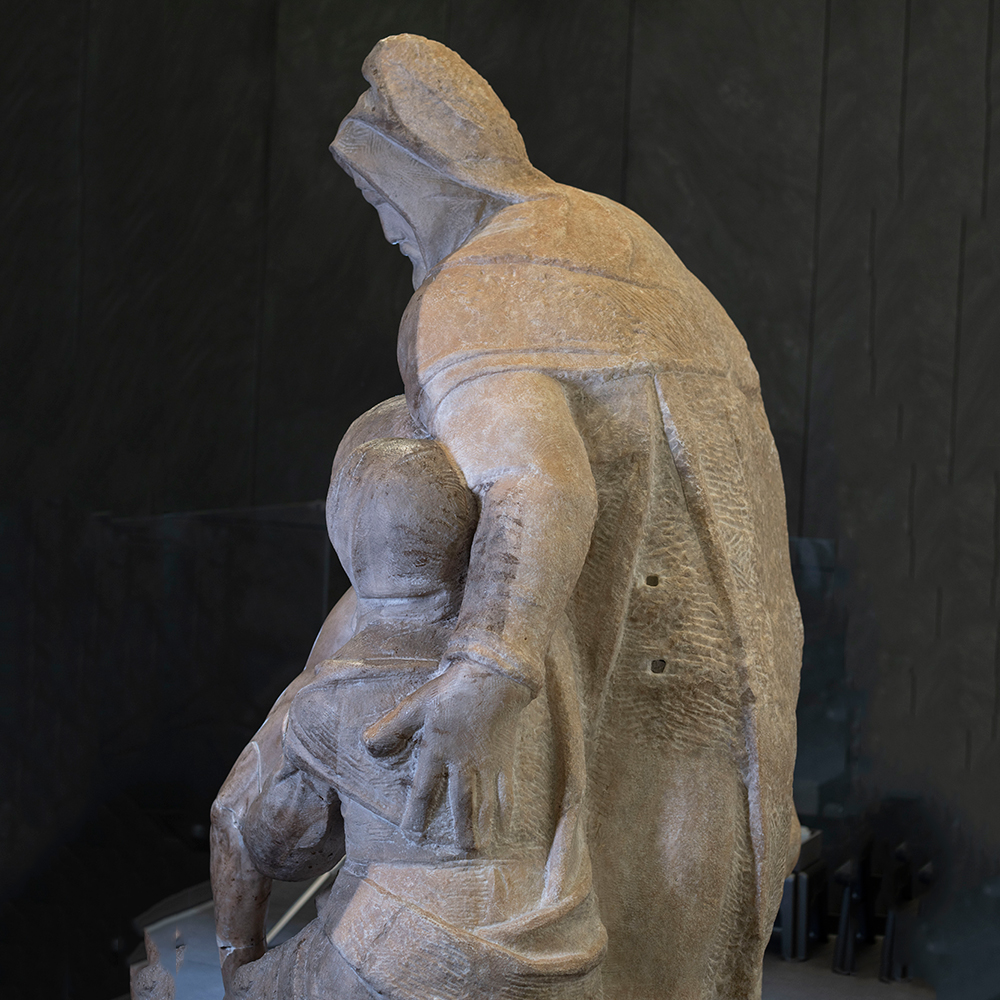
The Pietà of Bandini is a complex marble sculpture consisting of four figures: Jesus Christ at the center, the Virgin Mary supporting Christ’s body, Mary Magdalene on the left, and Nicodemus at the top.
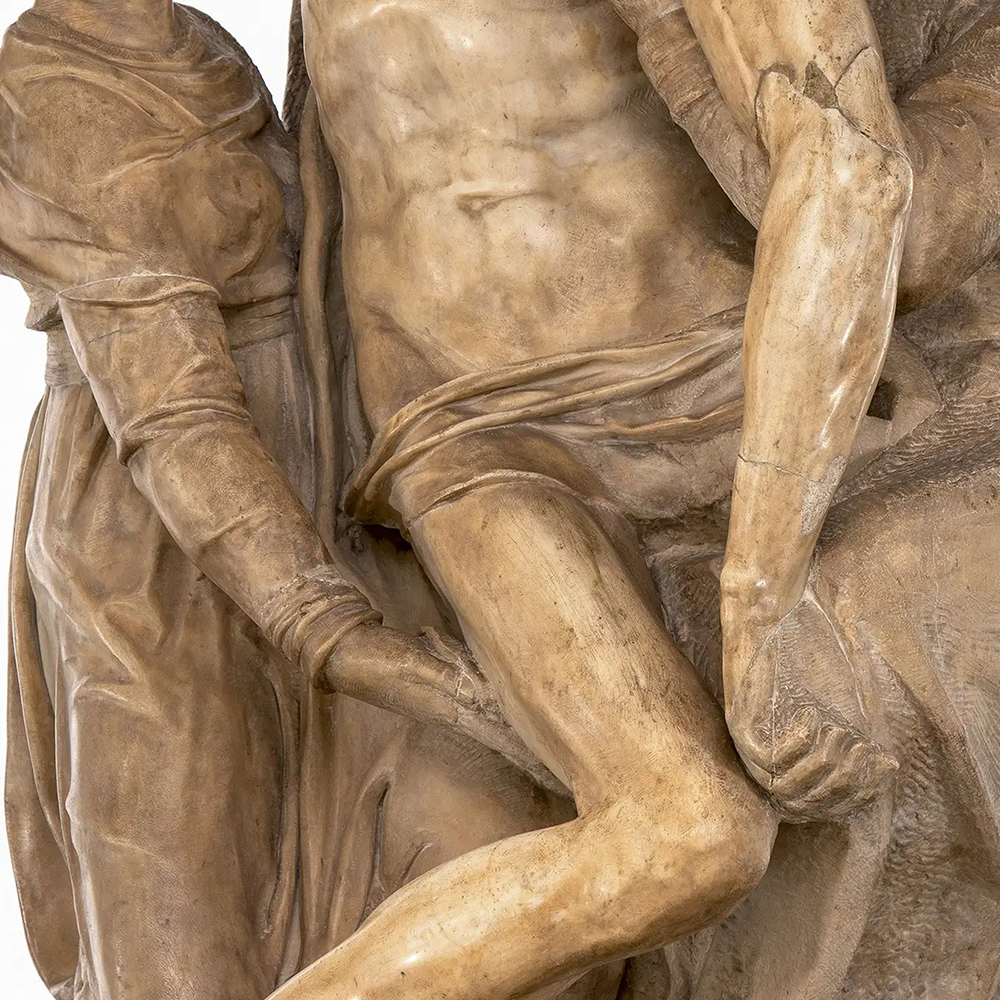
In the sculpture, Christ’s body is drooping, conveying the heaviness of death; the surrounding figures are closely arranged, forming a group structure full of emotional tension. Nicodemus, located at the top of the work, is often considered to have features characteristic of Michelangelo himself, and is therefore interpreted by many art historians as the artist’s reflection on his own life, faith, and death.
Bacchus Michelangelo Sculpture
Basic Information
- Name: Bacchus
- Creation Time: 1496–1497
- Material: Marble
- Height: About 203 cm
- Style: Renaissance Sculpture
- Location: Museo Nazionale del Bargello, Florence, Italy
- Theme: Bacchus, the Roman god of wine
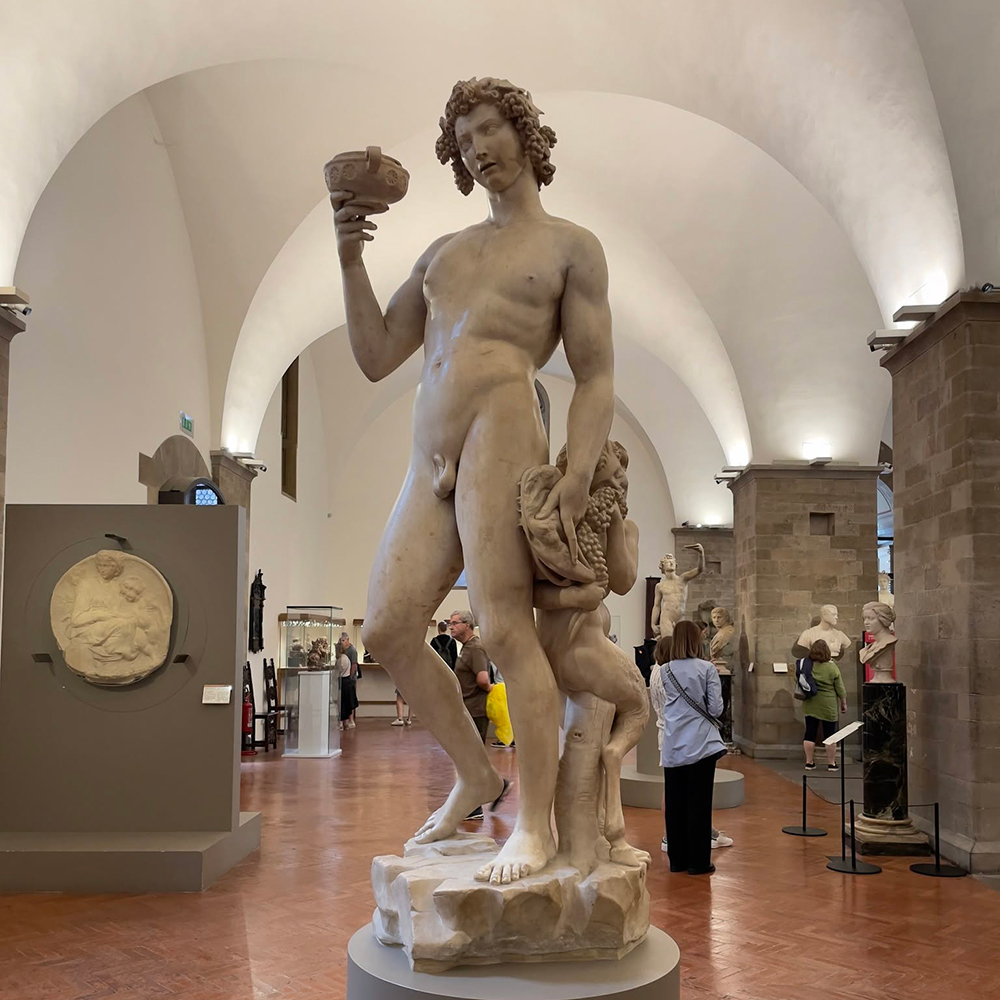
The Michelangelo Sculpture Bacchus is an important early marble work by Michelangelo, created between 1496 and 1497, when he was about 21 years old. Originally commissioned by Cardinal Raffaele Riario, it was not acquired due to the discrepancy between the depiction of Dionysus and traditional religious aesthetics. Later, it entered the Medici family collection and was eventually acquired by the National Museum of the Bargello in Florence in the 19th century.
The Appearance of Bacchus Michelangelo Sculpture
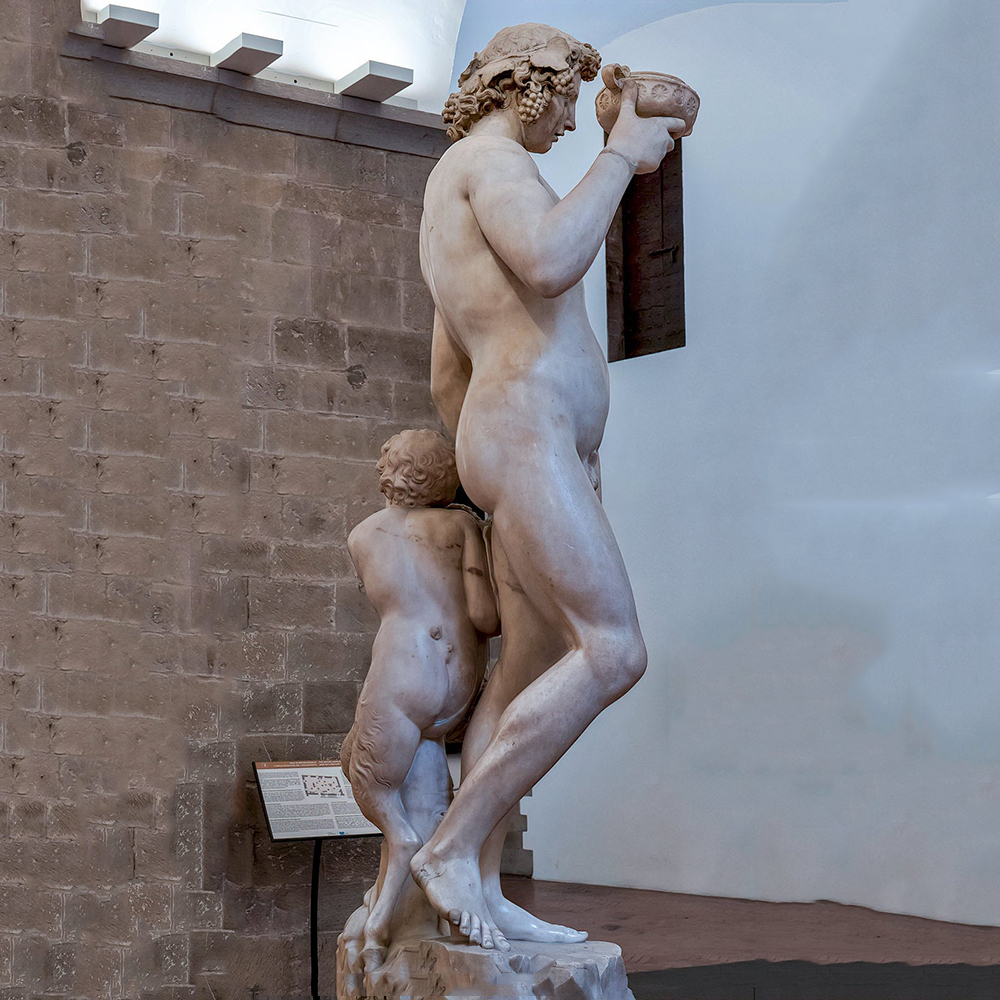
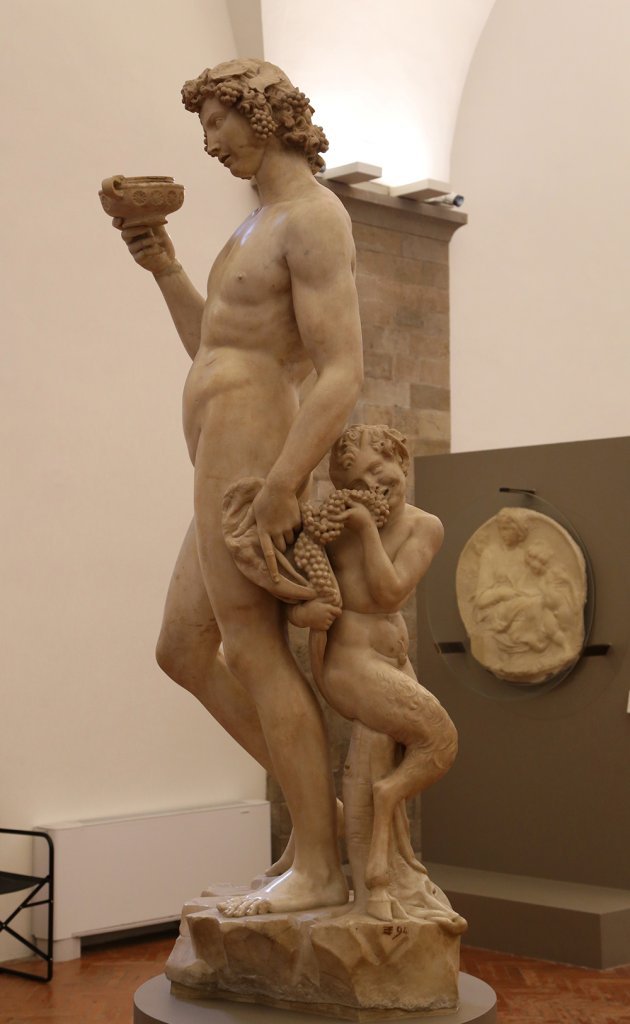
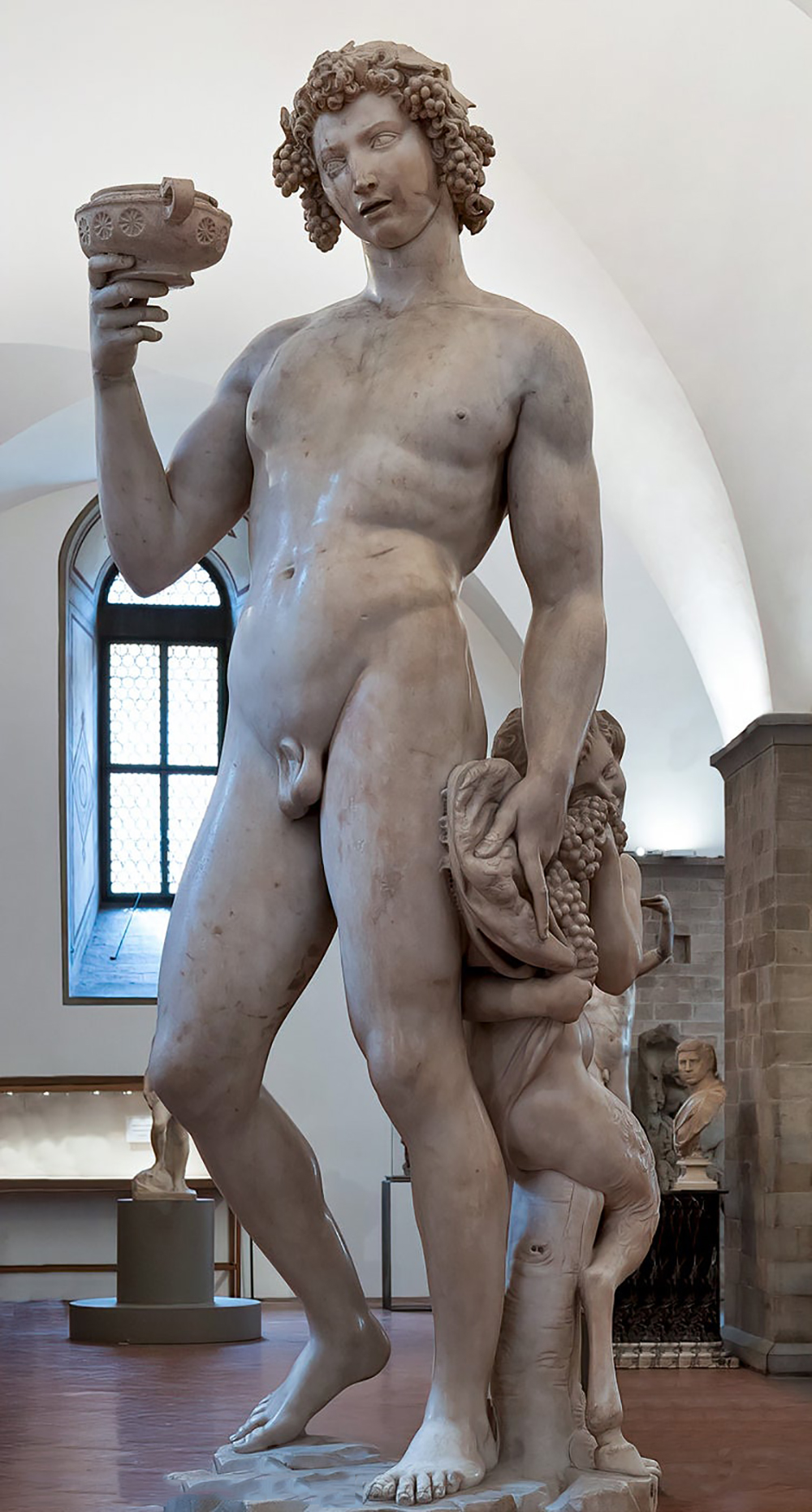
The Michelangelo Statue in Florence depicts the Roman god of wine. Bacchus is a young male, leaning back with his head slightly turned, in a posture of imbalance, consistent with the god’s state of intoxication.
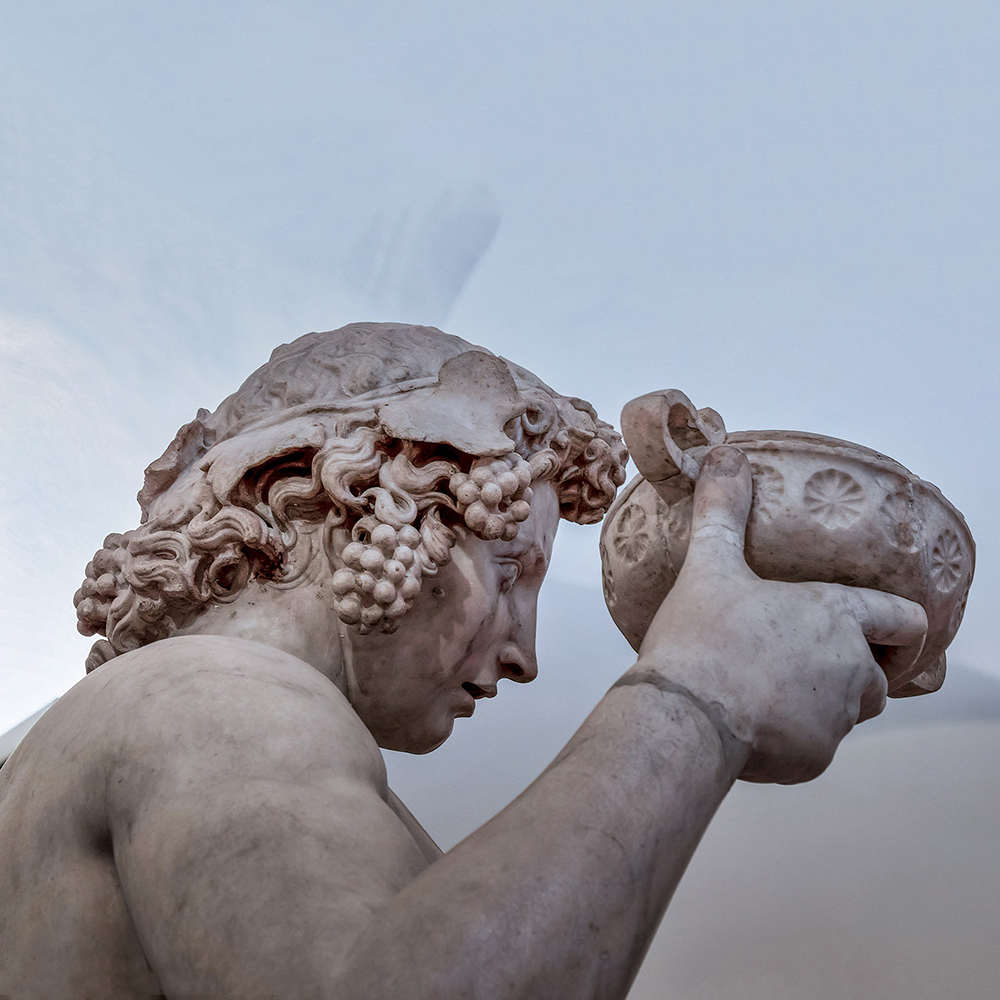
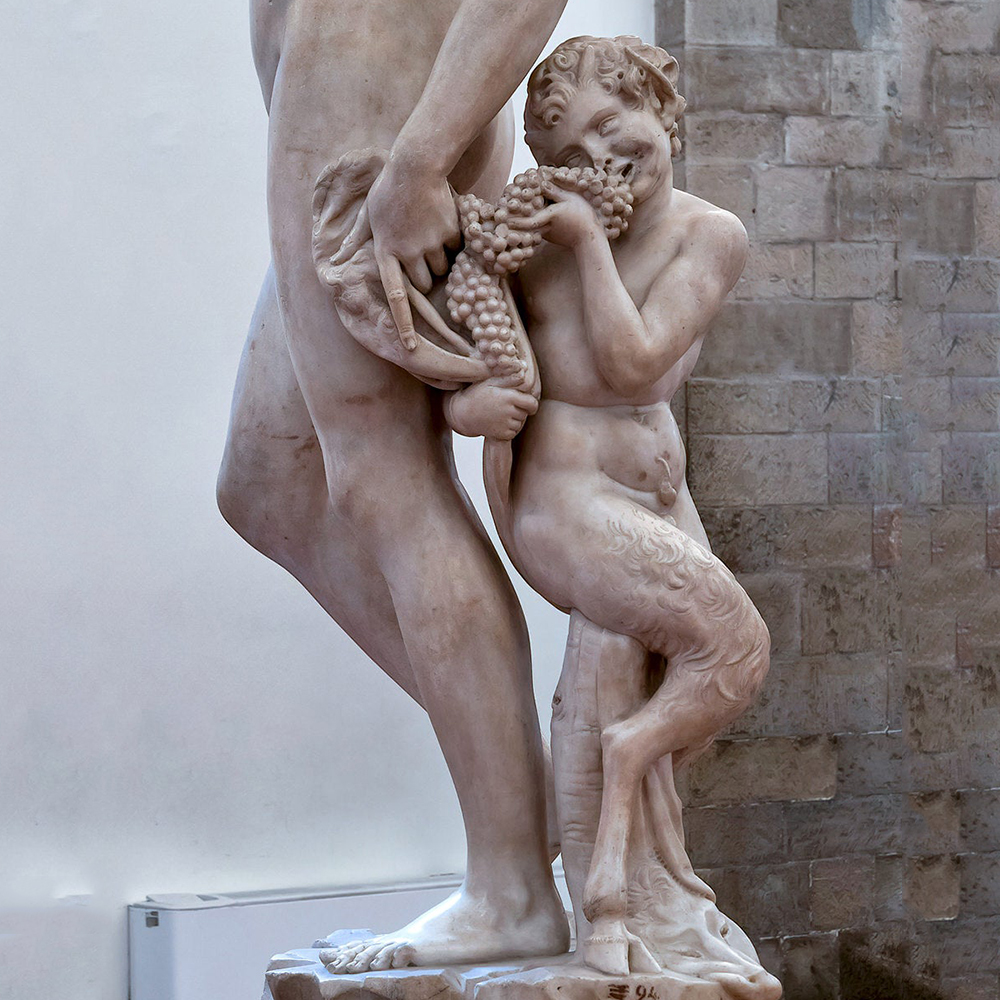
His right hand holds a wine cup, while his left hand holds a skin wrapped in grape leaves. Behind him stands a young satyr stealing grapes.
What does Michelangelo’s Bacchus statue symbolize?
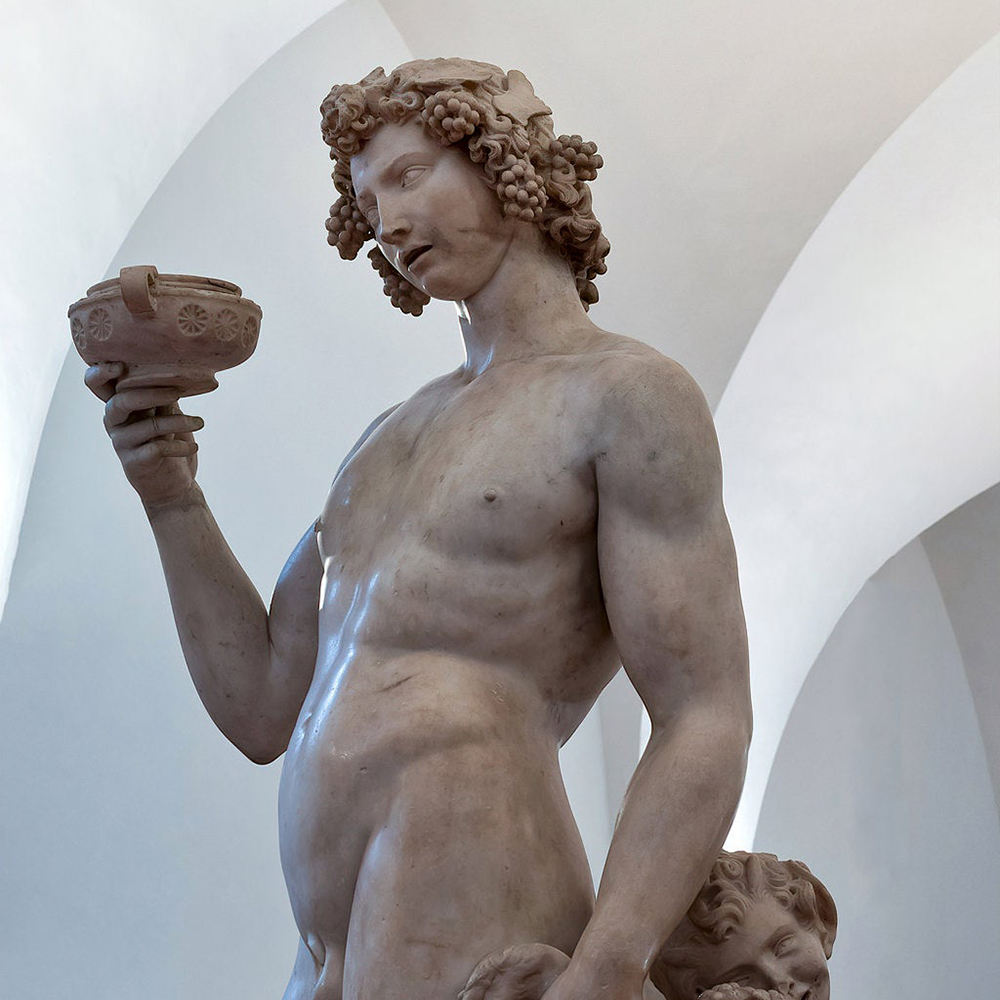
Bacchus symbolizes the god of wine, sensual pleasure, and the desires of humanity. In the work, Bacchus holds a wine cup and is depicted in a drunken posture, embodying the revelry and intoxication brought by wine; the elements of Sartre and grapes behind him further reinforce the themes of desire, instinct, and pleasure. Michelangelo, through the unstable posture of a drunken figure, reveals the union of divinity and humanity.
Brutus Bust
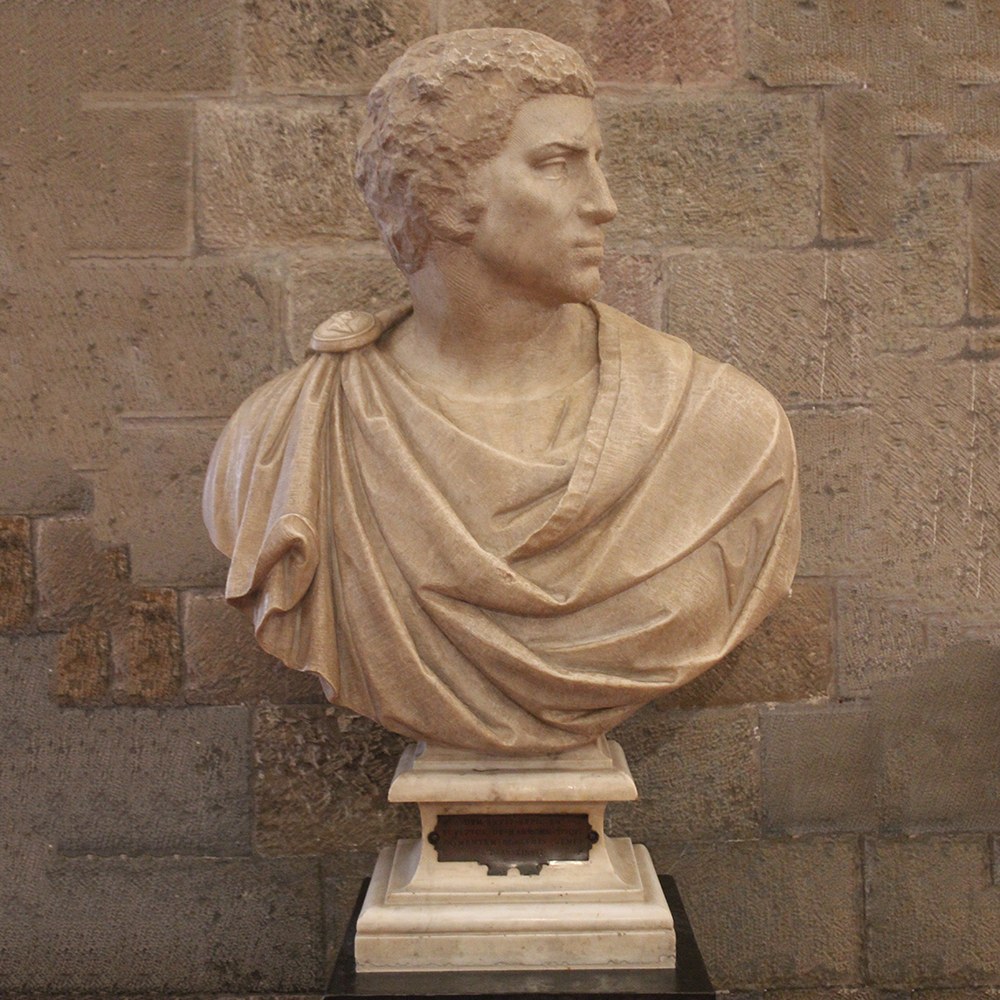
Basic Information
- Name: Brutus
- Creation Time: Around 1538–1539
- Material: Marble
- Style: Renaissance Sculpture
- Location: Museo Nazionale del Bargello, Florence, Italy
- Theme: Portrait bust of Marcus Junius Brutus, the Roman statesman
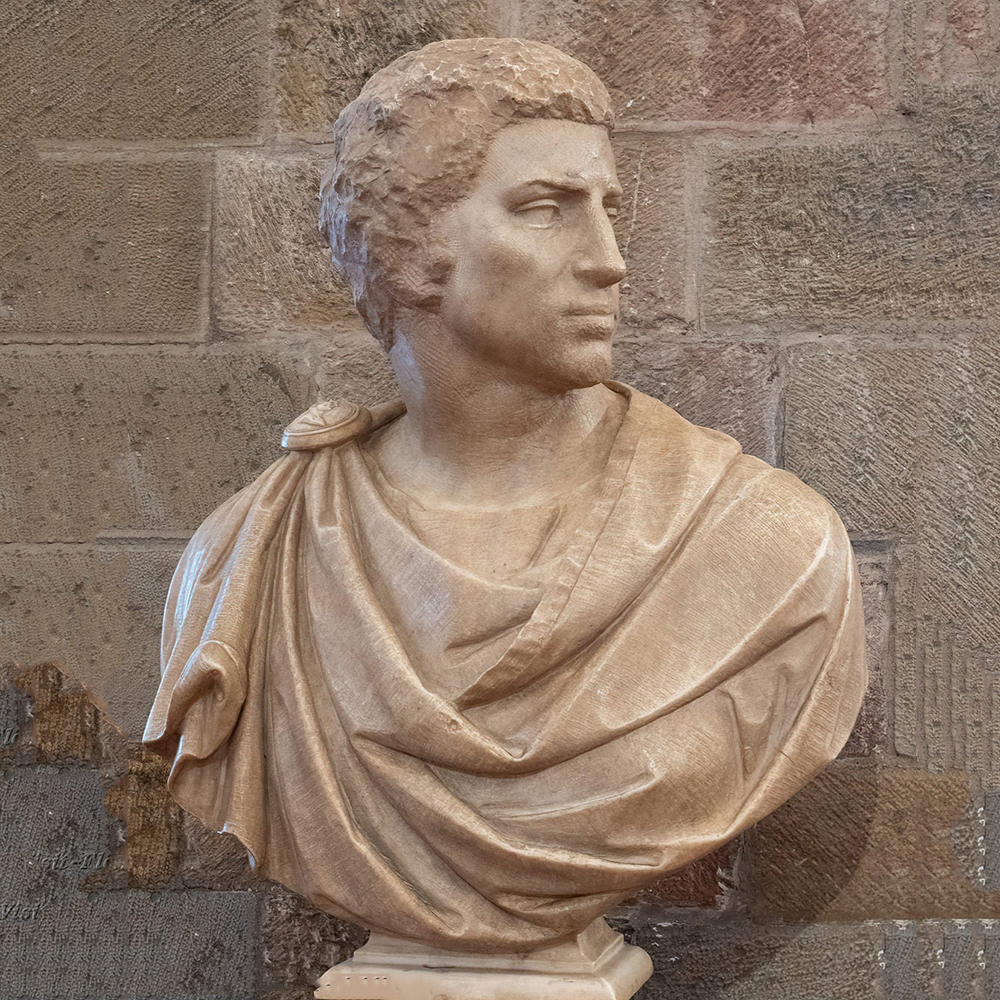
Brutus Bust is one of Michelangelo’s few portrait sculptures and an important late marble work. The sculpture depicts Marcus Junius Brutus, a Roman politician famous for his involvement in the assassination attempt on Julius Caesar.
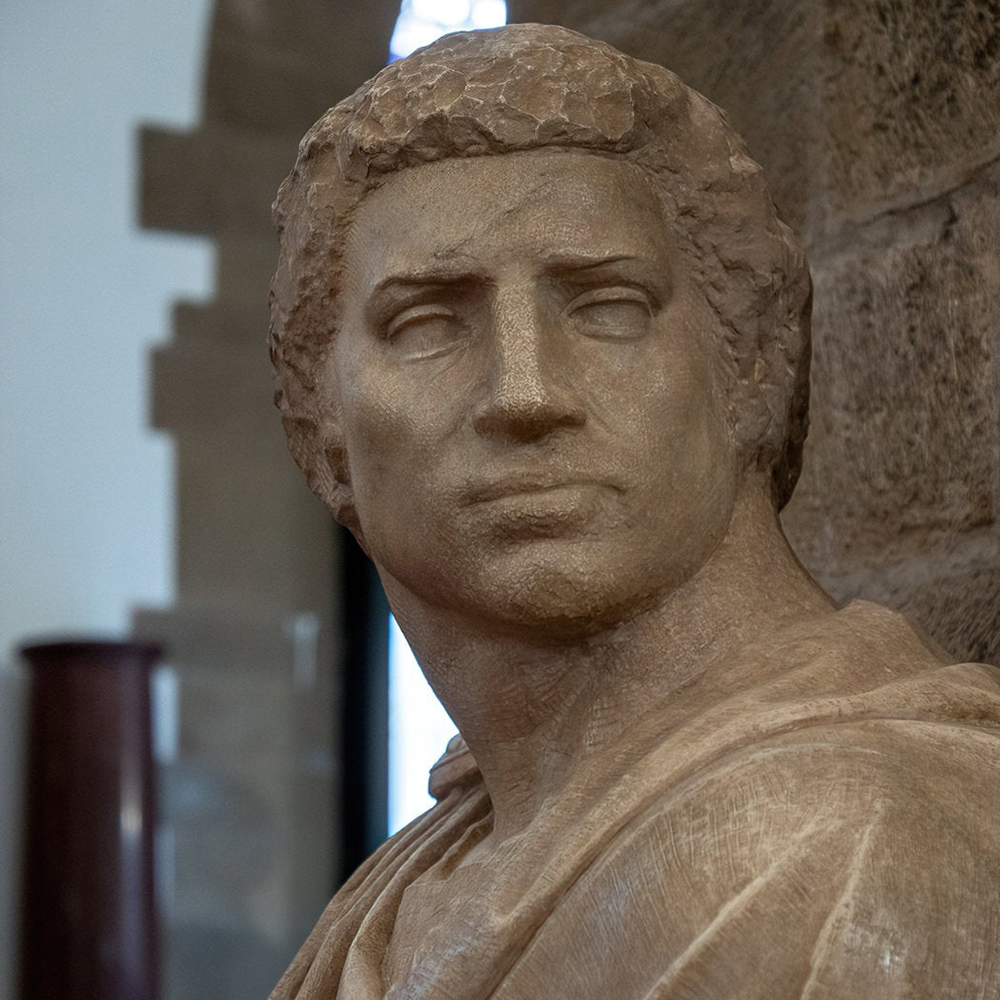
Unlike Michelangelo’s earlier works, which focused on mythological and religious figures, the Bust of Brutus carries a clear political and historical symbolism.
The Appearance of Brutus Bust
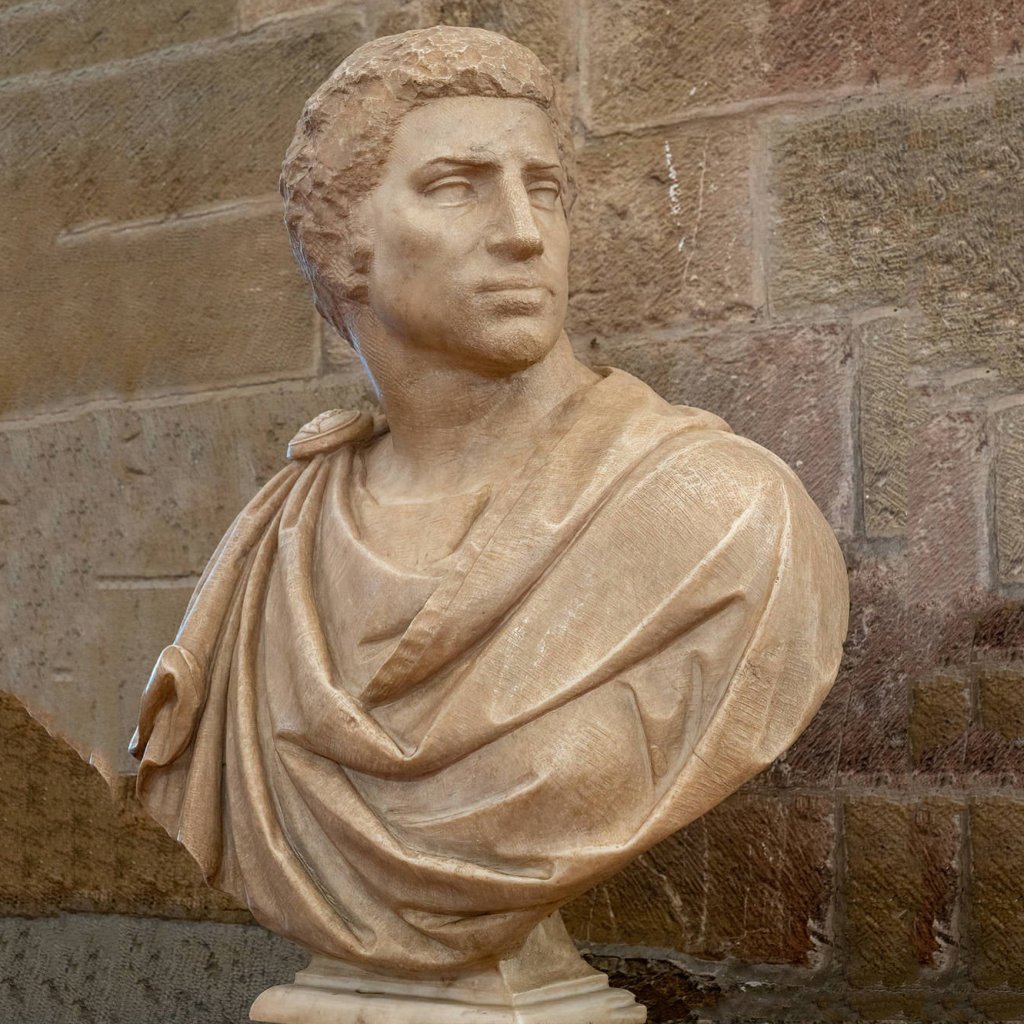
The bust of Brutus depicts the half-length figure of a mature man. The head is slightly turned to one side, the facial features are clearly defined, and the brow is furrowed, conveying a resolute and serious expression.
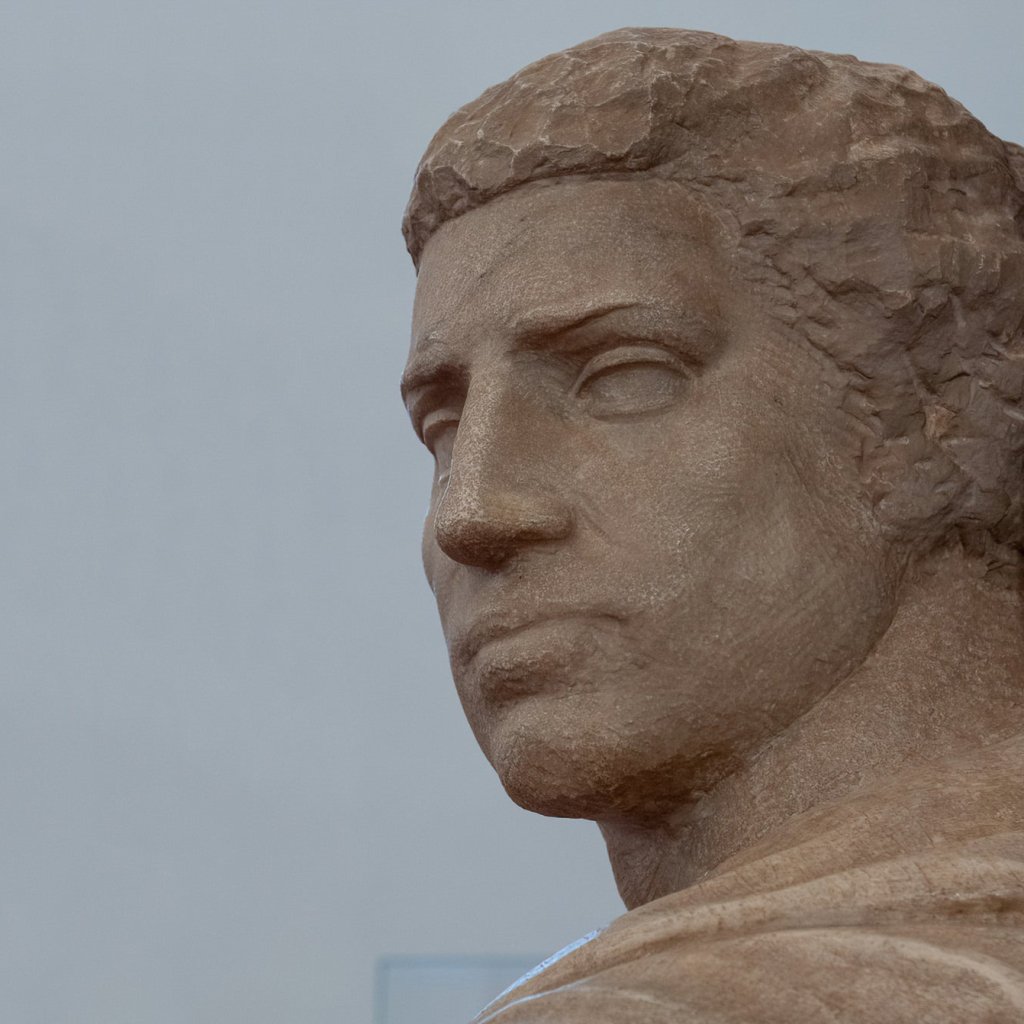
In the Michelangelo Statue in Florence, Brutus has short hair and wears ancient Roman clothing. Michelangelo uses facial structure, eyes, and strong contour lines to express the figure’s willpower and decisiveness.
David-Apollo
Basic Information
- Name: David-Apollo (also called Apollo-David)
- Creation Time: Around 1530
- Material: Marble
- Height: About 146 cm
- Style: Renaissance Sculpture
- Location: Museo Nazionale del Bargello, Florence, Italy
- Theme: A male figure possibly representing David or Apollo
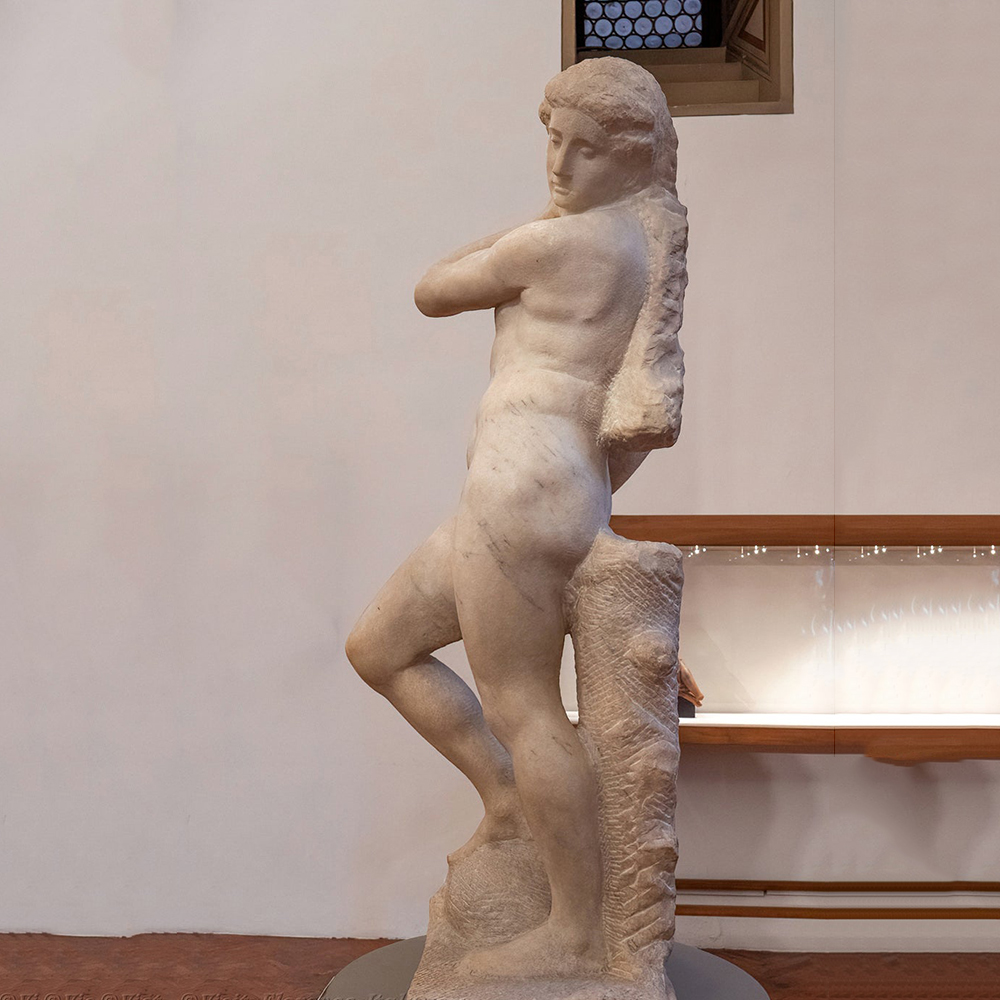
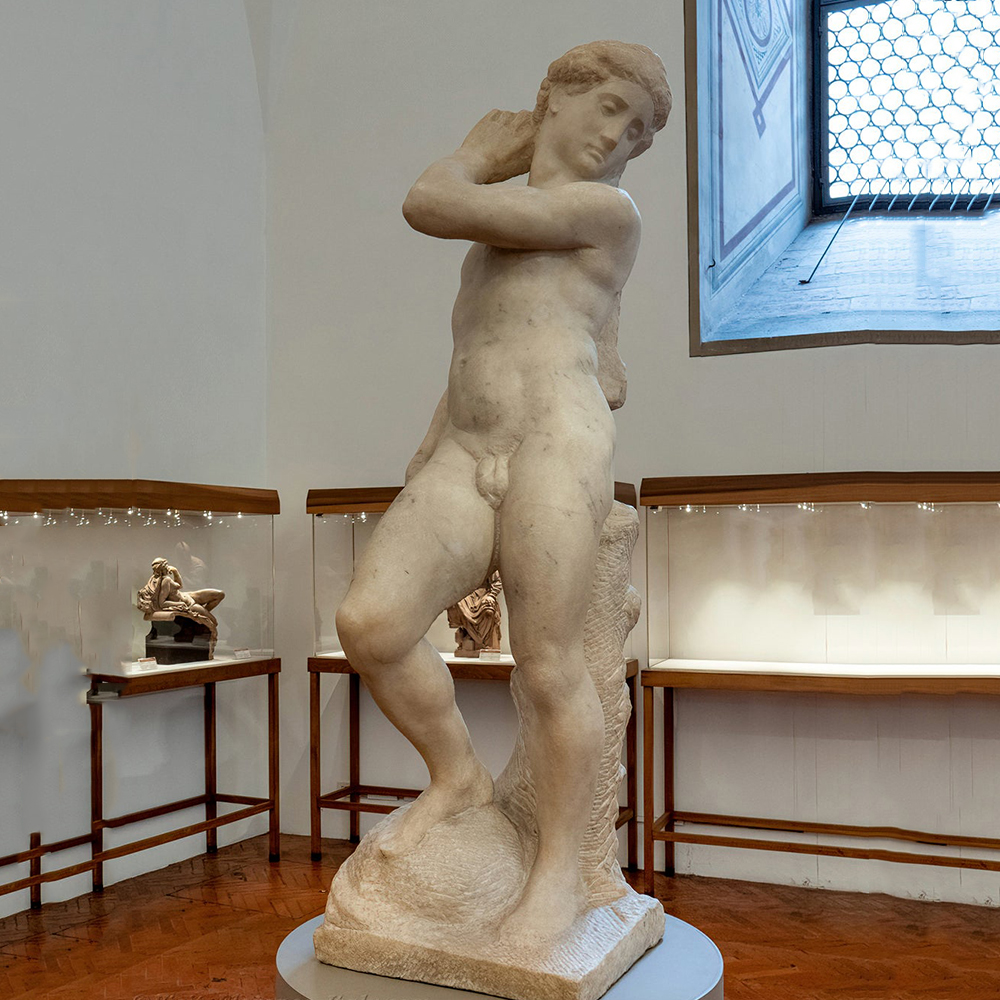
David-Apollo is a controversial sculpture by Michelangelo, created around 1530. The title stems from the uncertainty surrounding the figure’s identity: some scholars believe it depicts the biblical figure David, while others think it portrays the Greek sun god Apollo.
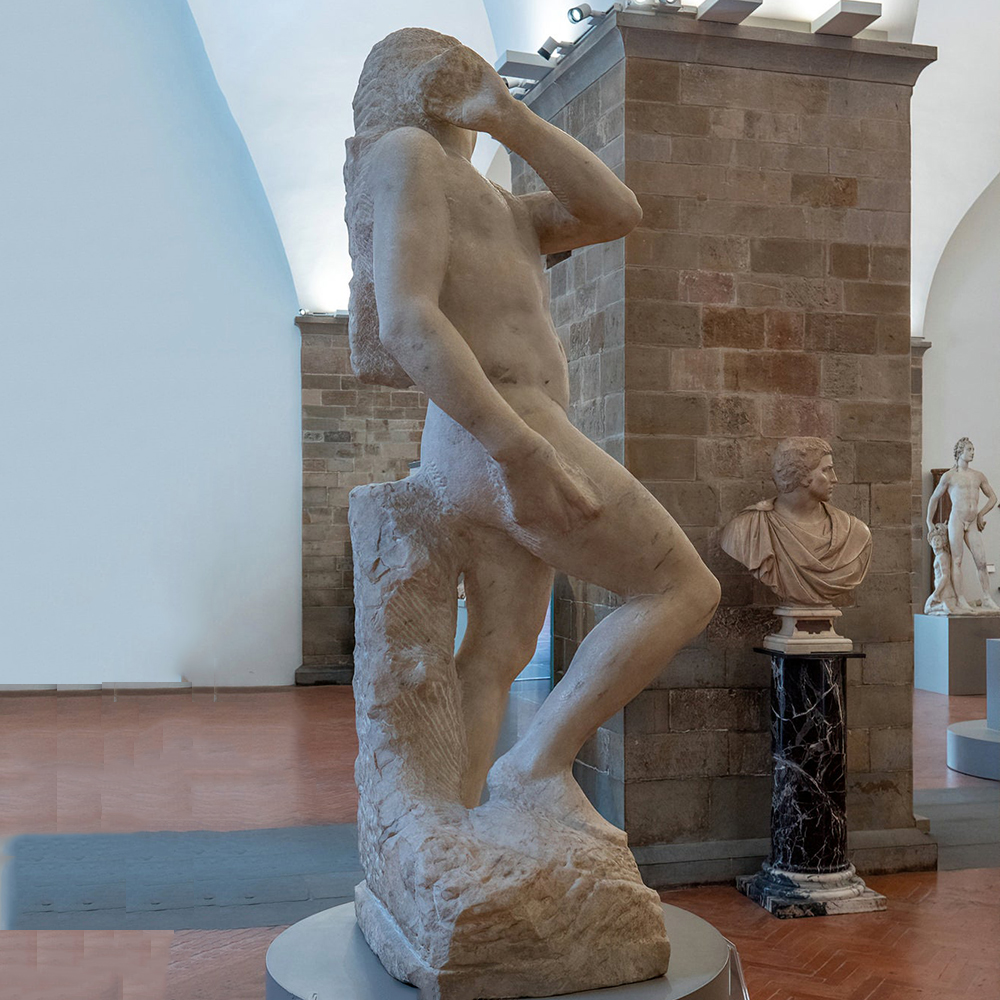
The Appearance of David-Apollo
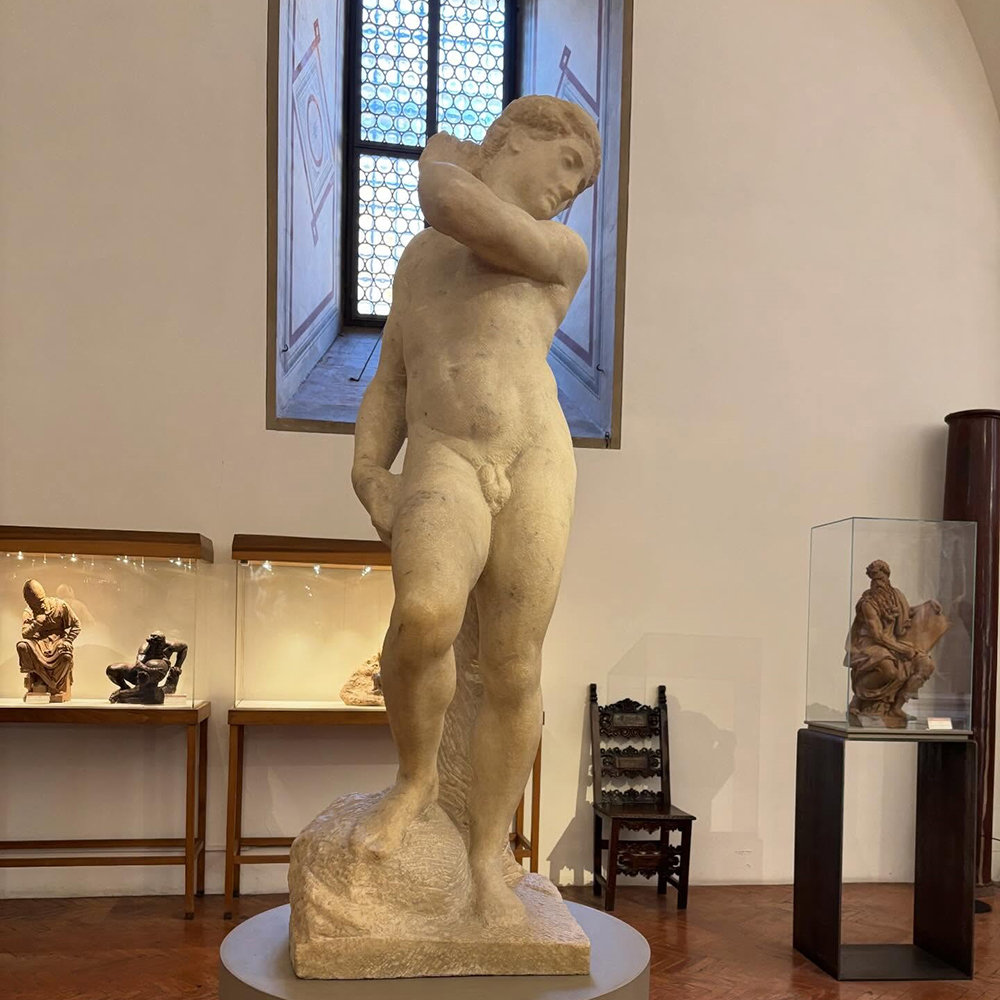
David Apollo depicts a nude male figure in a distinct contrapposto pose, with one leg supporting his weight while the other is relaxed, reflecting Renaissance studies of human dynamic balance.
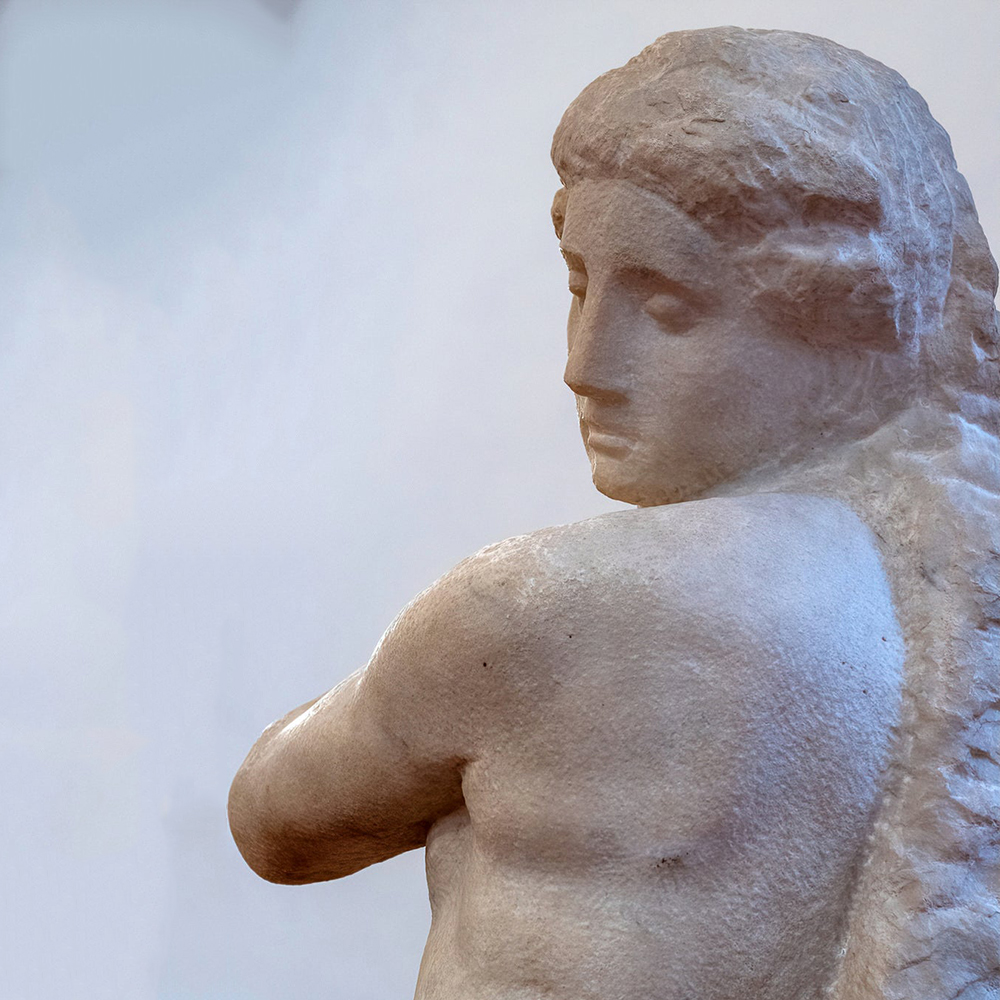
The upper body of the Michelangelo Statue in Florence is upright, with soft yet clearly defined muscle lines, and the head is slightly turned to one side. There is an unfinished area at the base of the sculpture; some scholars believe that the figure’s feet may have originally represented a snake or other symbolic element, which complicates the identification of the work.
Pitti Tondo
Basic Information
- Name: Pitti Tondo (Tondo Pitti)
- Creation Time: Around 1503–1505
- Material: Marble
- Type: Marble Relief
- Diameter: About 82 cm
- Style: Renaissance Sculpture
- Location: Museo Nazionale del Bargello, Florence, Italy
- Theme: The Virgin Mary, Child Jesus and Saint John the Baptist
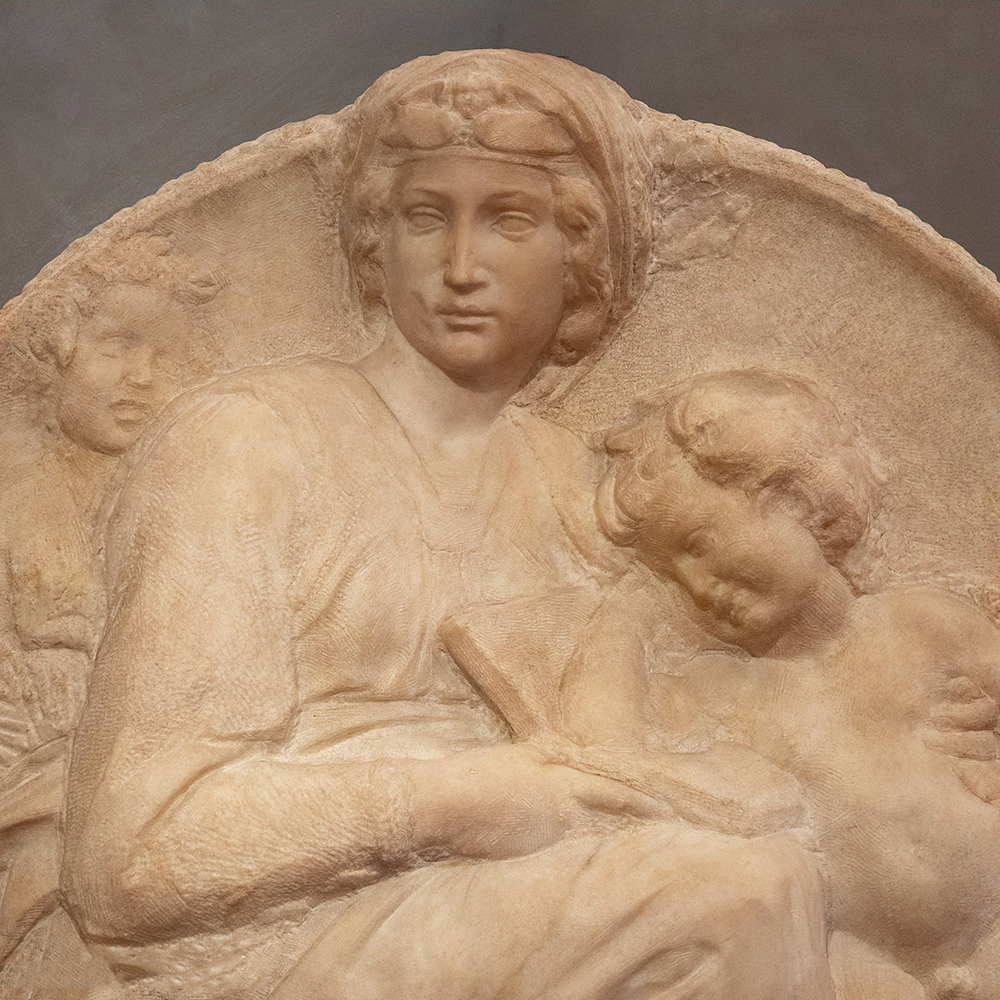
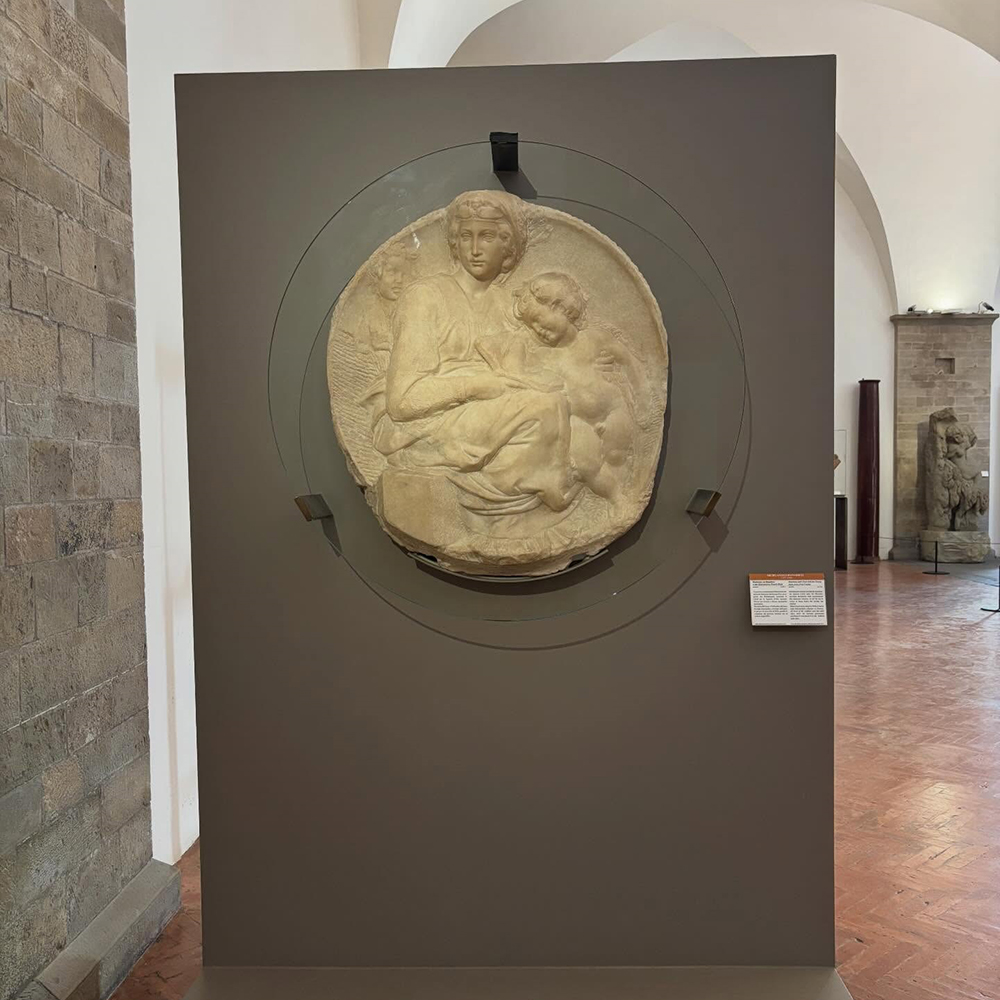
Pitti Tondo is an important early marble relief by Michelangelo, created around 1503-1505 during his Florentine period. “Tondo” in Italian means “circular artwork,” and the work depicts the Virgin Mary, the infant Jesus, and Saint John the Baptist in a circular composition.
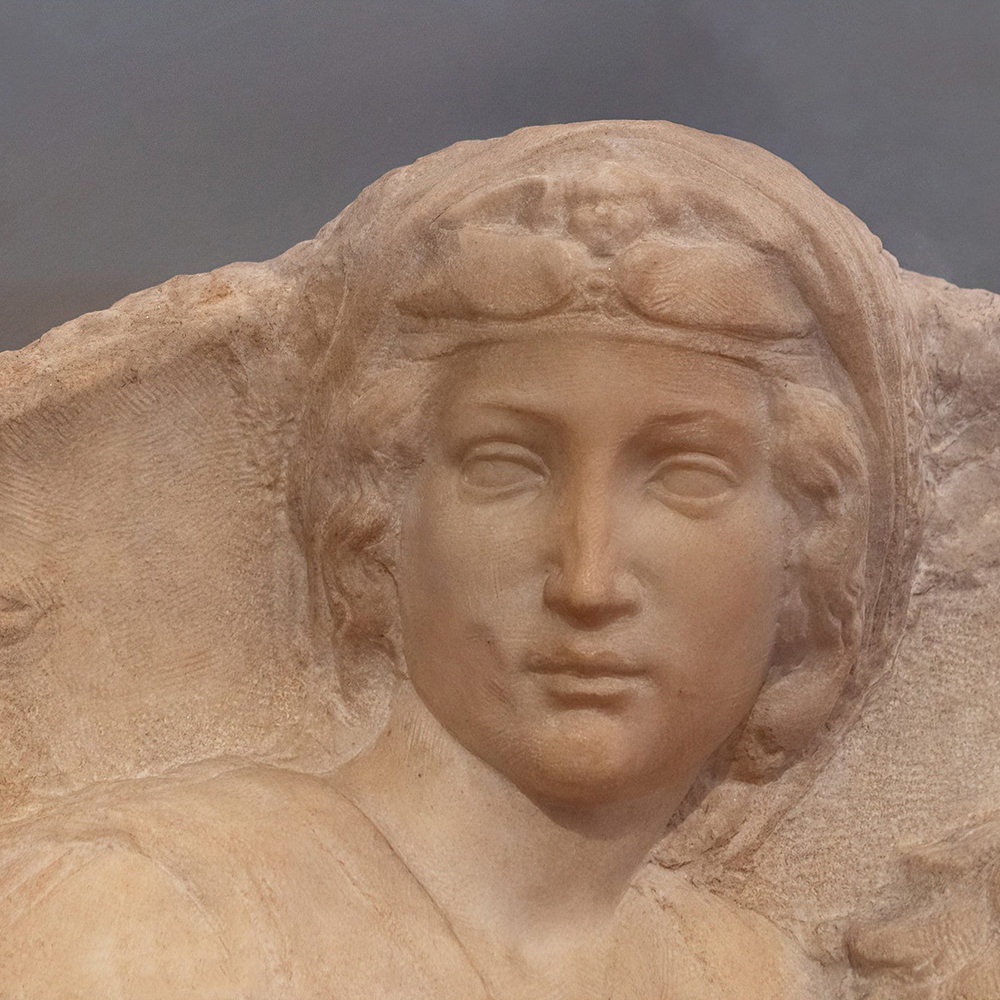
This work was commissioned by the Florentine nobleman Bartolomeo Pitti, but Michelangelo later traveled to Rome, and thus the work was never completed.
The Appearance of Pitti Tondo
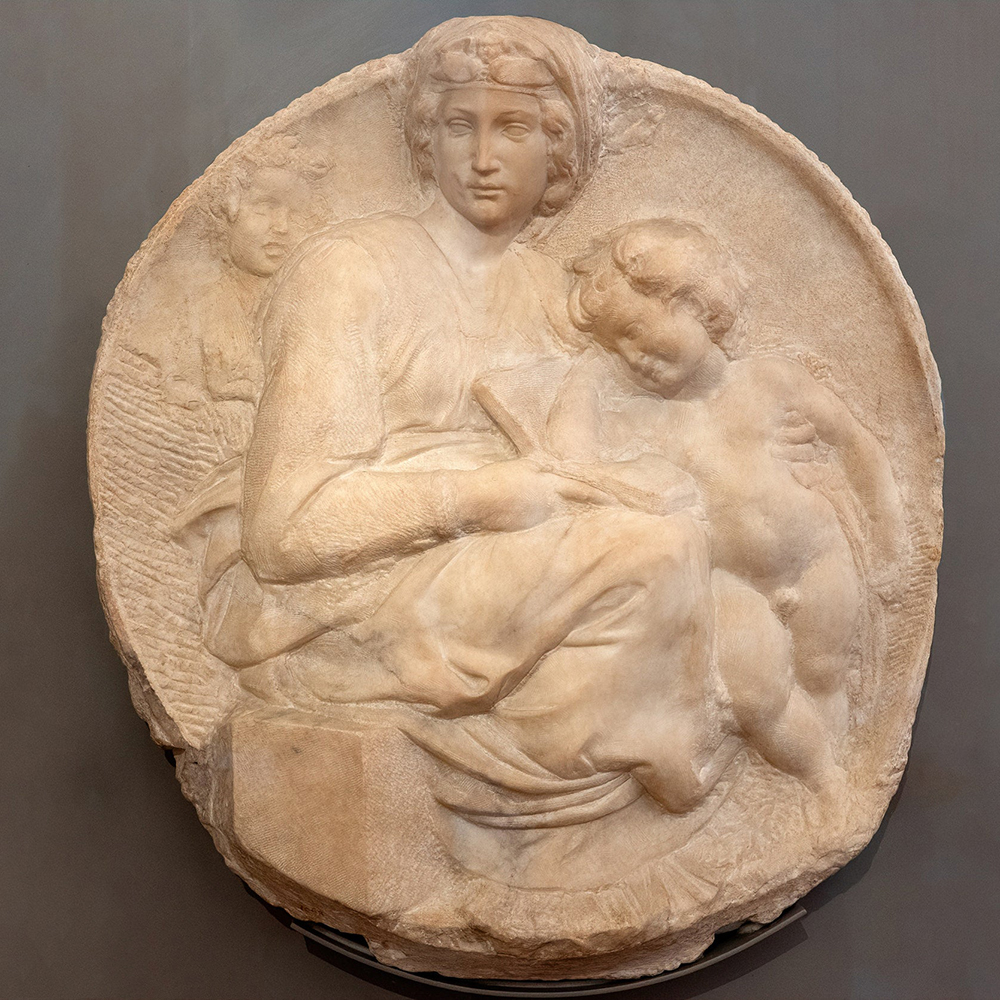
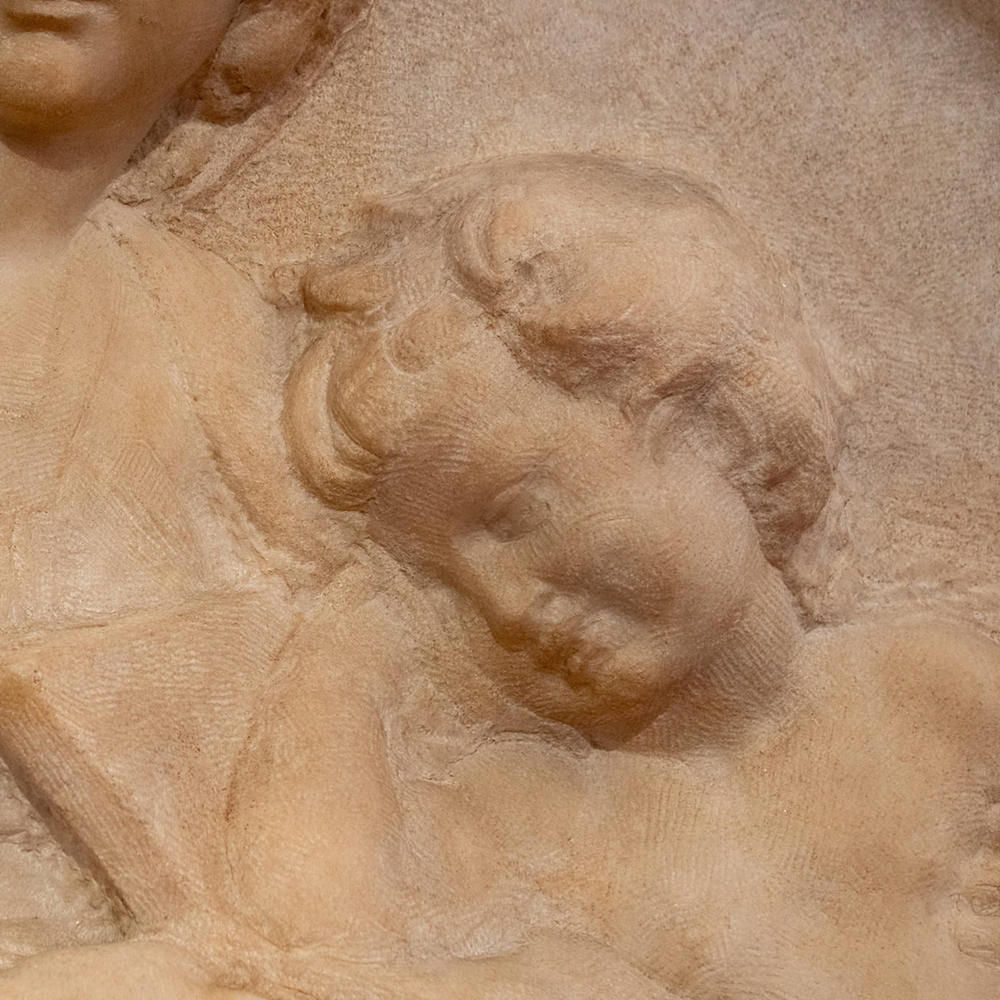
The Pitti Tondo is a round marble relief depicting the Virgin Mary, the infant Jesus, and the child John the Baptist. The Virgin Mary is positioned in the center, seated with her head slightly turned forward, her body covered by wide drapery. The infant Jesus leans against her in a relaxed posture; John the Baptist appears as a child on the left.
Madonna of the Stairs
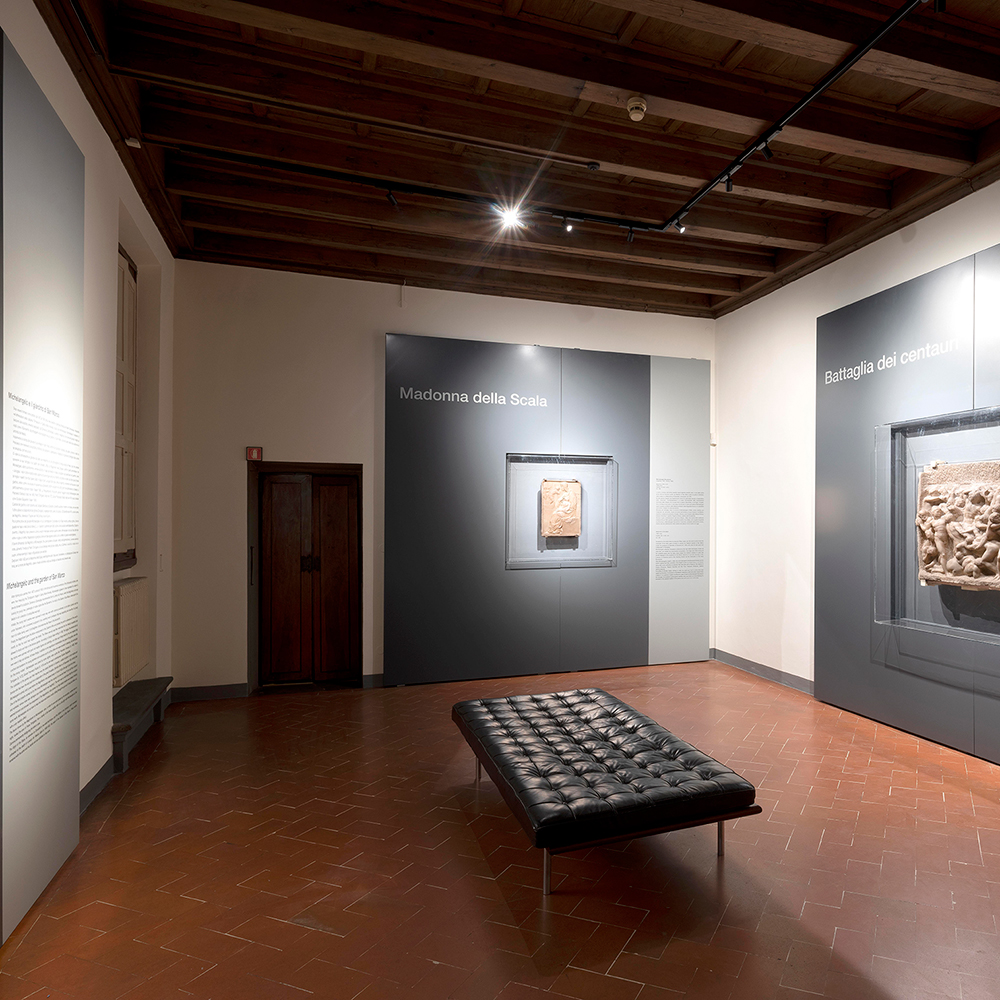
Basic Information of the Michelangelo Statue in Florence
- Name: Madonna of the Stairs (Madonna della Scala)
- Creation Time: Around 1490–1491
- Age of Artist: About 15 years old
- Material: Marble
- Type: Marble Relief Sculpture
- Style: Early Renaissance Sculpture
- Location: Casa Buonarroti, Florence, Italy
- Theme: The Virgin Mary and Child Jesus
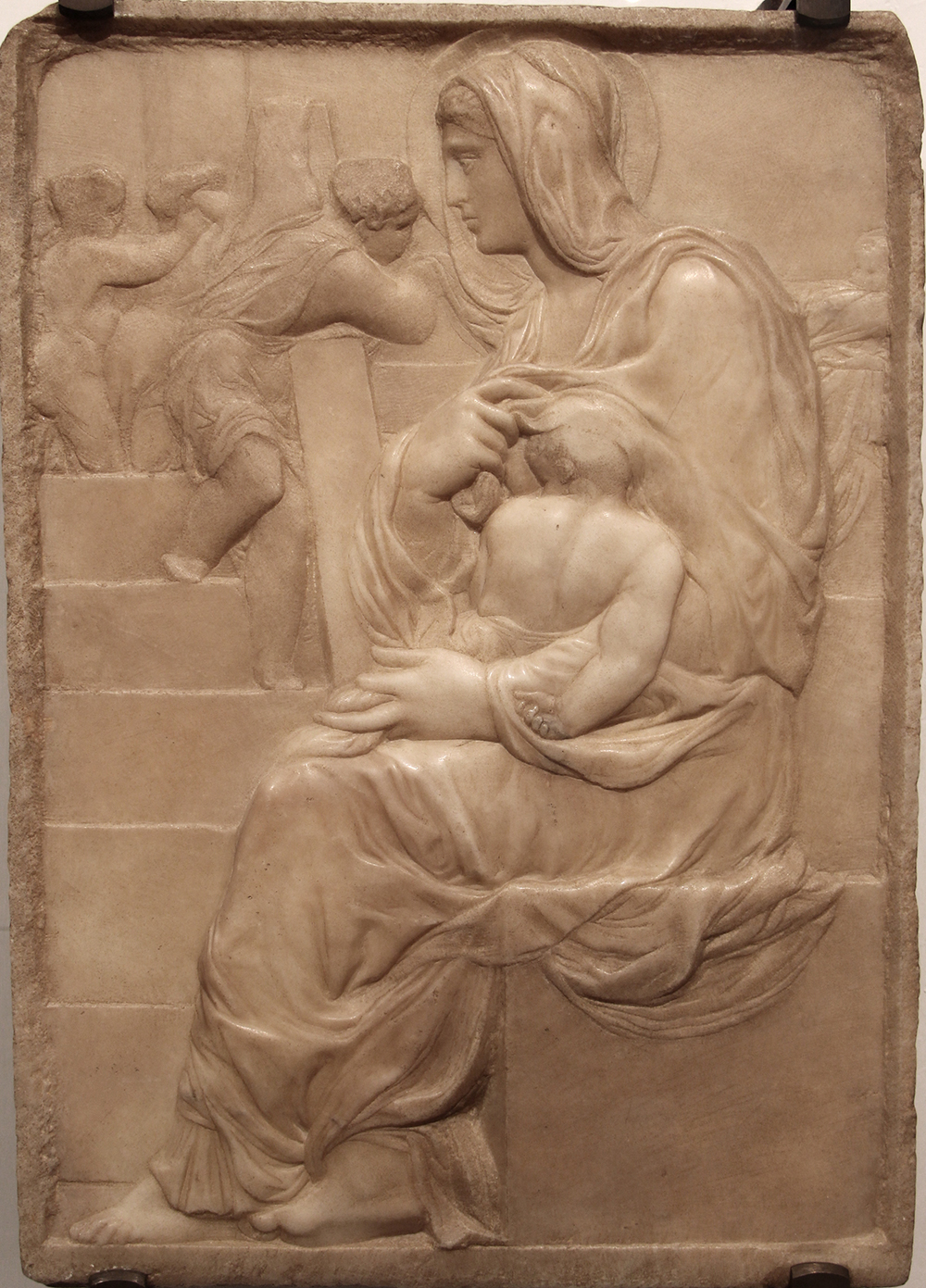
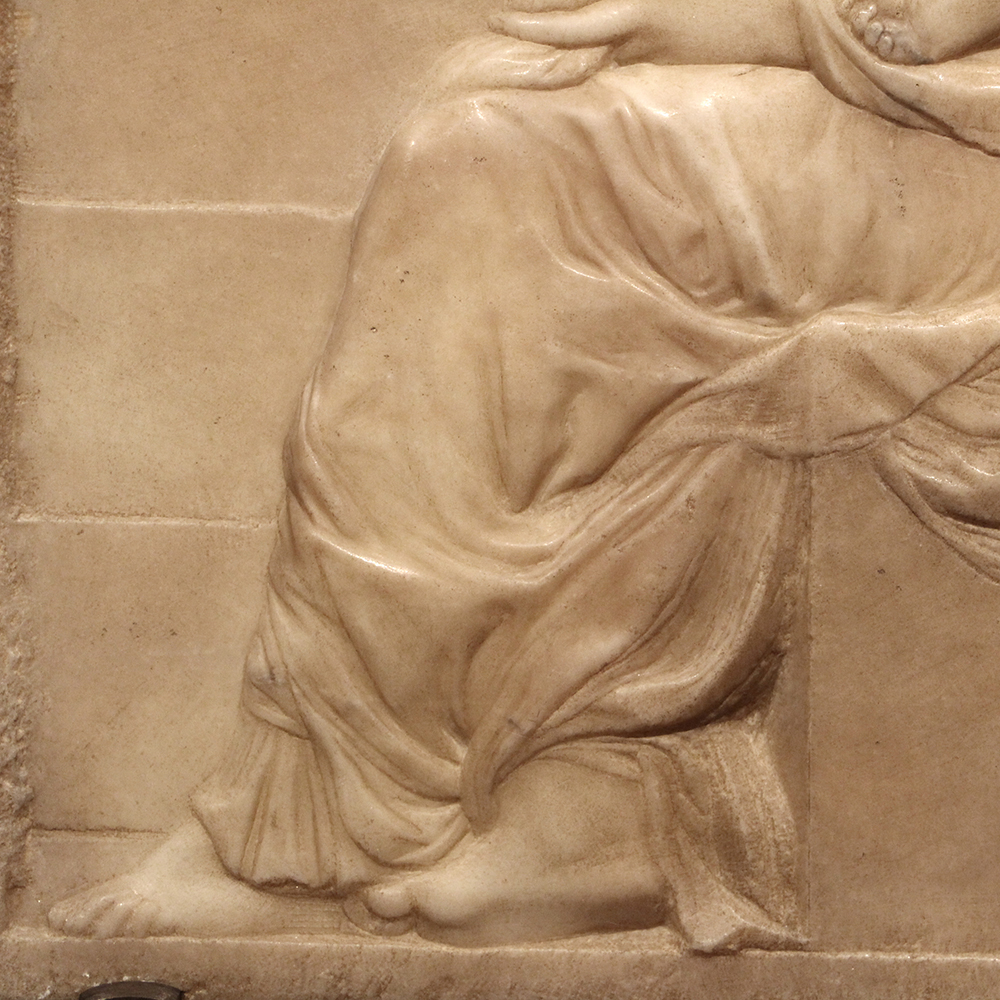
Madonna of the Stairs is one of Michelangelo’s earliest surviving sculptures, created around the age of 15 during his Florentine period. The work, sculpted in stiacciato relief, depicts the Virgin Mary and the infant Jesus. Along with The Battle of the Centaurs, it is considered a significant work in Michelangelo’s early artistic explorations.
The work is clearly influenced by the stiacciato technique of the Florentine sculptor Donatello. Michelangelo uses extremely shallow sculpting layers to create spatial variation, allowing the figures to gradually emerge from the marble surface.
The Appearance of Madonna of the Stairs
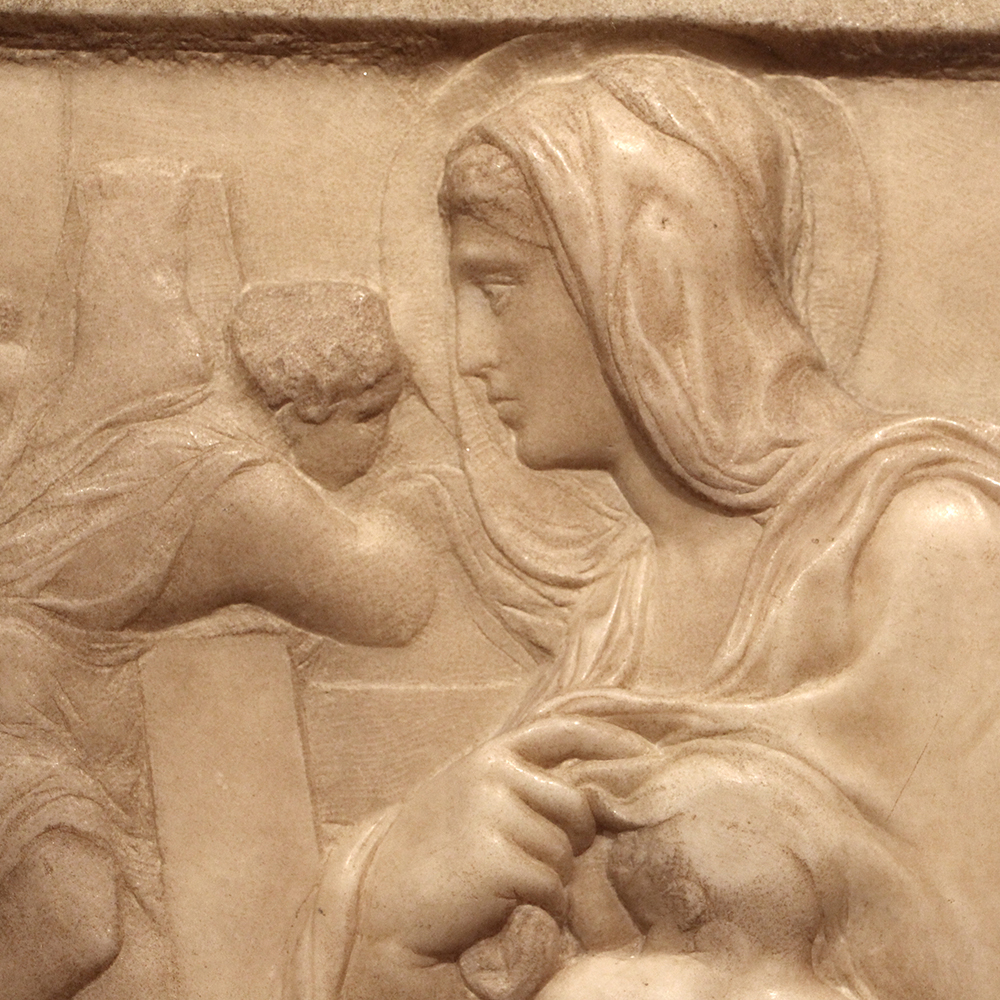
The Madonna of the Stairs is a rectangular marble stiacciato relief depicting an intimate scene of the Virgin Mary and the infant Jesus. The Virgin Mary sits on a pedestal beside the steps, her body turned to the side, her head slightly turned to one side, her overall image serene and dignified. The infant Jesus in her arms is close to his mother; the Michelangelo Statue in Florence is generally considered to depict the moment when the Virgin Mary is nursing or preparing to nurse the infant Jesus.
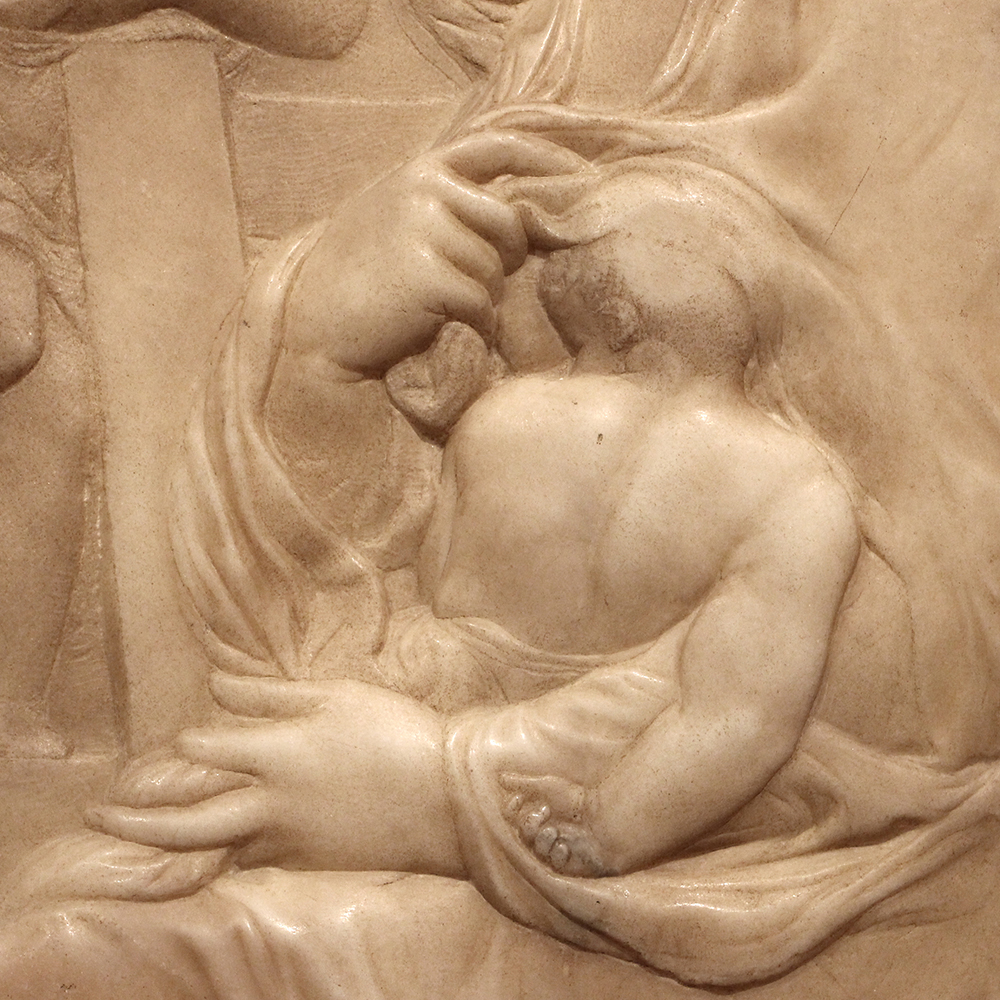
The steps in the background and the children in the distance are depicted with shallower carving, creating spatial depth with the figures in the foreground.
What is Michelangelo’s first sculpture?
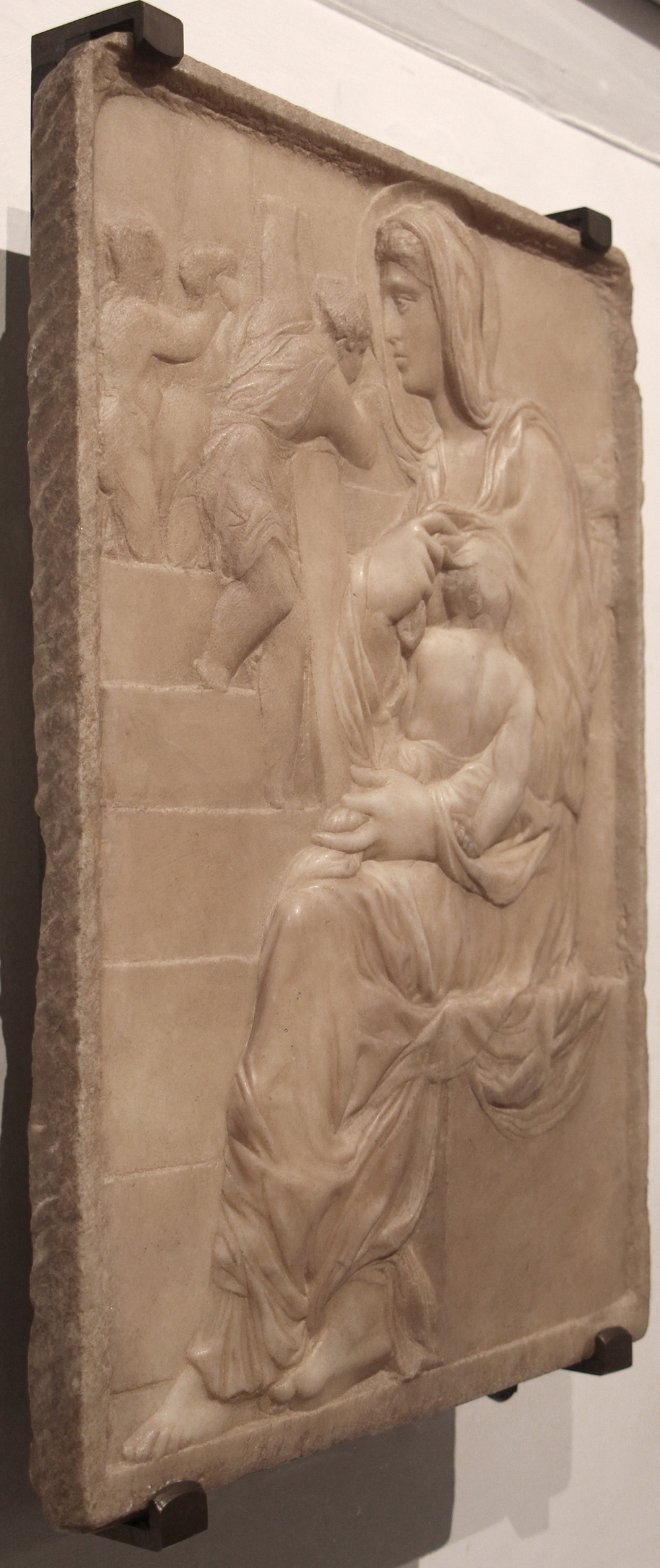
Michelangelo’s earliest surviving sculpture is generally considered to be the Madonna of the Steps. This marble bas-relief, created when he was about 15 years old, depicts the Virgin Mary and the infant Jesus.
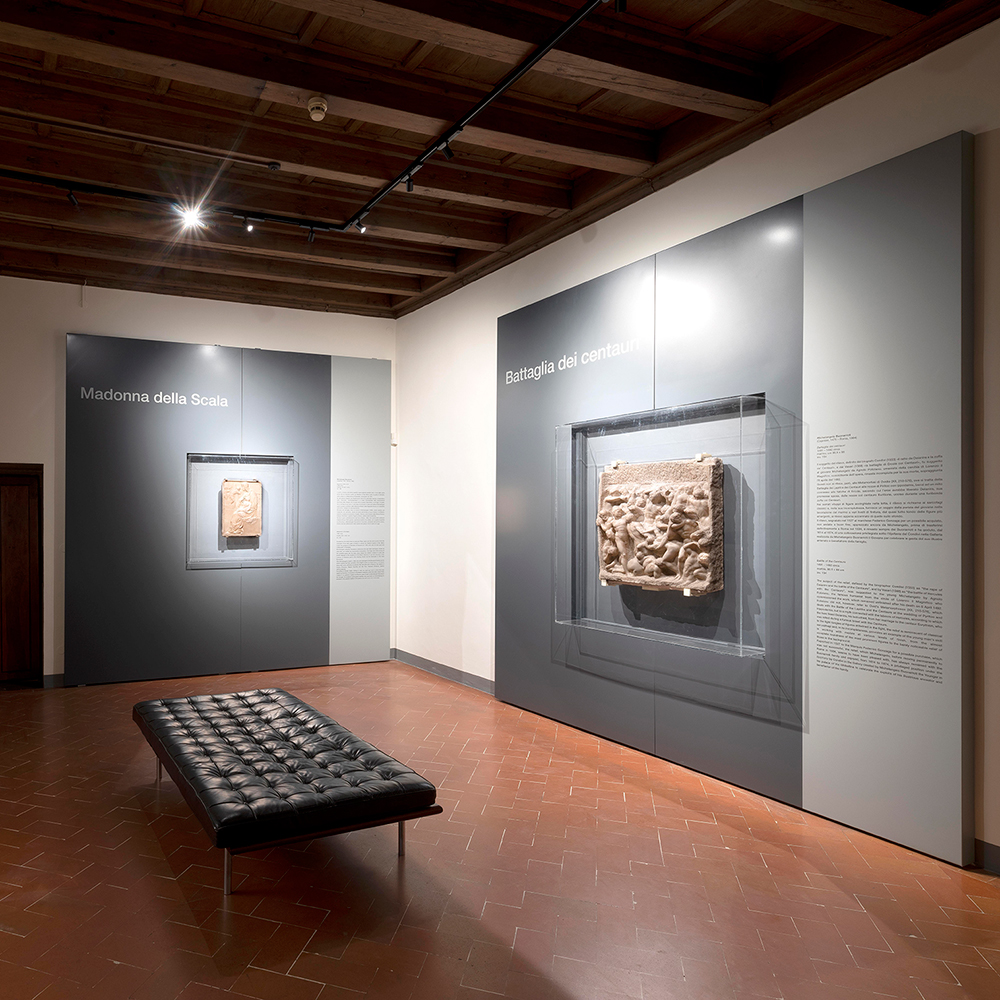
Battle of the Centaurs
Basic Information
- Name: Battle of the Centaurs (Battaglia dei Centauri)
- Creation Time: Around 1492
- Age of Artist: About 17 years old
- Material: Marble Relief
- Style: Early Renaissance Sculpture
- Location: Casa Buonarroti, Florence, Italy
- Theme: The battle between the Lapiths and Centaurs from Greek mythology
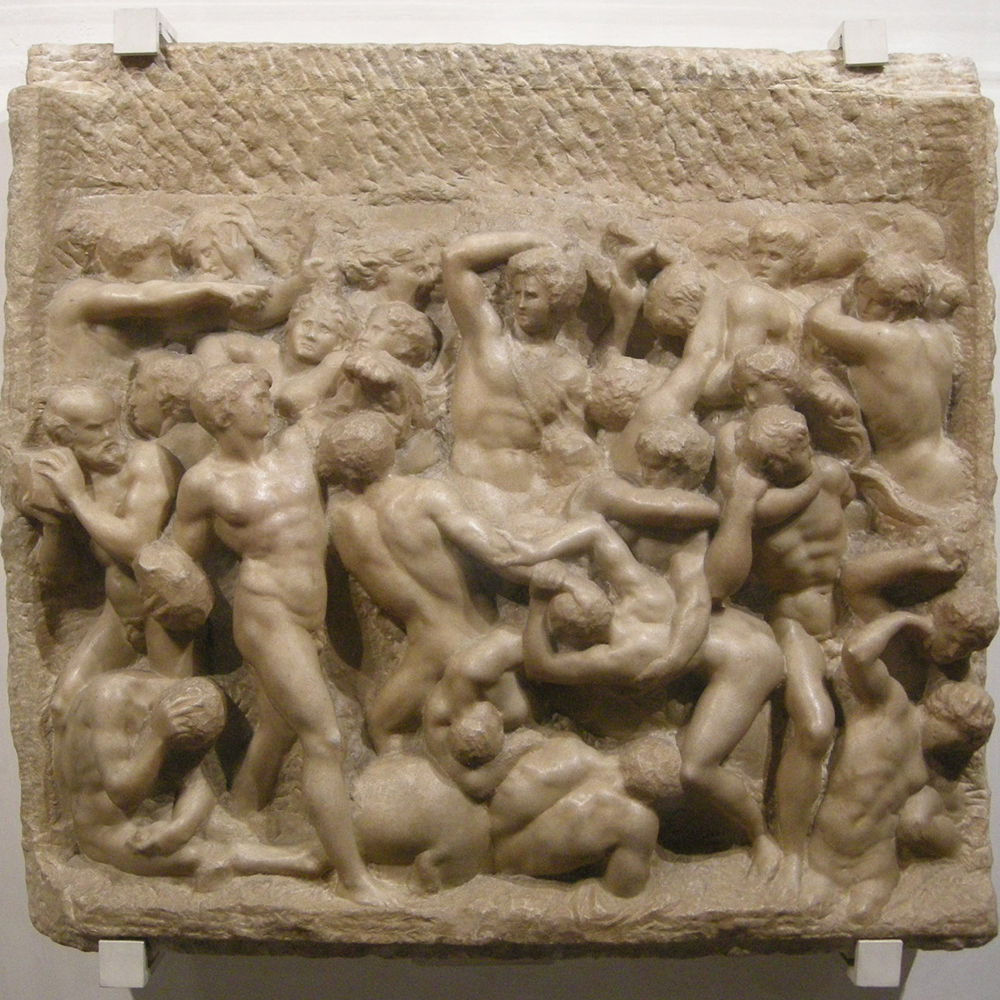
Battle of the Centaurs is an important marble relief from Michelangelo’s early period. He was not yet 20 years old at the time, and this work was commissioned by members of the Lorenzo de’ Medici family, a prominent patron in Florence.
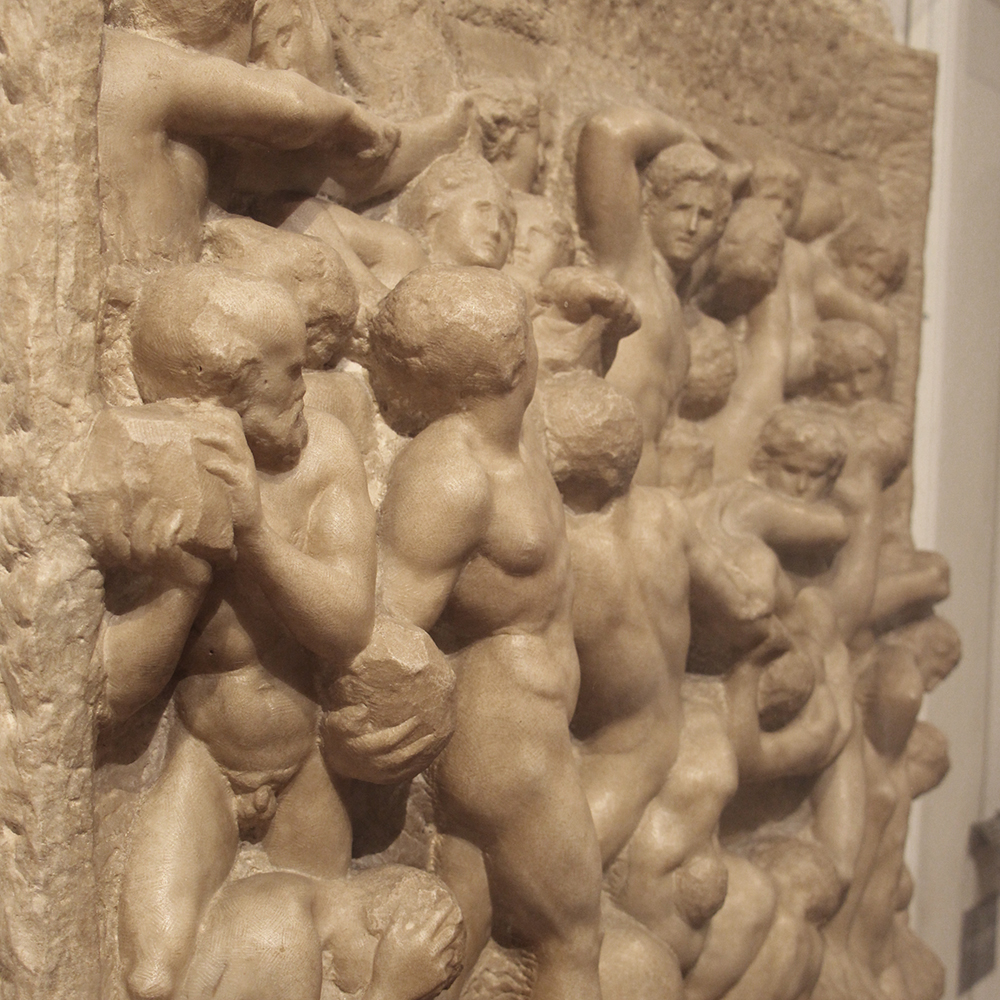
The work is based on the Greek myth of the Battle of the Lapiths and Centaurs. Michelangelo did not complete the final polishing of the surface, but the complex human dynamics and strong sense of movement already demonstrate his early and profound exploration of classical art and the representation of the human form.
The Appearance of Battle of the Centaurs
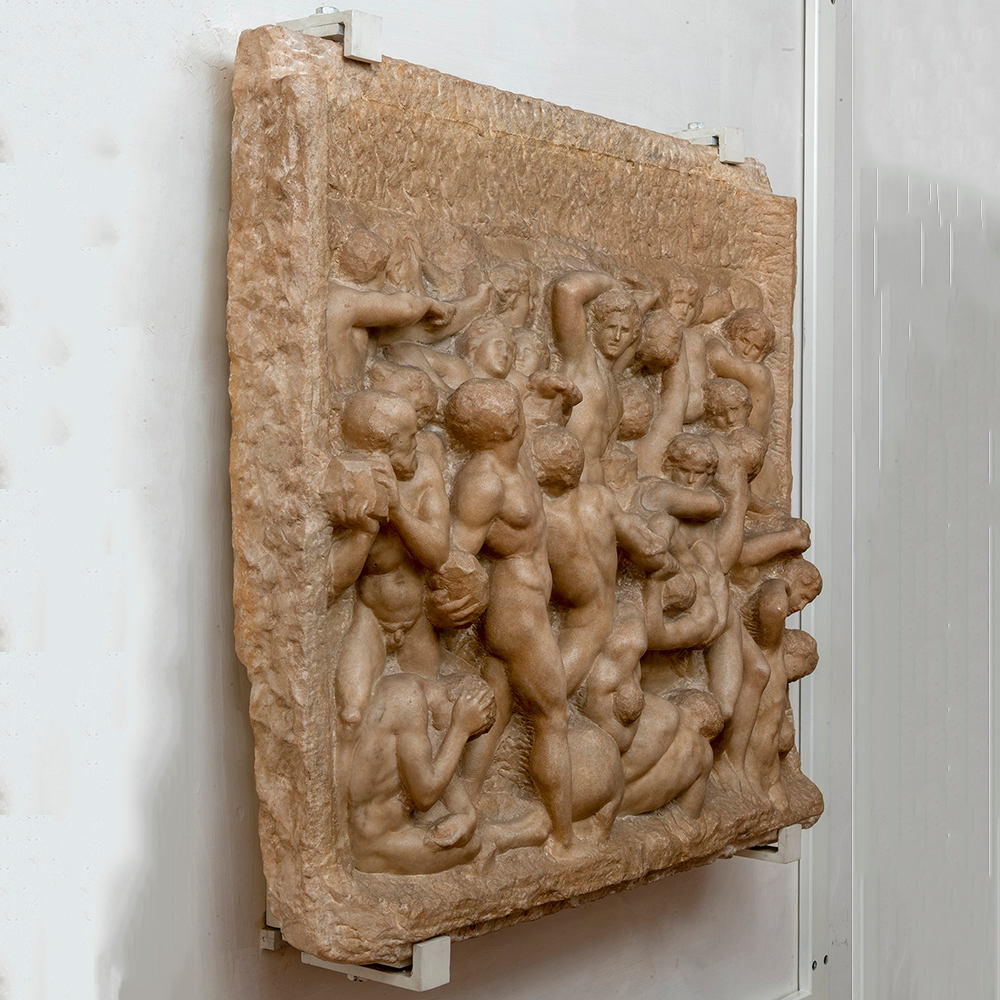
Battle of the Centaurs is a rectangular marble relief depicting a fierce battle between the Lapiths and centaurs. Numerous nude figures are intertwined, some throwing punches, others struggling on the ground, creating a dynamic composition full of conflict.
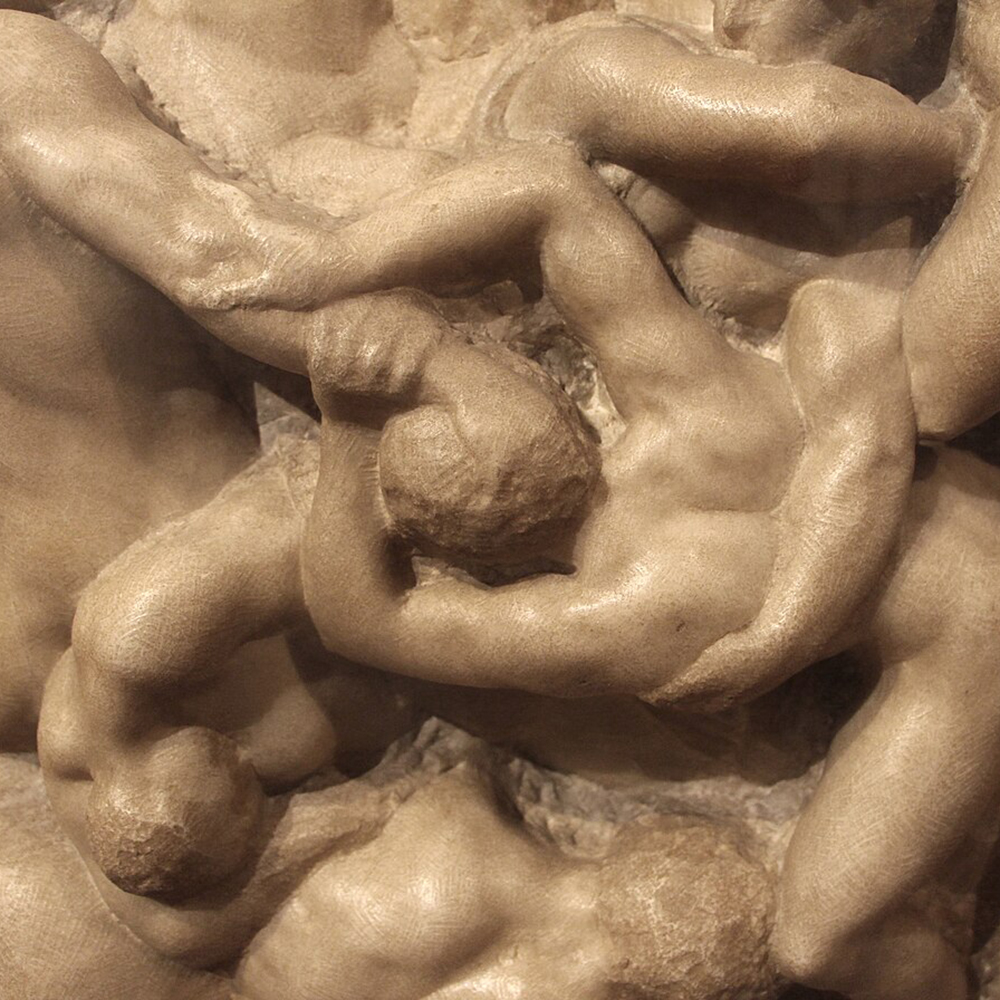
Michelangelo uses the twisting of the figures’ bodies, the lines of their muscles, and the overlapping relationships to express the power of the battle. Some areas of the artwork retain a rough marble surface, without being fully polished, presenting an early, unfinished effect. The figure gradually emerges from the stone surface.
Michelangelo Wooden Crucifix Statue in Florence
Basic Information
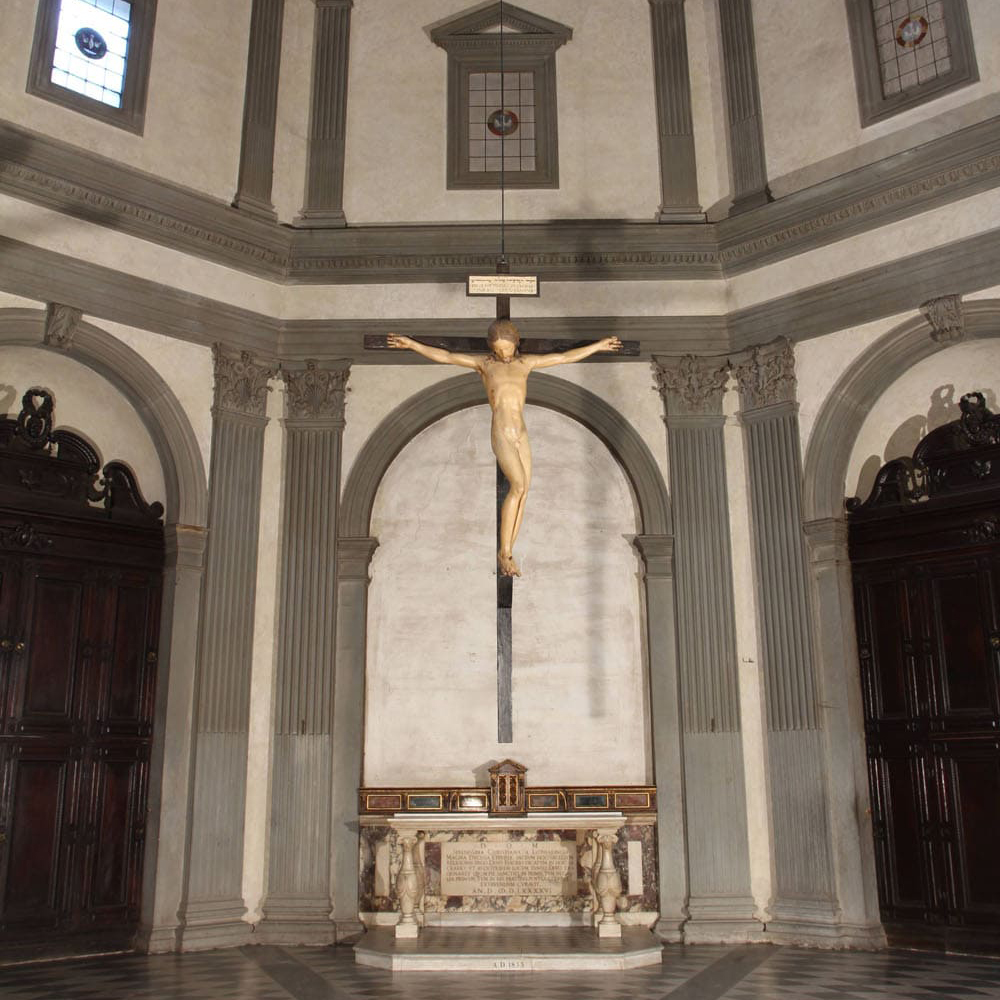
- Name: Wooden Crucifix (Crocifisso di Santo Spirito)
- Creation Time: Around 1492–1493
- Material: Wood (Polychrome wood sculpture)
- Style: Early Renaissance Sculpture
- Location: Basilica of Santo Spirito, Florence, Italy
- Theme: Crucifixion of Jesus Christ
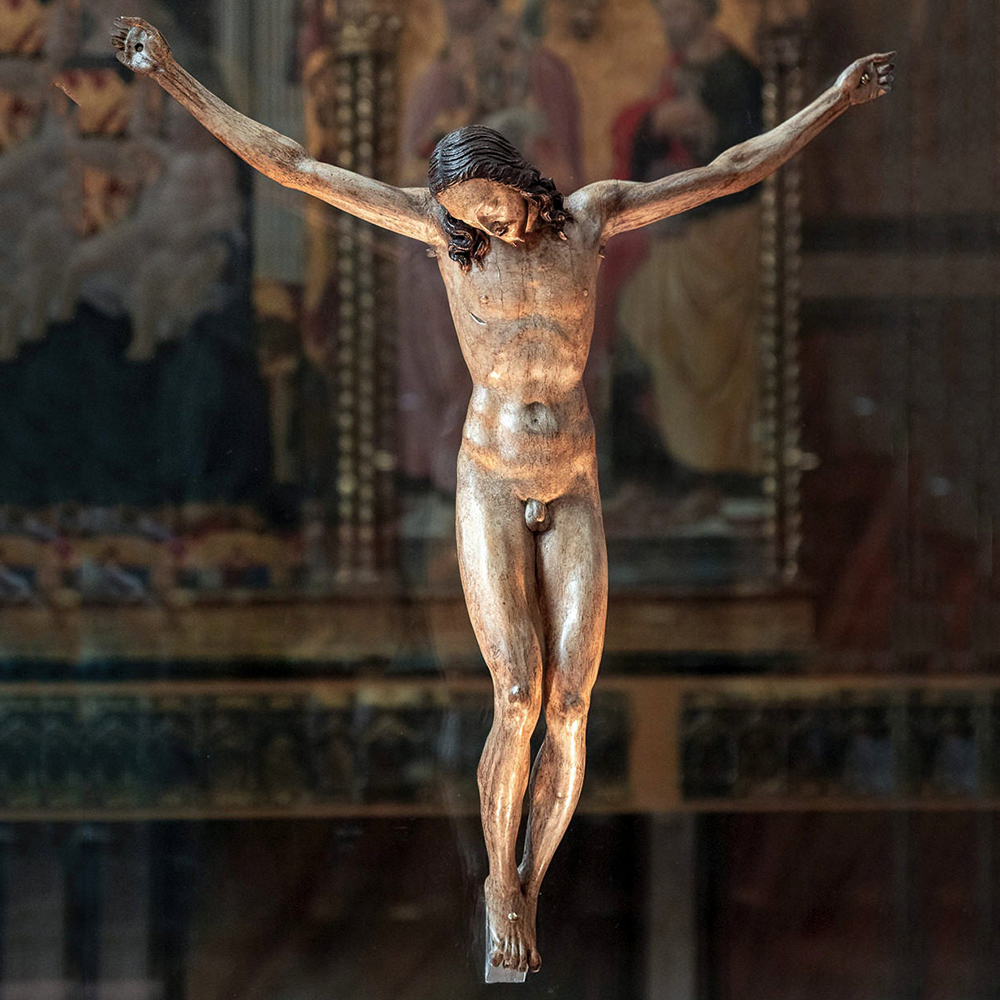
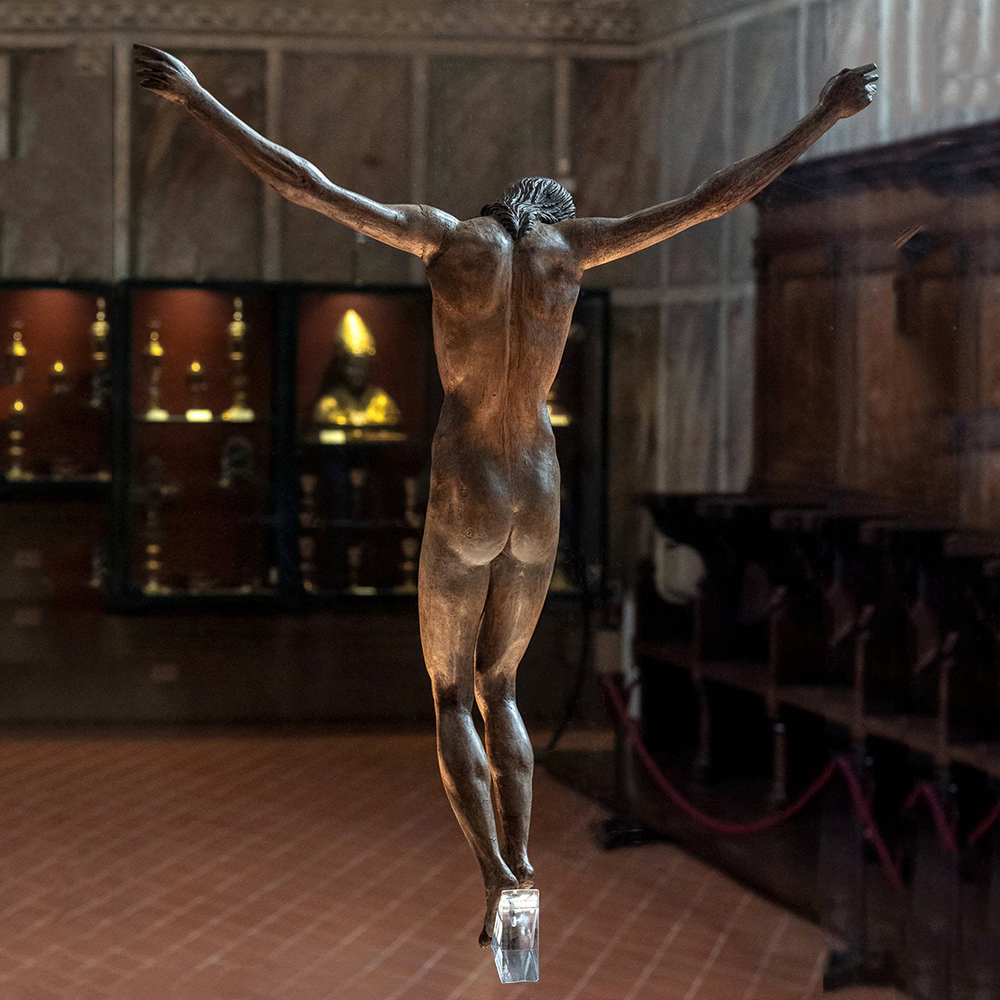
Michelangelo’s Wooden Crucifix is one of his important early religious sculptures, created when he was approximately 17 or 18 years old. The work is associated with the Basilica of Santo Spirito in Florence and is considered a significant piece from Michelangelo’s early period of study of human anatomy and religious sculpture. Records indicate that Michelangelo had the opportunity to observe human anatomy within the Basilica hospital, and in gratitude for the monastery’s support, he created this wooden crucifix.
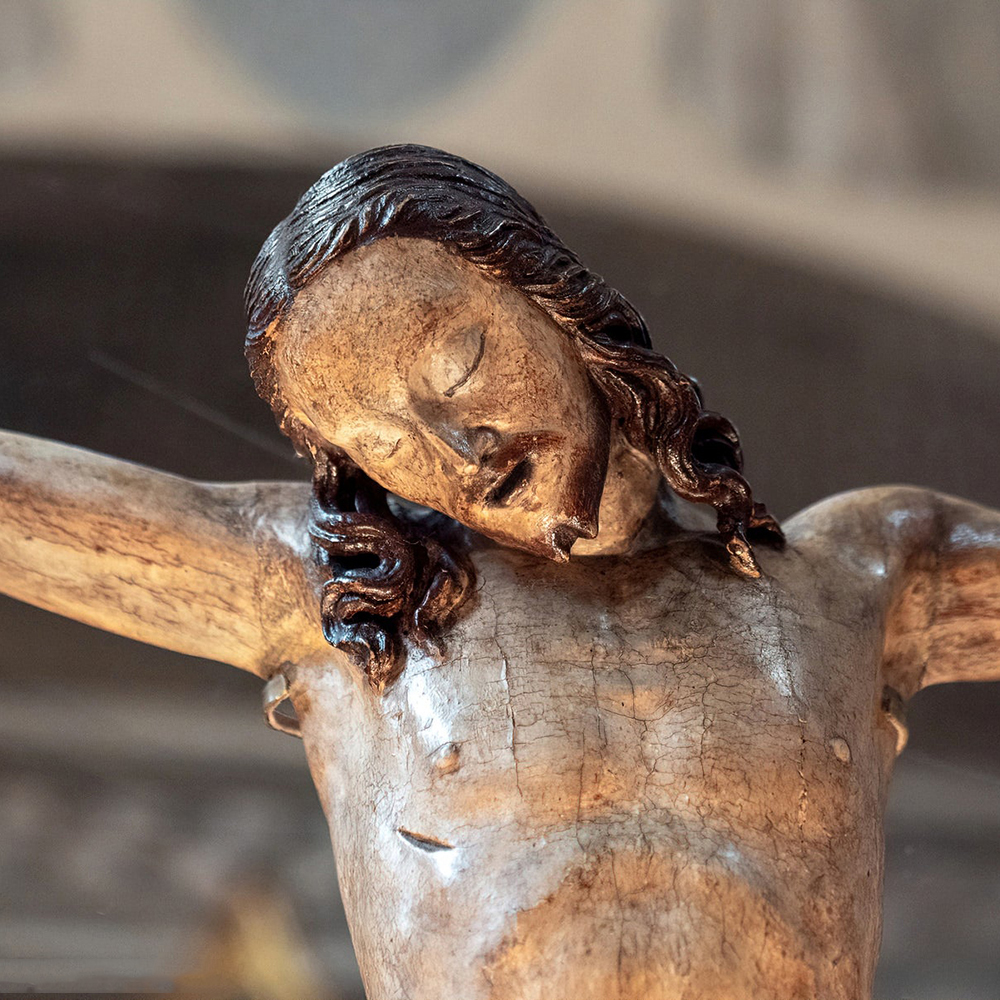
The Appearance of Michelangelo Wooden Crucifix
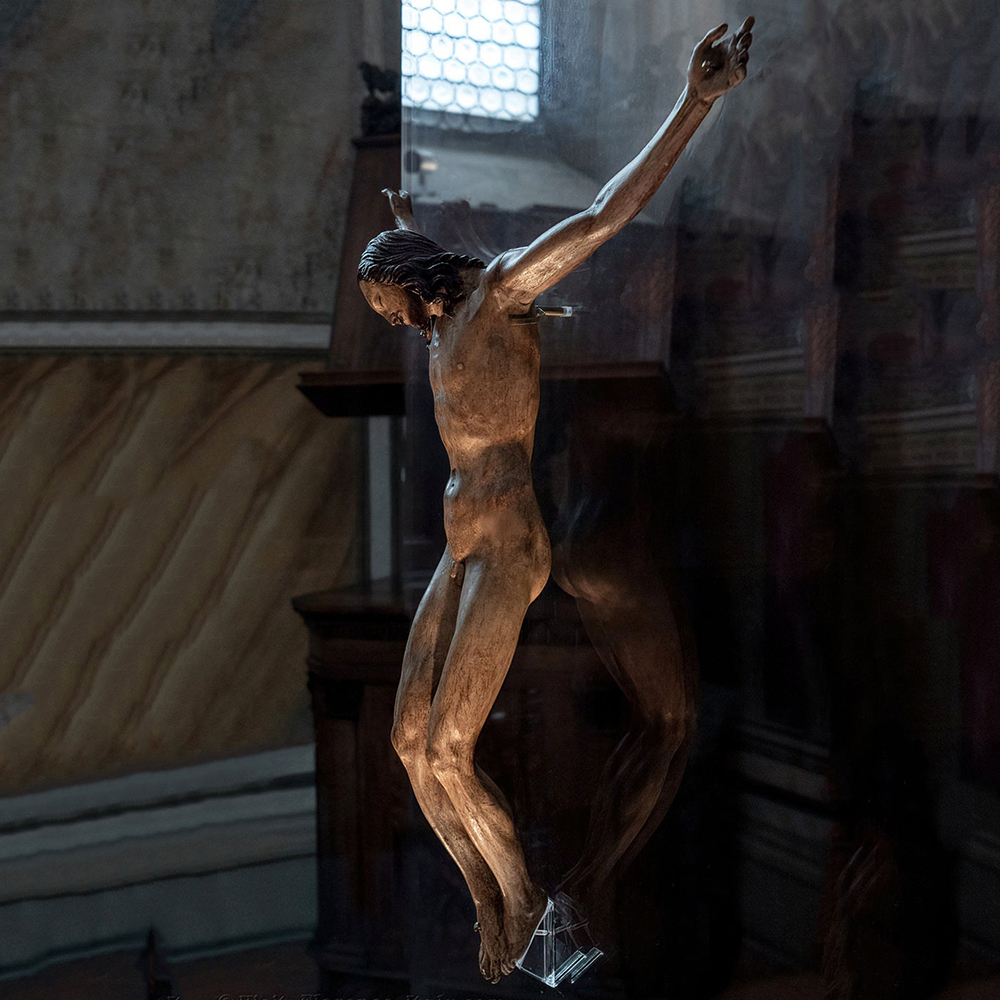
The Wooden Cross of the Sant’Saint-Tristram depicts Jesus Christ crucified. Carved from wood and painted, the figure is slender, with the body in a naturally drooping posture.
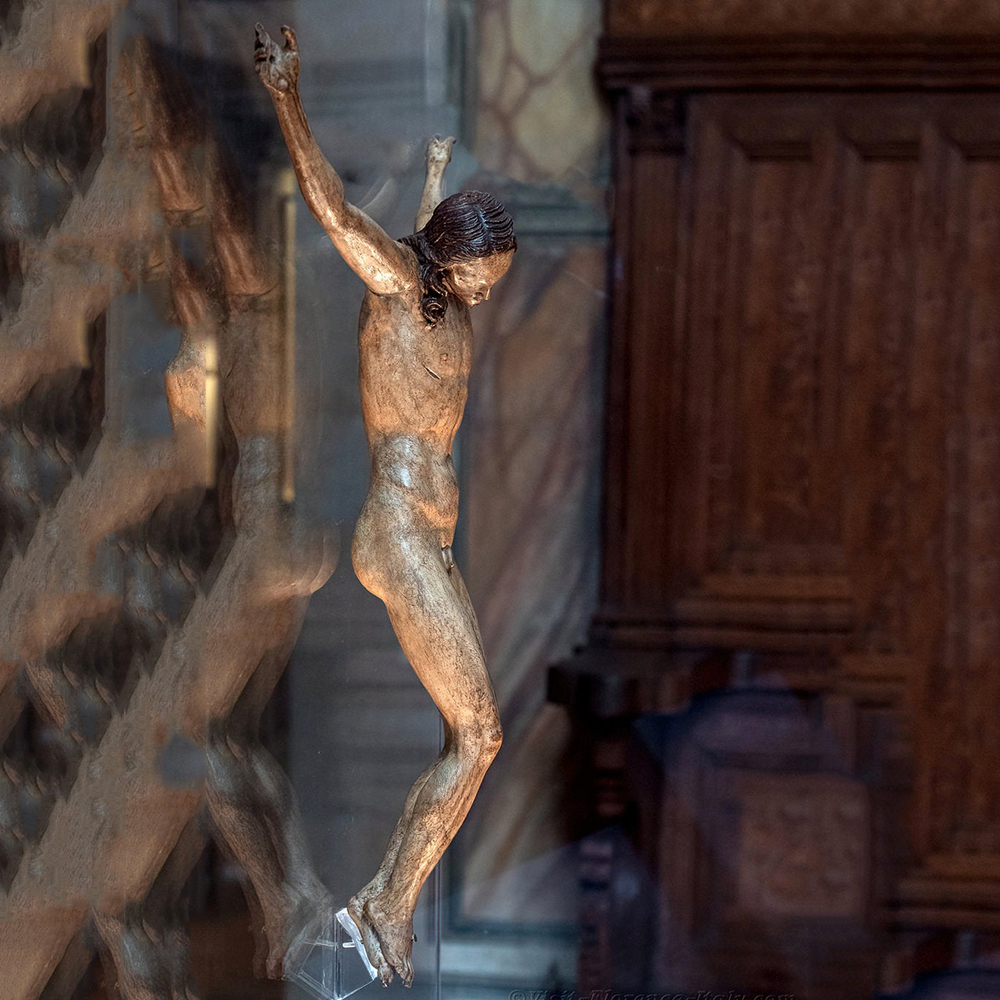
Michelangelo’s depiction of the chest, abdomen, arms, and legs demonstrates a profound understanding of human anatomy. Unlike many religious sculptures that emphasize suffering, the Christ in this Michelangelo Statue in Florence presents a serene figure with simple, clean lines.
The Genius of Victory
Basic Information
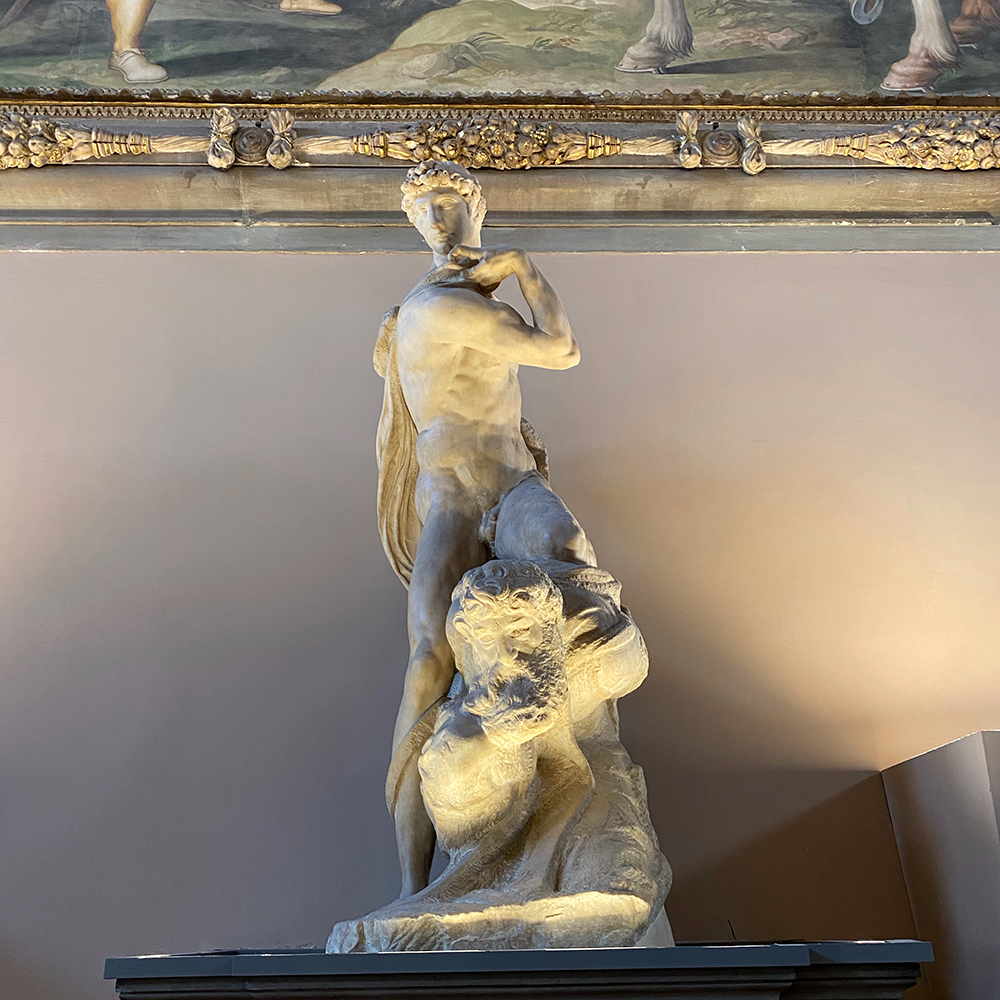
- Name: The Genius of Victory (Il Genio della Vittoria)
- Creation Time: Around 1532–1534
- Material: Marble
- Height: About 261 cm
- Style: Renaissance Sculpture
- Location: Palazzo Vecchio, Florence, Italy
- Theme: Allegory of Victory and Defeat
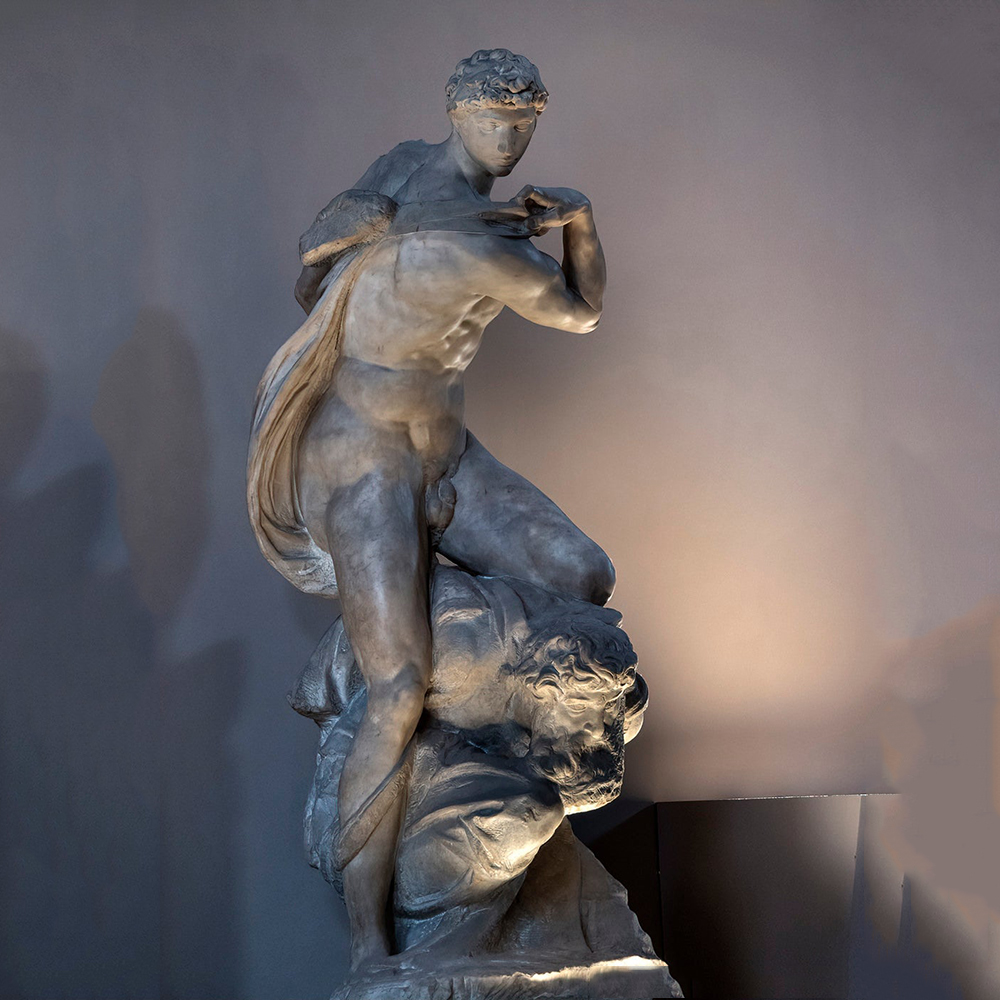
The Genius of Victory is generally believed to be related to Pope Julius II’s mausoleum plans, but it was never installed in the tomb. Later, at the suggestion of Giorgio Vasari, the work was gifted to the Medici family and eventually became part of the Palazzo Vecchio in Florence.
The Appearance of The Genius of Victory
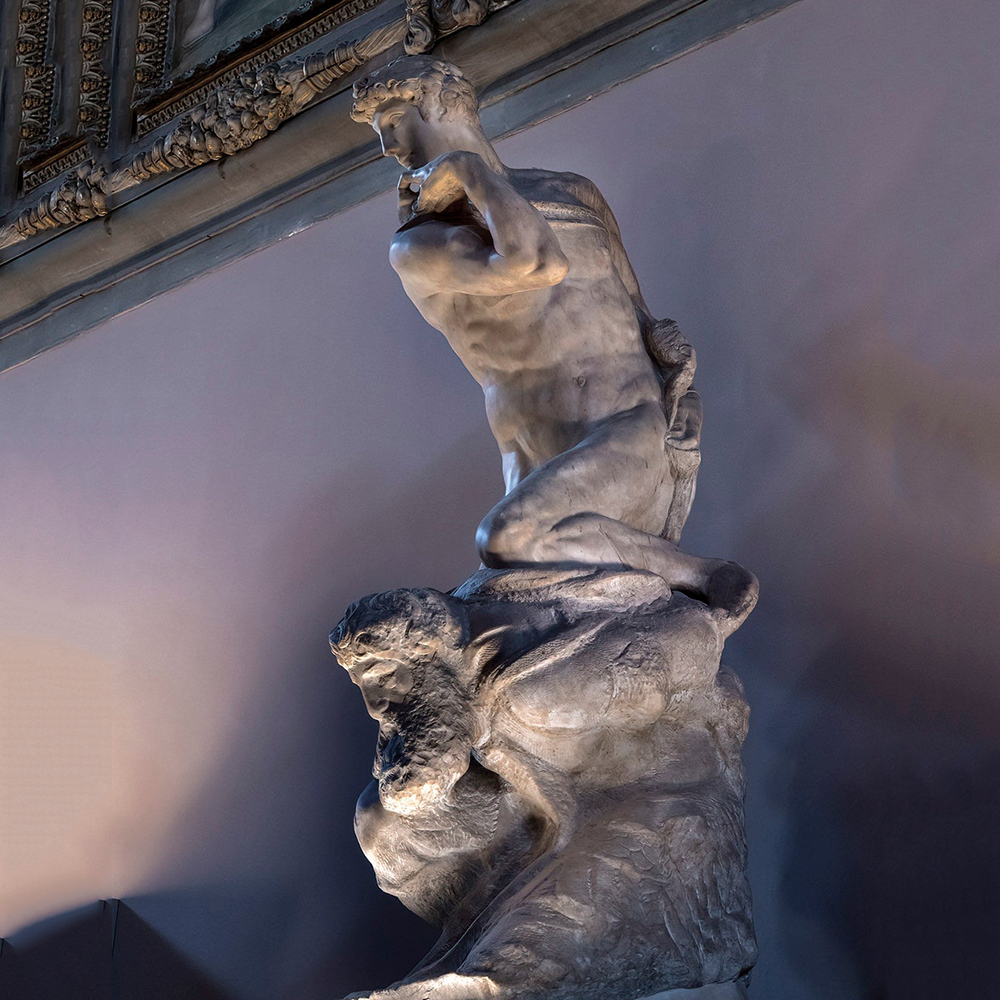
The work depicts a young victor subduing an older prisoner, not a real moment of battle, but an allegorical image symbolizing victory. Above is a young man, slender and graceful, his body in a distinctly twisted position (figura serpentinata). One leg supports and presses down on the older prisoner, showcasing the victor’s agility and control.
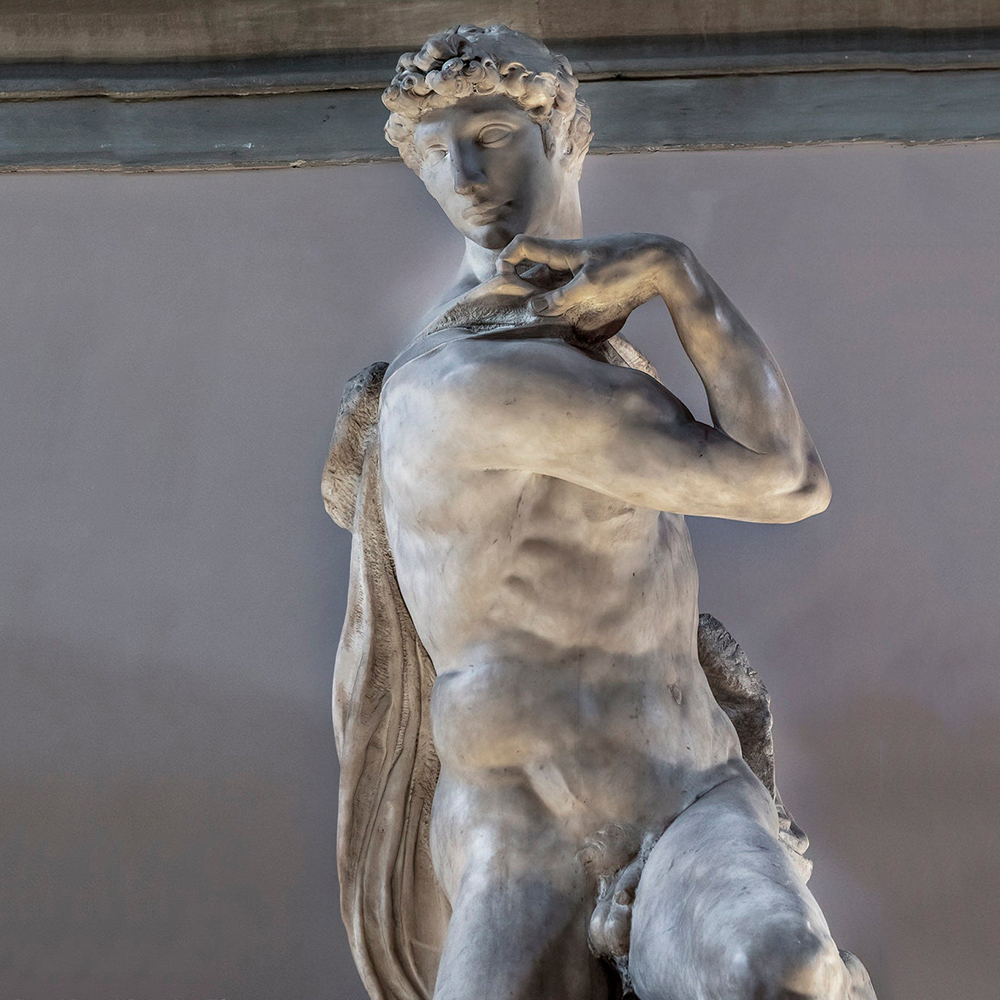
Below is an older man, bearded, dressed in clothing resembling that of an ancient Roman warrior, his body bent and subdued. His posture is heavy, contrasting sharply with the younger figure.
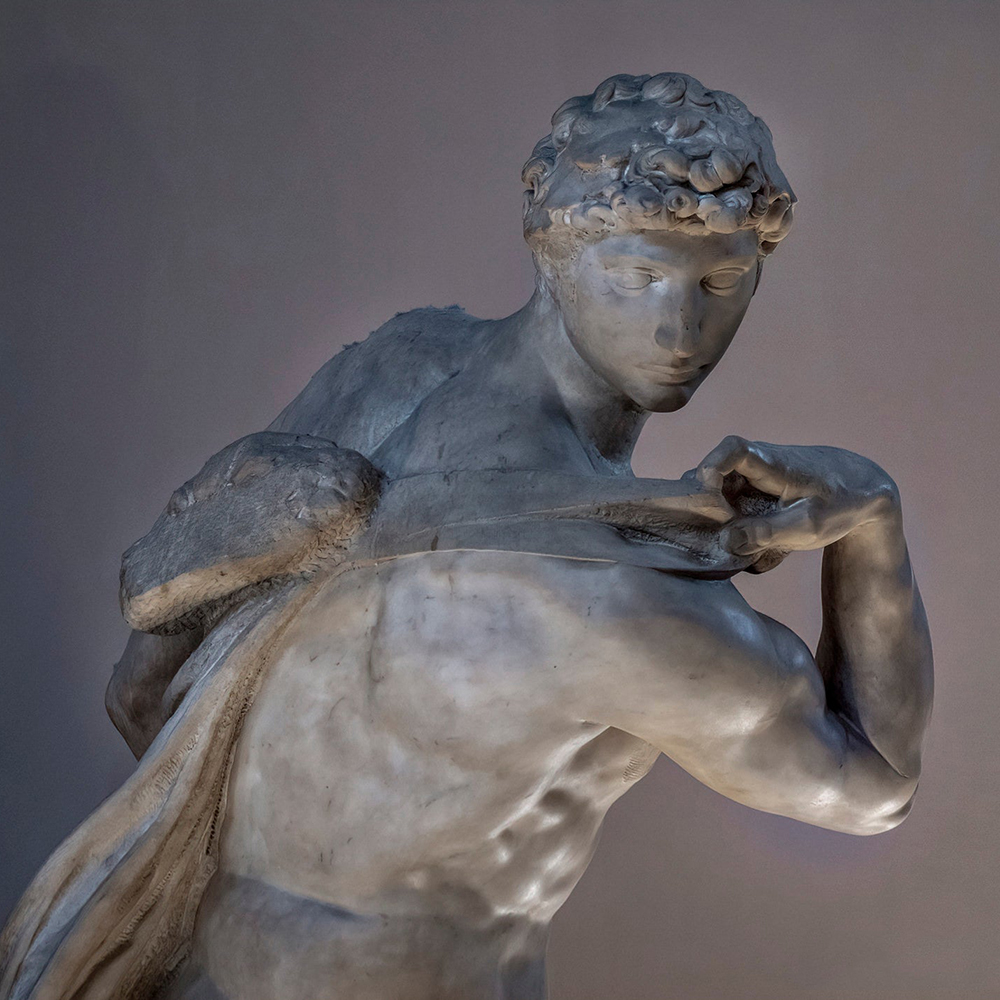
Michelangelo emphasizes this difference through different surface treatments: the younger figure’s body is sculpted with smoother, more detailed lines, while areas of the older man retain a rougher, more stone-like texture, creating a contrast between power, age, and state of being.
What does Michelangelo’s “Genius of Victory” symbolize?
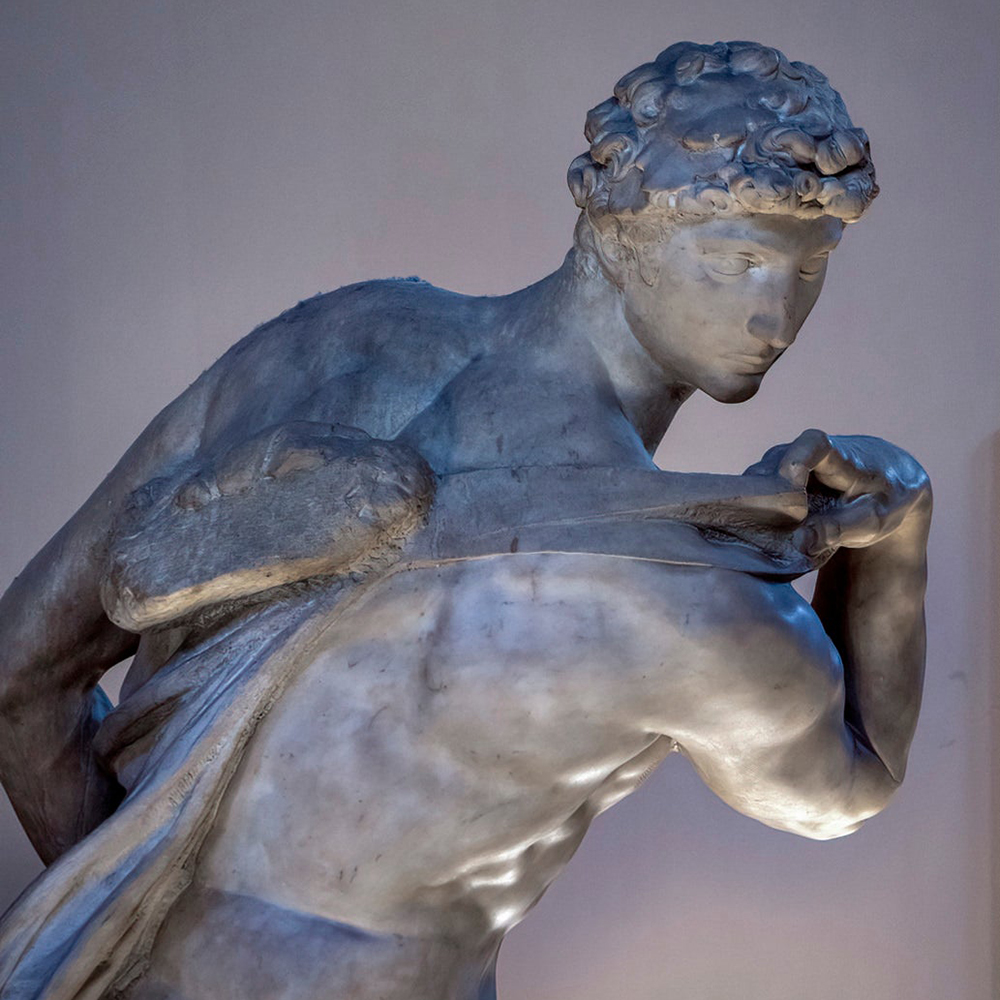
The Genius of Victory symbolizes the victor’s conquest of the defeated and the relationship between power and dominance. In the work, the young victor stands atop an older prisoner, his posture embodying the victor’s agility, strength, and control, while the oppressed old man below represents the defeated or conquered.
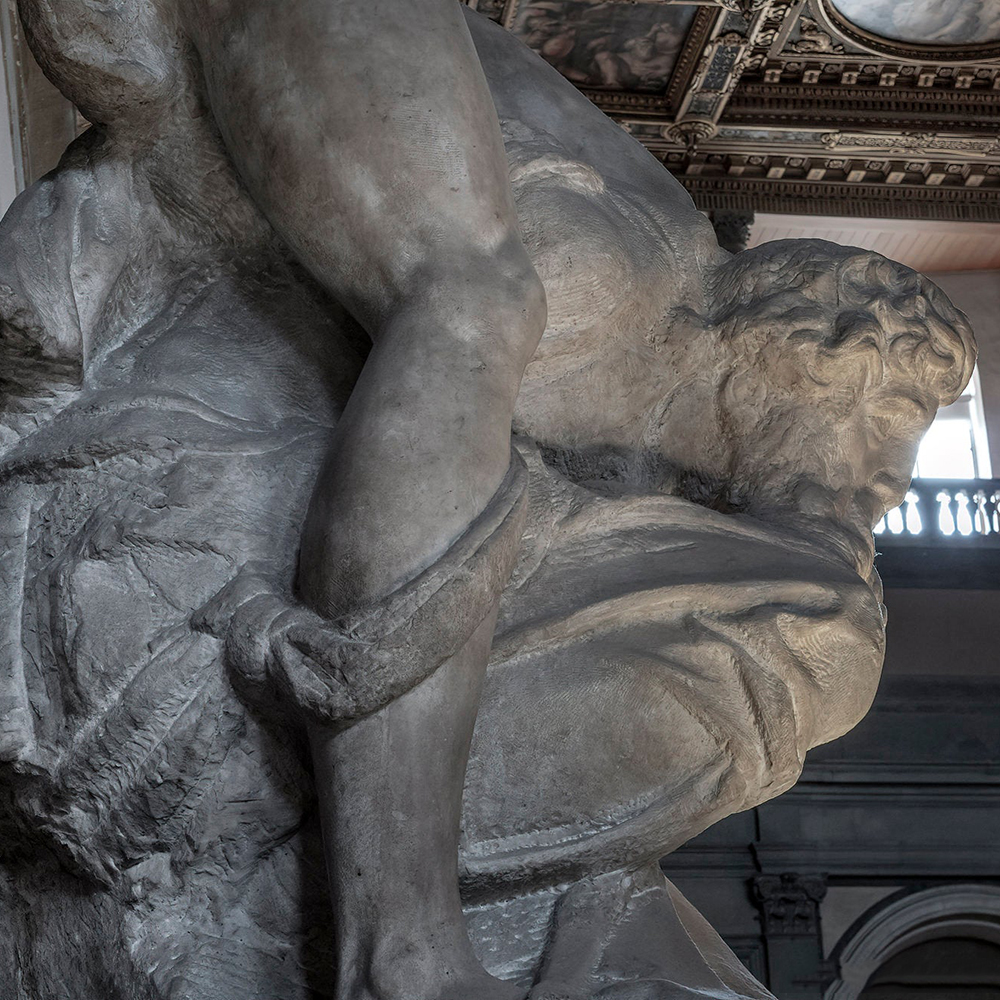
This Michelangelo Statue in Florence does not depict a real battle, but rather is an allegory of triumph. Furthermore, given that it was created during a period of political turmoil in Florence, some scholars believe it may also reflect Michelangelo’s reflections on power, conflict, and the changing times.
Conclusion
Michelangelo’s sculptures in Florence chronicle his development from early explorations to mature works. From David to The Medici Tomb Sculpture and The Prisoner, these works showcase his diverse representations of the human form, religious themes, and historical subjects, serving as crucial windows into understanding Renaissance sculpture.
Arturban Sculpture offers custom-made sculptures of all types, including figurines, historical sculptures, and art reproductions. We provide a one-stop customization service from design to production, creating sculptures suitable for various settings based on client needs. Contact us for more information on customization.
Send us your requirements now, we will reply to your email within 24 hours