
Alcibiades (c. 450–404 BC) was a prominent statesman and military leader of classical Athens, and a highly controversial figure during the Peloponnesian War. His close relationship with Socrates and the multiple shifts in his political stance and military career have made him a subject of considerable interest in ancient history and subsequent art. Today, the Alcibiades Statue is not limited to a single fixed image, but includes Roman busts, shield portraits, and reliefs depicting his life. Below, we examine several representative works to see the image of Alcibiades in art from different periods.
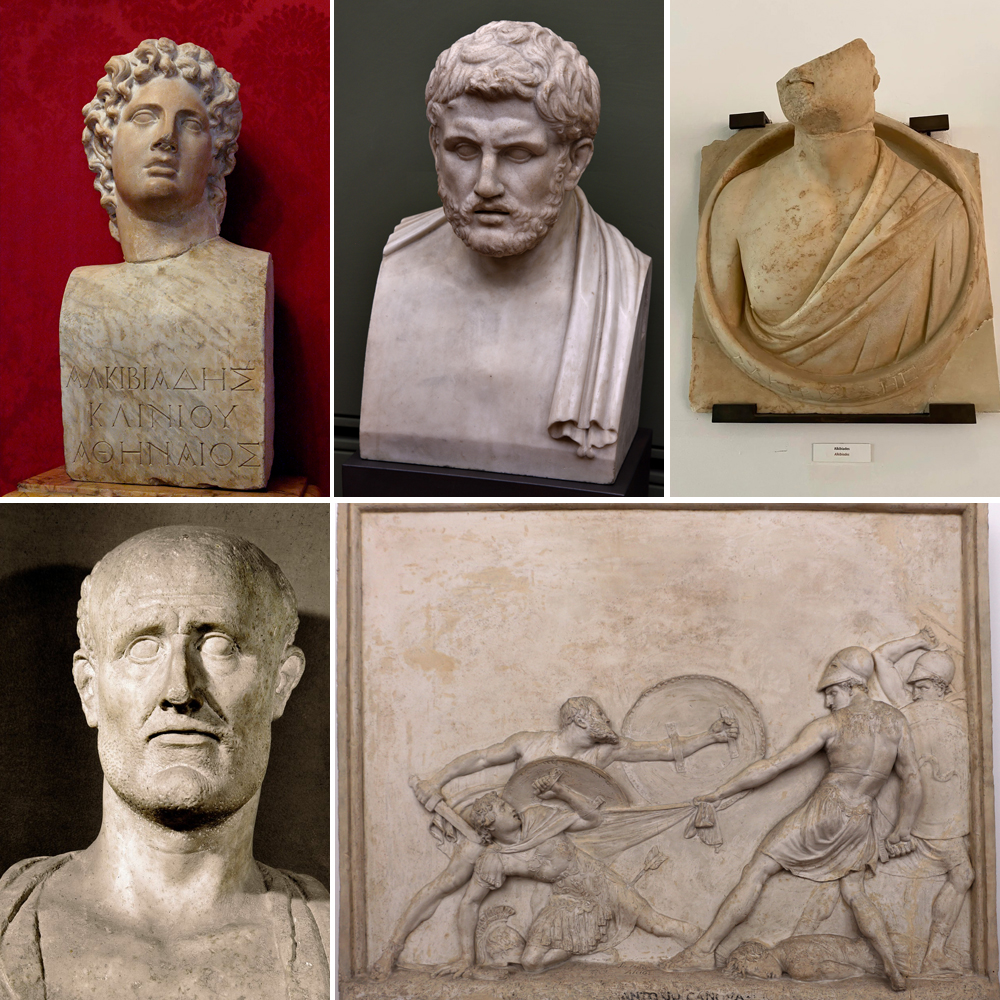
1. Alcibiades Bust Statue
Basic Information:
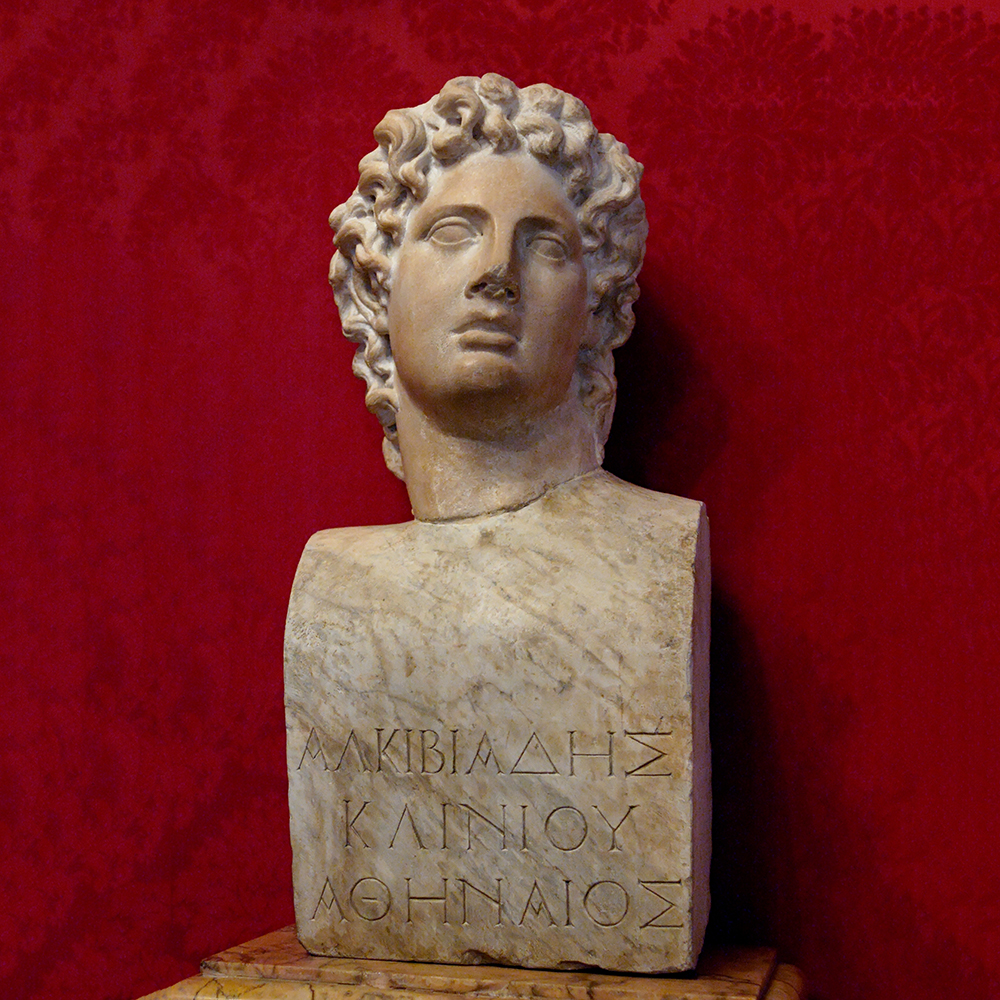
- Name: Alcibiades Bust
- Location: Capitolline Museums, Rome
- Catalogue Number: MC 1160
- Material: Marble
- Type: Herm-type Portrait Bust
- Period: Roman period, based on late 4th century BC Greek portrait prototypes
Description
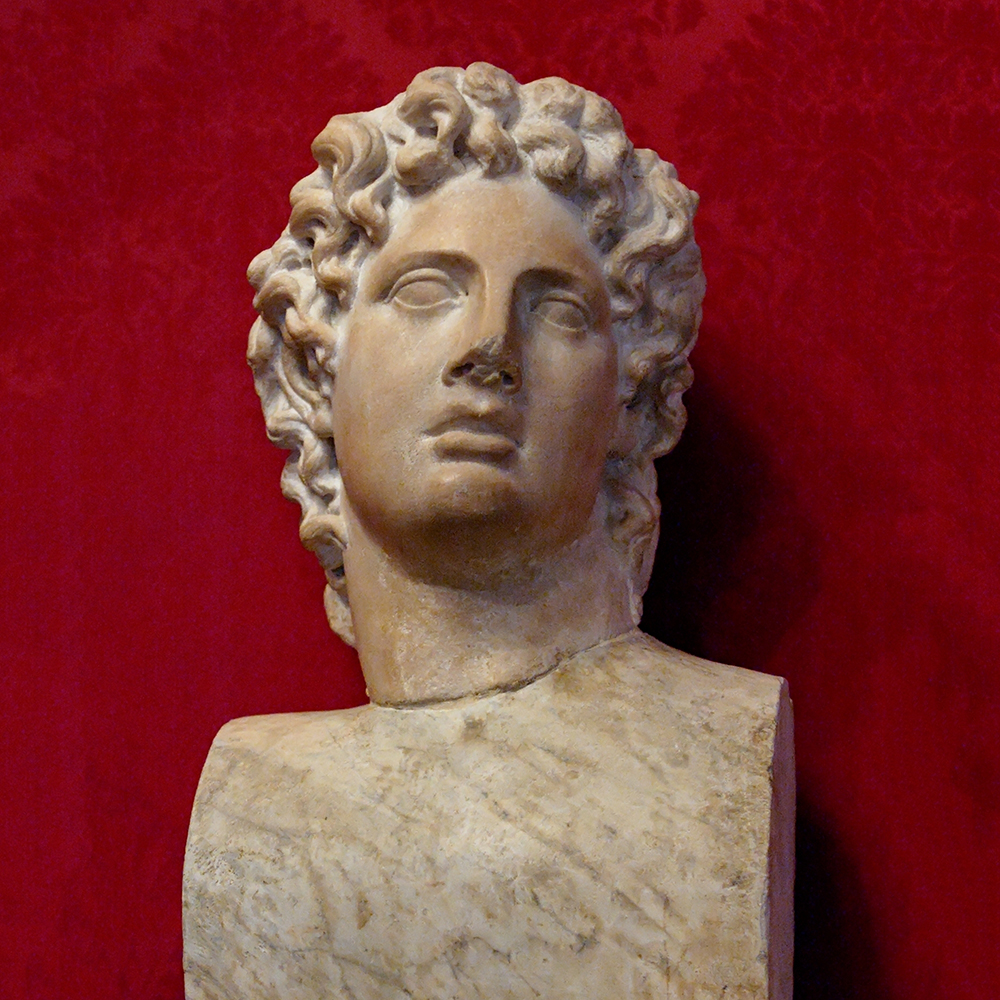
This Alcibiades Bust depicts a young male with his head slightly turned to one side. Thick, curly hair spreads from his forehead to both sides, extending behind his ears and down his neck. The face is clean-shaven, with a broad forehead, a straight nose, and closed lips, exhibiting typical idealized youthful features.
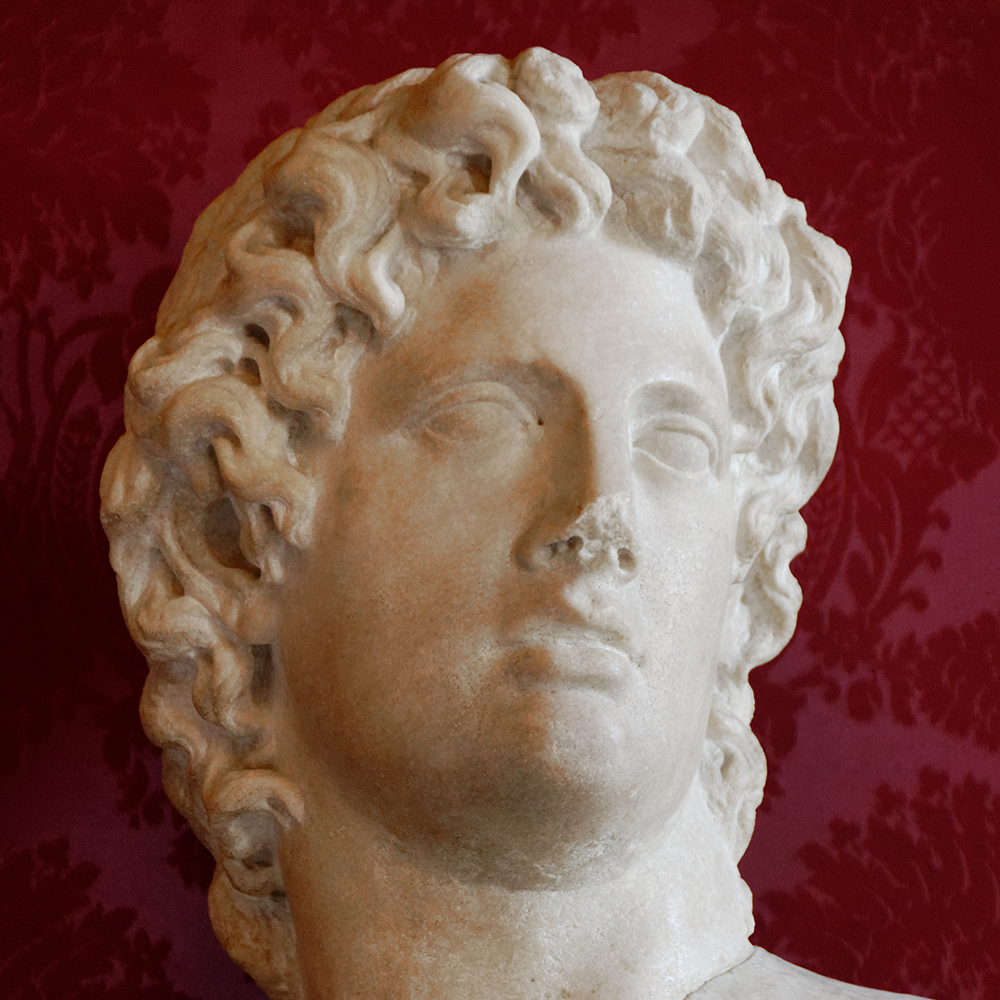
The head is mounted on a square pedestal with a Greek inscription containing the name Alcibiades on the front. However, the existing pedestal and inscription are later additions, so this work is often cautiously referred to as “So-called Alcibiades.” Despite ongoing debate about the figure’s identity, it remains one of the most recognizable Alcibiades Statue images today.
2. Bust Known as Alcibiades
Basic Information
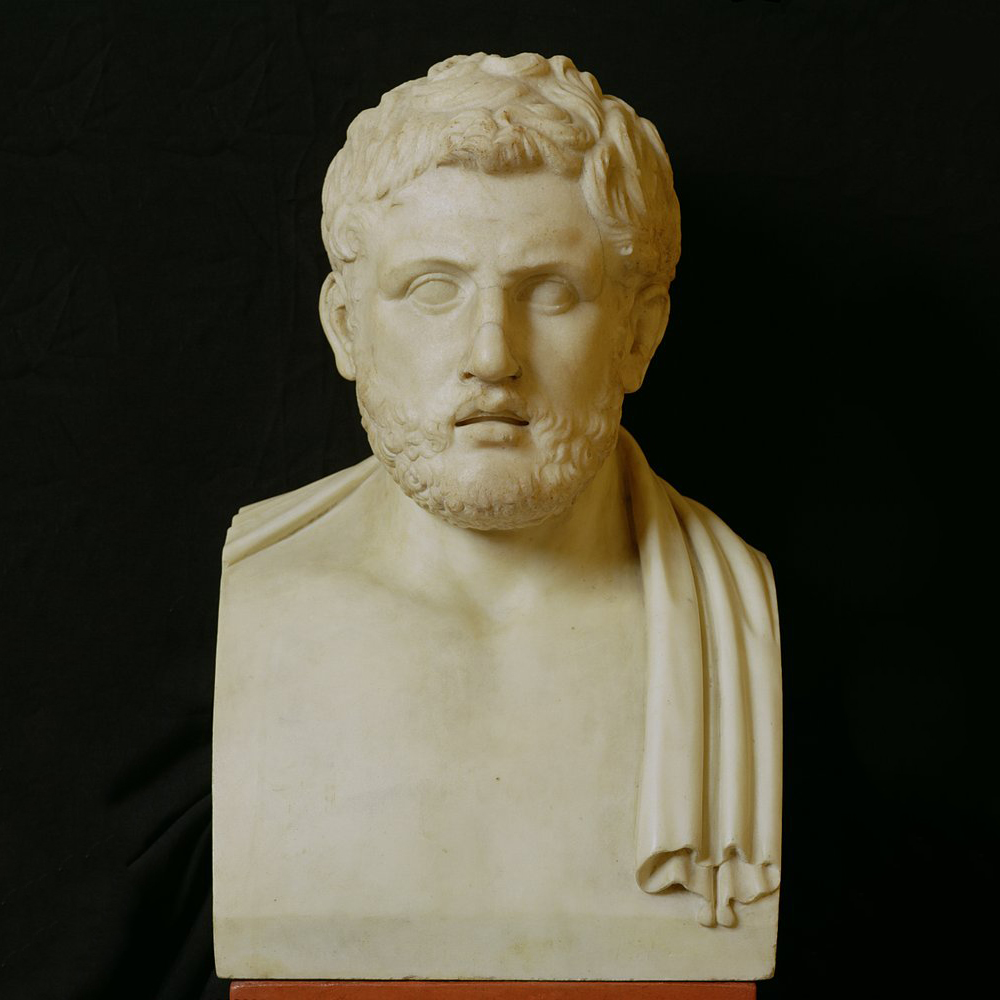
- Name: Bust Known as Alcibiades
- Location: Uffizi Gallery, Florence
- Catalogue Number: Inv. 1914 n. 370
- Material: Greek Marble
- Date: Circa 1st century AD
- Type: Roman Portrait Bust
- Identity: Recognized as Alcibiades in the late 18th century; modern research also suggests it may represent the ancient Greek athlete Polydamas of Skotoussa.
Description
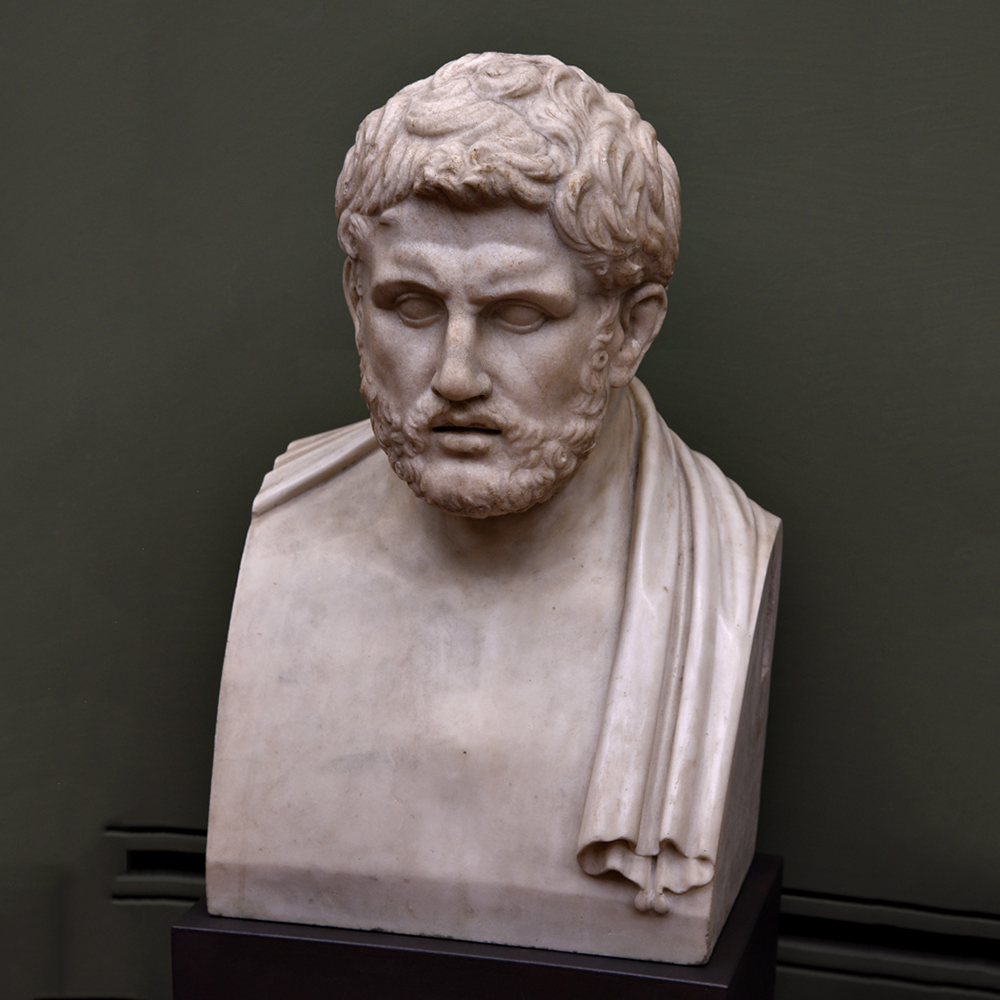
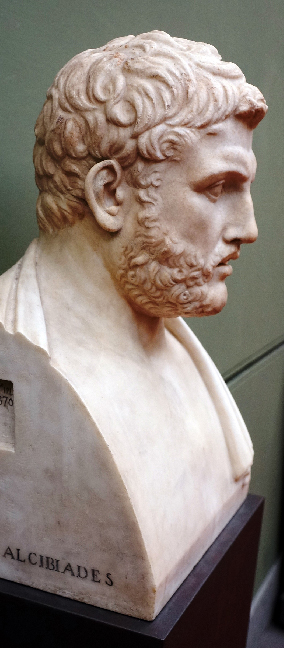
Unlike the previous young, beardless Alcibiades bust, this Alcibiades Statue bust depicts a significantly more mature man. The head is turned to the side, with short, thick, curly hair lying close to the head, and a fine, curly beard covering the ears, cheeks, and chin. The brow ridge is prominent, the nose is well-defined, the chin is broad, and a robe is draped over the shoulders. The inscription “ALCIBIADES” is engraved at the base of the bust.
Is This Really Alcibiades?
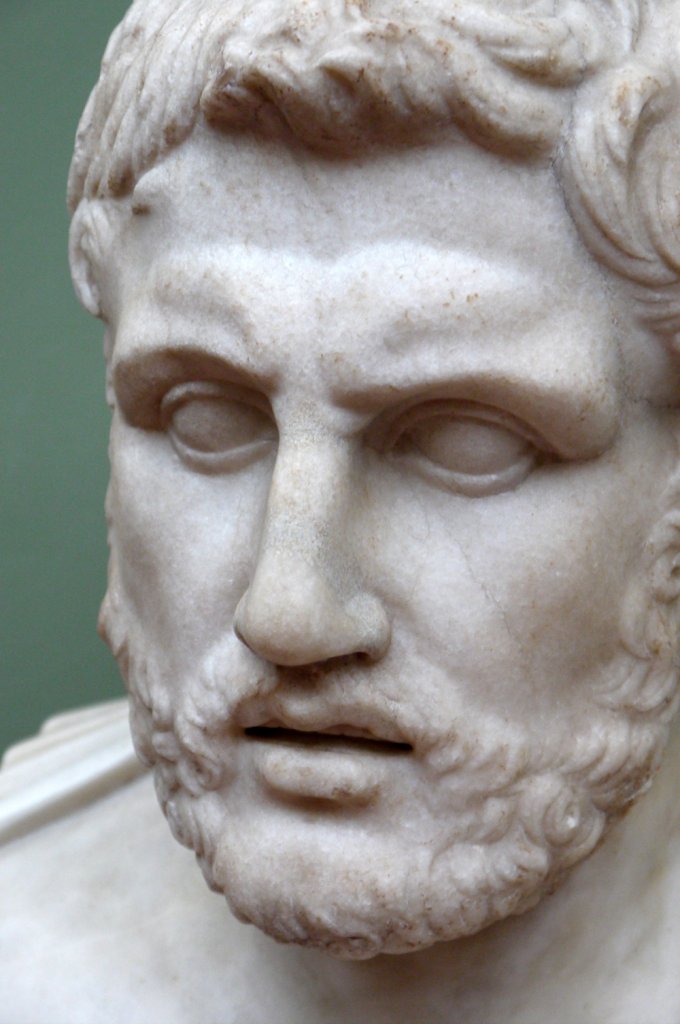
This Alcibiades Statue bust has long been considered to depict Alcibiades, and has been known as such since at least the 18th century. However, modern research has found that its facial features are closer to those of portraits attributed to the ancient Greek athlete Polydamas of Skotoussa. Therefore, the more cautious name “Portrait Bust of an Athlete (Known as Alcibiades)” is commonly used today. This controversy over its identity reflects the complexity of identifying and naming portraits of famous figures from antiquity in later generations.
3. Shield Portrait of Alcibiades
Basic Information
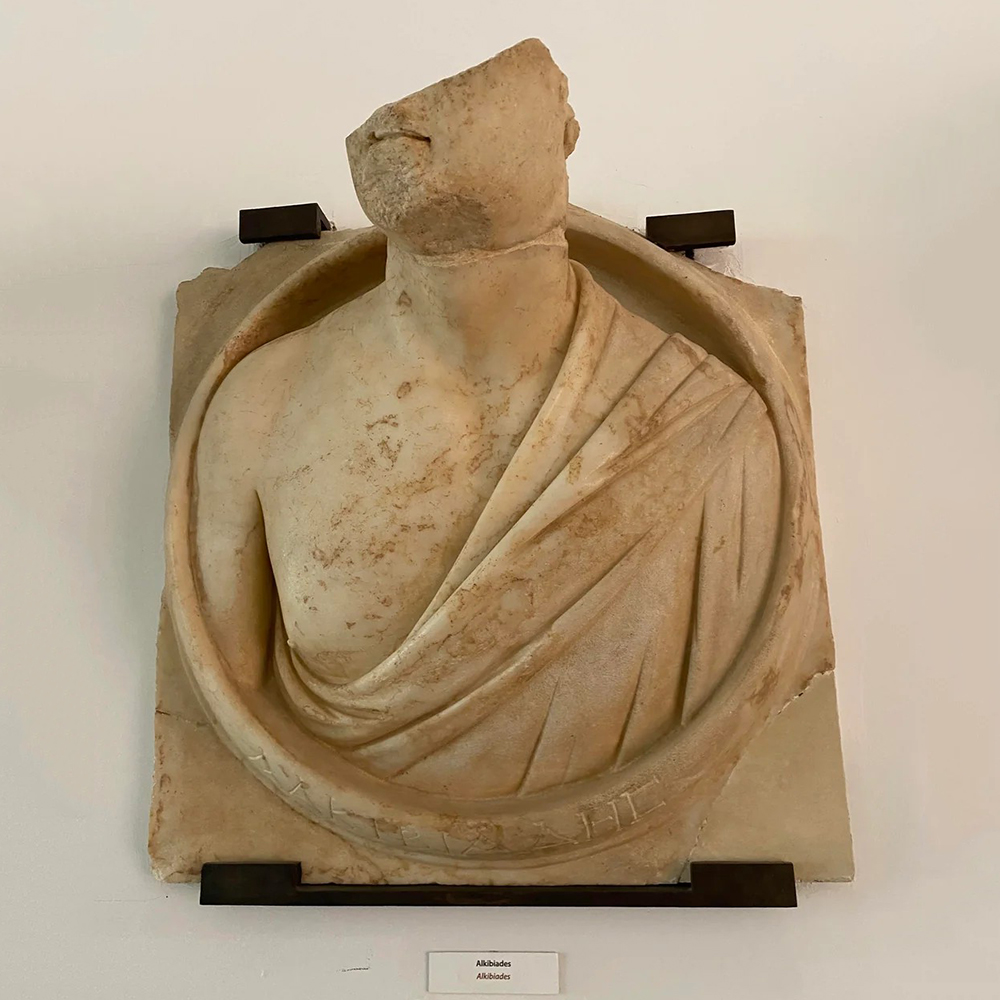
- Title: Shield Portrait of Alcibiades
- Location: Aphrodisias Museum, Turkey
- Place of Origin: Atrium House, Aphrodisias
- Date of Discovery: 1981
- Material: Marble
- Period: Late 4th to early 5th century AD
- Type: Shield Portrait
- Dimensions: Approx. 60 × 55 cm
Description
Unlike typical freestanding busts, this Alcibiades Statue depicts Alcibiades’s half-length figure within a circular shield-shaped frame, into which a rectangular stone slab is embedded. One side of the figure’s chest is bare, while the other side is draped in a heavy robe, the fabric diagonally across the chest, creating distinct folds.
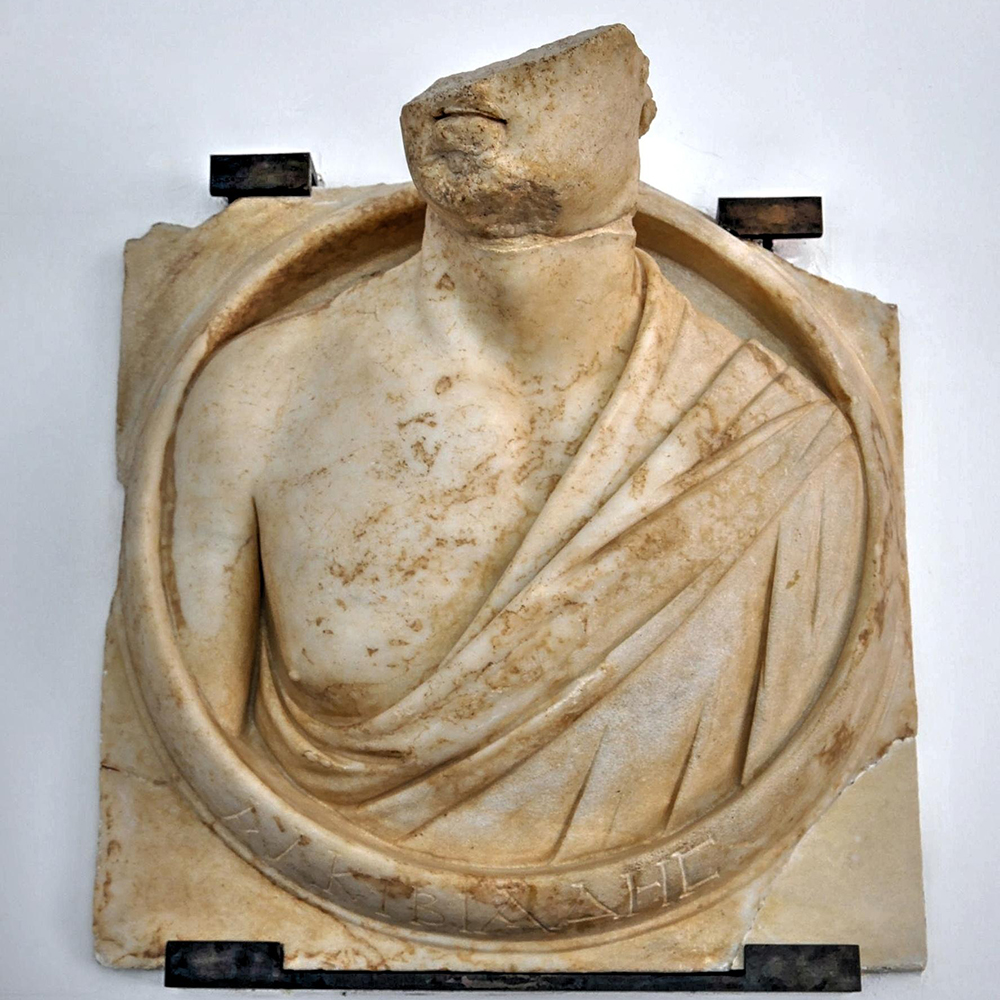
Unfortunately, a large portion of the head is now missing, leaving only part of the chin, neck, and bust, making it impossible to fully observe the original face. The inscription of the person’s name preserved below the shield portrait provides important evidence of the figure’s identity.
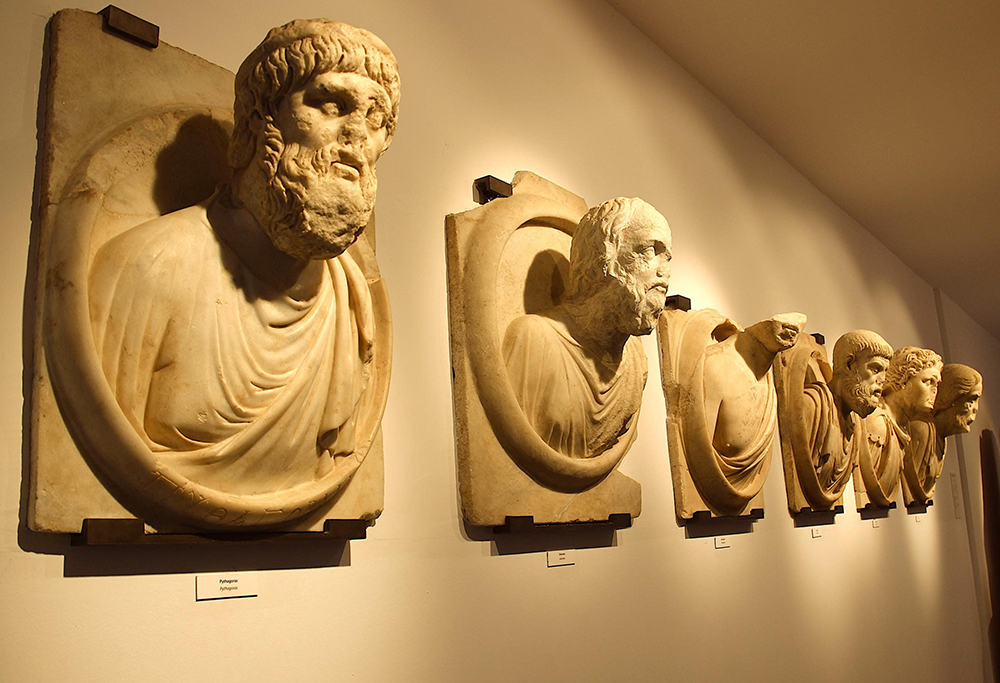
This Shield Portrait of Alcibiades originally belonged to a group of classical portraits in the Aphrodisias Atrium House. The group also included figures such as Socrates, Pythagoras, Pindar, and Alexander the Great. These works were not portraits made directly during Alcibiades’s time, but rather examples of the continuation and reinterpretation of the classical portrait tradition in the late Roman period.
4. Socrates Rescues Alcibiades at the Battle of Potidaea
Basic Information
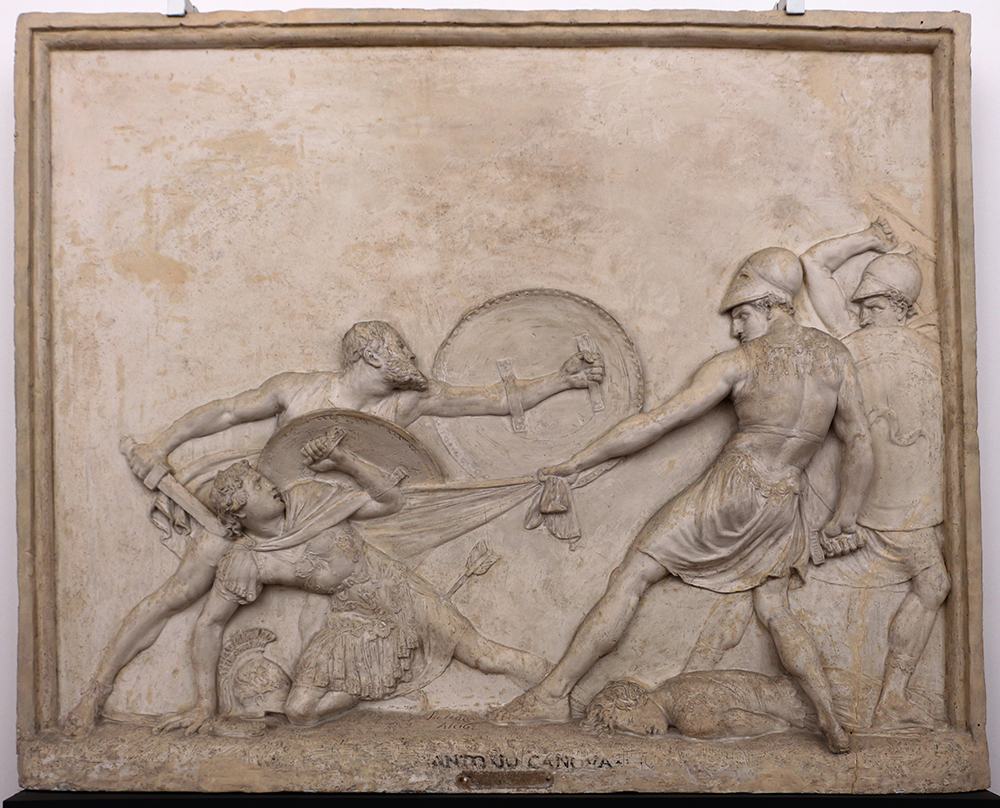
- Title: Socrates Rescues Alcibiades at the Battle of Potidaea
- Artist: Antonio Canova
- Date: 1797
- Medium: Plaster
- Type: Bas-relief
- Dimensions: 110 × 140 × 6.5 cm
- Location: National Academy of San Luca, Rome
The Battle of Potidaea was one of the most important military events of Alcibiades’ youth. According to ancient records, he was wounded in battle, and Socrates protected him in danger. Centuries later, the Italian Neoclassical sculptor Antonio Canova transformed this story into a narrative relief.
Description
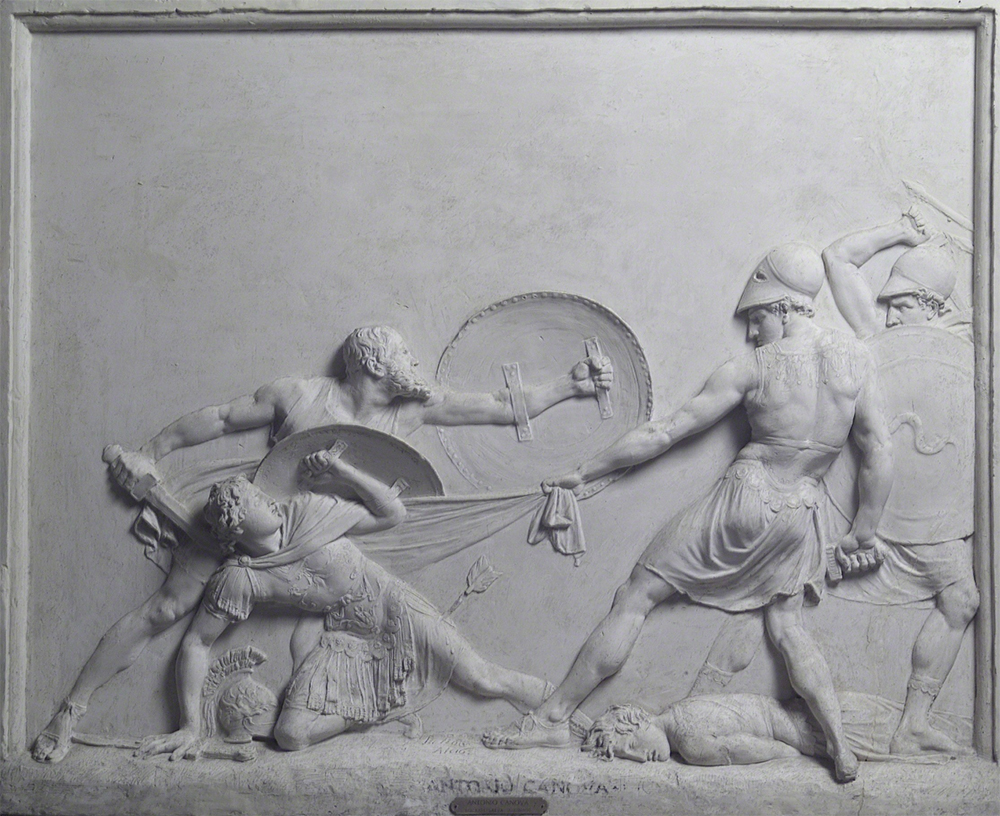
In the relief, the wounded Alcibiades is positioned slightly to the left of center, leaning backward, surrounded by scattered shields and weapons. Socrates stands close behind him, protecting Alcibiades while extending his arm towards the approaching enemy. Several helmeted soldiers, carrying shields and spears, advance forward on the right, creating a clear sense of conflict within the composition.
Canova eschews a complex landscape background, instead concentrating the figures within a shallow relief space. The bodies, shields, cloaks, and spears unfold horizontally, allowing the viewer direct attention to the interaction between Socrates and Alcibiades. This Alcibiades Statue not only depicts Alcibiades’ appearance but also reveals his widely known relationship with Socrates through specific historical narratives.
5. Another Bust of Alcibiades at the Musei Capitolini
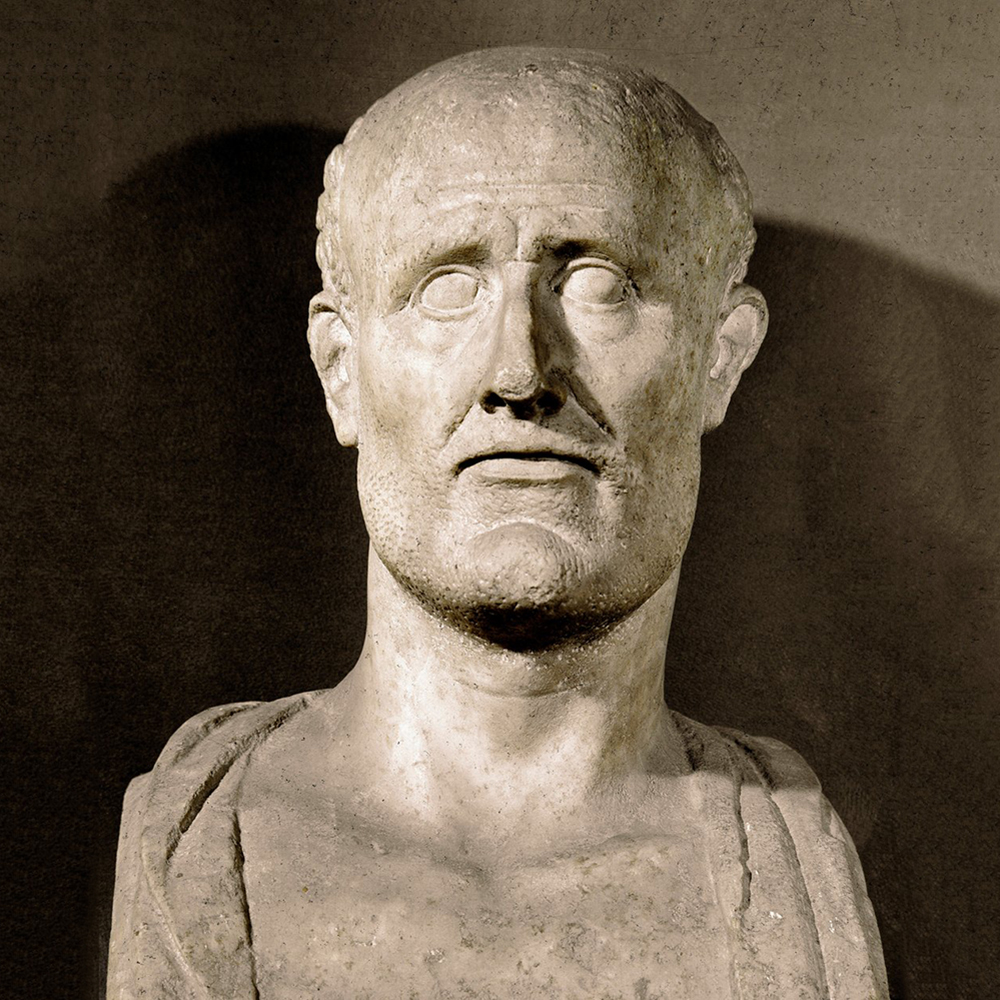
Basic Information
- Name: Bust of Alcibiades
- Subject: Alcibiades
- Location: Musei Capitolini, Rome
- Authorship: Greek or Roman
- Type: Portrait Bust
- Date: Undated in publicly available images
- Image Source: Musei Capitolini / Bridgeman Images
- Bridgeman Image ID: LRI4669458
Description:
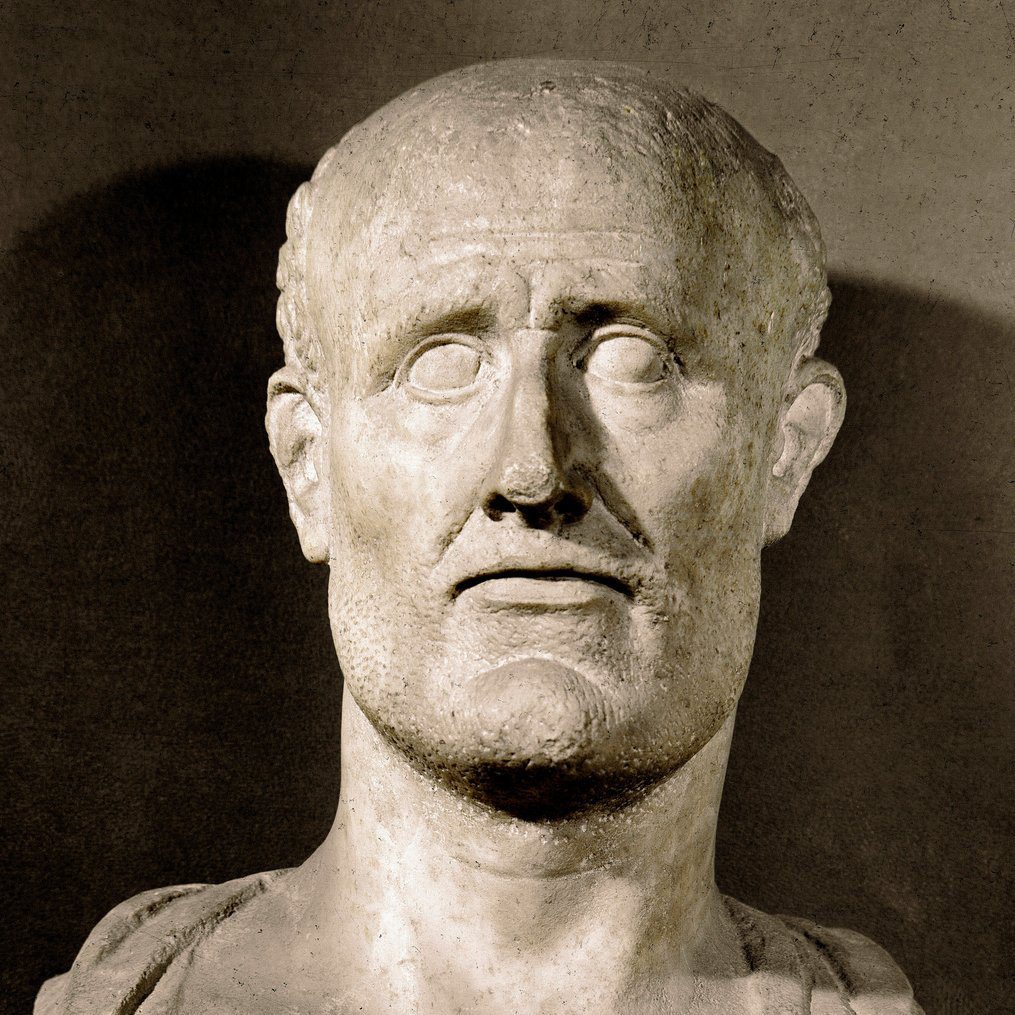
This bust of Alcibiades differs significantly from the MC 1160 mentioned at the beginning of this article. The figure is no longer depicted as a young man with thick, long, curly hair, but rather as a mature man with a more aged appearance. He has very short hair, a broad forehead, deep-set brow bones and eyes, a straight nose, tightly closed lips, and a broad jaw.
In this Alcibiades Statue, a thick neck connects to a broad chest, and a simple cloak covers the shoulders, drawing visual attention to the face. This more mature and serious image contrasts sharply with the common idealized youth of Alcibiades, demonstrating that the portraits later attributed to Alcibiades were not limited to a single fixed type.
Bonus: Dog of Alcibiades — A Sculpture Connected to His Story
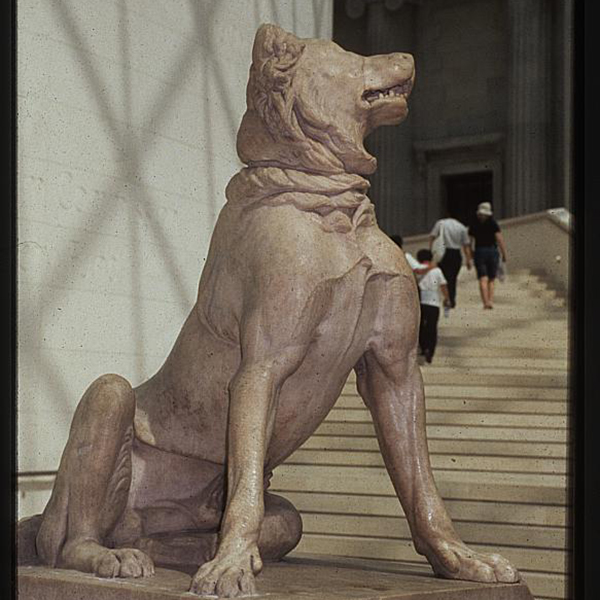
The preceding works all directly depict Alcibiades himself or portray important events in his life. This last piece, the Dog of Alcibiades, is different: it is not a portrait of Alcibiades, nor is there evidence that the dog in the sculpture is the one he actually owned. Its connection to Alcibiades primarily stems from a long-standing ancient story.
Basic Information
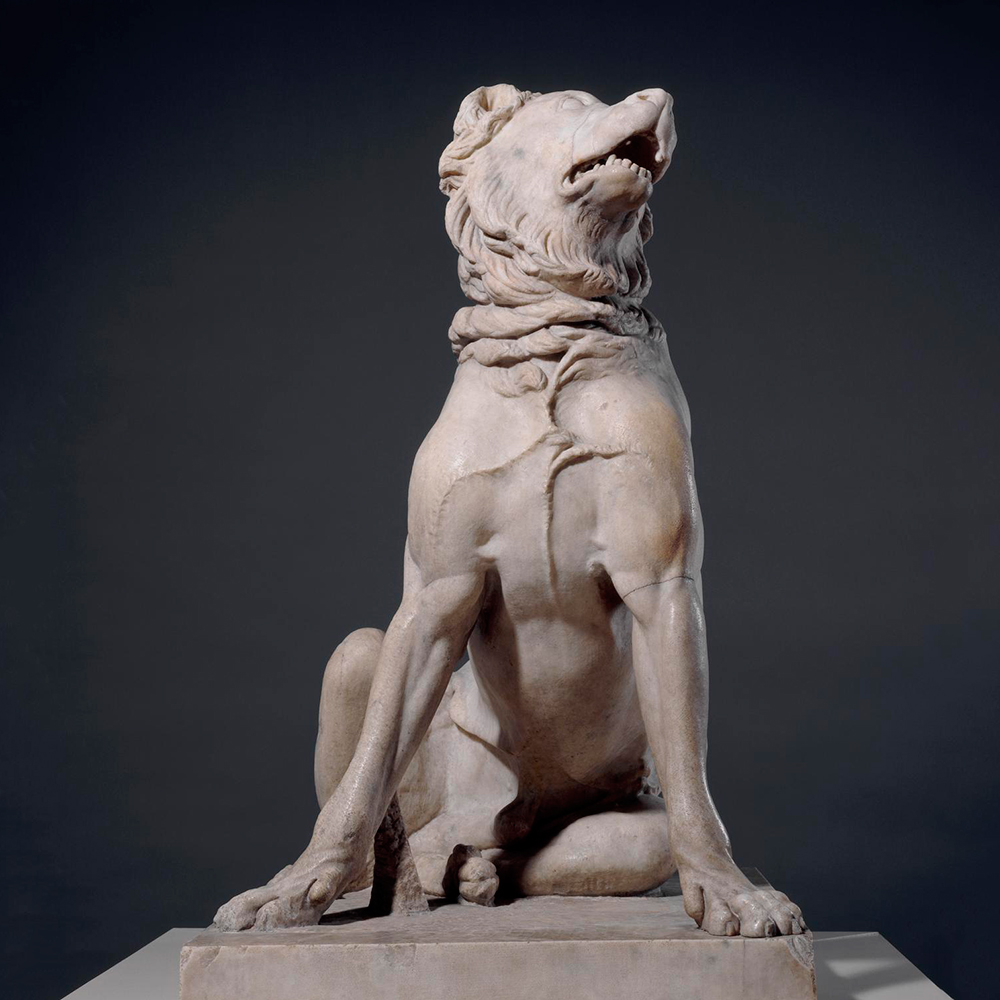
- Name: Dog of Alcibiades / Jennings Dog / Duncombe Dog
- Location: British Museum, London
- Material: Marble
- Period: Circa 2nd century AD
- Type: Roman Animal Sculpture
- Prototype: Possibly based on a 2nd-century BC Hellenistic bronze dog sculpture
- Height: Approximately 1.05 meters
- Animal Type: Molossian Hound
Description
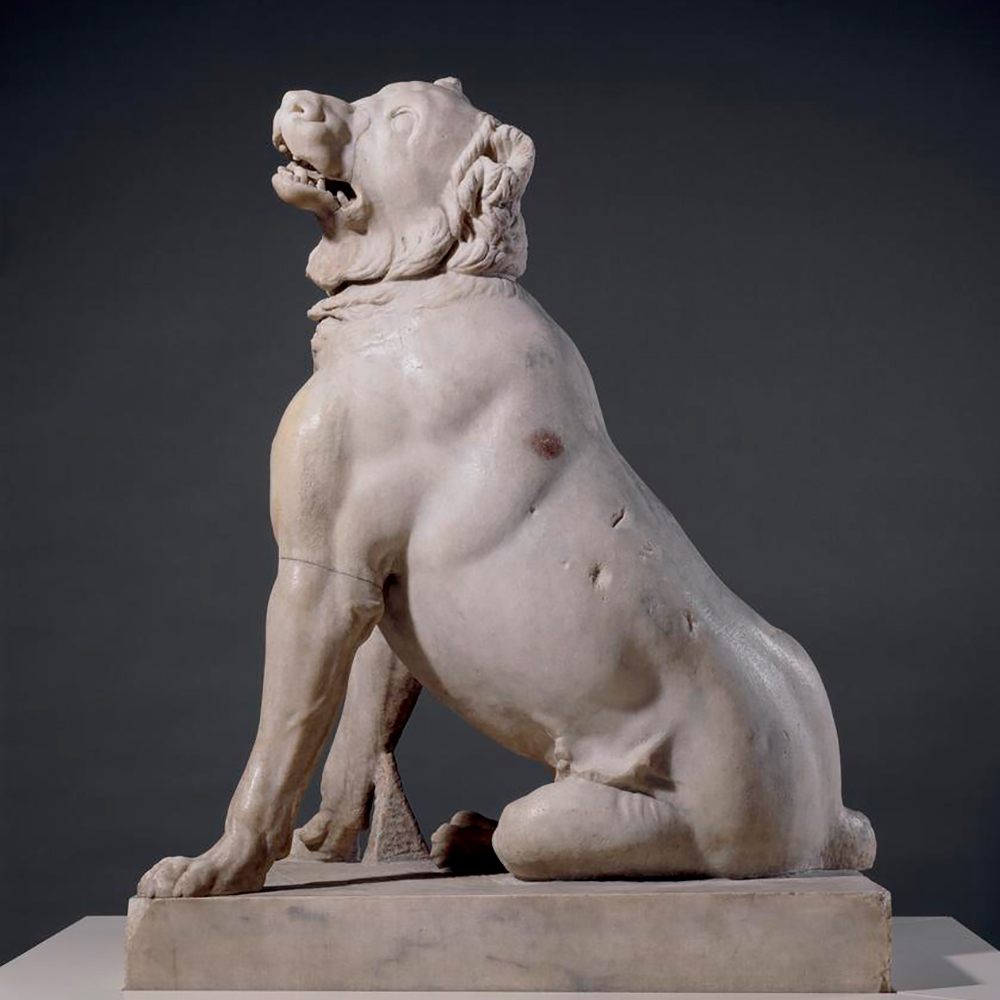
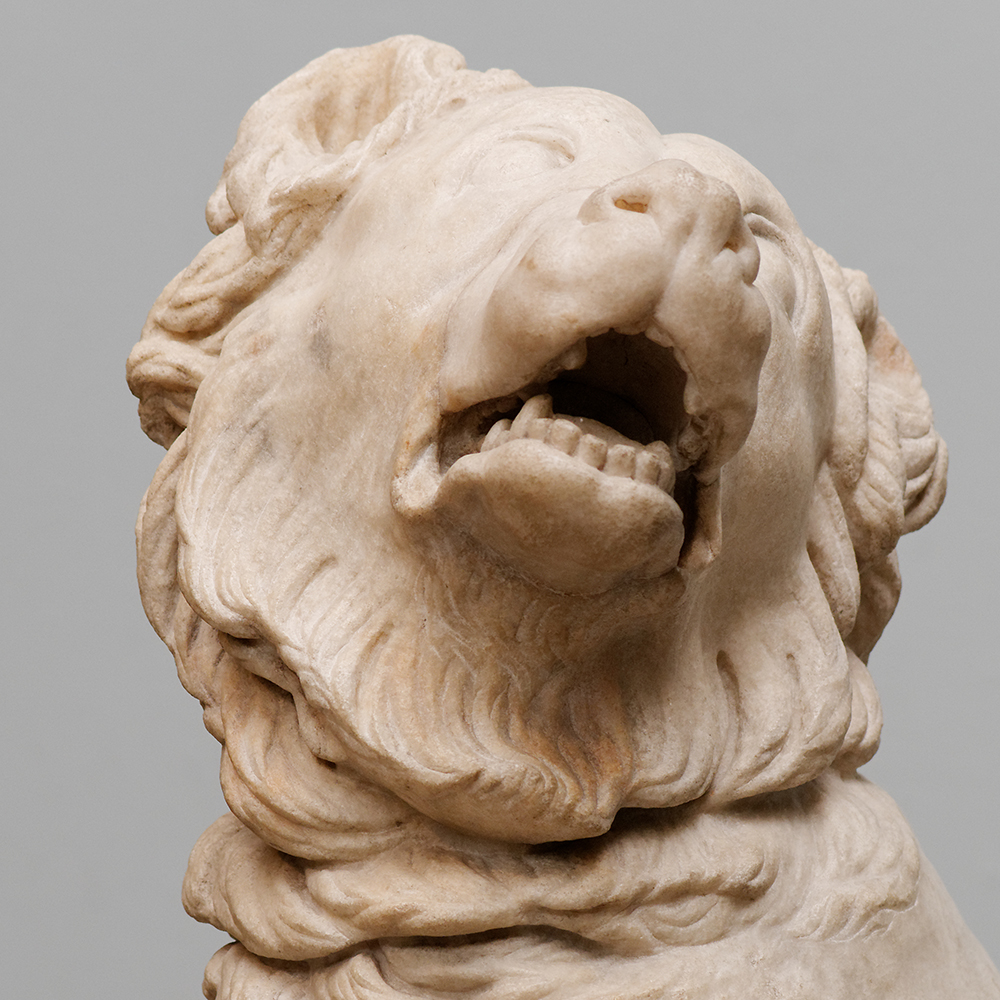
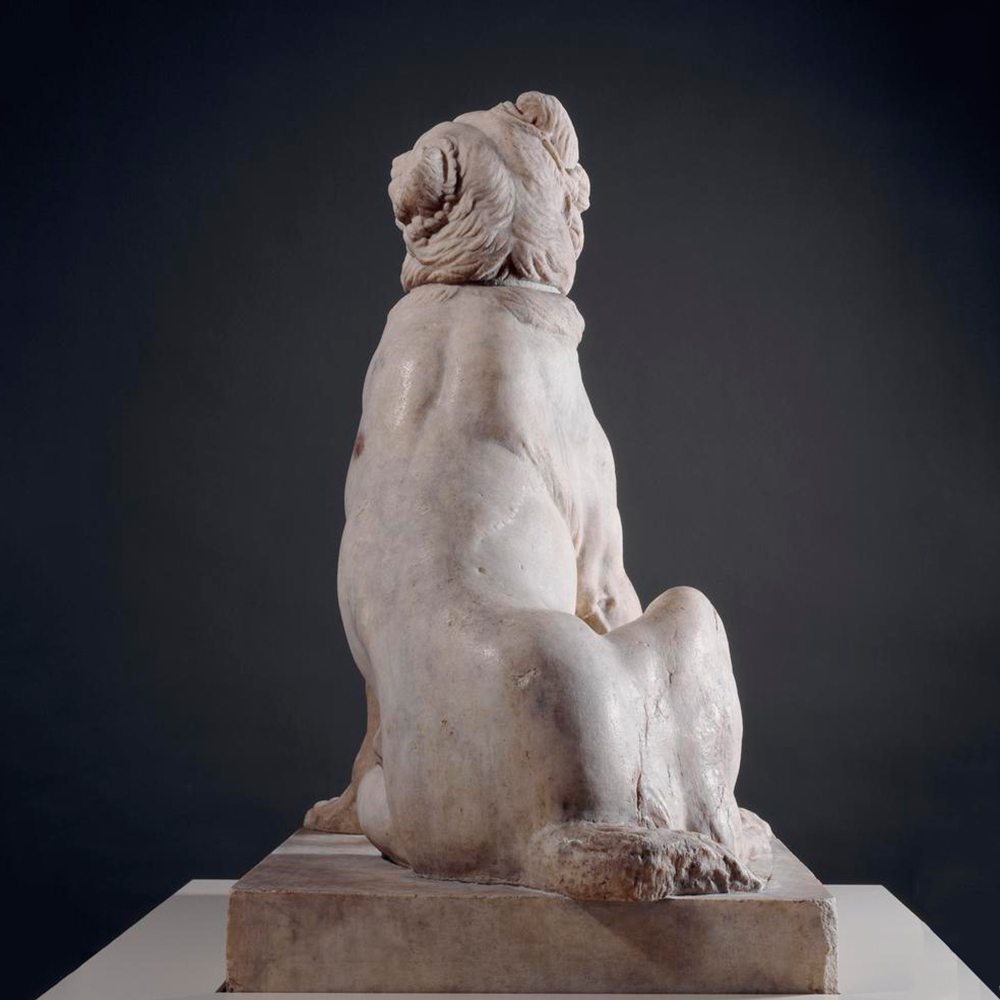
This marble sculpture depicts a robust, large dog. The dog sits on its hind legs, with its forelegs spread apart to support its body. Its chest is broad, and its head is held high and turned to one side. Thick, wavy, long hair covers the neck and head, while the hair on the chest, abdomen, and limbs is relatively shorter. The slightly open muzzle, sturdy forelegs, and clearly defined body structure all emphasize the physique of a large guard dog.
The Dog of Alcibiades Story
The story of “The Dog of Alcibiades” primarily comes from Plutarch’s account of Alcibiades. It is said that Alcibiades owned a large, beautiful, and expensive dog, but deliberately docked its magnificent tail. This unusual act quickly sparked much discussion in Athens.
When friends expressed their bewilderment, Alcibiades reportedly explained that he wanted the Athenians to be preoccupied with discussing the dog and its tail, thus diverting attention from his other actions. This story has since been used to illustrate Alcibiades’s keen grasp of public opinion and attention.
Today, the dog sculpture in the British Museum is commonly known as the Jennings Dog. “Dog of Alcibiades” is merely a later name and does not prove that this was the dog Alcibiades actually owned. Due to the missing tail of the sculpture, the 18th-century collector Henry Constantine Jennings associated it with this famous story, and thus the name gradually emerged.
Custom Alcibiades Statues by Arturban Sculpture
From ancient Roman busts to late archaic shield portraits, and Canova’s reliefs based on historical stories, these diverse works present Alcibiades in various forms in later art, reflecting the enduring interest in this Athenian statesman and military figure.
If you are interested in the Alcibiades Statue or other ancient Greek and Roman sculptures, Arturban Sculpture offers custom-made and replica services for classical figures in marble, bronze, and other materials. We can create sculptures based on reference images, dimensions, materials, and the actual installation scenario, suitable for private collections, gardens, hotels, public spaces, and art projects. Contact us to learn more about busts, classical sculptures, and personalized customization options.
Send us your requirements now, we will reply to your email within 24 hours