
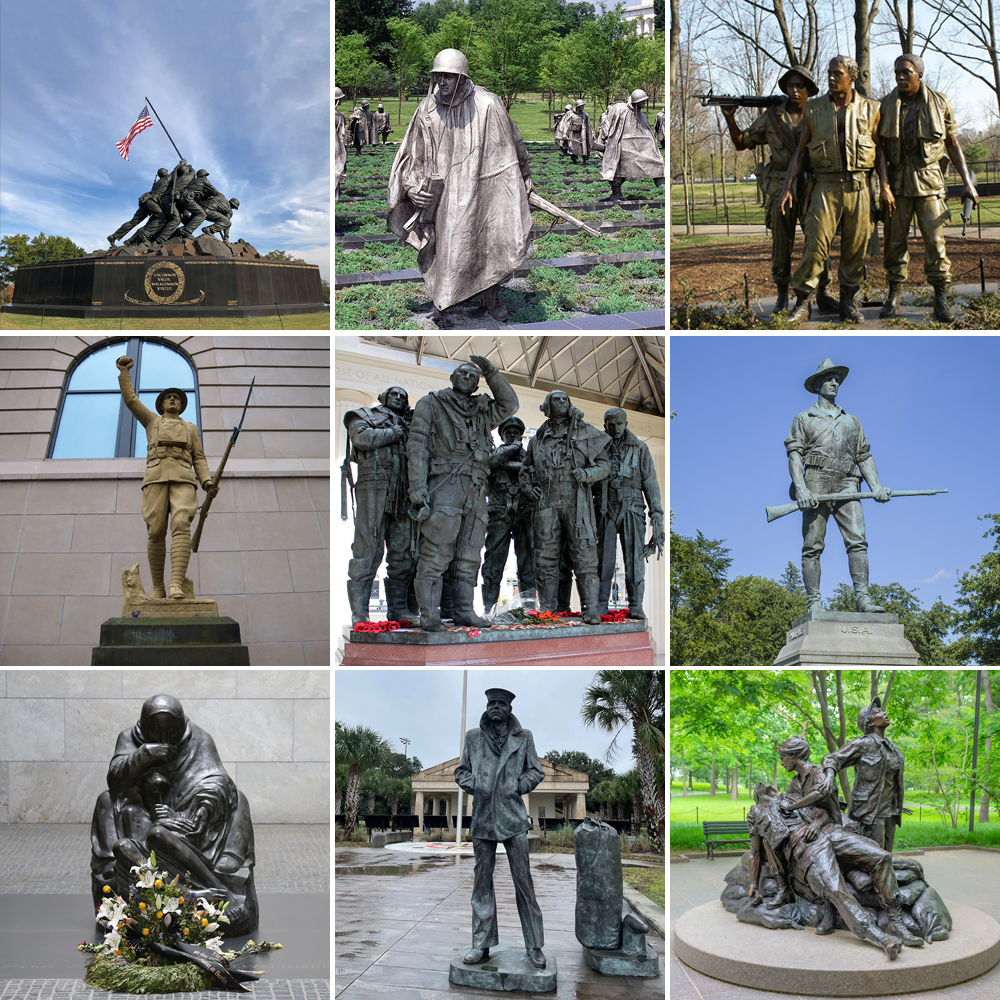
Military sculptures not only record the history of war but also reflect how people understand the role of “soldier.” From symbols of victory to the real experiences of ordinary people, these sculptures showcase the evolution of war narratives. Below are 10 of the most iconic military statues, spanning the United States and Europe, ranging from classic works to more emotionally resonant modern commemorations.
Marine Corps War Memorial military statues
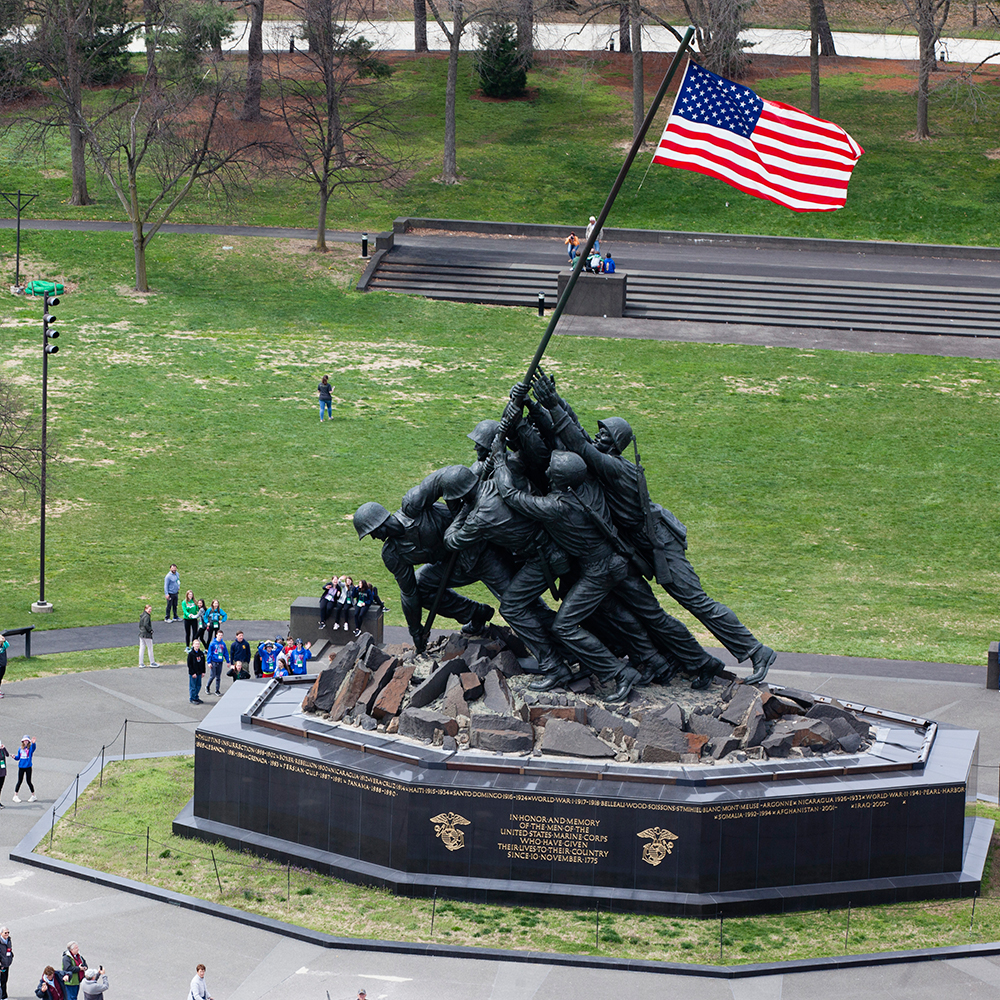
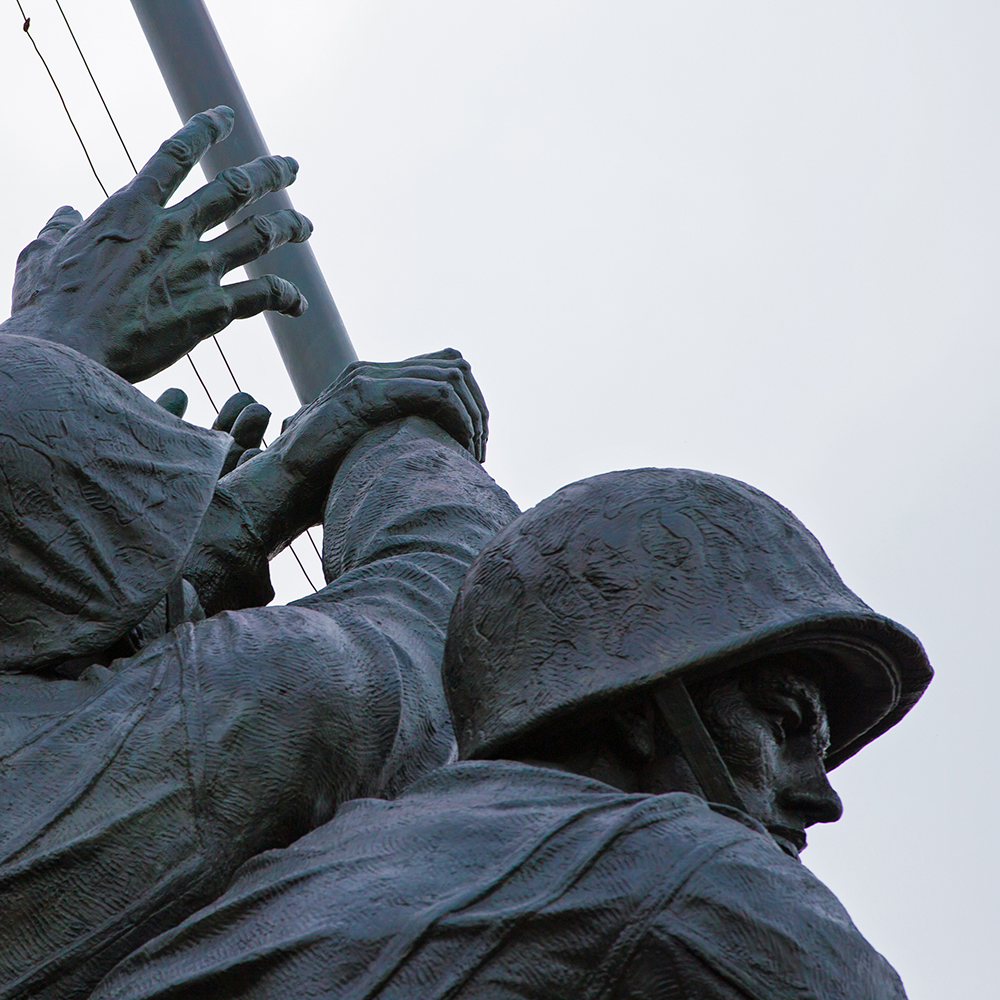
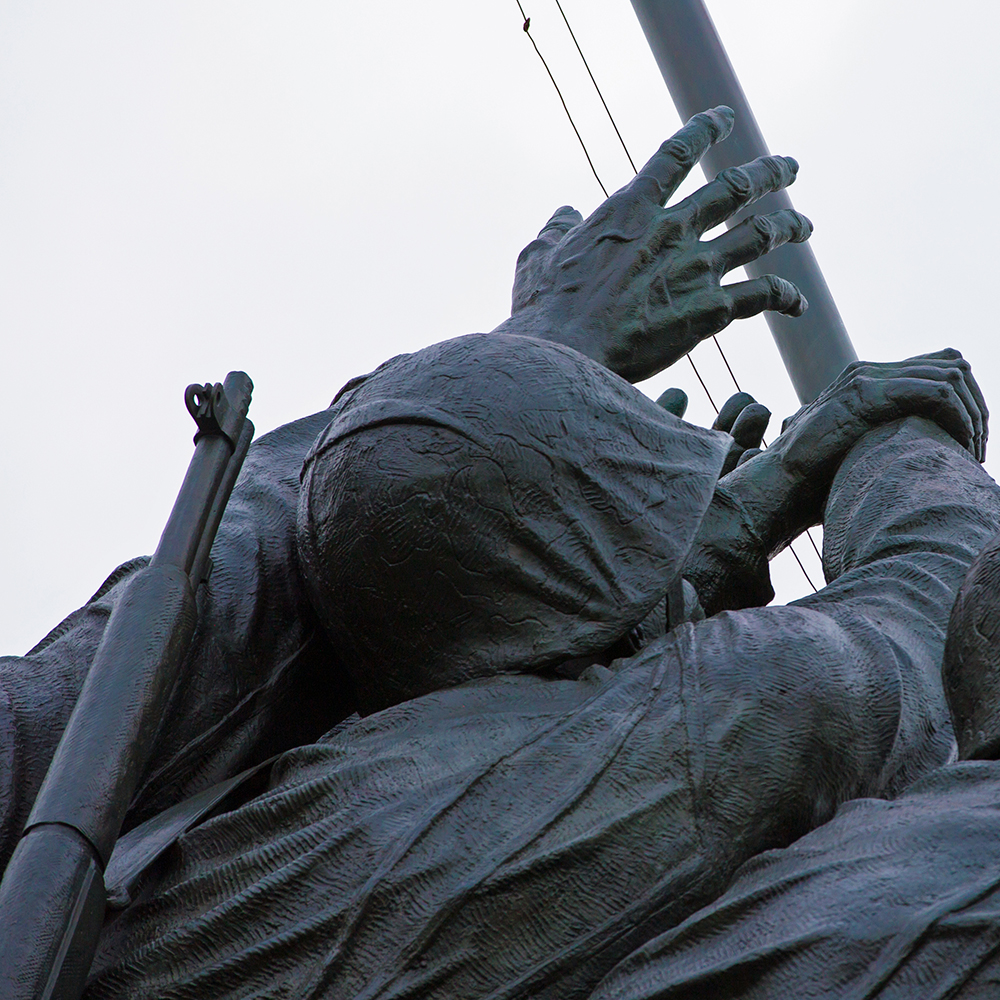
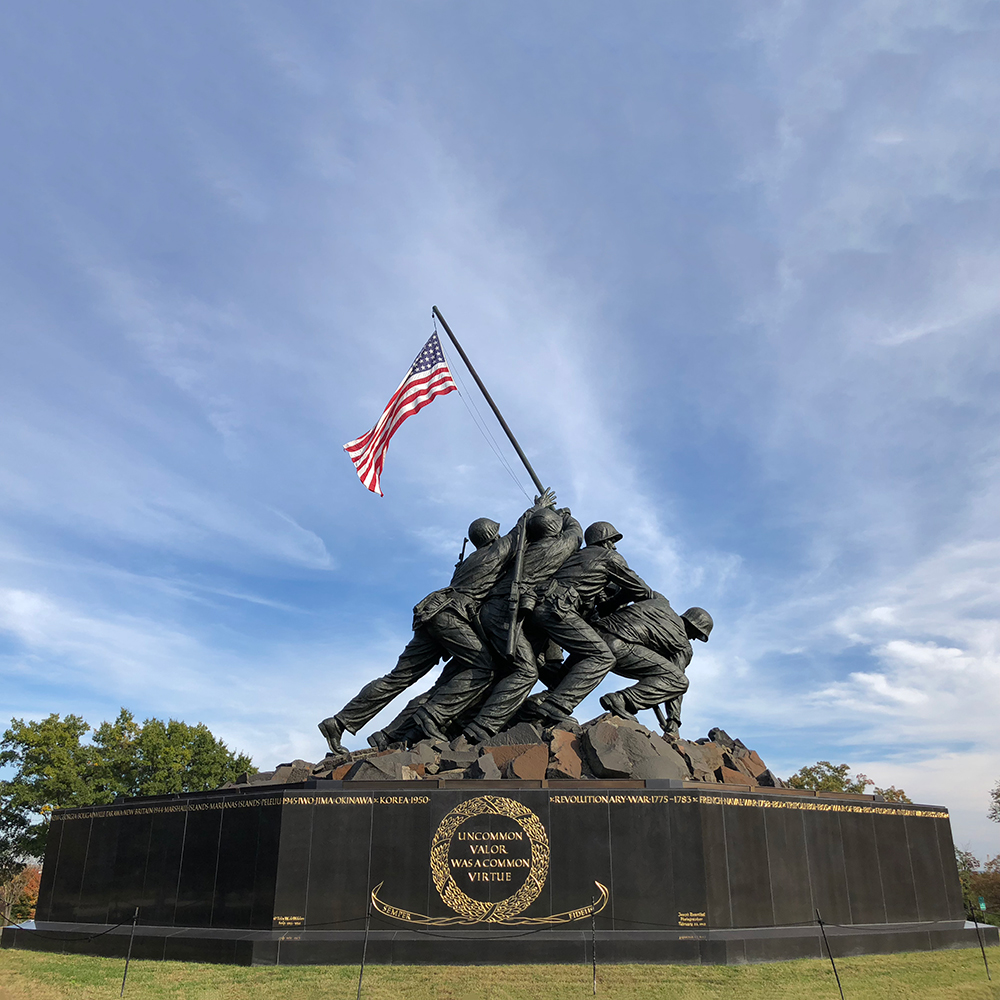
The Marine Corps War Memorial is one of the most iconic military memorial sculptures in the United States, renowned for its highly recognizable group composition and symbolic meaning.
Basic Information
- Sculptor: Felix de Weldon
- Year of Completion: 1954
- Inspiration: A classic photograph by Joe Rosenthal
- Historical Context: Battle of Iwo Jima
- Dimensions: Figure approximately 9.8 meters (32 feet) tall; flagpole approximately 18 meters (60 feet) tall
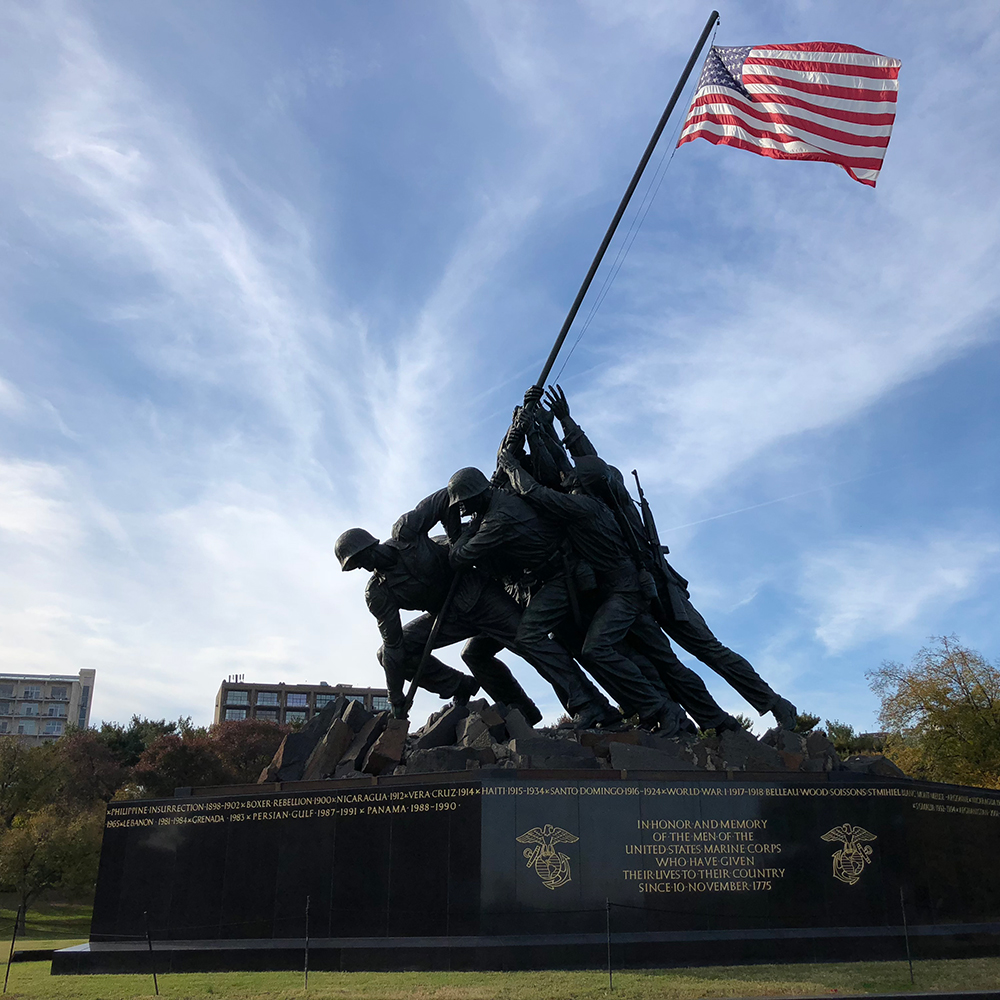
Background: This sculpture is inspired by the Battle of Iwo Jima in 1945, a crucial and extremely brutal amphibious landing operation in the Pacific Theater of World War II. Iwo Jima, located between the Japanese mainland and the Mariana Islands, was a vital stronghold in the U.S. military’s advance strategy. The battle lasted approximately five weeks, resulting in nearly 7,000 U.S. casualties, while the Japanese defenders were almost completely annihilated. During the battle, soldiers raising the American flag atop Mount Suribachi was captured by war photographer Joe Rosenthal, an image that quickly became one of the most widely circulated visual symbols of the war. The ser of military statues is based on this moment, transforming a fleeting historical instant into a permanent memorial.
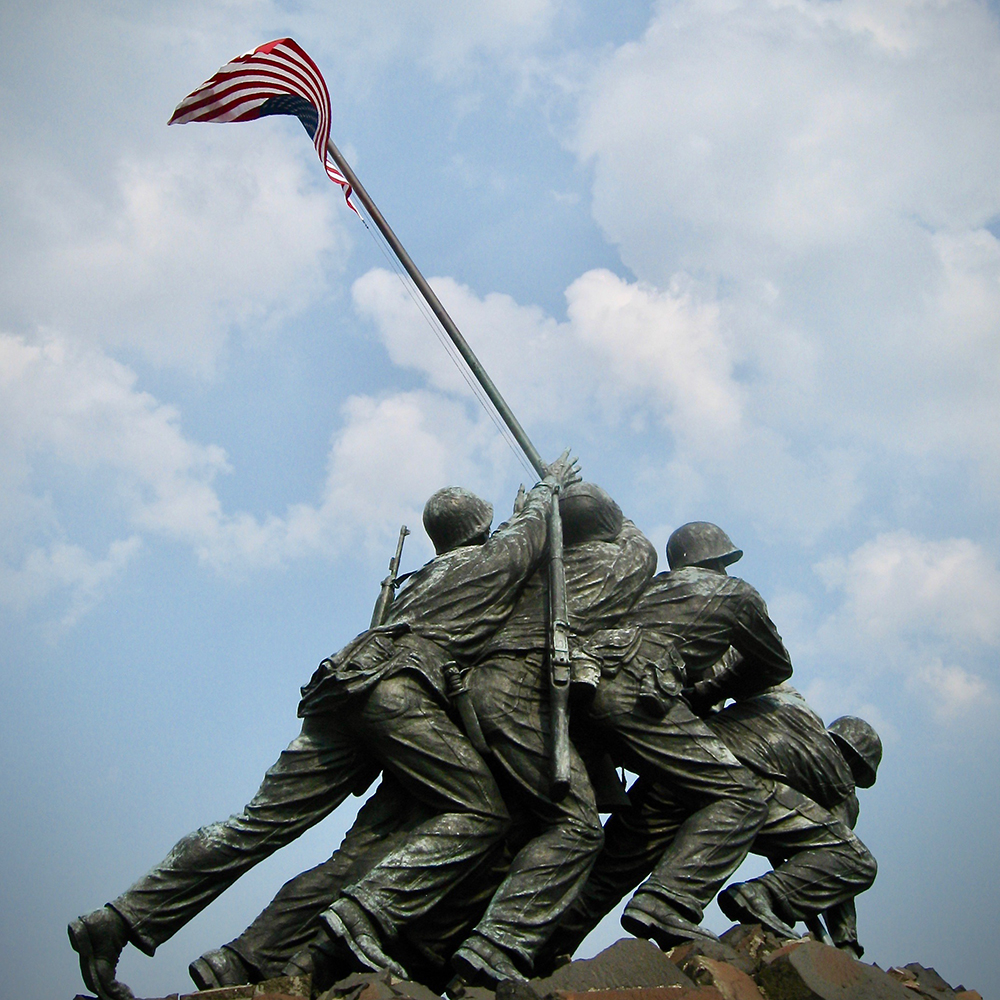
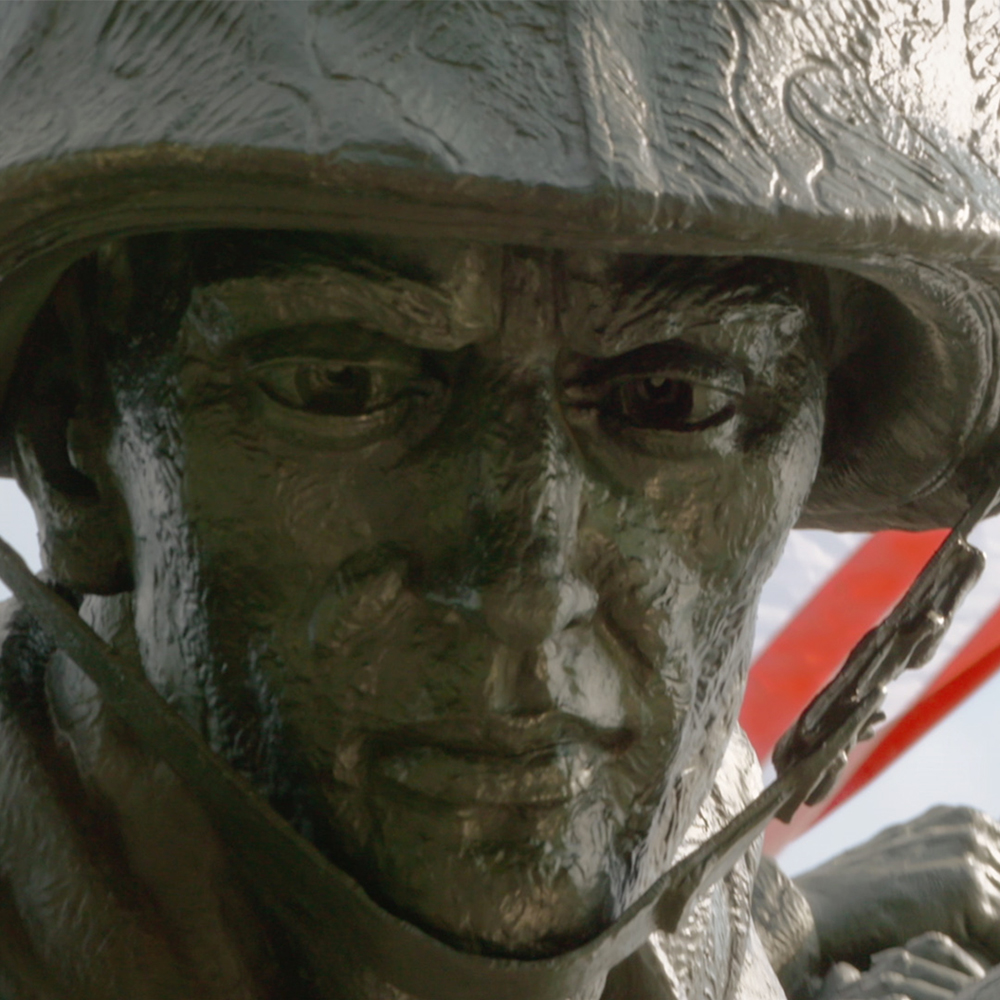
Appearance: The most striking feature of this set of military statues is its strong dynamic composition and sense of power. Six soldiers exert force in the same direction with different postures, their bodies leaning forward and arms taut, forming a continuous and rhythmic chain of movements. The flagpole, tilted at a distinct angle, runs through the composition, becoming the visual axis and guiding the viewer’s eye from the ground to the height. The figures are closely intertwined, with no extra space, creating a highly cohesive group structure. In terms of detail, the sculpture meticulously recreates the folds of military uniforms, equipment accessories, and human anatomy, making each character both independent and unified. While the facial expressions are not exaggerated, they convey a state of tension, focus, and cooperation through posture and movement.
Who are the soldiers in the Iwo Jima Memorial?
The Marine Corps War Memorial statue depicts six soldiers, all actual U.S. Marines who participated in the Battle of Iwo Jima, and one Navy medic.
The figures are:
- Ira Hayes (Marine Corps)
- Rene Gagnon (Marine Corps)
- John Bradley (Naval Medic)
- Harlon Block (Marine Corps)
- Franklin Sousley (Marine Corps)
- Michael Strank (Marine Corps)
It’s important to note that these figures are based on the famous flag-raising photograph (taken by Joe Rosenthal), and the sculpture was created based on that moment.
Korean War Veterans Memorial military statues
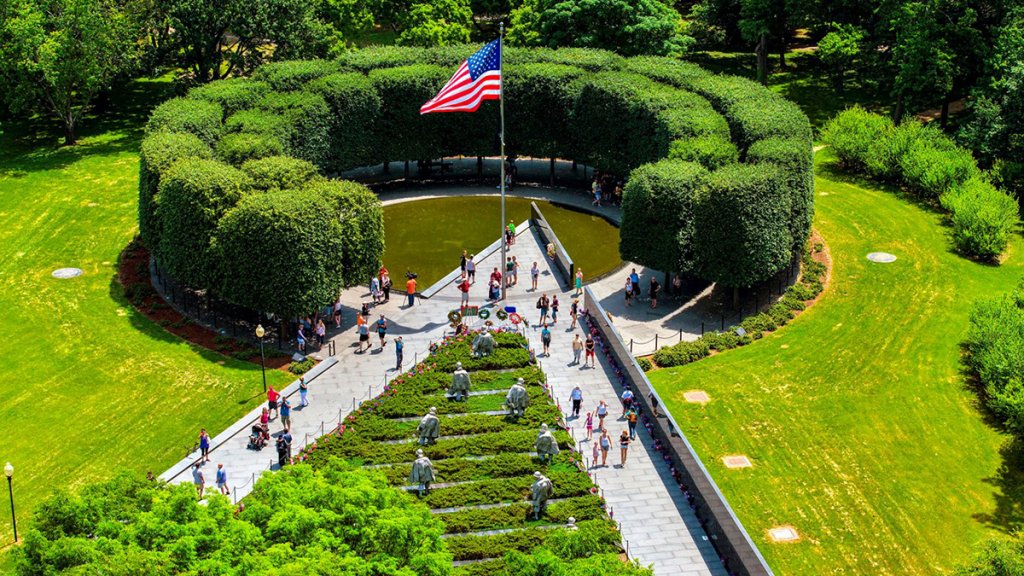
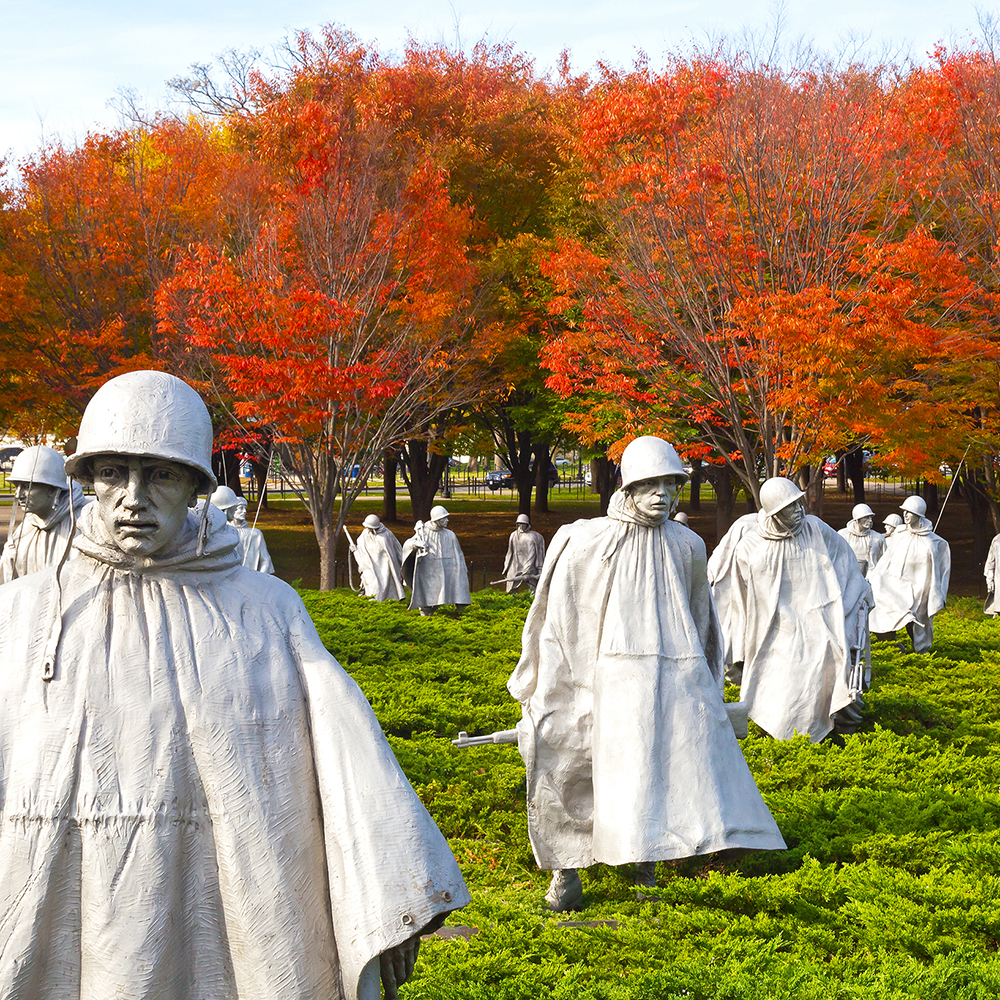
The Korean War Veterans Memorial is a military memorial sculpture that focuses on the actual combat conditions of soldiers. Compared with traditional commemorative methods that emphasize victory, it pays more attention to presenting individual experiences and collective memories during the war.
Basic Information
- Design Team: Cooper-Lecky Architects
- Sculptor: Frank Gaylord
- Completion Date: 1995
- Historical Background: Korean War
- Number of Sculptures: 19 soldier statues
- Material: Stainless Steel
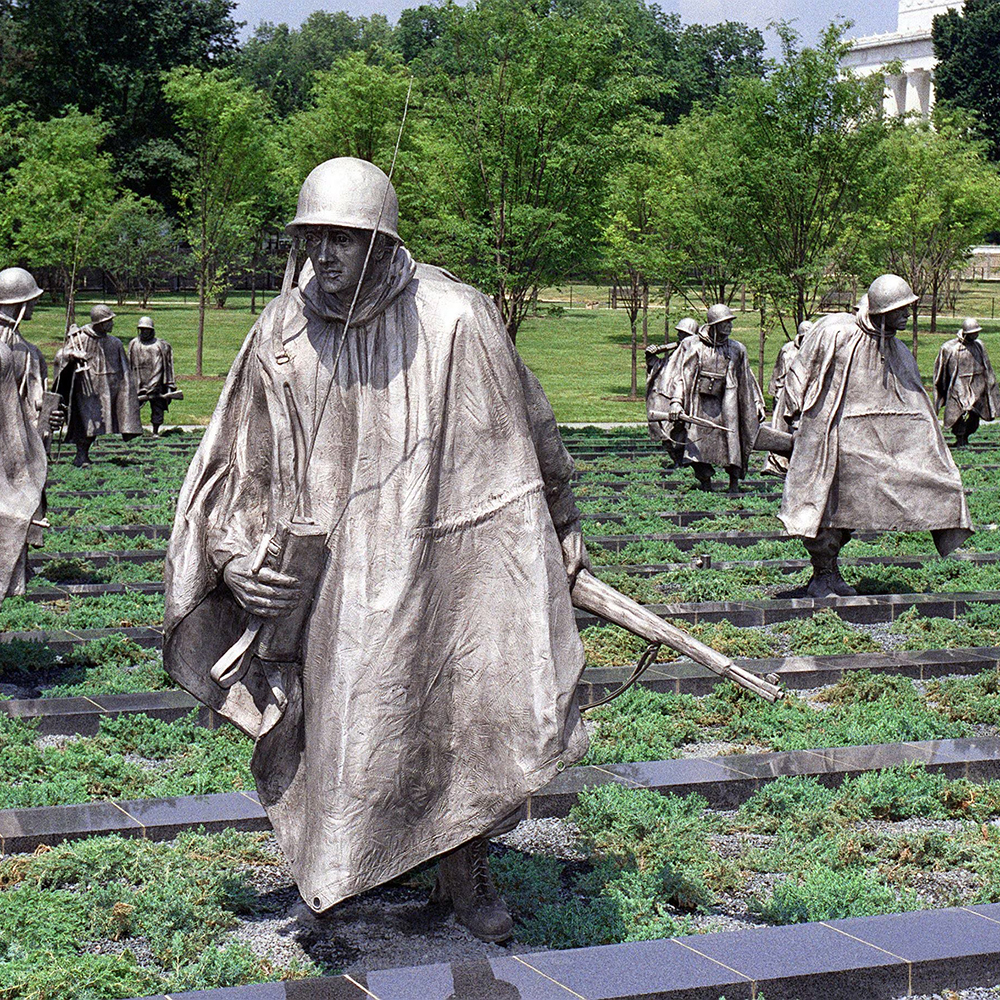
Background: This memorial sculpture is inspired by the Korean War (1950-1953), a key international conflict in the early Cold War. Initially triggered by the division of the Korean Peninsula, the war quickly escalated into a multinational military confrontation, with fierce fighting between the US-led UN forces and the Chinese People’s Volunteer Army and North Korean troops. Due to a long period of neglect after the war, it is often referred to as the “Forgotten War.” This memorial project aims to emphasize the sacrifices and contributions of ordinary soldiers in a complex environment, providing a more concrete representation of historical memory.
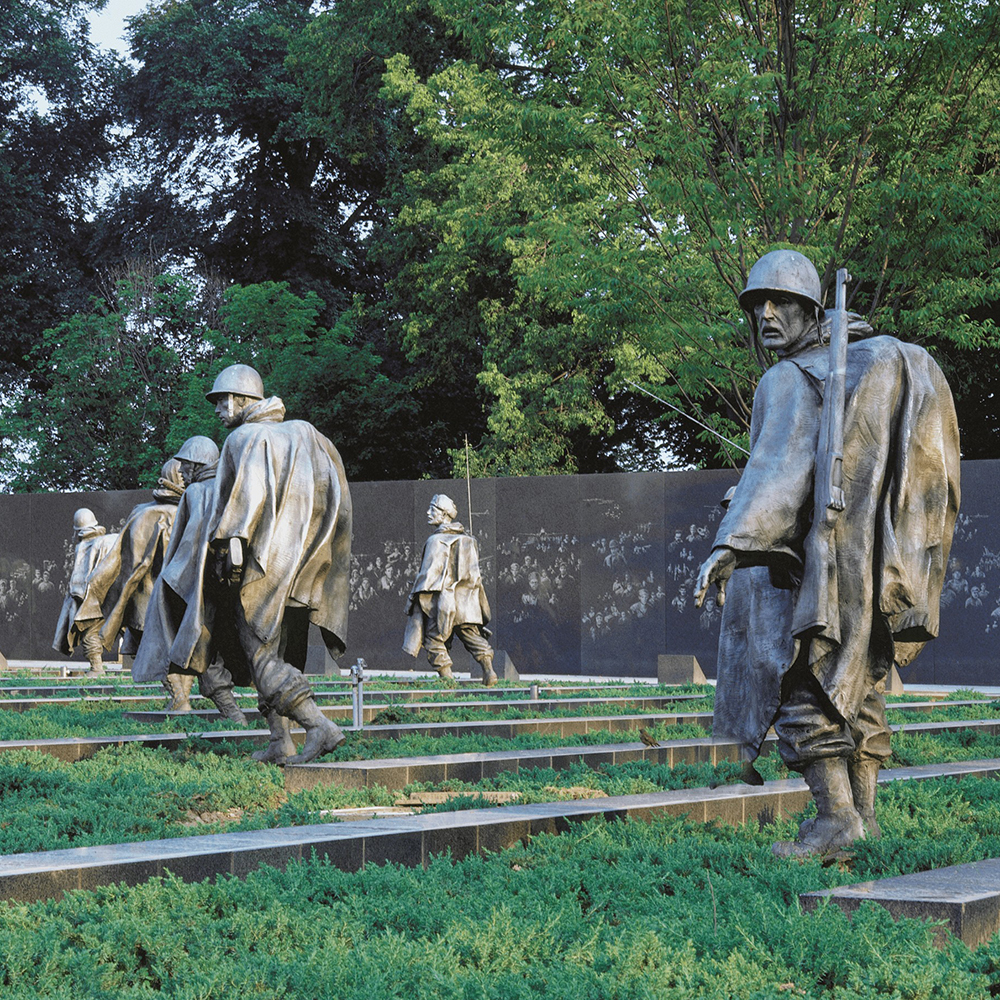
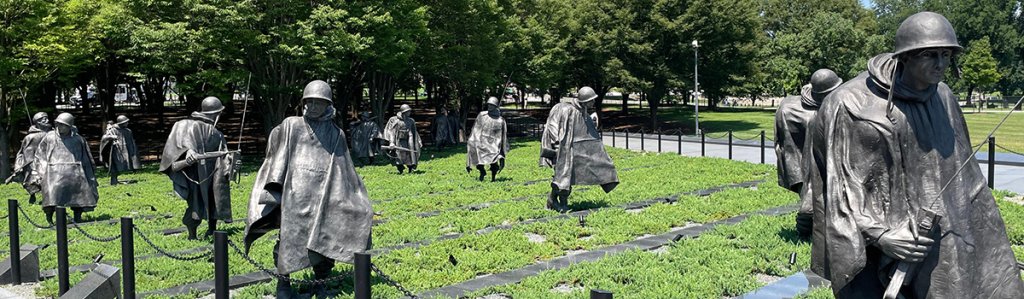
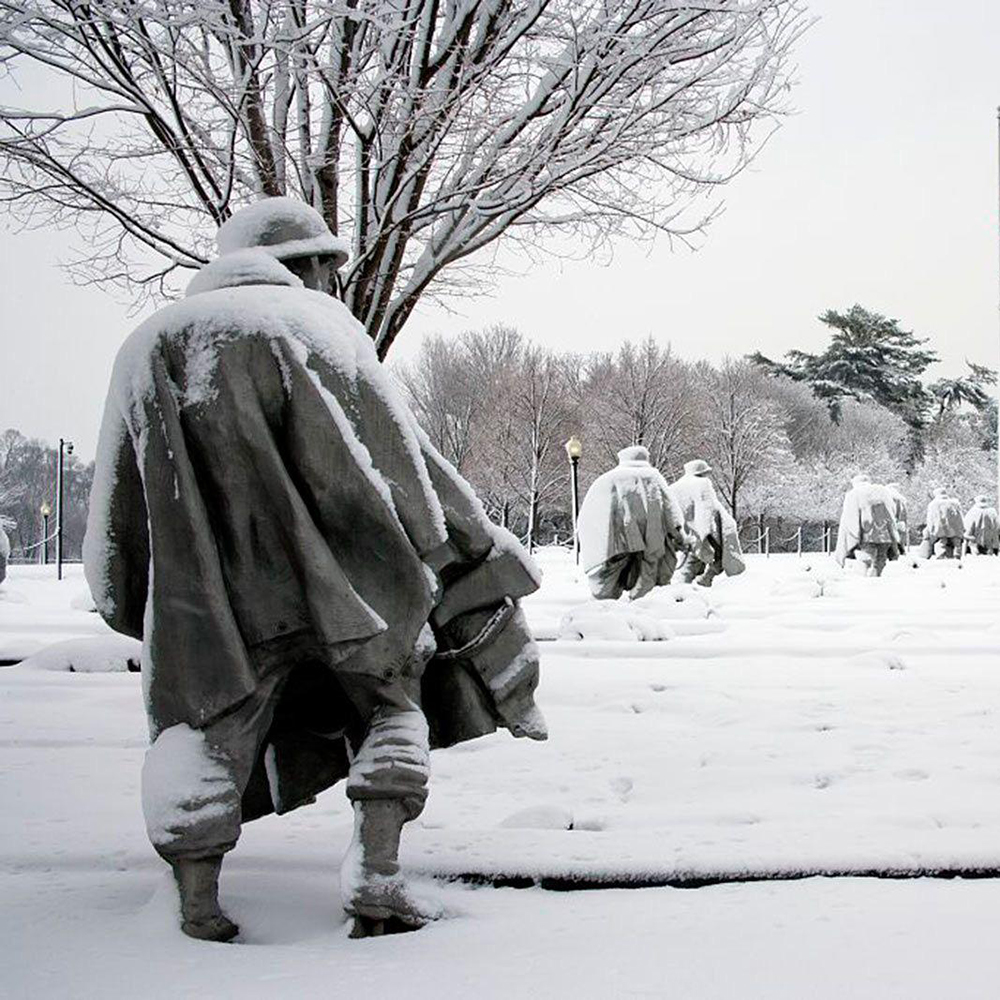
Appearance: The sculpture comprises 19 soldiers, positioned in an open space, depicting them on patrol. The figures maintain a certain distance from each other, forming a loose yet rhythmic formation. The soldiers wear ponchos, are fully equipped, and display various postures; some walk with their heads down, while others observe from the side, creating an overall atmosphere of tension and restraint. The overall design of the set of military statues emphasizes the process rather than a single moment, allowing viewers to more easily immerse themselves in a realistic combat scenario of continuous movement.
Why are there 19 soldiers in the Korean War Memorial
The inclusion of 19 soldier statues in the Korean War Veterans Memorial is a carefully designed symbolic expression, not an arbitrary number.
The core reason lies in the visual symbolism of “19 + 19 = 38”: The 19 soldiers in the memorial sculptures are made of stainless steel and march in the memorial plaza, while their images are engraved on a black granite “Mural Wall” to one side. When viewed from a certain angle, these 19 three-dimensional statues create reflections on the wall, echoing the images on the wall and visually forming the effect of “19 × 2 = 38”.
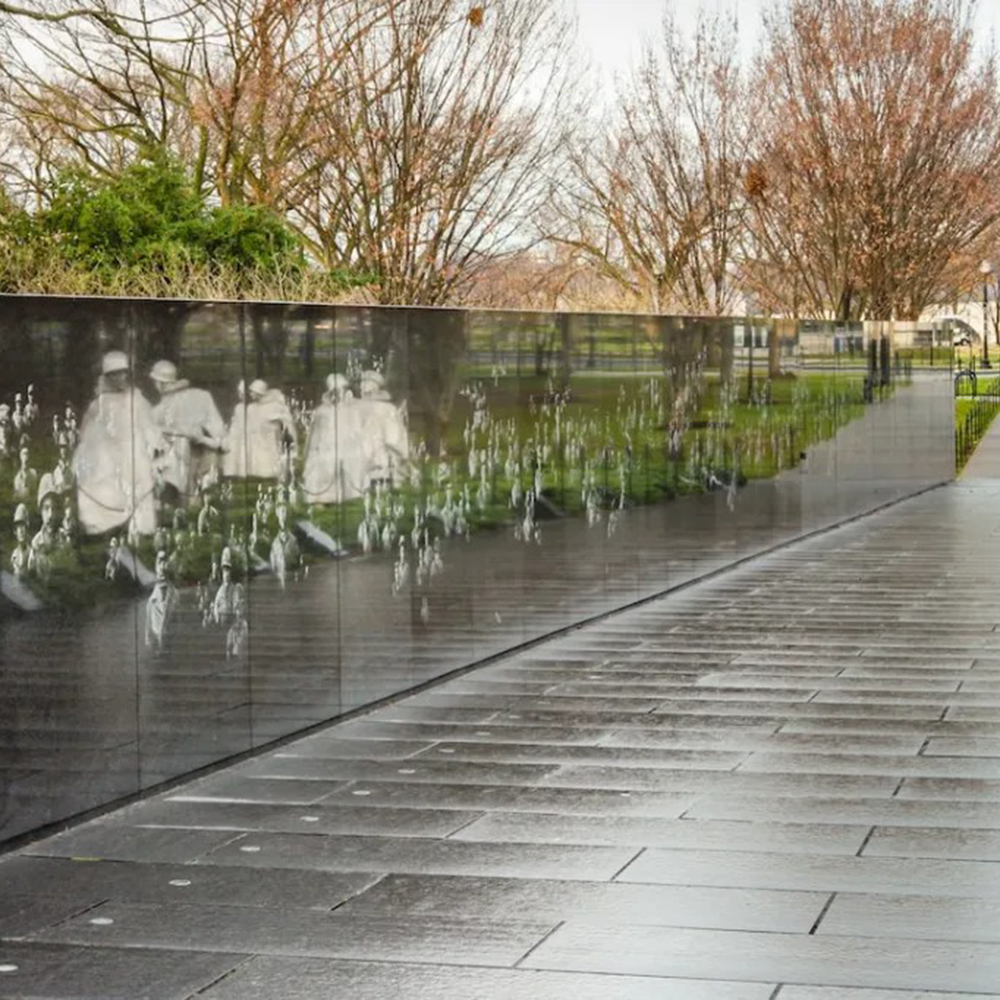
The number 38 has a clear historical significance:
It refers to the 38th parallel, the dividing line of the Korean Peninsula.
This line became the military demarcation line between North and South Korea after World War II.
Therefore, this design has three layers of meaning:
- Historical reference: Directly corresponding to the 38th parallel, the geopolitical core of the Korean War.
- Spatial interaction: Enhancing the sense of participation through visual overlap between the sculpture and the wall.
- Symbolism of unity and division: Hinting at the division between North and South Korea, while also implying reflections on peace and unification.
Three Soldiers Military Statues
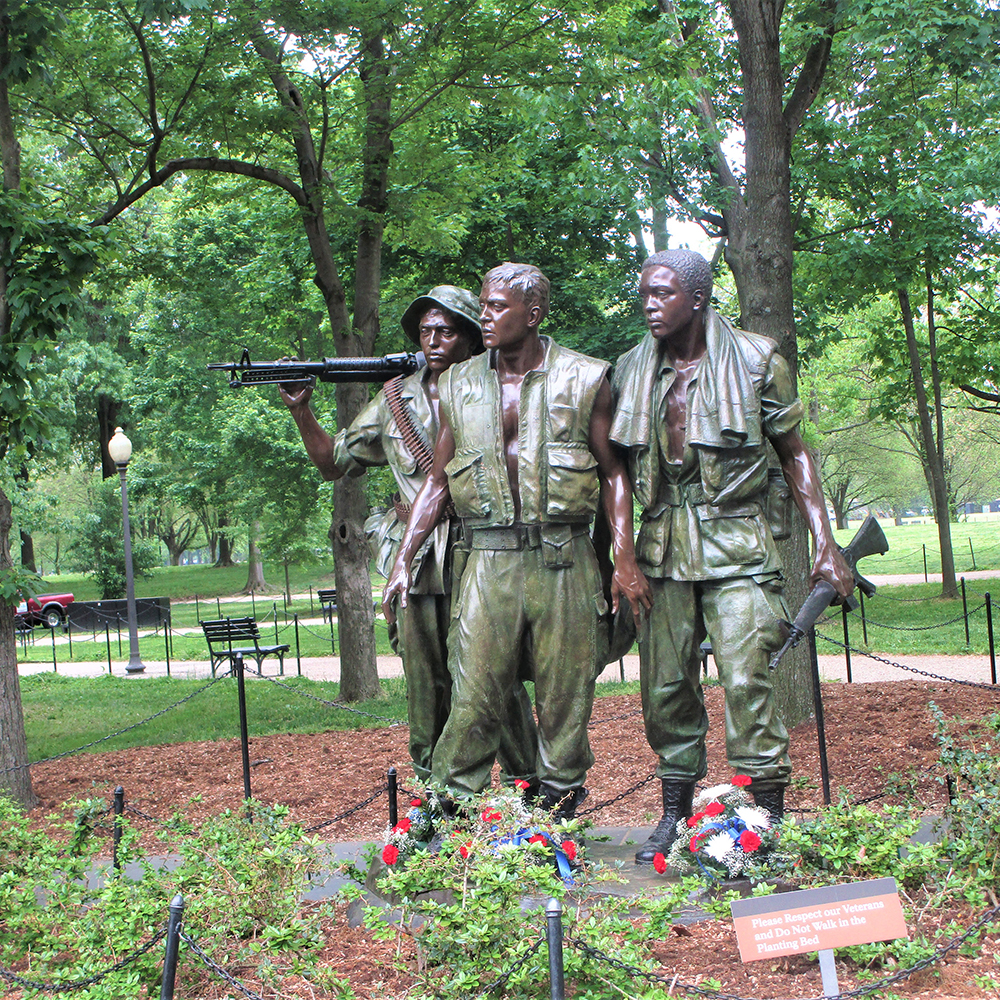
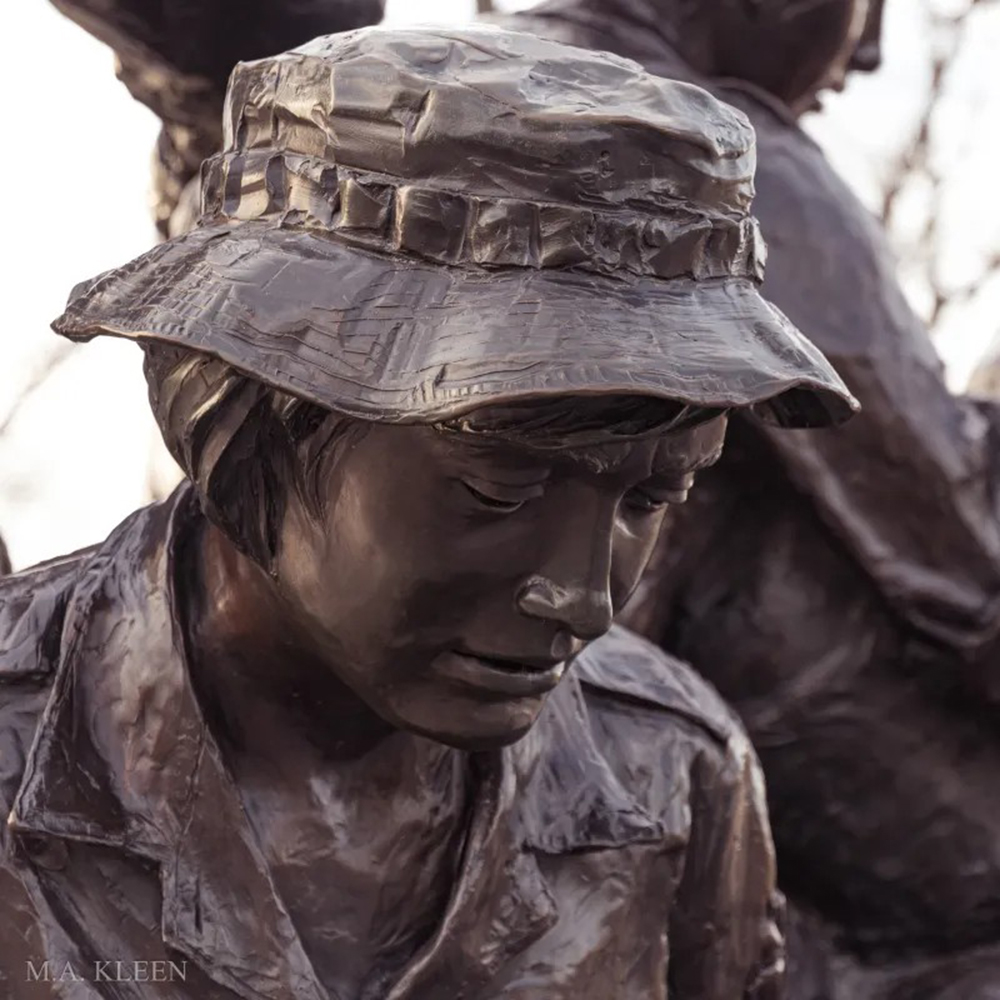
The Three Soldiers statue is one of the most iconic modern military sculptures in the United States. Located in the Vietnam Veterans Memorial in Washington, D.C., it forms a complete narrative space together with the memorial wall.
Basic Information
- Design Team: Frederick Hart
- Completion Date: 1984
- Location: Washington, D.C., USA
- Historical Background: Vietnam War
- Number of Sculptures: 3 soldiers
- Material: Bronze
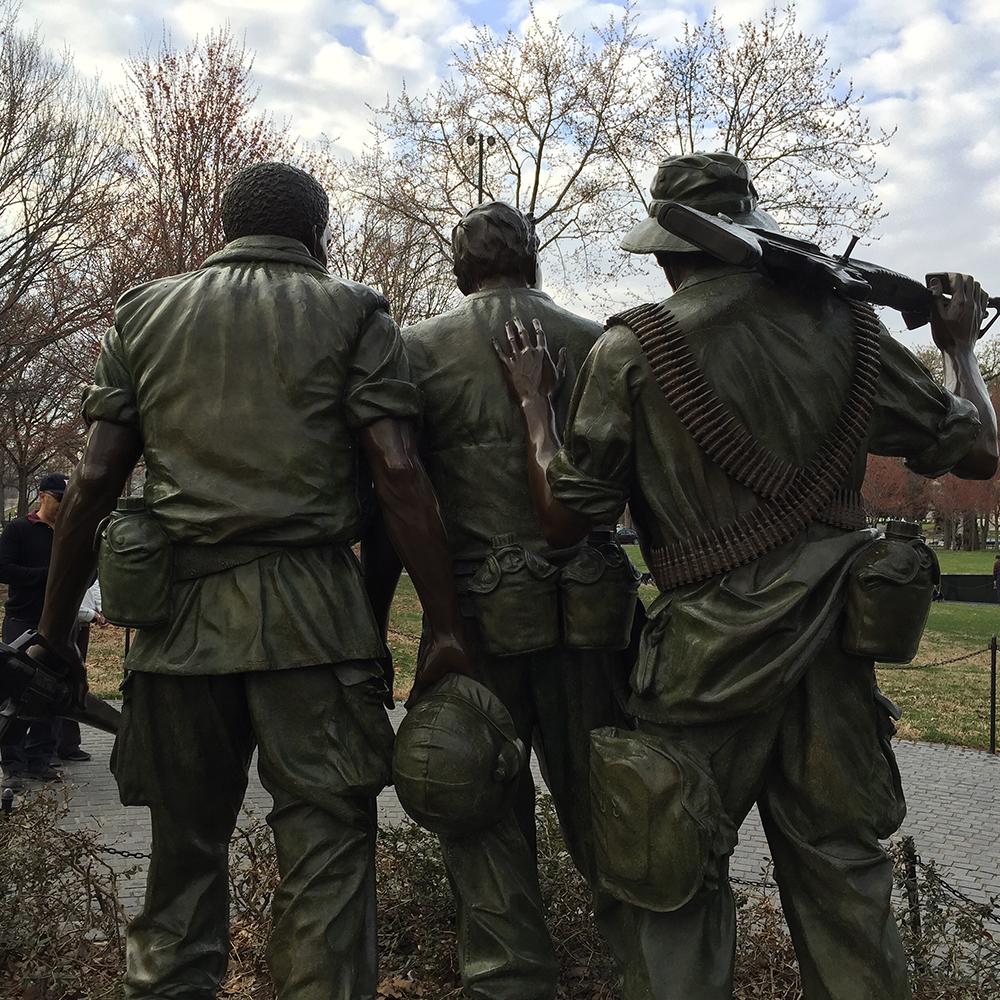
Background: This statue commemorates the Vietnam War (1955–1975), a major war in which the United States participated during the Cold War. The war not only caused massive casualties but also sparked widespread social controversy and reflection within the United States. Within the Vietnam War memorial system, this set of military statues, along with the memorial wall, forms a complete narrative: on the one hand, recording the names of the fallen, and on the other hand, presenting “those who still exist.”
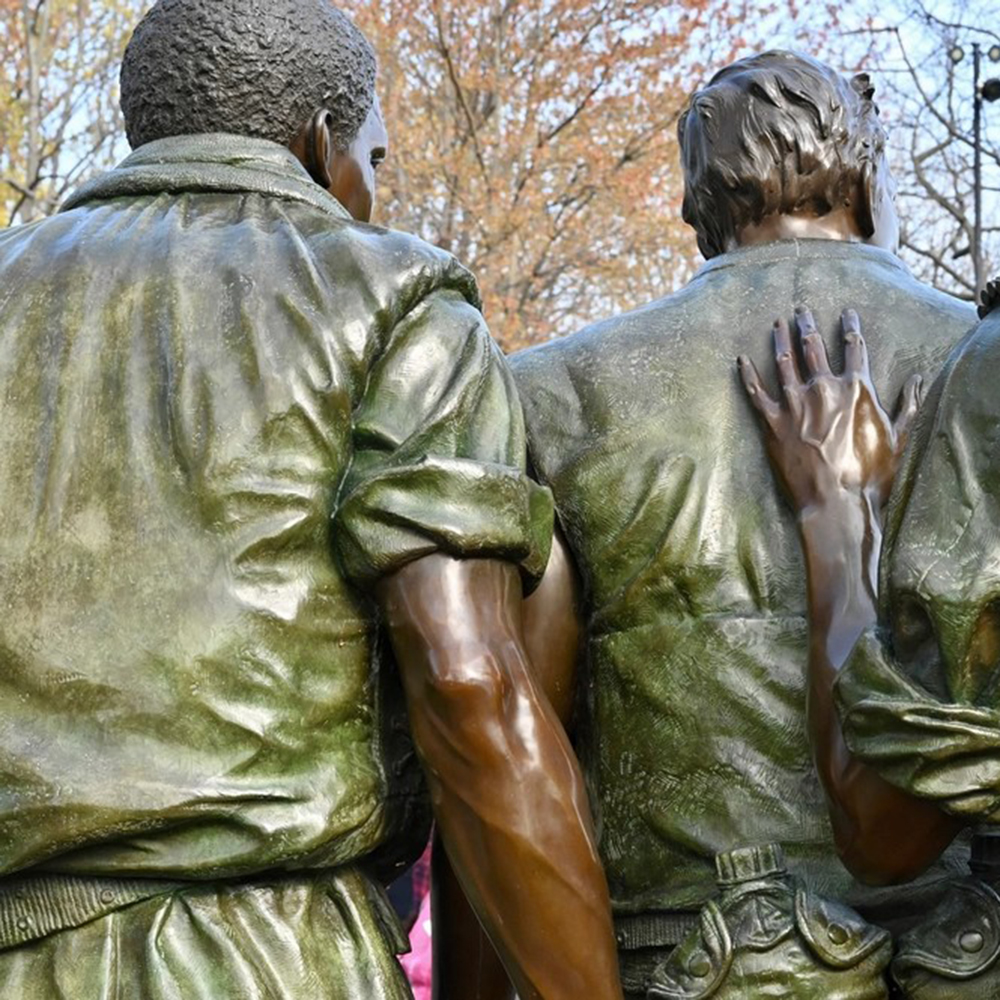
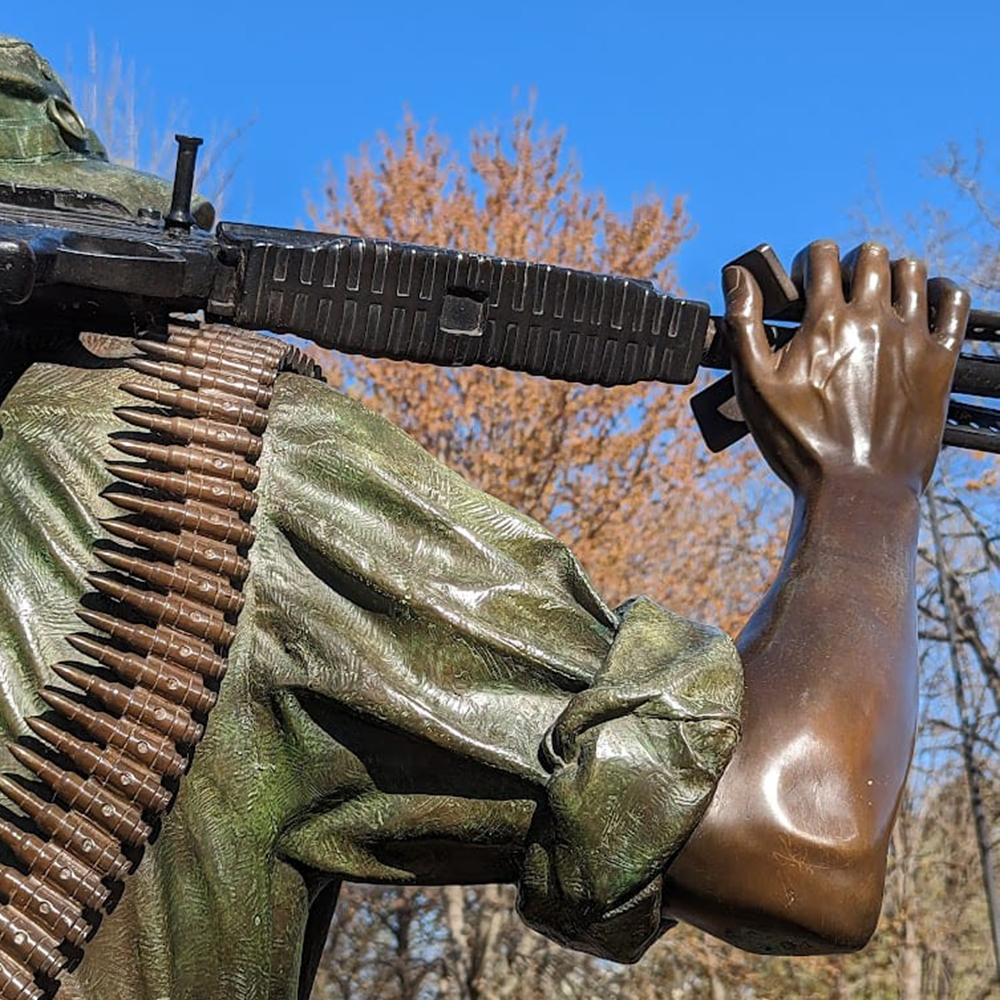
Appearance: The sculpture consists of three soldiers standing side-by-side, their overall posture natural yet slightly tense. The three soldiers represent different ethnicities (white, African American, and Latino), symbolizing the diverse composition of the U.S. military at the time. The figures face the memorial wall. Their postures differ: one gazes directly forward, one slightly tilts their head to observe, and the third appears alert. The clothing and equipment are meticulously depicted, with highly accurate details including uniform folds, weapons, and backpacks. The overall form avoids exaggerated movements, instead conveying fatigue, vigilance, and contemplation through subtle expressions and postures, making it easier for viewers to empathize.
What does The Three Soldiers statue represent?
The Three Soldiers Statue primarily represents the following aspects:
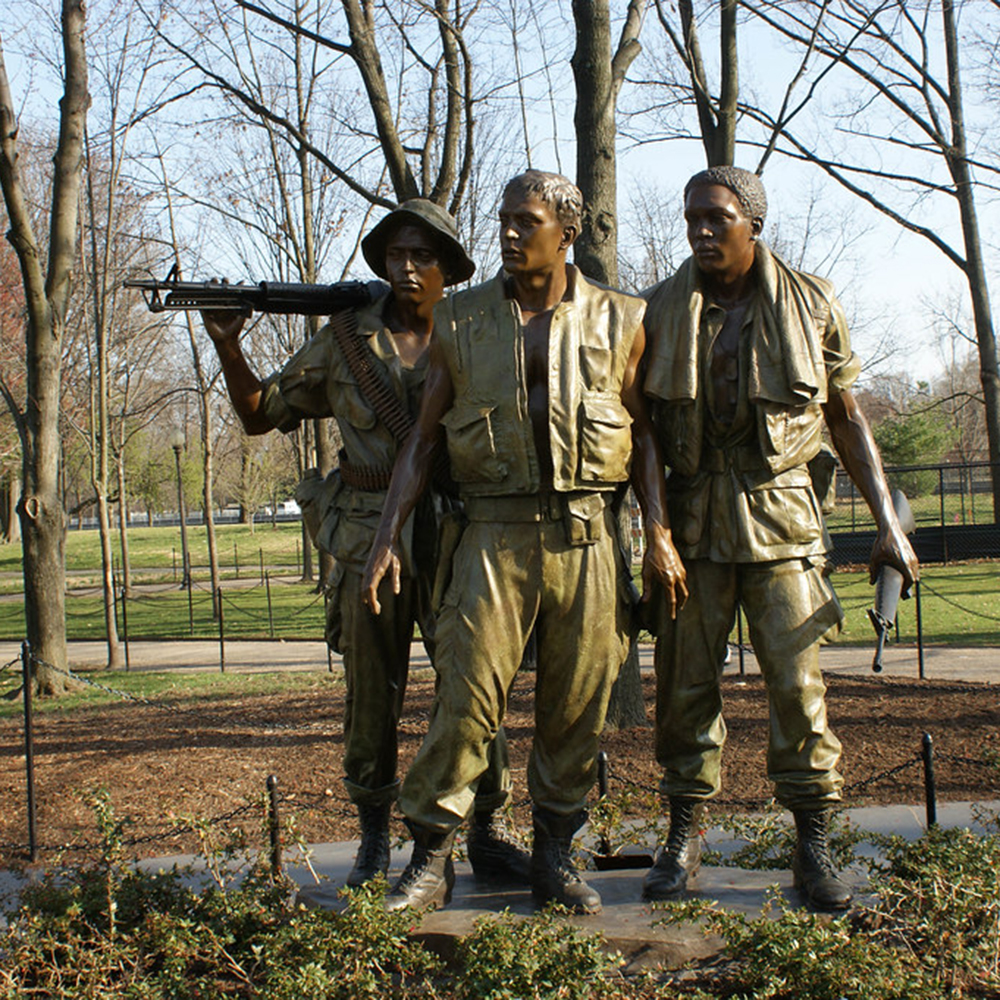
- Individual Soldiers: Centered on three highly realistic soldiers, the statue emphasizes that “soldiers are people, not symbols.” Their expressions and postures convey different states such as alertness, tension, and fatigue, reflecting the real experiences of war.
- Diverse Ethnic Combat: The three soldiers symbolize different ethnic backgrounds, reflecting the diverse composition of the U.S. military in the Vietnam War and emphasizing the reality of different groups participating in the war.
- Psychological State During War: Unlike traditional statues that emphasize victory or heroism, this sculpture focuses more on the soldiers’ emotions, such as uncertainty, stress, and vigilance, reflecting the impact of war on individuals.
- Complement to the Vietnam Veterans Memorial: Facing the Vietnam Veterans Memorial, the statue contrasts with the inscribed memorial wall. The memorial wall represents those who have perished, while the statue represents the soldiers who still “exist,” making the commemoration more complete.
- A Balanced Approach to Commemoration: It establishes a connection between the abstract commemoration of names and the concrete image of individuals, allowing the public to feel both the scale of history and the specific people involved.
What was the controversy surrounding the Vietnam Veterans Memorial?
The controversy surrounding the Vietnam Veterans Memorial mainly focuses on the following aspects:
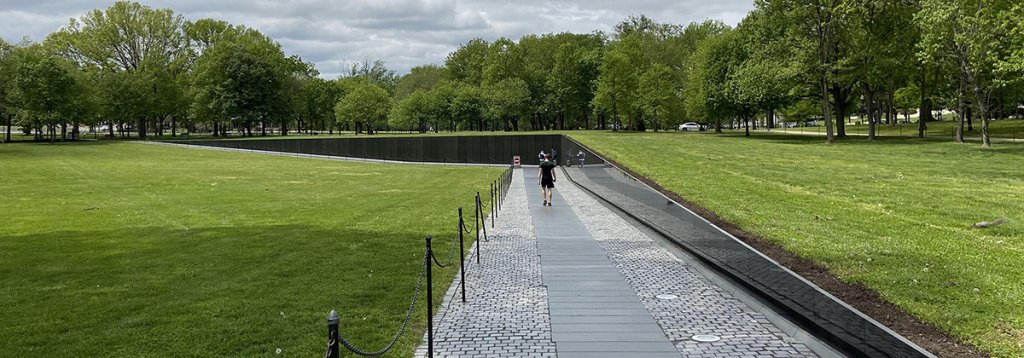
- Overly Abstract Design: Designed by Maya Lin, the memorial uses a black granite wall inscribed with names, without soldier statues or traditional symbols. Some felt this minimalist design lacked solemnity and heroism, even describing it as “a wound.”
- Overly Negative Emotions: The black wall and densely packed names of the fallen reinforced the feeling of death and loss, but failed to convey victory or glory. Therefore, critics argued it expressed tragedy or anti-war sentiments rather than commemorating military honor.
- Controversy Over the Designer’s Identity: The designer was a young student at the time, leading some to question her representativeness. Furthermore, her Asian background sparked biased discussions at the time, exacerbating the controversy.
- The Memorial Method Did Not Meet Public Expectations: Many veterans preferred to see concrete soldier statues rather than an abstract wall of names. This discrepancy made it difficult for some to initially accept this form of commemoration.
- Subsequent addition of sculptures as a compromise: To alleviate the controversy, the Three Soldiers Statue was later added near the memorial wall, using figurative soldier figures to balance the abstract expression of the original design.
Spirit of the American Doughboy Military Statues
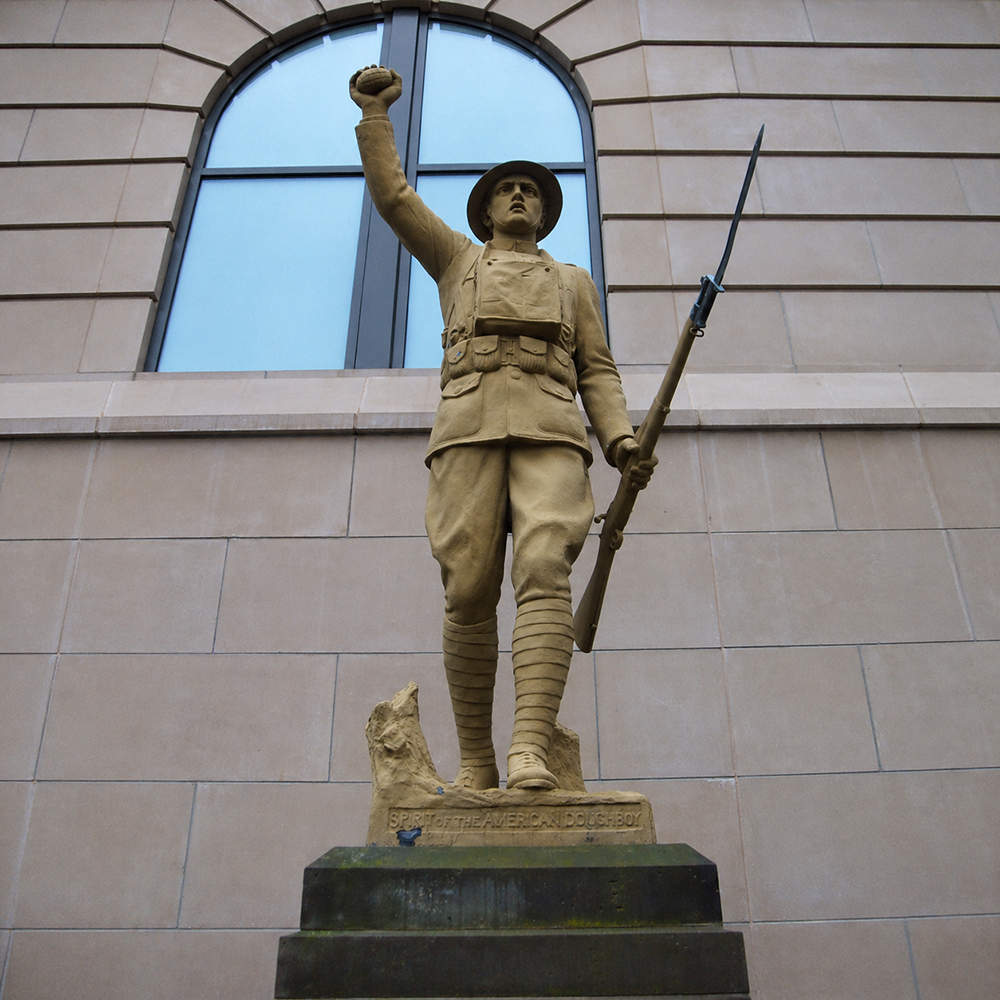
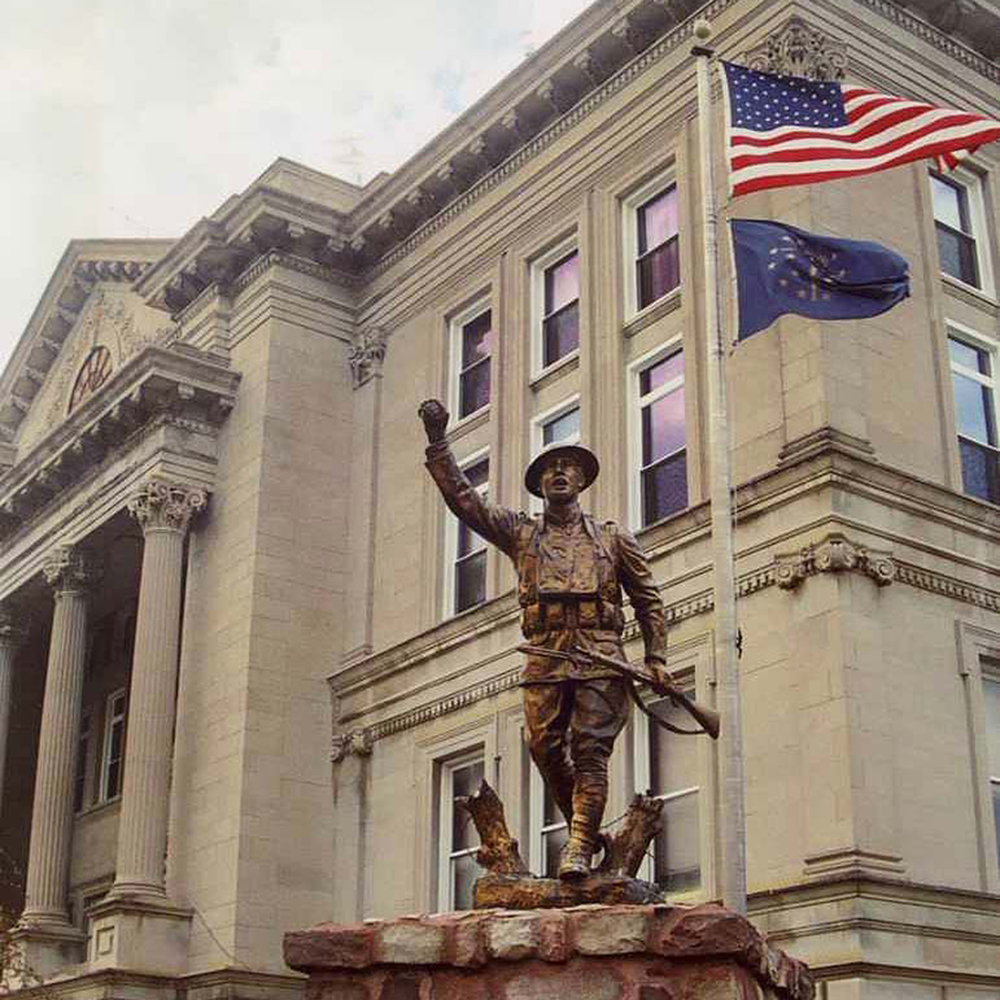
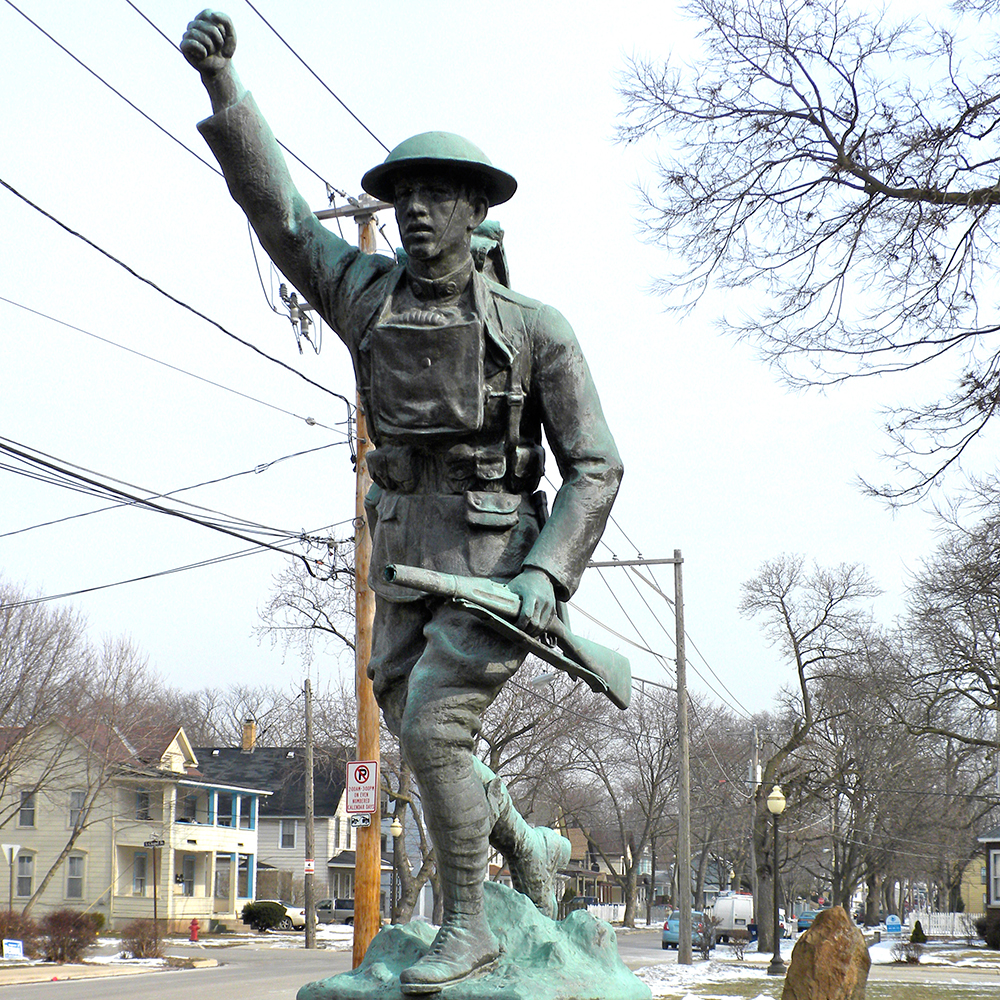
The Spirit of the American Doughboy is one of the most widely distributed and reproduced works of World War I memorial sculptures in the United States, commonly found in various town squares and memorial spaces.
Basic Information
- Sculptor: E. M. Viquesney
- Creation Time: 1920 (subsequent long-term reproduction)
- Historical Context: World War I
- Location: Widely distributed throughout the United States (no single fixed location)
- Material: Early versions were made of zinc (spelt) and bronze.
- Dissemination Characteristics: Numerous reproductions throughout the United States, exceeding 100.
Background: This sculpture was created after the end of World War I, when a wave of commemoration of fallen soldiers swept across the United States.
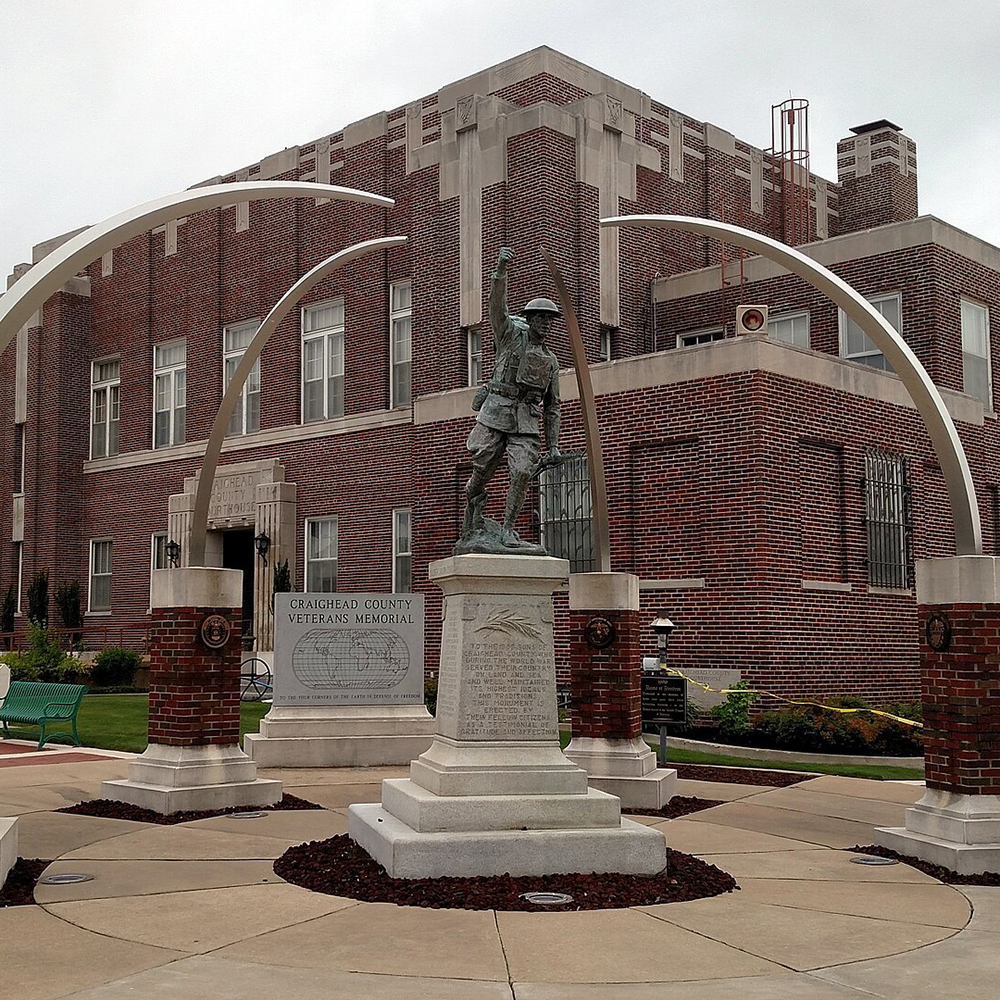
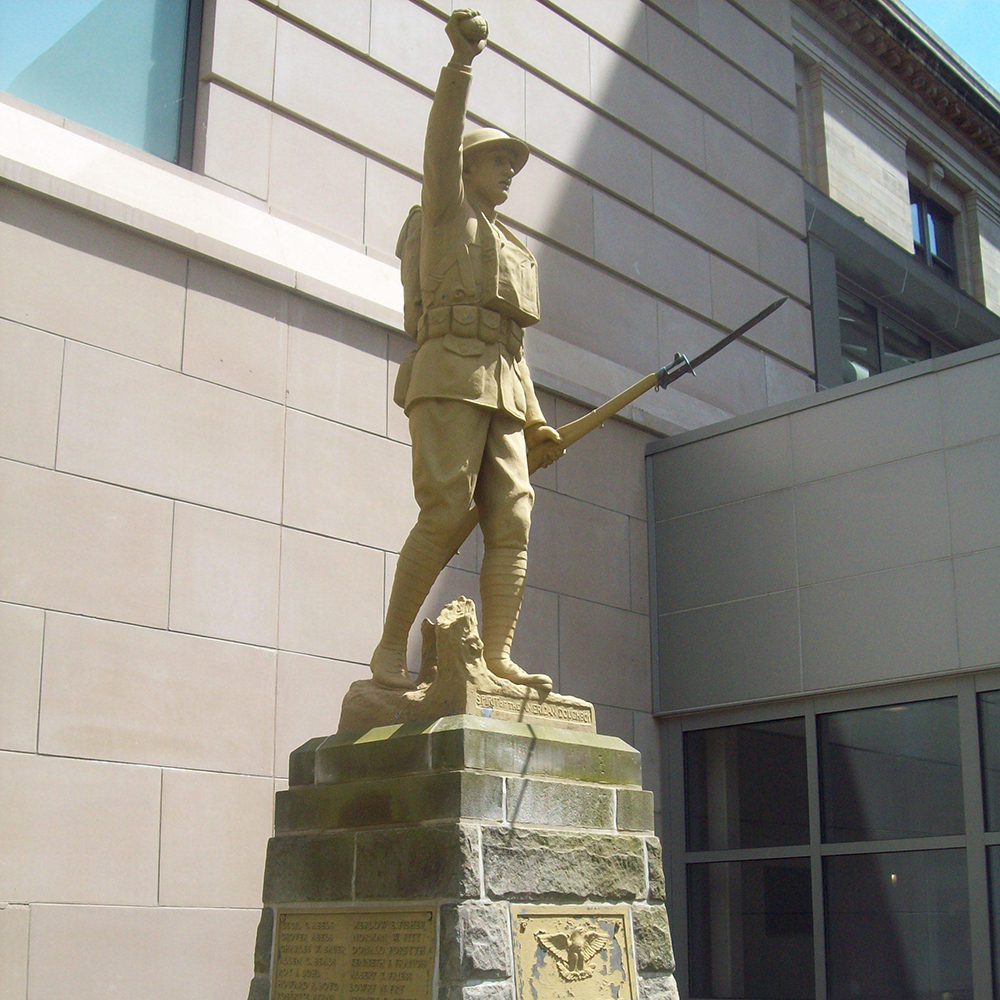
Sculpture Appearance: The type of military statues depicts a soldier charging forward in a moment of intense action, leaning forward, taking a step forward, with a clearly forward-shifted center of gravity. The right hand holds a grenade aloft, and the left hand holds a rifle, creating a strong sense of offensive momentum. The figure’s expression is tense and resolute, and the movement has a distinct sense of explosive power. The uniform, helmet, and equipment are clearly depicted with realistic details.
What is doughboy in military slang?
In military slang, “doughboy” is a colloquial term for U.S. infantry during World War I. The exact origin of the word is not definitively established, but common explanations include:
- Uniform-related reasons: Soldiers’ clothing was often covered in dust during marches, making them look “dough-covered.”
- Equipment or appearance: Early uniforms or backpacks were thought to resemble “lumps of dough.”
- Historical continuity: The term can be traced back to the Mexican-American War in the 19th century and was later used during World War I.
Semantically, “doughboy” is usually not derogatory but rather a term of endearment and collective identification, similar to an informal nickname for ordinary soldiers.
In the sculpture “Spirit of the American Doughboy,” this term emphasizes the image and spirit of ordinary soldiers, rather than specific heroic figures.
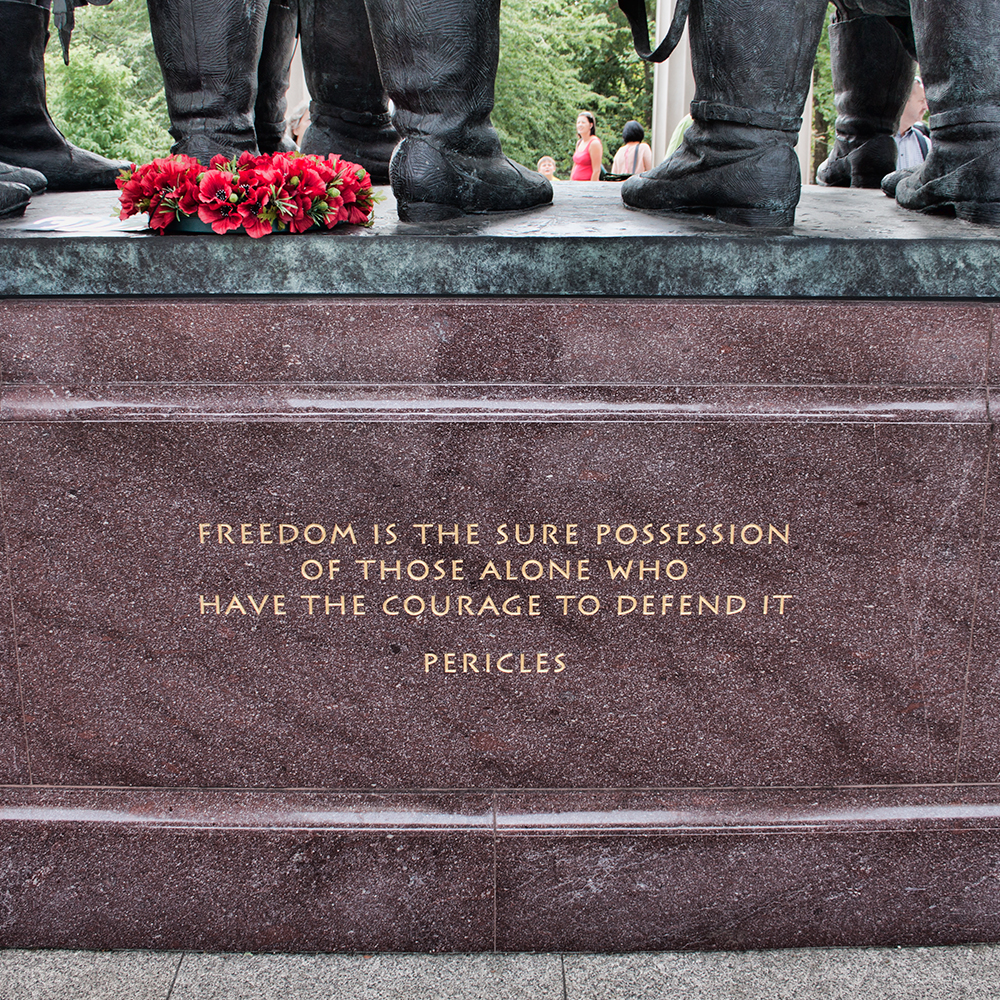
RAF Bomber Command Memorial
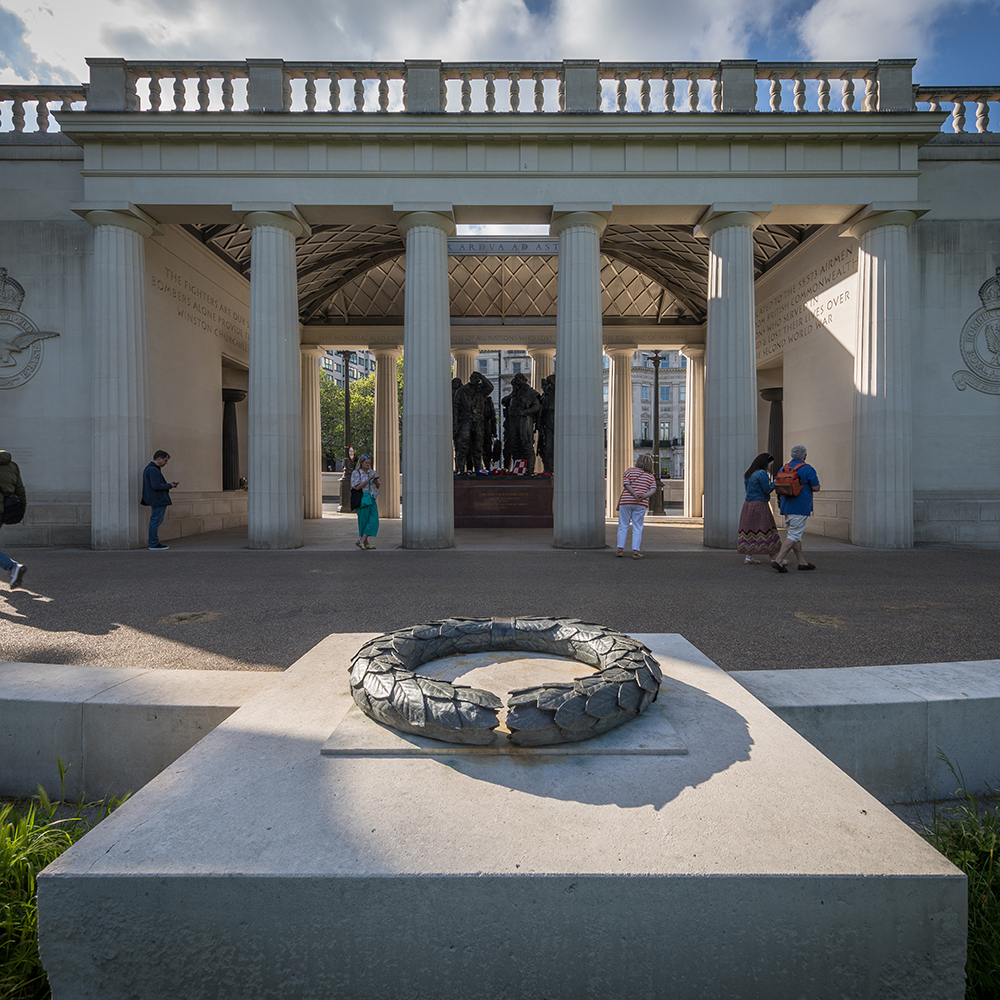
The RAF Bomber Command Memorial is one of the UK’s most important World War II memorial sculptures, commemorating members of the Royal Air Force Bomber Command. It presents a solemn and restrained commemorative style.
Basic Information about the military statues
- Sculptor: Philip Jackson
- Completion Date: 2012
- Historical Context: World War II (Royal Air Force Bomber Command Operations)
- Location: Green Park, London
- Number of Figures: 7 crew members
- Material: Bronze statue + stone memorial structure
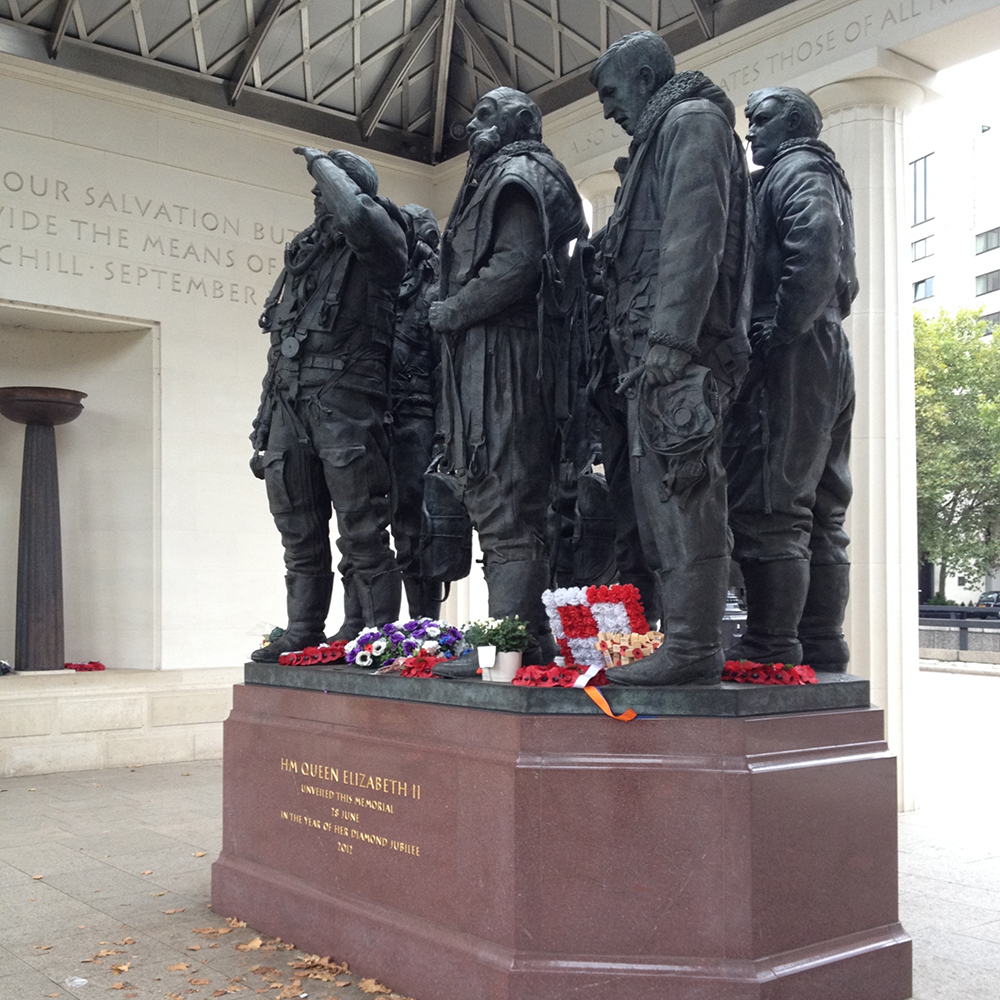
Background: This memorial commemorates the approximately 55,000 personnel who died during World War II in the Royal Air Force Bomber Command. The bomber force carried out numerous strategic bombing missions against Germany during the war, missions that were extremely dangerous and resulted in staggering casualties. At the same time, strategic bombing itself is historically controversial; therefore, this monument is not only a tribute to the fallen but also carries a complex historical weight.
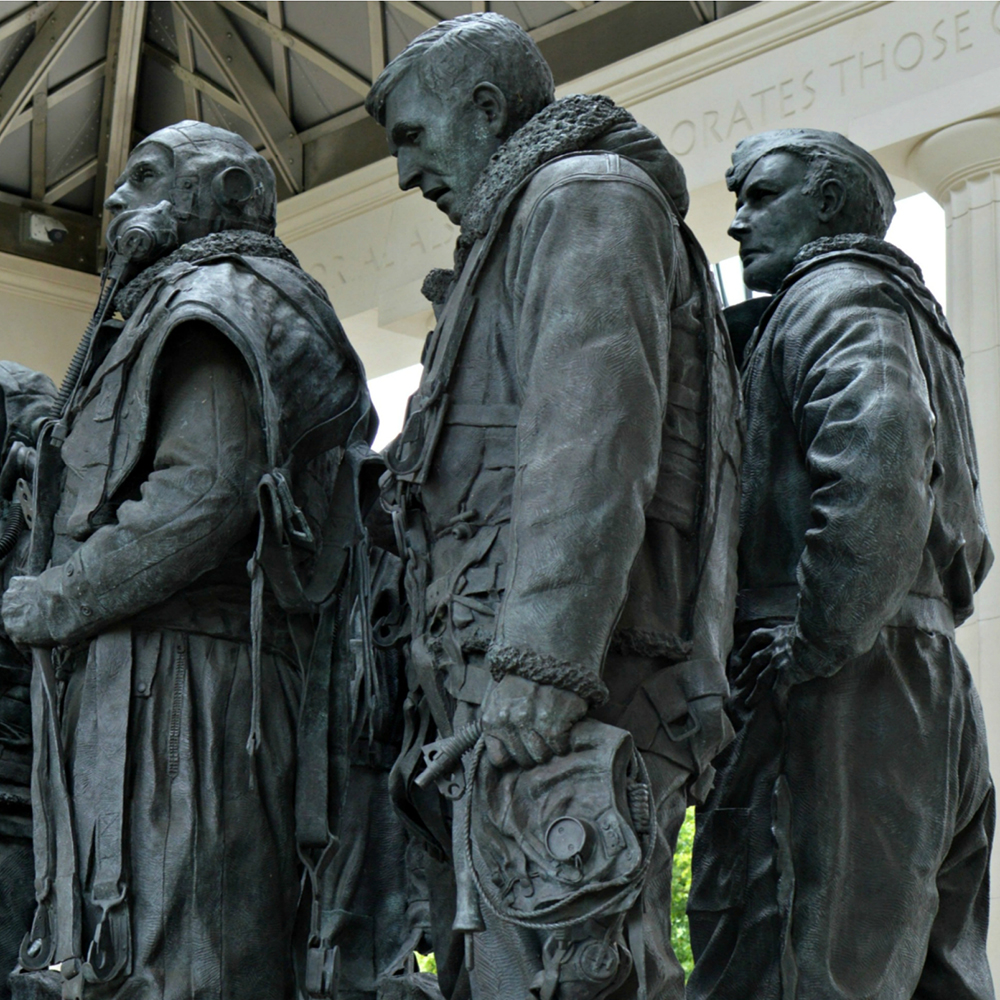
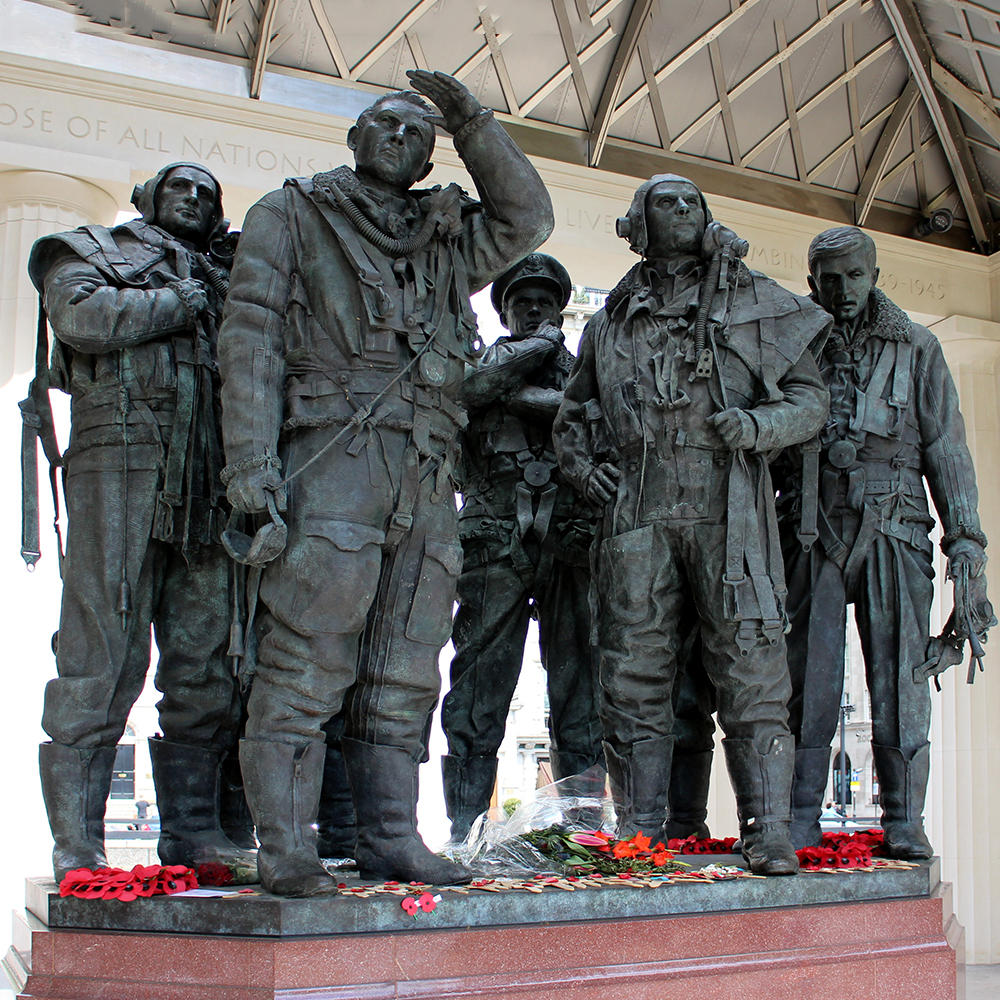
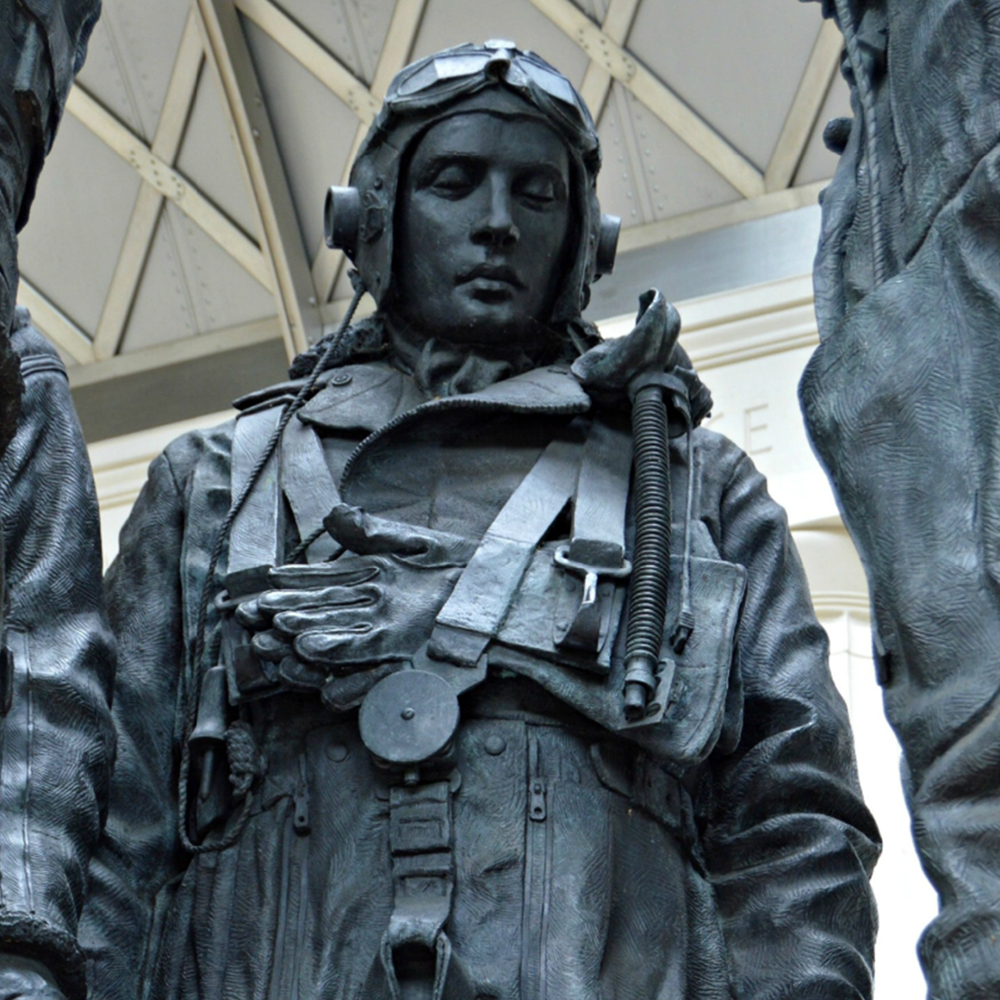
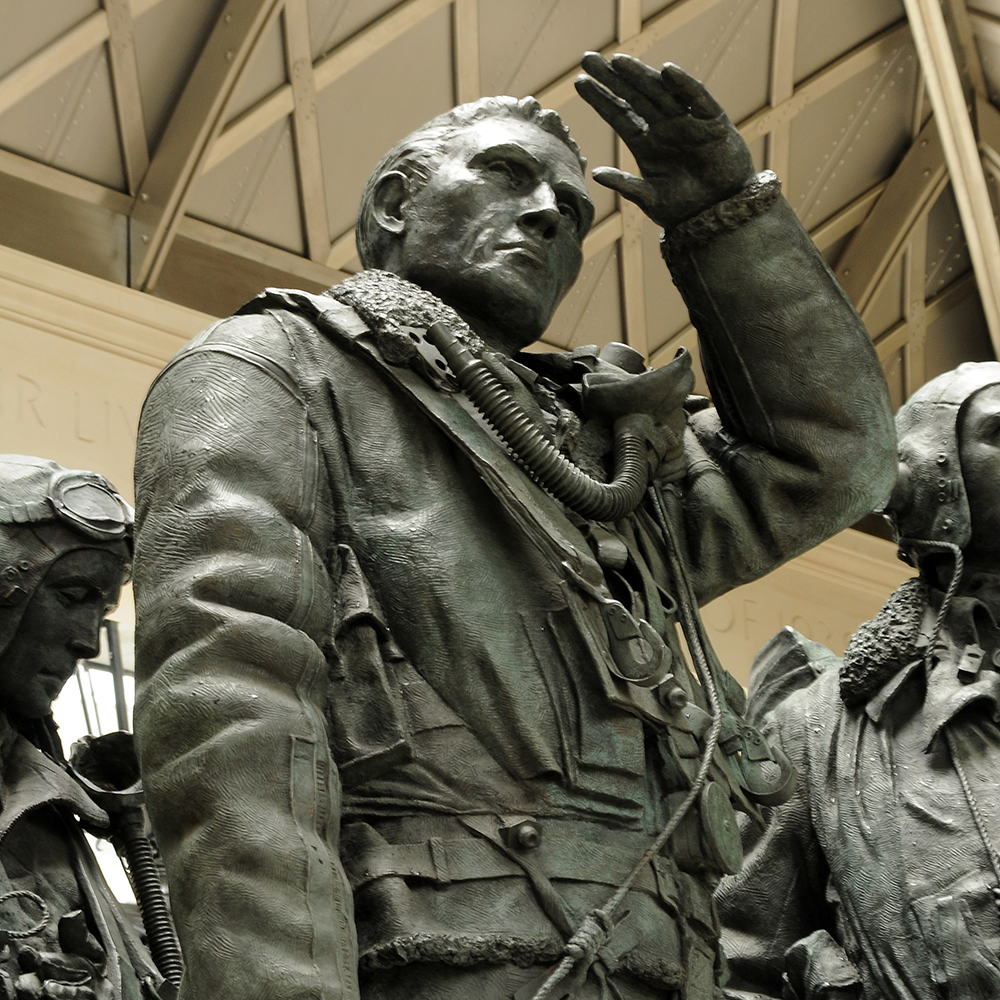
Appearance: The set of military statues is located inside an open pavilion-like structure, with the seven crew members standing side-by-side, forming a stable and focused group composition. The overall impression is one of composure after a mission. The clothing and equipment are meticulously detailed, with recognizable details such as flight suits and survival gear. The character’s facial expressions are restrained, emphasizing fatigue and calmness rather than intense emotions.
Battle of Britain Monument
The Battle of Britain Monument is a military memorial sculpture presented in the form of a continuous relief, recording scenes related to air battles through a long scroll structure.
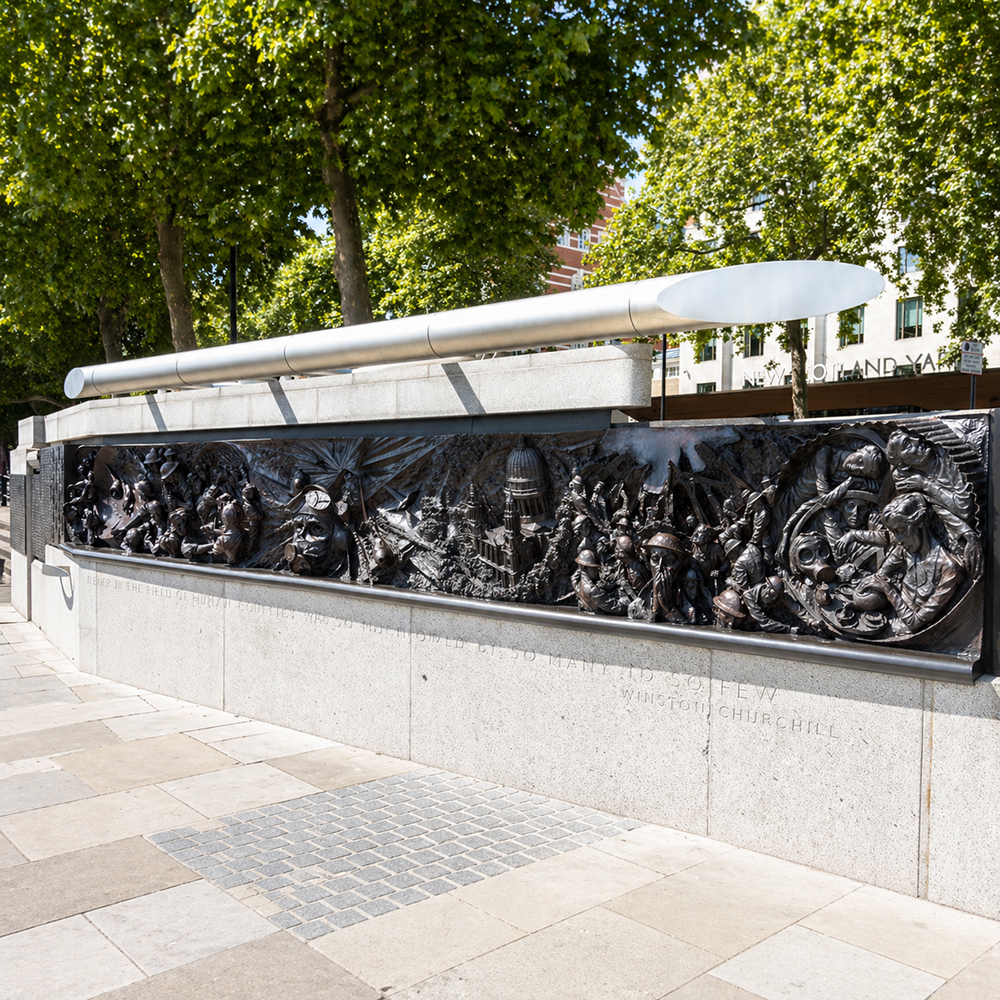
Basic information about the relief
- Designer: Liam O’Connor Architects & Planning
- Sculptor: Paul Day
- Completion Date: 2005
- Historical Context: Battle of Britain
- Location: Victoria Embankment, London
- Material: Bronze relief + stone structure
- Dimensions: Approximately 25 meters (82 feet) in length and 2 meters (6.5 feet) in height
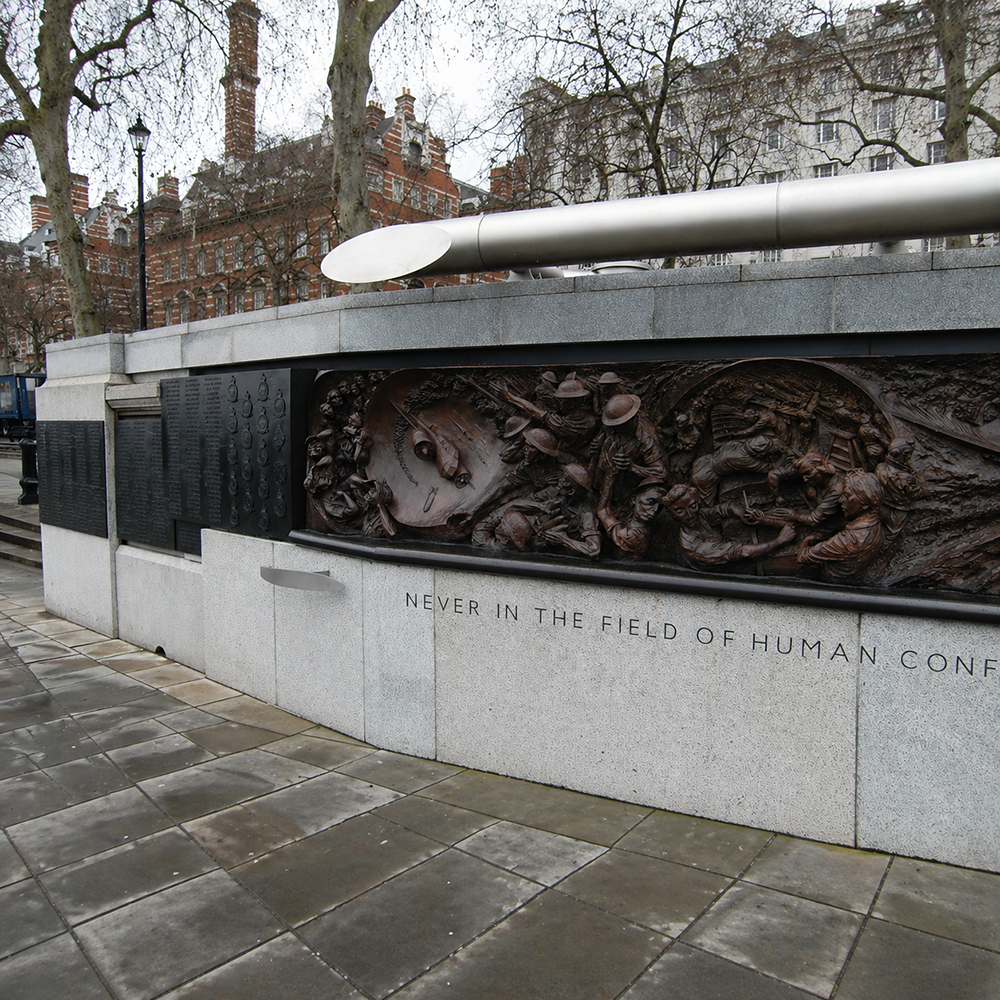
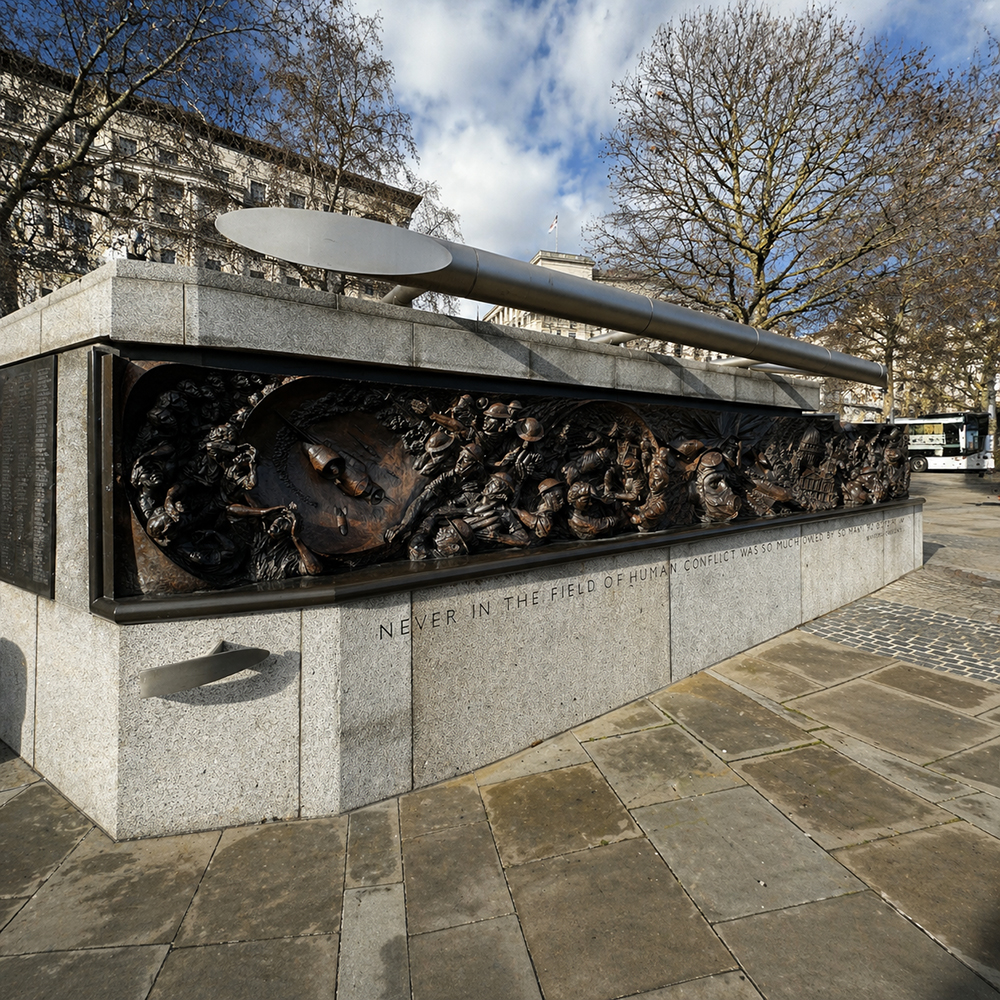
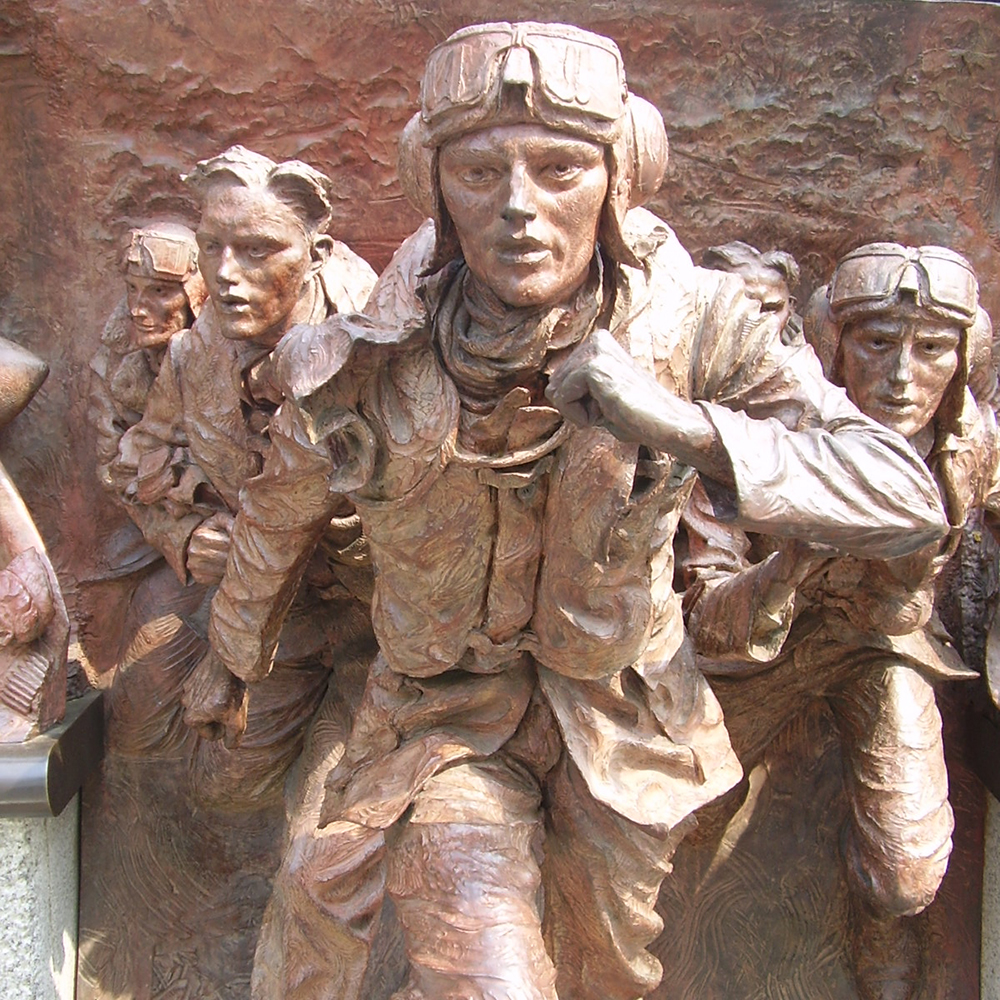
Background: This monument commemorates the Battle of Britain in 1940, a crucial air battle in the defense of the British homeland during World War II. The Royal Air Force withstood continuous Luftwaffe air raids during this phase, preventing the invasion of Britain. The set of military statues uses figurative sculpture to integrate those involved in the air battle and the ground support system into a single narrative framework.
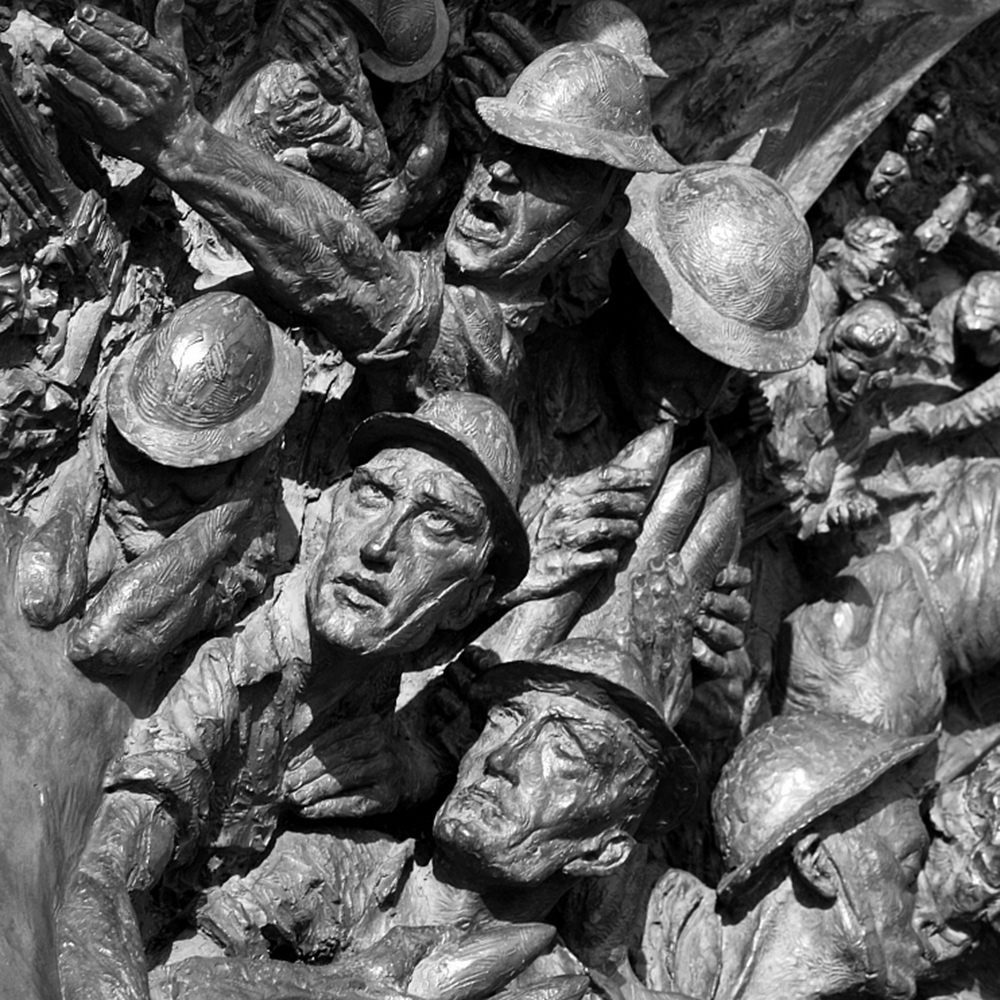
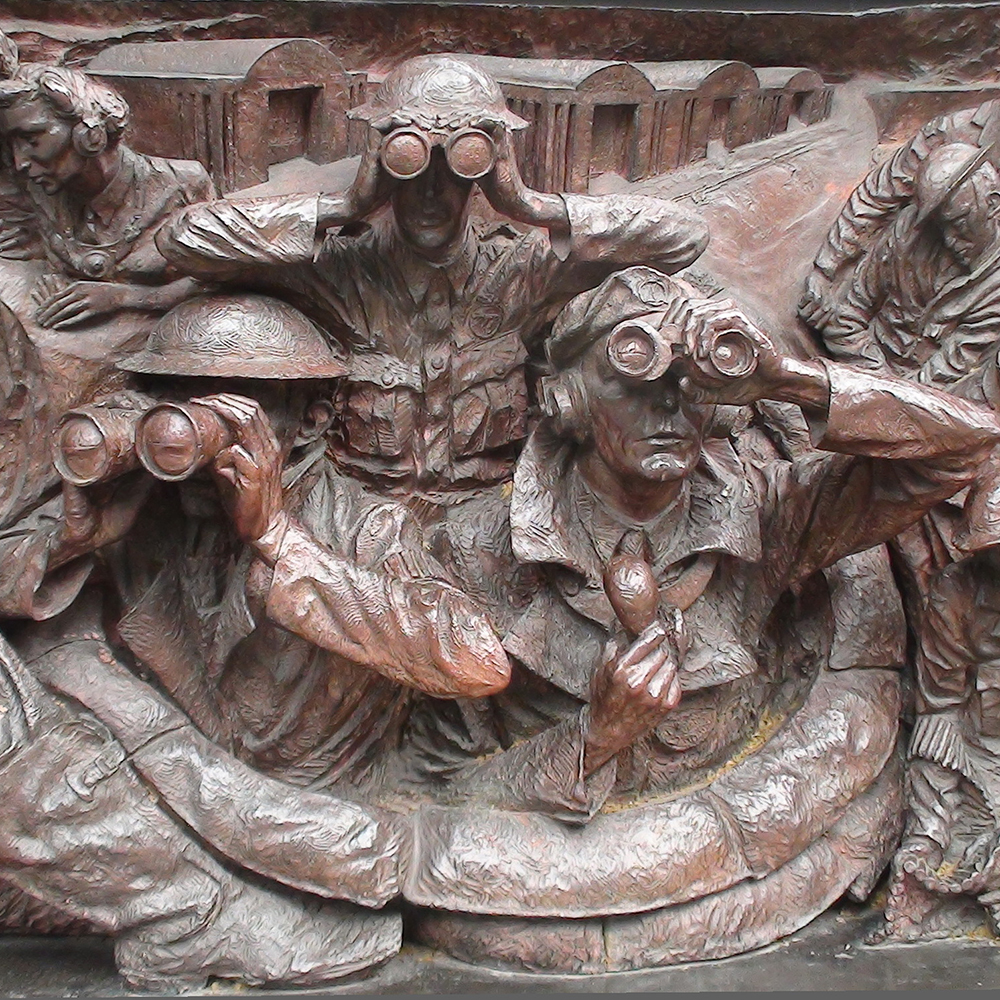
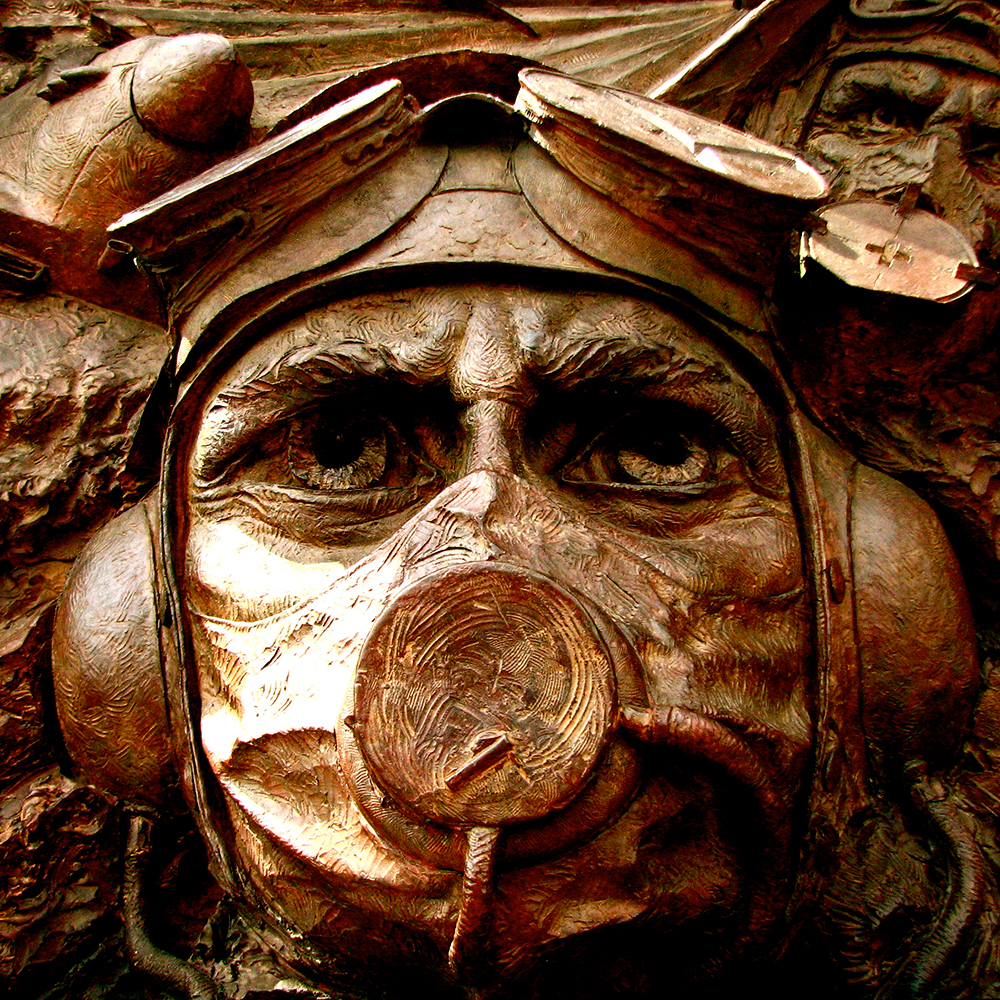
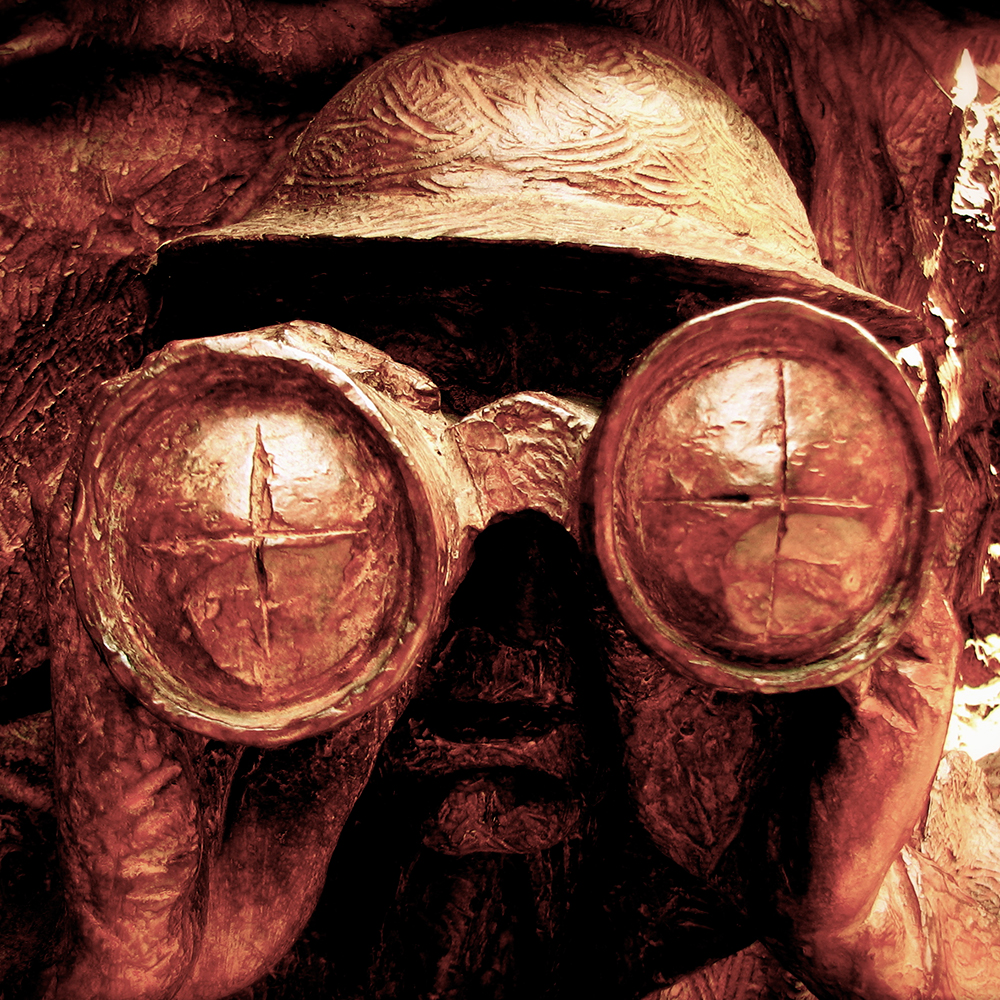
Appearance: The monument employs a horizontally expansive composition, combining large-scale reliefs with individual figure sculptures. A pilot statue is placed in front, its natural pose—standing or ready—emphasizing the presence of the individual figure. The main body is a continuous relief sculpture depicting scenes such as pilots preparing for takeoff, maintaining aircraft, and commanding operations. The figures are densely packed and richly layered, and the undulating carving expresses a dynamic narrative, giving the entire work a strong sense of storytelling.
Neue Wache Memorial Sculpture
The memorial sculptures in Neue Wache are among the most representative war memorial works in Germany, known for their minimalist environment and strong emotional expression.
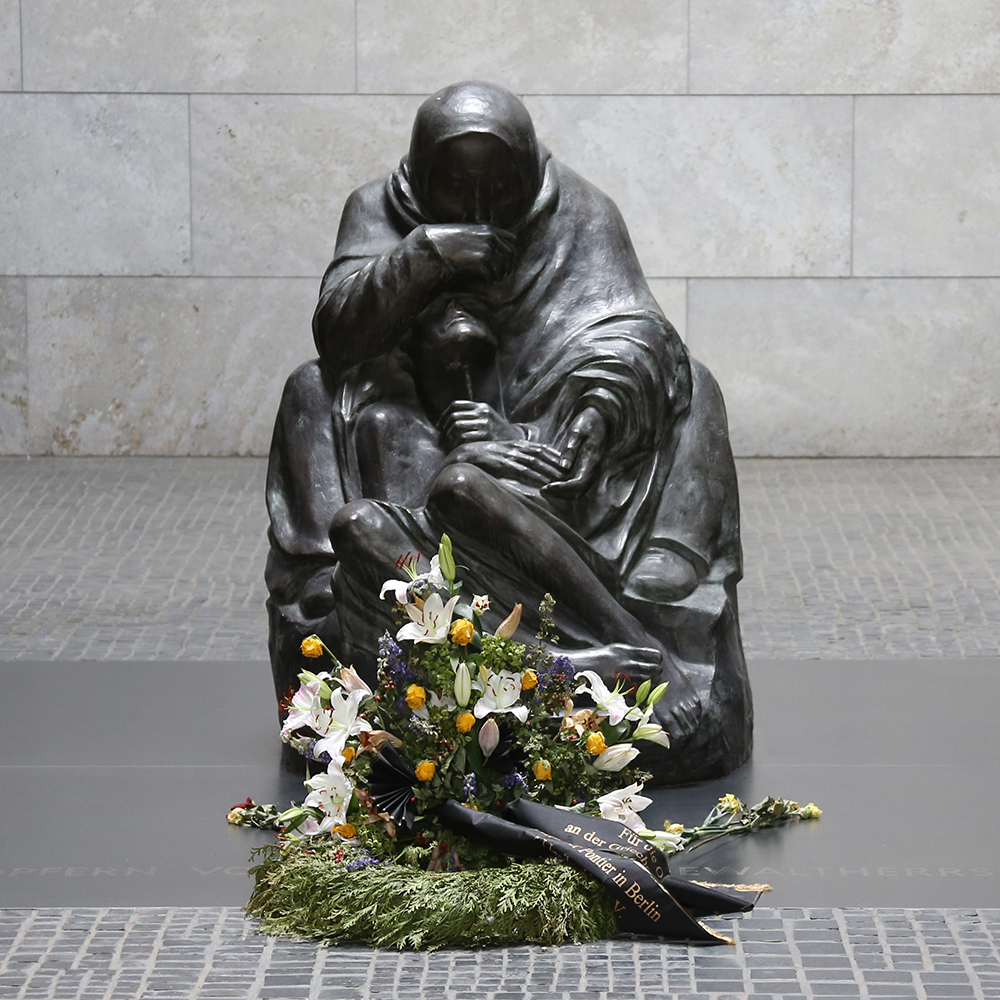
Basic Information
- Original Sculptor: Käthe Kollwitz
- Current Location and Establishment Date: 1993 (After reunification, it became the National Central Memorial)
- Title: Mother with her Dead Son
- Historical Context: Commemoration of victims of war and violence during the two World Wars
- Location: Unter den Linden, central Berlin
- Material: Enlarged bronze sculpture
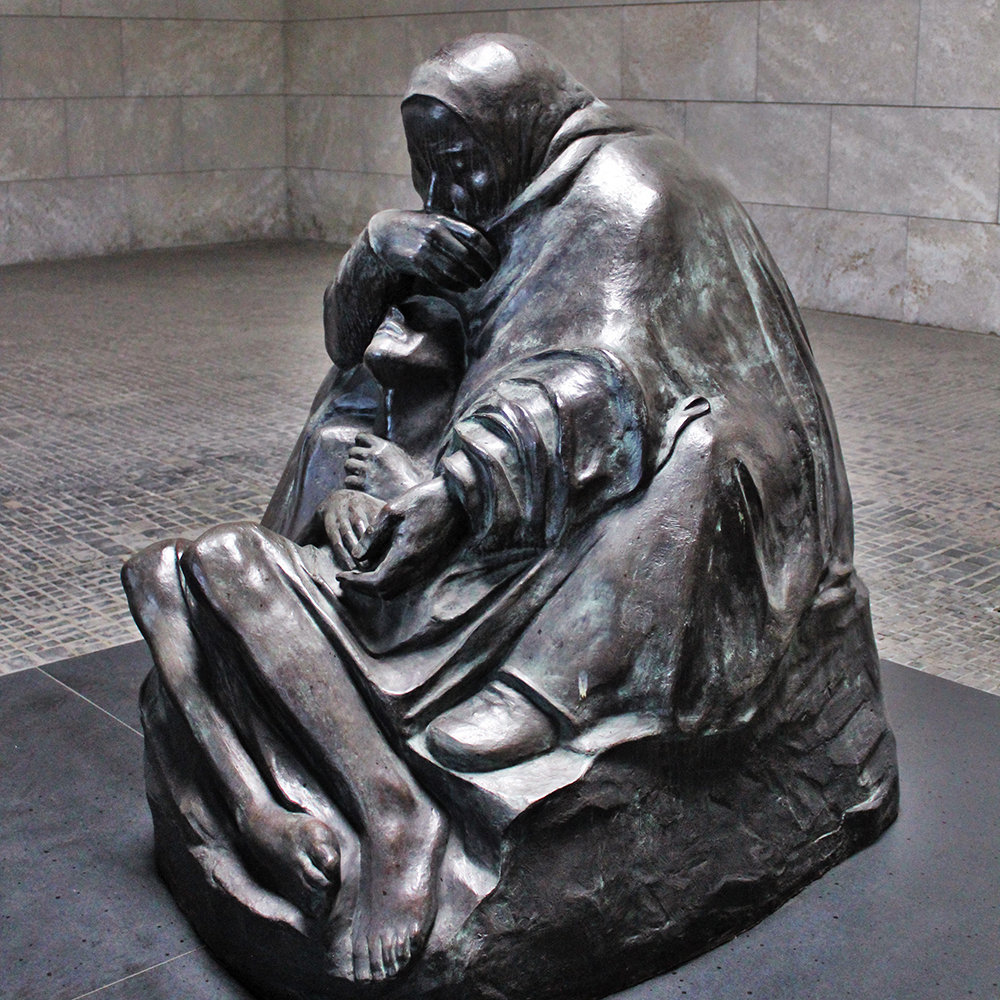
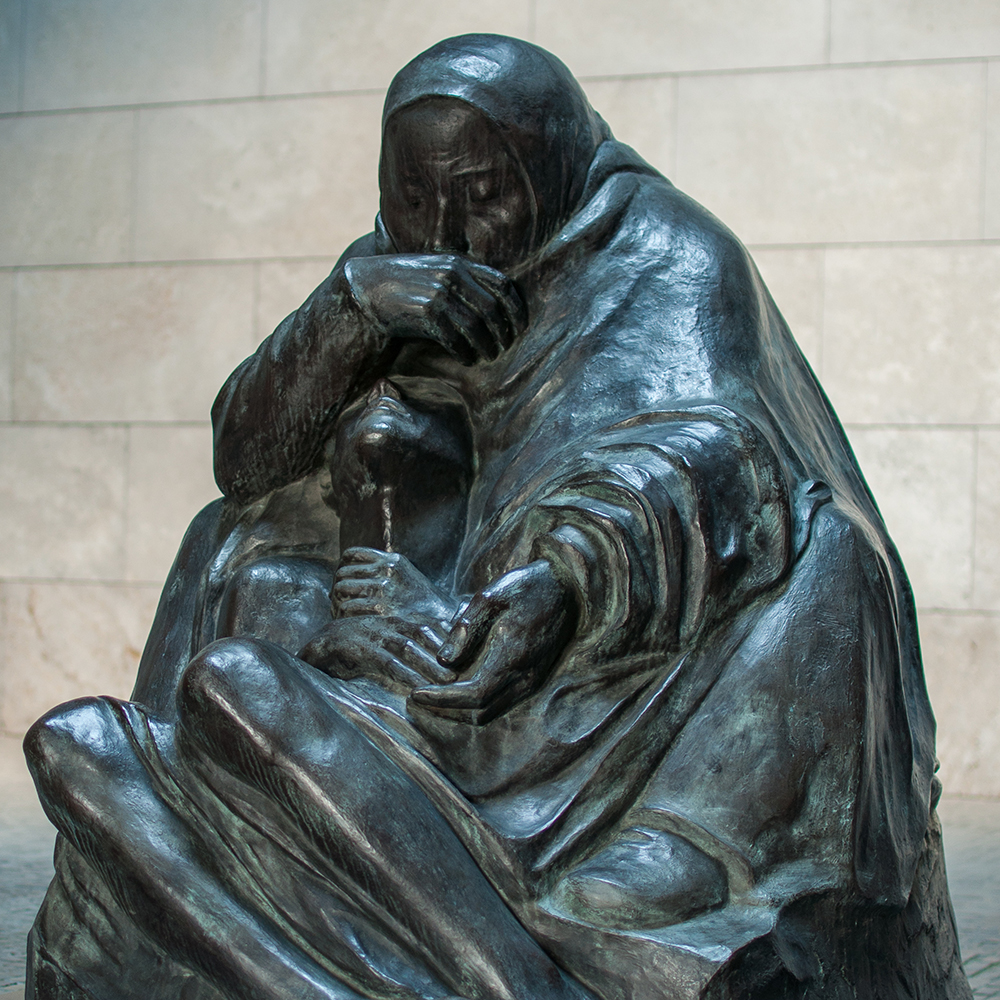
Background: The original sculpture was created in the early 20th century by German artist Käthe Kollwitz, inspired by her personal experience of losing her son in World War I. In 1993, the German government enlarged it into a bronze version and installed it inside Neue Wache as the core work of the “Central Memorial to Victims of War and Tyranny.” This memorial space no longer focuses on a single war or army, but expands to commemorate all victims of war.
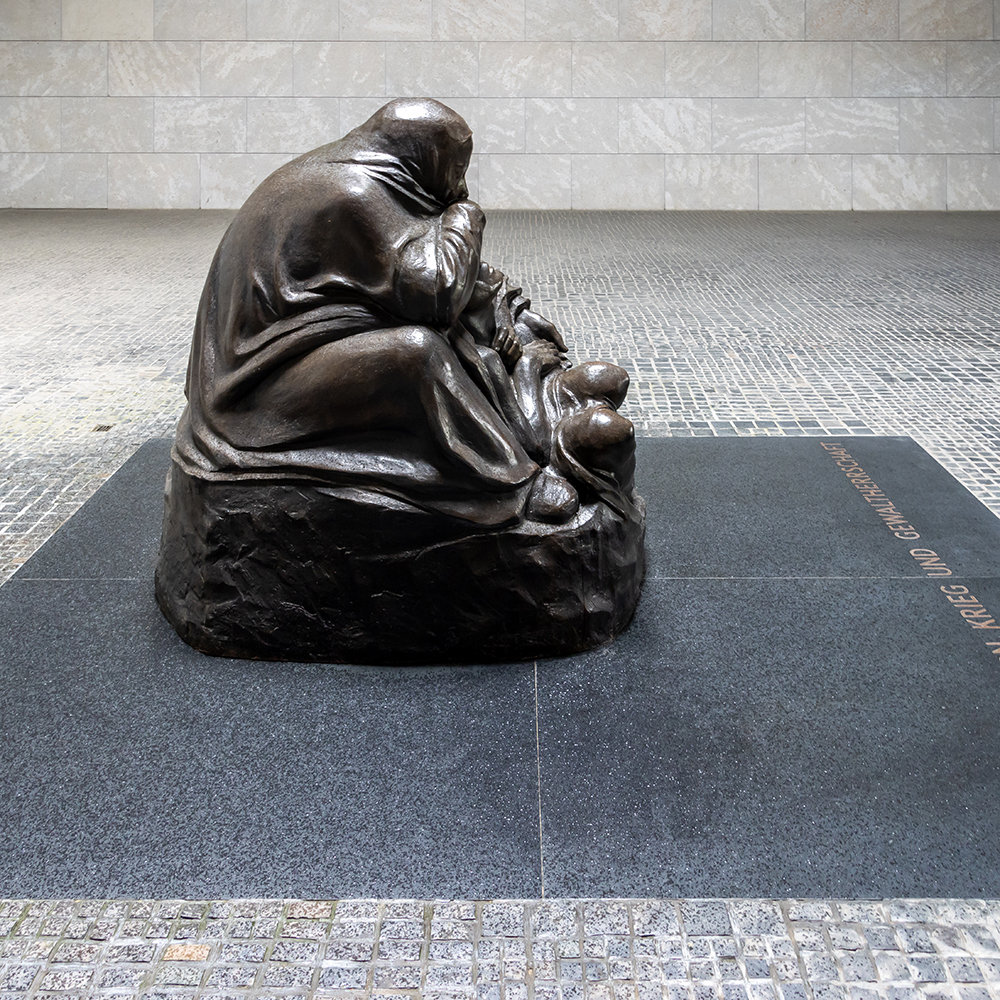
Appearance: The Neue Wache Memorial Sculpture is located in the central space of the building, placed alone without any other decorative elements. The work depicts a mother cradling her deceased son, the overall composition compact, the figure’s body drawn inward, creating a sense of enclosed volume. The form is simple, the details restrained, focusing on the figure’s posture and the relationship between volumes. Above the sculpture is an open circular skylight (oculus), allowing natural light, rain, and snow to fall directly onto the sculpture’s surface, causing it to appear different depending on the environment. The overall space is open and symmetrical, further enhancing the sculpture’s visual focus.
What happened to Käthe Kollwitz’s son?
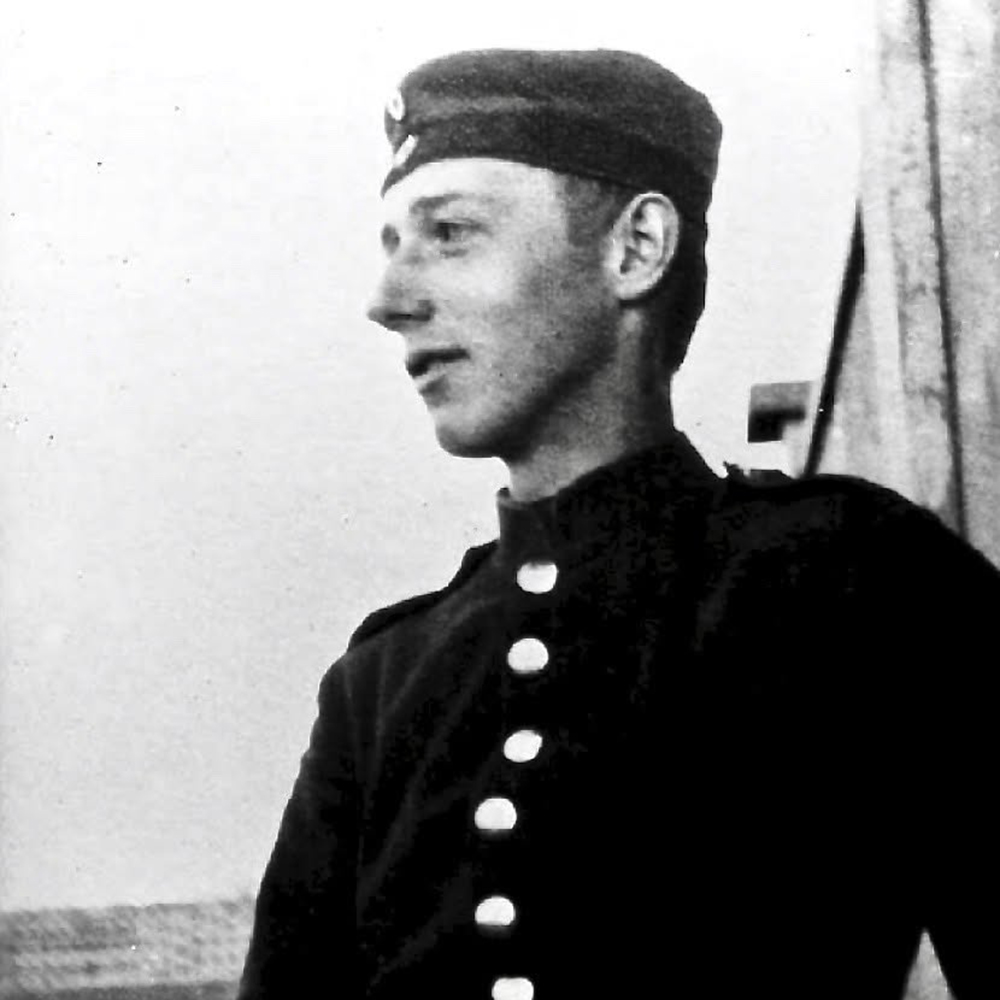
Käthe Kollwitz’s son, Peter Kollwitz, was killed in action early in World War I. In 1914, at the age of 18, Peter volunteered for the army and was subsequently sent to the Belgian front. He was killed in action in the Flanders shortly after the outbreak of World War I.
The Lone Sailor Military Statues
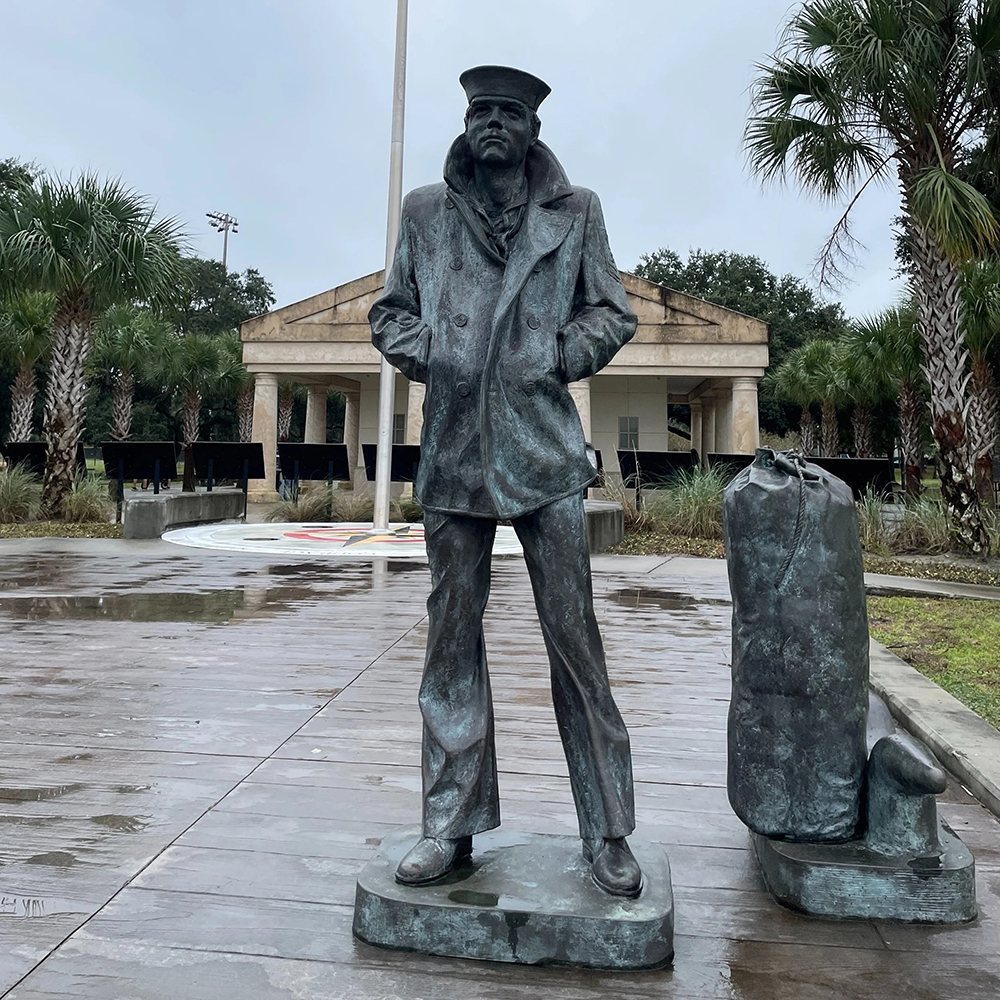
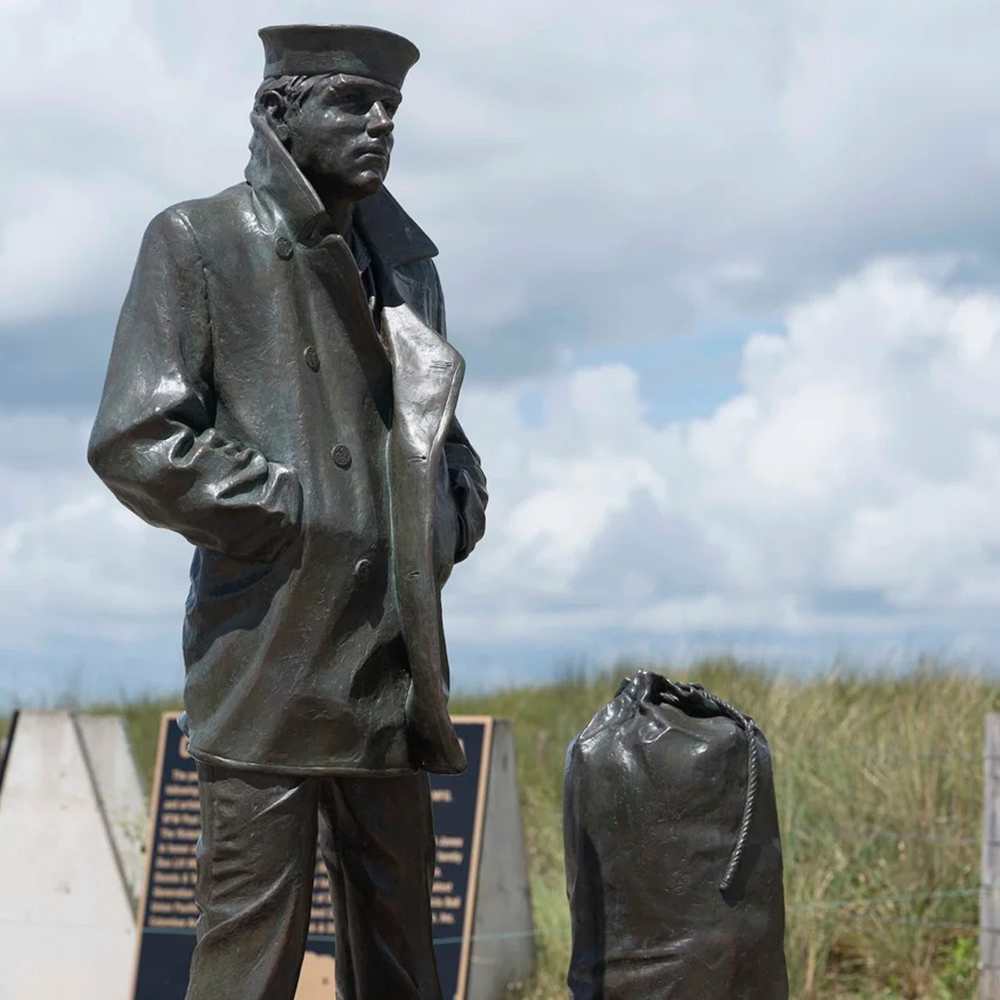
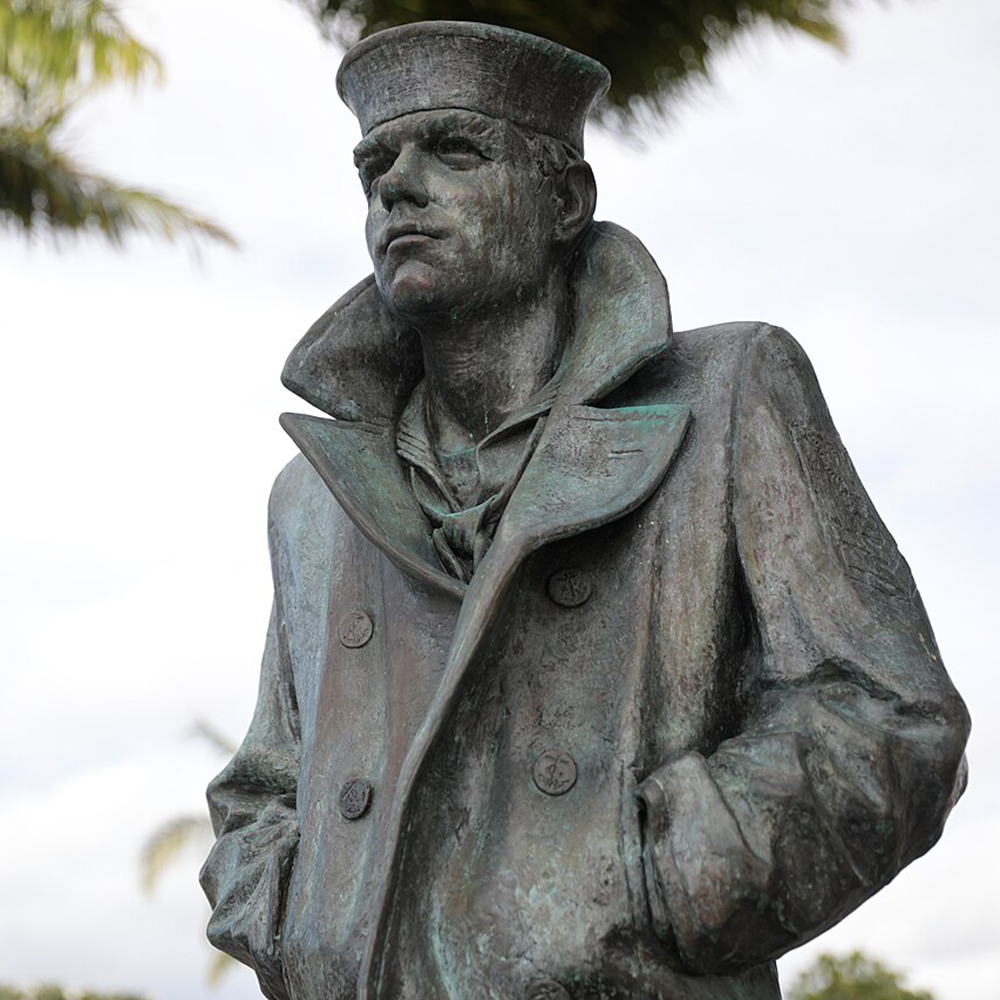
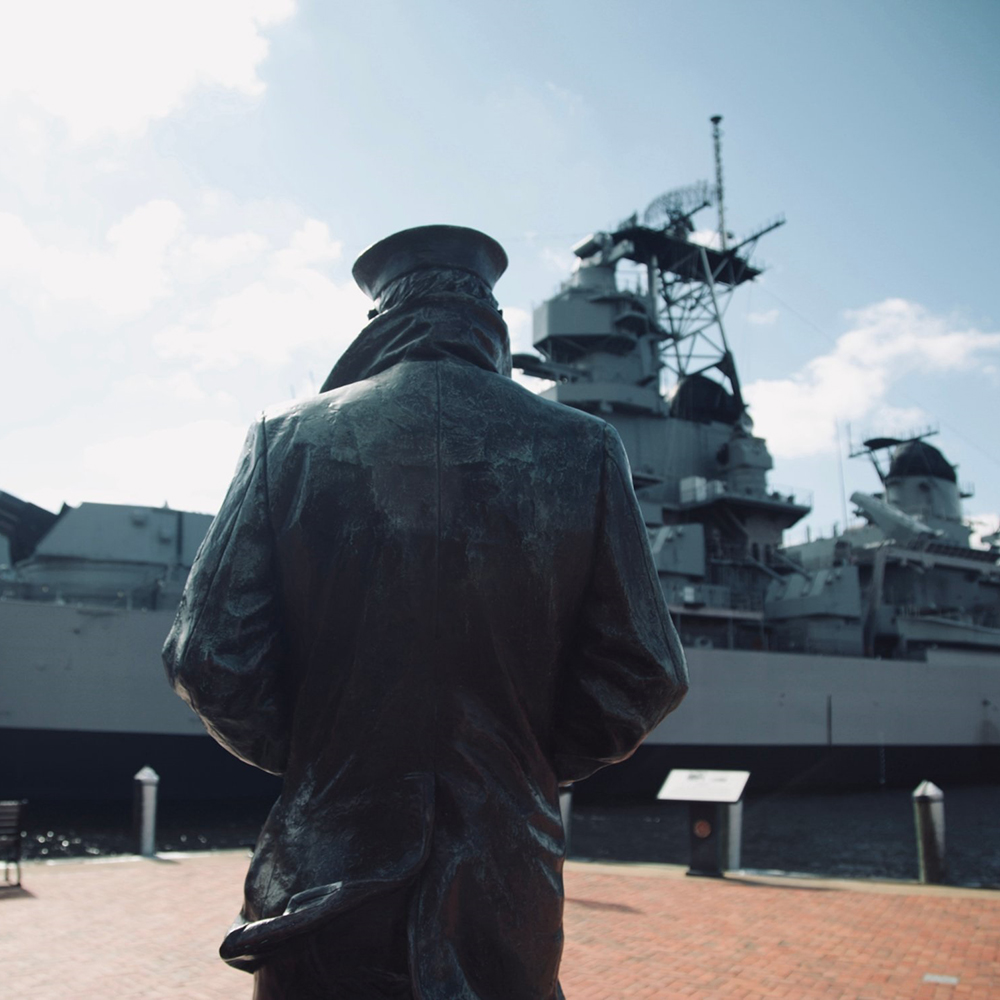
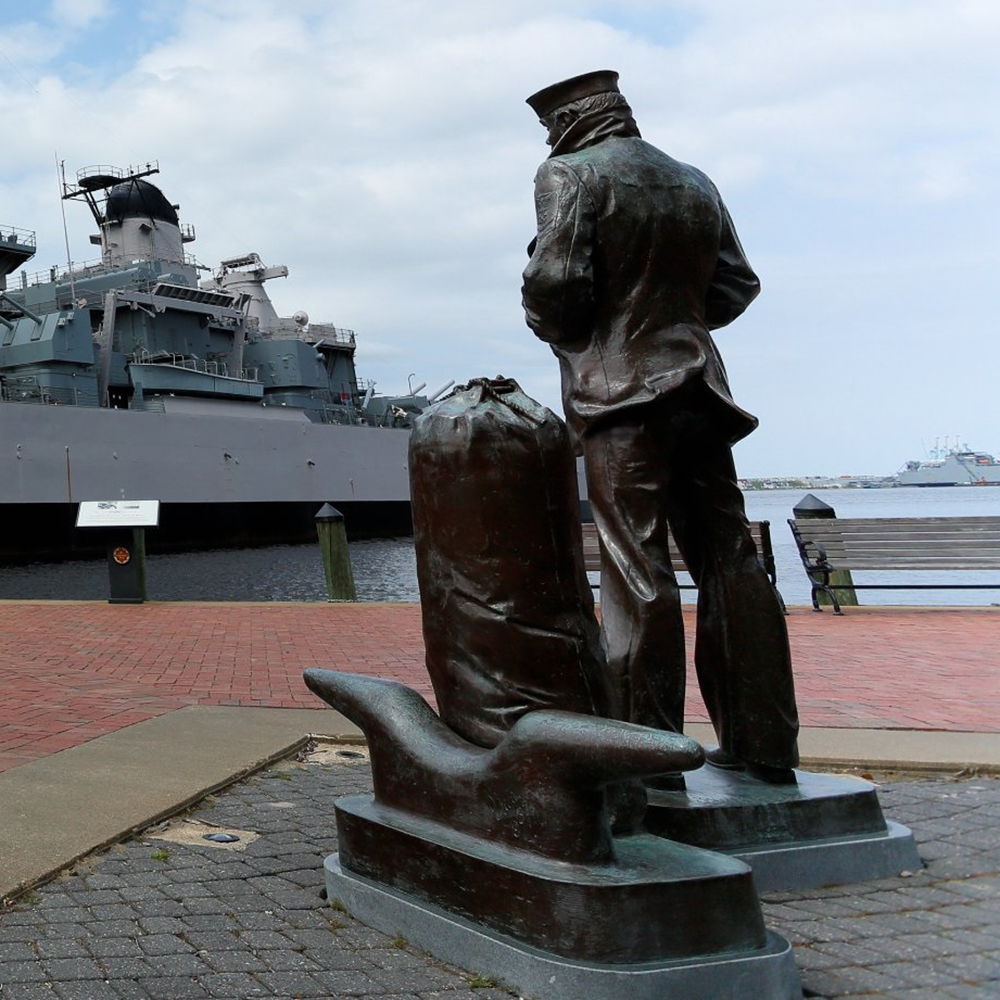
The Lone Sailor Statue is an iconic sculpture in the U.S. Navy’s memorial system, depicting a typical image of a Navy sailor in a single figure.
Basic Information
- Sculptor: Stanley Bleifeld
- Year of Inscription: 1987
- Historical Background: U.S. Navy historical memorial (covering multiple war periods)
- Location: U.S. Navy Memorial Plaza, Washington, D.C.
- Number of Figures: 1 sailor
- Material: Bronze
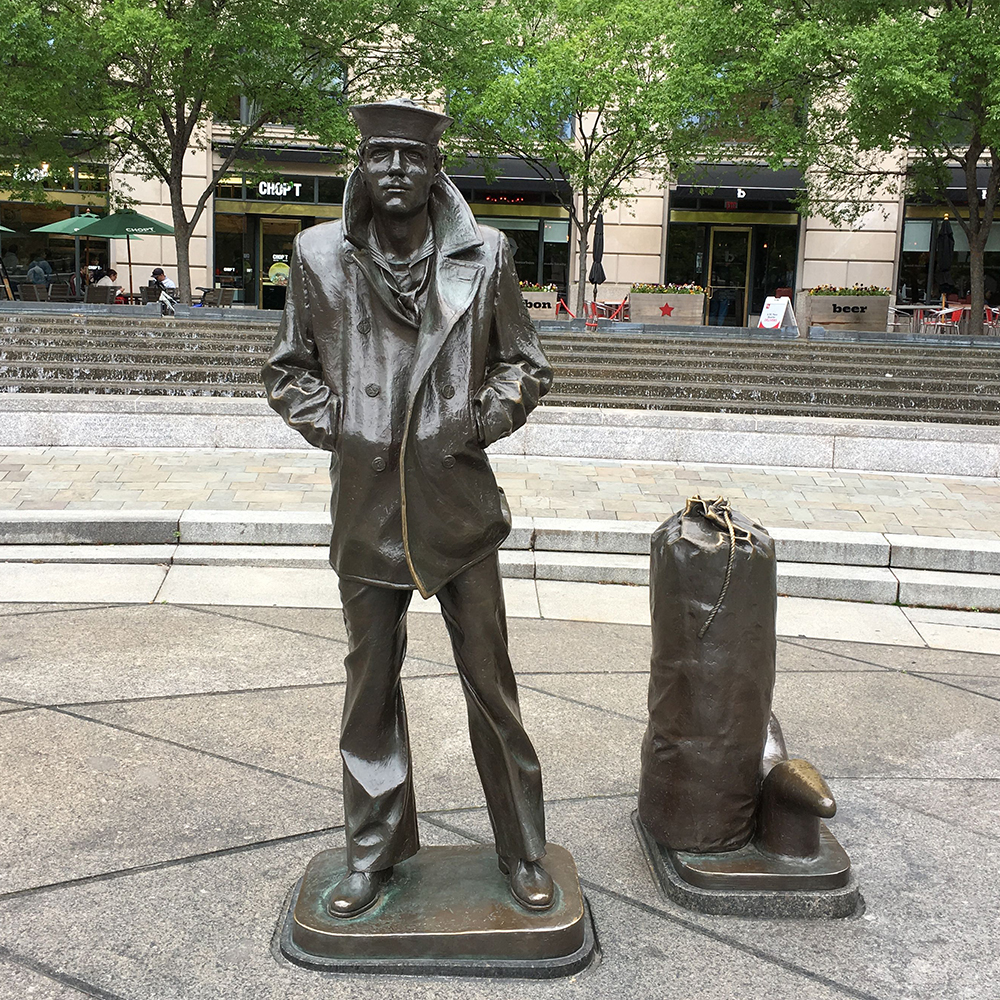
Appearance: The sculpture references the typical image of a mid-20th-century U.S. Navy sailor, emphasizing the collective identity of an “ordinary sailor.” The set of Military Statues depicts a single, standing sailor, with proportions close to life-size. The body is upright, hands in the coat pockets, the posture relaxed yet slightly paused. The head is slightly tilted forward, gazes straight ahead. The figure wears a typical naval uniform, including a sailor’s cap, double-breasted coat, and trousers; the clothing is clearly outlined with simple folds. A separate seabag stands upright on the ground to one side of the figure. The seabag has a simple design and is slightly below waist height.
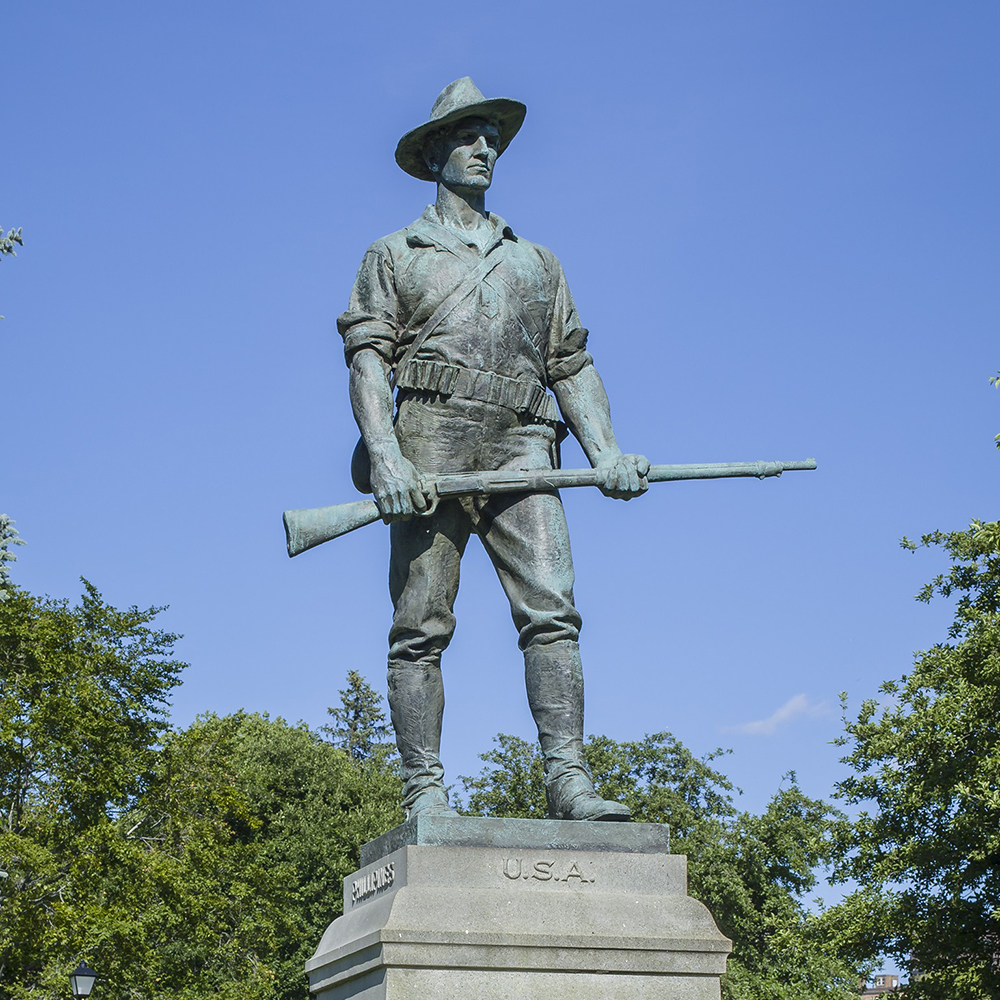
The Hiker
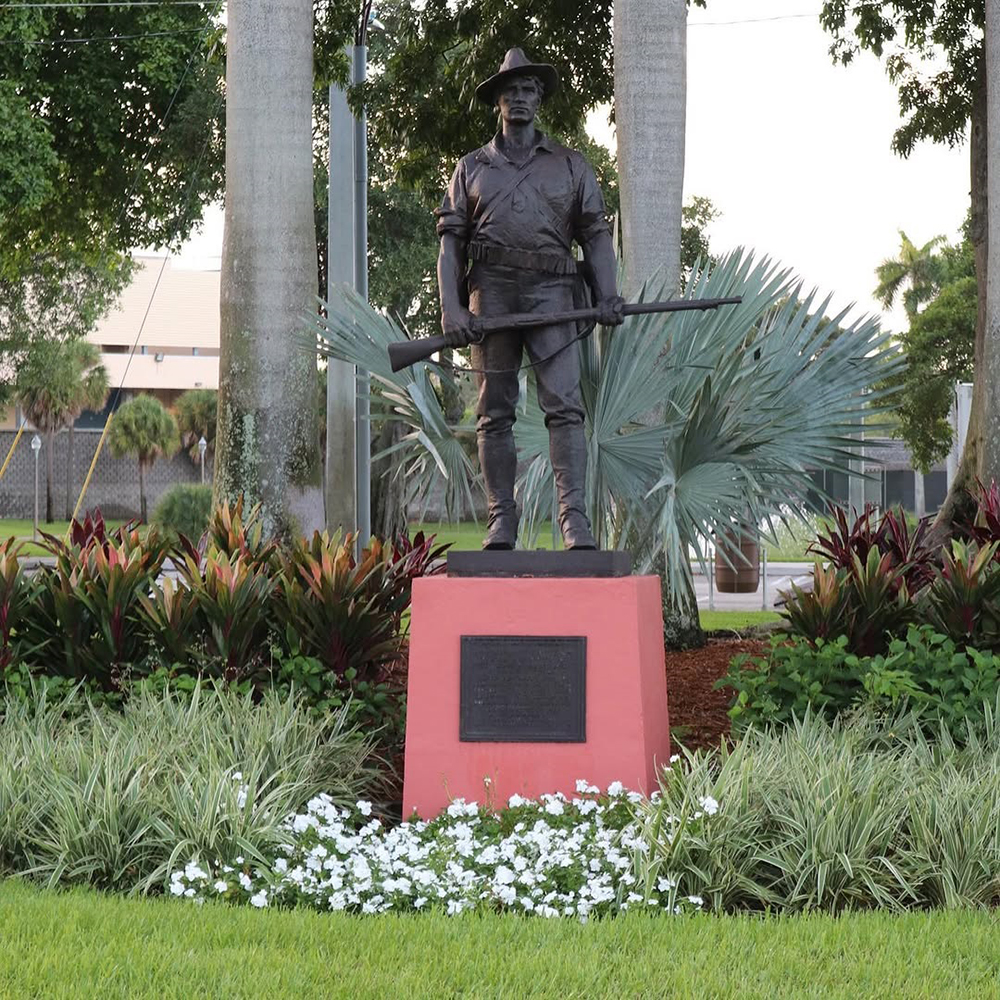
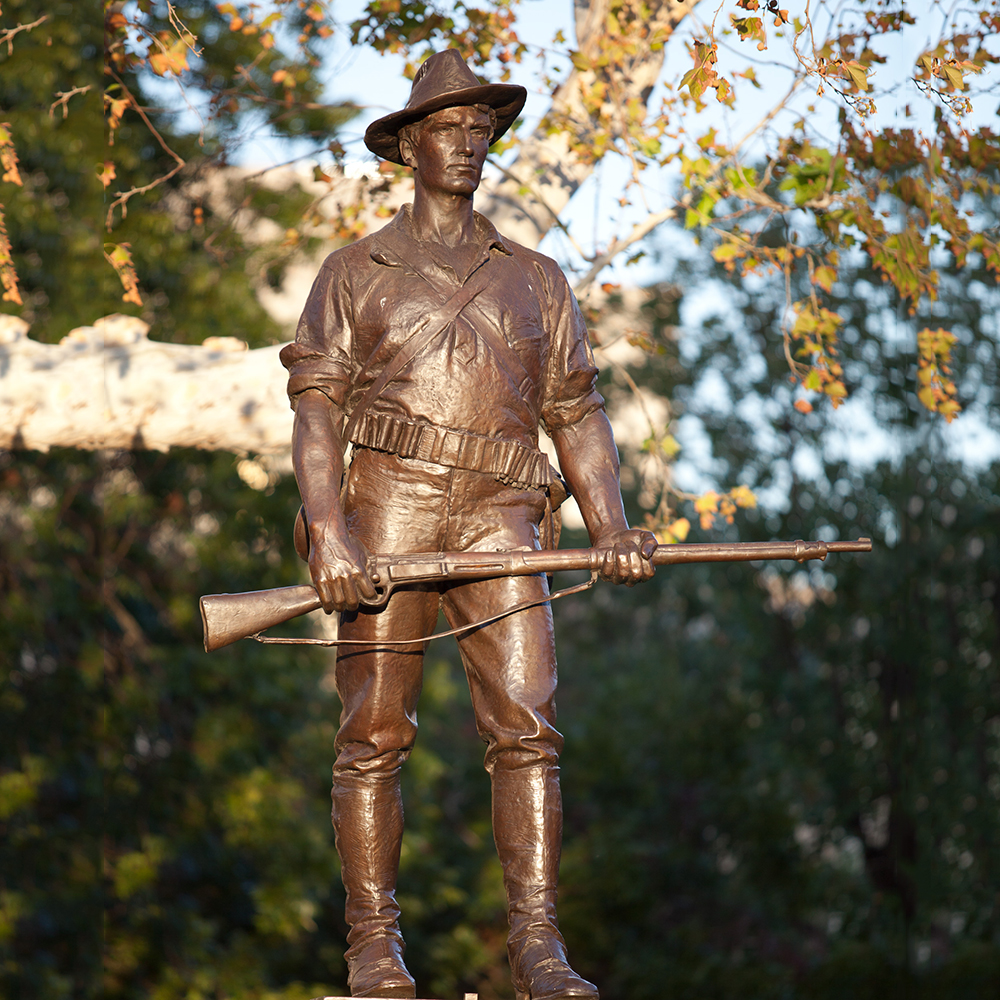
The Hiker is one of the representative sculptures commemorating soldiers of the Spanish-American War. It depicts a soldier in a normal state, rather than in a moment of battle, as a single standing figure.
Basic Information
- Sculptor: Theo Alice Ruggles Kitson
- Date of Creation: 1904 (widely reproduced subsequently)
- Historical Context: Spanish American War
- Location: Replicas exist in multiple locations across the United States
- Number of Figures: 1 soldier
- Material: Bronze
Background: This sculpture commemorates soldiers who fought in the Spanish-American War of 1898. “Hiker” was a colloquial term for American infantrymen at the time, referring to soldiers who marched long distances in tropical regions.
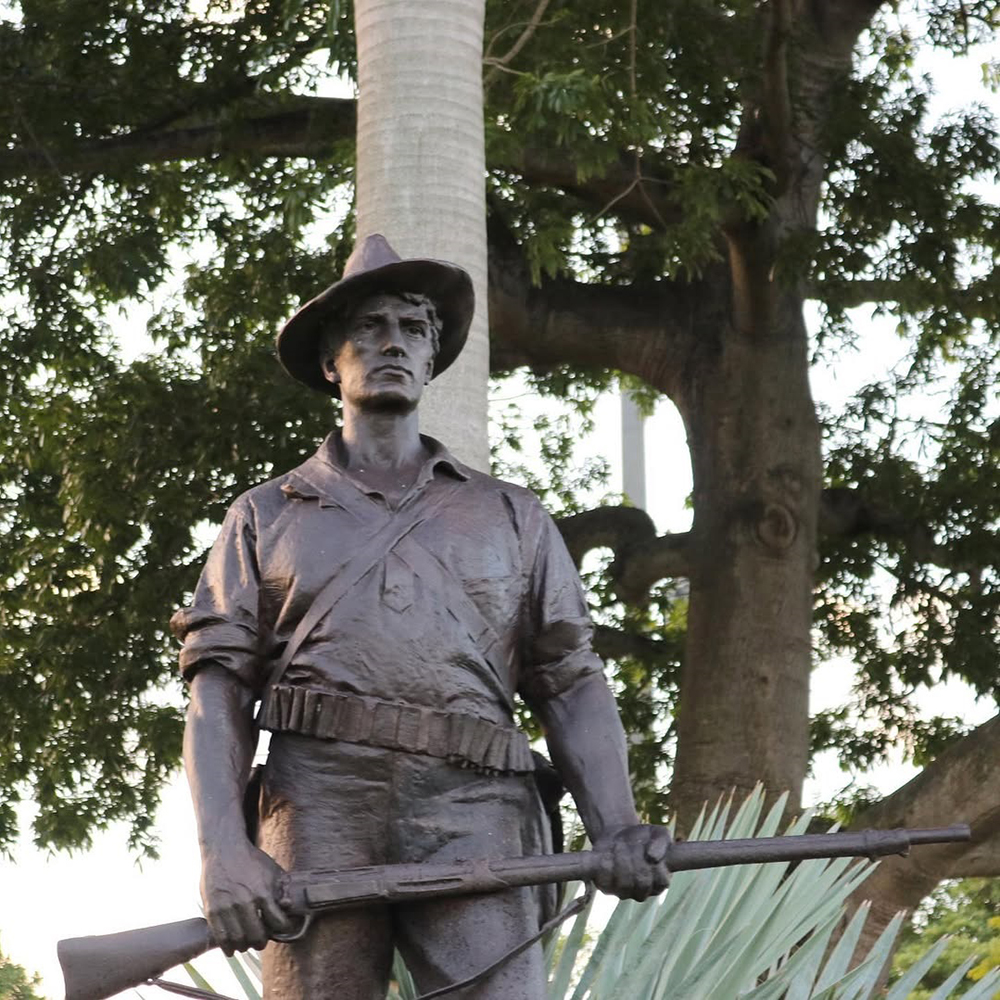
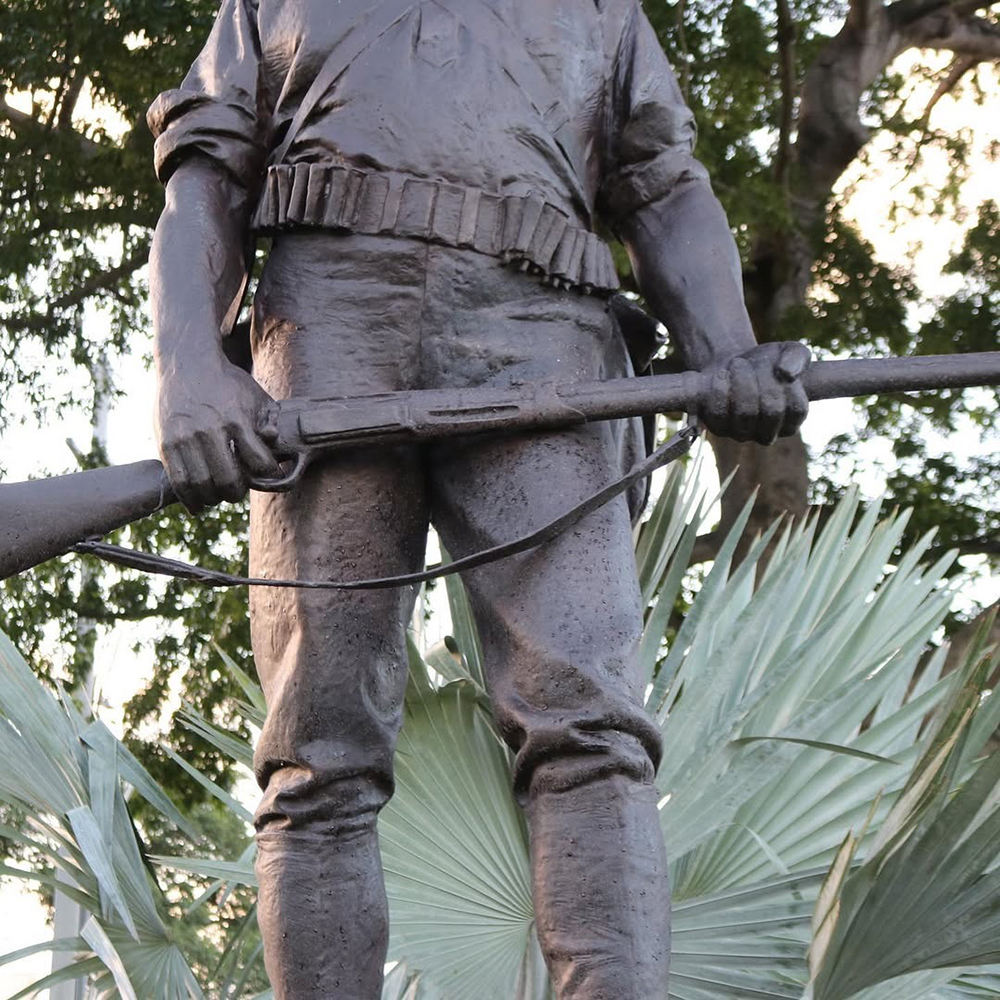
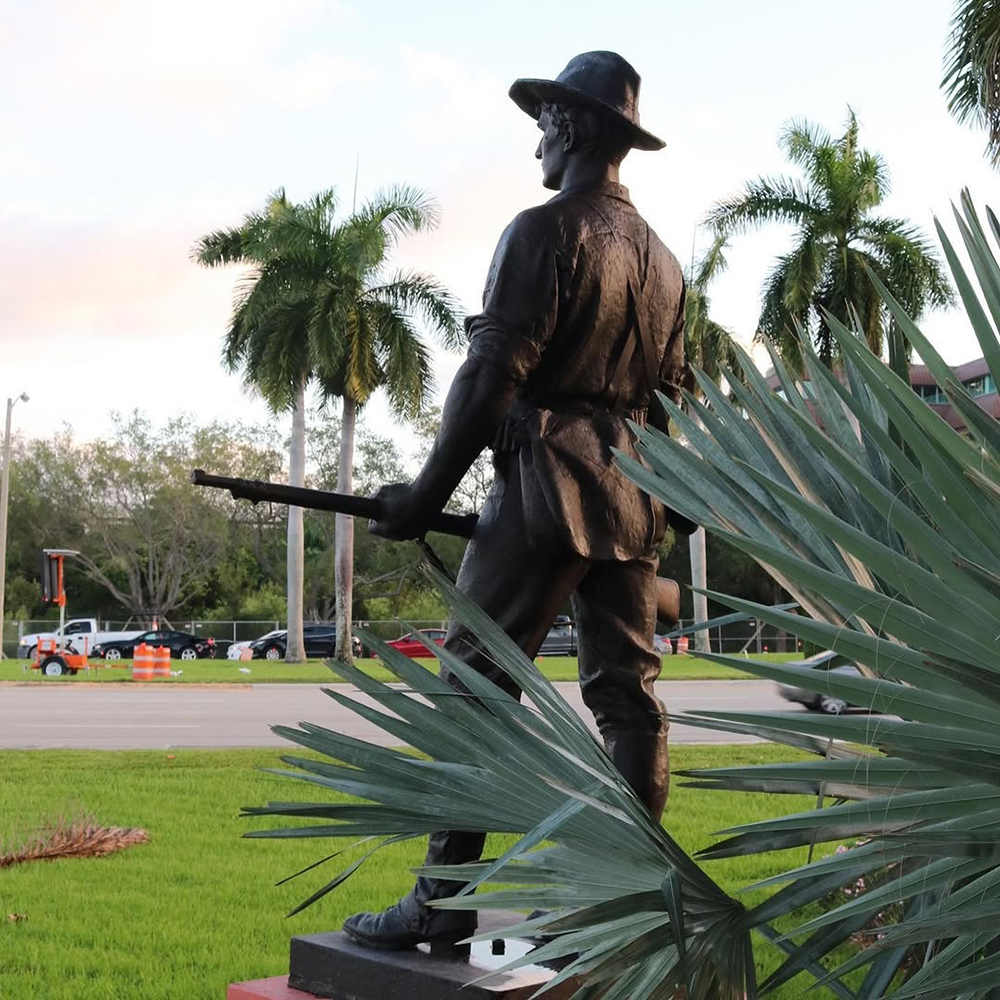
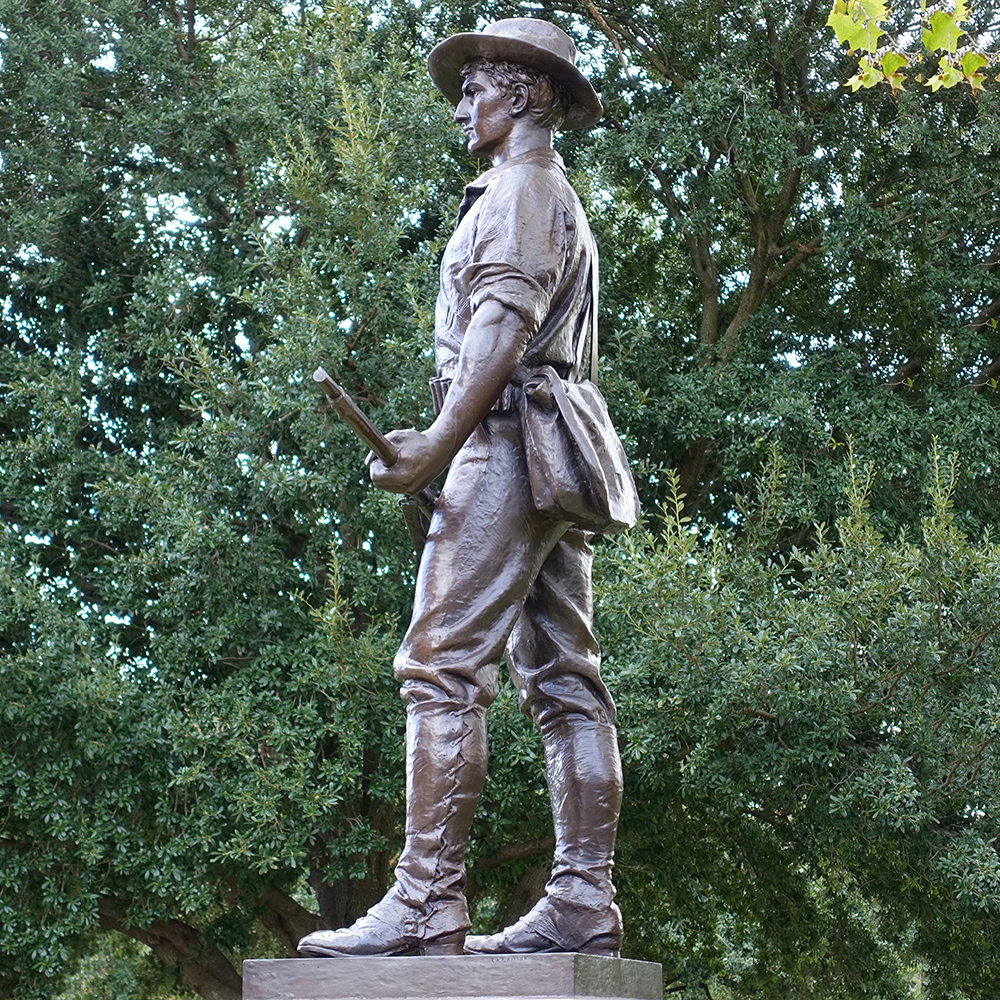
Appearance: The type of Military Statues depicts a single, standing figure on a high pedestal. The soldier stands with feet apart, body upright, and posture stable. He holds a rifle in both hands, the barrel held horizontally in front of his body, roughly at waist height. The figure wears light military uniform, including a hat, shirt, leggings, and boots; the clothing is simple in structure and clearly adapted to the tropical environment. The facial expression is relatively calm.
Vietnam Women’s Memorial Military Statues
The Vietnam Women’s Memorial is one of the most important war memorial sculptures in the United States, dedicated to commemorating female soldiers, especially nurses, who served in the Vietnam War.
Basic Information about the type of Military Statues
- Sculptor: Glenna Goodacre
- Year of Completion: 1993
- Historical Context: Vietnam War
- Number of Figures: 3 female soldiers + 1 wounded soldier
- Location: National Mall, Washington, D.C.
- Material: Bronze
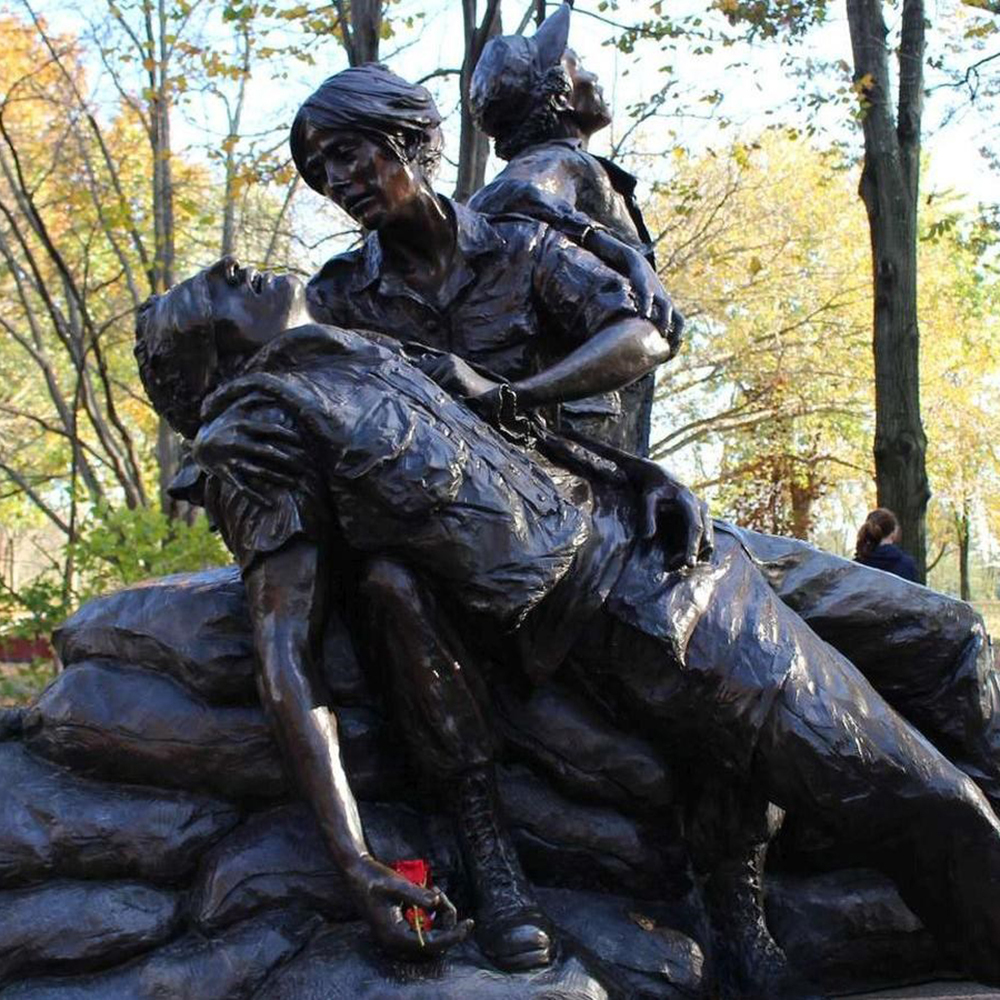
Background: This statue commemorates approximately 11,000 women who served in Vietnam during the Vietnam War (1955–1975). Most were army nurses, but some served in communications, administration, and other roles. For a long time, the contributions of women in war were rarely commemorated individually; this statue was erected to fill this gap.
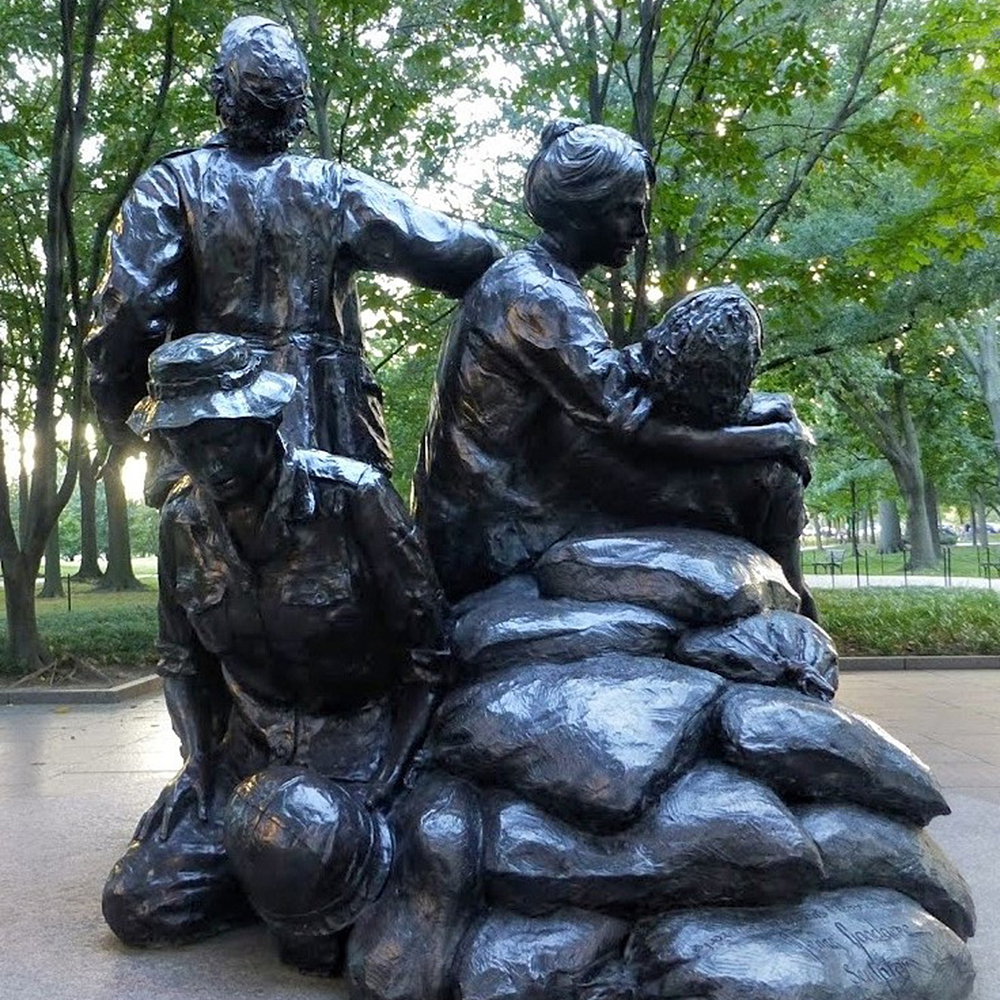
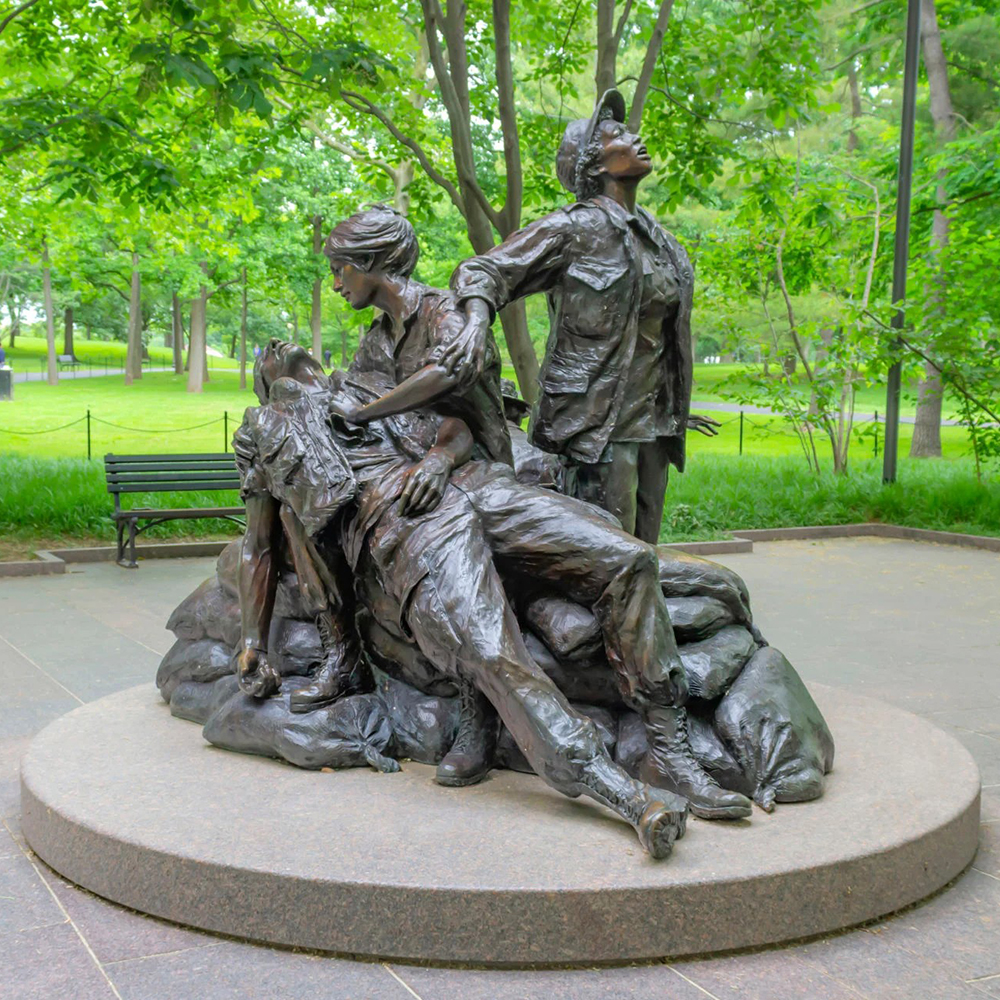
Appearance: The sculpture consists of three women and a wounded soldier, arranged in a compact group composition. The central figure kneels, cradling the wounded soldier, forming the visual focus; the wounded soldier leans back, limbs relaxed, in a state of unsupported posture. The other two women are positioned on either side, one standing and looking up, the other kneeling in a supporting role, creating a sense of depth and perspective.
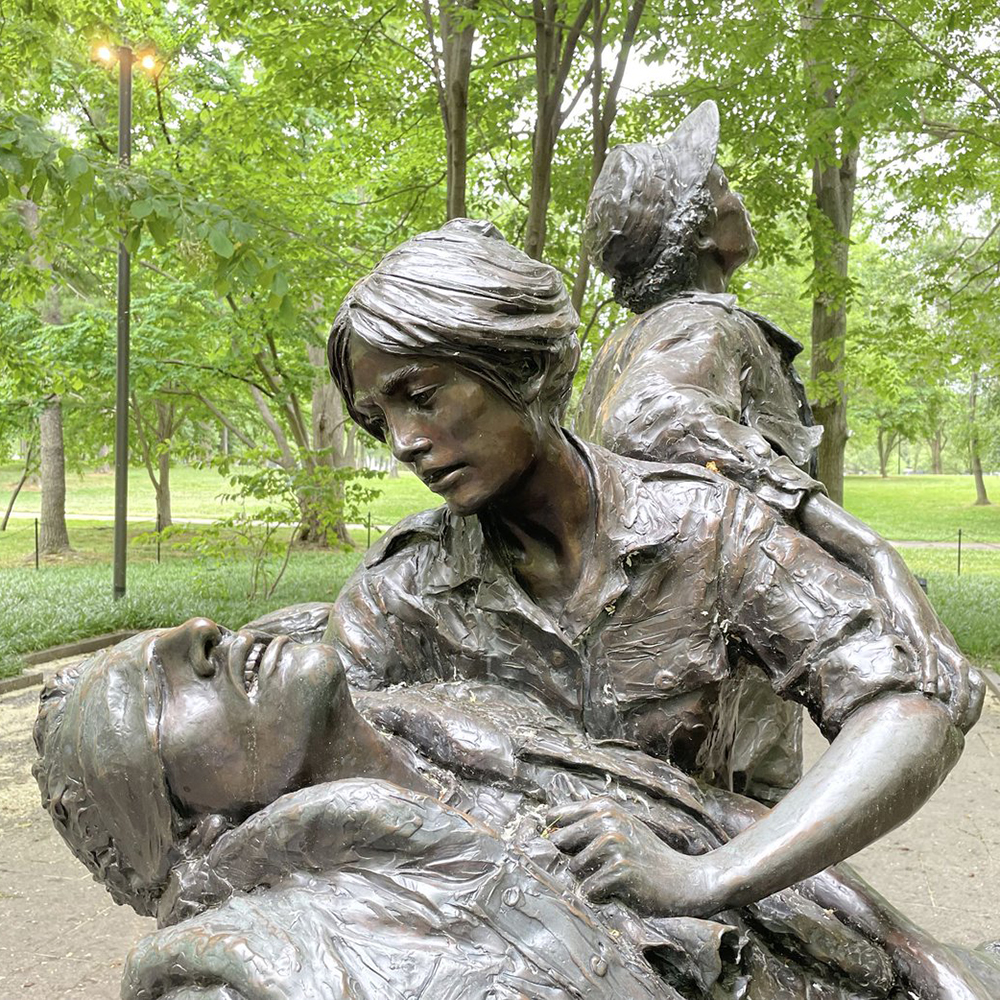
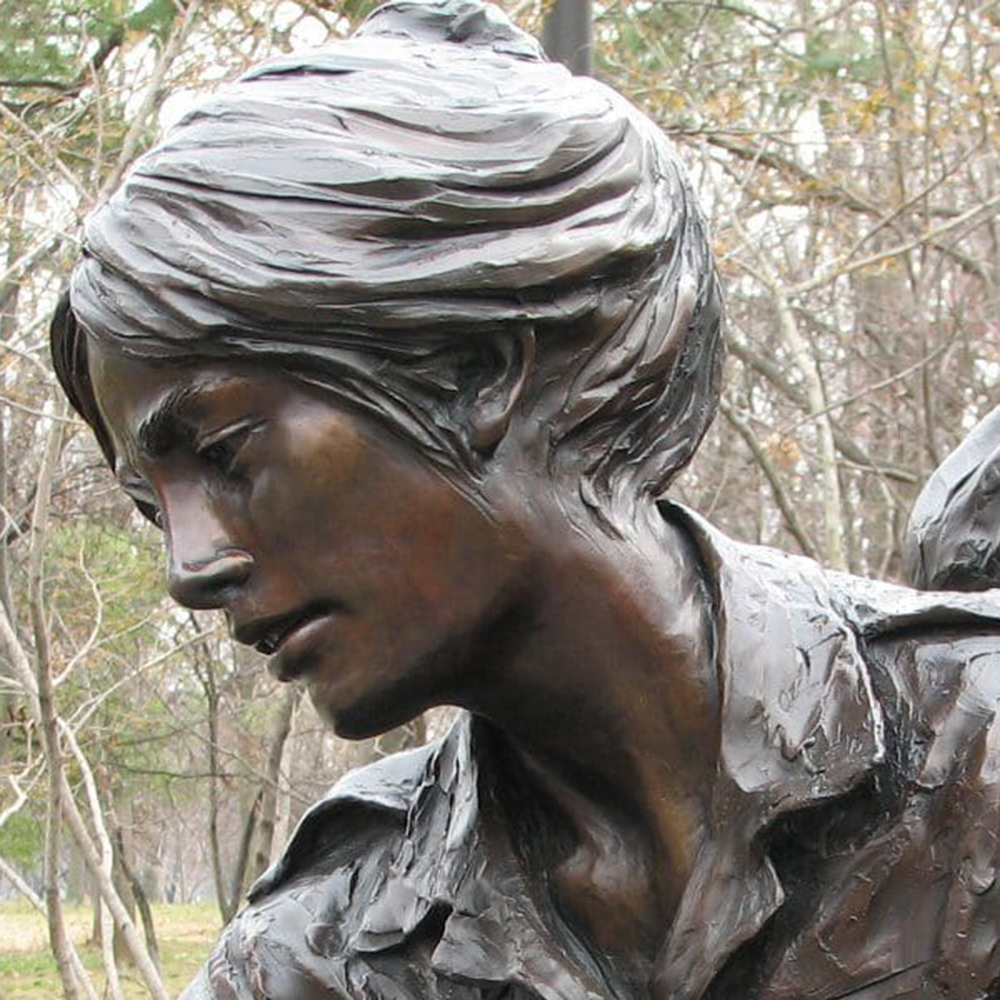
The figures’ postures are clearly defined, their actions focused on the moment of the “rescue process.” The clothing is military workwear, with clear but not overly complex details.
Why was the Vietnam Veterans Memorial so controversial?
The Vietnam Women’s Memorial sparked controversy during its construction, primarily concerning the following points:
- The Need for a Separate Memorial for Women: Some argued that existing Vietnam War memorials made a separate memorial unnecessary; supporters, however, believed women had been neglected and should be represented independently.
- Overly Simplified Roles: The sculpture primarily depicts nurses treating the wounded, which some felt reinforced the “caregiver” image and failed to comprehensively reflect women’s roles in other areas.
- Overly Emotional Expression: The sculpture’s depiction of tense rescue moments, contrasting with the restrained style of the memorial wall, led some to believe it overemphasized emotion.
Overall, these controversies centered on one key question: How should the role of women in war be represented and commemorated?
FAQ about military statues
1. What are the most famous military statues in the world?
Some of the most famous military sculptures include the Marine Corps War Memorial, the Korean War Veterans Memorial, and the Vietnam Veterans Memorial. These works are usually located in national memorial spaces and have strong historical and cultural symbolism.
2. What materials are military statues usually made of?
Most military sculptures are made of bronze or stainless steel. These materials have good weather resistance and structural stability, making them suitable for long-term outdoor display. Bronze is better suited for depicting details, while stainless steel is more modern and has a reflective effect.
3. Why are military statues important?
Military sculptures not only record historical events but also carry collective memory. Through figurative or abstract forms, they allow viewers to understand the figures, emotions, and social context of war, representing an important combination of public art and historical narrative.
4. Can military statues be customized for private or public spaces?
Yes. Many military-themed sculptures can be customized in size, material, and design to suit various settings such as memorial parks, squares, schools, or private collections.
5. Can you create a custom military statue based on a photo or concept?
Yes, Arturban Sculpture offers complete customization services from concept to finished product. Whether based on historical photographs (such as group scenes), individual memorials, or original designs, we can perform 3D modeling, clay modeling, and final casting, ensuring detail accuracy and structural stability.
6. What is the typical process of commissioning a sculpture?
The general process includes:
Requirements communication → Design scheme → 3D/clay model confirmation → Casting → Surface treatment → Installation and transportation
Arturban Sculpture has its own studio and sculpture factory, allowing for full control over quality and schedule.
7. How long does it take to make a custom sculpture?
Depending on size and complexity, the production cycle is typically between 4 and 12 weeks. Large group sculptures or complex structural projects will take longer.
8. What sizes can you produce?
We can customize everything from small tabletop sculptures (tens of centimeters) to large public sculptures (several meters or even tens of meters). We have extensive experience in enlargement and structural fabrication, suitable for commemorative projects.
9. Do you ship sculptures internationally?
Yes. Arturban Sculpture has extensive international shipping experience, including wooden crate packaging, protective treatment, and sea/air freight solutions, ensuring the safe delivery of sculptures worldwide.
10. How much does a custom military statue cost?
The price depends on the size, material, complexity, and craftsmanship requirements. Small sculptures may cost only a few hundred dollars, while large custom commemorative sculptures can reach thousands or even more.
👉 We recommend providing reference images or your requirements so we can provide a more accurate quote.
Send us your requirements now, we will reply to your email within 24 hours