
The Butterfly Sculpture is widely used in contemporary art and public spaces, attracting attention for its symbolic meaning of “transformation and rebirth.” A stainless steel butterfly sculpture, with “From Cocoon to Butterfly” as its core design concept, not only possesses a distinct artistic expression but also places higher demands on form, structural safety, and manufacturing processes. This article will analyze the complete realization process of a professional Butterfly Statue from the perspectives of design concept, manufacturing process, and customized practice.
What Do Butterflies Symbolize in Art?
In the art world, butterflies have long been seen as symbols of transformation and rebirth. From a natural life cycle perspective, butterflies undergo a complete metamorphosis from larva to cocoon to emergence, a process with strong symbolic meaning on both visual and spiritual levels.
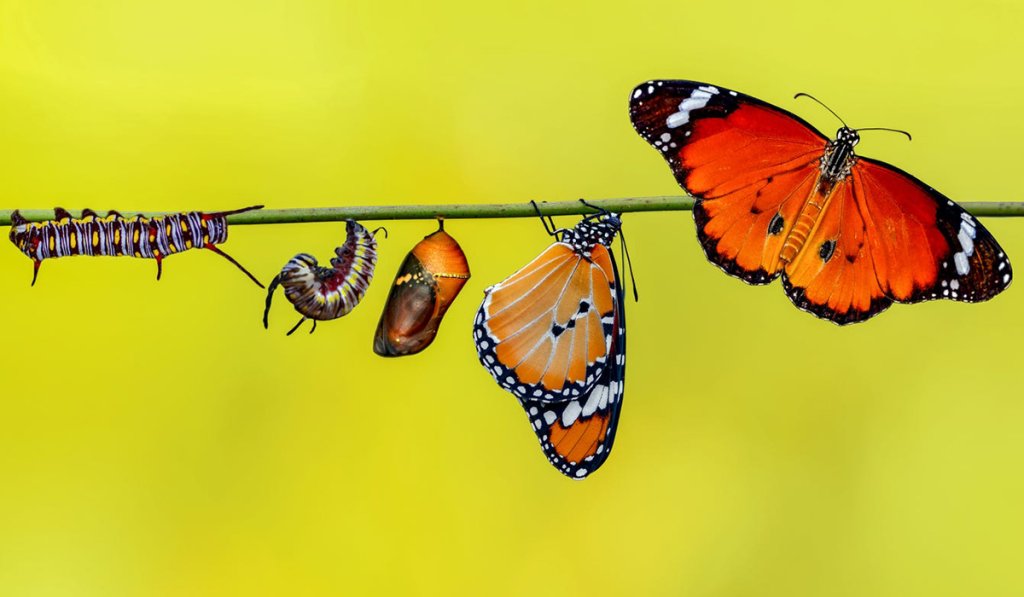
In public art, butterflies typically represent:
- Breaking through limitations and completing a metamorphosis
- The beginning of a new stage
- Freedom, hope, and growth
The renewal and reshaping of spaces or brands. Because of this highly universal cultural consensus, the Butterfly Statue is widely used in urban public art, commercial spaces, and brand image displays.
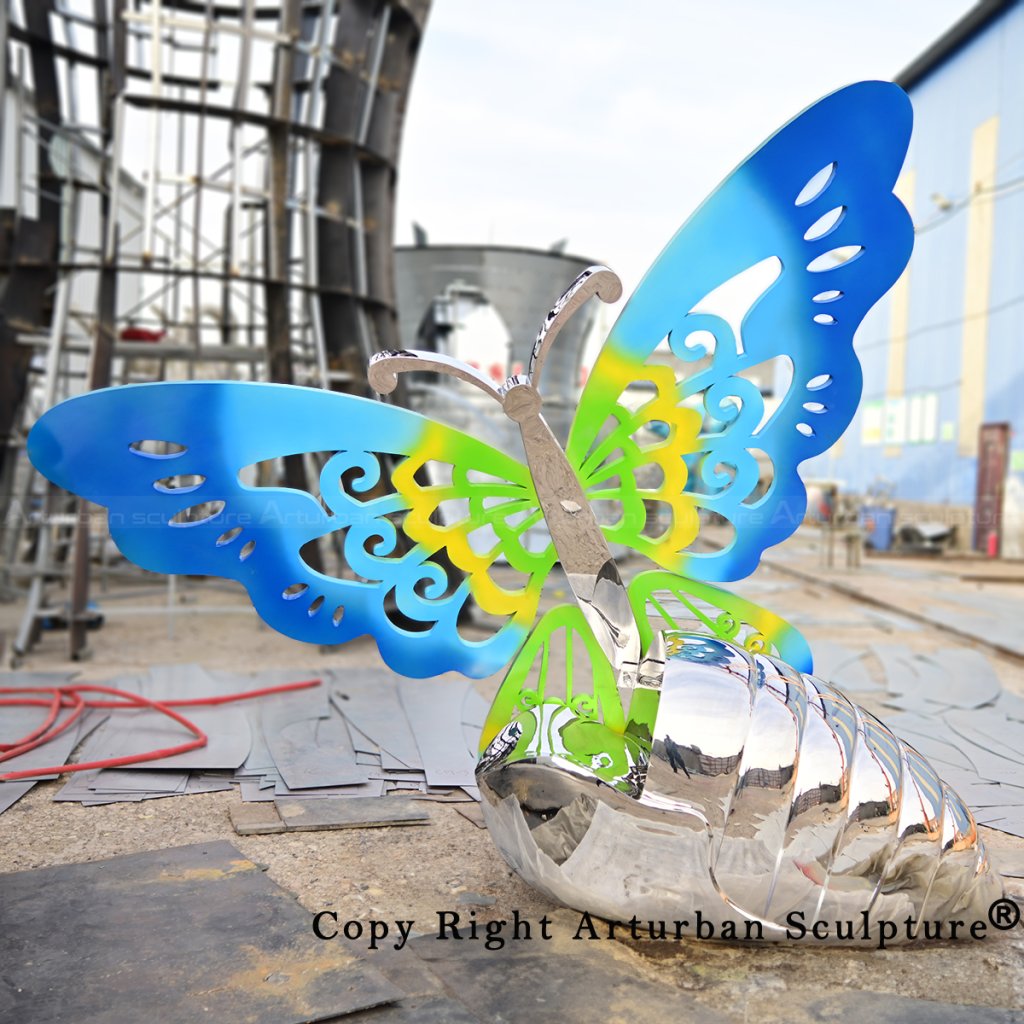
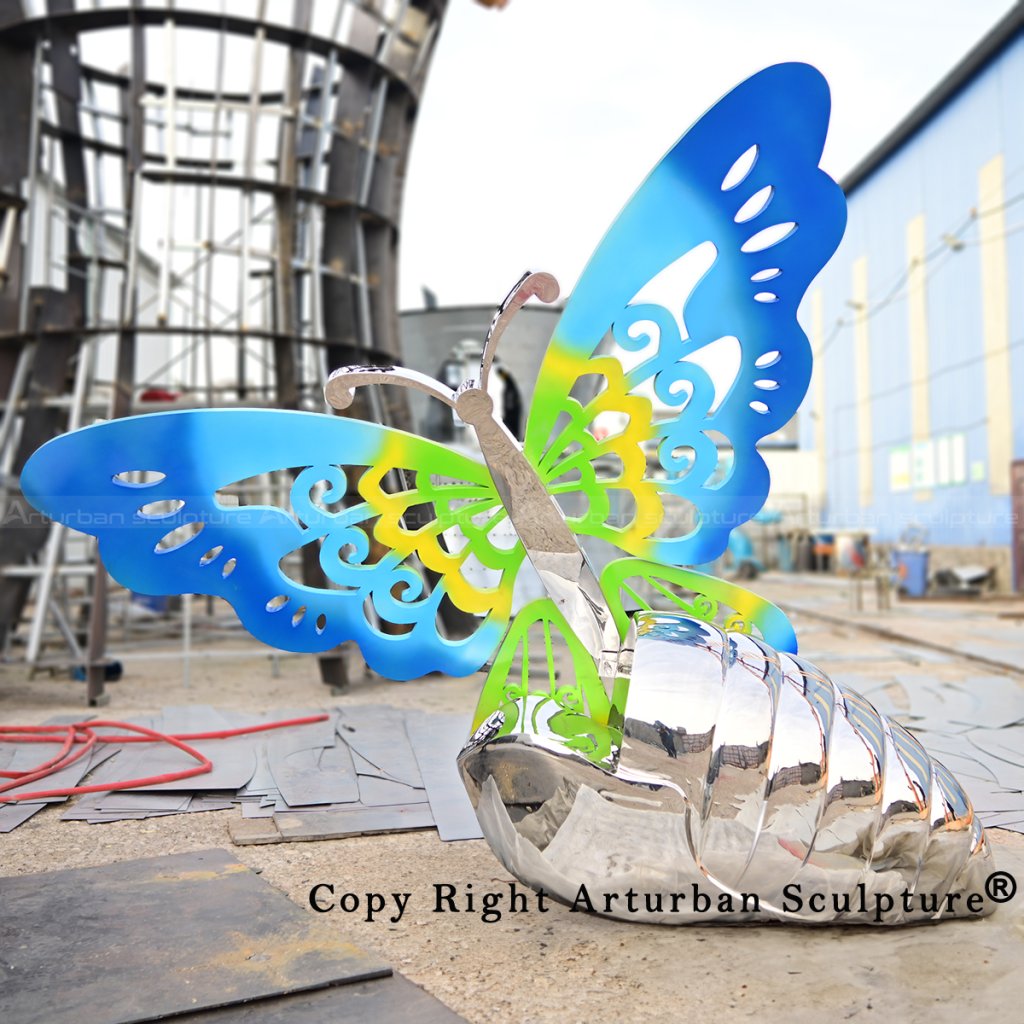
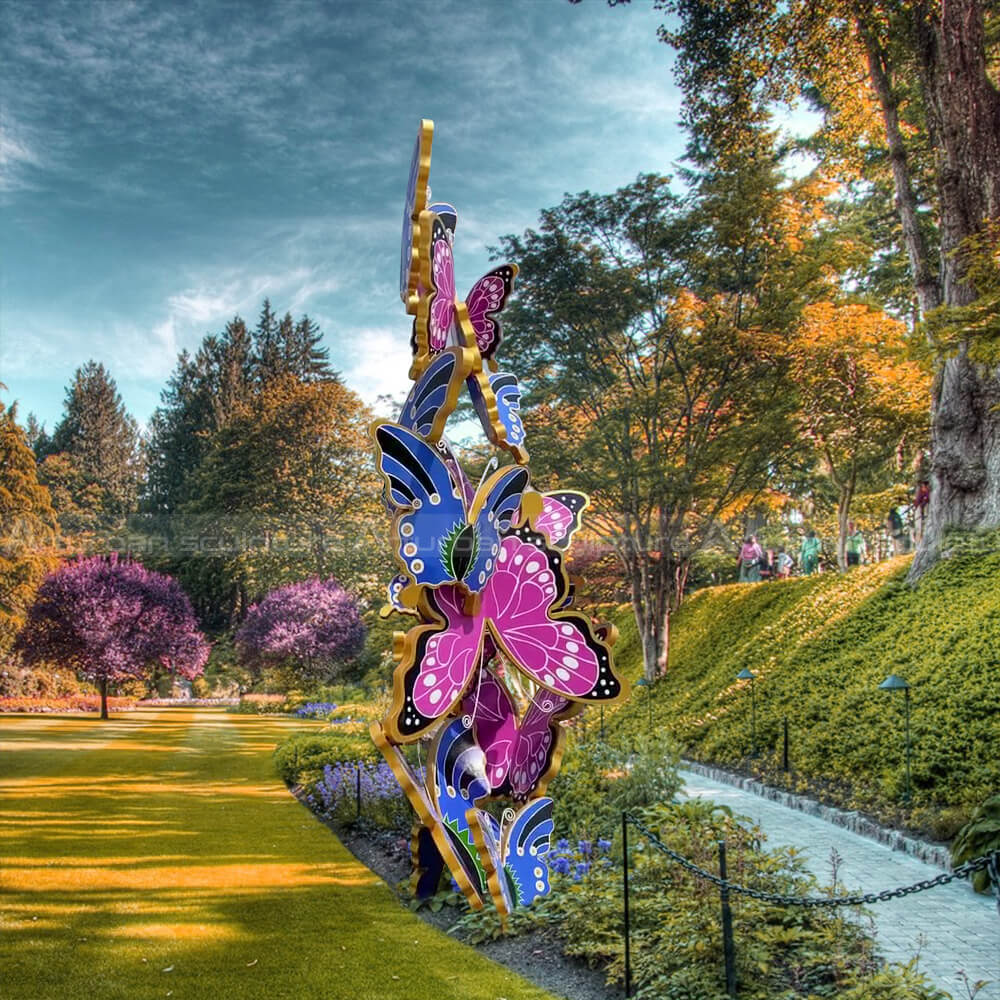
A Real Custom large Butterfly Sculpture by Arturban Sculpture.
In a custom project for Arturban Sculpture, this stainless steel butterfly sculpture revolves around the core concept of “From Cocoon to Butterfly.” The client desired this piece to:
- Possess a clear spiritual meaning, rather than being merely decorative
- Be suitable for long-term outdoor use
- Offer visual depth when viewed from both distant and close-up perspectives.
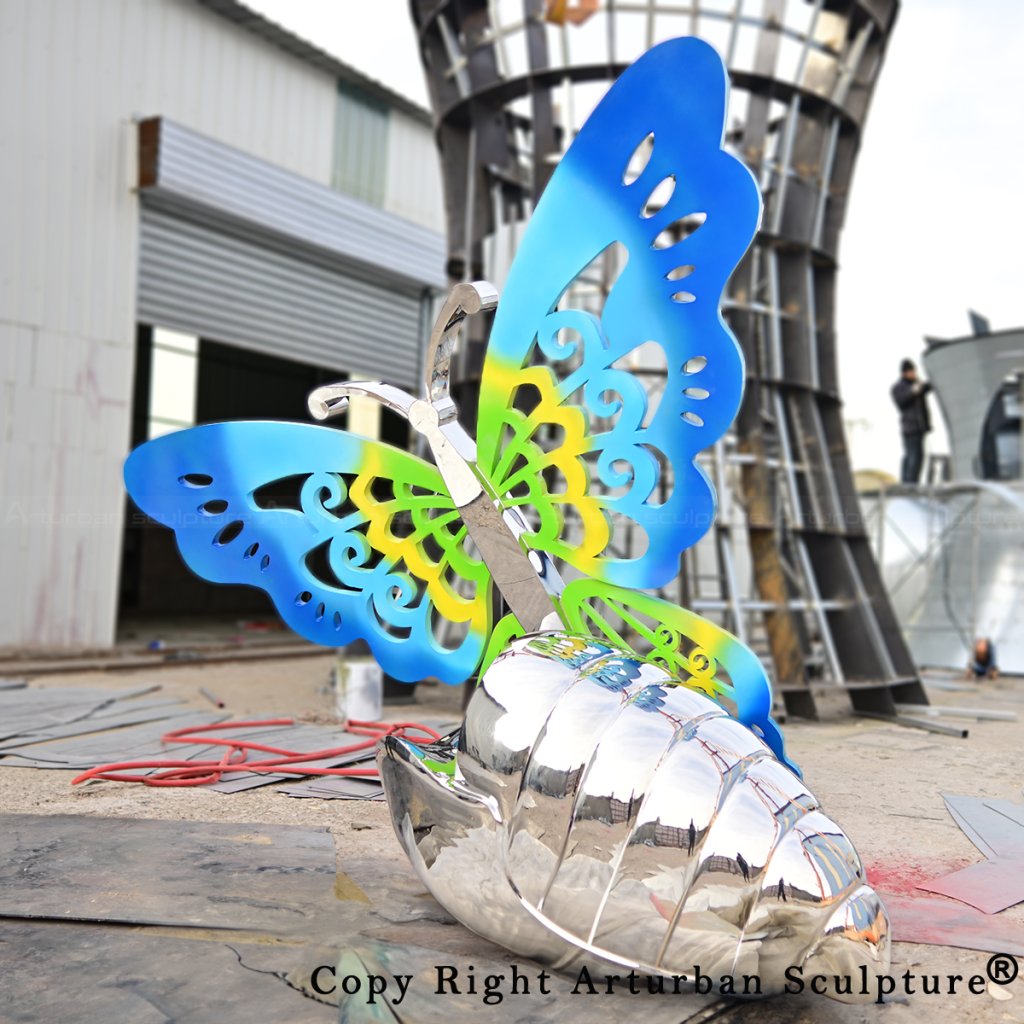
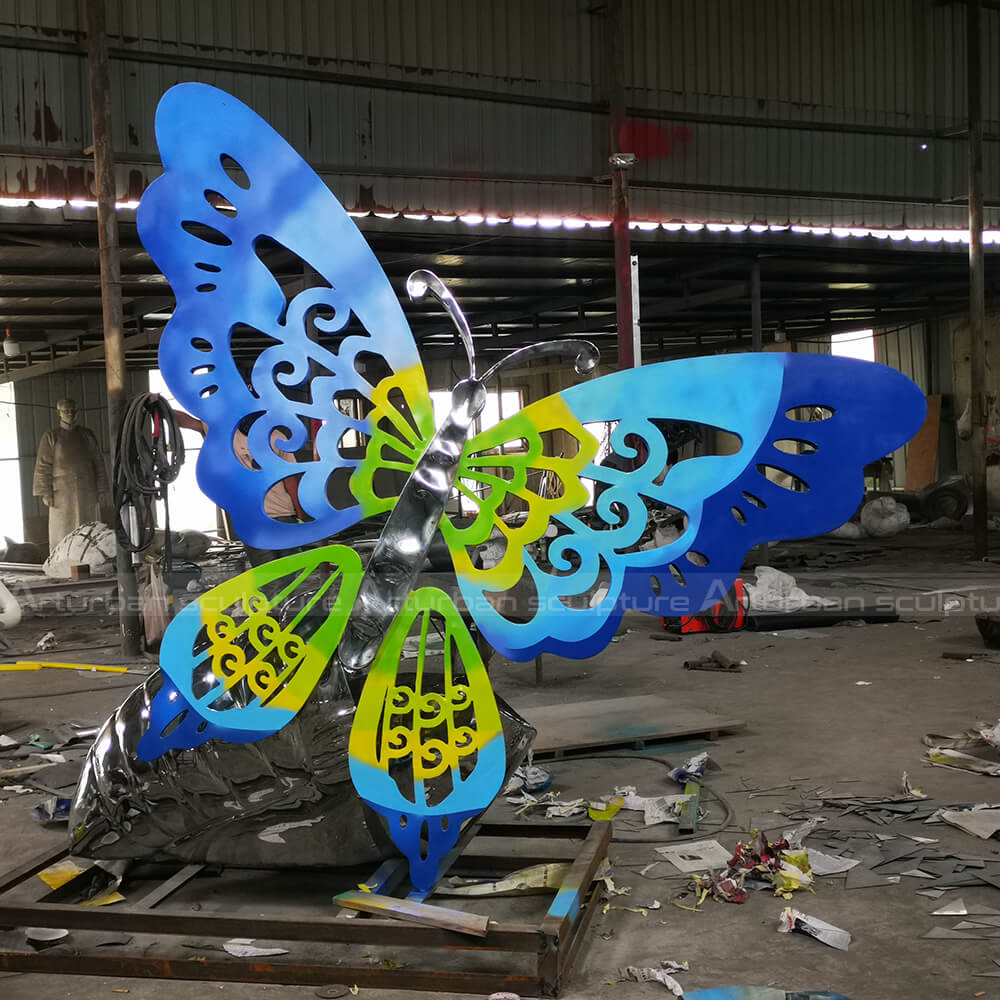
The overall form of the Butterfly Statue captures the pivotal moment of a butterfly emerging from its cocoon. The pupa below, crafted from highly polished stainless steel, is full and rounded, symbolizing the power of gestation and accumulation. The butterfly itself emerges upright from the cocoon, its wings spread wide, their lines fluid and dynamic.
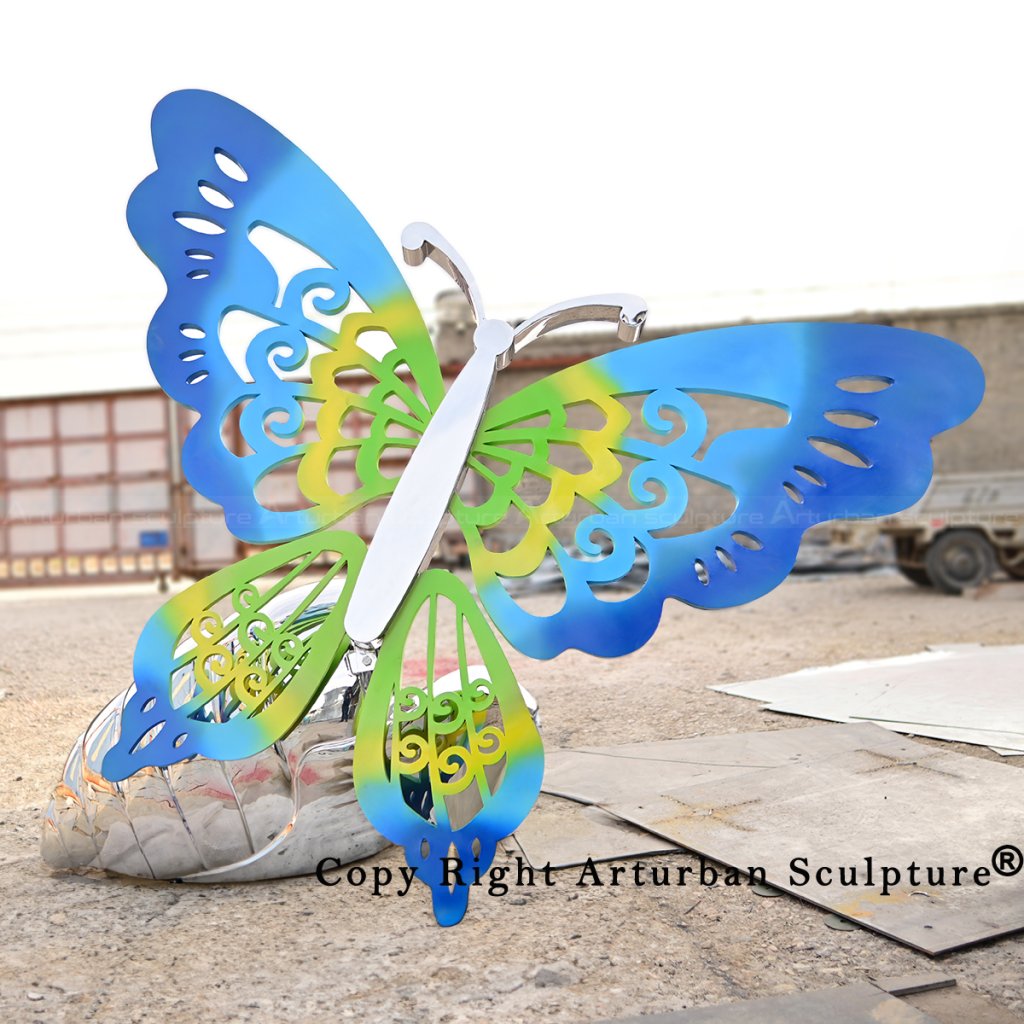
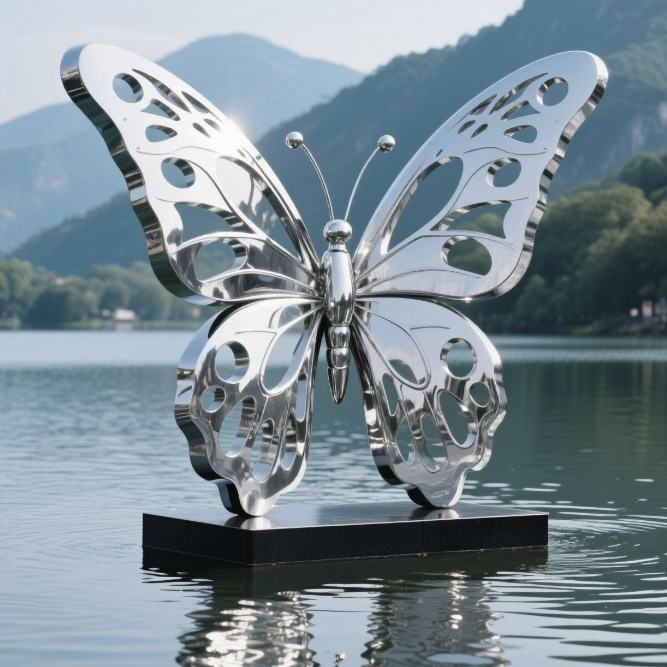
The wings are treated with a gradient of blue, green, and yellow, combined with openwork patterns, allowing light and space to freely penetrate, creating a light and agile visual effect. The cool texture of the metal body contrasts sharply with the vibrant colors, reinforcing the theme of “metamorphosis.”
Why Choose a Stainless Steel Butterfly Sculpture?
In large-scale or outdoor Butterfly Sculpture projects, stainless steel is one of the most frequently used materials, and for reasons beyond just durability.
The core advantages of stainless steel Butterfly Statues include:
- High strength: suitable for large-span wing structures
- Good weather resistance: suitable for long-term outdoor use
- Ability to achieve complex openwork and curved shapes
- Diverse surface finish options: mirror, brushed, painted, etc.
In actual projects, 304 and 316 stainless steel are selected based on the installation environment to ensure a balance between aesthetics and lifespan.
Of course, Arturban Sculpture offers a variety of material options, including bronze, fiberglass, marble, and more.
How a Stainless Steel Butterfly Statue Is Made.
This stainless steel butterfly sculpture is crafted using a combination of hand forging and modern metalworking techniques, suitable for artistic works like “Butterfly Emerging from the Cocoon,” which require high levels of surface tension and structural safety.
The entire production process can be divided into two core parts: forging the pupa (main body) and creating the butterfly wings.
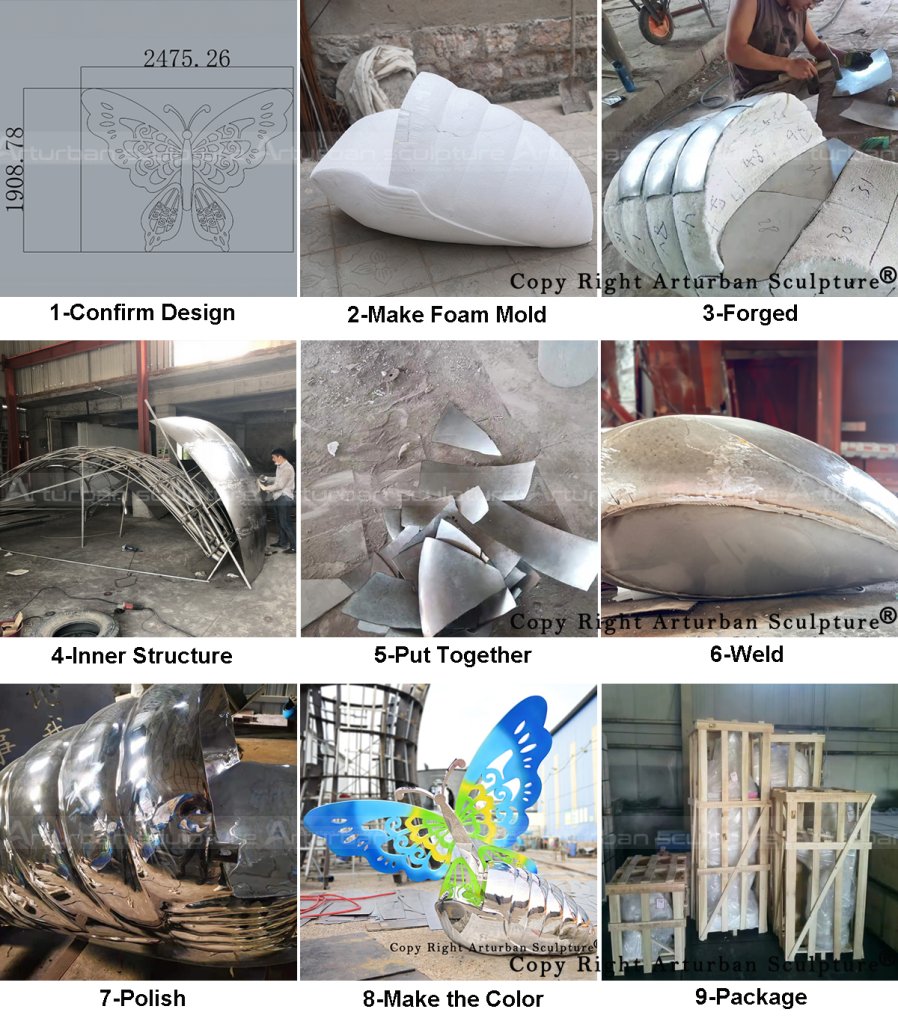
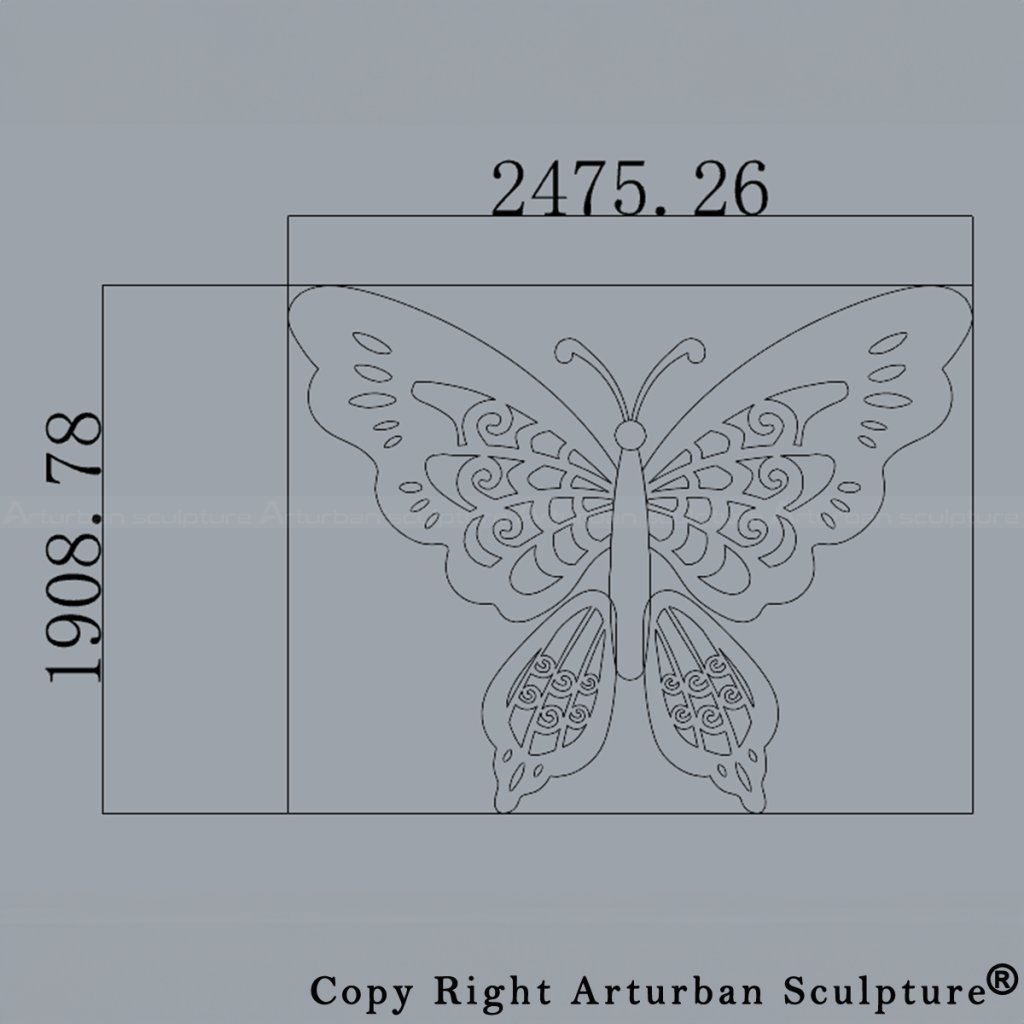
1. Design Confirmation and Structural Refinement: Based on the initial design, the dimensions, proportions, and internal steel structure are refined to ensure both visual appeal and structural safety.
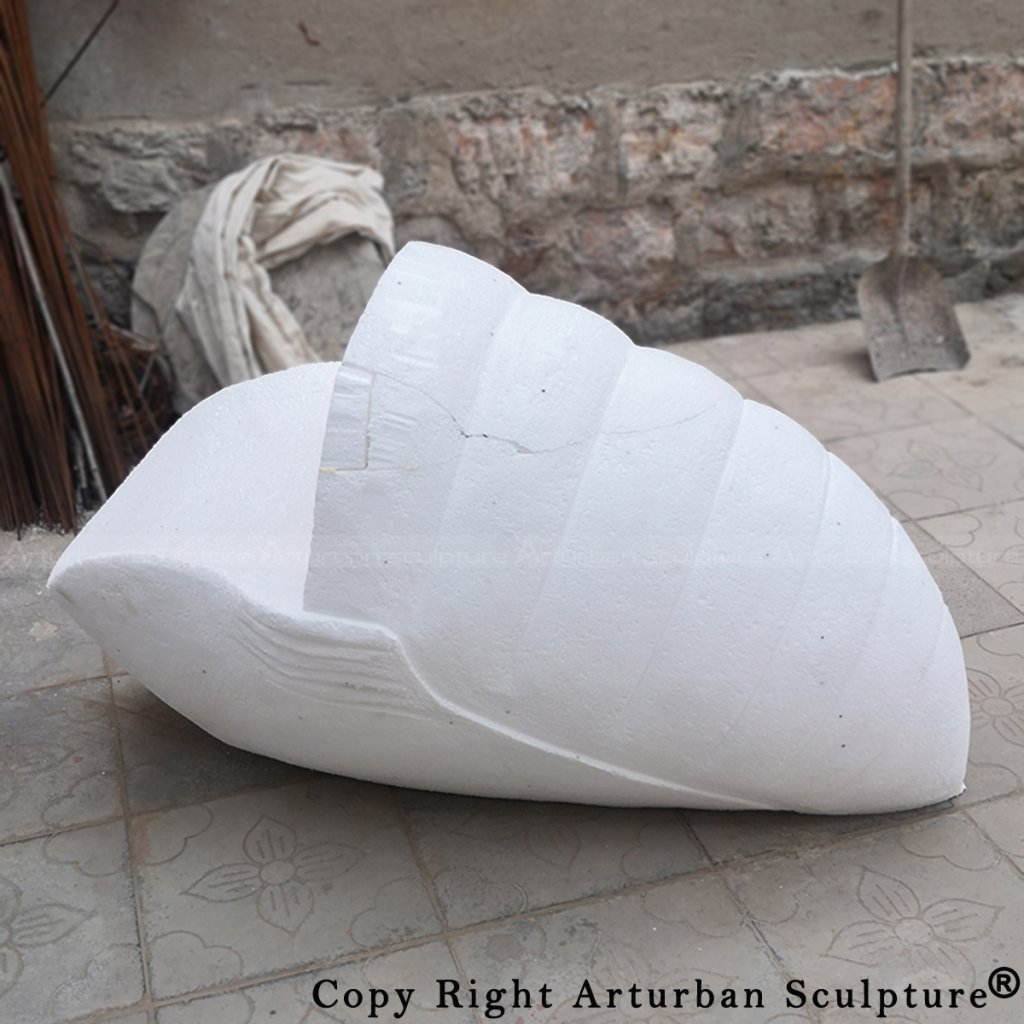
2. Foam Model Creation: A solid foam model is used to determine the final volume and surface curvature, providing an accurate reference for subsequent stainless steel forging.
3. Stainless Steel Pupa (Main Body) Forging: The main body is forged using segmented stainless steel plates through heating and manual forging, allowing the metal to gradually form a natural and flowing three-dimensional curved surface under controlled conditions.
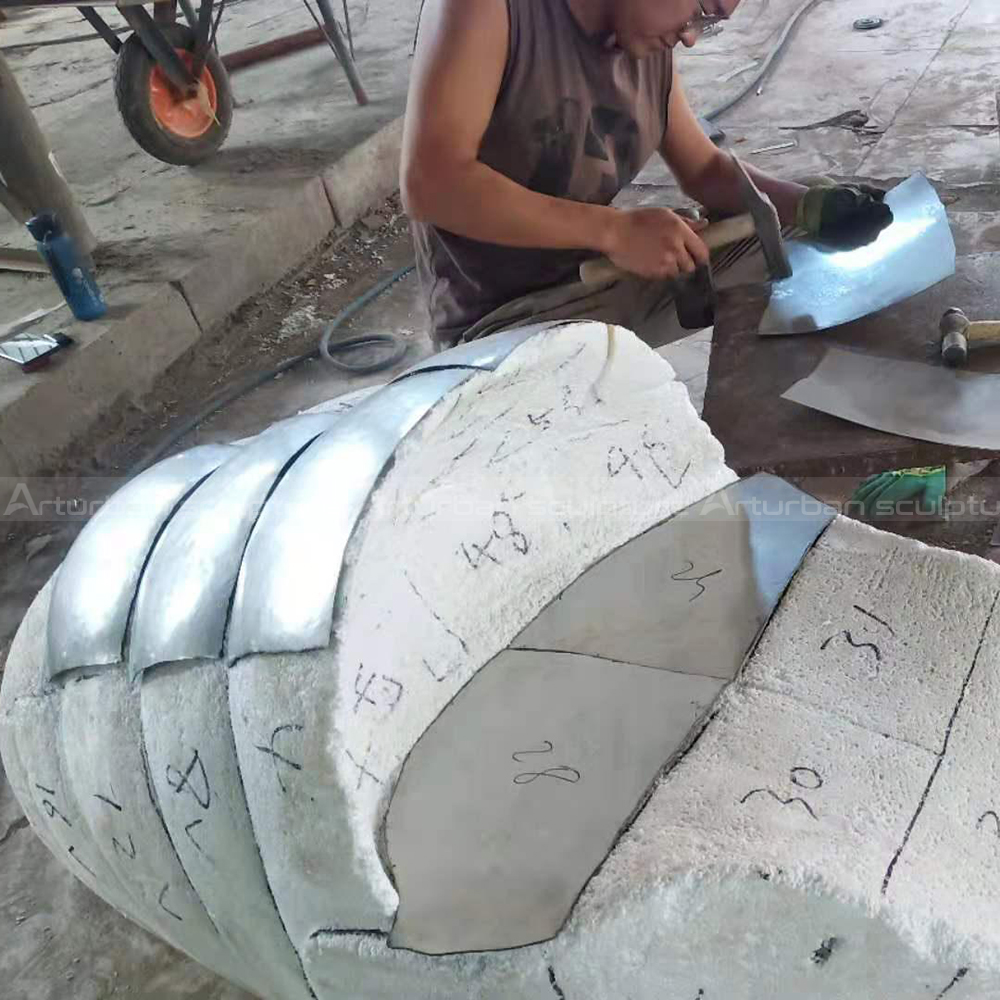
4. Internal Steel Structure Installation: A concealed steel structure is fabricated and installed to support the pupa, ensuring overall stability and long-term outdoor safety.
5. Component Assembly and Welding: The forged components are assembled and welded according to the plan. The weld positions are pre-designed to avoid affecting the overall aesthetics.
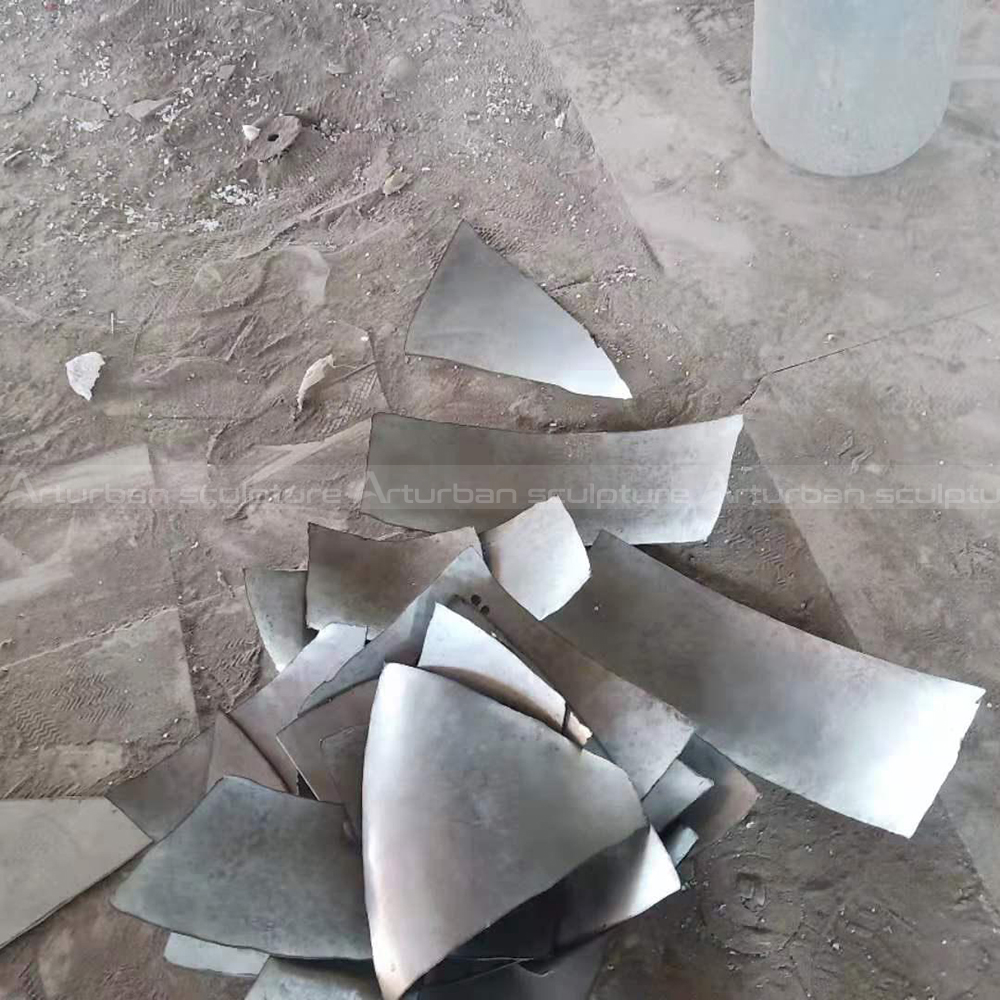
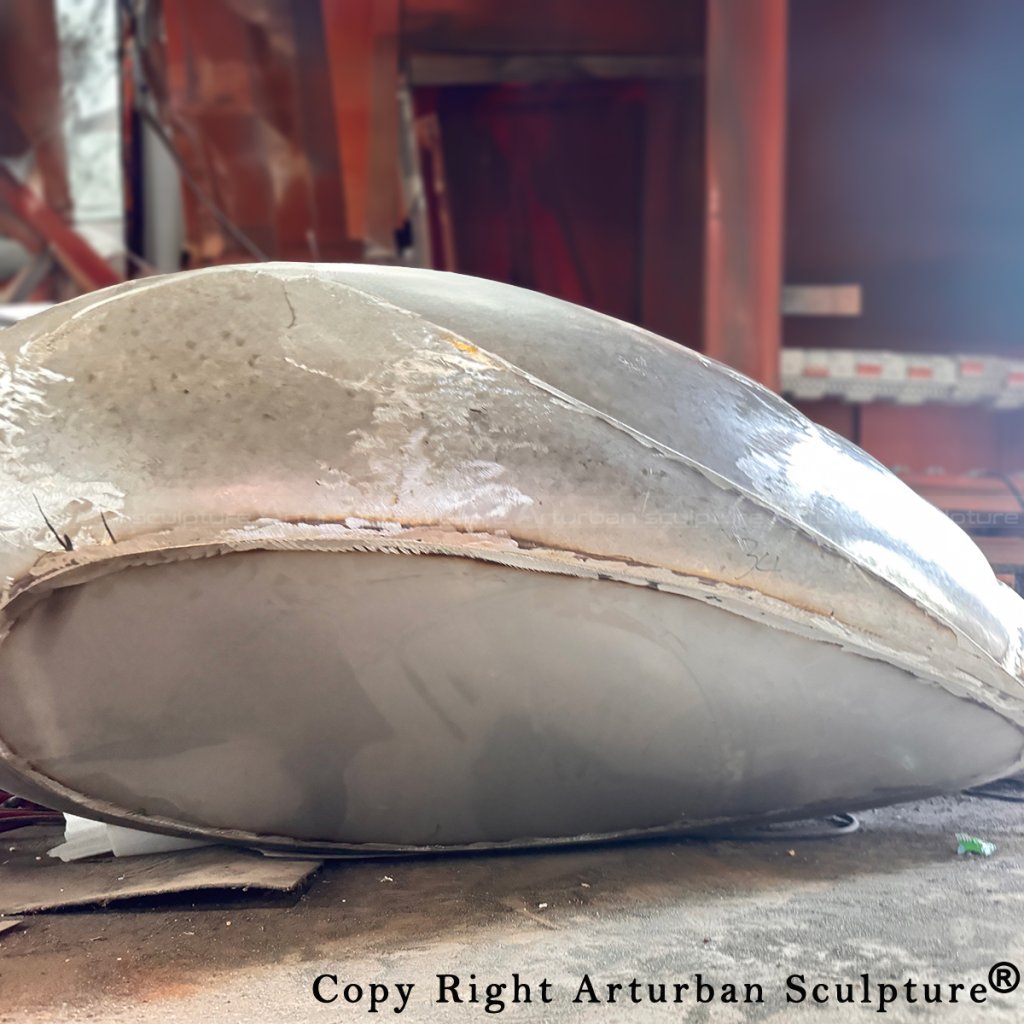
6. Wing Shaping and Hollow-out Cutting: The wings are first shaped with curved surfaces, then laser-cut to create hollow patterns, balancing visual transparency with structural strength.
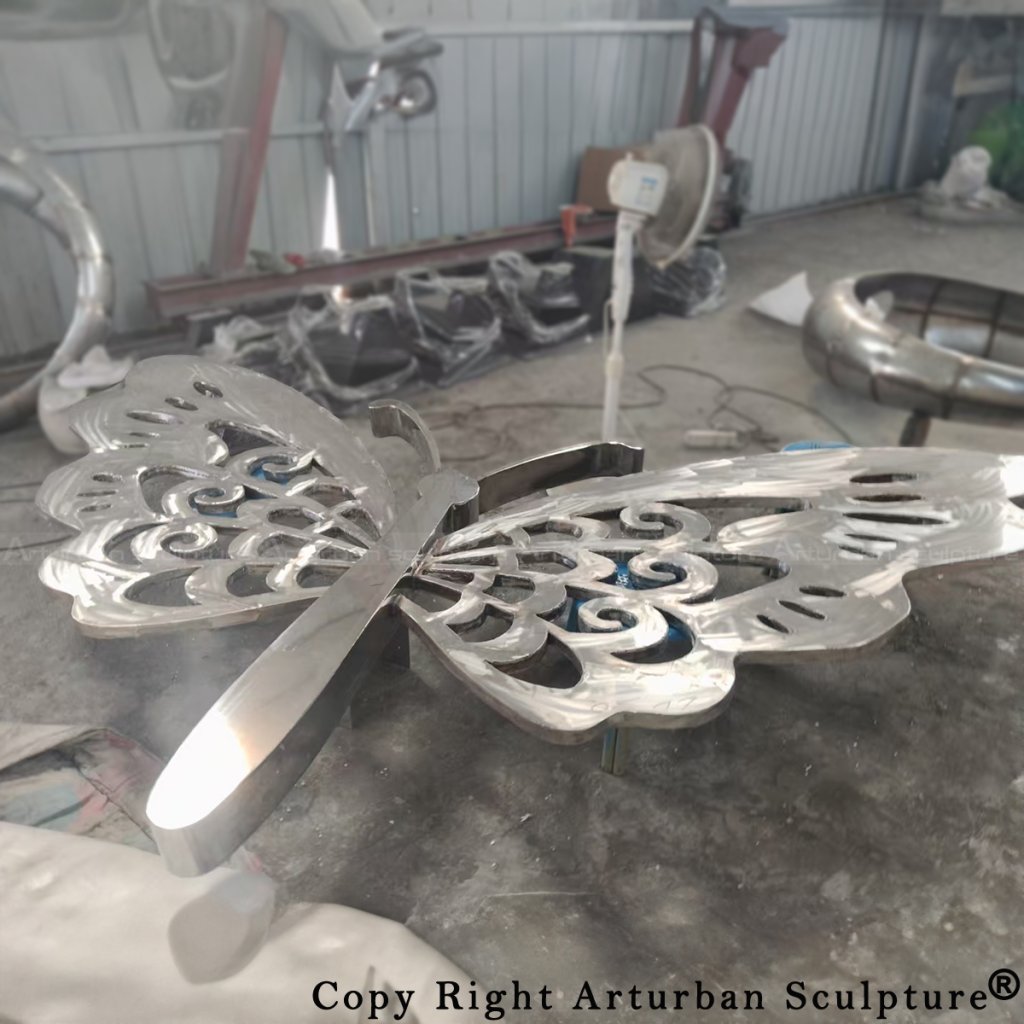
7. Wing Structure Connection: The wings are connected to the pupa through an internal structure, ensuring stability during large-span deployment while maintaining a light and airy visual effect.
8. Grinding, Polishing, and Color Treatment: After overall welding, all welds and surfaces undergo fine grinding and mirror polishing. The wings are custom-colored according to the design scheme to enhance the artwork’s artistic expression.
9. Finished Product Protection and Packaging: The surface is protected and the Butterfly Statue is professionally packaged in wooden crates to ensure safe transportation and installation.
Challenges of a Hollow Butterfly Statue
The openwork design gives the Butterfly Statue a light and airy visual effect, but it also places higher demands on structural safety and process control.
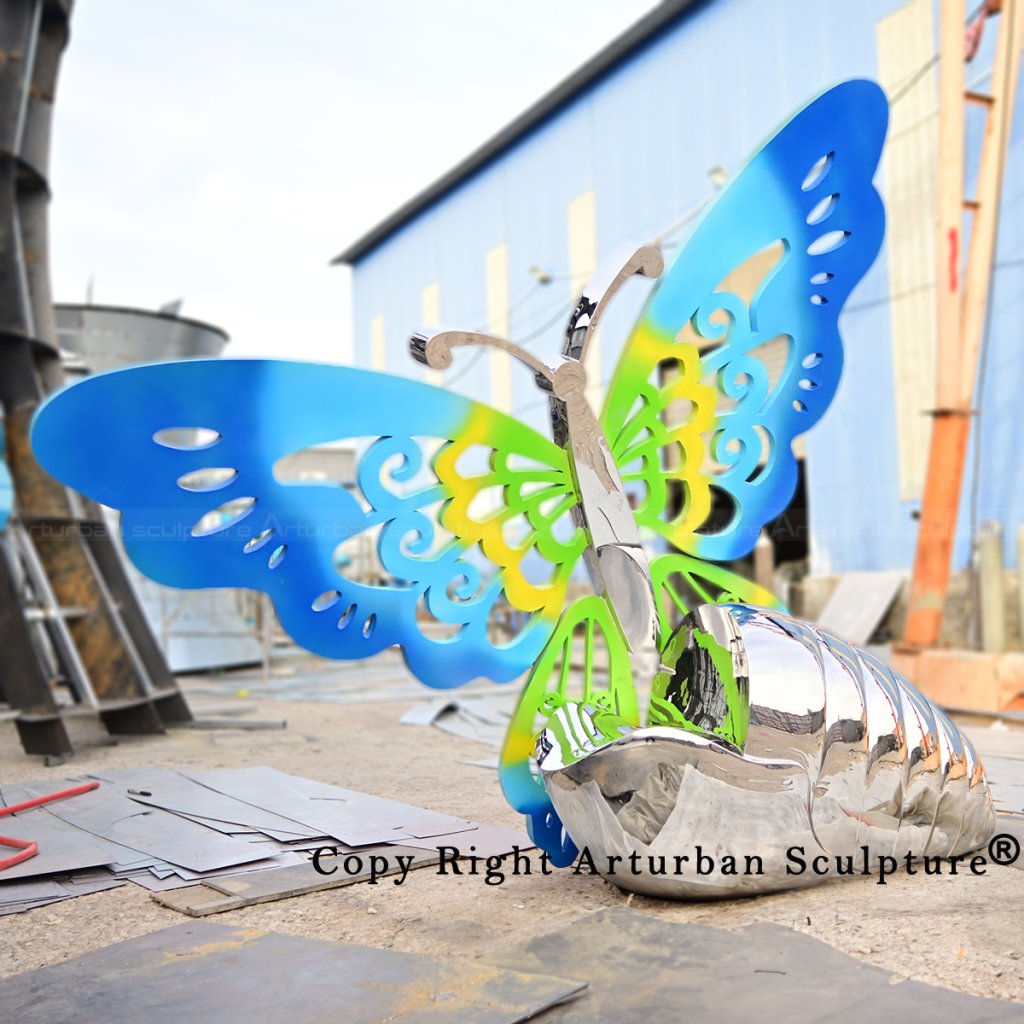
The large-span wing structure requires reasonable sheet thickness and internal reinforcement to ensure long-term stability; the openwork pattern design must strike a balance between visual transparency and structural safety; the curved surface forming and openwork process require precise coordination, otherwise deformation or precision deviations can easily occur; welding and surface treatment are more complex with openwork structures, requiring extremely high levels of manual experience.
In Arturban Sculpture’s actual projects, these problems are usually systematically resolved in the early stages of design and production, ensuring that the openwork Butterfly Statue maintains long-term stability in terms of both visual appeal and usability.
Applications of Butterfly Statues
The Butterfly Statue is highly adaptable to various spaces, with common applications including:
- Commercial complexes and shopping malls
- City squares and public art spaces
- Hotels, cultural tourism projects, and art parks
- Corporate image displays and brand entrance installations
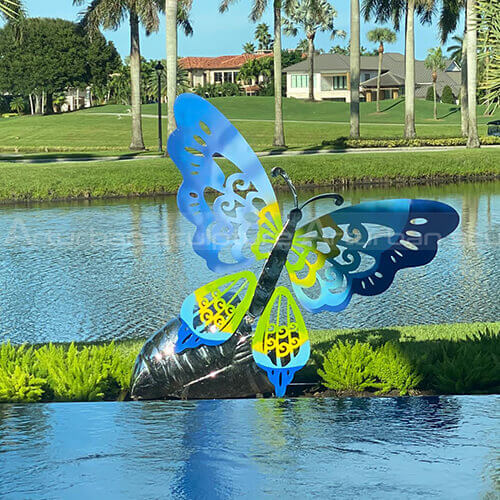
In different settings, the butterfly sculpture’s size, posture, and visual center of gravity are adjusted to ensure harmony with the environment.
Can a Butterfly Statue Be Customized?
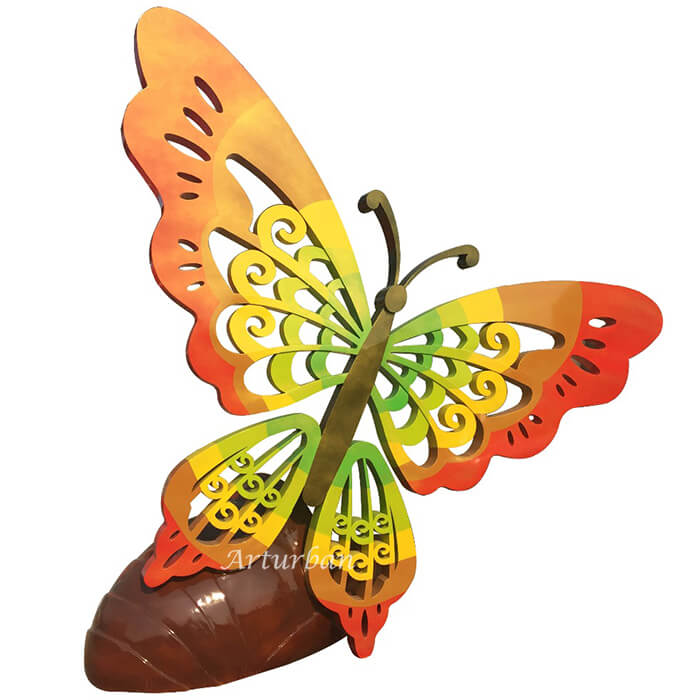
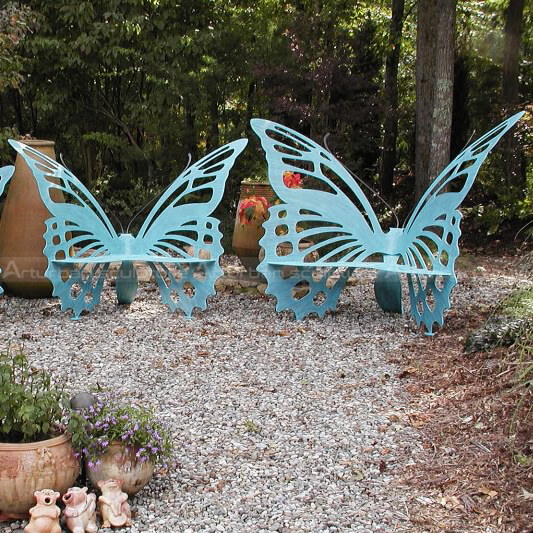
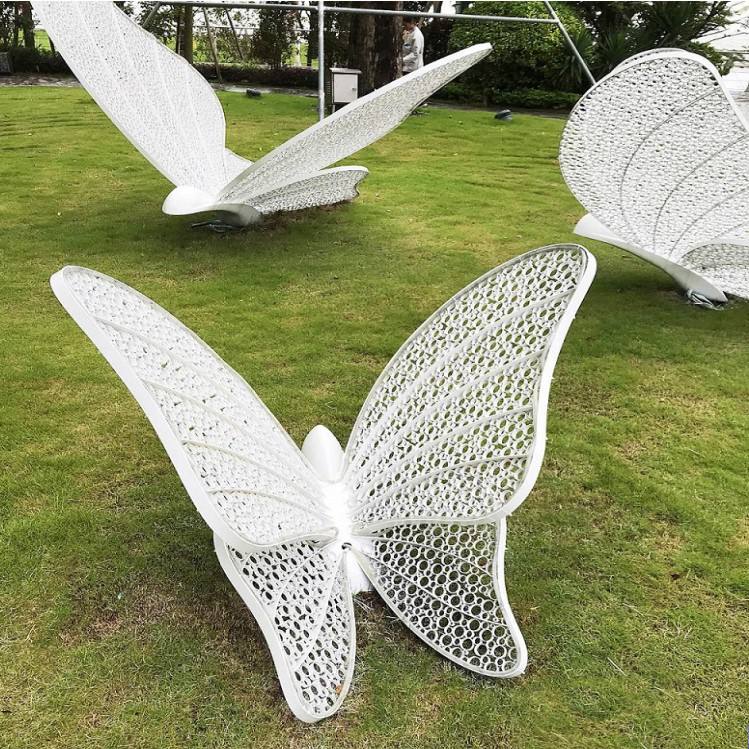
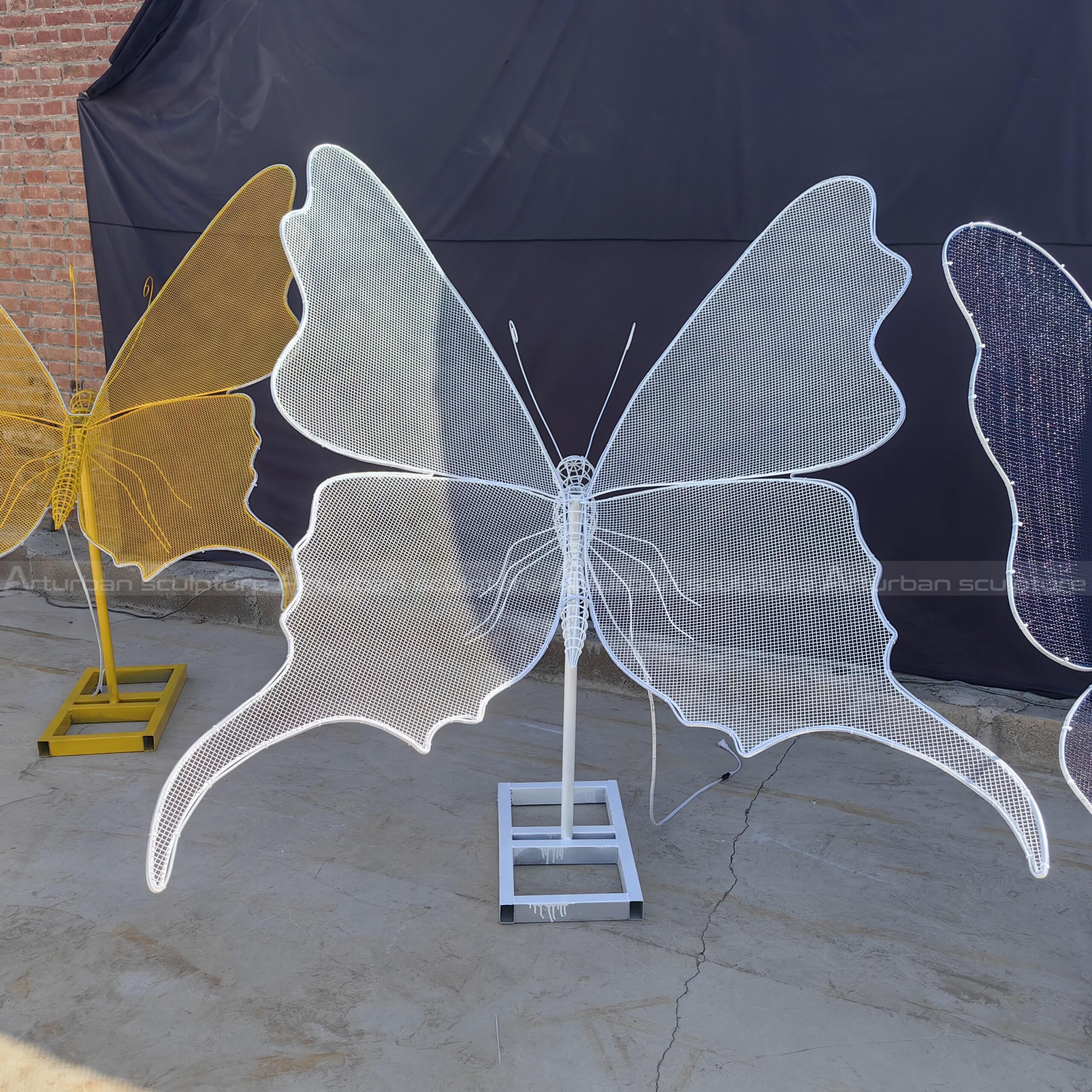
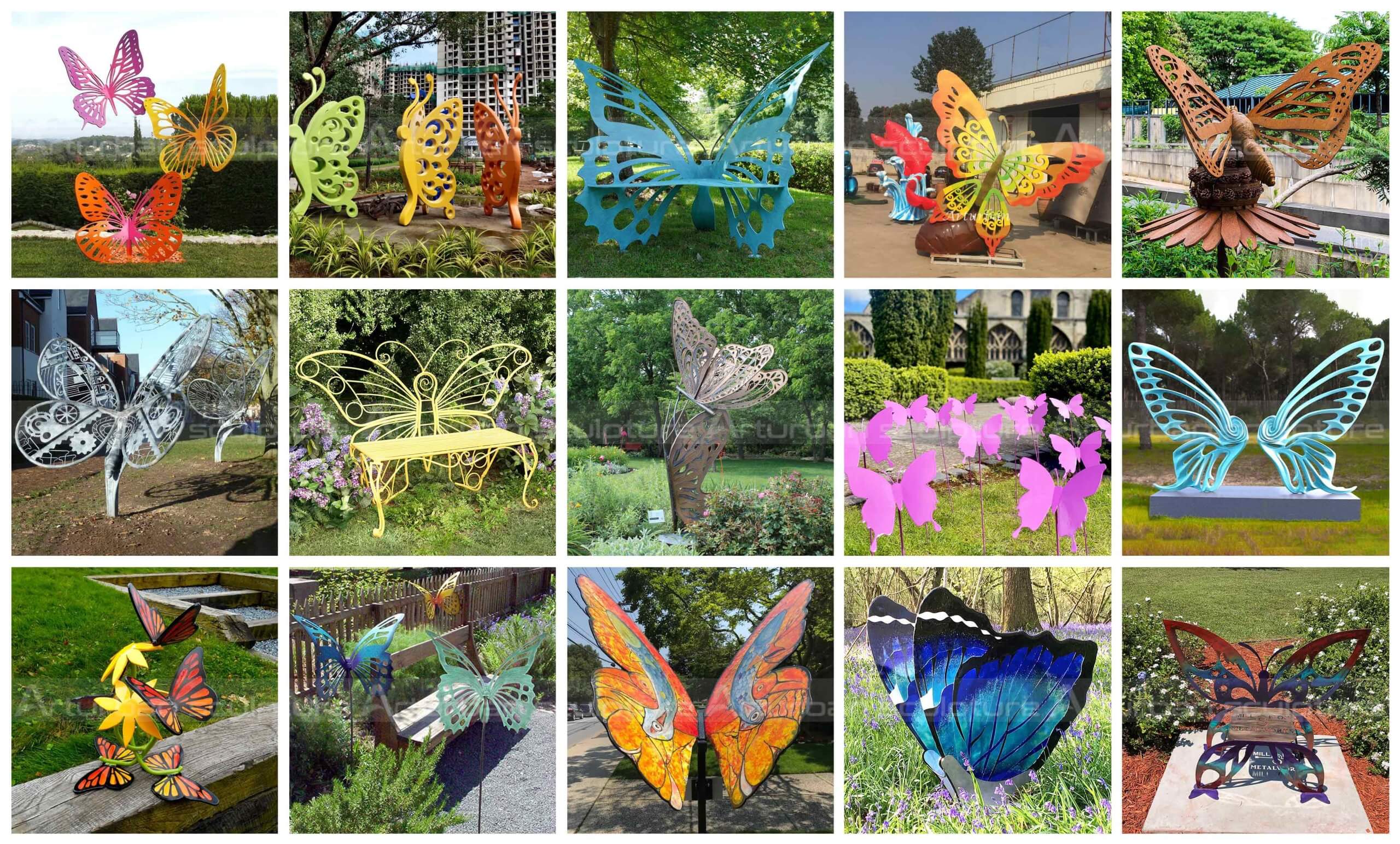
Yes, the Butterfly Sculpture can be completely customized to meet project needs, and customization is often the core value of butterfly sculpture projects. At Arturban Sculpture, Butterfly Statue customization typically includes the following:
- Size and Proportion Customization: Adjusting the overall scale according to the installation space, viewing distance, and environmental conditions.
- Shape and Theme Customization: Any Designs can be customized as you want.
- Wing Structure and Openwork Pattern Customization: Balancing visual appeal with structural safety.
- Material and Surface Finish Customization: Different surface treatments and color schemes are available for stainless steel.
- Structure and Installation Customization: Optimizing the internal structure and connection methods for outdoor or indoor environments.
The key to customization is not merely changing the form, but rather the ability to integrate artistic concepts, safe structures, and manufacturing processes. This is why complex Butterfly Statues are better suited to be completed by factories with practical manufacturing experience.
FAQ about of butterfly statue
1. Is a Butterfly Statue suitable for long-term outdoor use?
Yes. Stainless steel Butterfly Sculptures are made of 304 or 316 stainless steel and undergo standardized surface treatment processes, making them suitable for long-term outdoor use with excellent weather resistance and stability.
2. Will a stainless steel Butterfly Sculpture rust or fade over time?
With proper material selection and manufacturing processes, the stainless steel body is not prone to rusting; the wing color can be achieved through stable spraying or coloring processes, maintaining a good color effect under normal outdoor conditions.
3. Is a hollow Butterfly Statue structurally safe?
Yes. Hollow Butterfly Statues undergo structural evaluation during the design phase, and overall safety and long-term stability are ensured through internal reinforcement and appropriate sheet metal thickness.
4. Can a Butterfly Sculpture be fully customized?
Yes. Butterfly Statues can be customized in size, shape, wing structure, hollow patterns, color effects, and installation methods according to project requirements.
5. How is a large Butterfly Statue transported and installed?
Large Butterfly Statues are typically manufactured in parts and professionally packaged, then transported to the site for installation. The installation method is planned in advance during the manufacturing phase.
6. Is the “From Cocoon to Butterfly” concept suitable for commercial or public spaces?
Absolutely. “From Cocoon to Butterfly” symbolizes transformation and rebirth in different cultures and is widely used in commercial spaces, public art, and urban landscape projects.
Send us your requirements now, we will reply to your email within 24 hours