
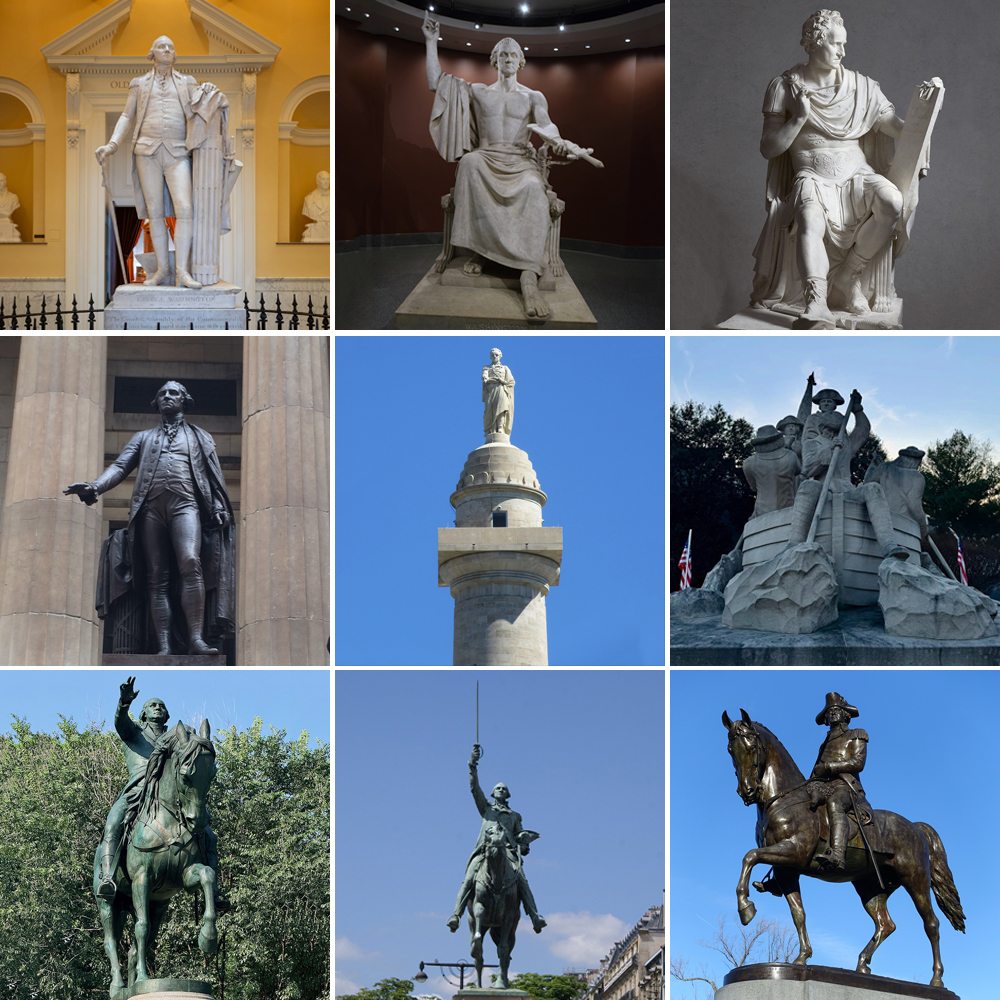
George Washington, a key military leader during the American Revolutionary War and the first president of the United States, has become one of the most common historical figures depicted in American public memorial art. From Houdon’s realistic portrait based on the real person, to Canova and Greenough’s neoclassical interpretations, to equestrian monuments and large-scale historical sculptures, artists from different eras have interpreted Washington in different ways. This article will review 10 of the most representative George Washington statue and introduce their forms, materials, creative backgrounds, and historical significance.
George Washington: A Brief Biography
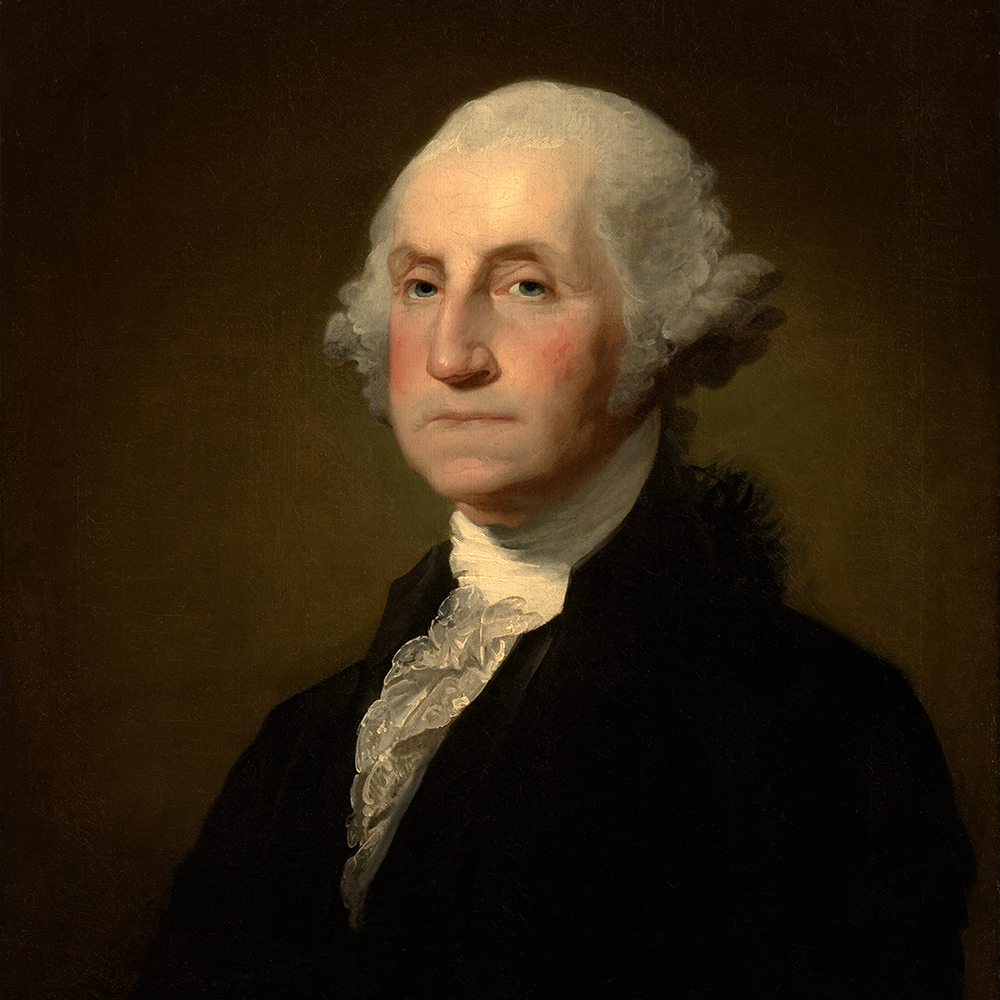
- Early Life (1732–1758): George Washington was born in Virginia. In his youth, he worked as a land surveyor and gained early military experience through the French and Indian Wars.
- Revolutionary War (1775–1783): In 1775, he was appointed Commander-in-Chief of the Continental Army, leading the colonial forces against the British and ultimately helping the United States win independence.
- Giving Up Military Power (1783): After the war, Washington voluntarily resigned as Commander-in-Chief.
- First U.S. President (1789–1797): Washington became the first President of the United States in 1789, serving two terms and establishing many important precedents for the early American presidential system.
- Later Life and Legacy: After leaving office in 1797, he returned to Mount Vernon, where he died in 1799.
These different roles also explain why George Washington has been portrayed in so many different ways in sculpture.
Top 1: George Washington Sculpture Houdon
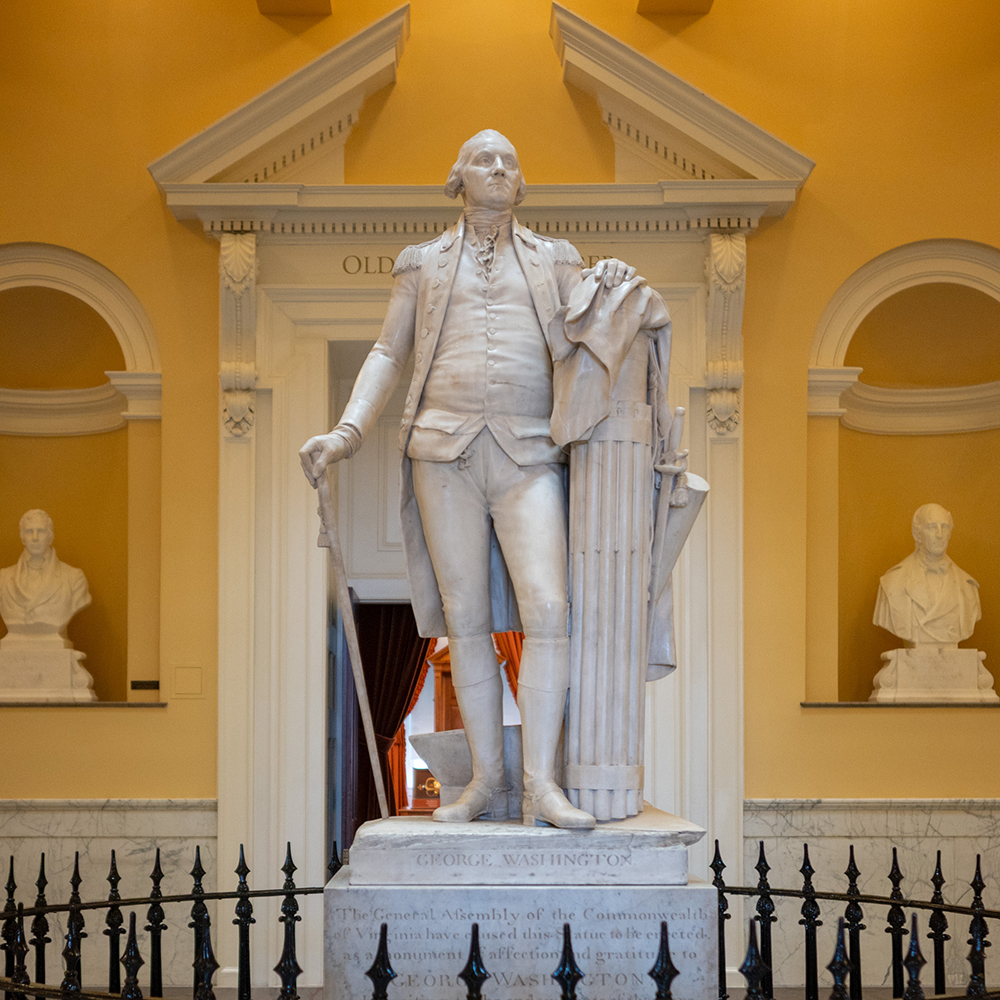
- Sculptor: Jean-Antoine Houdon
- Date: Commissioned in 1784; Houdon studied Washington in 1785; installed in 1796
- Material: Carrara marble
- Dimensions: Life-size, approximately 6 ft 2 in (1.88 m) tall
- Location: Rotunda, Virginia State Capitol, Richmond, Virginia, USA
- Subject: George Washington
- Commissioned by: Virginia General Assembly
Background
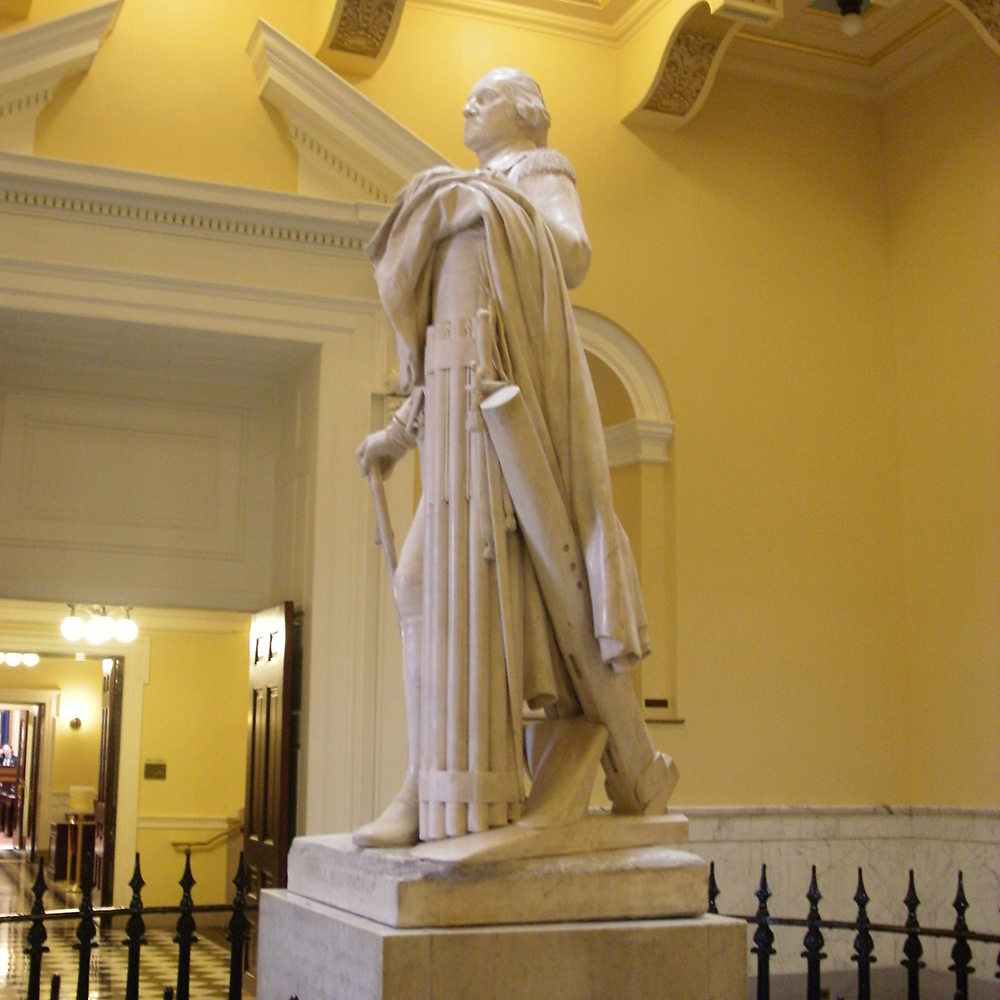
This marble George Washington sculpture was created by the French Neoclassical sculptor Jean-Antoine Houdon. In 1784, the Virginia General Assembly decided to create a memorial statue for Washington and asked Thomas Jefferson, who was in France at the time, to find a suitable sculptor. Houdon could have based his work on a portrait of Washington by Charles Willson Peale, but he felt that two-dimensional drawing was insufficient to accurately depict a full-body three-dimensional statue.
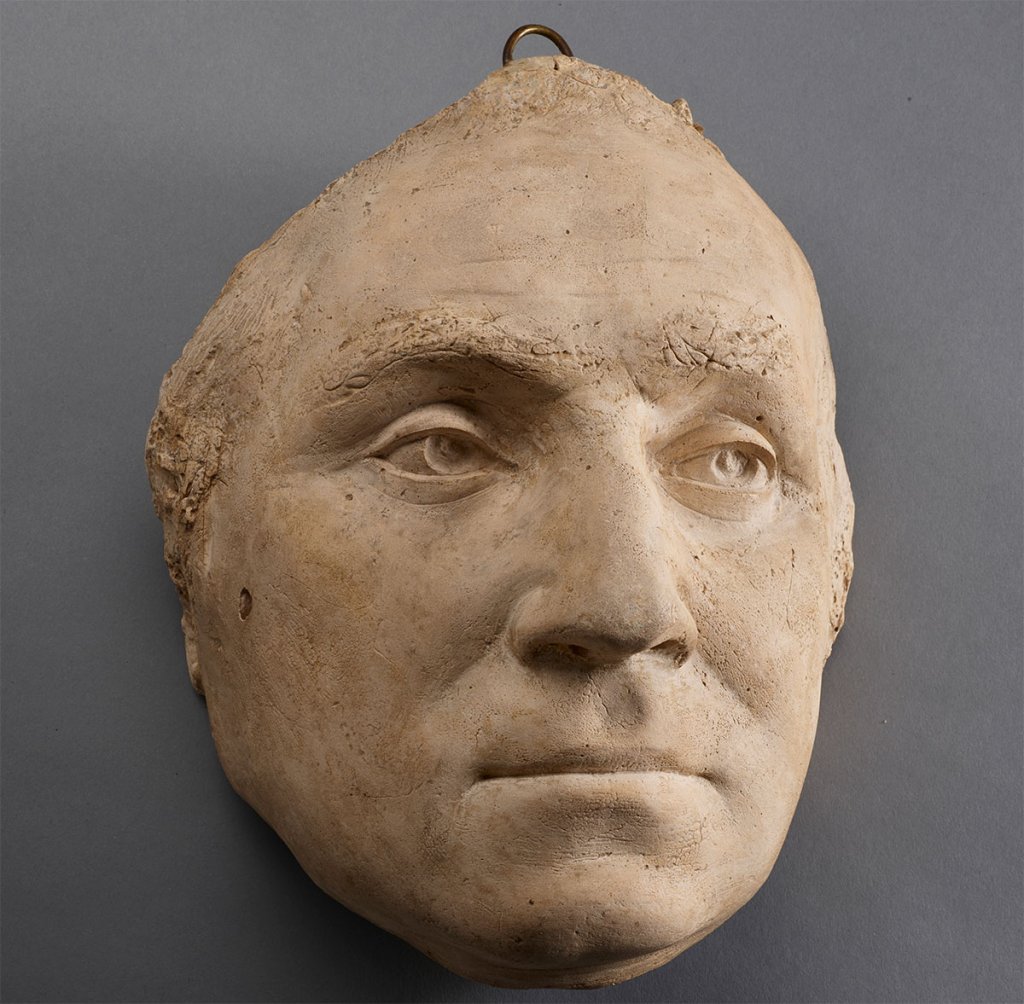
Therefore, in 1785, he personally went to Mount Vernon to create a plaster life mask for Washington, take his body measurements, and complete research on the terracotta portrait. The final work was sculpted in France using Carrara marble and arrived at the Virginia State Capitol in 1796.
What Does the Houdon George Washington Statue Look Like?
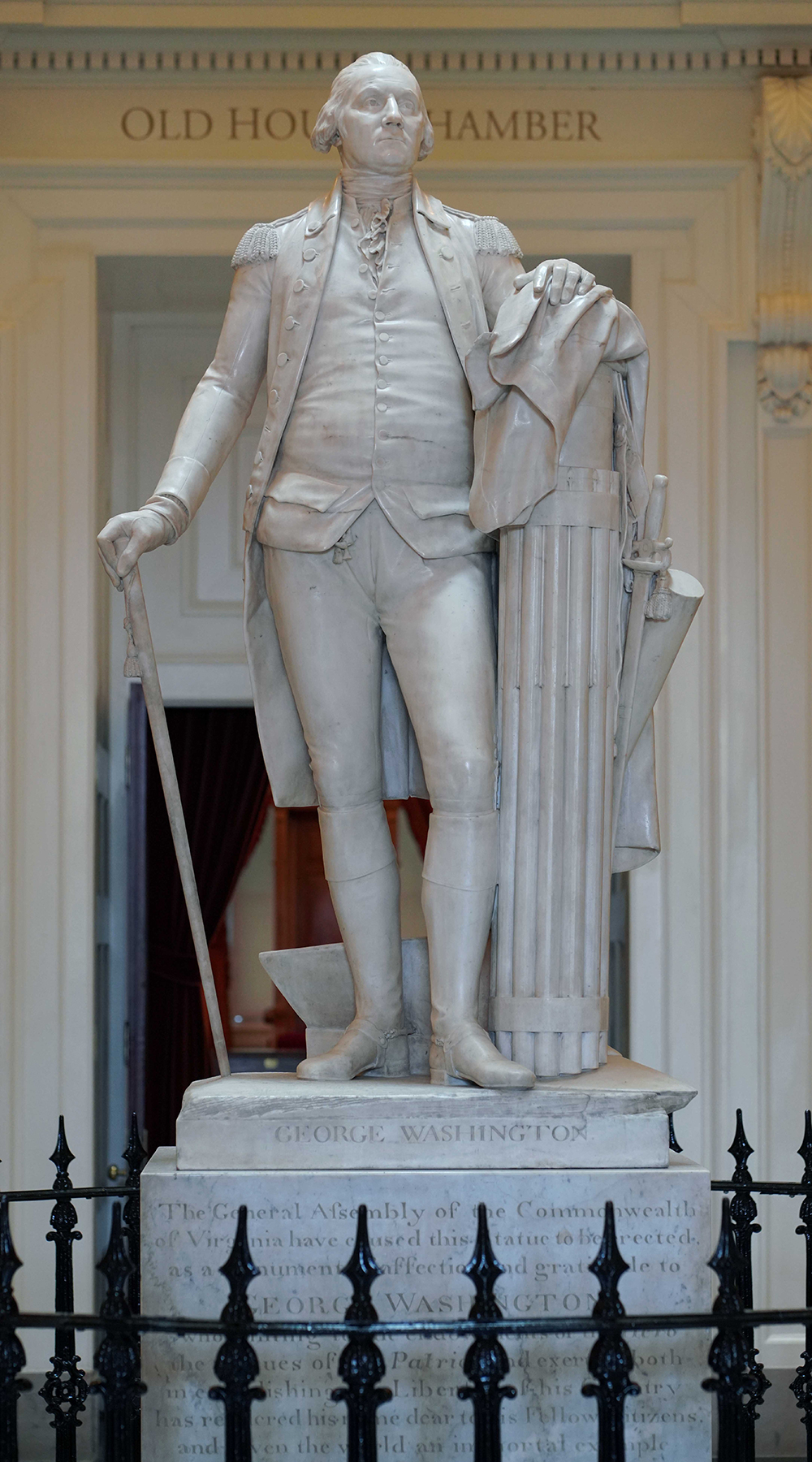
Washington stands at near-life size, dressed in Revolutionary War uniform, but without a hat and without any pose of commanding troops or engaging in battle. His head is slightly turned to one side, his expression calm; his right hand rests on a gentleman’s walking stick, while his left arm is bent and leans against a bundle of fasces. A military cloak and an officer’s sword hang on one side of the fasces, and a plow can be seen behind the figure.
Why Is This George Washington Statue So Important?
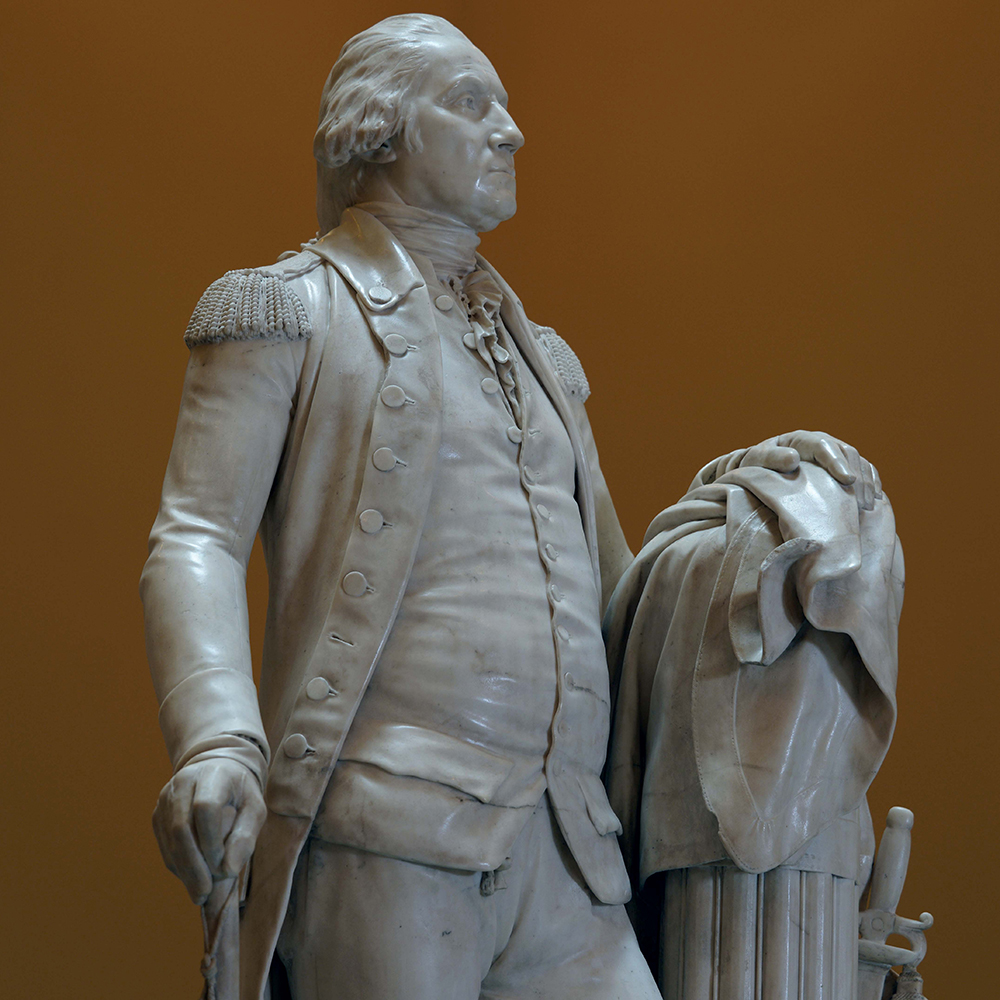
The most important aspect of this work is that Houdon created it after directly studying Washington during his lifetime. He not only observed Washington but also used facial molds and body measurements to record his appearance, thus this george washington statue is often considered one of the most reliable three-dimensional portraits of Washington. Contemporaries who saw Washington in person also acknowledged the statue’s striking resemblance to him.
What is it about Jean-Antoine Houdon’s statue of George Washington that is drawn from Roman culture?
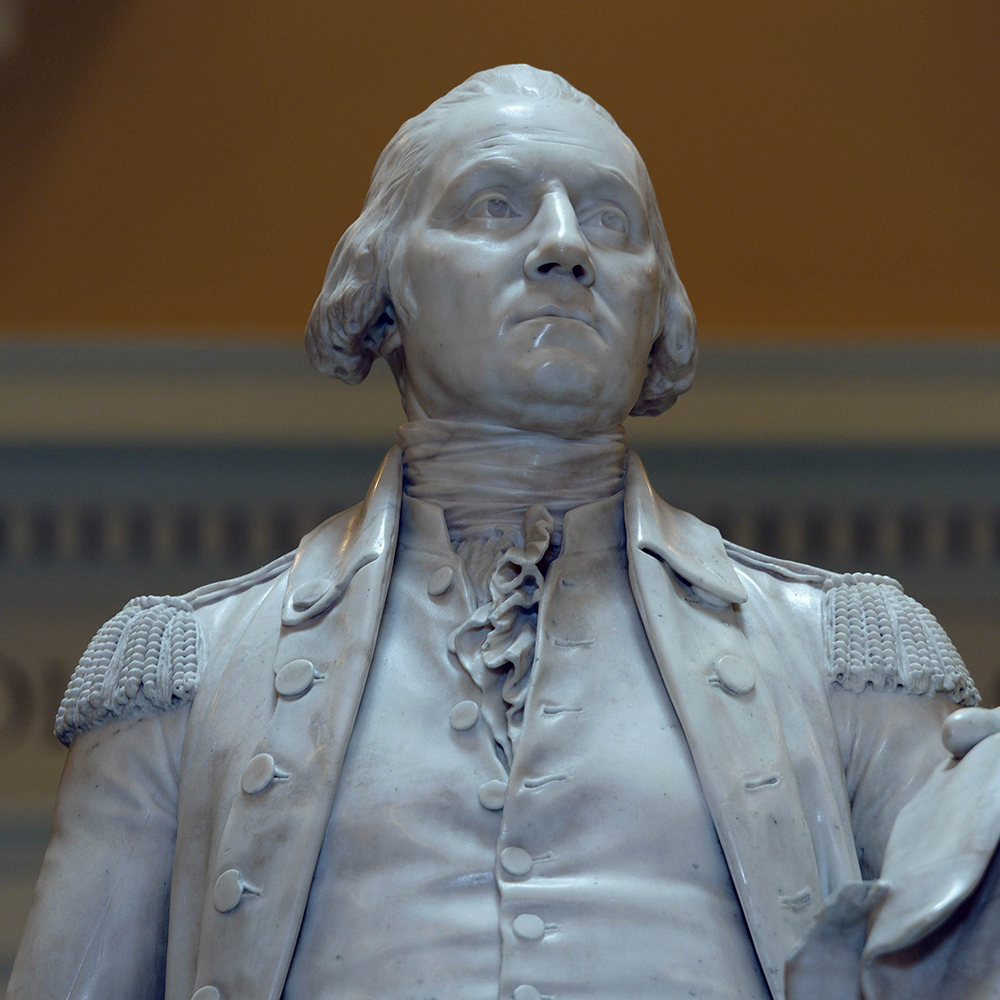
- Fasces: Originating from ancient Rome, these symbols represent public power and national authority, and are often interpreted here as representing the original 13 states that formed the United States.
- Cincinnatus: Washington voluntarily resigned from the military after World War II to return to a private life, thus being compared to Cincinnatus who returned to agriculture after relinquishing power.
- Sword and Plow: The sword represents military power, and the plow represents a return to agricultural life, reinforcing the republican meaning of “relinquishing power.”
- Roman Republican Ideals: The entire work borrows from the values of the ancient Roman Republic, portraying Washington as a self-disciplined, restrained, and civic leader willing to relinquish power.
Top 2: Enthroned Washington
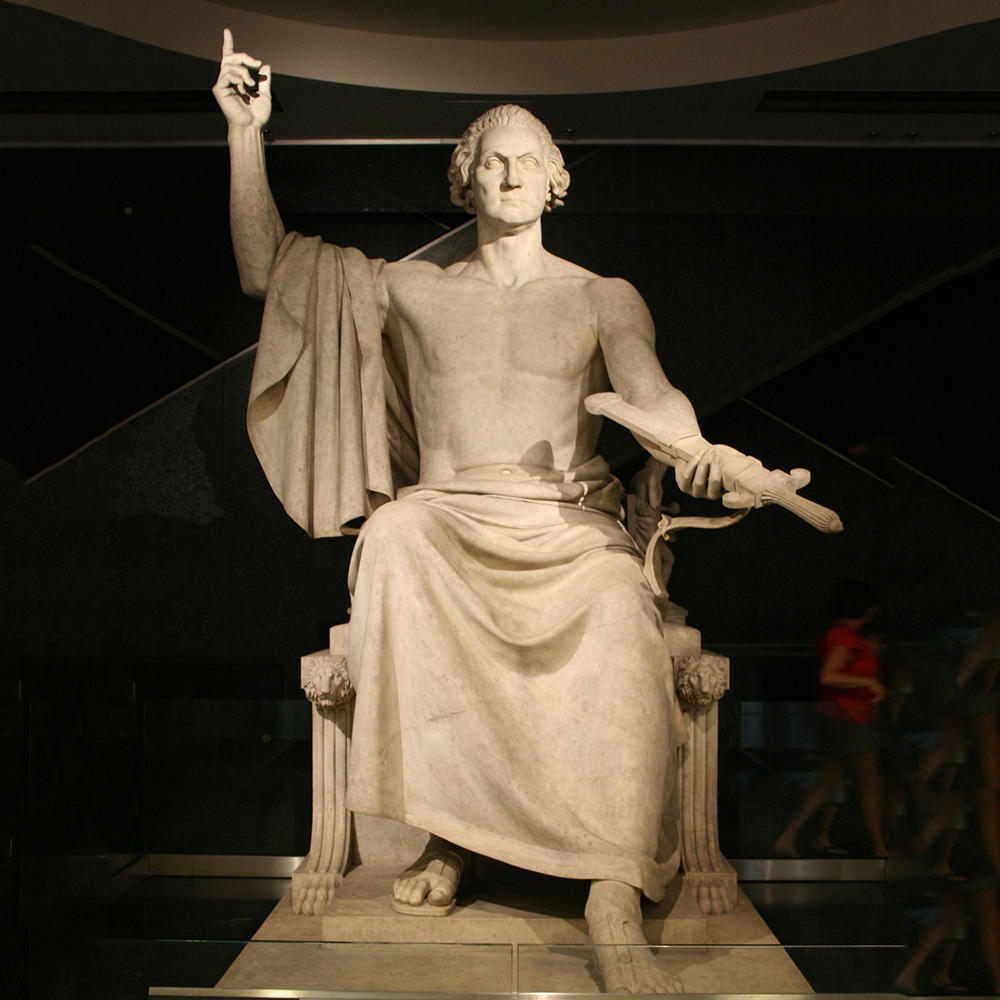
- Sculptor: Horatio Greenough
- Commissioned: 1832
- Completed: 1840
- Installed at the U.S. Capitol: 1841
- Material: White marble
- Dimensions: 136 × 102 × 82.5 in. / 345.4 × 259.1 × 209.6 cm
- Weight: About 12 tons
- Style: Neoclassical sculpture
- Original Location: U.S. Capitol Rotunda, Washington, D.C.
- Current Location: National Museum of American History, Smithsonian Institution, Washington, D.C.
Background
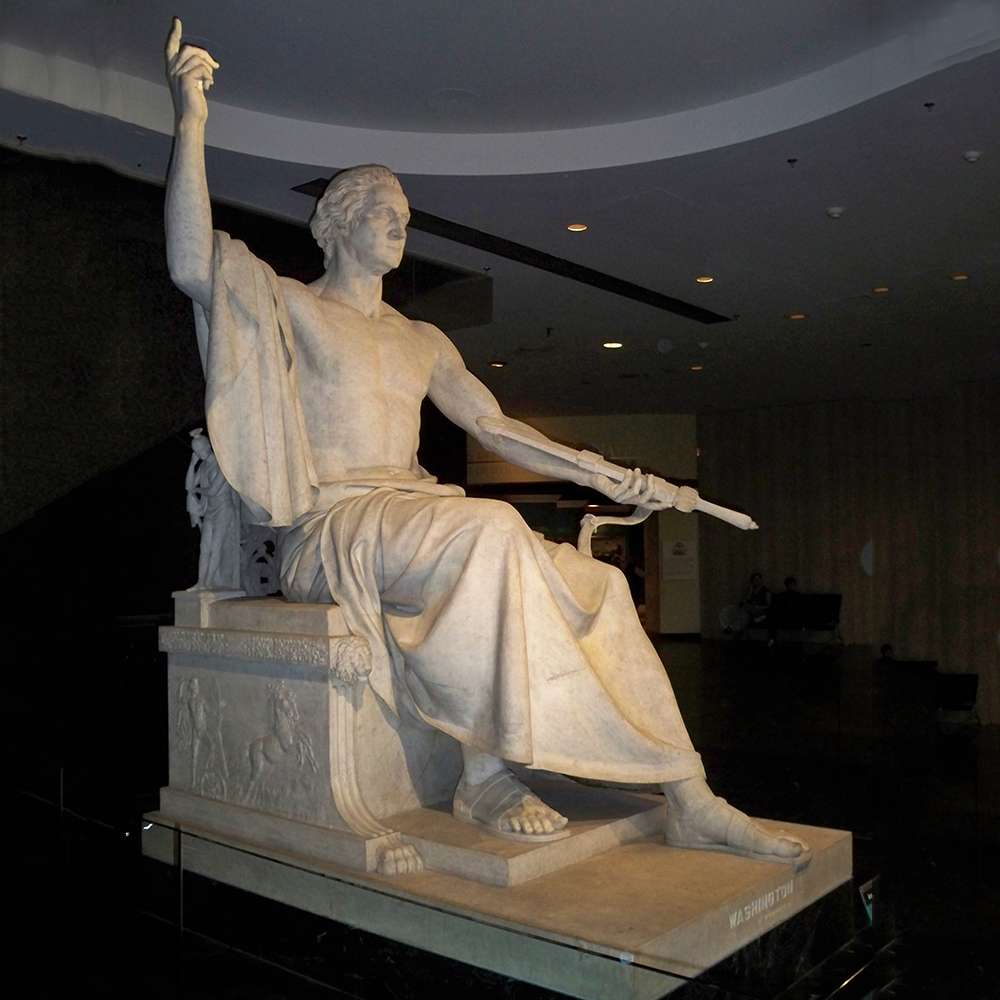
In 1832, to commemorate the 100th anniversary of George Washington’s birth, the U.S. Congress commissioned Horatio Greenough to create a large memorial statue, which was planned to be placed in the U.S. Capitol Rotunda. Greenough spent approximately eight years completing the work.
What Does the Enthroned Washington Look Like?
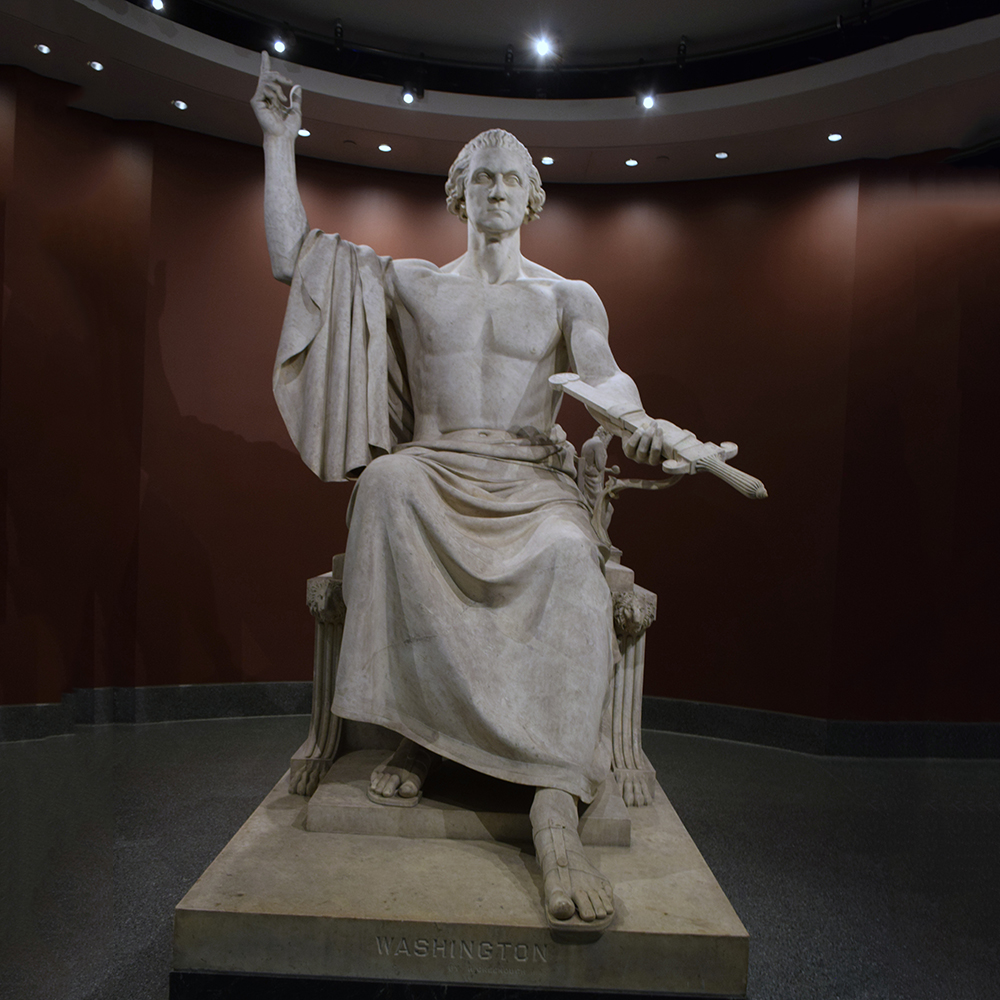
Washington sits on a massive, throne-like chair, his upper body bare, draped in a classical robe, and wearing sandals. His right arm is raised high, index finger pointing upwards; his left arm extends towards the audience, his hand cradling a sword still in its sheath, the hilt facing the viewer—a gesture symbolizing Washington’s voluntary relinquishment of military power to the people after the American Revolutionary War.
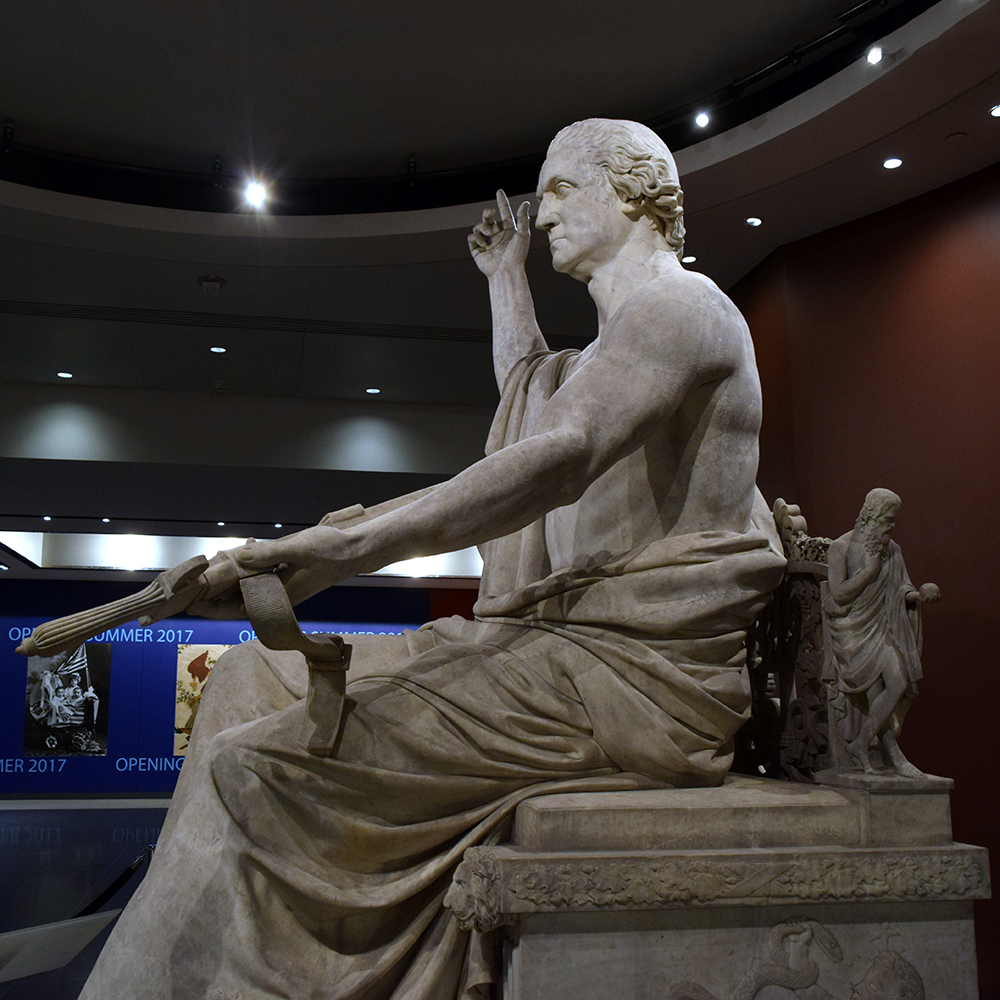
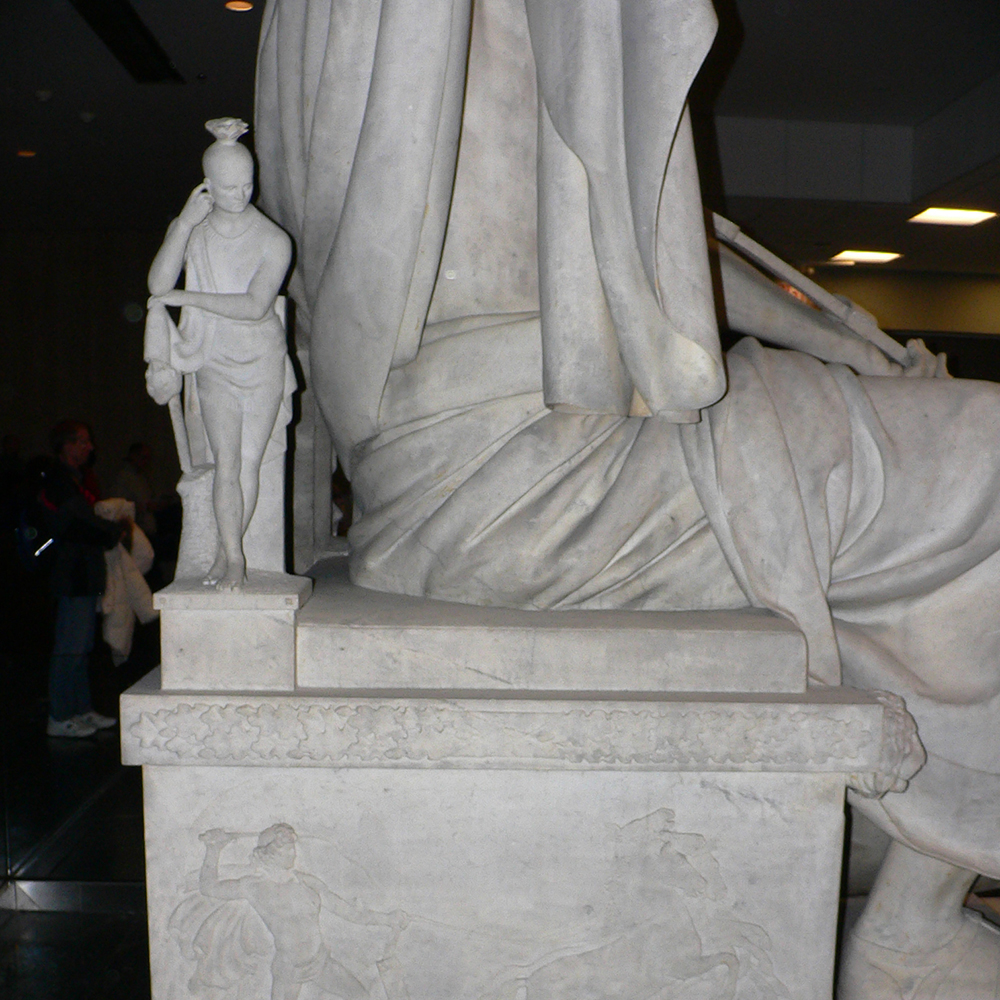
The figure is rendered with exceptional strength, the chest, shoulders, and arms possessing the idealized physique of a classical hero.
What Was the Controversy Surrounding the George Washington Statue in Washington, D.C..?
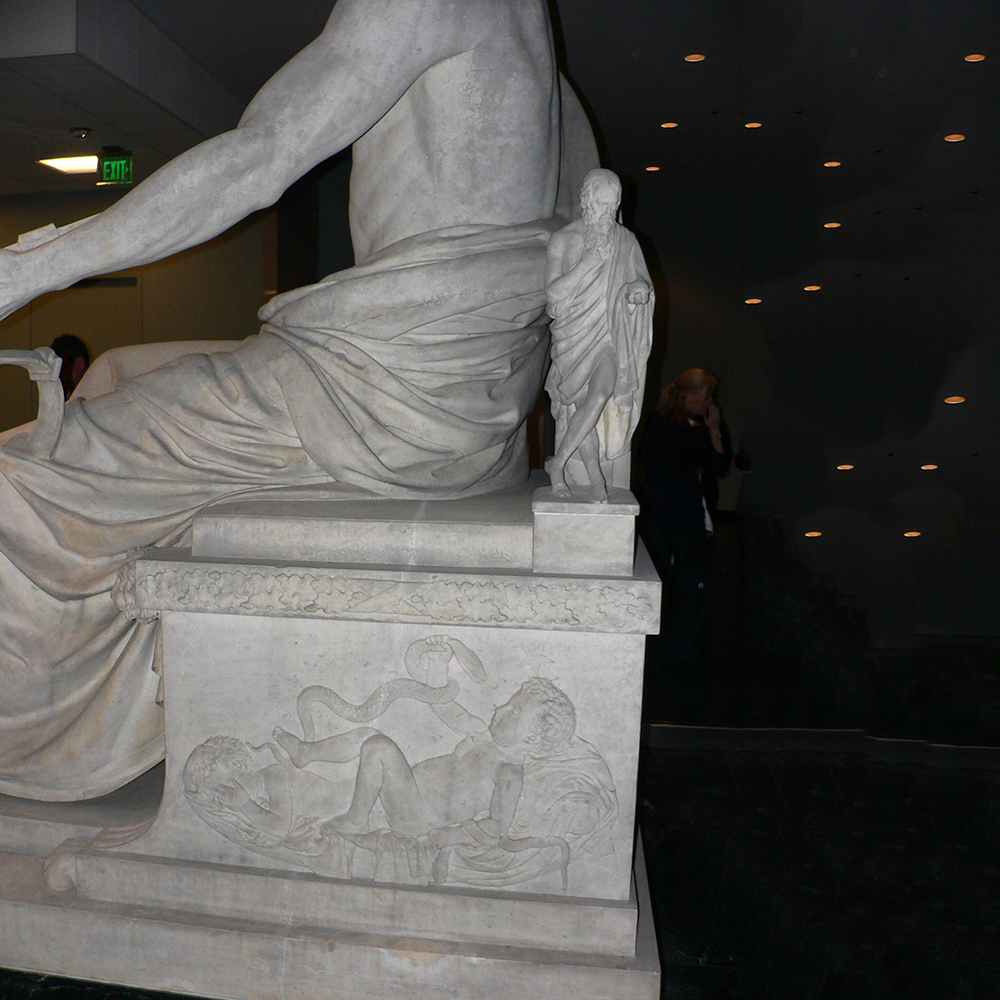
The controversy primarily centered on Horatio Greenough’s overly classical portrayal of Enthroned Washington:
- The semi-nude pose caused discomfort: Washington was depicted shirtless, wearing sandals and a classical robe, a stark contrast to the military or formal attire familiar to Americans at the time. Many viewers felt this depiction was “unsuitable” for the first president.
- Resembling Zeus, not Washington: Greenough clearly borrowed the seated posture and mythical composition of the ancient Greek Olympian Zeus. The artist’s intention was to portray Washington as a free hero ahead of his time, but the public was more likely to see him as “Washington dressed like a Greek god.”
- Conflict with American aesthetic sensibilities: At the time, European Neoclassicism often used heroic nudity to depict heroic figures, but this allegorical and idealized artistic language was less accepted by the American public, even becoming an object of ridicule and mockery.
- Ultimately removed from Capitol Rotunda: The george washington statue was installed in U.S. Capitol Rotunda in 1841, only to be moved to Capitol Grounds in 1843. It moved several times afterward, finally settling in Smithsonian in 1908.
What Statue Was Horatio Greenough’s George Washington Based on?
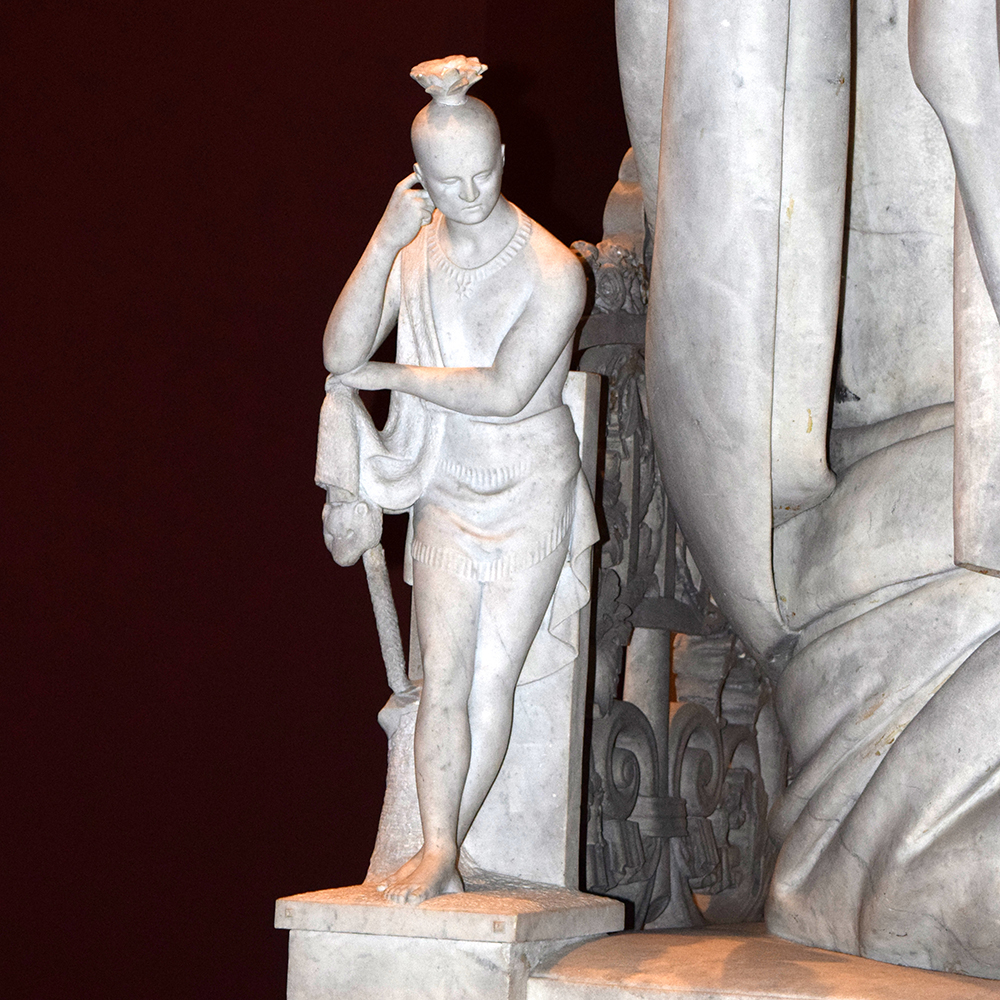
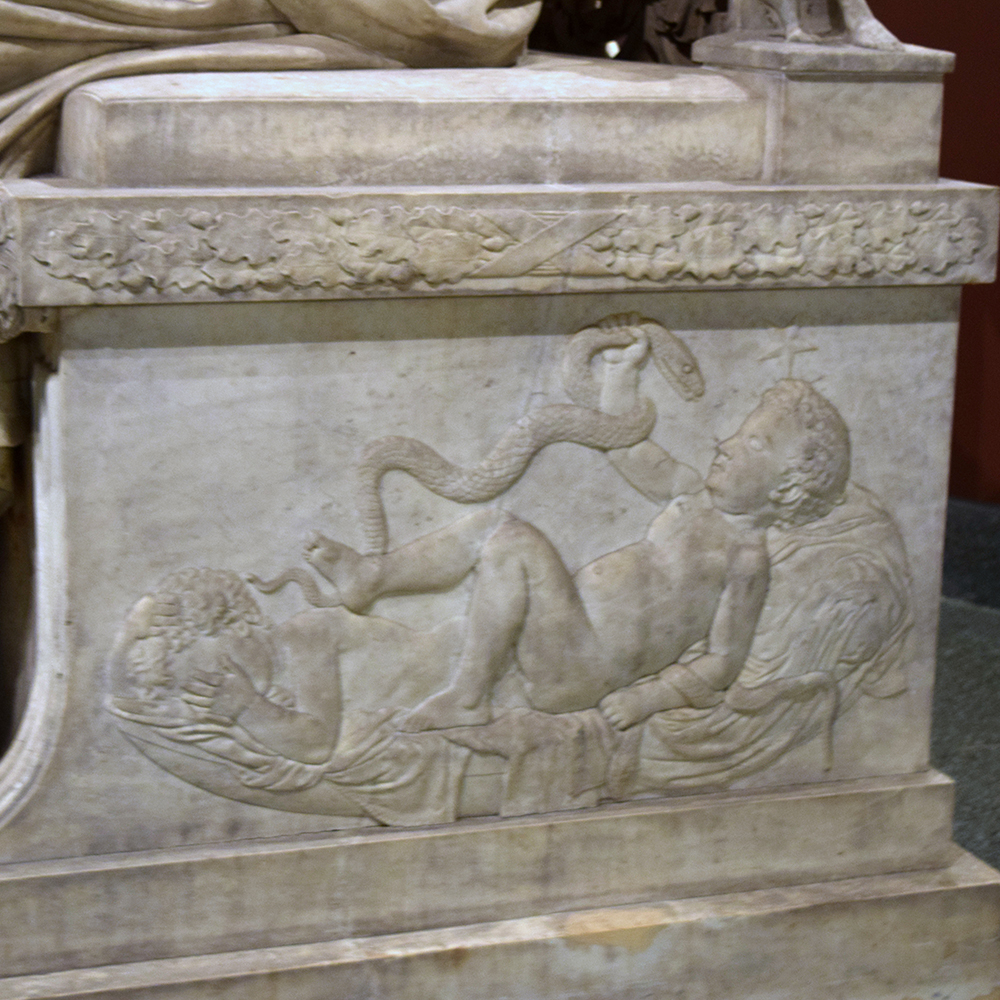
Greenough’s composition was directly influenced by the Olympian Zeus created by the ancient Greek sculptor Phidias. The original was one of the Seven Wonders of the Ancient World, which is now lost, but its seated posture, throne, and the composition of the deity with outstretched arms are widely known through ancient documents and later images.
Top 3: George Washington Canova
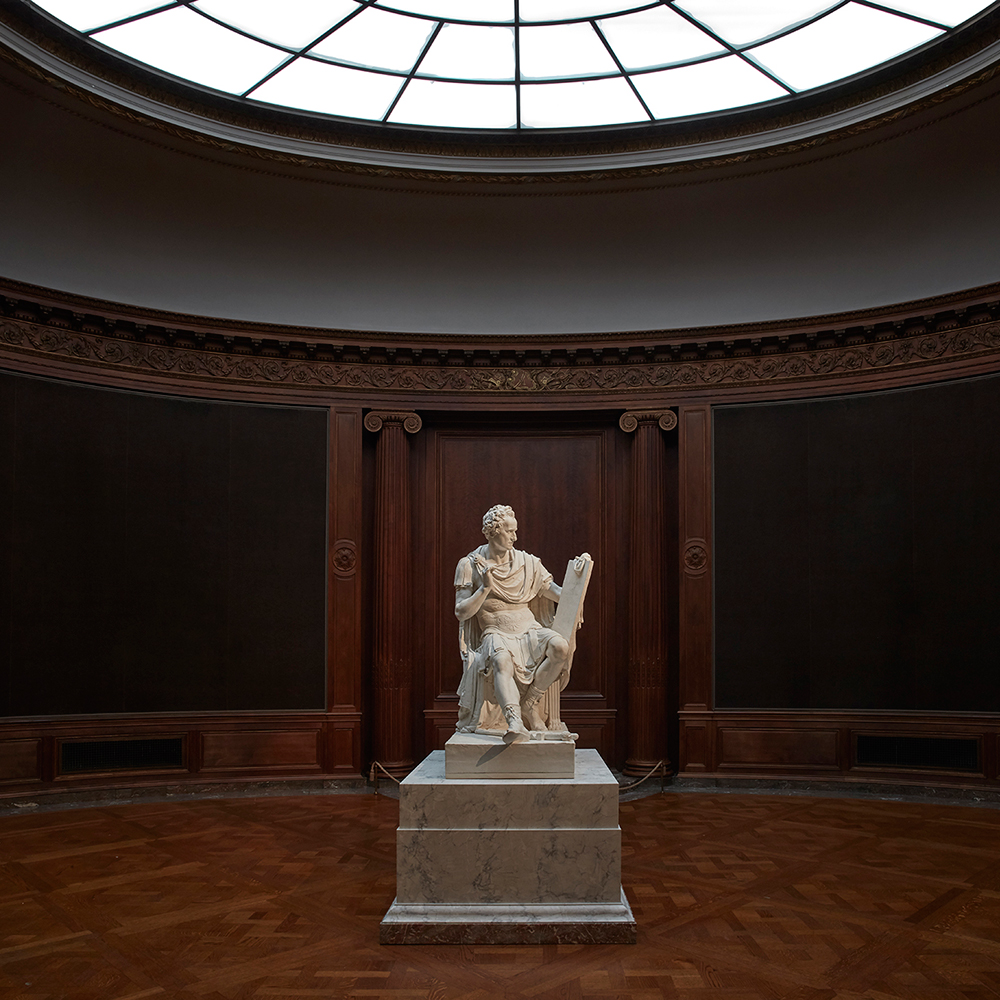
- Sculptor: Antonio Canova
- Date: Commissioned in 1816; created 1817–1820; installed in 1821; original destroyed in 1831; marble reproduction installed in 1970.
- Material: Carrara marble
- Size: Life-size / slightly larger than life-size; the existing full-size plaster modello is approximately 66 9/16 in (169 cm) tall.
- Style: Neoclassical sculpture
- Original Location: North Carolina State House, Raleigh, North Carolina
- Current Version: 1970 marble reproduction by Romano Vio
- Current Location: Rotunda, North Carolina State Capitol, Raleigh
- Subject: George Washington drafting his Farewell Address
Background
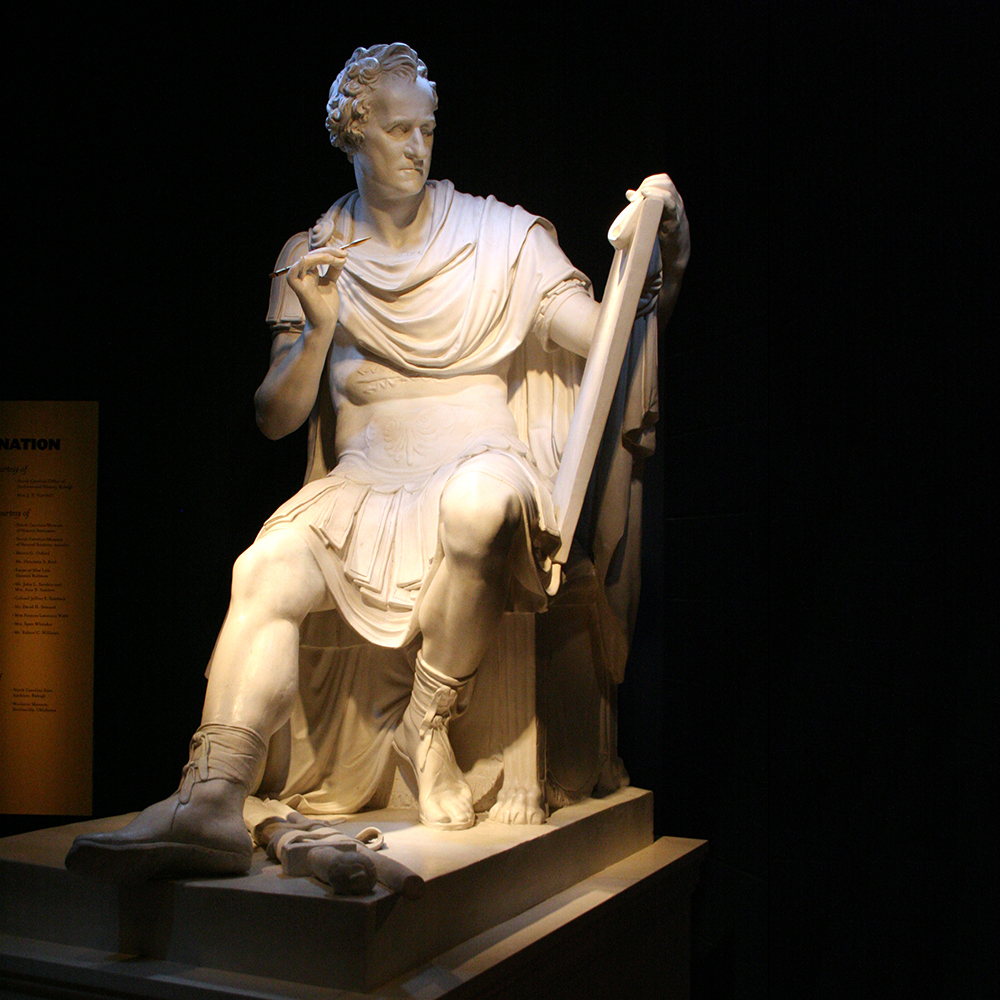
This work is the only sculpture created for the United States by the Italian Neoclassical master Antonio Canova. In 1816, North Carolina commissioned Antonio Canova to create a statue of George Washington, and Thomas Jefferson suggested using ancient Roman clothing. Since Canova had never seen Washington, he mainly referenced Giuseppe Ceracchi’s bust of Washington based on the real person to sculpt the face.
What Does Canova’s George Washington Look Like?
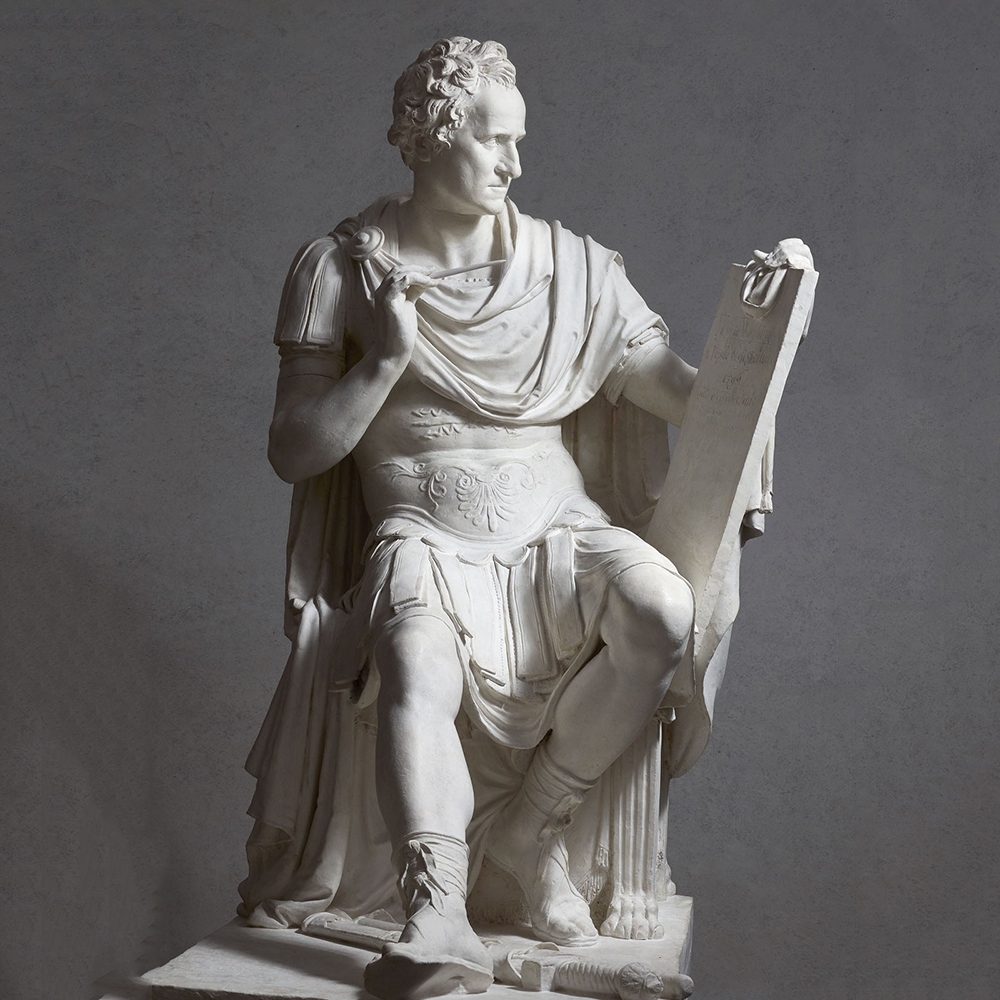
Washington is depicted not standing or riding a horse, but seated in a classical chair, leaning slightly forward. He wears all’antica Roman armor, his legs are bare and he wears sandals, and he holds a pen in his right hand and a writing tablet in his left, suggesting that he is drafting text. At his feet are objects related to his military identity, such as a sword.
What Is George Washington Writing?
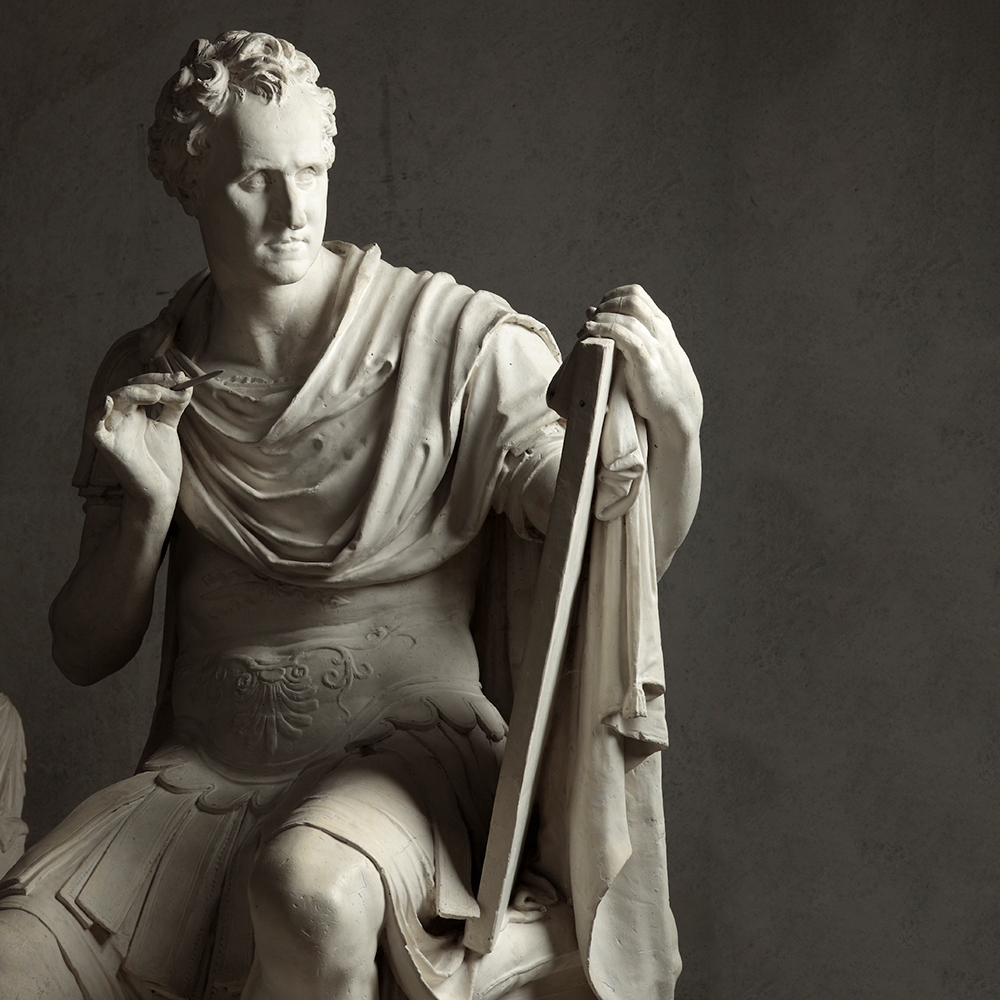
The Canova depicts Washington drafting his 1796 Farewell Address. Washington voluntarily stepped down from the presidency after serving two terms, so the emphasis here is not on military victory, but on his voluntary relinquishment of political power.
The final plaque on the marble george washington statue bears Washington’s name, the year 1796, and a tribute to “Friends and Citizens,” clearly pointing to the Farewell Address. Earlier plaster models of the Canova originally featured the Latin phrase “Law, Homeland, Liberty,” but this was ultimately changed to text directly related to historical events concerning Washington.
Is the Canova George Washington Statue Original?
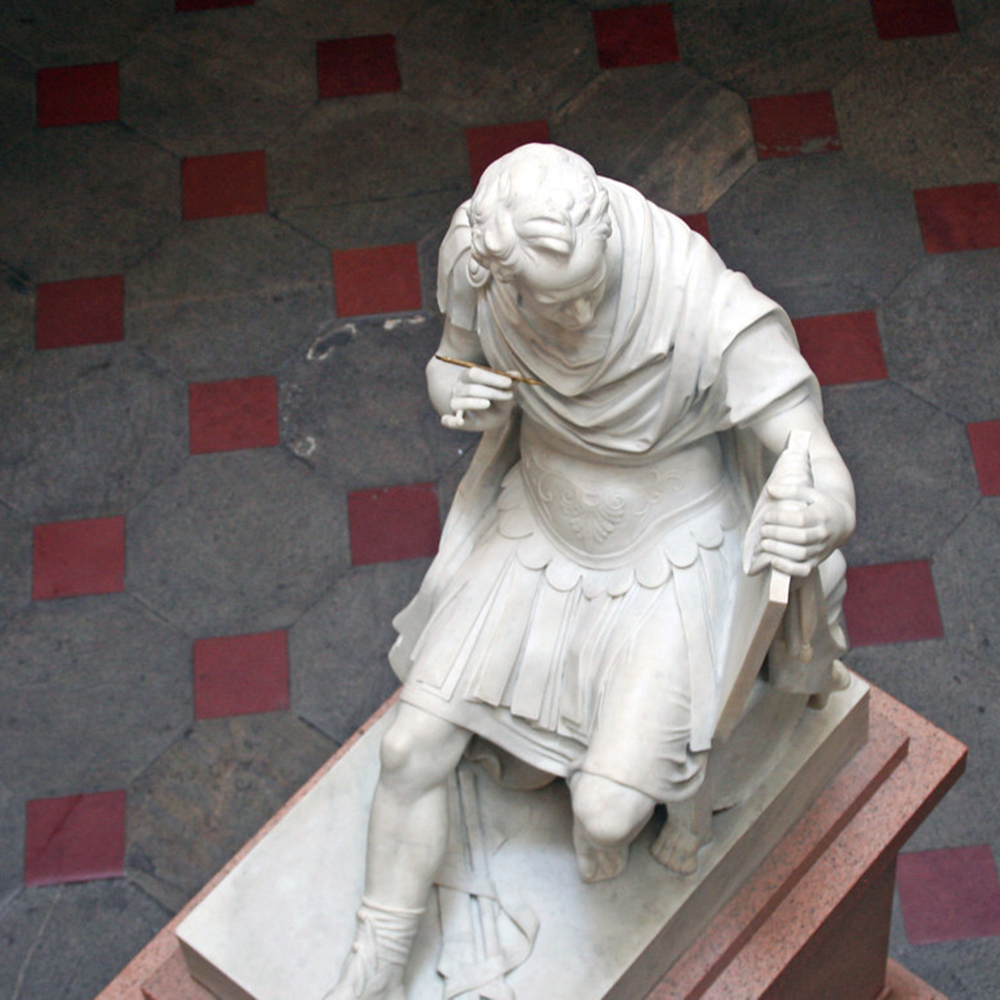
The sculpture now in North Carolina State Capitol is not the original 1820 Canova work.
Canova’s original Carrara marble arrived in Raleigh in 1821 and was solemnly unveiled on December 24th. However, a fire at North Carolina State House in 1831 severely damaged the building and the sculpture, shattering the original and leaving only a few fragments.
Fortunately, Canova preserved a complete full-size plaster model in Italy. In 1970, North Carolina commissioned Italian sculptor Romano Vio to re-carve a marble version based on this model, which was then placed in the Rotunda at what is now North Carolina State Capitol.
Top 4: George Washington Statue on Wall Street
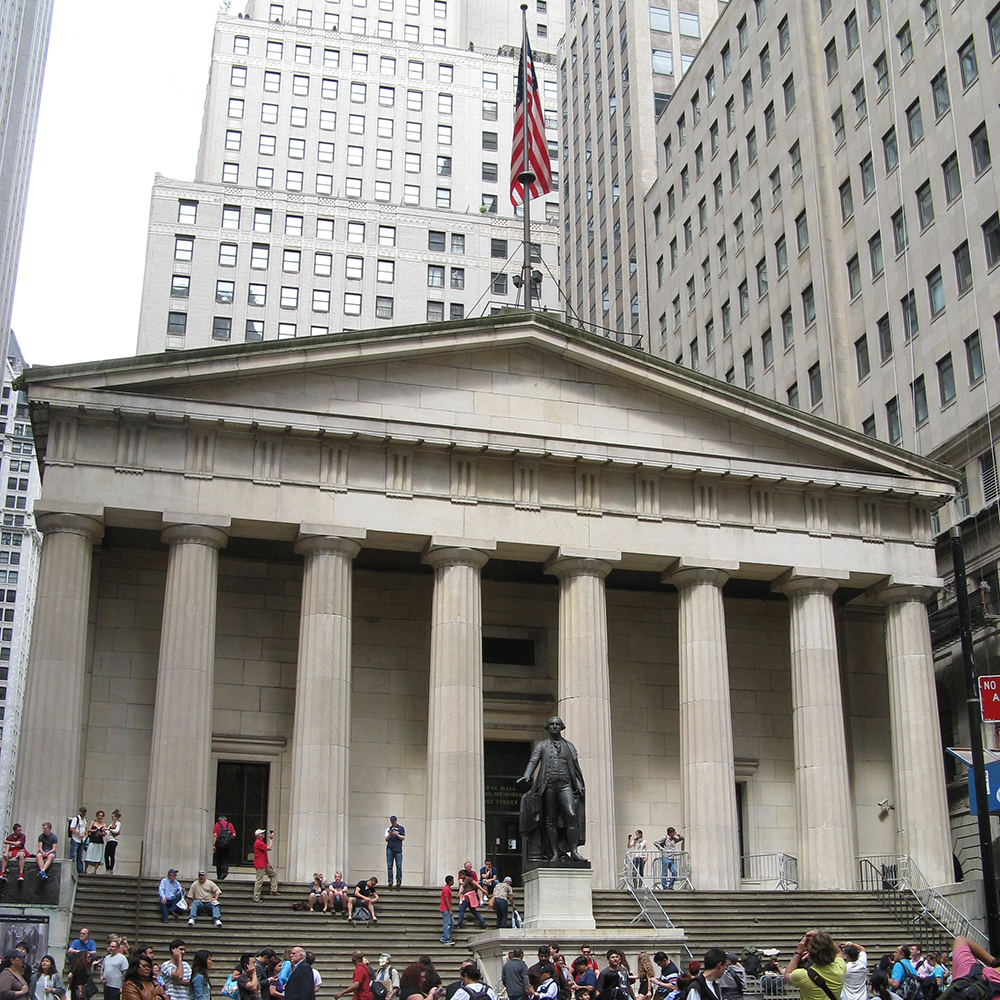
- Sculptor: John Quincy Adams Ward
- Date: Final model developed around 1882; dedicated on November 26, 1883
- Material: Bronze with black patina
- Height: About 12 ft / 3.66 m
- Base: White granite
- Pedestal Architect: Richard Morris Hunt
- Location: Federal Hall National Memorial, 26 Wall Street, New York City
- Subject: George Washington at his first presidential inauguration
Background
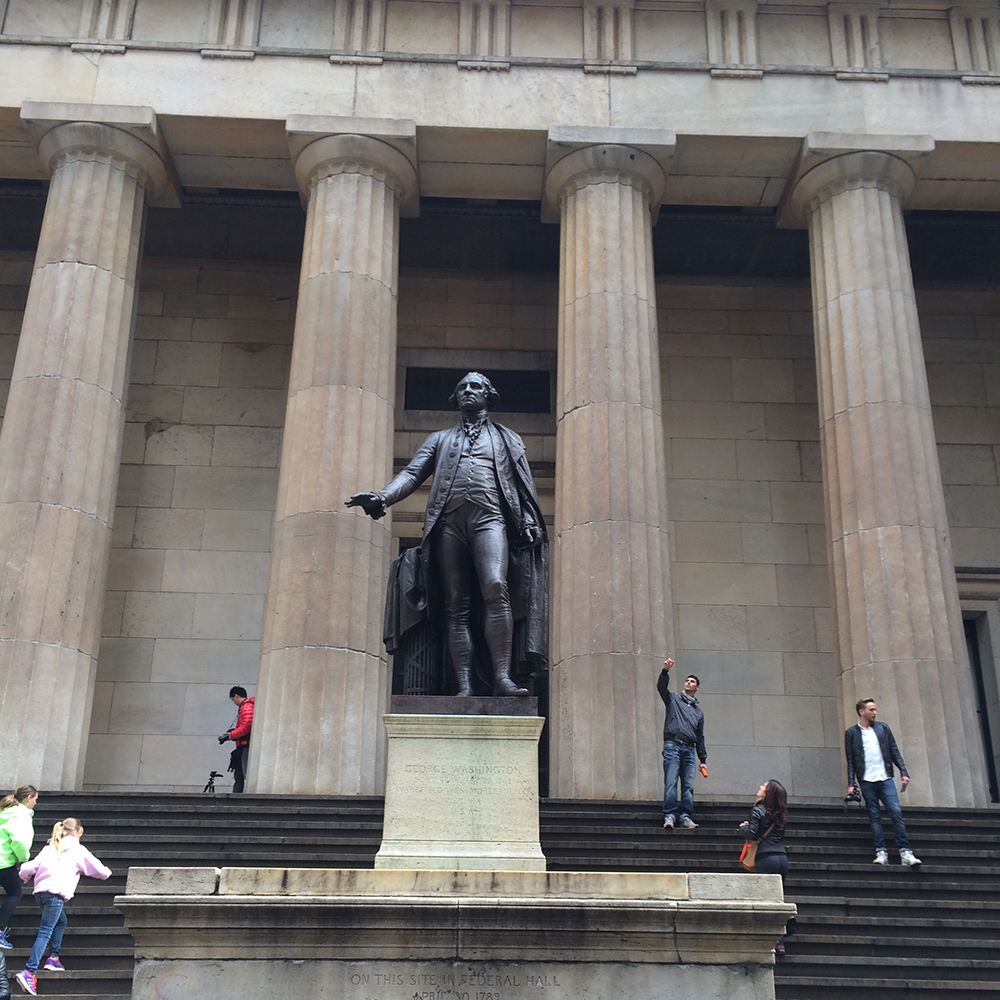
This george washington statue commemorates the historic event of George Washington’s inauguration as the first President of the United States on April 30, 1789. Around 1880, the New York Chamber of Commerce commissioned the creation of this memorial sculpture and selected American sculptor John Quincy Adams Ward to create it. The work was officially unveiled in 1883, placed on the steps of Federal Hall, roughly corresponding to the location where Washington held his inauguration ceremony.
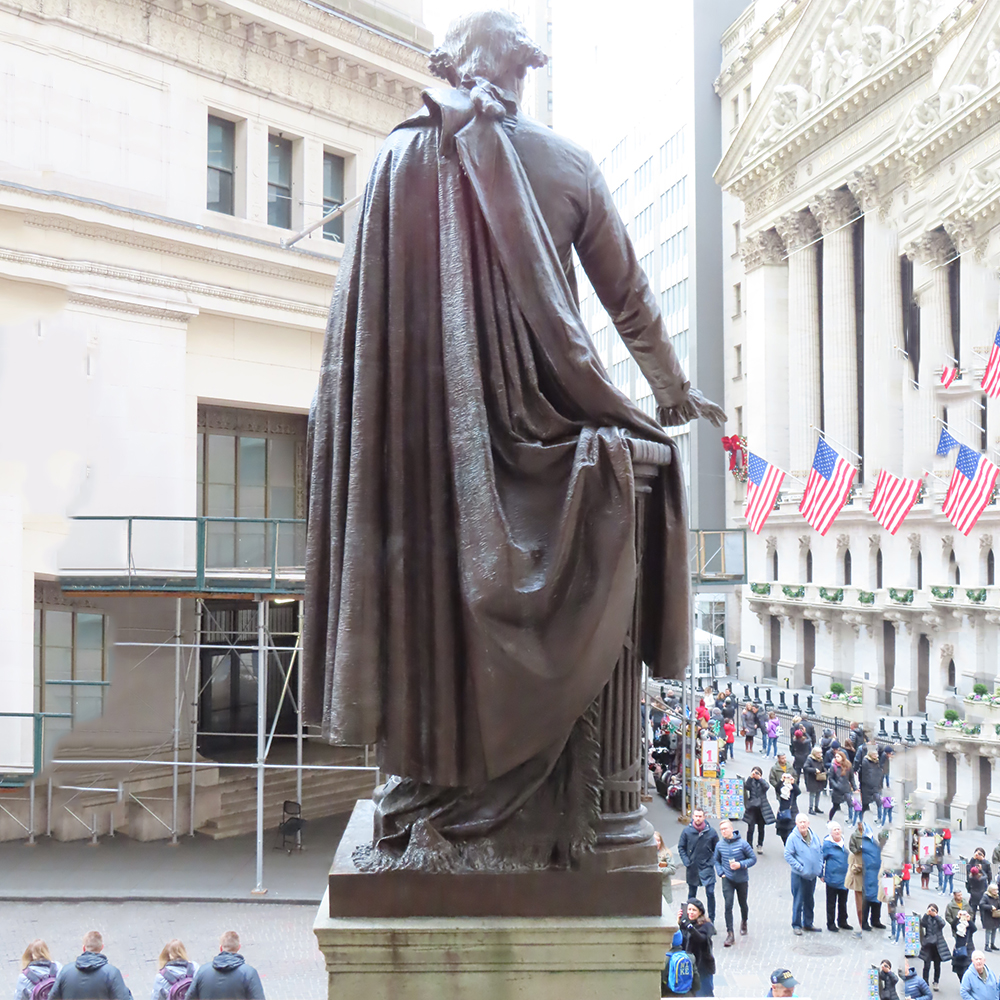
It’s important to note that the Federal Hall we see today is not the original building from 1789. The original Federal Hall was later demolished; the current Greek Revival building opened in 1842 as the U.S. Customs House, and the sculpture utilizes this historical site to commemorate the first president’s inauguration.
What Does the George Washington Statue Look Like?
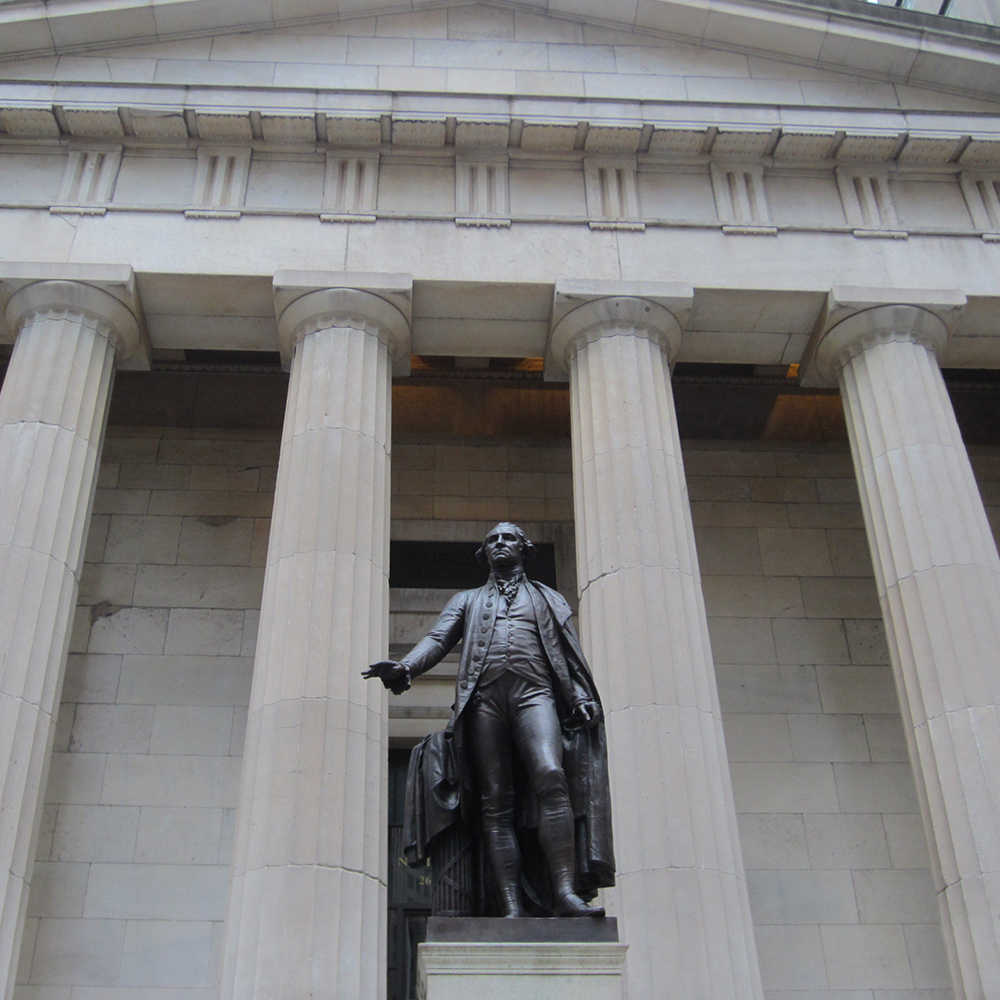
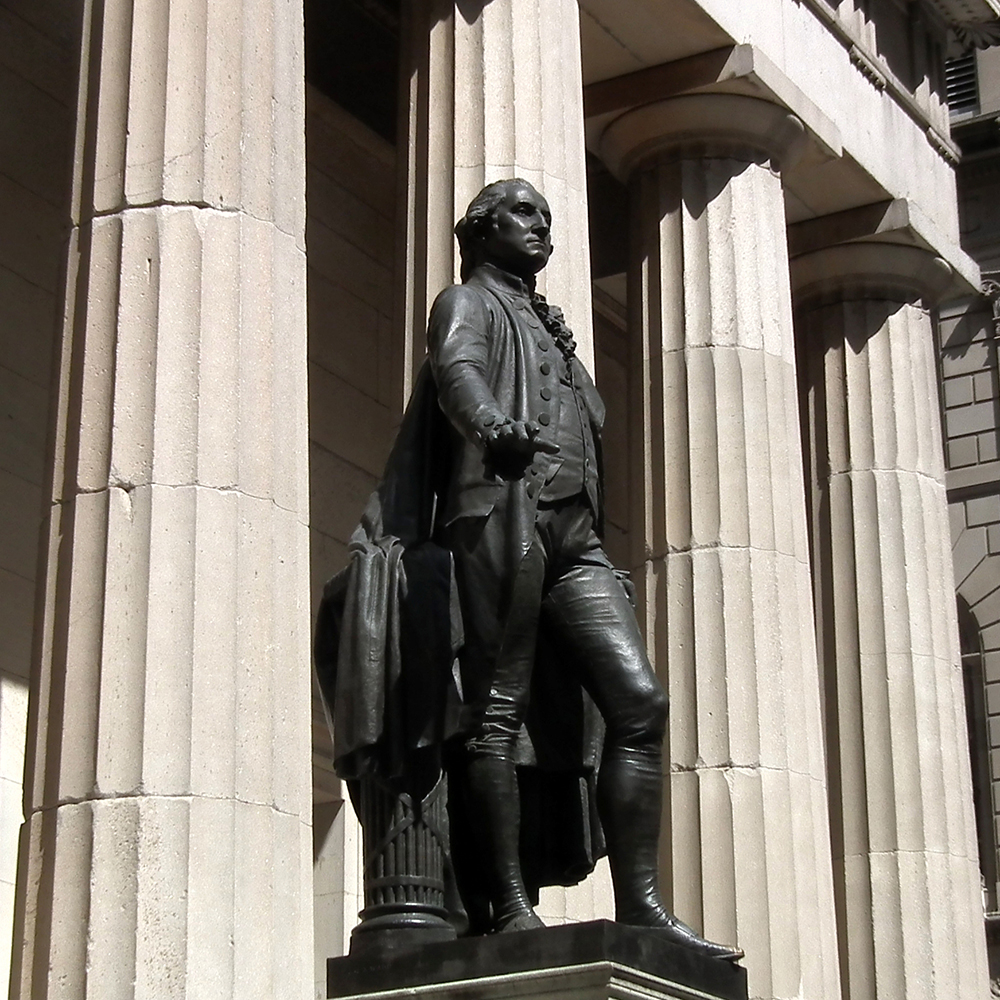
Washington is depicted in a standing full-length statue, dressed in 18th-century formal attire and a cape. The most striking feature is his right hand extended forward. This gesture is not a typical speaking pose, but directly corresponds to the presidential oath-taking scene: the image depicts Washington at the moment of his inauguration, with his outstretched right hand pointing towards the spot where the Bible was originally placed.
Top 5: Baltimore George Washington Monument
- Architect: Robert Mills
- Sculptor: Enrico Causici
- Date: Construction began in 1815; Washington statue installed in 1829
- Material: Marble
- Statue Height: About 14 ft / 4.3 m
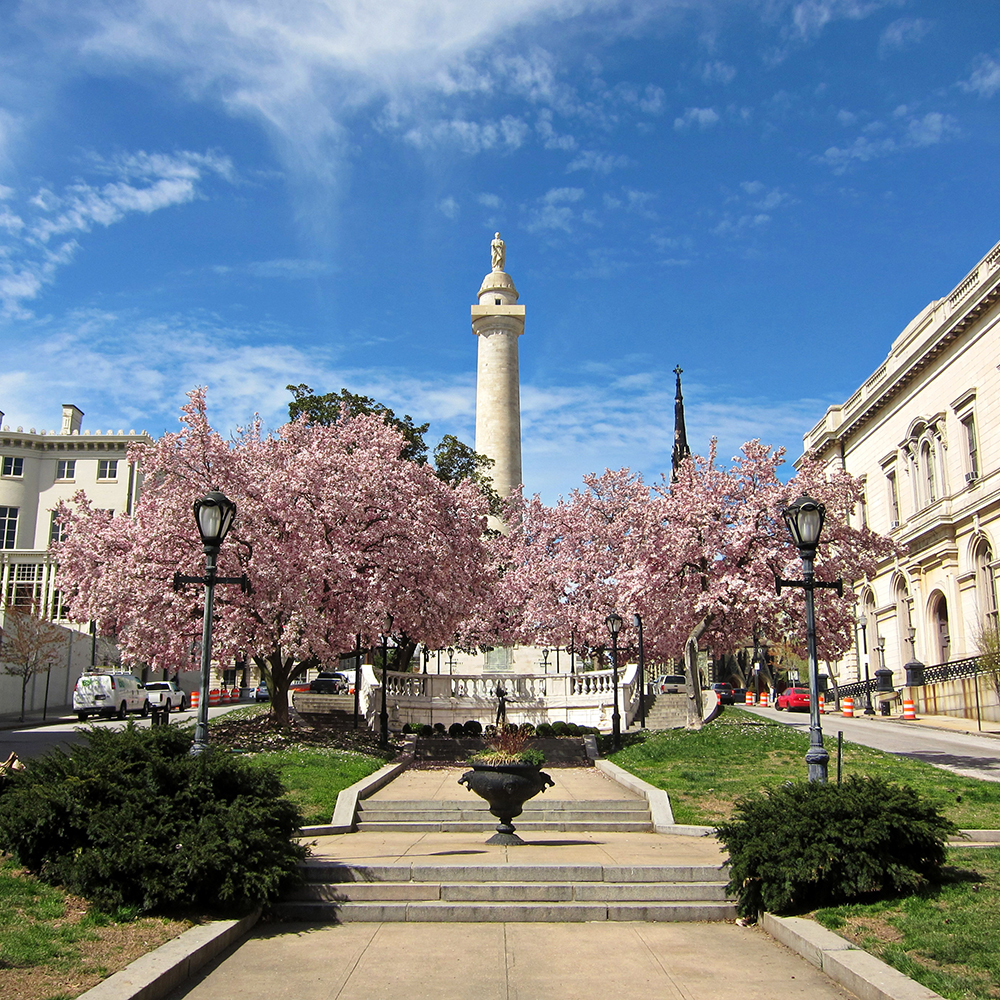
- Monument Height: About 178 ft / 54 m
- Style: Neoclassical monument
- Location: Mount Vernon Place, Baltimore, Maryland
- Subject: George Washington resigning his military commission
What is the history of the Washington Monument in Baltimore?
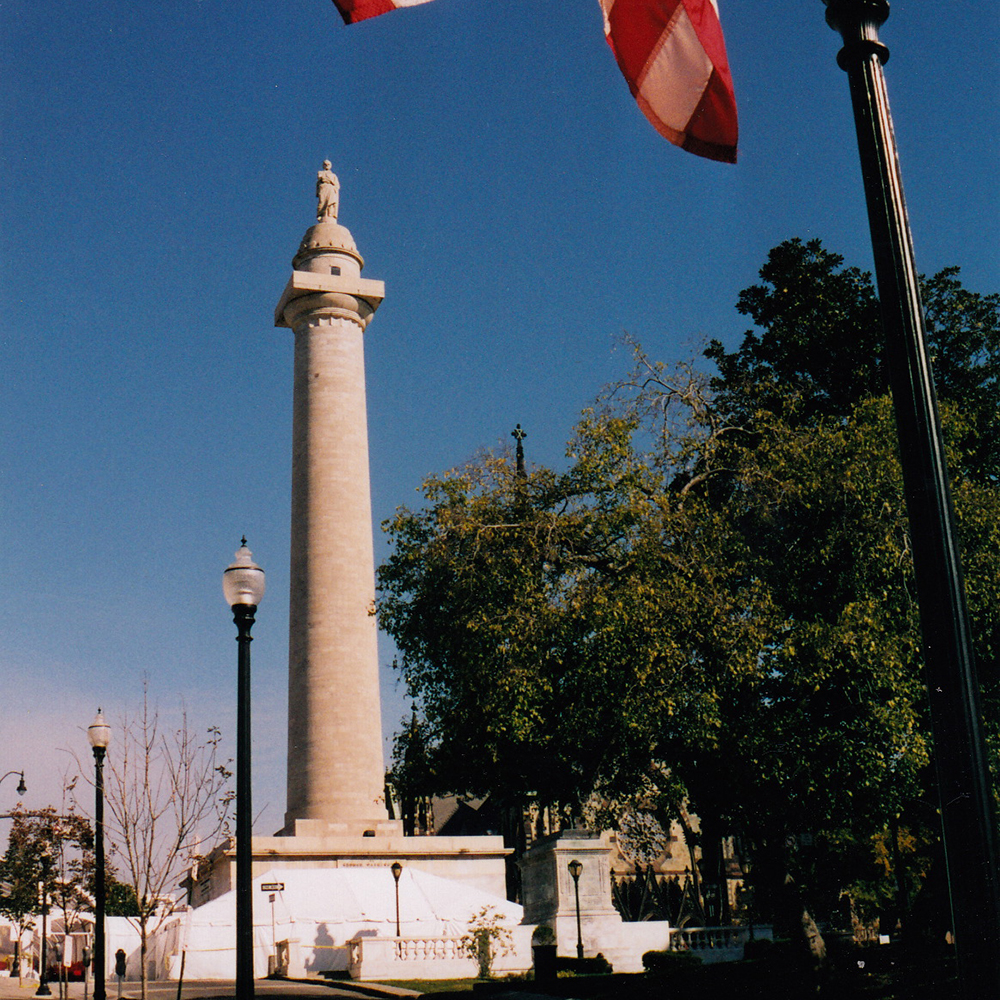
The Washington Monument in Baltimore is one of the earliest large-scale public monuments built in the United States in honor of George Washington.
- 1813: A design competition was held in Baltimore, and architect Robert Mills’ design won.
- 1815: Foundation stone was laid on July 4th, making it one of the earliest large-scale public monuments built in the United States in honor of George Washington.
- 1824: The base, doric column, and capitals were largely completed, but the project had exceeded the budget, so the original design was simplified.
- 1826–1829: Italian sculptor Enrico Causici was commissioned to create the marble statue of Washington at the top.
- 1829: The statue was hoisted to the top of the column, and the monument was essentially completed. Washington was depicted resigning as Commander-in-Chief of the Continental Army, holding the military commission, and facing Annapolis.
- Later Influence: Robert Mills later designed the more famous Washington Monument in Washington, D.C., so Baltimore is considered an important precedent for his monumental architectural designs.
- 2014: The monument underwent a complete restoration.
What Does the Baltimore George Washington Monument Look Like?
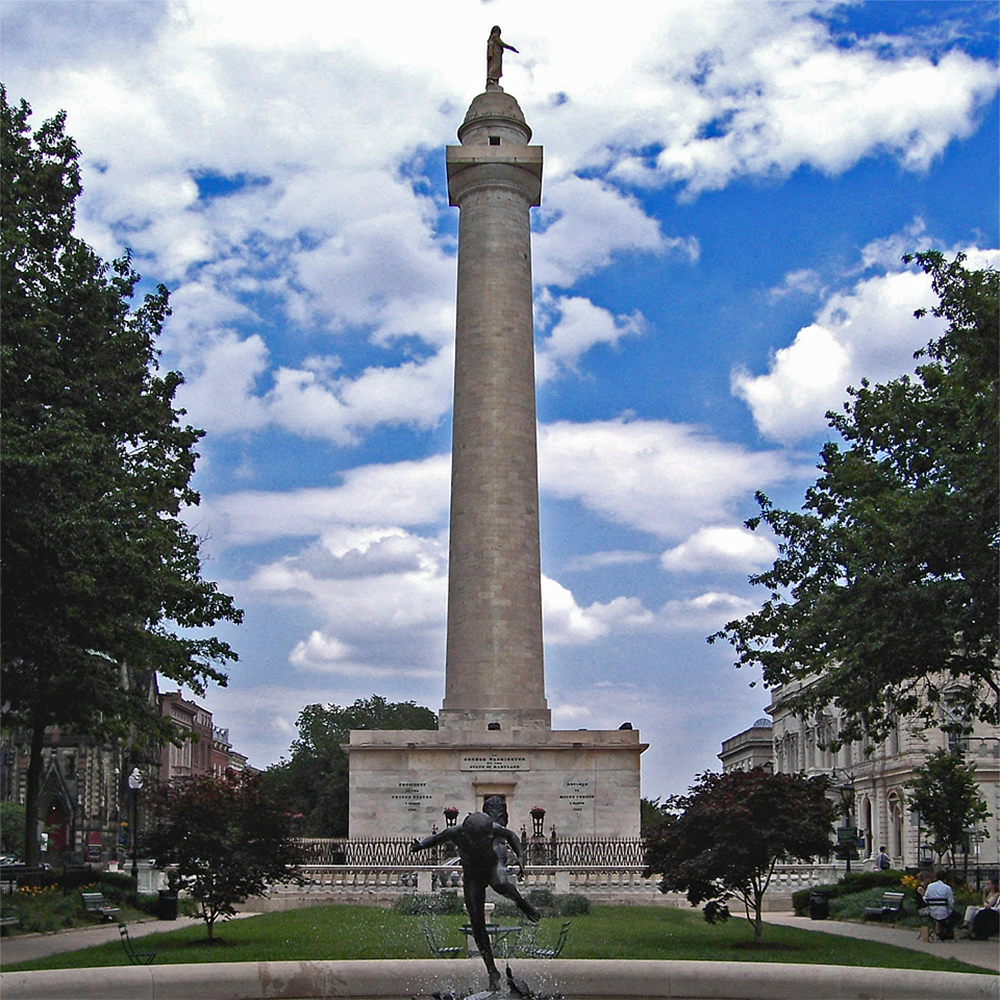
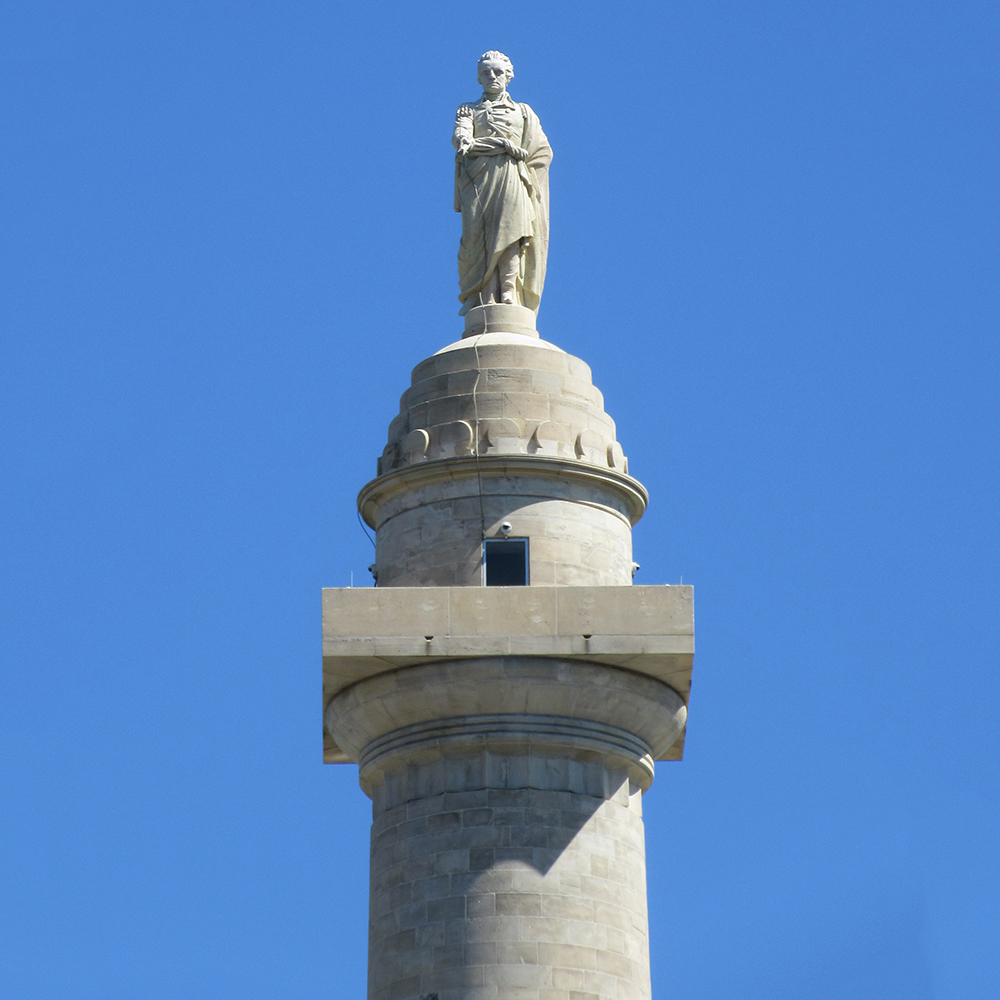
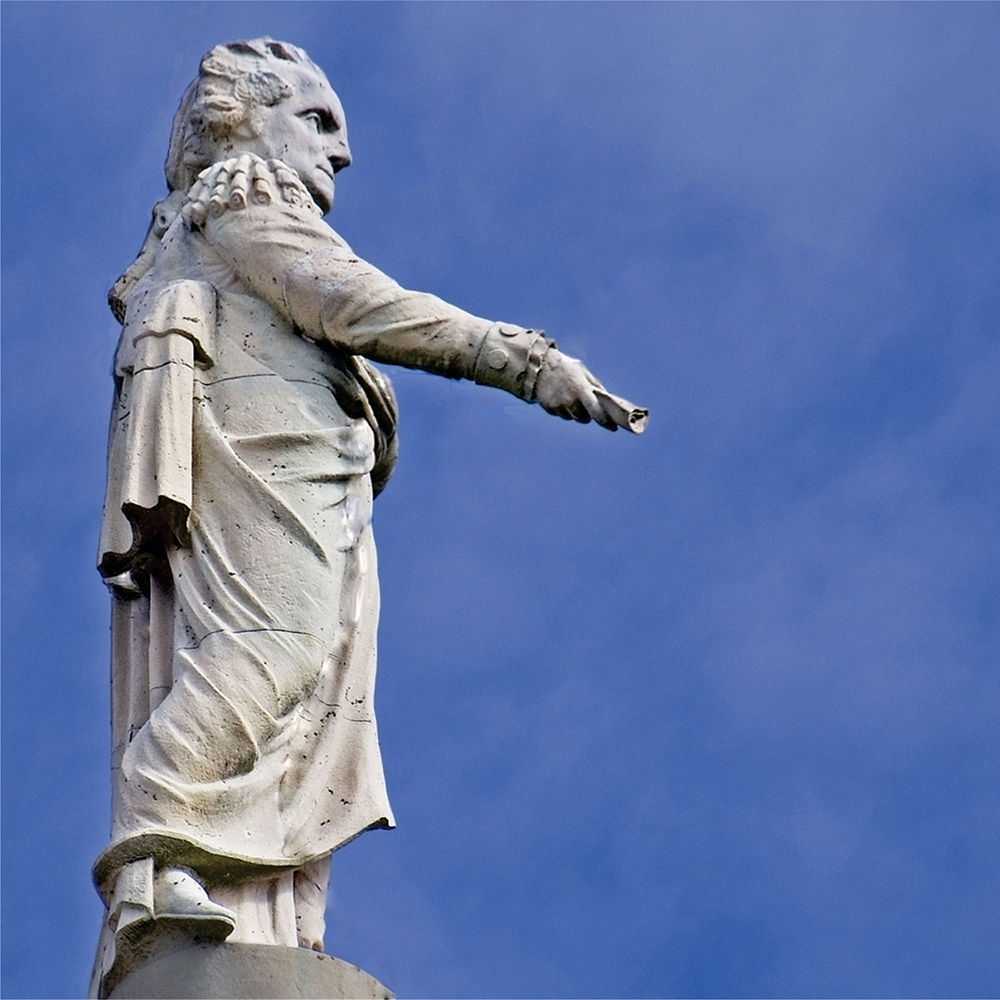
The entire monument features a tall, classical columnar design, with a massive Doric column rising from a square base, topped by a statue of Washington. The figure is dressed in Revolutionary War uniform, draped in a classical cloak, with his right arm outstretched, holding a scroll, and his left hand at his side.
What Is Washington Holding in His Hand?
Washington’s outstretched right hand holds a scroll symbolizing his military commission.
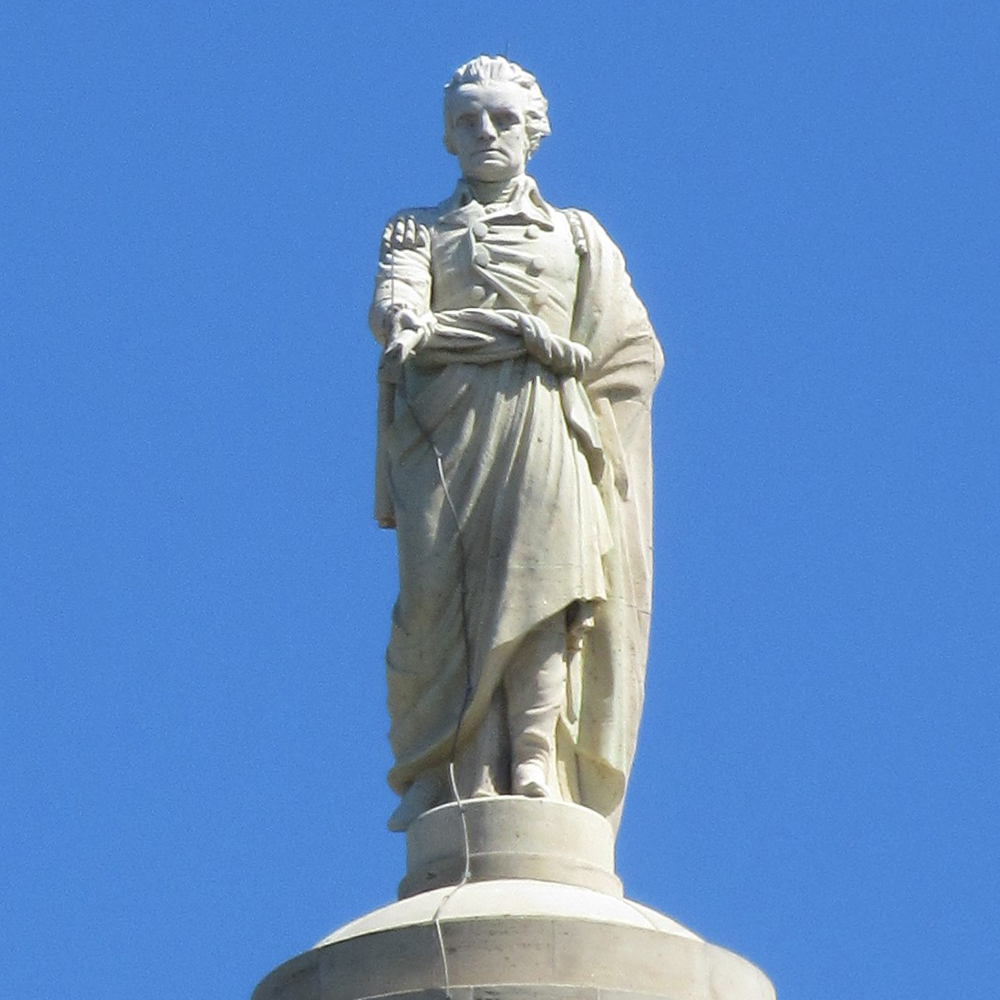
On December 23, 1783, after the American Revolutionary War had largely ended, Washington formally resigned his position as Commander-in-Chief to Continental Congress in the Old Senate Chamber of Maryland State House. The george washington statue depicts this moment when he relinquished military power.
Why Does the Statue Face Annapolis?
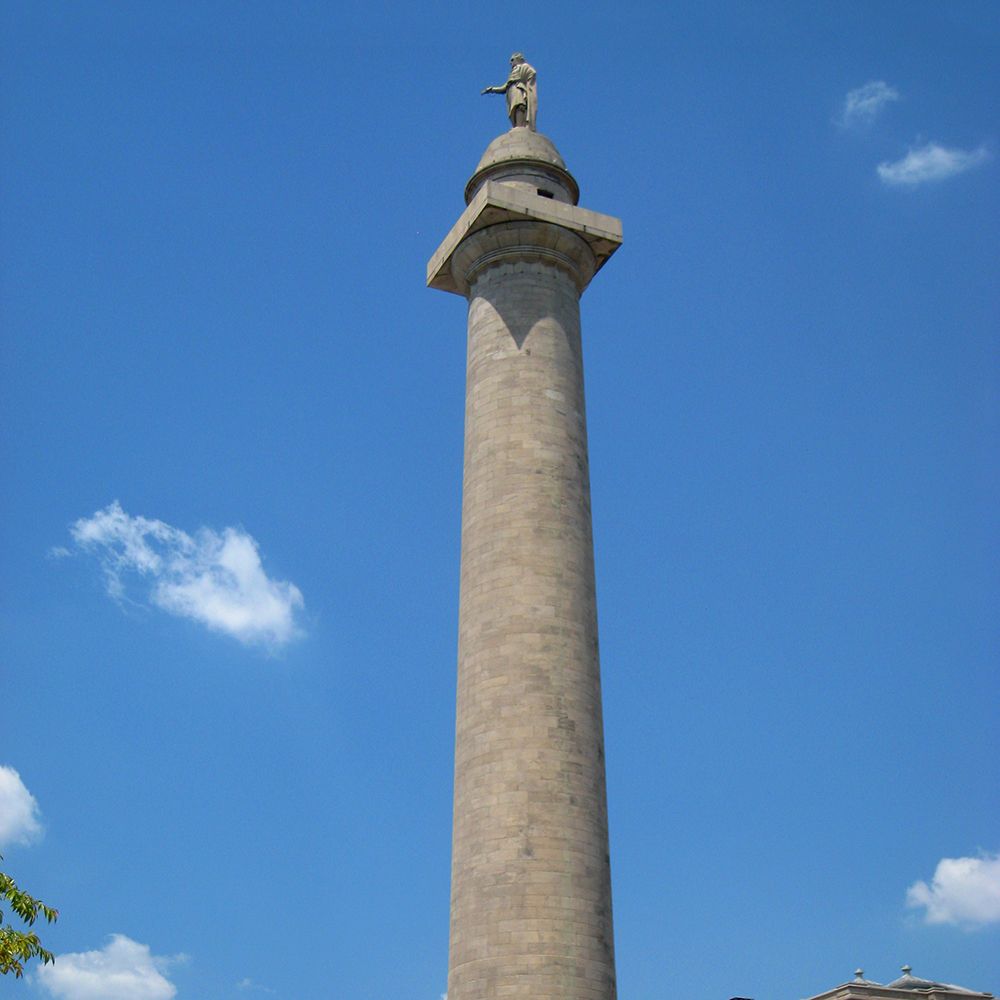
This is also a very special design feature of the monument.
The Washington statue faces Annapolis—the very place where he resigned as Commander-in-Chief of the Continental Army in 1783. The outstretched commission of the figure also faces this direction, creating a direct connection between the statue, the historical event, and the actual geographical location.
Top 6: Washington Crossing the Delaware Statue
- Sculptor / Carver: Frank Arena, with stone carvers from Woolery’s Stone Co.
- Date: Created mainly in 1975–1976; presented for the U.S. Bicentennial in 1976
- Material: Limestone
- Size: About 17.5 ft long × 11.6 ft high
- Weight: About 30 tons
- Figures: George Washington and 11 soldiers
- Style: Historical narrative sculpture
- Location: Beside the Washington Crossing Inn, Washington Crossing, Pennsylvania
- Based on: Emanuel Leutze’s 1851 painting Washington Crossing the Delaware
Background
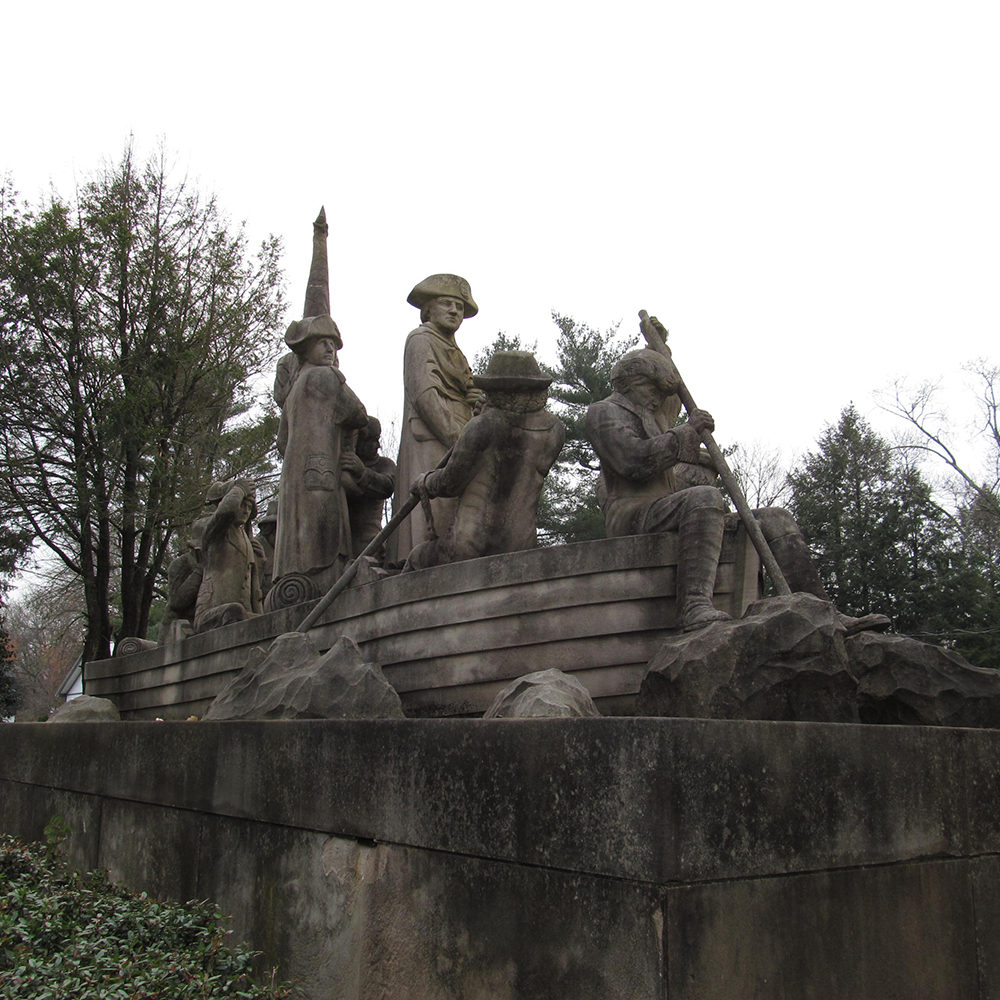
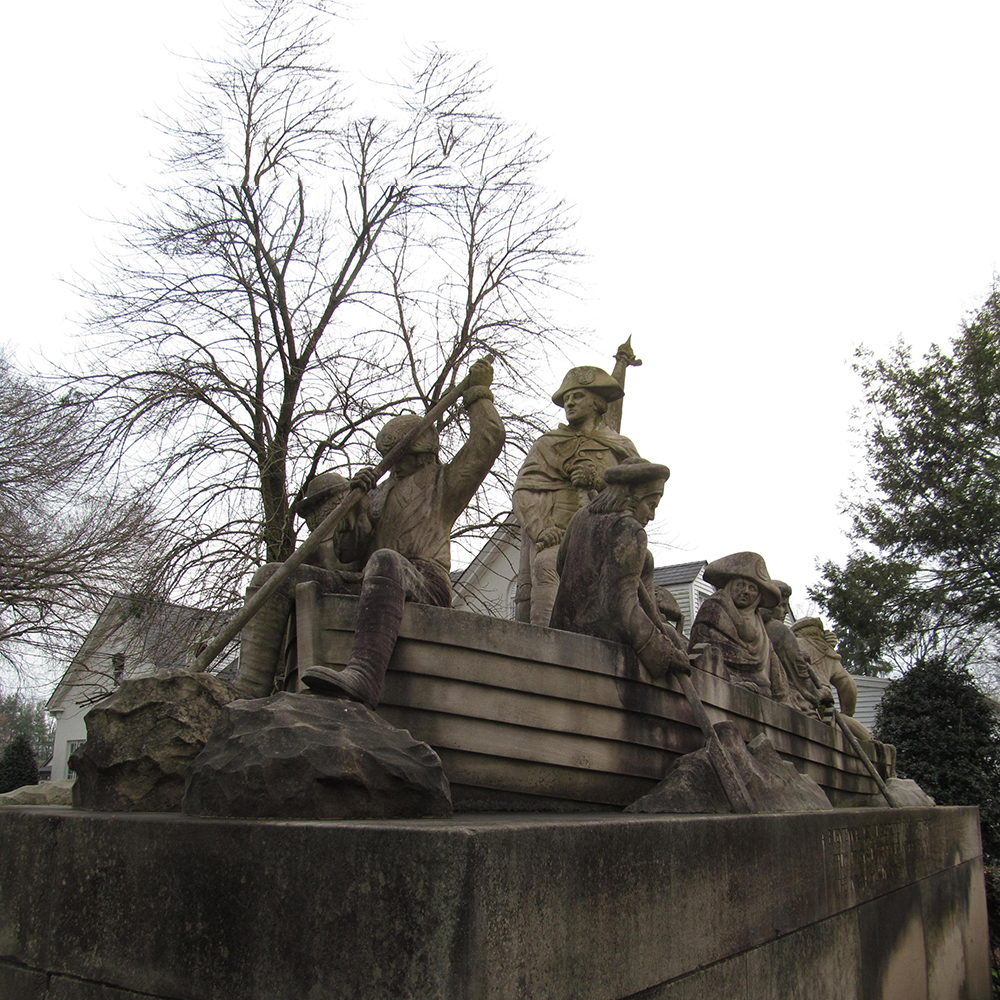
In 1974, as the bicentennial of the United States approached, Merle Edington of Bedford, Indiana, wanted to create a historical monument on behalf of the local community. After meeting with Anne Hawkes-Hutton of the Washington Crossing Foundation, he decided to transform Emanuel Leutze’s famous “Washington Crossing the Delaware” into a large-scale limestone sculpture. The project was completed by a team of stonemasons from Bedford, with Frank Arena responsible for the major details. It was sent to Pennsylvania in 1976 as a bicentennial memorial.
What Does the Washington Crossing the Delaware Statue Look Like?
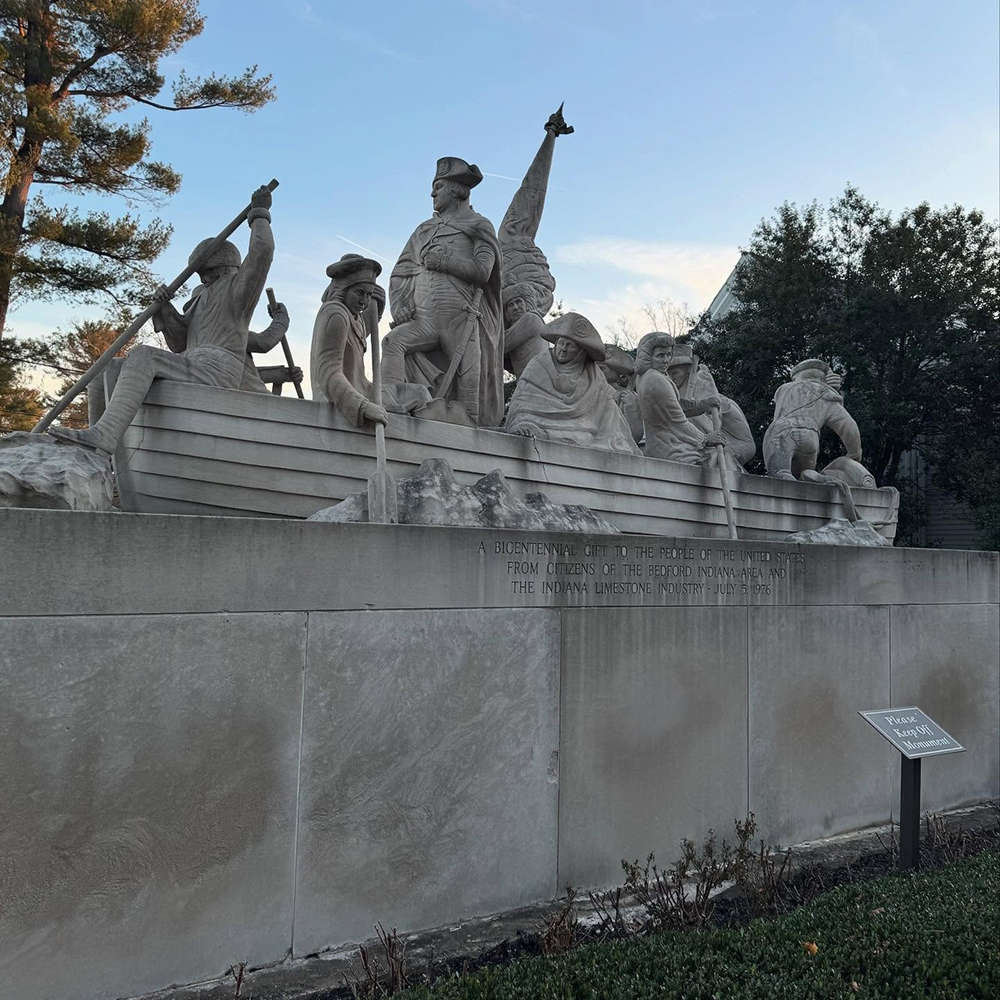
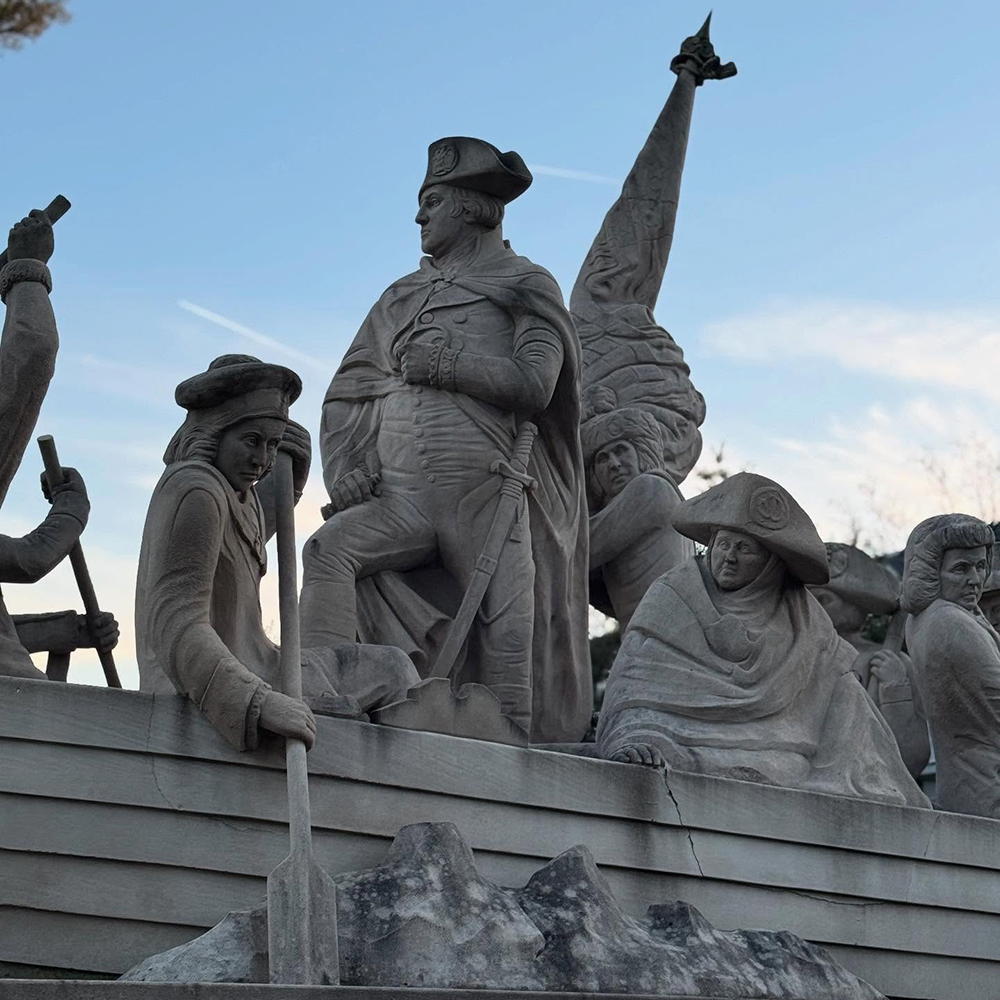
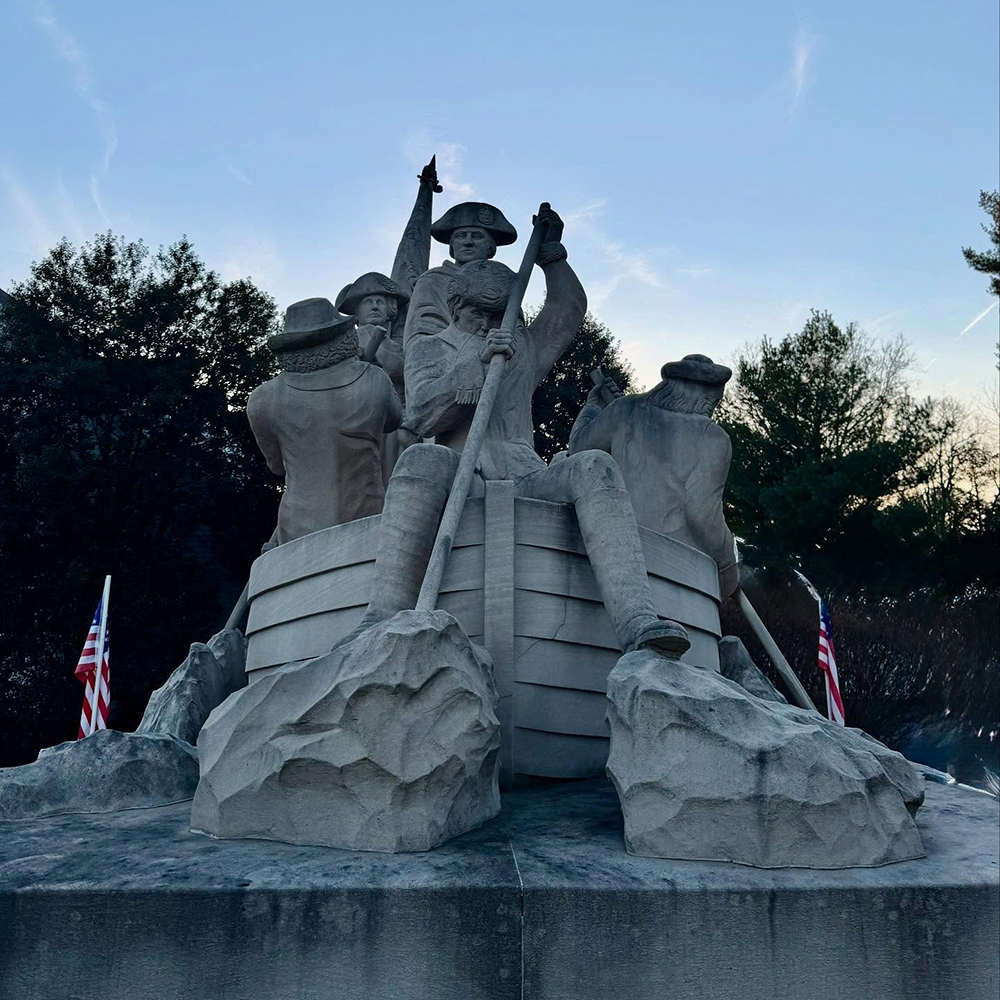
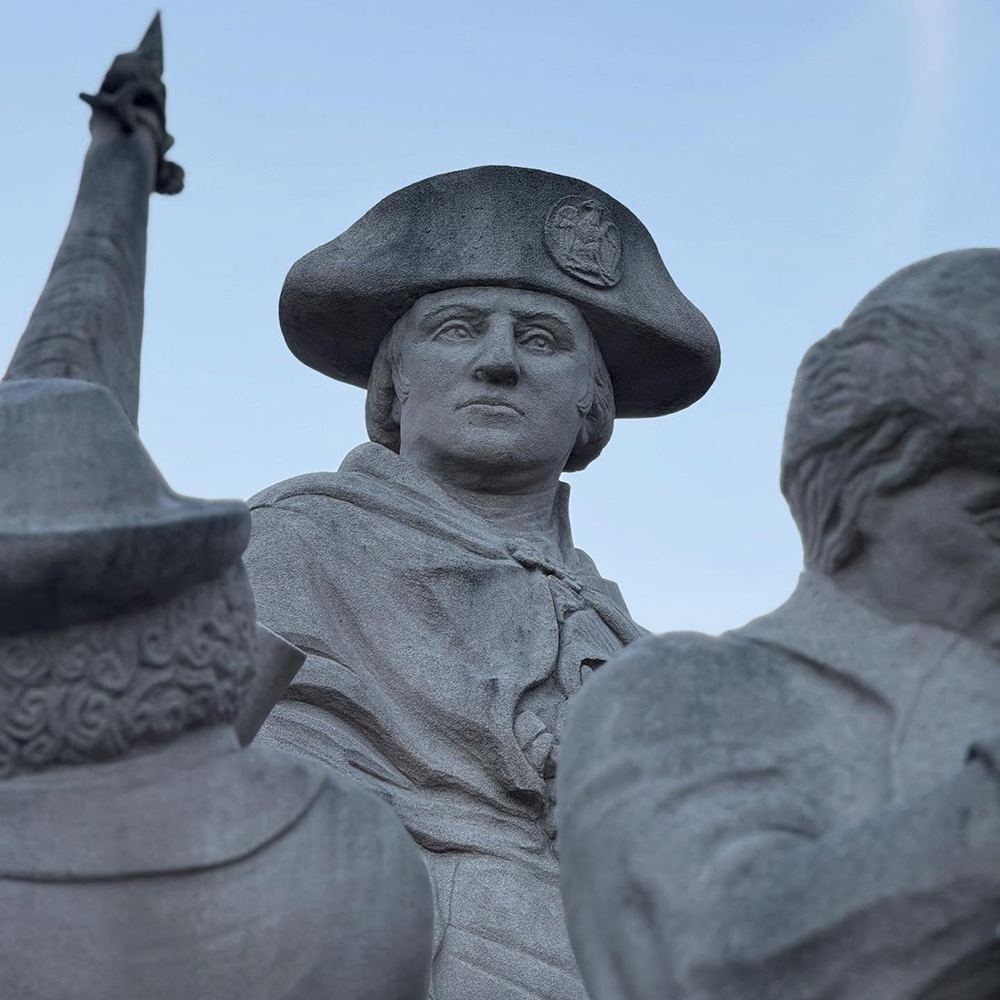
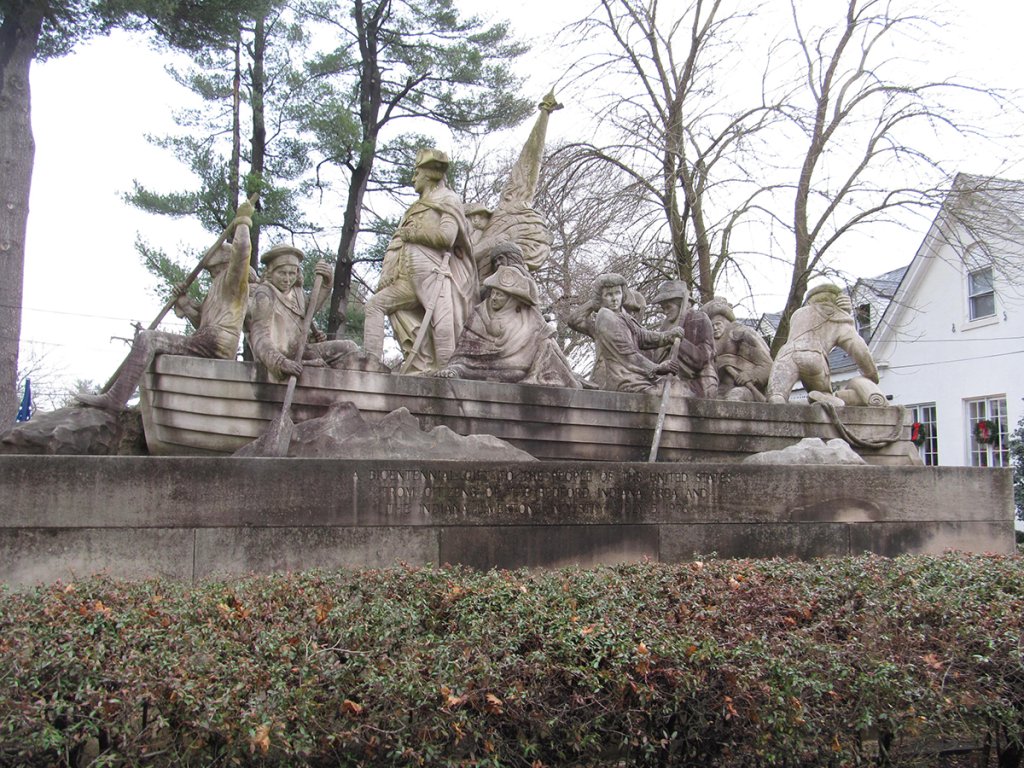
The sculpture group largely continues the most famous composition in Leutze’s painting: George Washington stands upright in the center of the boat, facing forward; 11 soldiers surround the boat, some rowing, some steering, and others holding up the flag. The lower part and sides of the hull are carved into the shape of ice blocks and water, to represent the harsh conditions of crossing the Delaware River in the winter of 1776.
Which Painting Is the Statue Based On?
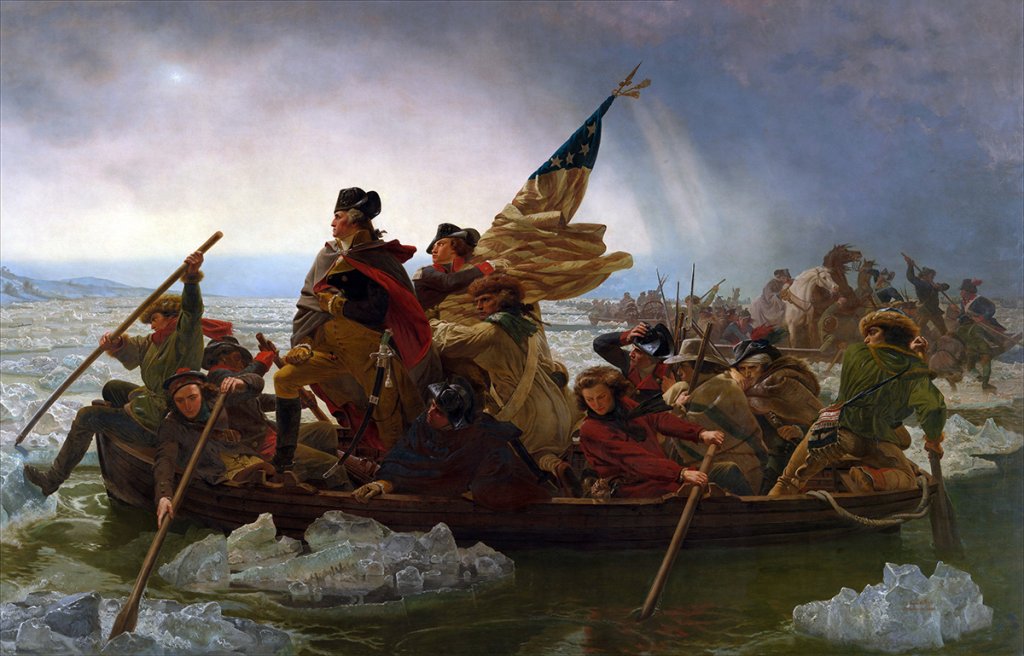
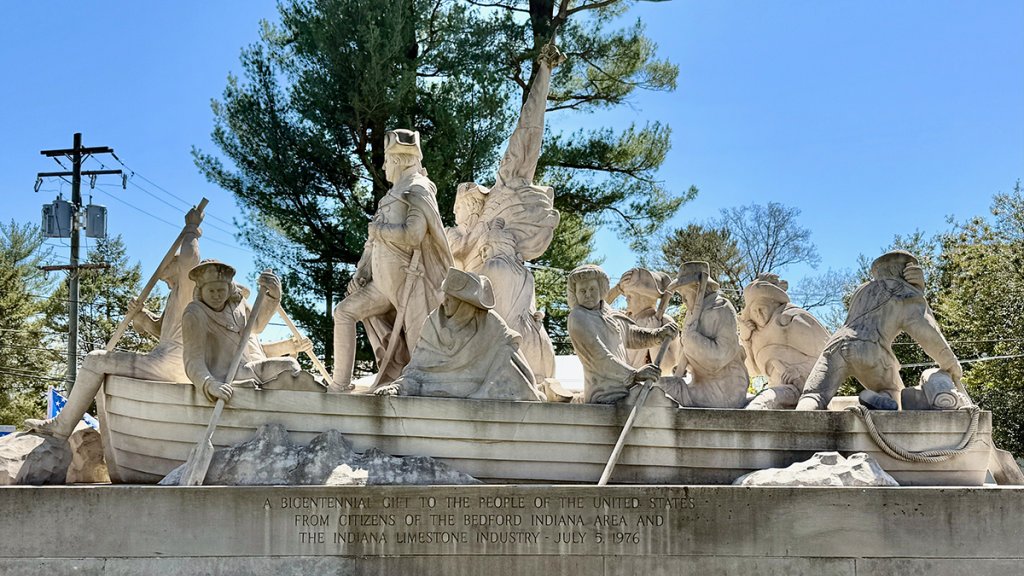
The work is directly based on Washington Crossing the Delaware, painted in 1851 by German-American painter Emanuel Leutze. This painting depicts Washington leading the Continental Army across the Delaware River on the night of December 25, 1776, in preparation for the attack on Trenton, and later became one of the most recognizable historical images of the American Revolutionary War.
Top 7: Equestrian Statue of George Washington (New York City)
- Sculptor: Henry Kirke Brown
- Pedestal Architect: Richard Upjohn
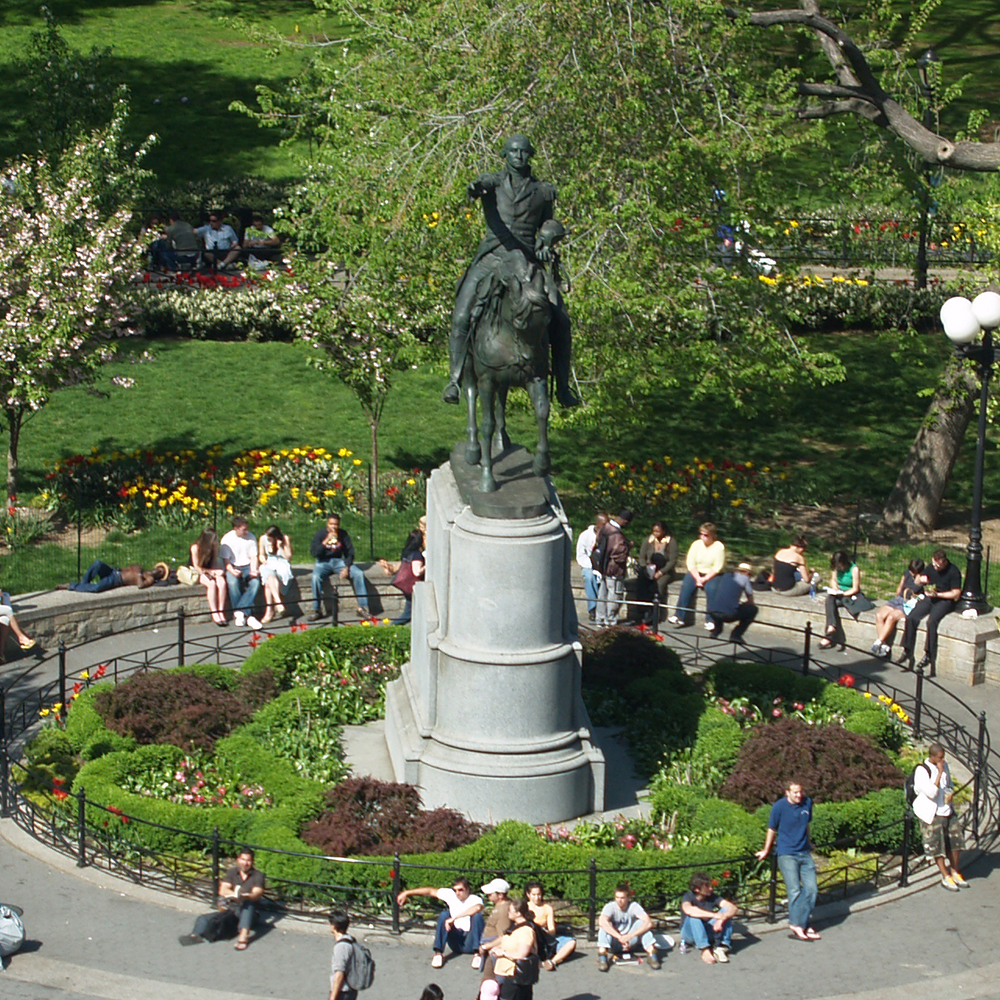
- Date: Completed and dedicated in 1856
- Material: Bronze
- Overall Height: About 29 ft / 8.8 m including pedestal
- Style: Equestrian monument
- Location: Union Square Park, New York City
- Subject: George Washington entering New York on Evacuation Day, November 25, 1783
Background
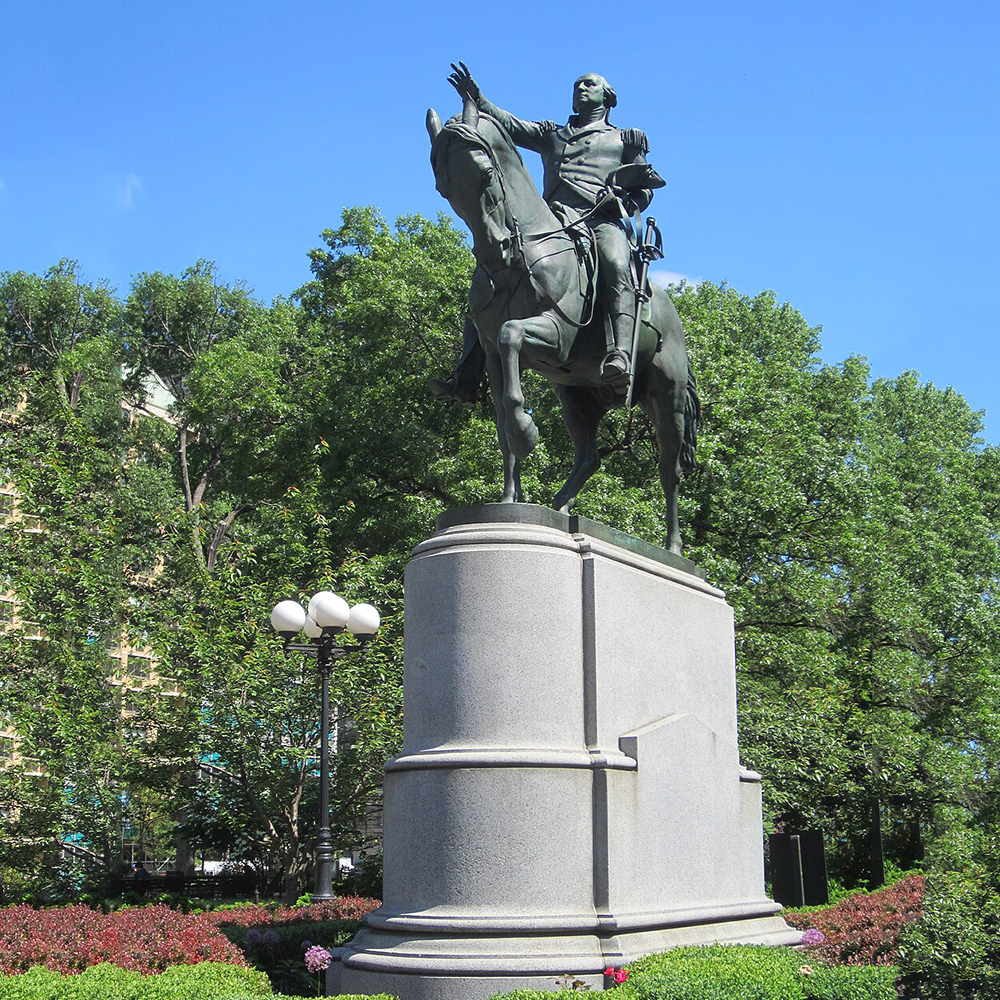
This equestrian statue of George Washington, unveiled on July 4, 1856, is a significant work in the history of New York public sculpture. It depicts Evacuation Day, November 25, 1783: the historic moment when Washington led the Continental Army back into New York after the British withdrawal, marking the end of the years-long British military occupation. Originally located in the center of the street on the southeast side of Union Square, it was moved to its present location during park renovations in 1930.
What Does the Statue Look Like?
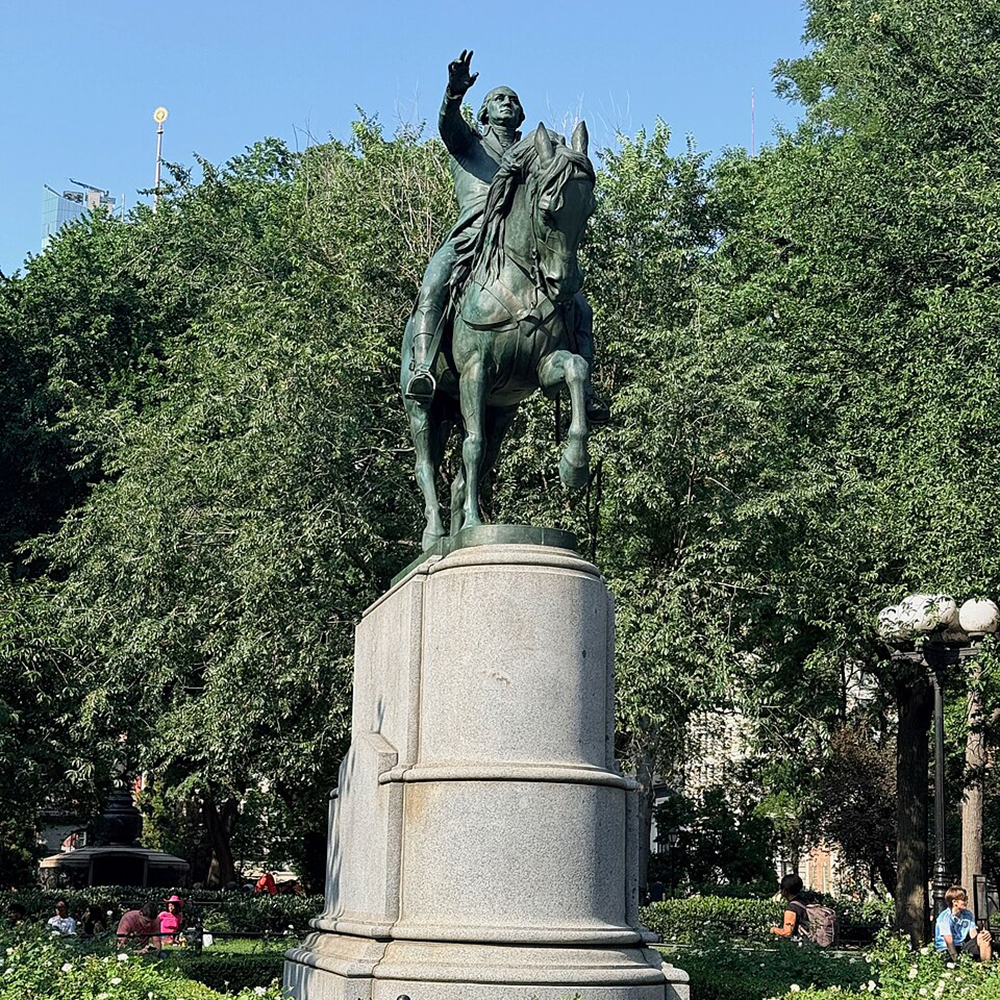
Washington, dressed in military uniform and mounted on horseback, is depicted without a hat, which is tucked under his left arm, and his sword remains sheathed. The horse raises one foreleg, and Washington’s right arm is raised forward, giving the george washington statue a sense of movement, yet without the intensity of a battle scene.
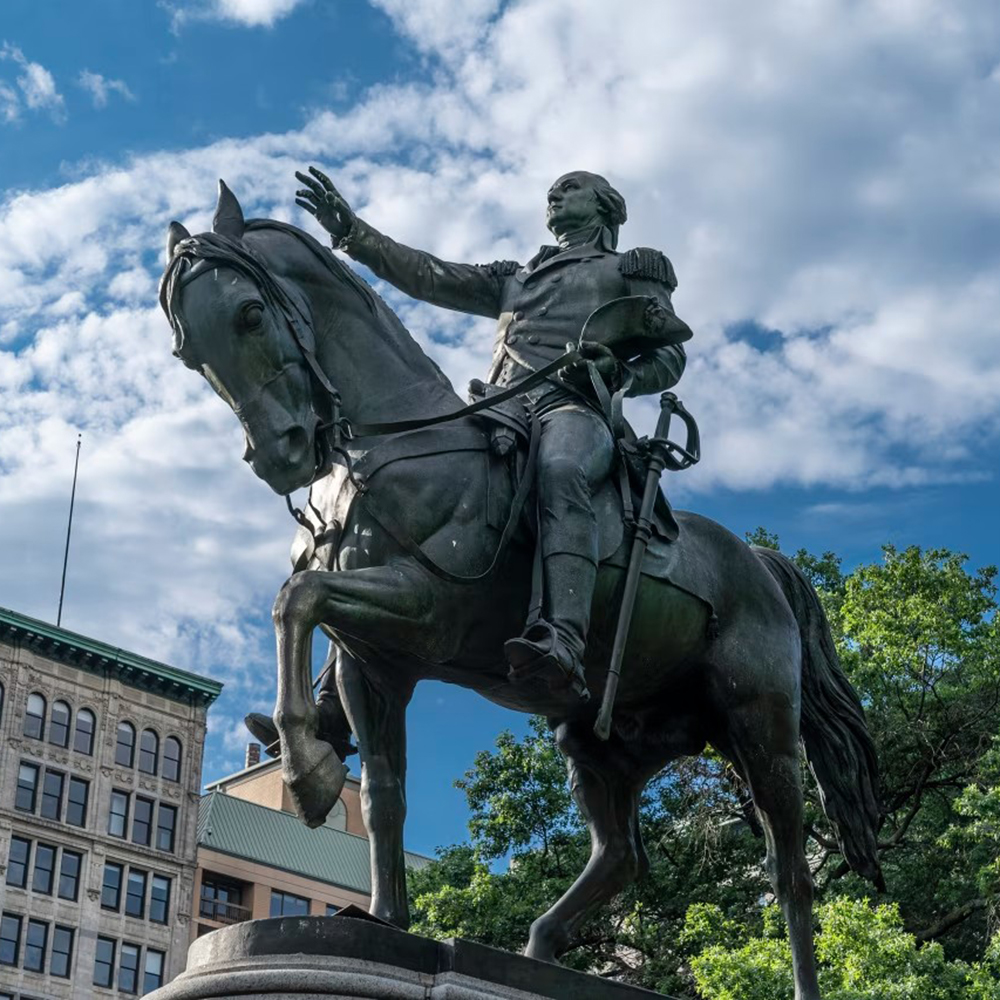
Brown referenced Houdon’s portrait of Washington and studied the military uniform Washington actually wore when sculpting him. Therefore, the figure possesses both the imposing presence of a heroic equestrian monument and retains distinct historical characteristics.
Top 8: Equestrian Statue of George Washington (Paris)
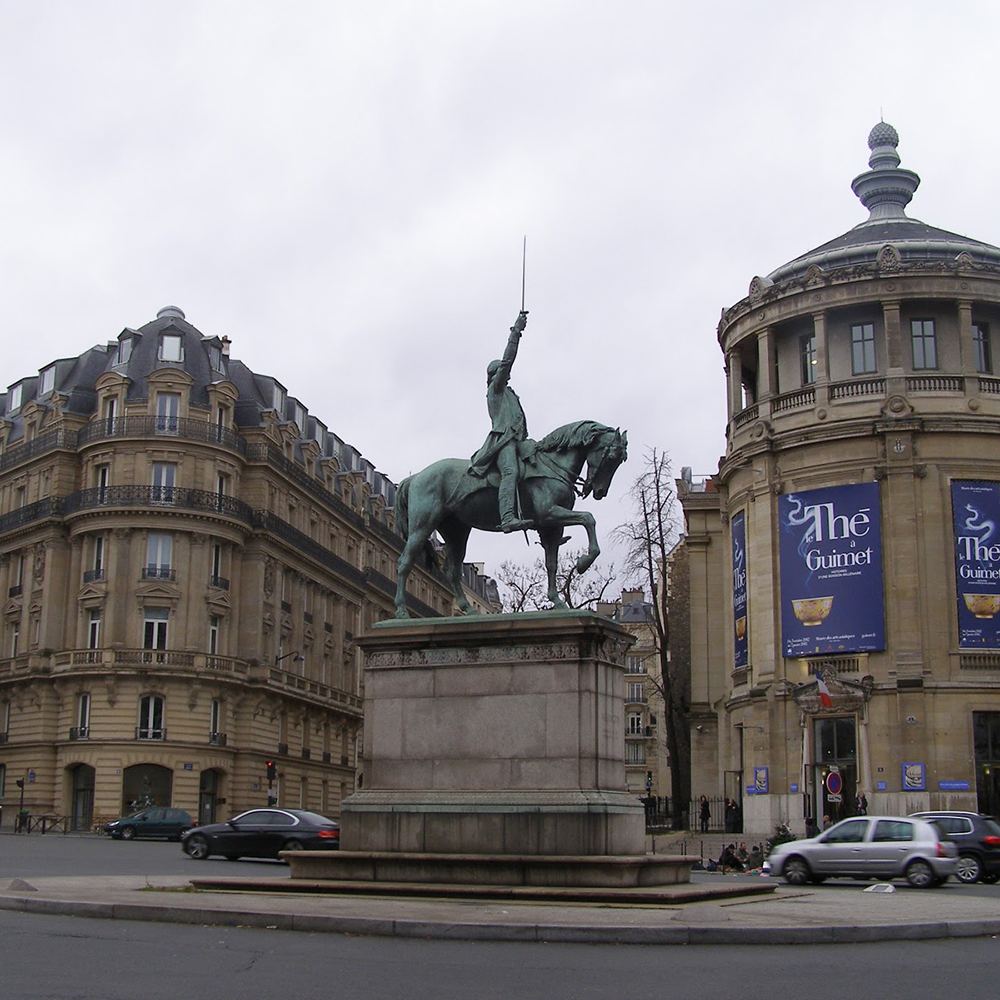
- Sculptors: Daniel Chester French and Edward Clark Potter
- Date: Commissioned in 1896; unveiled on July 3, 1900
- Material: Bronze
- Height: About 7 m for the bronze group; pedestal about 4 m high
- Style: Equestrian monument
- Location: Place d’Iéna, Paris, France
- Subject: George Washington as commander of the Continental Army
Background
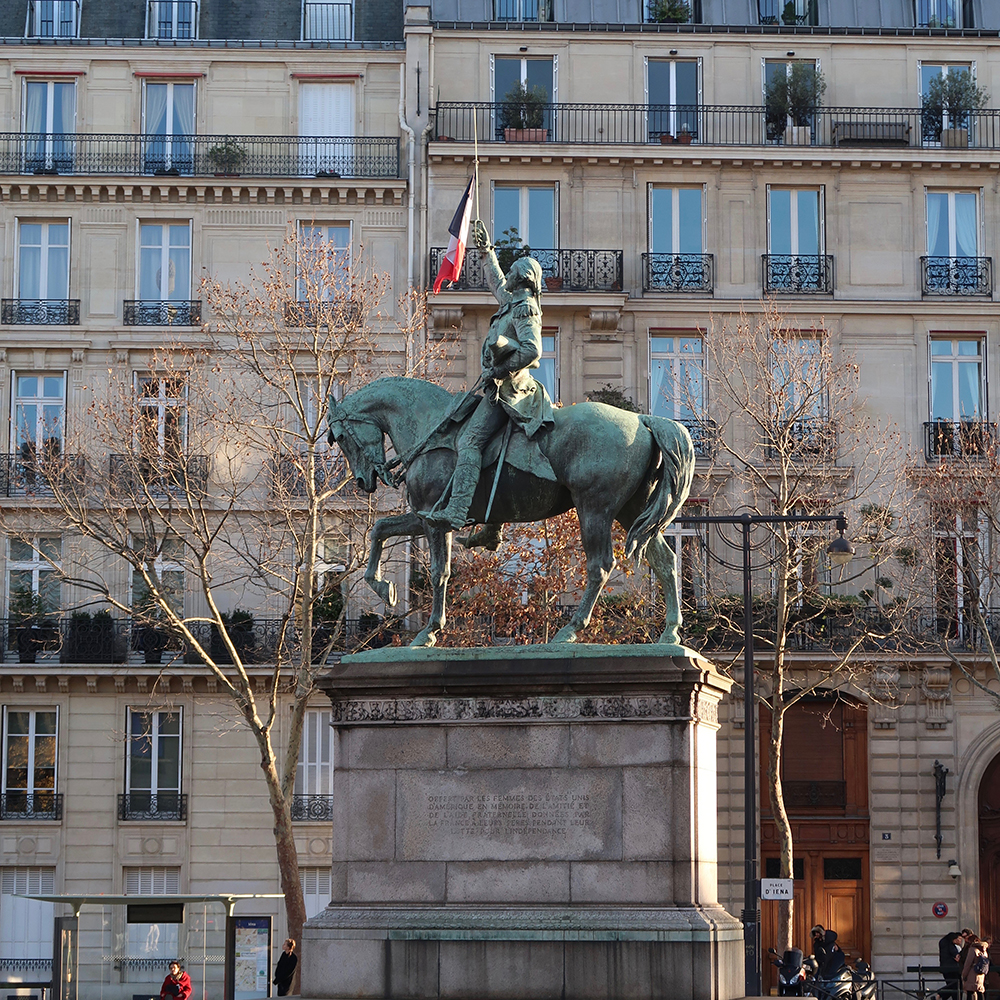
This equestrian statue of George Washington was a collaborative work by American sculptors Daniel Chester French and Edward Clark Potter, with French primarily responsible for the figure of Washington and Potter for the horse. The work was a gift from a committee of American women to France in gratitude for French support of the American Revolutionary War, and was unveiled in 1900 at Place d’Iéna in Paris.
What Does the Paris George Washington Statue Look Like?
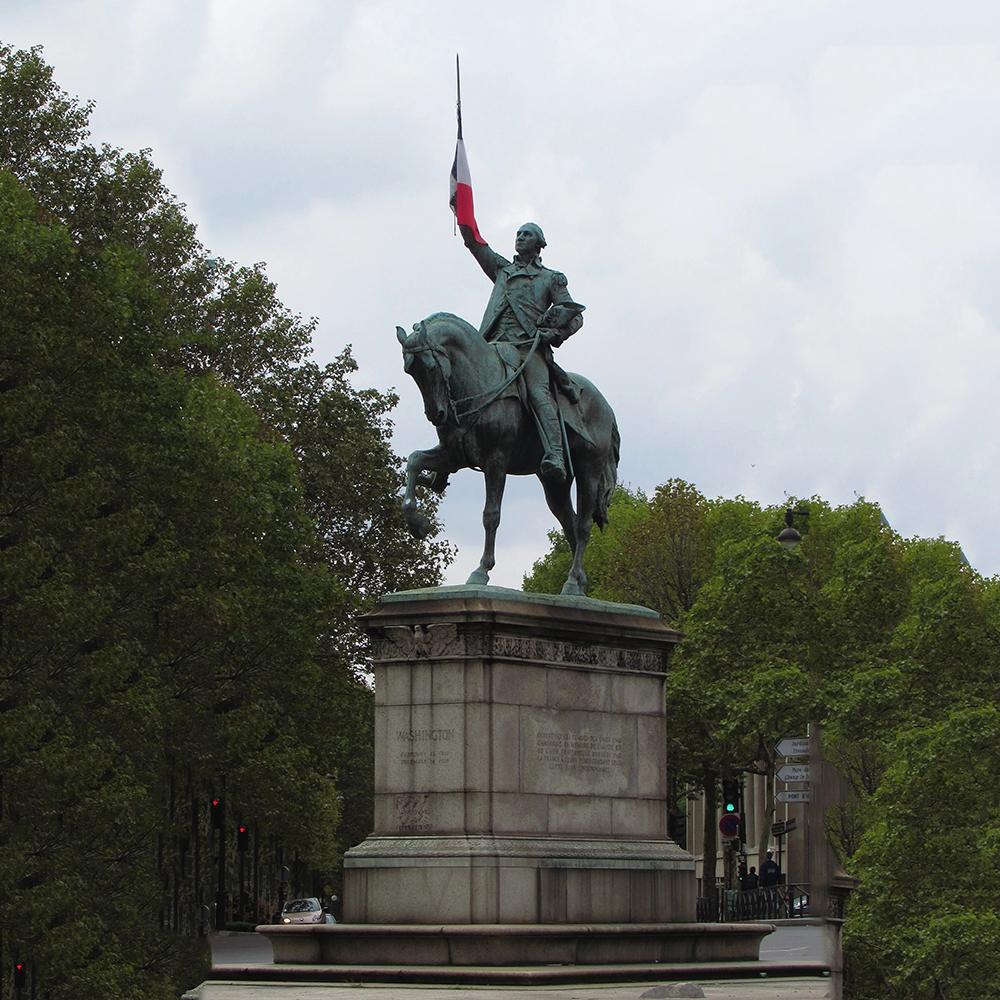
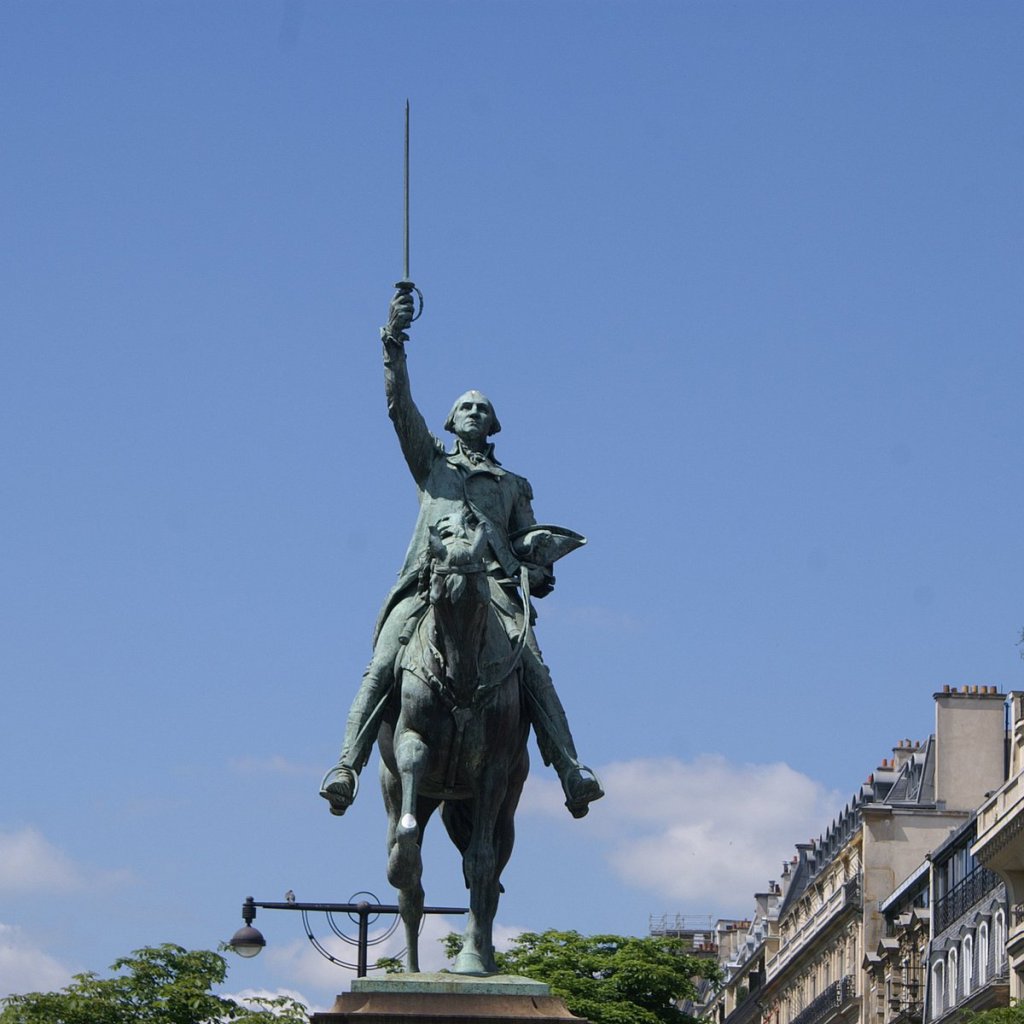
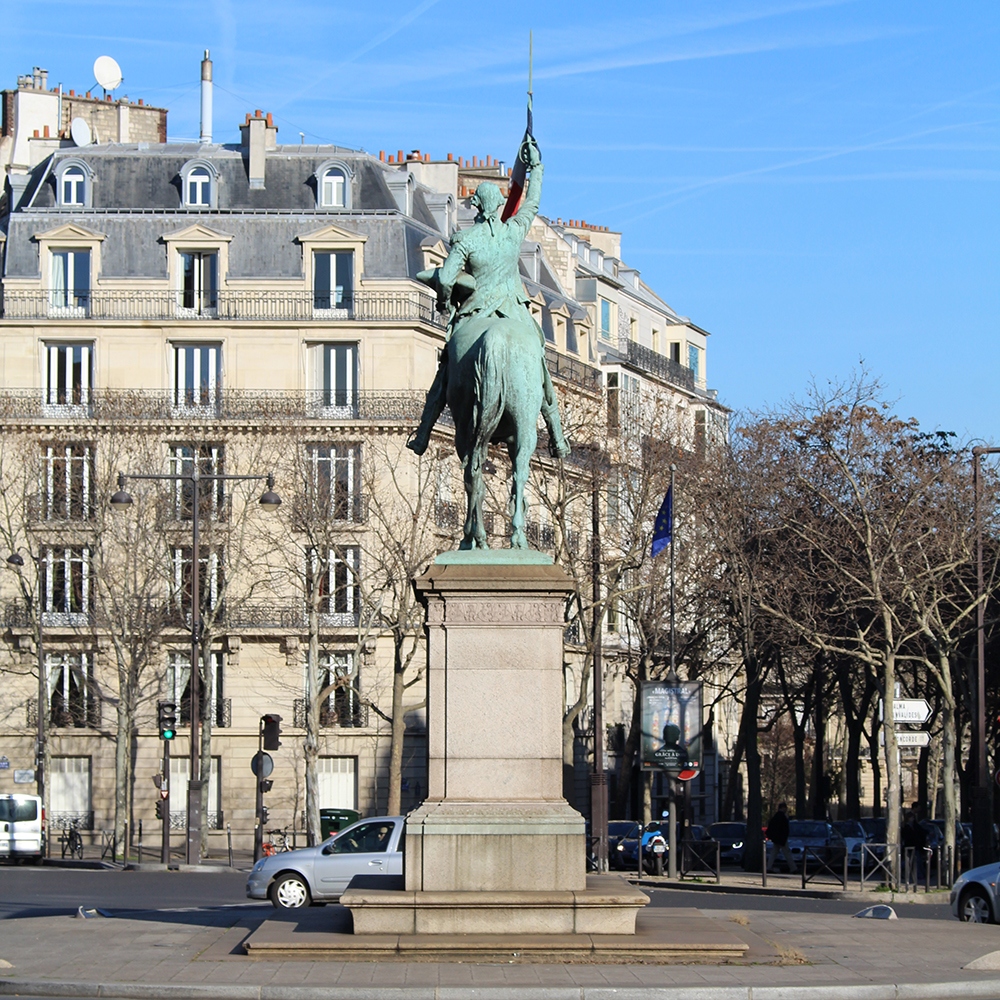
Washington, dressed in the uniform of a high-ranking Continental Army officer, sits upright on his horse. The horse’s right foreleg is raised, creating a clear sense of forward movement; Washington holds his saber high in his right hand and his tricorn hat in his left. The figure is not portrayed as a quiet politician, but rather emphasizes his military identity as a Revolutionary War commander.
Was Washington’s Face Based on a Real Portrait?
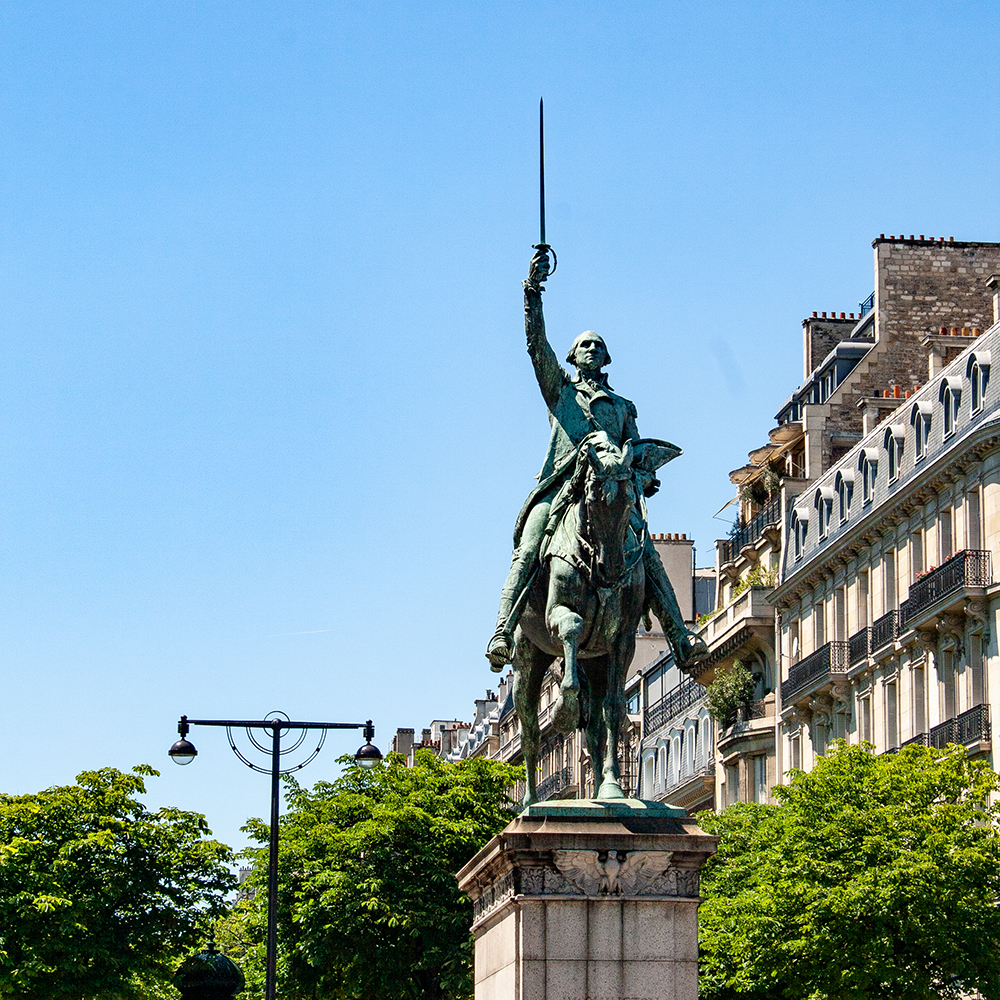
Yes. French referenced Jean-Antoine Houdon’s portrait model of Washington when creating the portrait. Houdon had personally made a life mask for Washington in 1785, so French was able to use this relatively reliable real-life portrait as a reference for sculpting the face.
Top 9: Washington Monument Philadelphia
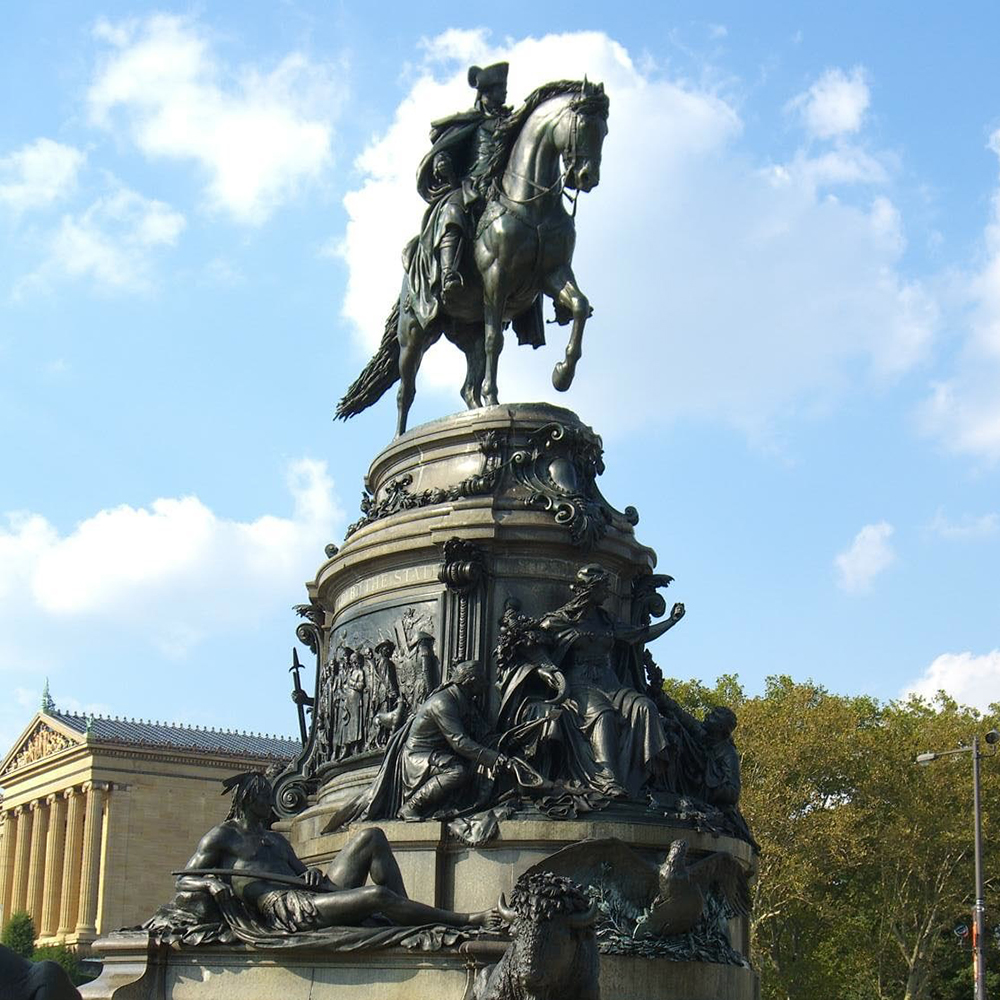
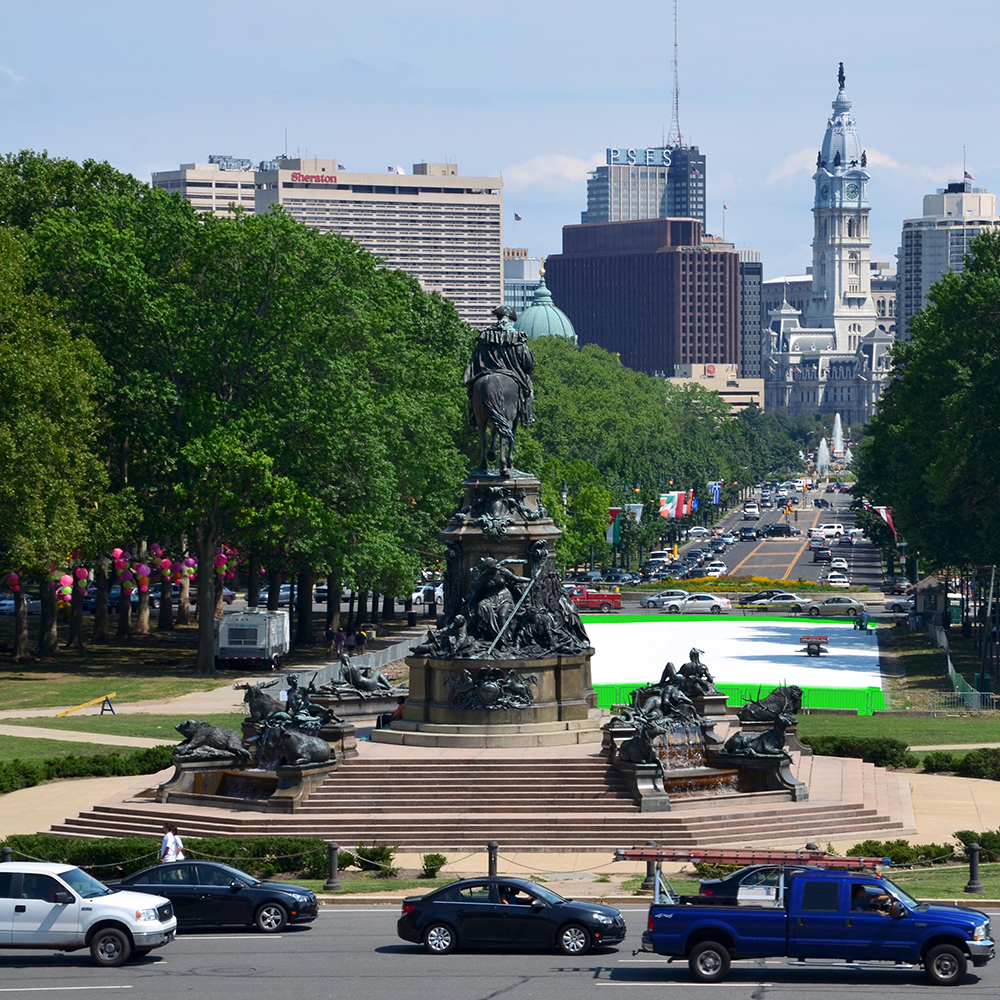
- Sculptor: Rudolf Siemering
- Date: Commissioned in 1881; unveiled on May 5, 1897; relocated in 1928
- Material: Bronze and granite
- Height: About 44 ft / 13.4 m
- Style: Monumental equestrian sculpture group
- Location: Eakins Oval, Benjamin Franklin Parkway, in front of the Philadelphia Museum of Art
- Commissioned by: Society of the Cincinnati of Pennsylvania
Background
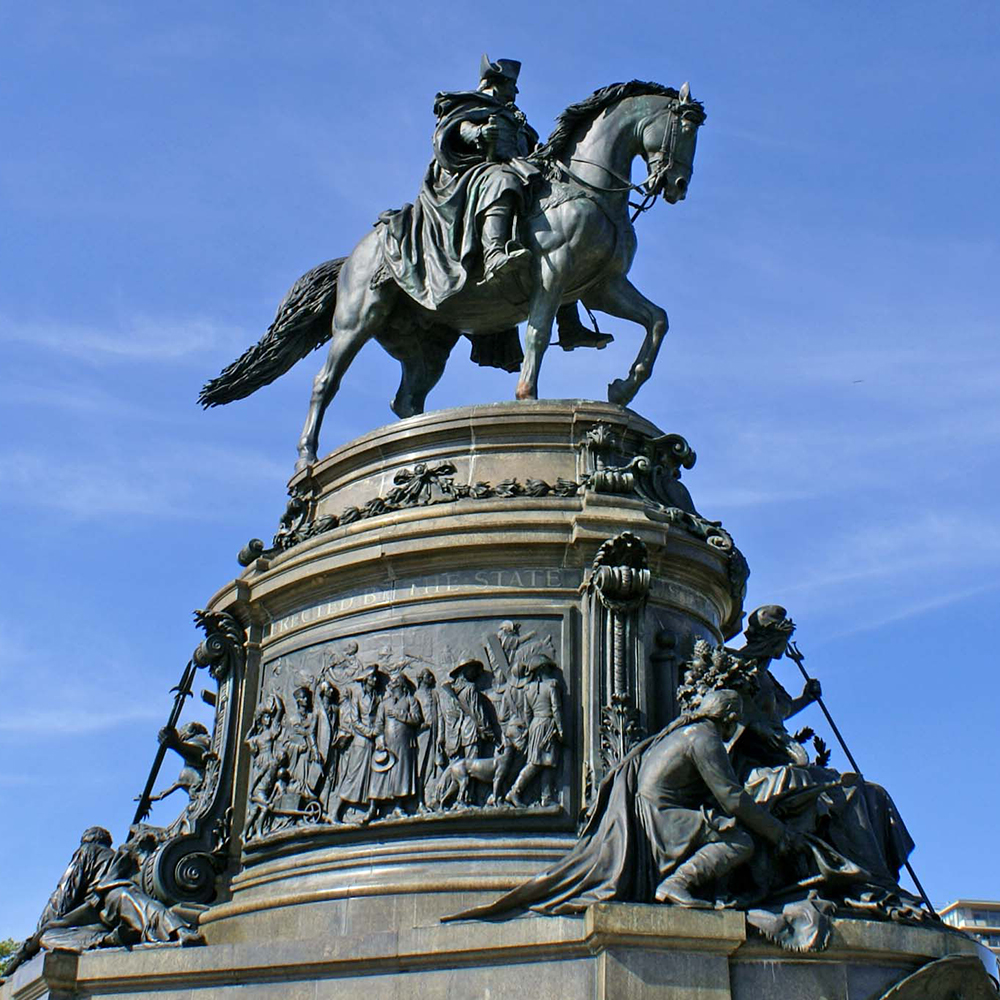
The planning for the Washington Monument dates back to 1810, when the Society of the Cincinnati of Pennsylvania decided to build a monument to George Washington. After a long period of fundraising, a formal contract was signed with German sculptor Rudolf Siemering in 1881. The work was unveiled in Fairmount Park in 1897, with then-President William McKinley in attendance; in 1928, it was moved to its current location in front of the Philadelphia Museum of Art, at the Eakins Oval.
What Does the Philadelphia Washington Monument Look Like?
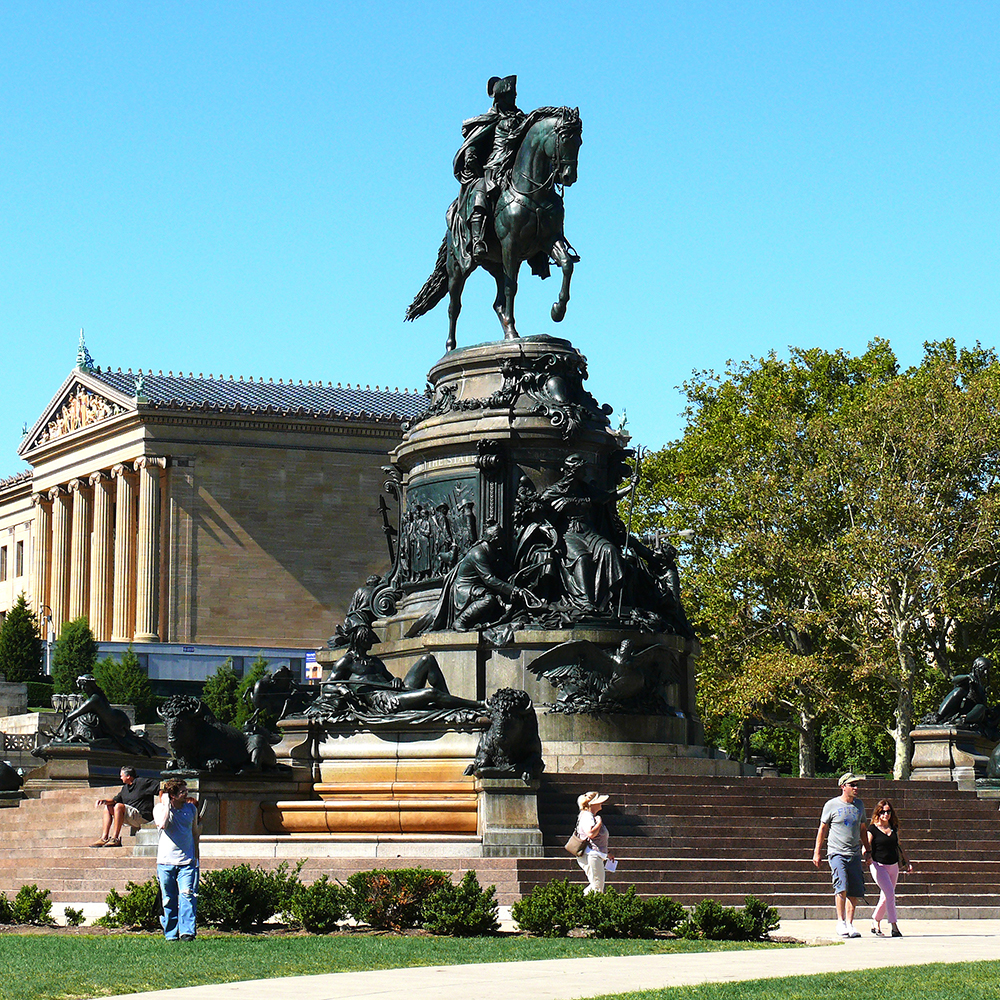
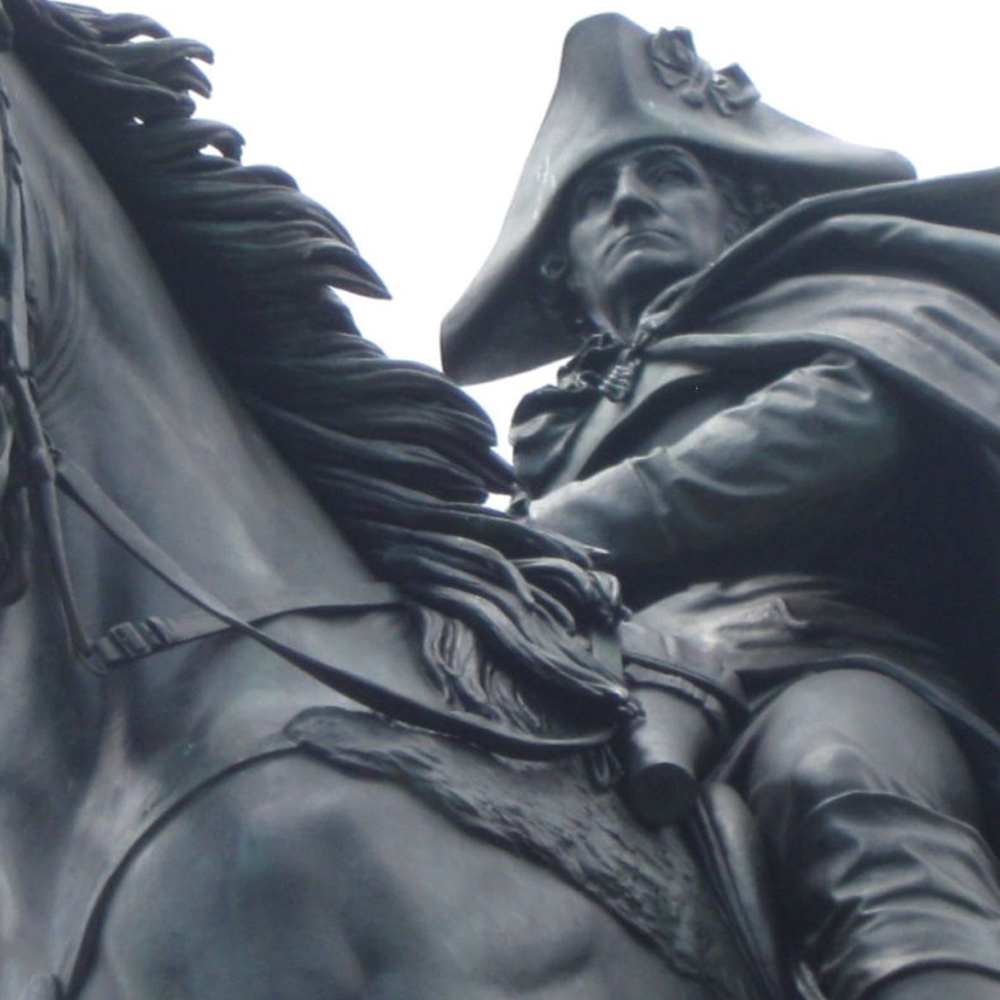
The monument, approximately 44 feet tall, consists of a bronze sculpture and a granite base, featuring a distinct three-tiered structure. At the top is a statue of George Washington on horseback, dressed in a Continental Army uniform and cloak, serving as the visual center of the monument. Washington’s face was modeled after his life to enhance the accuracy of the portrait.
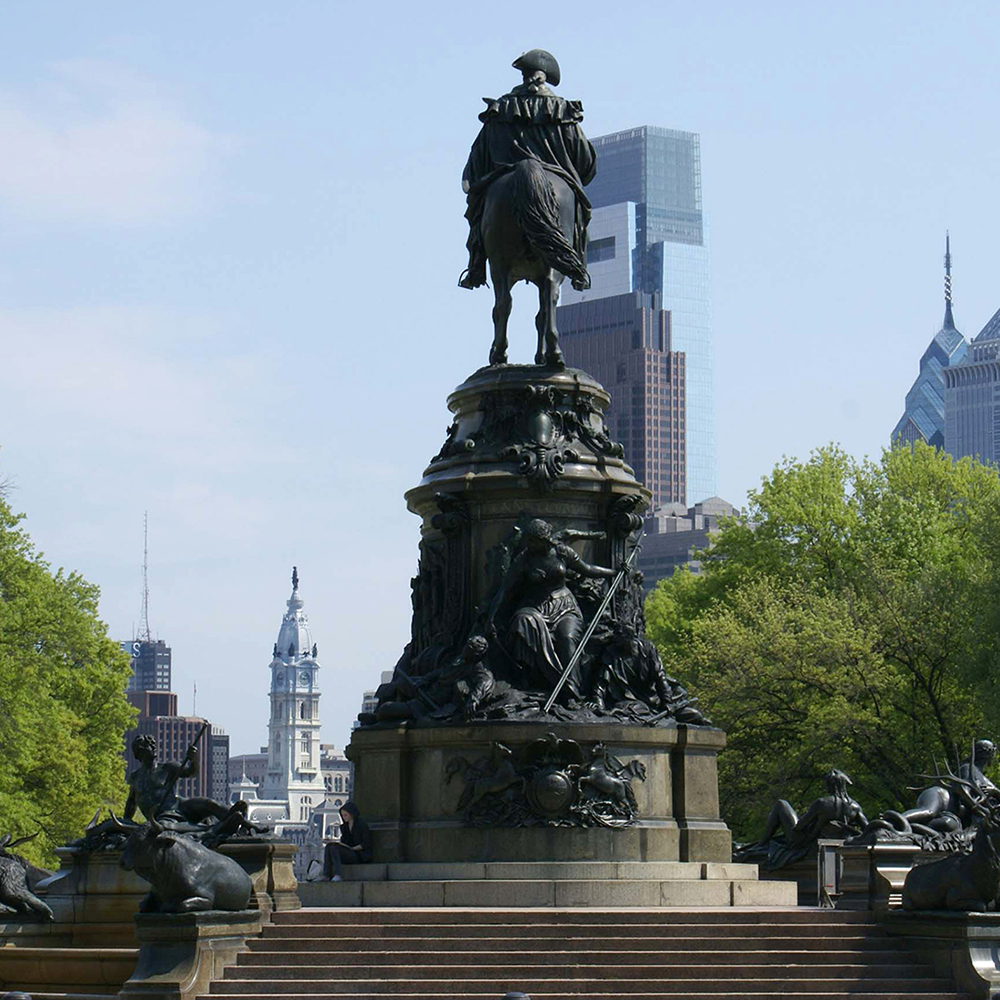
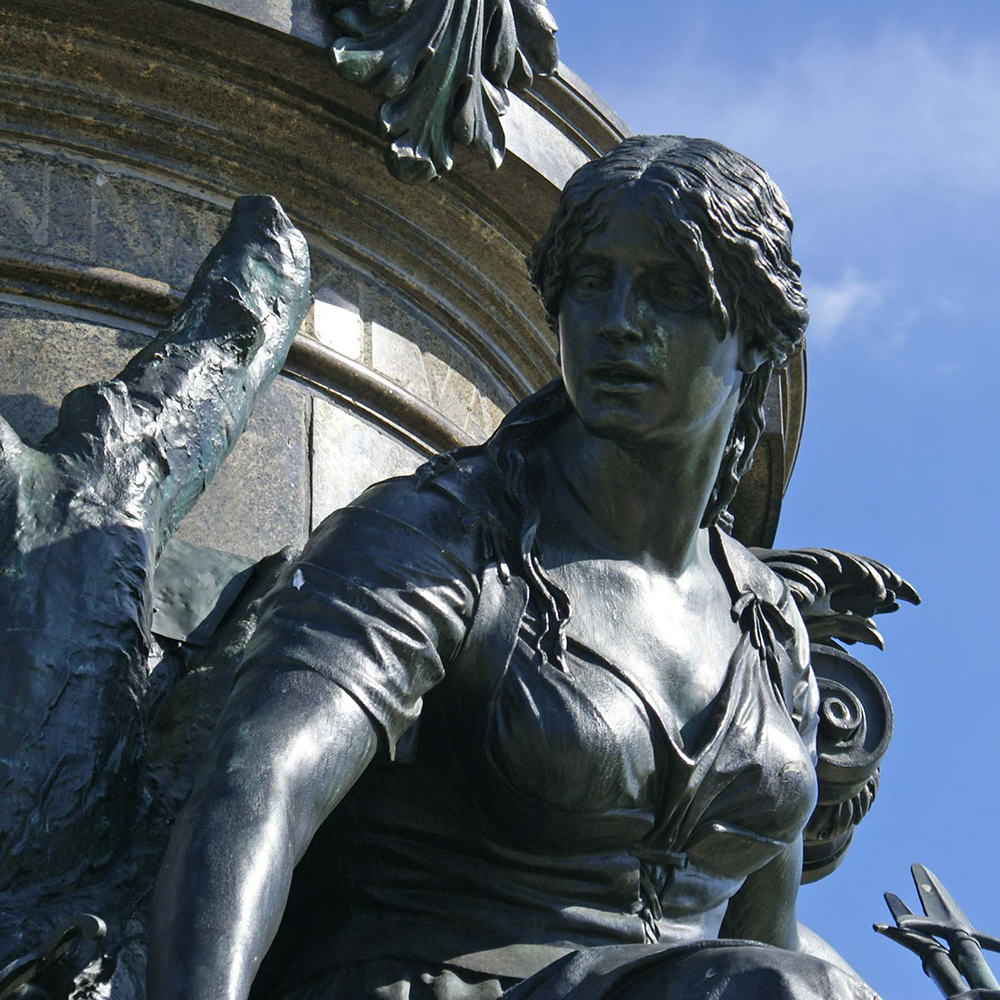
The middle tier, surrounding the base, comprises several groups of symbolic figures representing Washington’s era and the themes of American founding. These include anthropomorphic representations of America, as well as other symbolic figures and historical scenes.
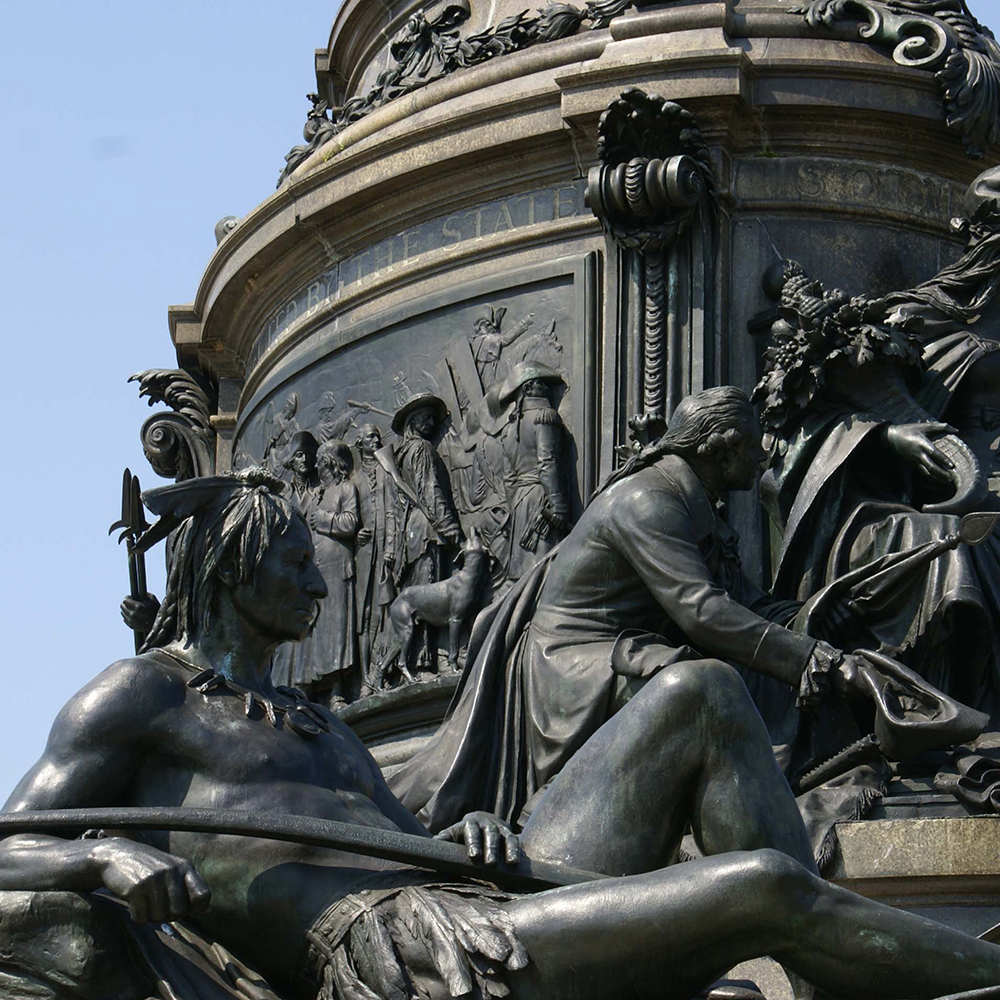
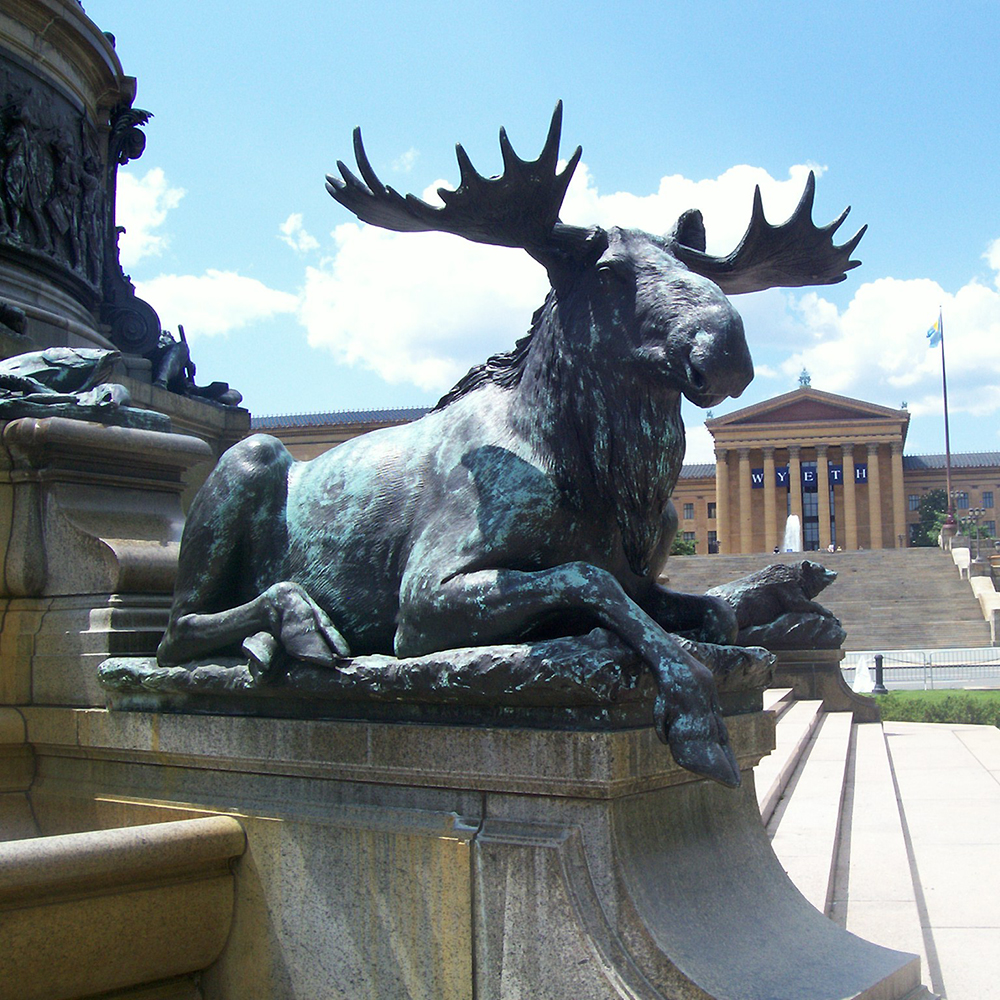
The lowest tier incorporates symbolic groups representing the four rivers of Delaware, Hudson, Potomac, and Mississippi, along with Native American figures and North American animal and plant elements such as bison, moose, elk, bear, and alligator.
What is the significance of the Washington Monument in Philadelphia?
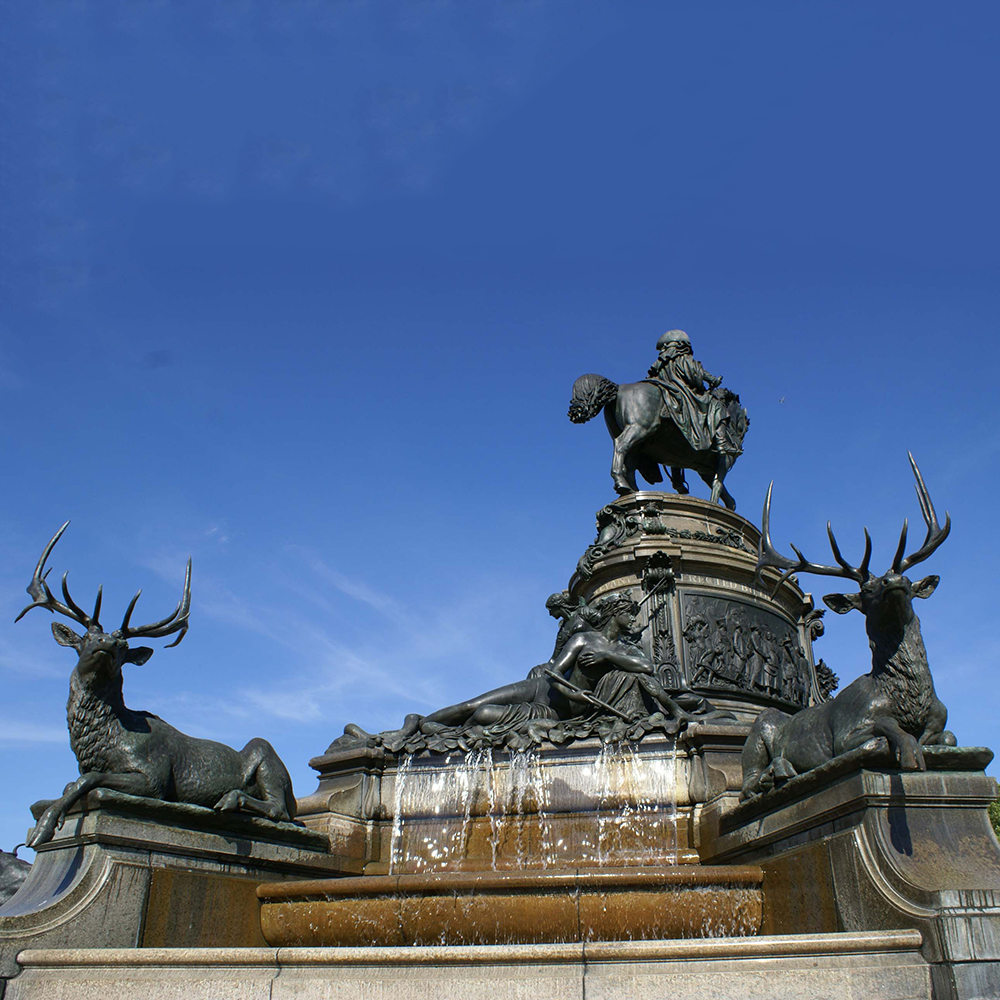
- Commemorating George Washington’s Founding Role: Washington, mounted on horseback, sits atop the monument, emphasizing his central role as Commander-in-Chief of the Continental Army and a founding leader of the United States.
- Expanding Personal Memorial into National Symbolism: The work goes beyond simply depicting Washington. The middle tier, with its anthropomorphic figures of America, historical figures, and allegorical scenes, connects his personal image with American independence, founding, and national development.
- Representing American Geography and Nature: The base layer uses the Delaware, Hudson, Potomac, and Mississippi rivers as its theme, incorporating North American animals such as bison, elk, bear, and alligator, making the monument a symbol of American land, rivers, and natural environment.
- Embodying 19th-Century Concepts in Large-Scale Memorial Sculpture: It combines equestrian statues, allegorical figures, animals, reliefs, and fountain groups, not as a simple equestrian statue, but as a complete system of national monumental sculpture.
- Long-standing public commemorative significance: The project dates back to the early 19th century, but was not officially unveiled until 1897, demonstrating the enduring importance of Washington’s image in American public commemorative culture.
In short, the monument’s significance goes beyond simply “commemorating George Washington.” It centers on Washington, shaping America’s history of independence, national identity, people, geography, and nature into a grand visual symbol.
Top 10: Boston George Washington Statue
- Sculptor: Thomas Ball
- Date: Commission awarded to Ball in 1857; modeled in 1864; cast and unveiled on July 3, 1869
- Material: Bronze; granite pedestal
- Dimensions: Sculpture approx. 22 ft high × 6 ft wide × 15 ft long
- Founder: Ames Manufacturing Company, Chicopee, Massachusetts
- Pedestal Designer: Hammatt Billings
- Style: Equestrian monument
- Location: Arlington Street entrance, Boston Public Garden, Boston, Massachusetts
Background
In the mid-19th century, Boston conceived of a public monument to George Washington. Local sculptor Thomas Ball was commissioned and spent years creating a large plaster model. Due to the primary use of bronze for wartime purposes during the American Civil War, the casting of the statue was delayed, and it was ultimately completed by the Ames Manufacturing Company in Massachusetts. On July 3, 1869, the george washington statue was unveiled with a grand ceremony and a 13-gun salute commemorating the original 13 states.
What Does the Boston George Washington Statue Look Like?
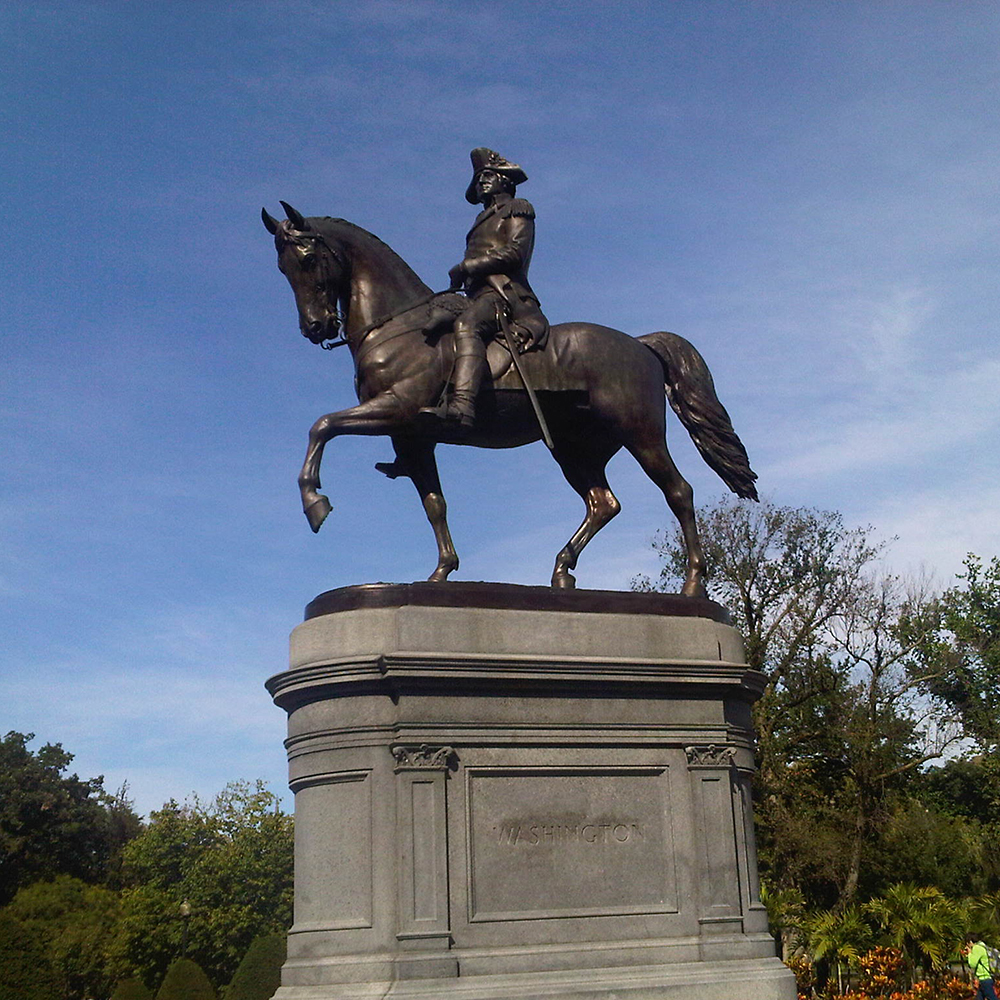
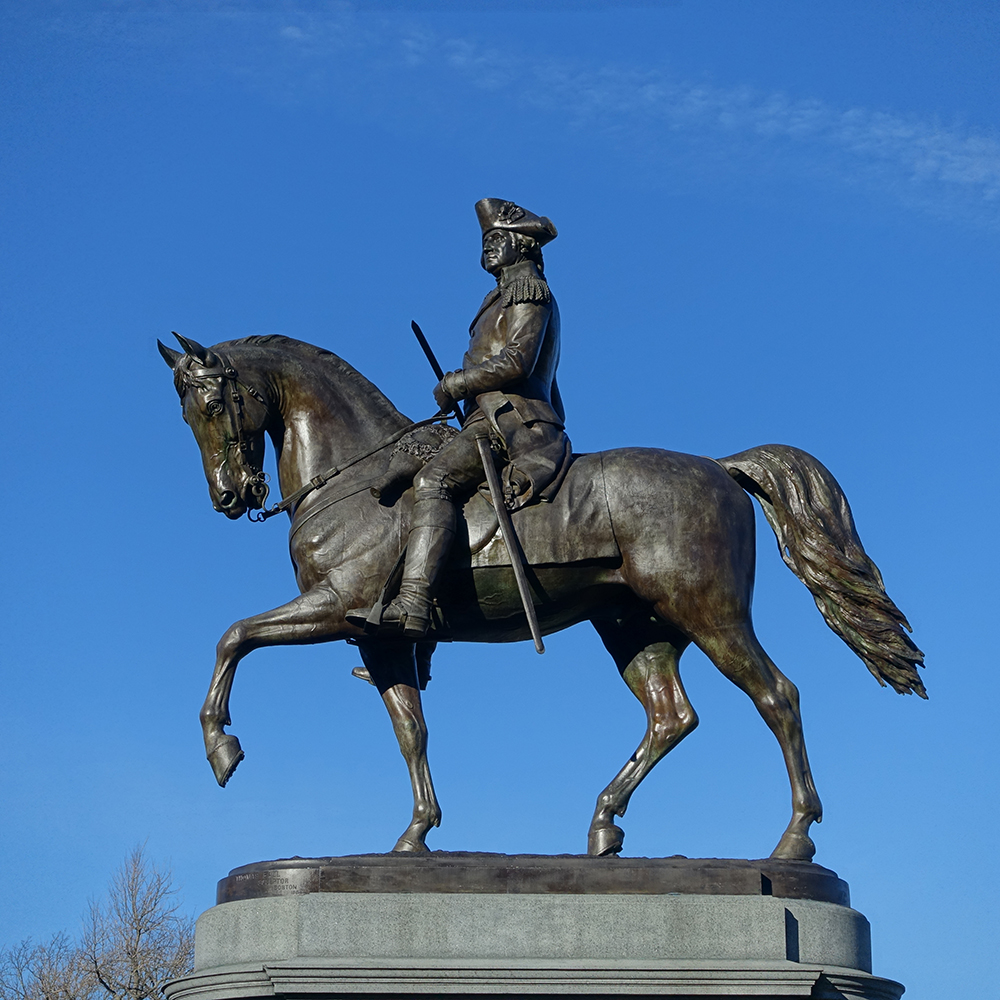
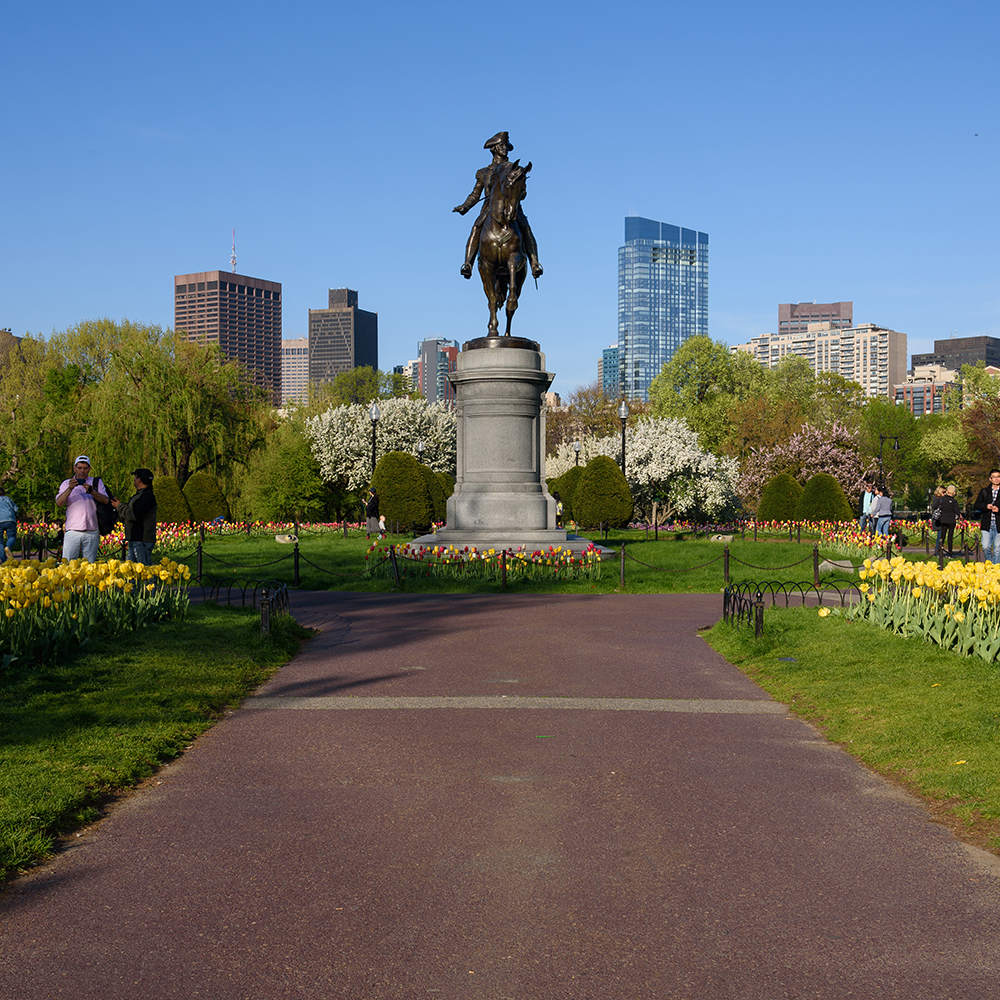
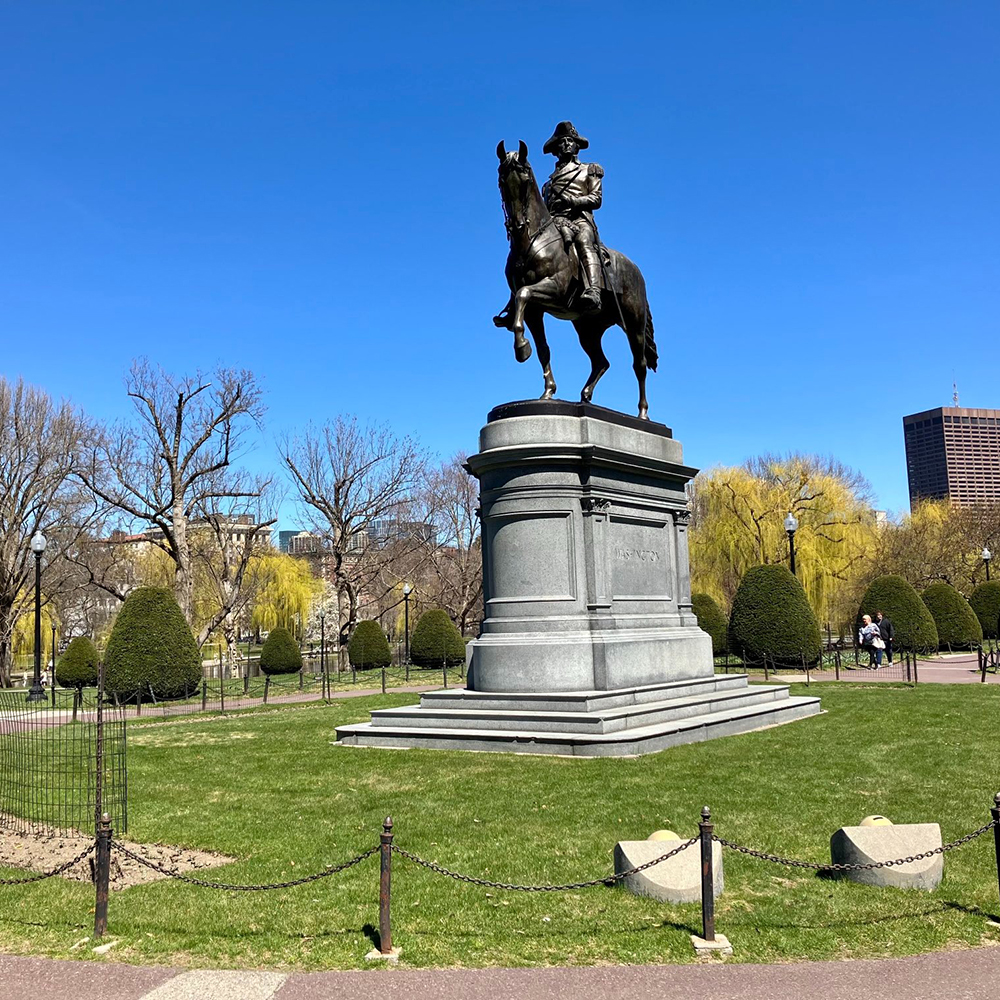
The sculpture depicts George Washington in Continental Army uniform, mounted on horseback, his posture upright and stable. Washington holds the reins in one hand and extends the other forward, conveying a sense of command without portraying the scene as one of intense battle. The horse has one foreleg raised and its head slightly turned, creating a dynamic balance with Washington’s stable upper body.
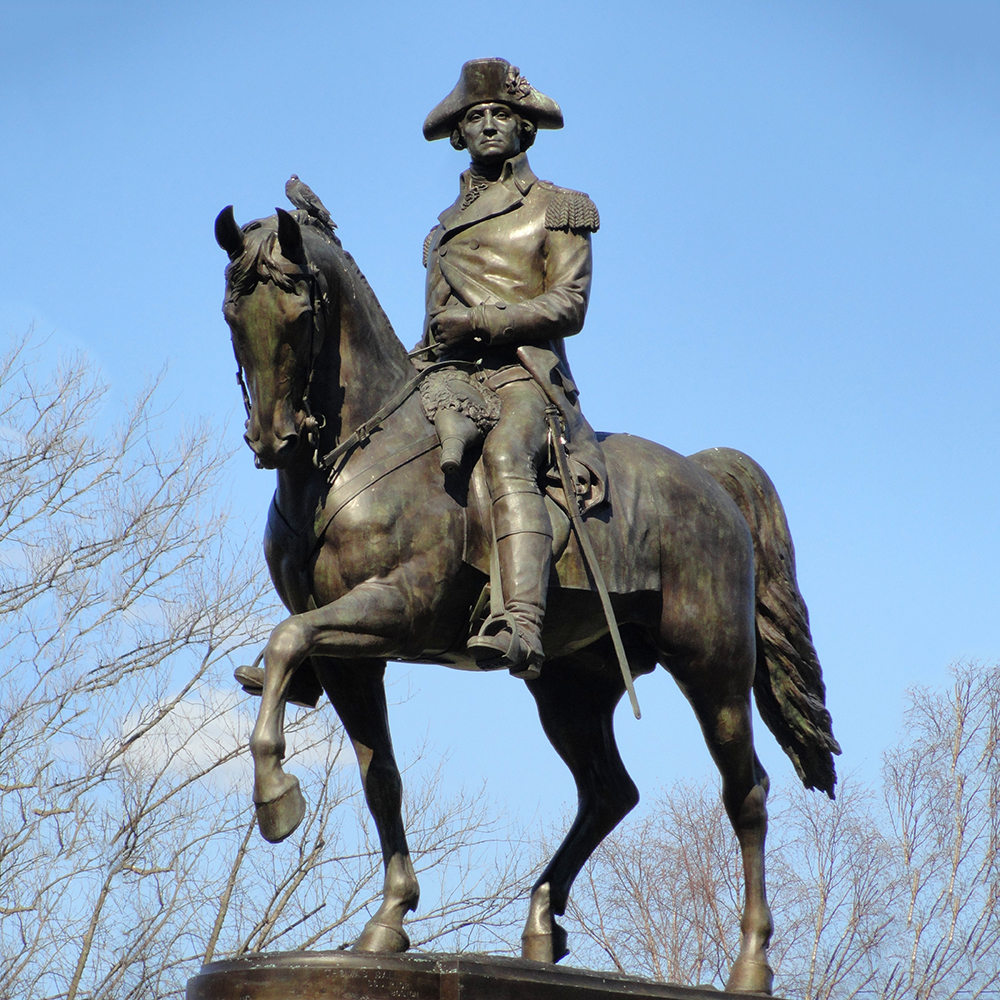
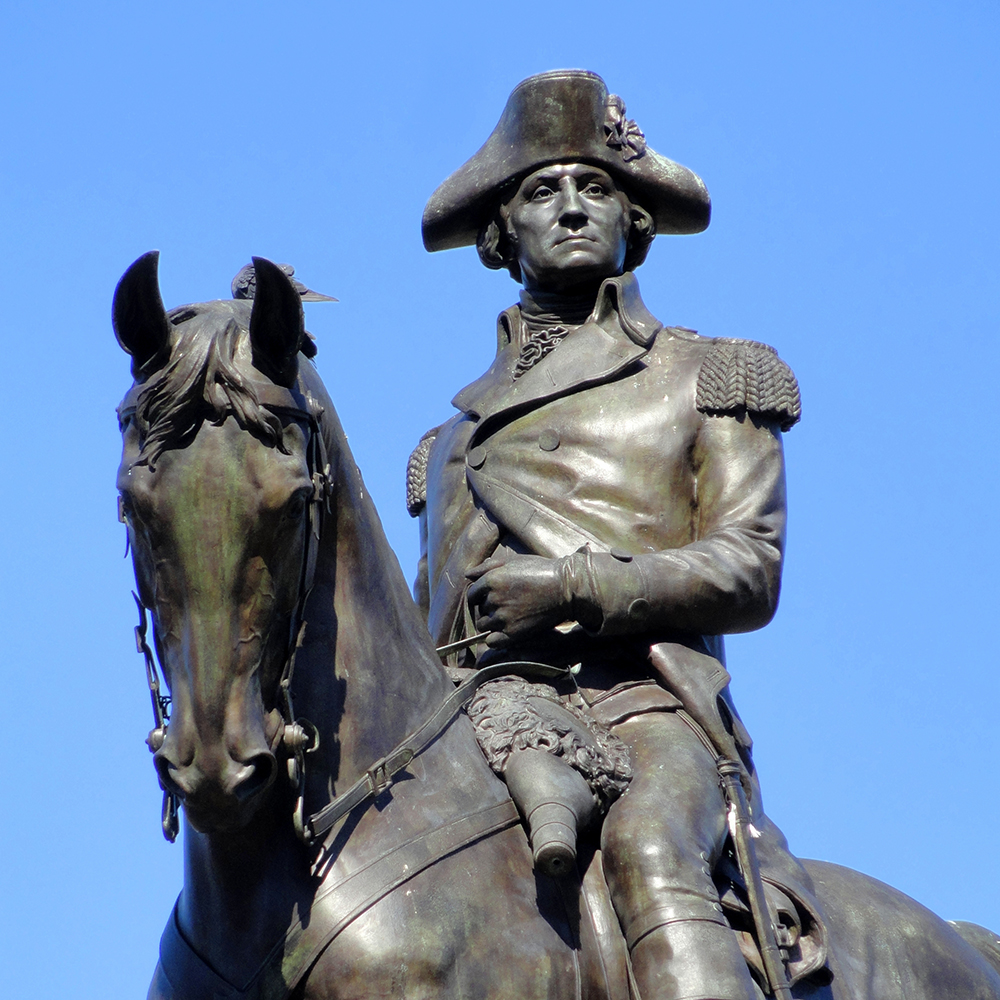
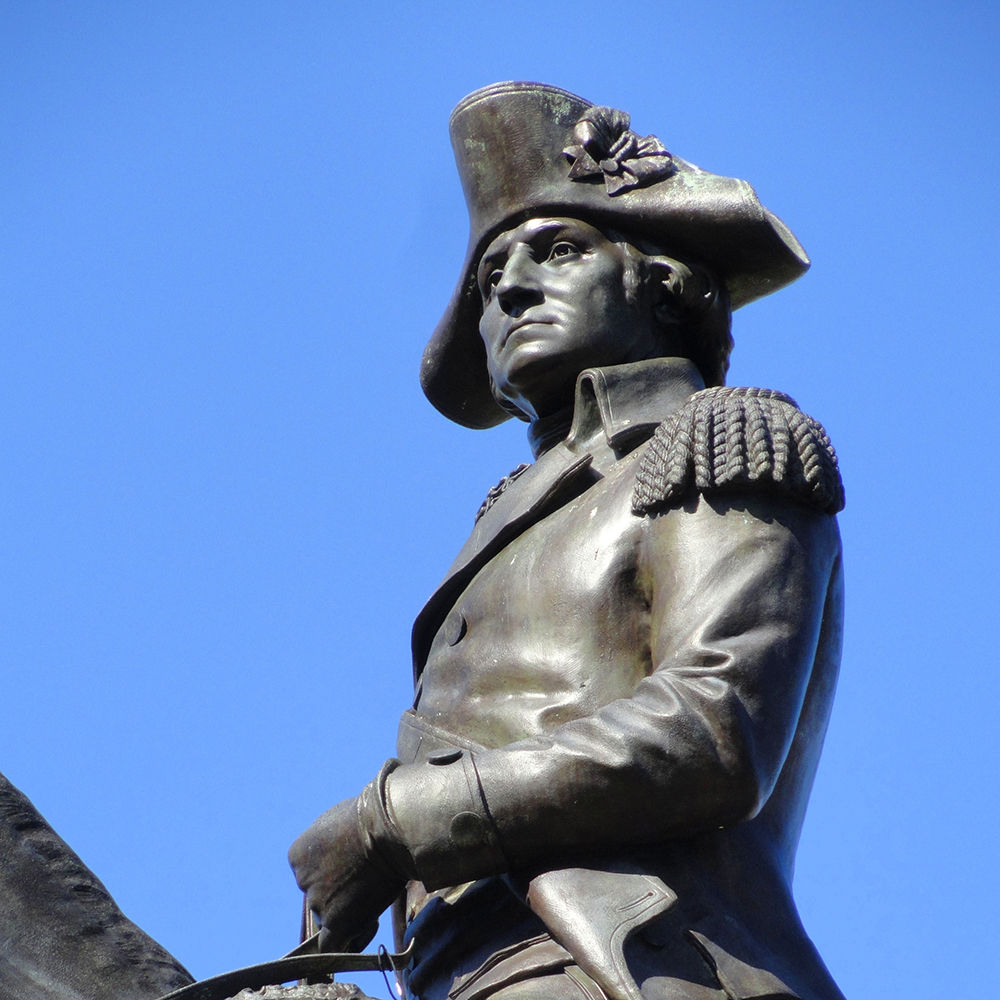
The entire bronze sculpture is approximately 22 feet tall and is set on a large granite pedestal, making Washington a prominent visual center at the main entrance to the Arlington Street entrance of the Boston Public Garden.
What Horse Was Used as the Model?
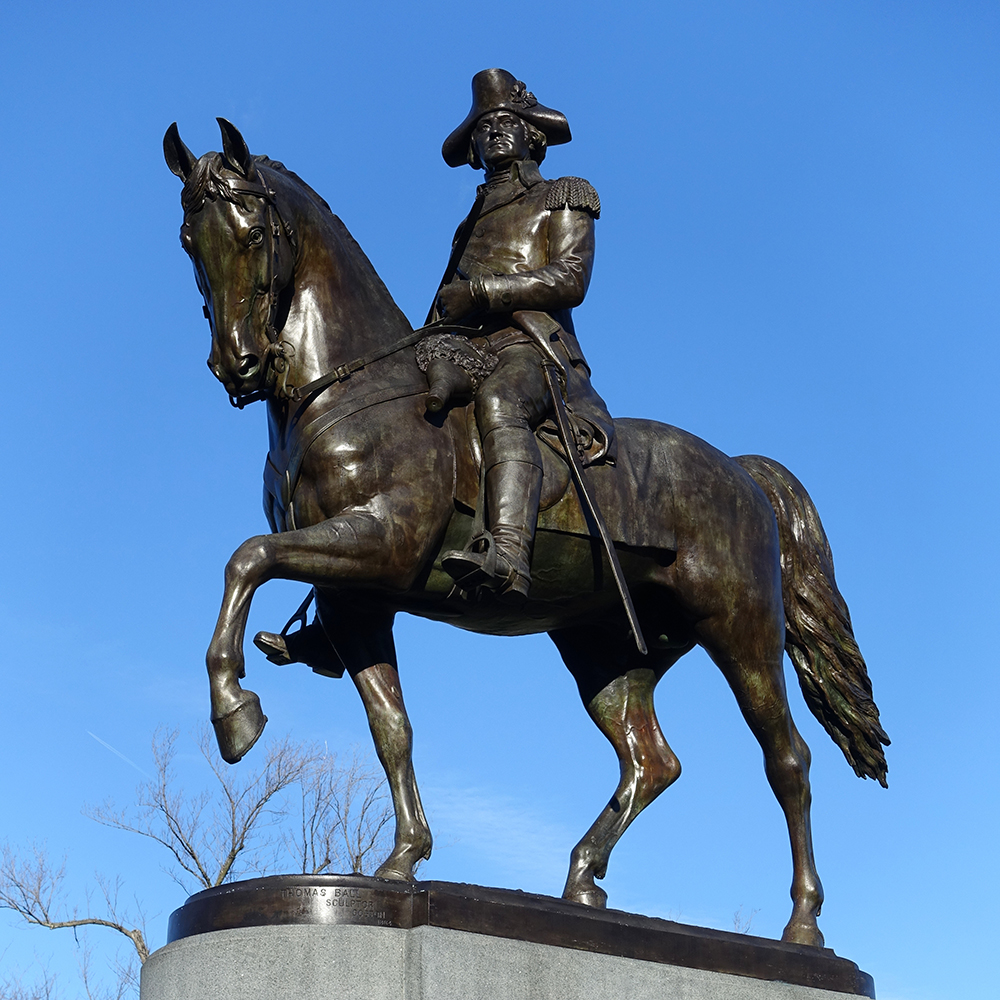
A fascinating detail in this work is that Ball didn’t sculpt the horse entirely from imagination.
He primarily referenced a local military horse, Black Prince. In creating the large plaster model, Ball spent approximately four years independently completing a significant amount of sculpting work, even mixing plaster bucket by bucket. This observation of a real horse resulted in a more natural proportion, muscular structure, and posture in the artwork.
Why Are People Putting Cones on Statues in Boston?
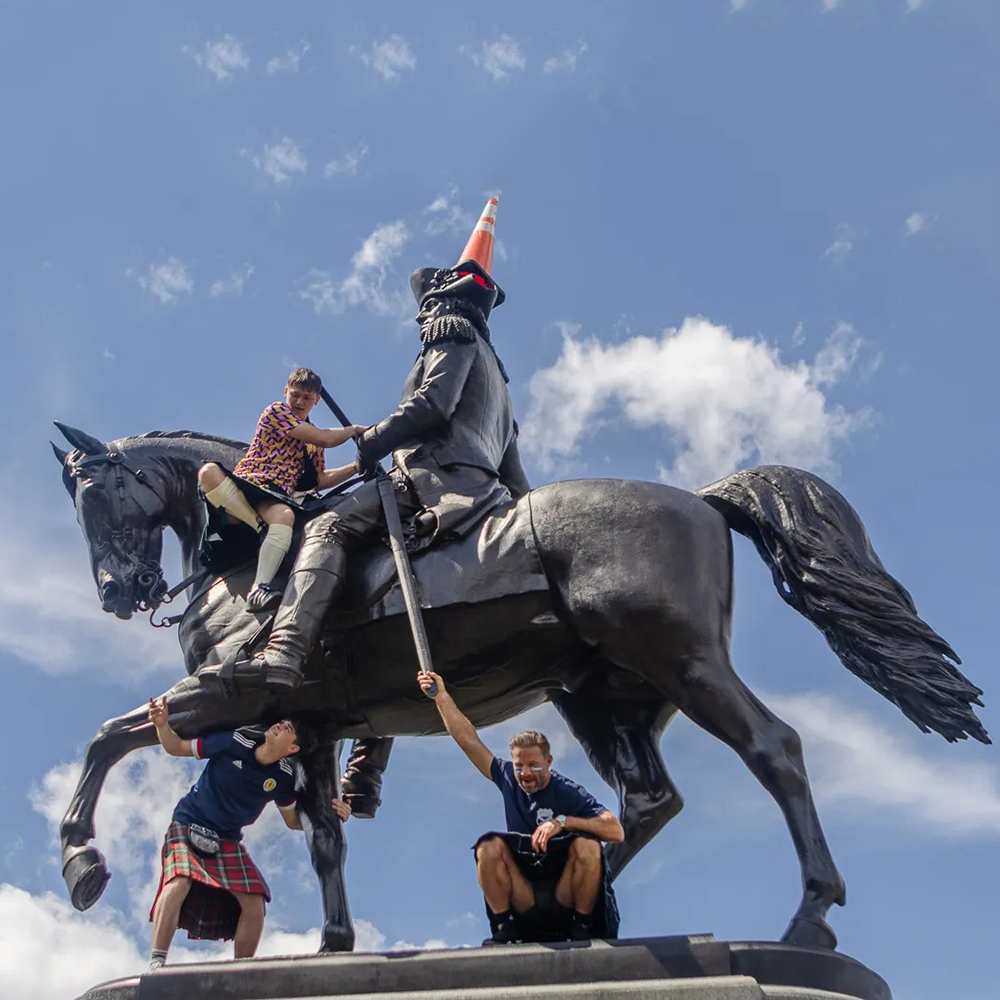
This is primarily because Scottish fans visiting Boston during the 2026 World Cup brought the famous Glasgow tradition of “putting traffic cones on statues” to the city.
- Originating in Glasgow: Locals have long placed traffic cones on the Duke of Wellington statue, a humorous urban cultural tradition.
- Bringing it to Boston by Scottish fans: During the World Cup, Tartan Army fans began placing cones on several Boston statues, including the George Washington statue.
- Usually not a political protest: It’s more of a prank, part of fan culture, and urban humor, not specifically targeting the figures the statues represent.
- Also becoming a symbol of cultural exchange: After gaining widespread attention in Boston, this Glasgow tradition gradually took on a meaning of interaction and friendly exchange between Scottish and local fans.
Custom George Washington Statues from Arturban Sculpture
If you’re looking for similar historical figure sculptures, Arturban Sculpture offers customization services based on images, 3D files, or specific design requirements. We can create George Washington statues, commemorative sculptures, equestrian sculptures, large group sculptures, and other types of Memorial Statue, supporting various materials including bronze, marble, stainless steel, and fiberglass, as well as customization of size, pose, clothing, base, and installation method.
Leveraging our own factory and sculpting experience, we provide complete support from model making, casting or sculpting, to surface treatment, packaging, and shipping, helping clients transform historical figures, commemorative themes, or original ideas into finished sculptures suitable for public spaces, memorial sites, gardens, or private collections.
Send us your requirements now, we will reply to your email within 24 hours