
In the history of human art, Aphrodite is one of the most iconic representations of the female form. As the goddess of love and beauty in ancient Greek mythology, she is said to have emerged from sea foam, symbolizing the origin of life, desire, and beauty. In another key myth, The Judgment of Paris, she was chosen as the fairest and awarded the golden apple, a theme frequently depicted in later art. The lasting influence of the greek goddess aphrodite statue reflects her central role in shaping Western ideals of beauty.
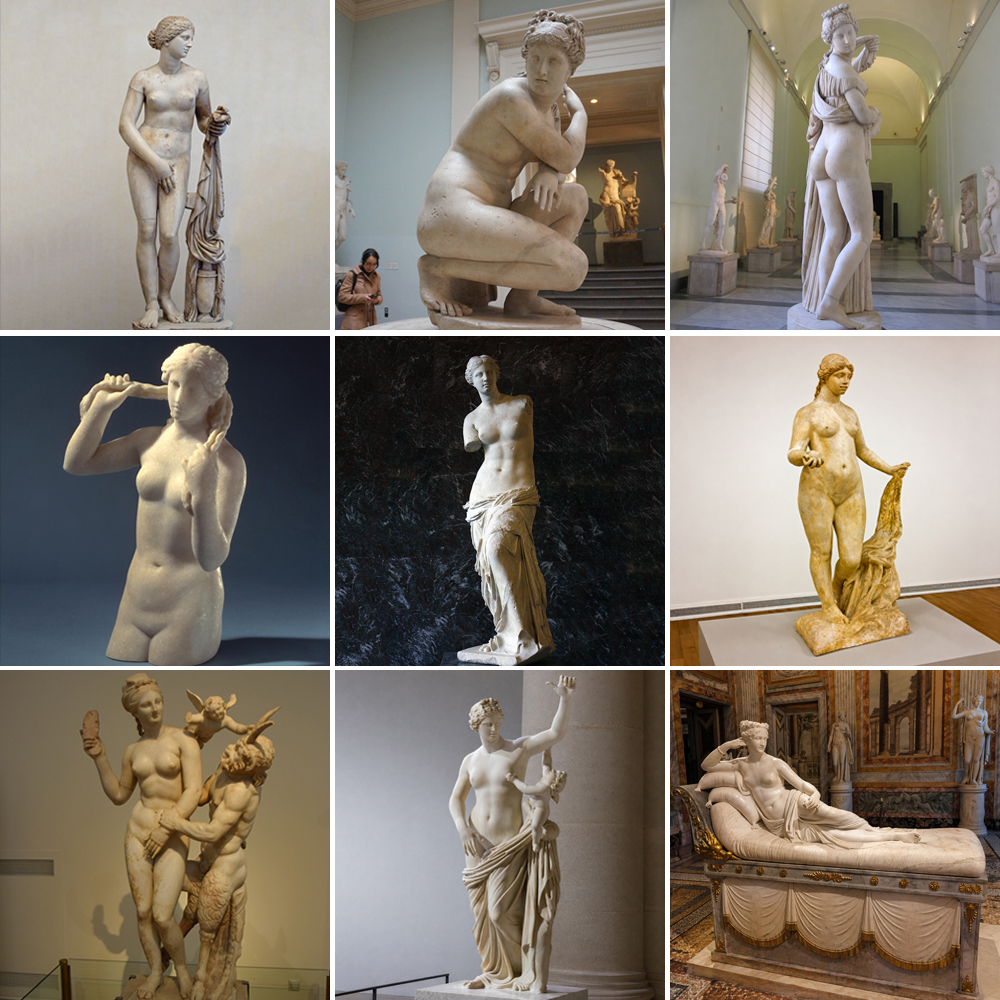
Because Aphrodite embodies both ideal beauty and mythological meaning, she became one of the most frequently depicted figures in Greek and Western art. Over time, various sculptural types developed around her image, including modesty poses, bathing scenes, and depictions of her birth from the sea. This article provides a clear overview of common greek goddess aphrodite statue types and their representative works.
Venus Pudica
“Venus Pudica” is one of the most classic and representative types of Aphrodite statues. “Pudica” comes from Latin and means “humble” or “shy,” and is usually translated as “Venus who hides her shame.” The core characteristic of this type is that the goddess uses her hands to cover key parts of her body, creating a visual effect that both conceals and emphasizes the body.
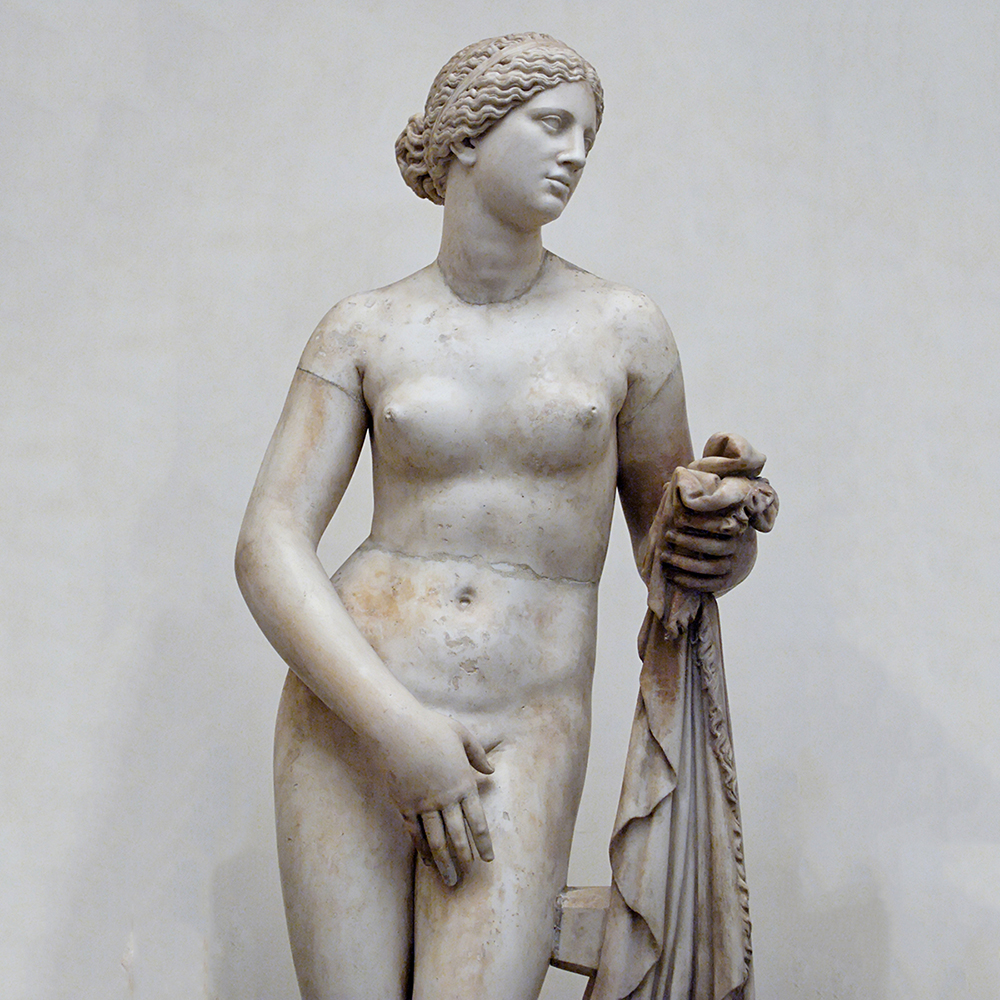
Greek Goddess Aphrodite of Knidos Statue
- Artist: Praxiteles
- Time: Circa 4th century BC (c. 350 BC)
- Material: Original marble (lost), extant works are mostly Roman copies
- Dimensions: Original dimensions unknown (lost), extant Roman copies are mostly close to life-size, approximately 180–200 cm high.
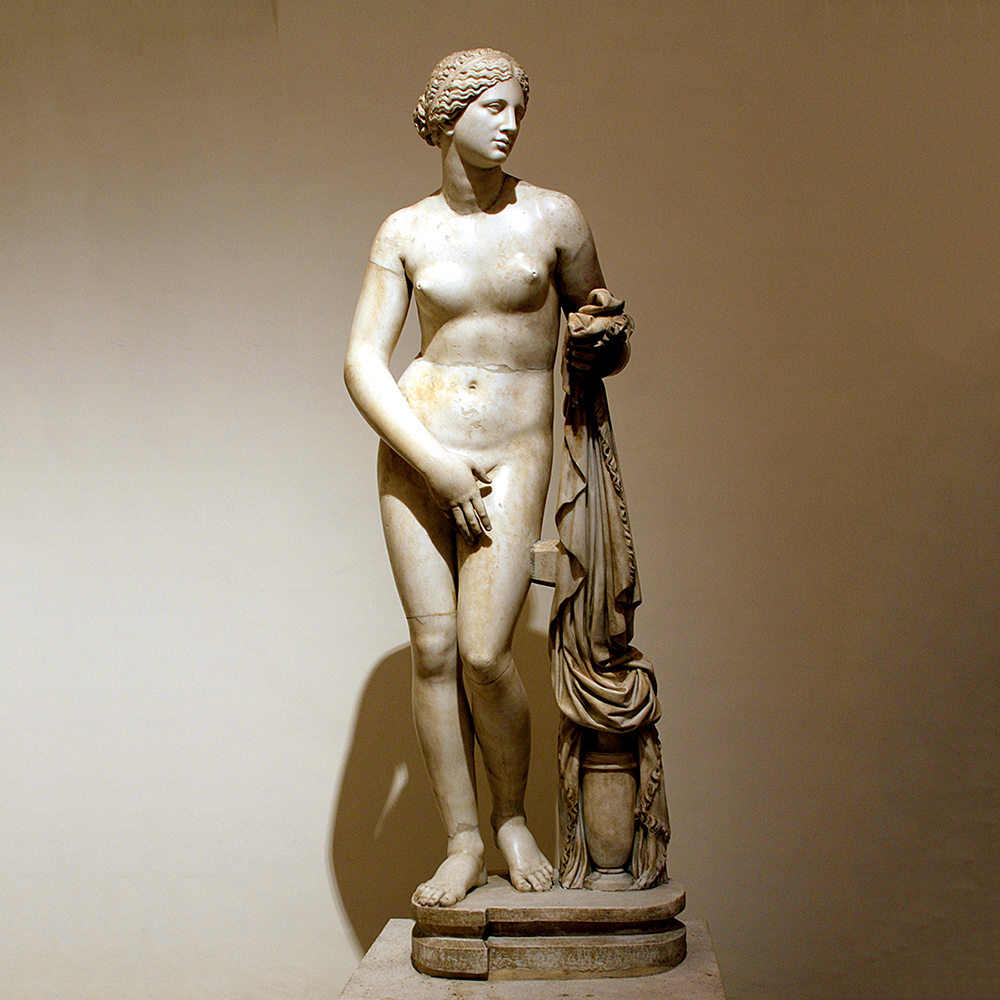
Appearance: This Aphrodite of Knidos depicts a standing nude woman, Aphrodite, with naturally soft proportions. The goddess covers her genitals with one hand and holds her hanging garment with the other, forming a typical “masked posture.” Her head is slightly turned to the side, her expression calm and restrained, the overall posture relaxed and natural, showcasing an elegant and subtle beauty.
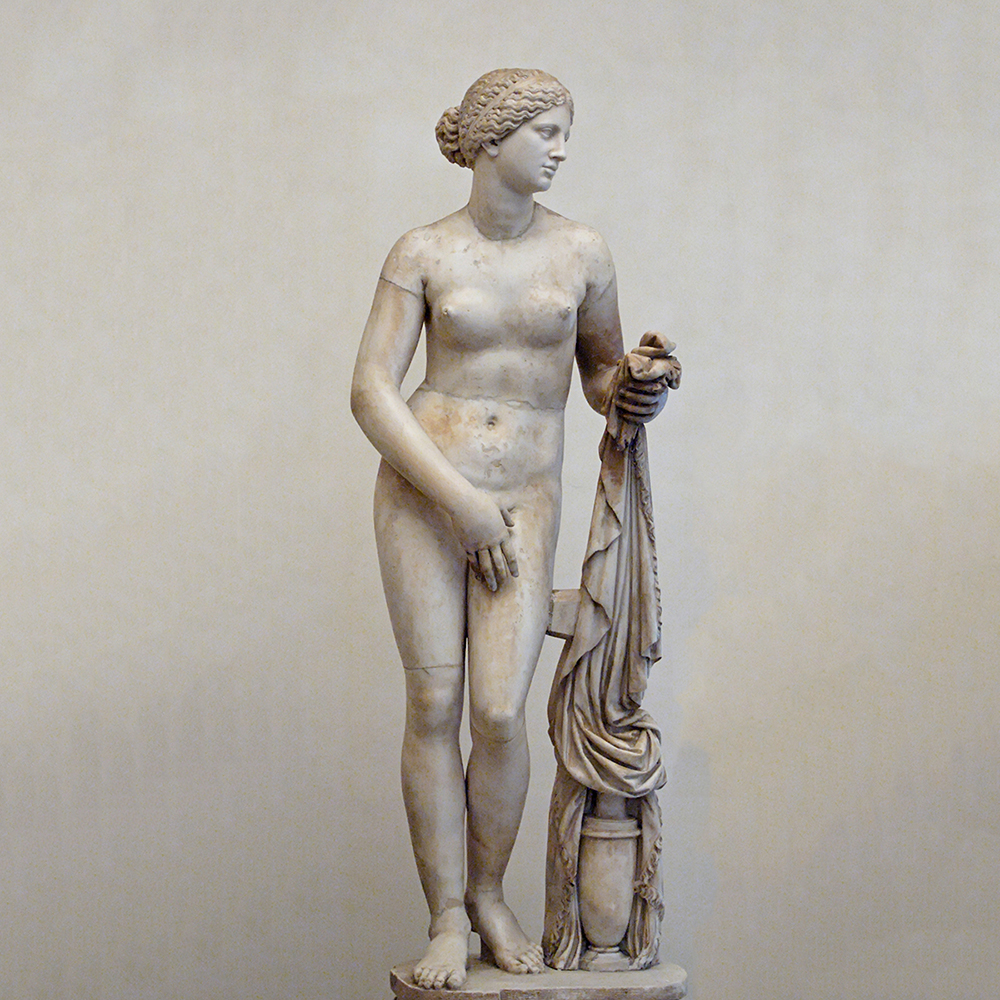
Artistic Significance: This Greek Goddess Aphrodite statue was the first to treat the female nude as an independent aesthetic object, pioneering the Venus Pudica type, and is considered the first life-size female nude statue in Western art history.
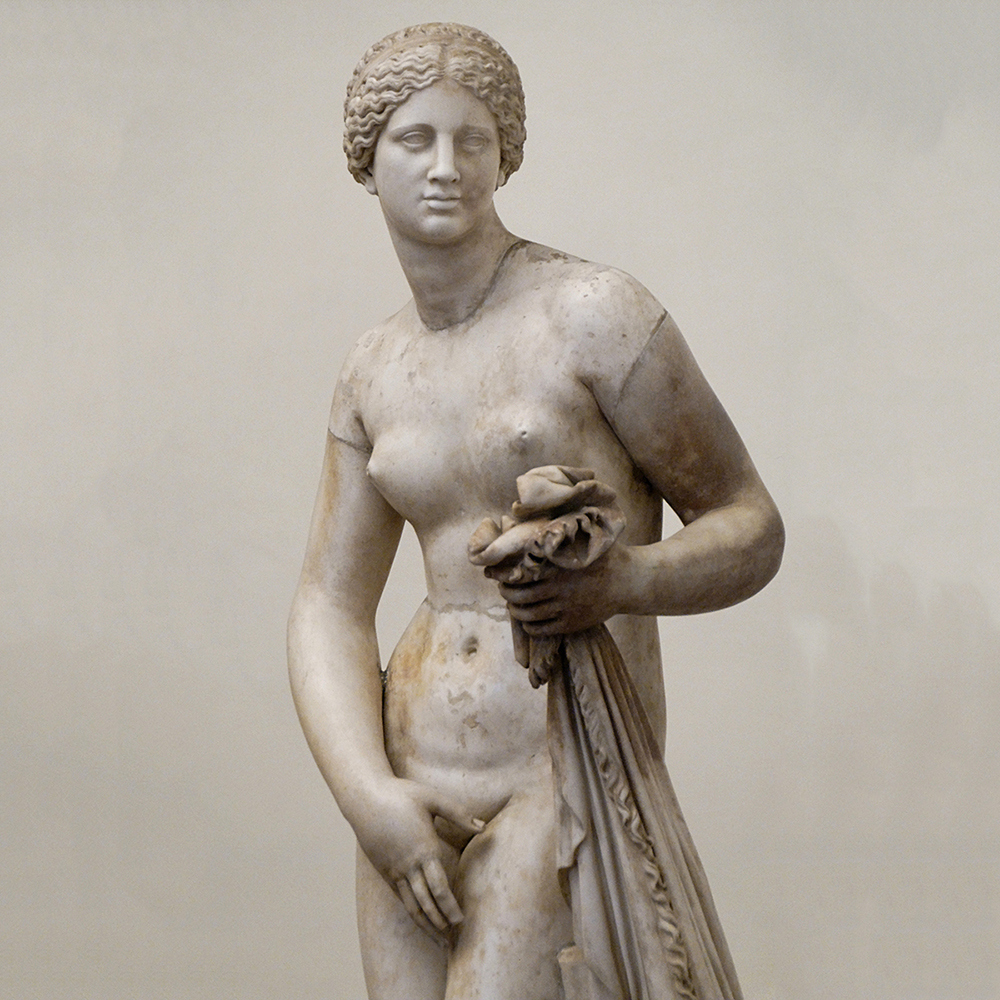
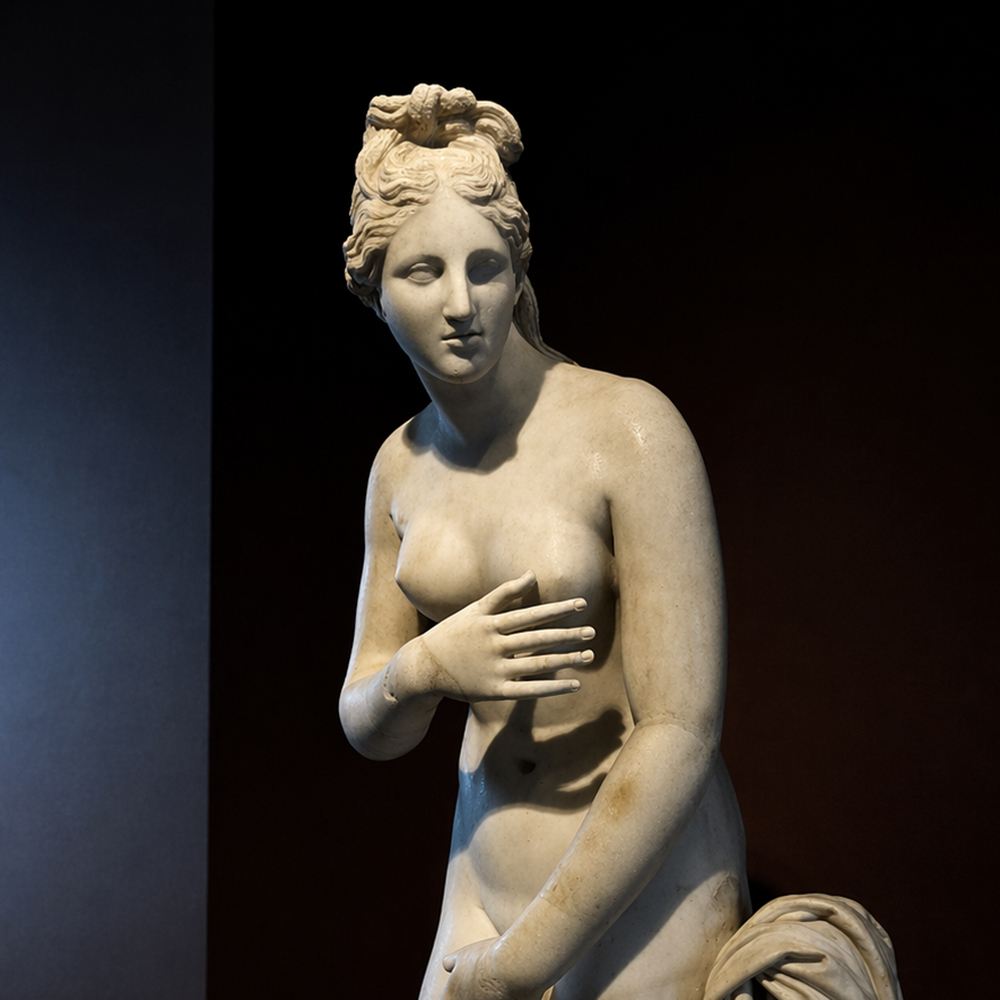
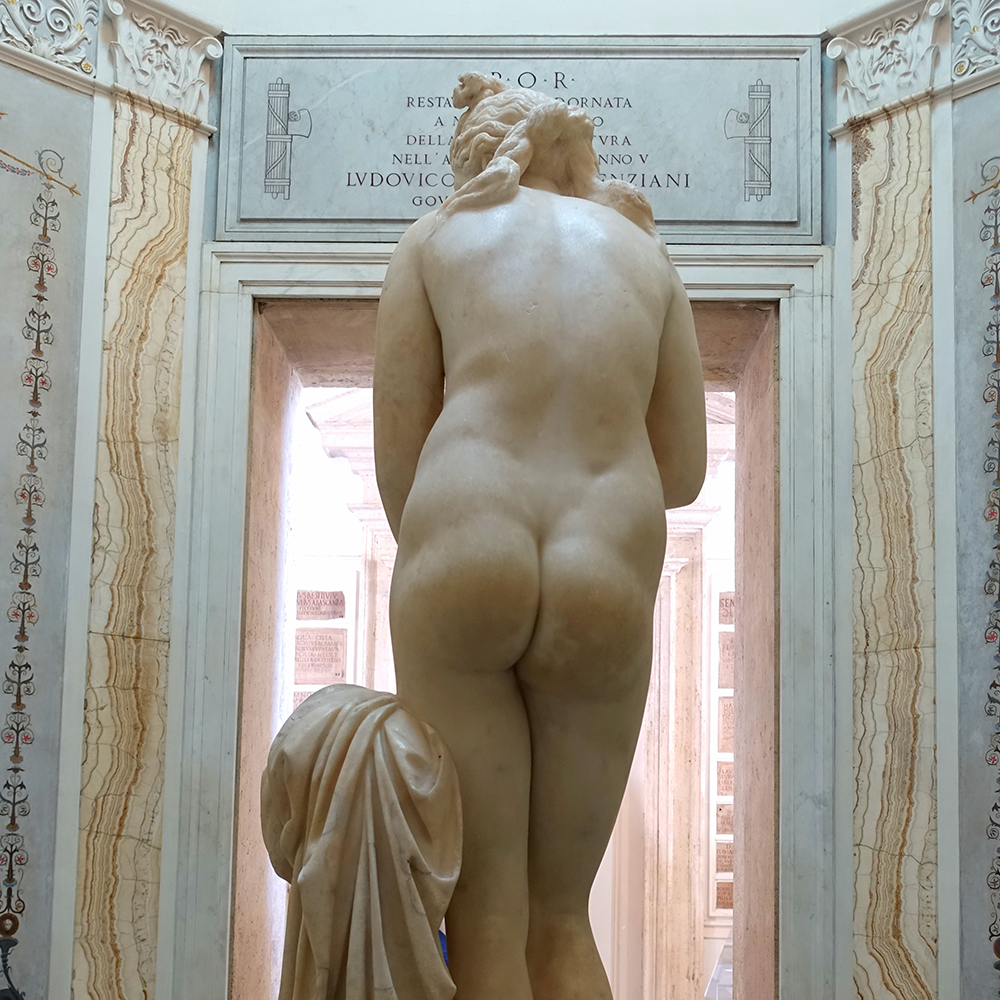
Capitoline Venus Statue
- Period: Ancient Rome, circa 2nd century AD
- Material: Marble
- Dimensions: Approx. 193 cm
- Collection: Capitoline Museums
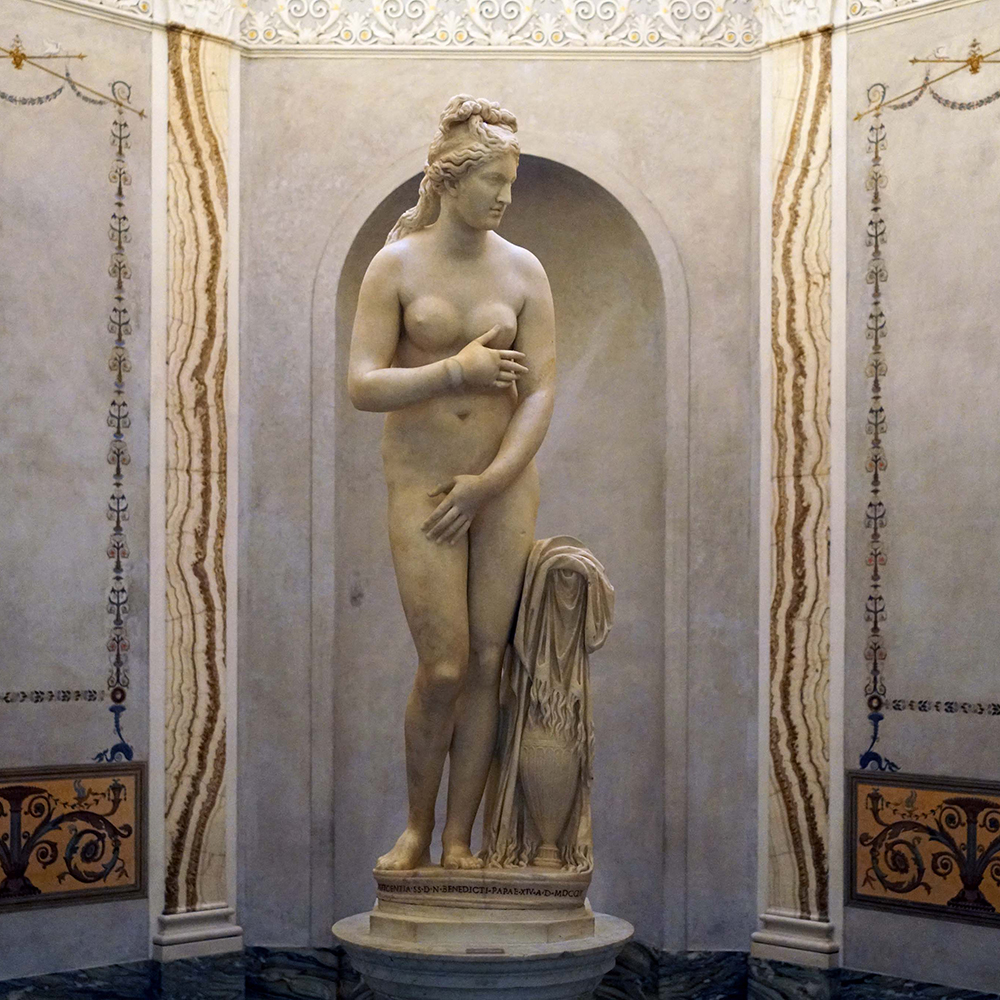
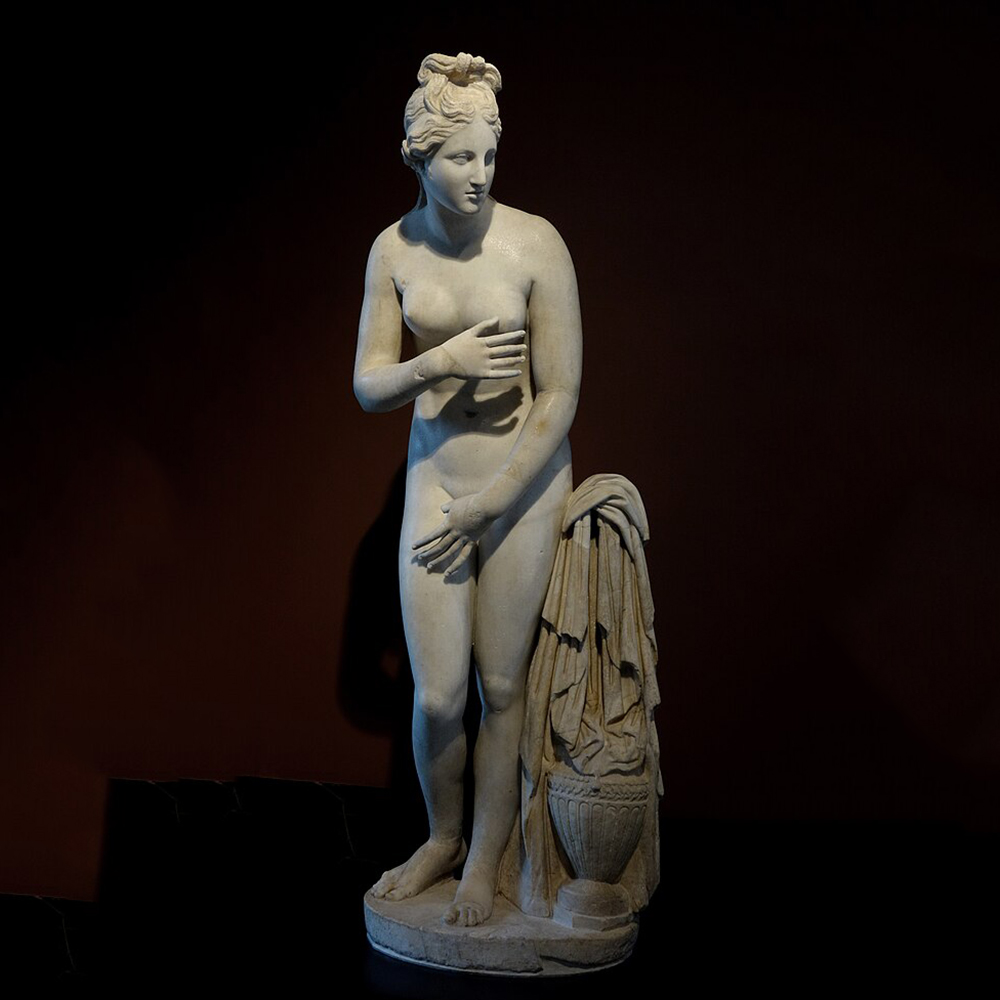
Appearance: The Capitoline Venus statue depicts a standing nude Venus, one hand covering her breast and the other her genitals, in a typical “covering-up” pose. The proportions are soft, the lines rounded, and the posture slightly twisted, presenting an elegant and understated classical beauty.
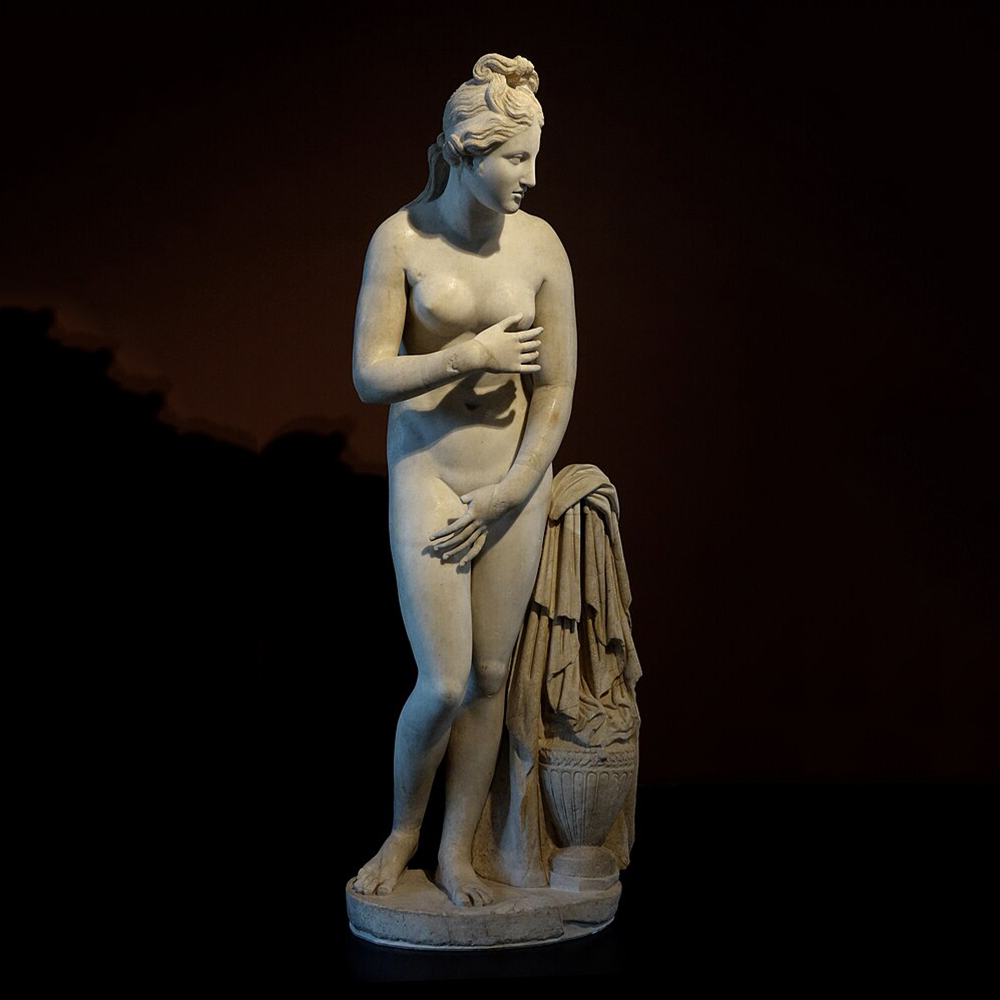
Artistic Significance: This Greek Goddess Aphrodite statue is a Roman copy and development of the Aphrodite of Knidos, considered one of the most standard representatives of the Venus Pudica type. It was widely circulated in ancient Rome and became an important model for artists studying human proportions and classical beauty during the Renaissance.
Venus de Medici Statue
- Period: Ancient Rome, circa 1st century AD (copy of the original Greek work)
- Material: Marble
- Size: Approx. 153 cm
- Collection: Uffizi Gallery
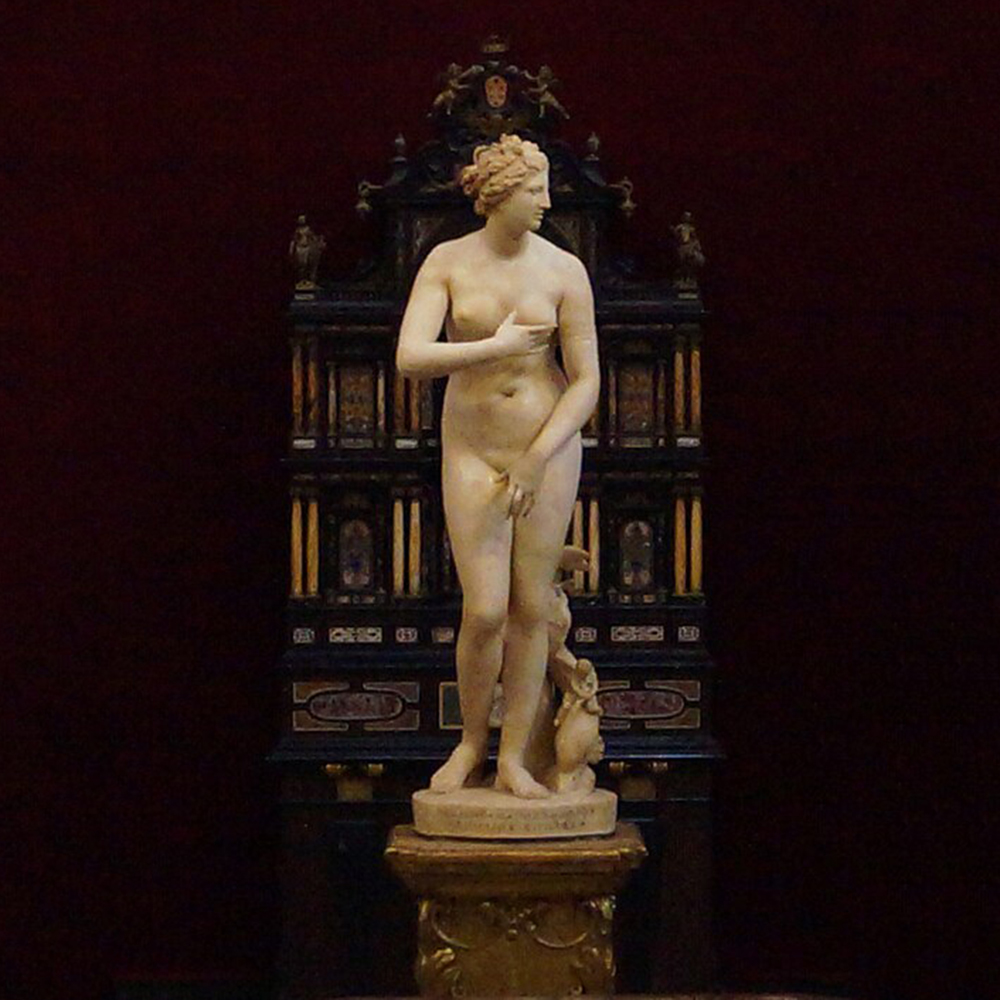
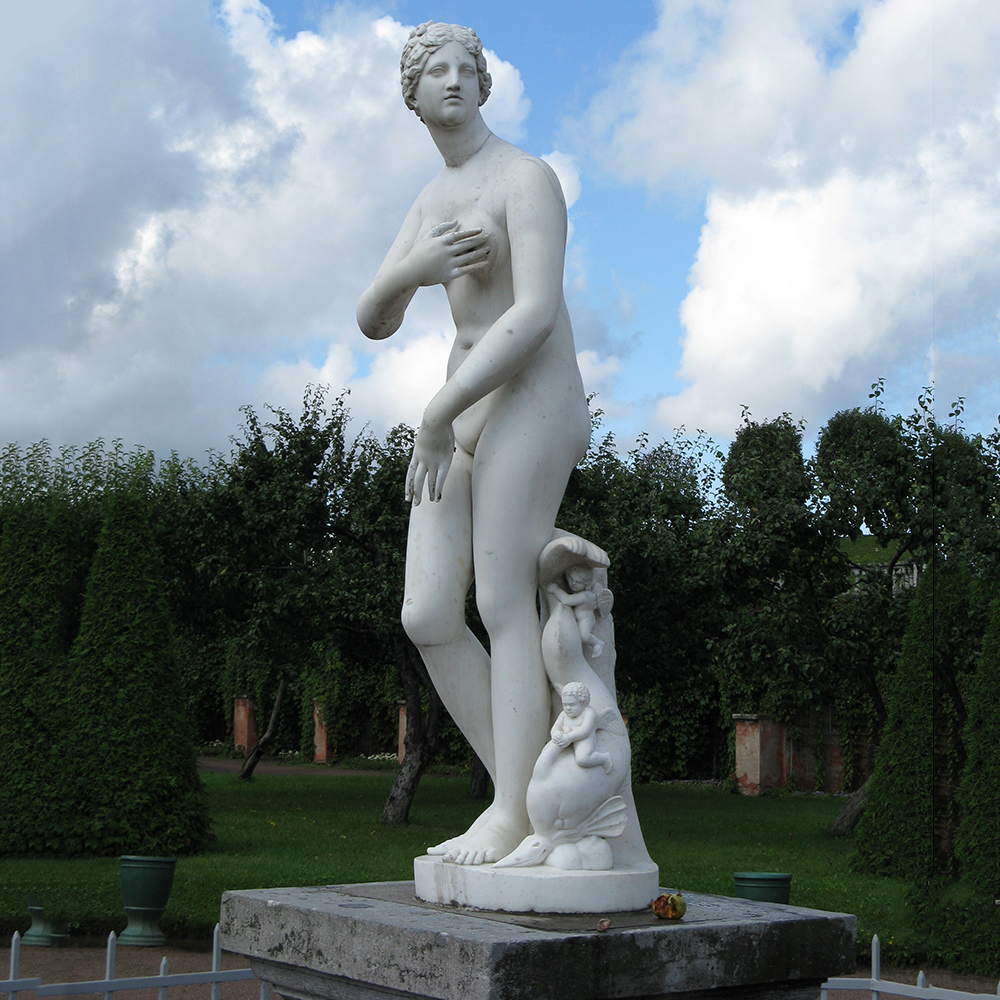
Appearance: Venus de’ Medici also adopts the Venus Pudica pose: standing naked, one hand covering her breast, the other covering her genitals, her body in a reversed stance with a slight twist, forming a flowing curve. Compared to Capitoline Venus, her figure is more slender and elongated, the pose slightly tense, with her arms close to her body enhancing the sense of contraction; her head is slightly tilted, and her expression is soft and reserved.
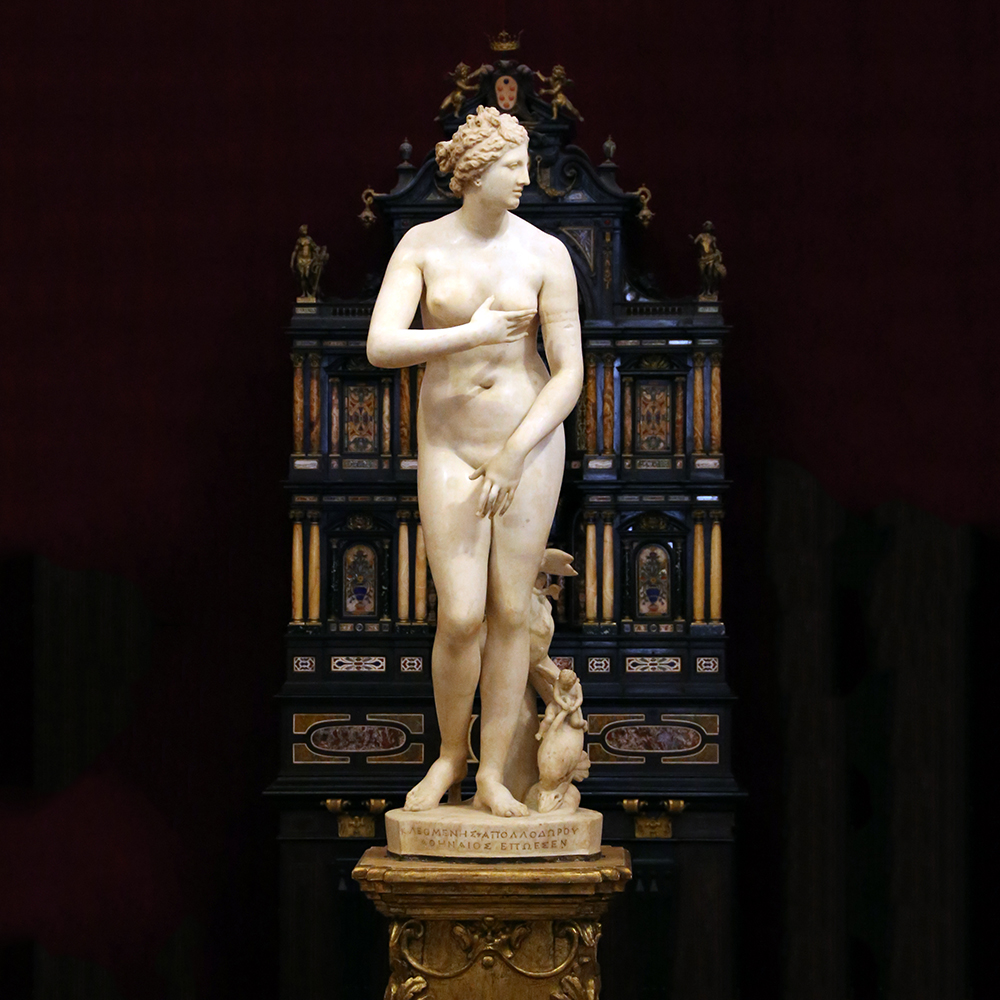
Beside her stands a supporting element in the form of a dolphin with a small Eros (Cupid), which both stabilizes the marble composition and alludes to her birth from the sea.
Greek Goddess Aphrodite Bathing Statue
“Bathing Aphrodite” is an important type of Aphrodite sculpture, mainly depicting the goddess bathing. This type emphasizes the natural state of the body and intimate moments, and compared to the idealized poses of Pudica, it is more lifelike and dynamic, reflecting the Hellenistic period’s focus on the real human body and its context.
Crouching Venus Statue
- Period: Originating in the Hellenistic period (circa 3rd century BC), most extant copies are ancient Roman reproductions.
- Sculptor: Generally believed to be based on the original work by the sculptor Doidalsas of Bithynia.
- Material: Mostly marble.
- Size: Mostly close to life-size or slightly smaller.
- Current Status: The original is lost; most are found in Roman copies.
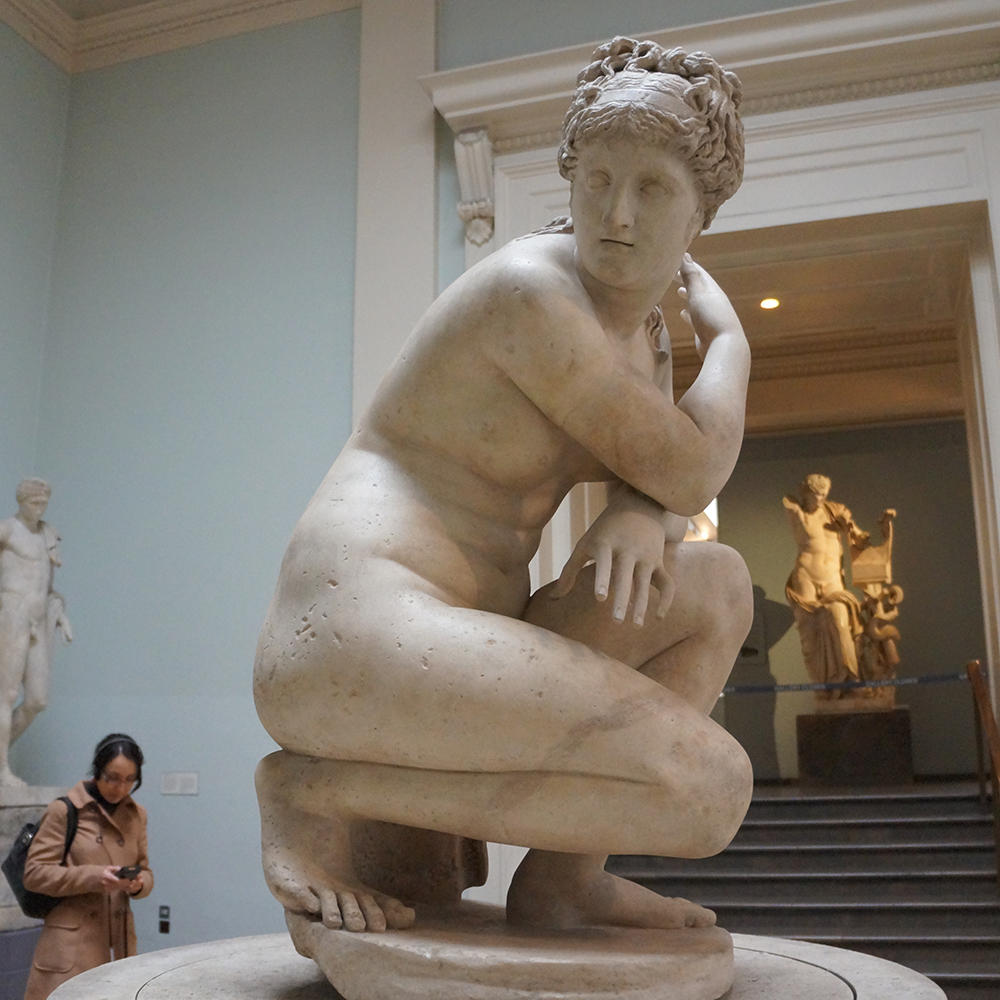
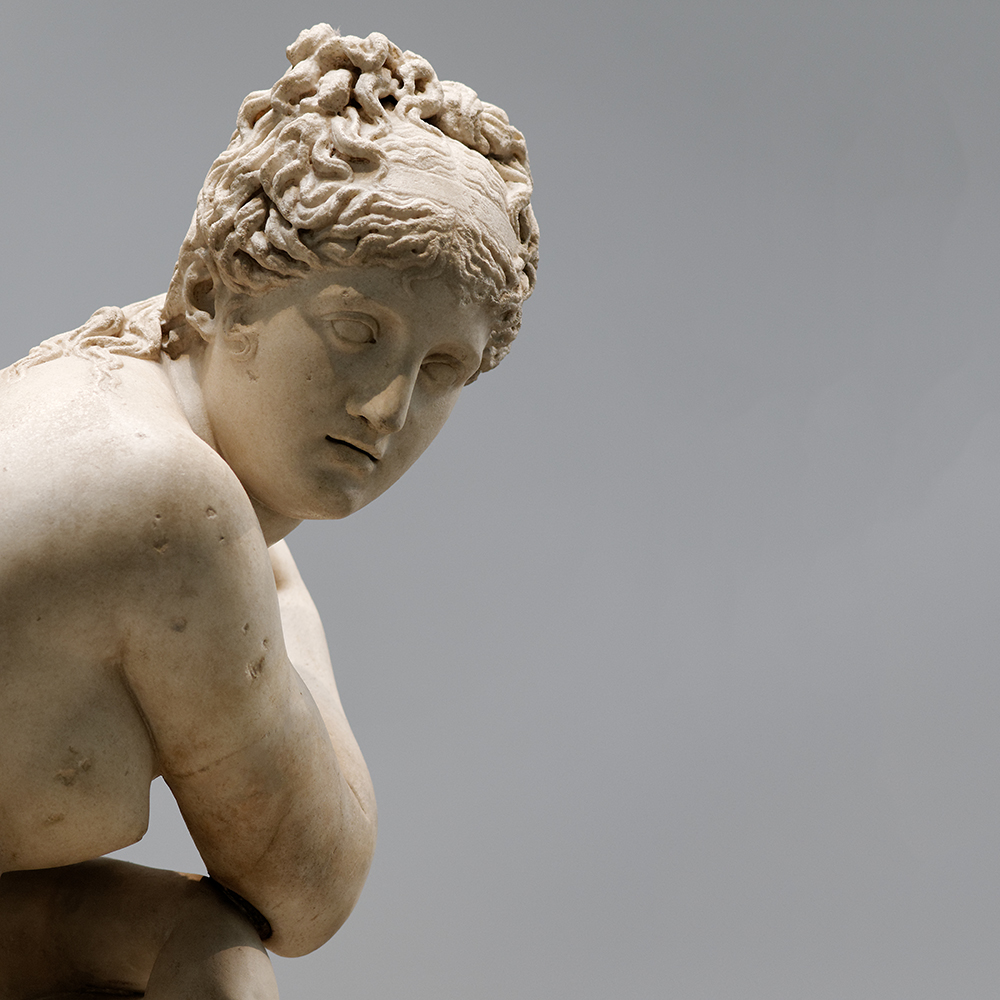
Appearance: Crouching Venus depicts the moment Venus is suddenly disturbed while bathing: she crouches, one leg bent to bear weight, the other drawn up, her torso leaning forward and slightly twisted, her arms wrapped around her body as if to cover herself, forming a compact and dynamic pose. The overall proportions remain idealized, but the pose is more lifelike and momentary.
Aphrodite of Rhodes Statue
- Alternative Name: Crouching Venus of Rhodes
- Type: Marble Sculpture
- Creation Time: circa 2nd–1st century BC (Hellenistic Period)
- Discovery Time: Unearthed in Rhodes in 1923
- Collection: Archaeological Museum of Rhodes
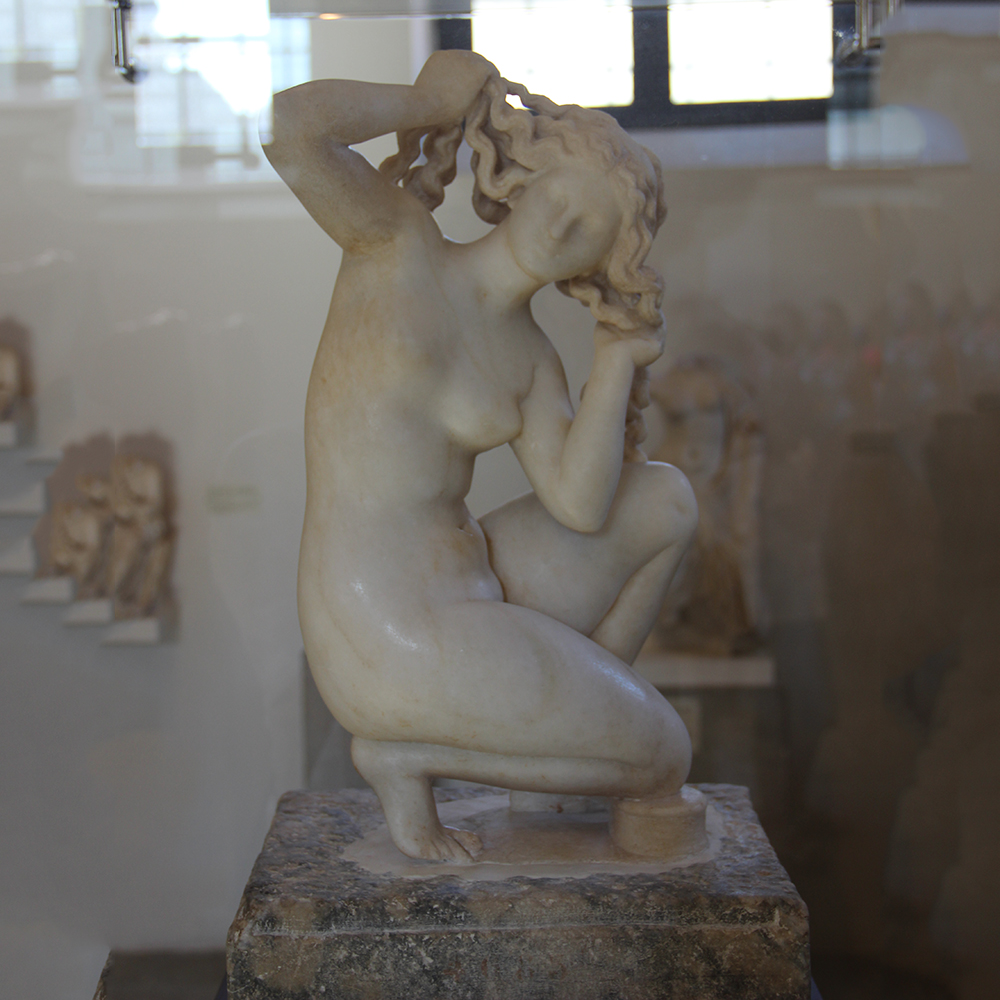
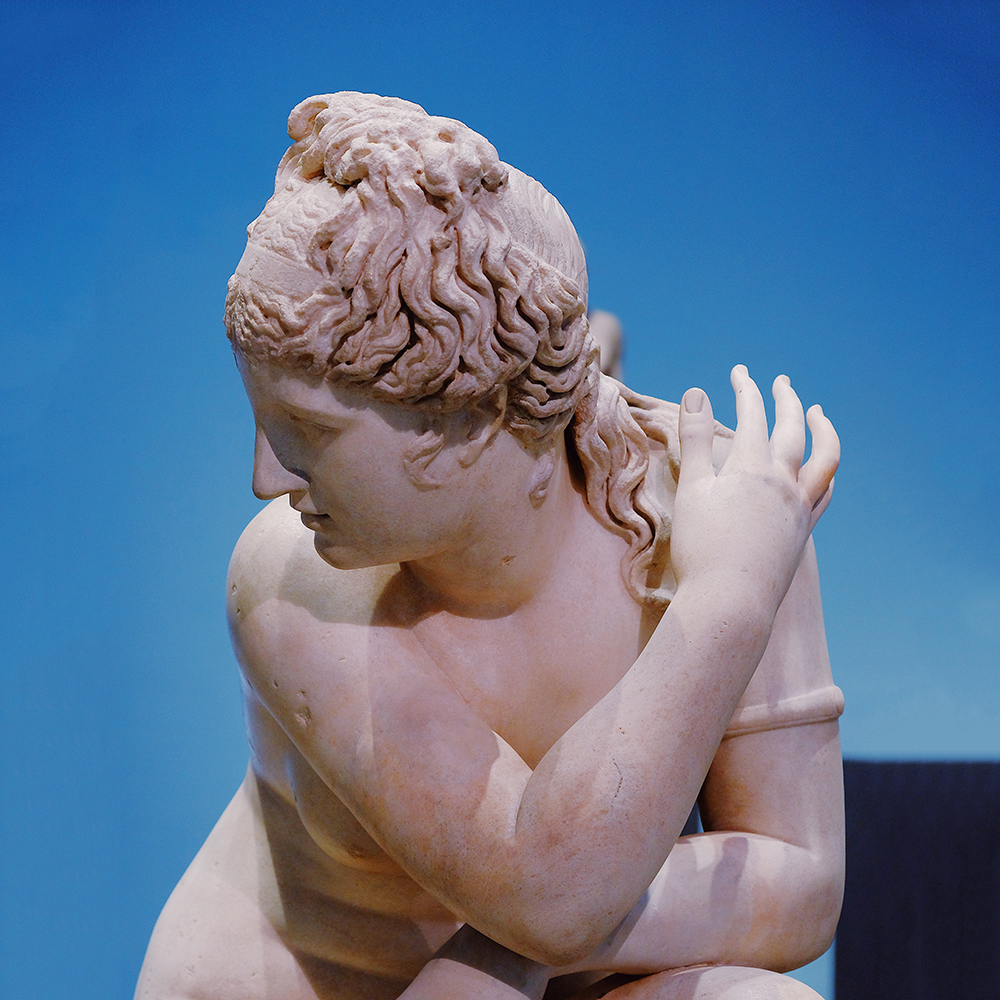
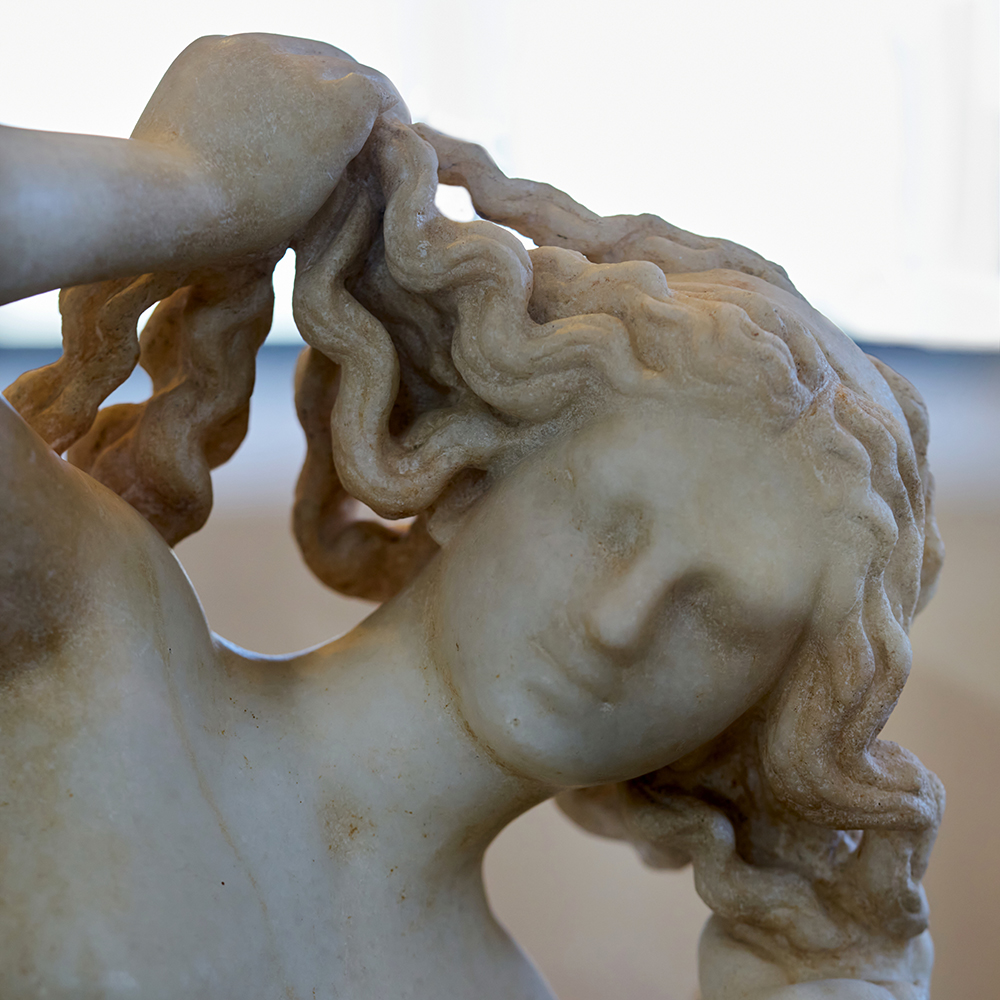
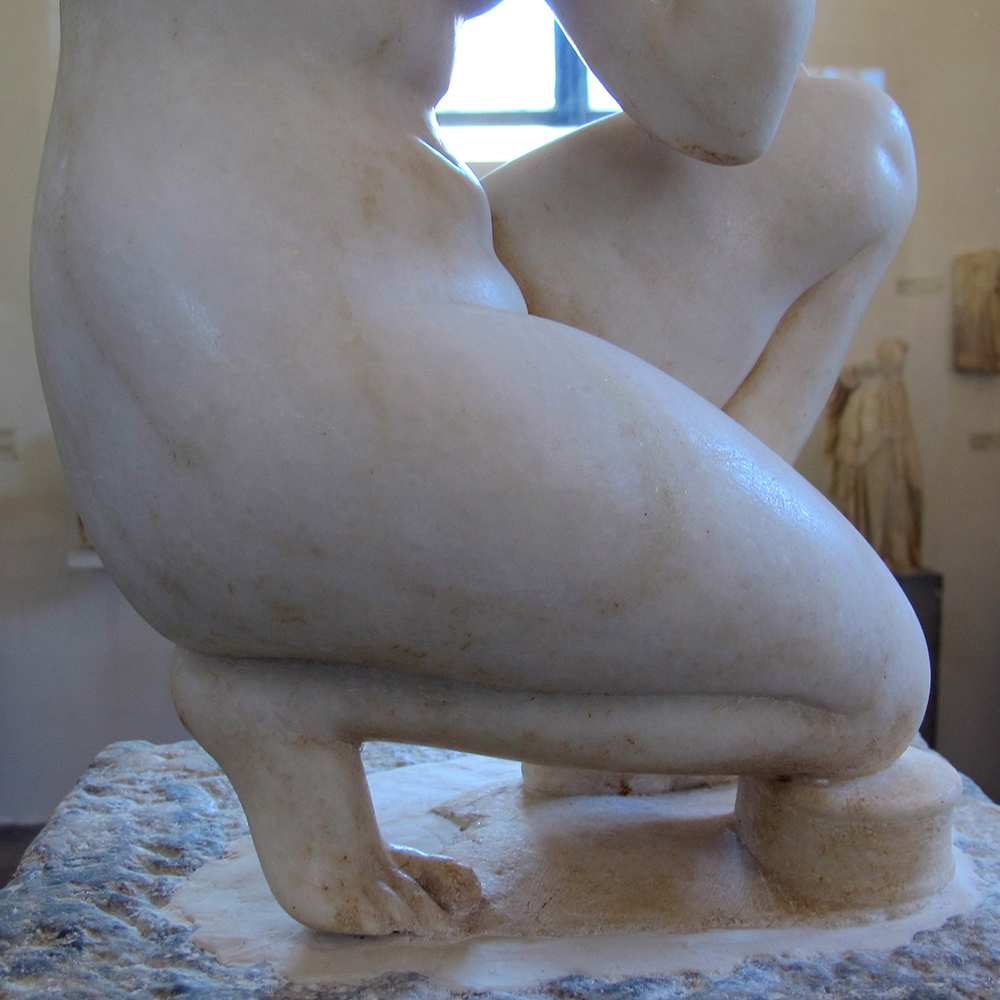
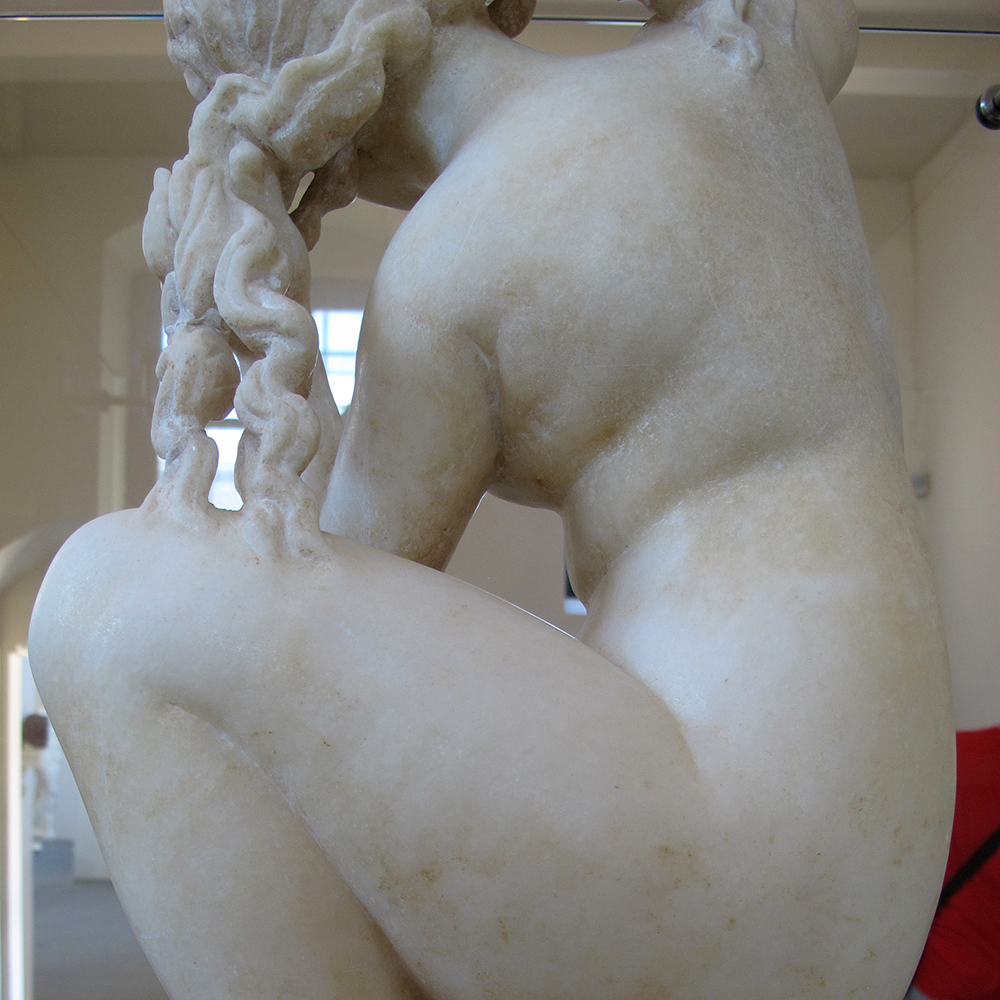
Appearance: The Aphrodite of Rhodes statue depicts Aphrodite in a crouching posture, one knee close to the ground, her body slightly twisted. She raises her hands to arrange or wring her hair, her head turned to one side. Unlike the typical crouching Venus with its “covered body,” this figure is more open, directly displaying the body, with a natural and fluid overall movement. This Greek Goddess Aphrodite Statue is a variation of the Crouching Venus type, incorporating the action of “wringing hair after bathing,” combining elements of both Bathing and Anadyomene.
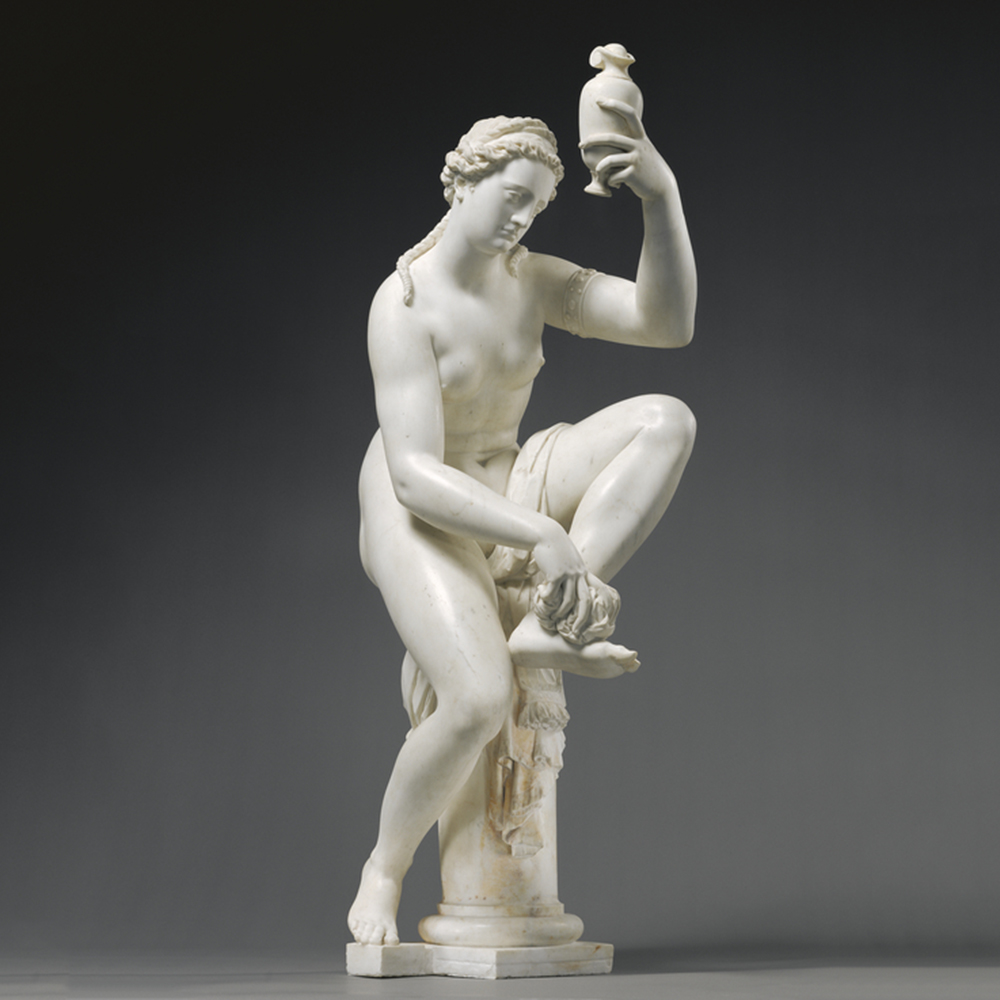
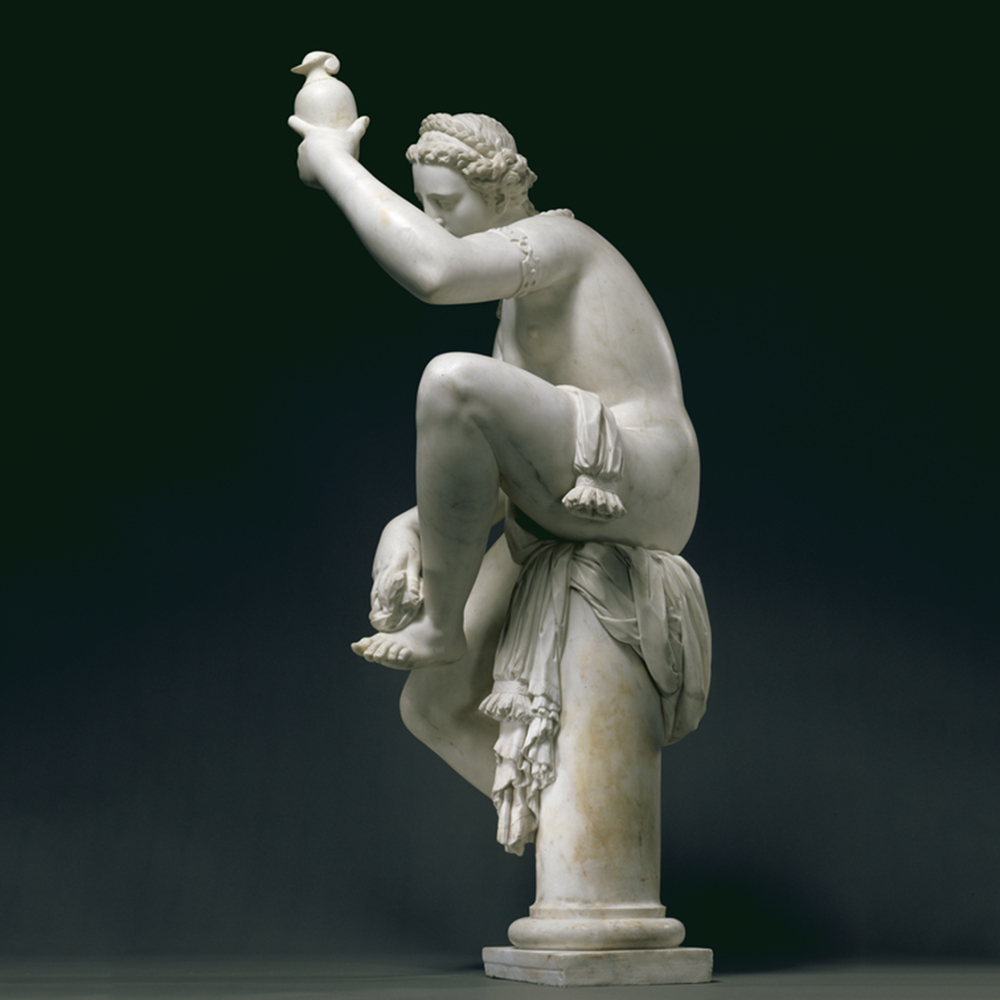
Bathing Venus Sculpture
- Creation Time: Circa late 16th century (representative bronze version circa 1597)
- Material: Bronze or marble (multiple versions exist)
- Dimensions (Bronze version): Approximately 112 cm high
- Historical Background: Once a diplomatic gift from the Medici family to King Henry IV of France
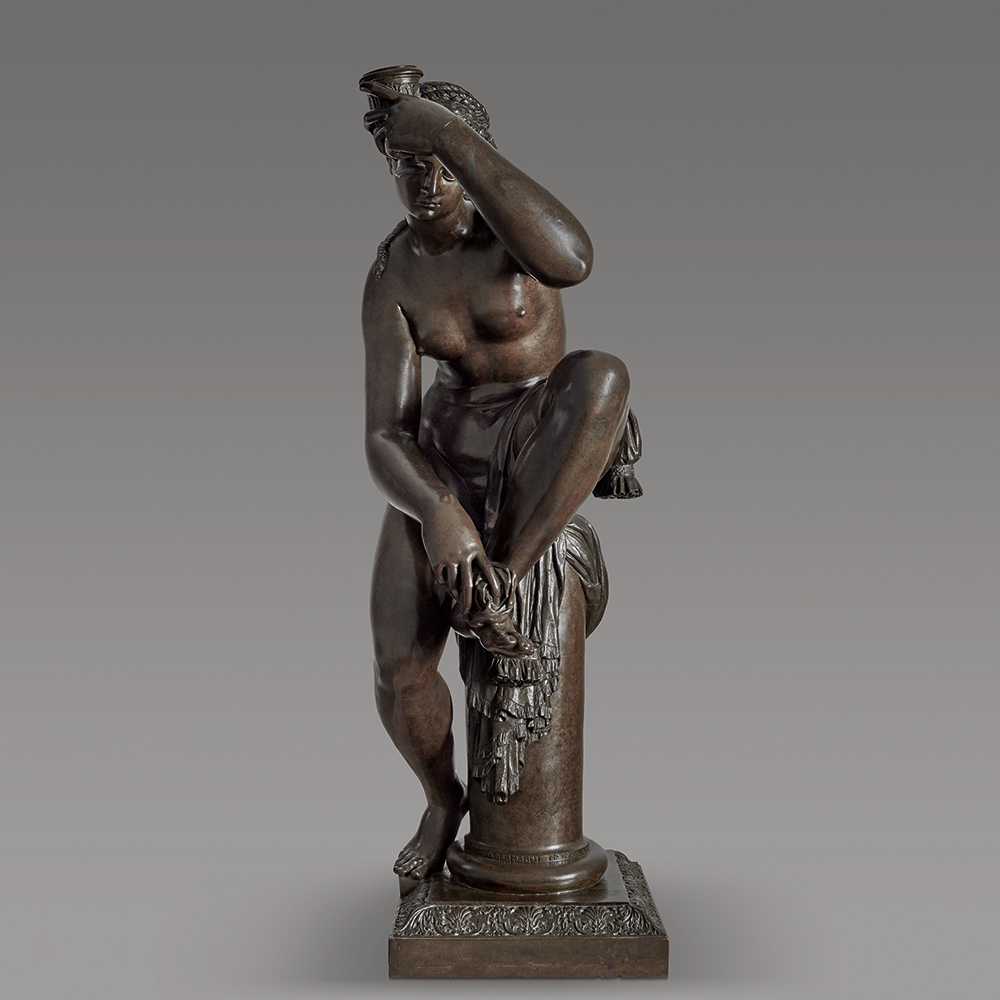
Appearance: This Bathing Venus sculpture depicts Venus bathing: she sits on a columnar pedestal, one leg raised, the other naturally supporting her weight. One hand is raised to her head (or holding a vessel), while the other reaches down to wash her feet; the movements are fluid and natural.
Display-Type Greek Goddess Aphrodite Statues
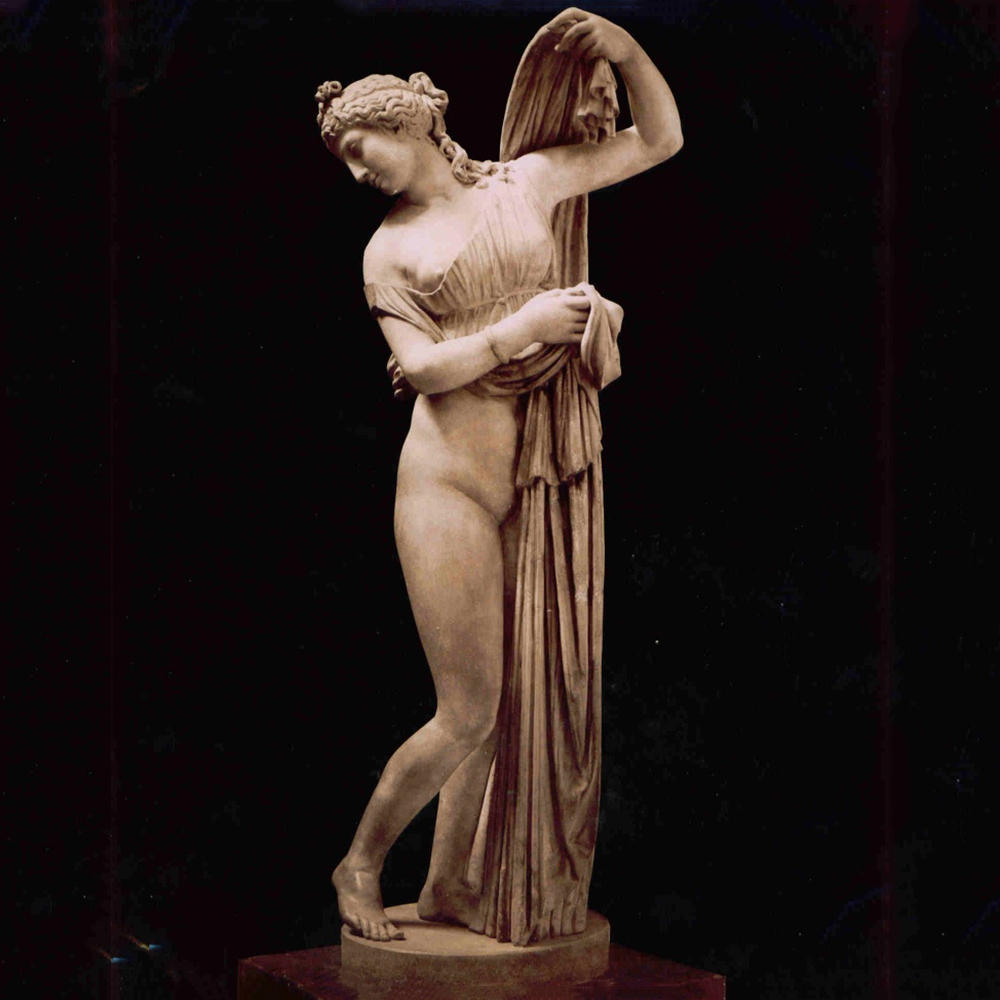
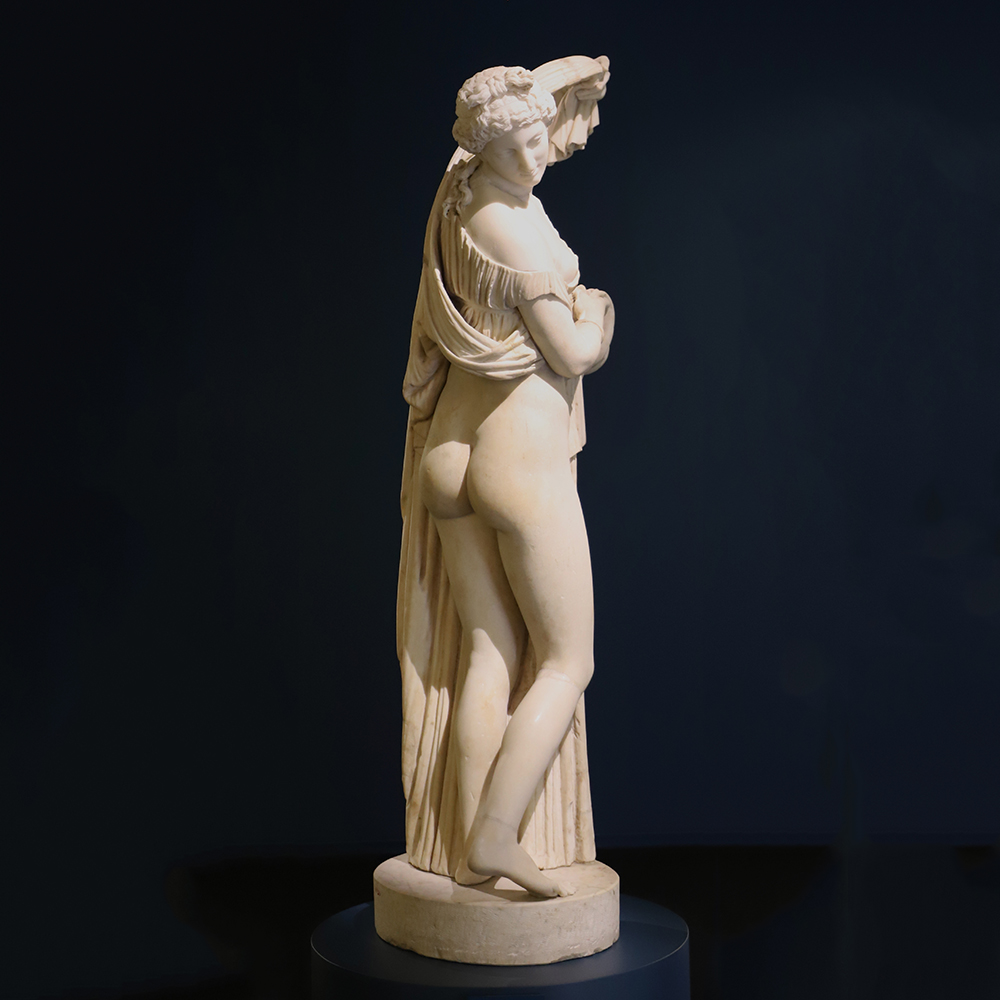
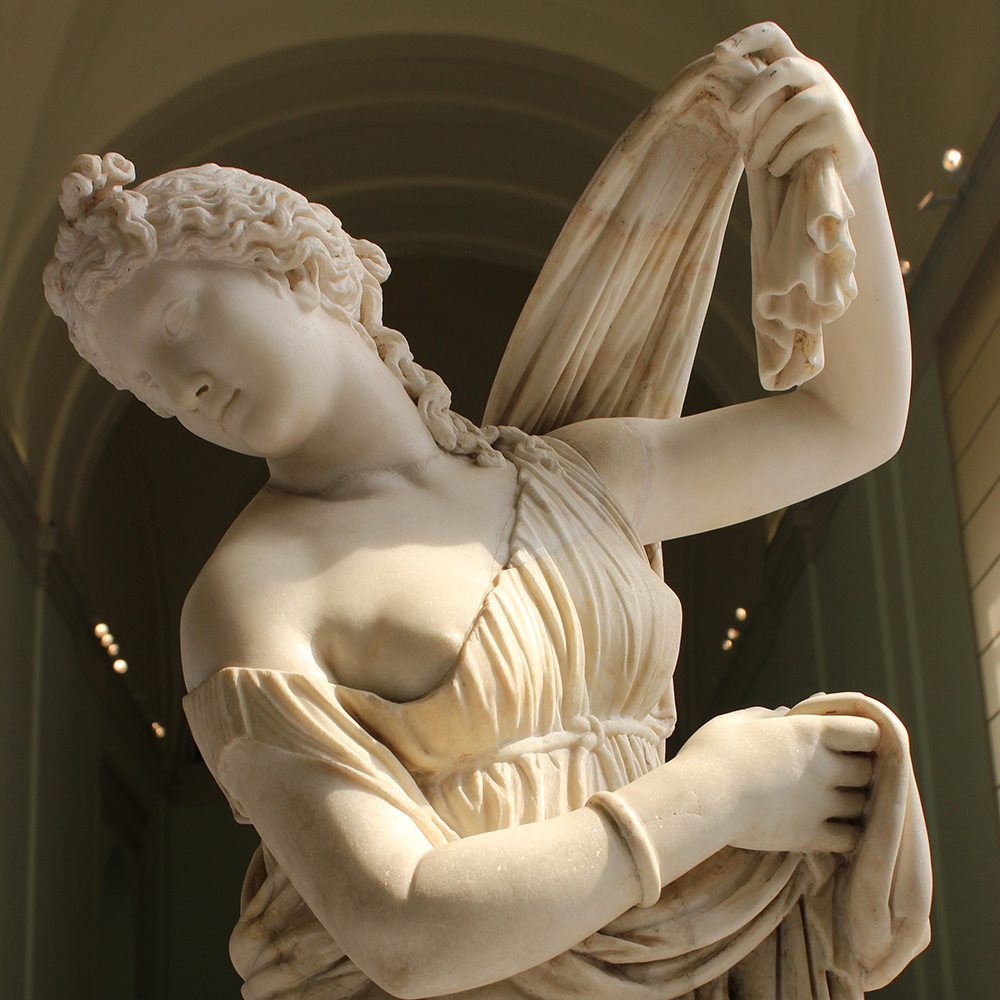
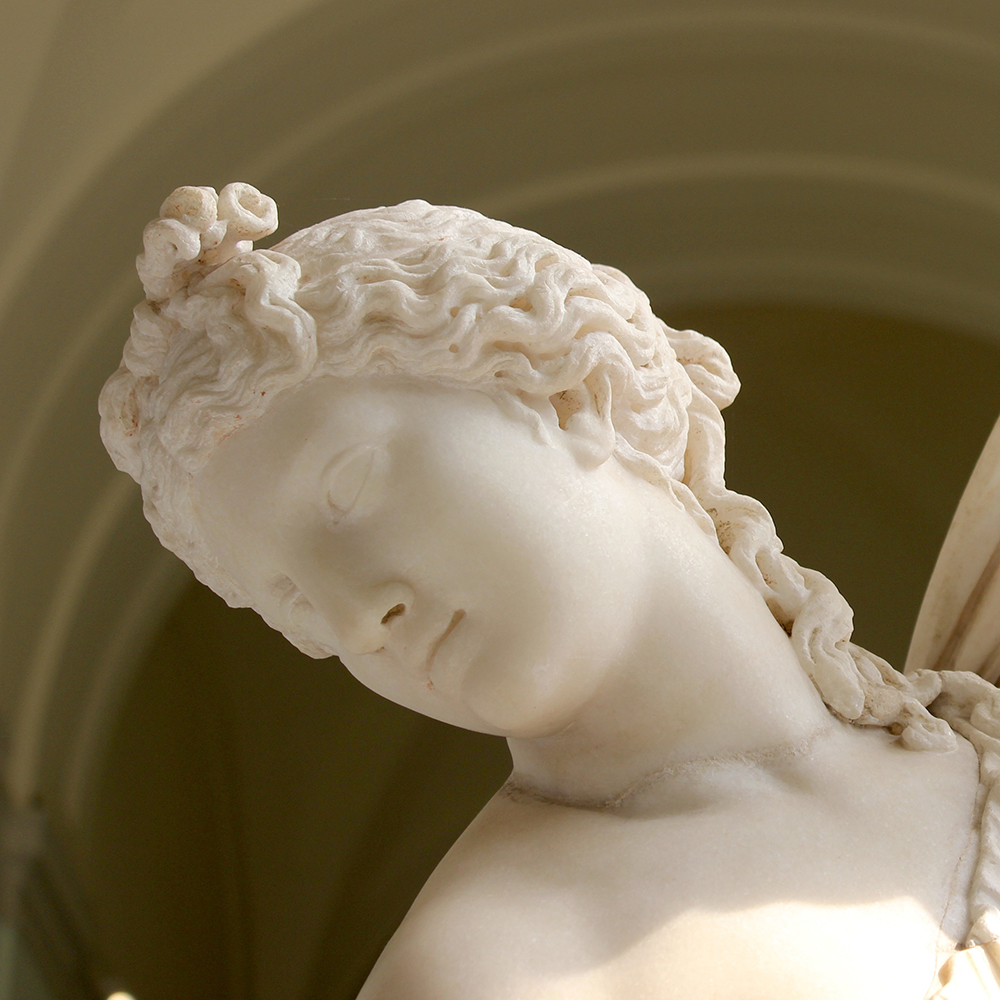
Venus Callipyge Statue
- Type: Marble Sculpture
- Era: Roman period copy (c. 1st–2nd century AD)
- Prototype: Based on a Hellenistic work (original lost)
- Location: National Archaeological Museum of Naples
- Name Meaning: “Callipyge” (Greek: kallipygos) means “possessing beautiful buttocks”
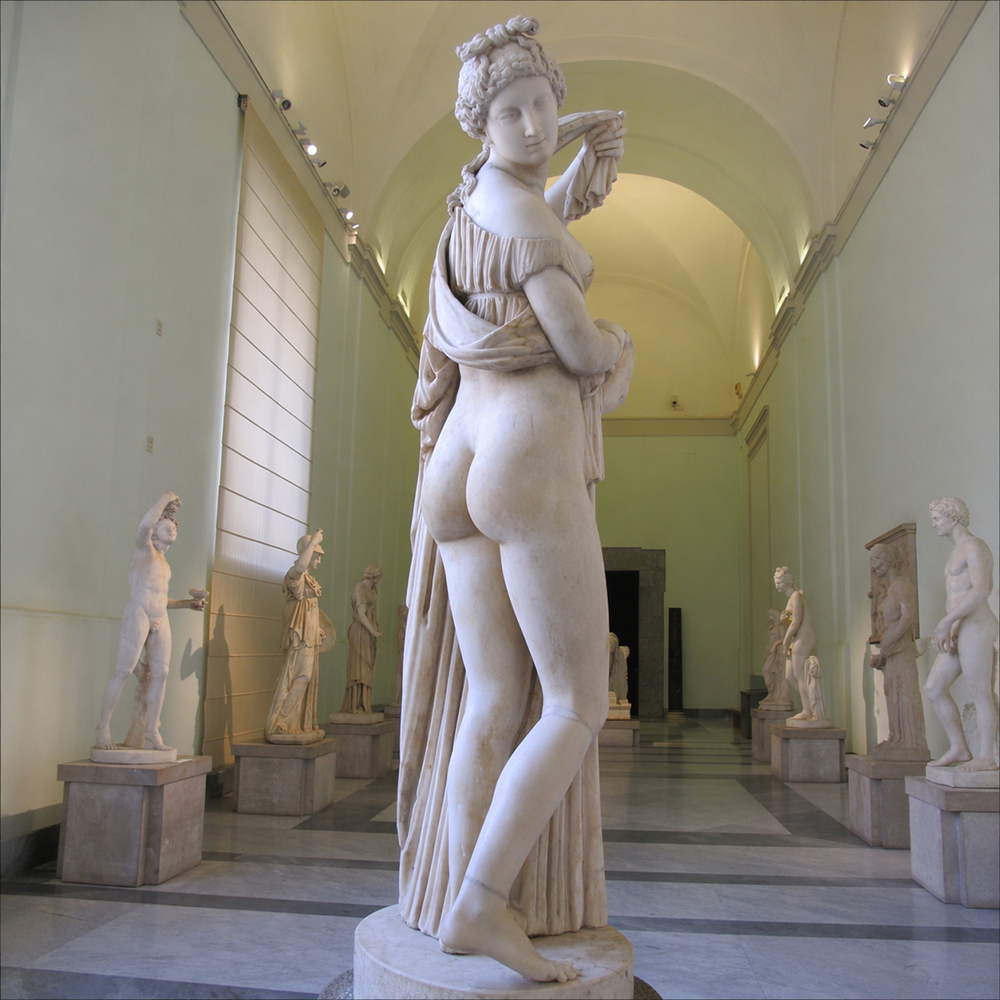
Appearance: Venus Callipyge sculpture emphasizes the rear of the body in a unique and direct way: the figure stands, her body twisted, her back facing the viewer, while simultaneously looking back at herself, creating a strong visual guide. She lifts her lower garments with both hands, raising the fabric to reveal her buttocks—a gesture that is both a display and a self-reflection. Unlike other Venuses that emphasize subtle or frontal proportions, this work is more dramatic and self-conscious.
Anadyomene Greek Goddess Aphrodite Statues (Rising from the Sea)
Ludovisi Throne
- Type: Marble relief (not a true “throne,” but more likely an altar or architectural decoration)
- Creation Time: Circa 460 BC (Early Classical Greece)
- Place of Excavation: Near Rome, Italy (discovered in the 19th century)
- Collection: Palazzo Altemps (a branch of the National Museum of Rome)
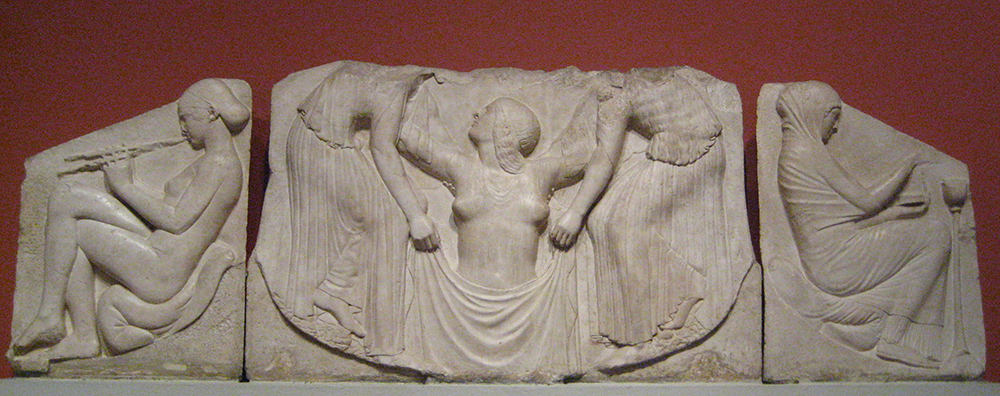
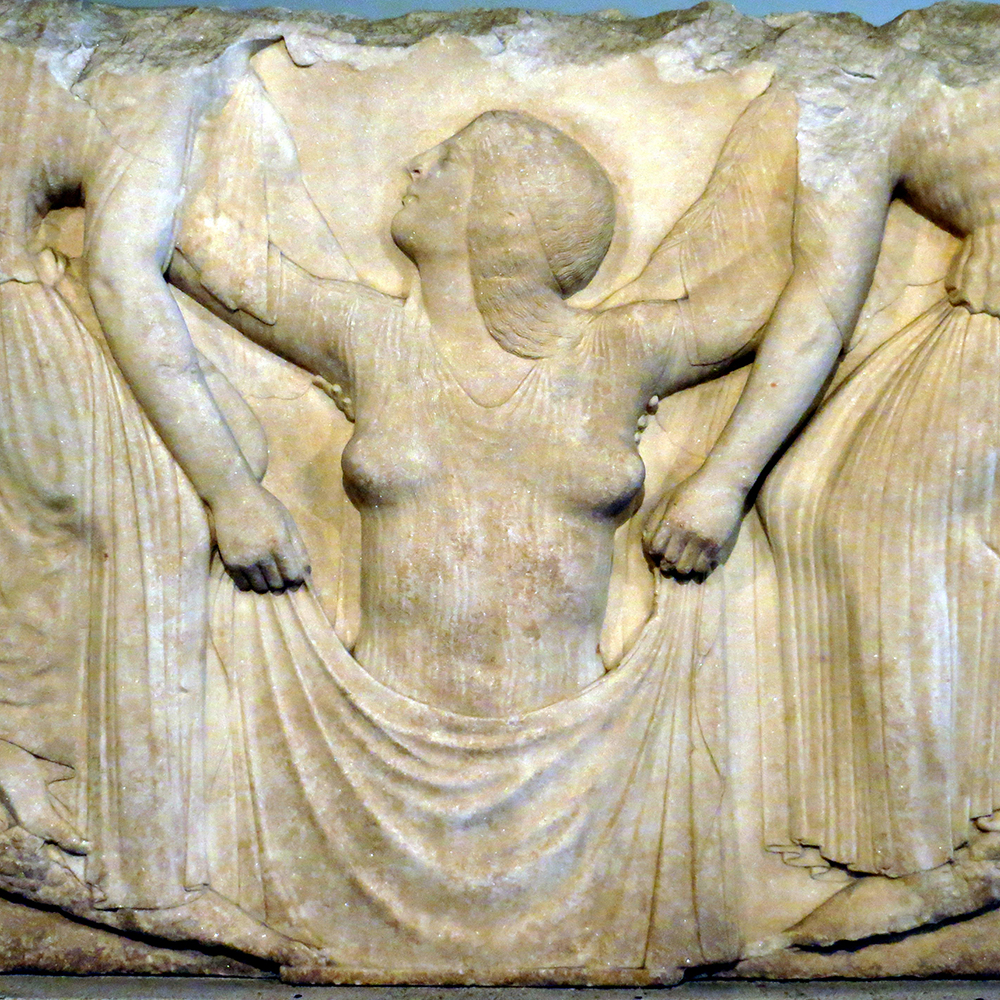
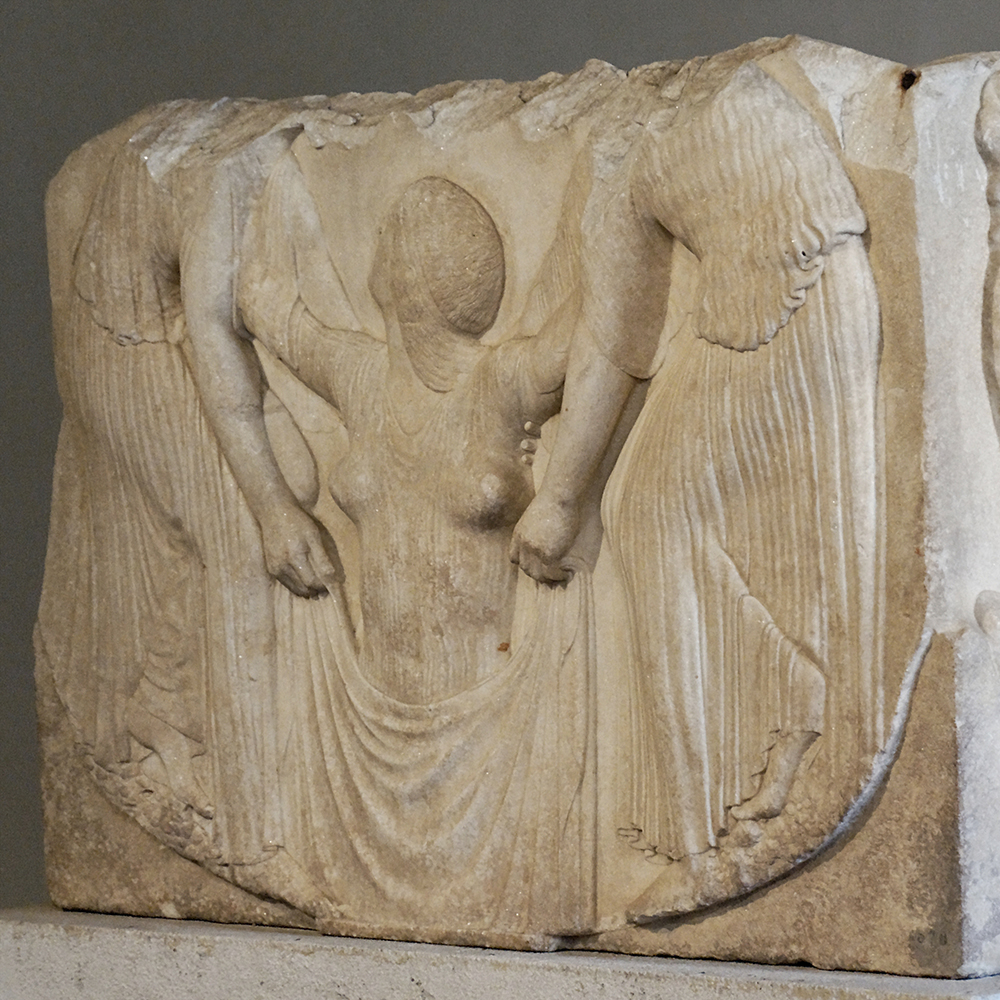
Appearance: The Ludovisi Throne consists of three marble reliefs: the central panel depicts a woman (usually believed to be Aphrodite) rising from the water, assisted by attendants on either side, lifting her to the surface; the two side panels each depict a different female figure—one side shows a woman dressed formally, performing a religious ceremony (possibly burning incense), and the other side shows a nude woman playing an aulos.
The overall composition is simple and symmetrical, the figures’ postures are relatively flat but proportionally harmonious, and the drapery is meticulously rendered, reflecting the transition from rigidity to naturalness in early Classical sculpture. Simultaneously, the central “emergence from the water” theme creates a symbolic contrast and connection with the scenes on either side.
Greek Goddess Aphrodite Anadyomene Statue
- Meaning: “Anadyomene” means “rising from the water”.
- Artistic Origins: The earliest known work can be traced back to the ancient Greek painter Apelles’s work of the same name (now lost).
- Era: Originating in ancient Greece, it was copied in Rome and widely developed during the Renaissance.
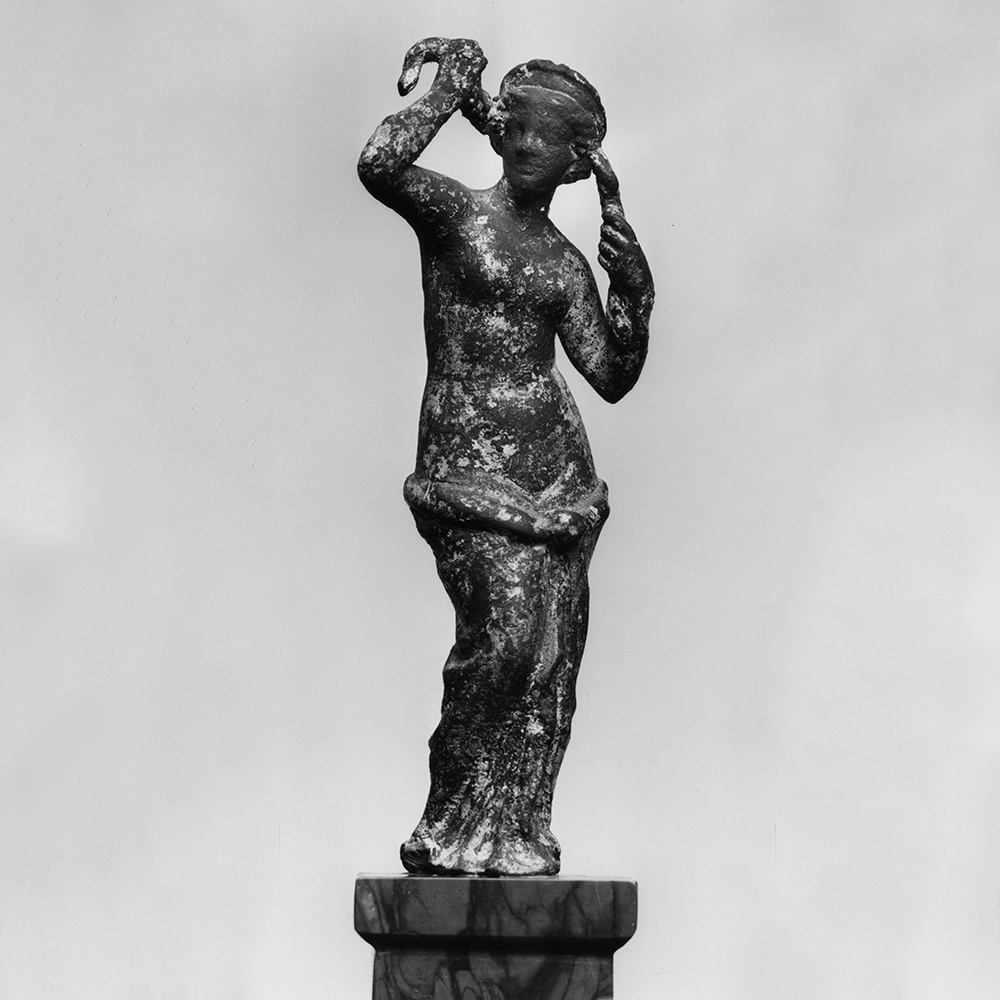
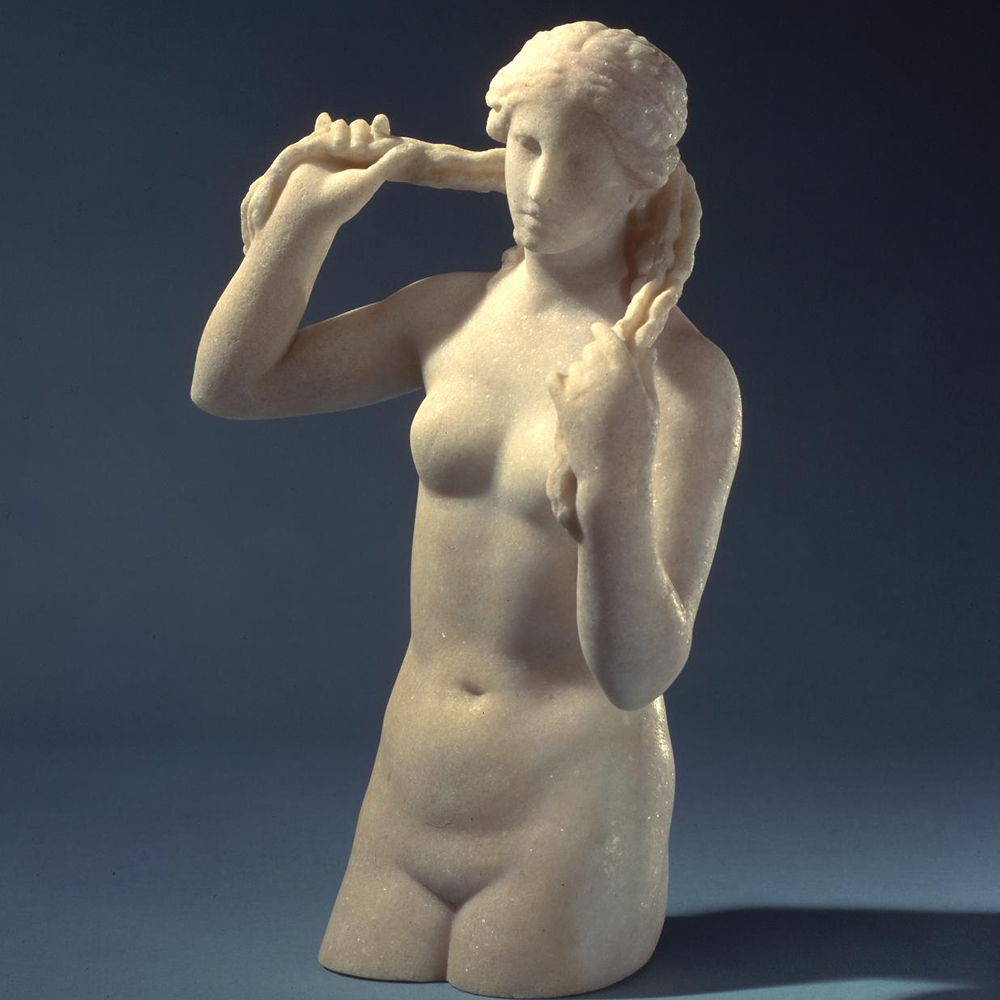
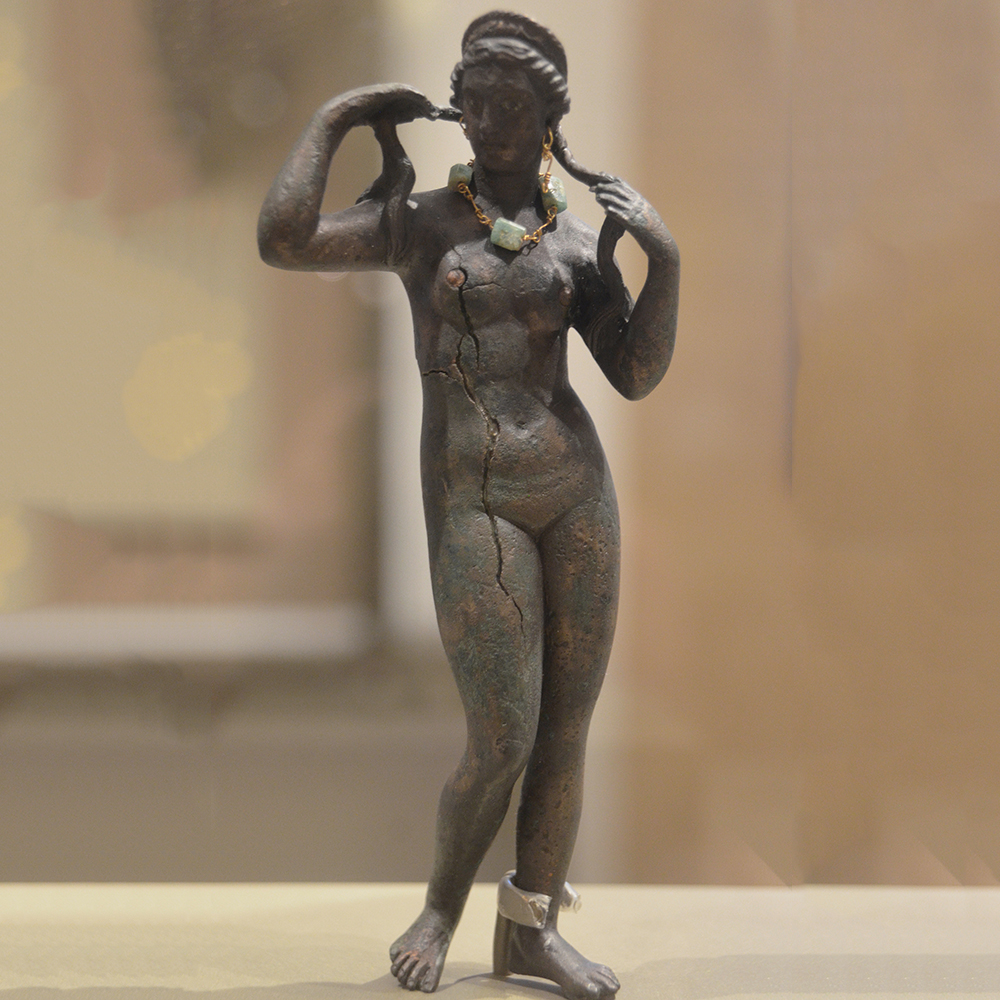
Appearance: The Greek Goddess Aphrodite statue depicts the moment Aphrodite is born from the sea, most notably in the gesture of raising her hands to wring out her hair. The body is depicted in a natural standing or slightly twisted posture, often accompanied by water imagery. The overall form is fluid, emphasizing the continuity of body lines and movement.
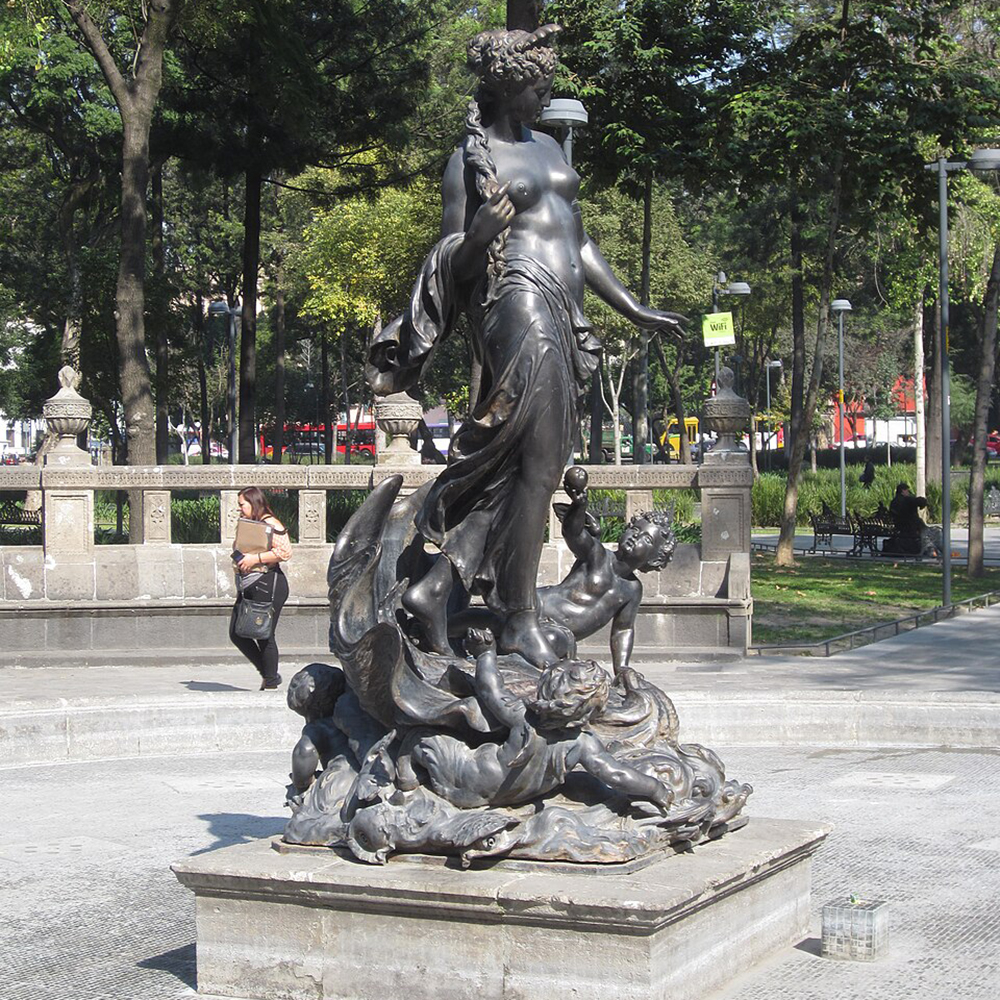
Fountain of Aphrodite
- Artist: Mathurin Moreau
- Date: 19th century (circa 1866)
- Location: Alameda Central
- Material: Bronze
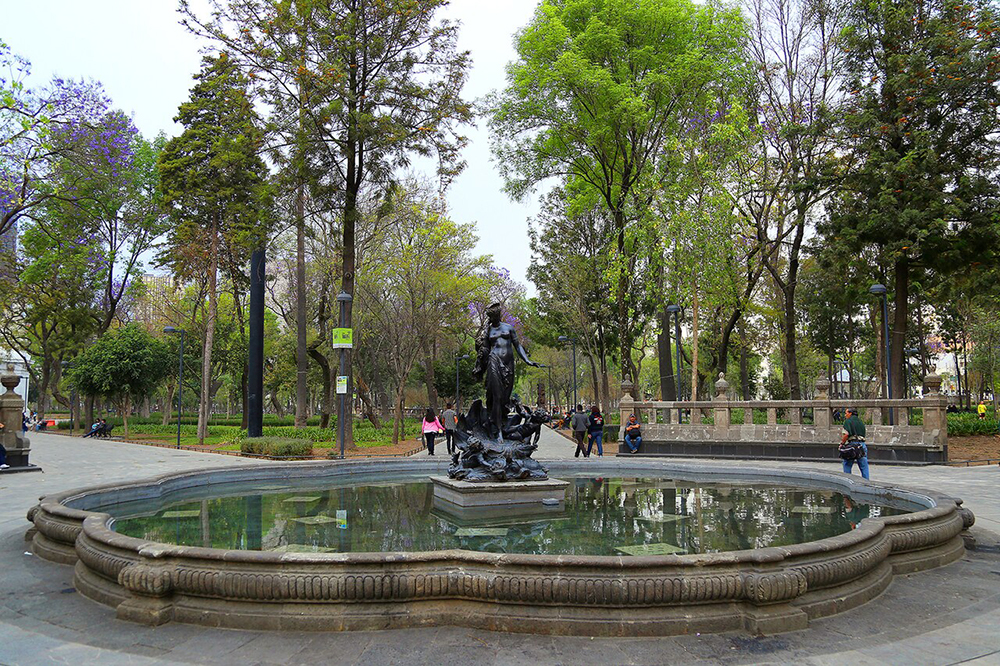
Appearance: This Fountain of Aphrodite centers on Venus, depicting the typical “Venus Anadyomene” image: she stands atop an open seashell, leaning slightly forward, one hand adjusting her long hair, the other hanging naturally, her posture elegant and relaxed. The overall proportions are balanced, the lines soft, presenting an idealized female figure.
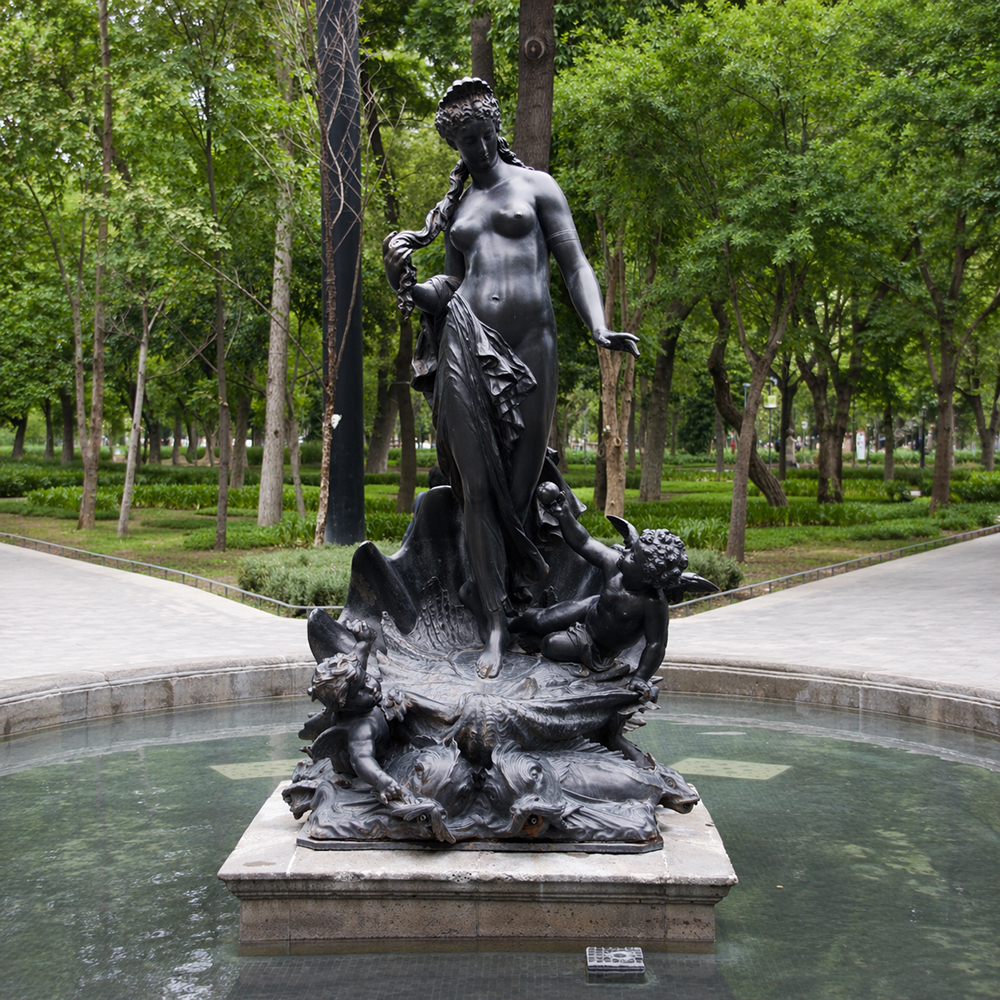
The base below of the Fountain of Aphrodite is composed of rich marine elements: seashells, waves, fish, and several Cupid figures surround it, these small figures either frolicking or clinging, making the composition more lively. The stability of Aphrodite contrasts with the dynamism of the decorative figures below, enhancing visual depth and reinforcing the theme of “born from the sea.”
Draped & Semi-Draped Greek Goddess Aphrodite statue
Venus de Milo
- Sculptor: Generally attributed to Alexandros of Antioch
- Time: c. 130–100 BC (Hellenistic period)
- Material: Marble
- Size: approx. 204 cm
- Collection: Louvre Museum
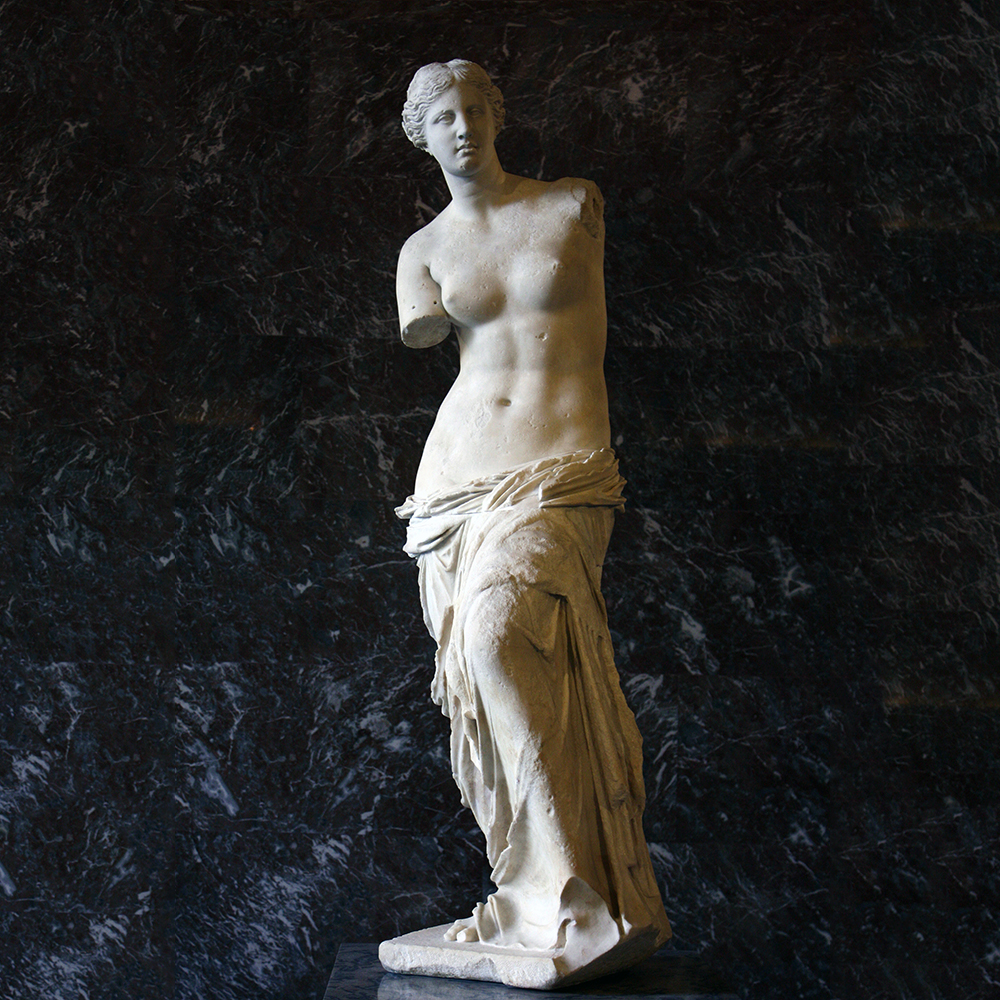
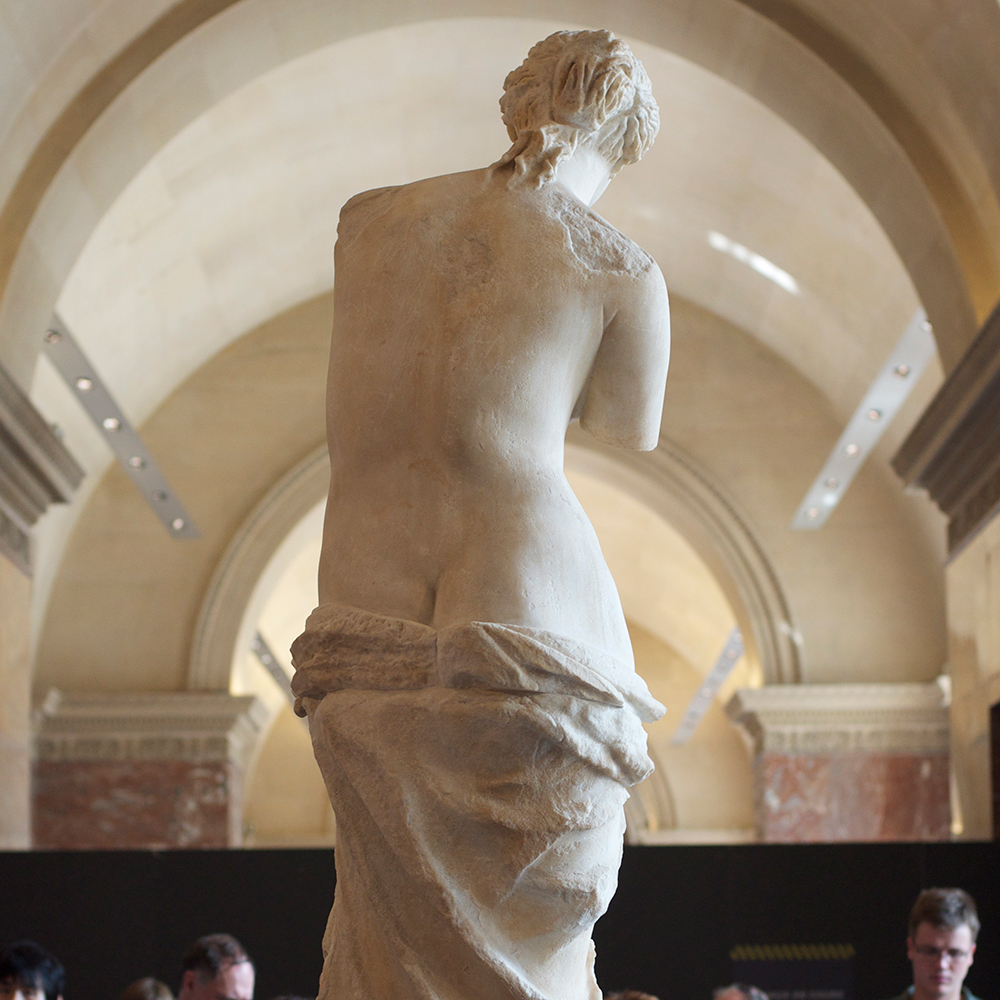
Appearance: Venus de Milo presents a typical half-draped female figure: the upper body is bare, while the lower body is covered by heavy fabric, with rhythmic folds at the hips and legs. The figure stands in a contrasting pose, bearing weight on one leg, with a slight twist in the torso, forming an elegant S-curve. The most striking feature of the Greek Goddess Aphrodite statue is the absence of arms, which makes the original pose enigmatic, while simultaneously enhancing visual tension and imaginative space. The facial expression is calm and restrained, with balanced proportions, embodying a combination of classical ideal beauty and the freer postures of the Hellenistic period.
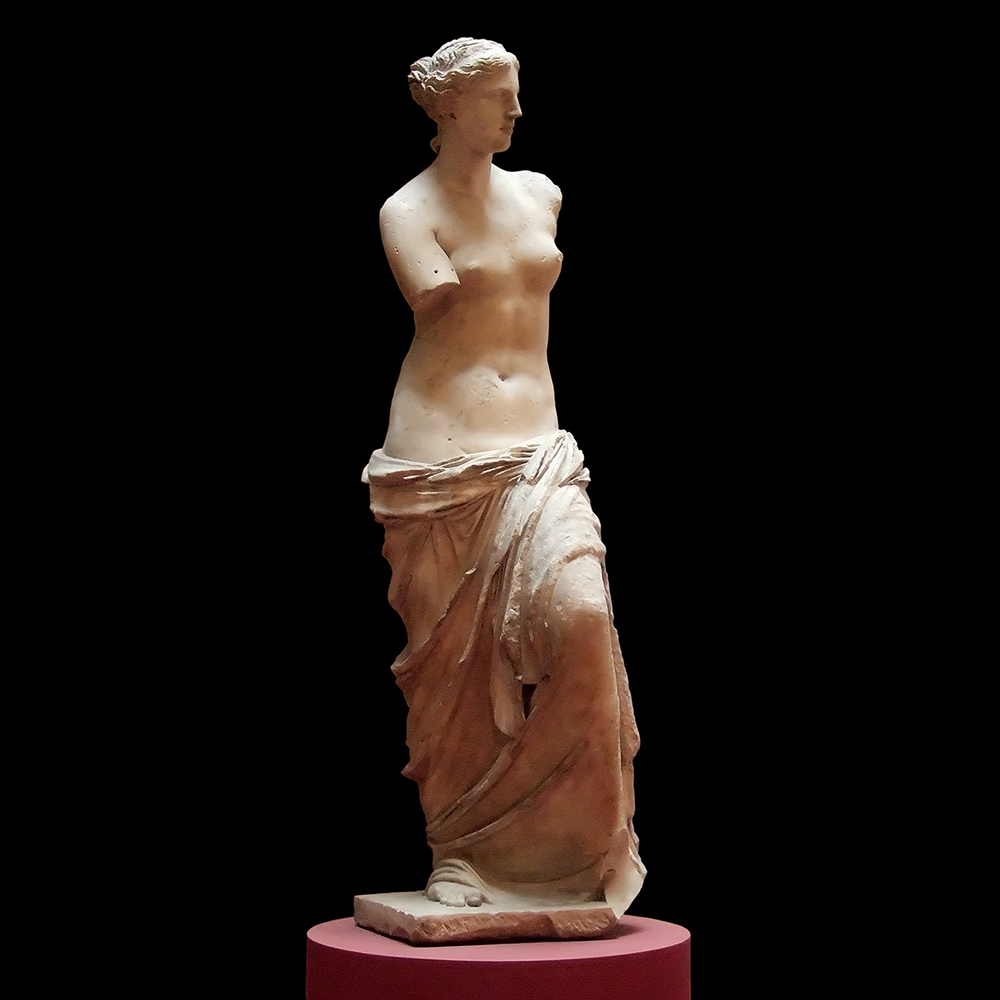
Artistic Significance: Venus de Milo is an important representative work of the Hellenistic period, combining classical ideal proportions with more natural variations in posture. Its significance lies primarily in its high degree of generalization of human anatomy and formal beauty, rather than in any specific narrative context.
Venus of Arles
- Period: Ancient Rome, circa 1st century AD (based on the original ancient Greek work)
- Prototype: Generally believed to originate from the Praxiteles tradition
- Material: Marble
- Dimensions: Approximately 194 cm
- Location: Ancient Roman ruins in Arles, France
- Collection: Louvre Museum
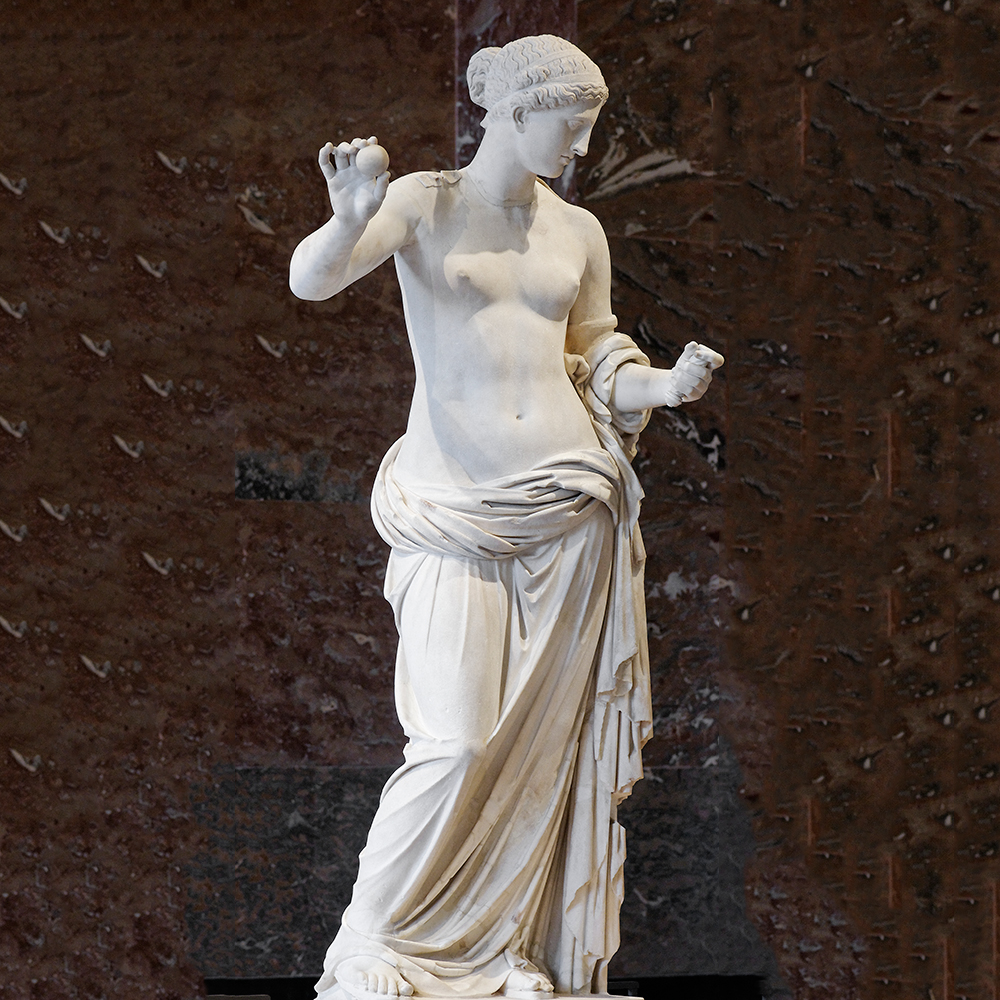
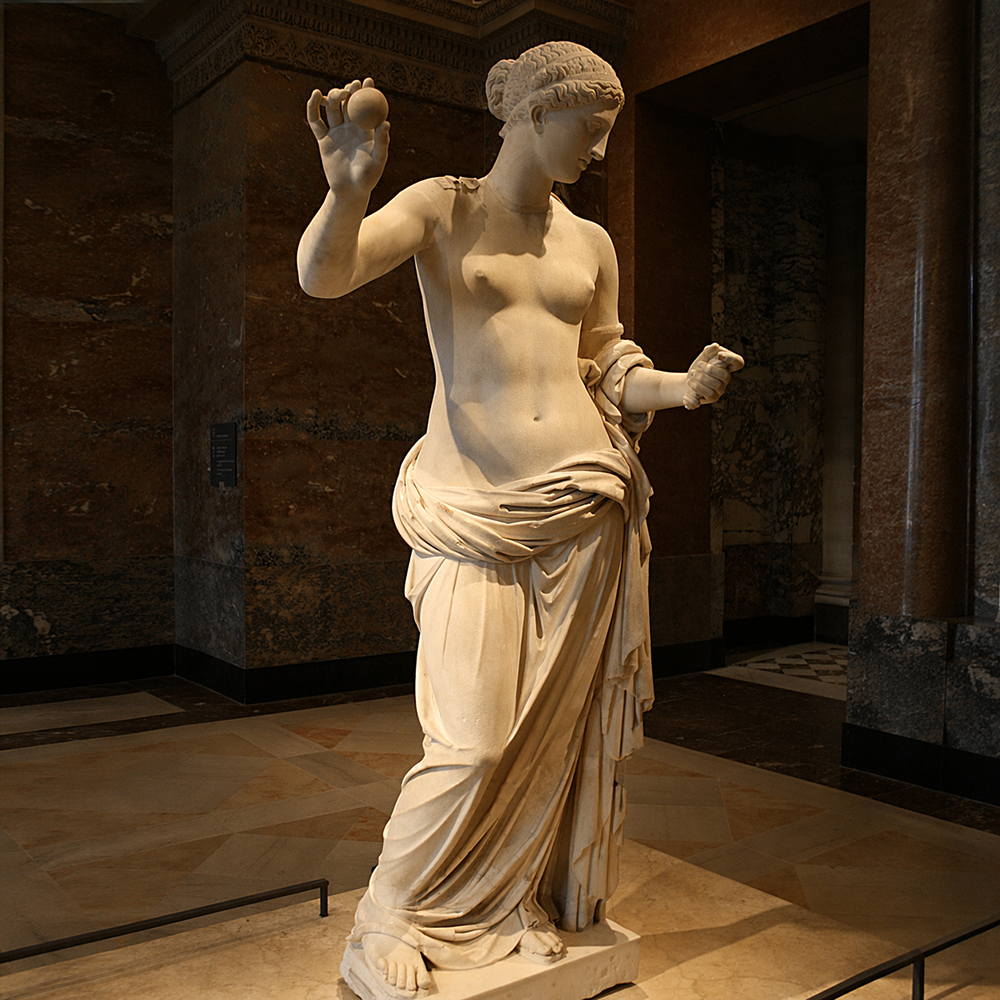
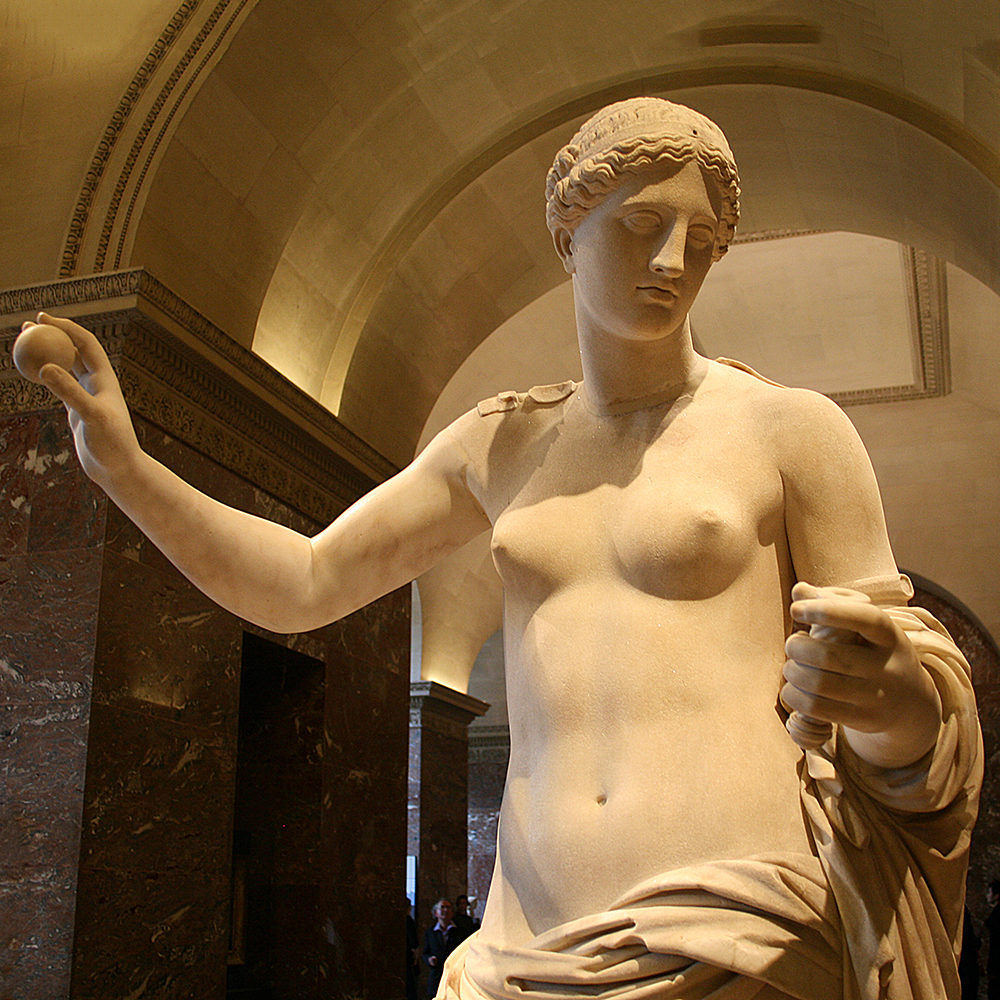
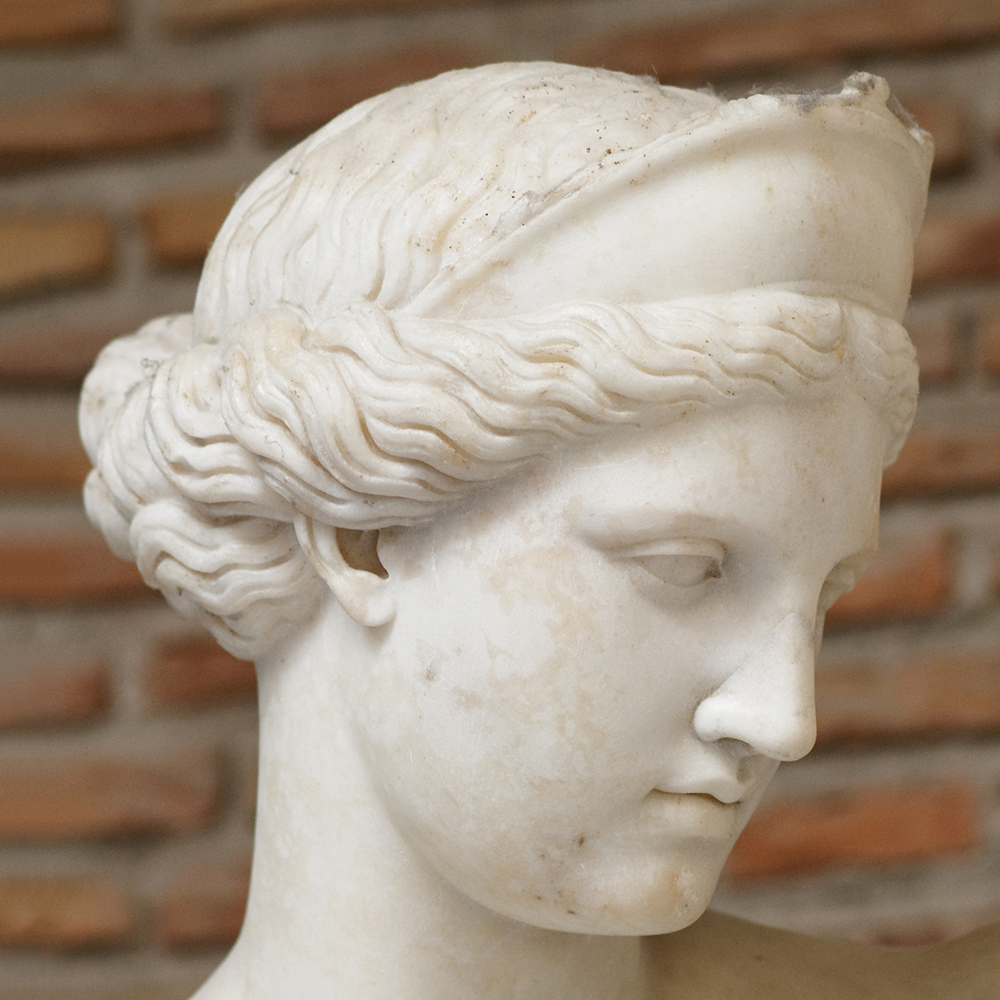
Appearance: The Venus of Arles is depicted standing, with the upper body bare and the lower body draped in a cloak. The drapery folds naturally drape from the waist and wrap around the legs, creating rich rhythmic variations. The body adopts a contrasting standing posture, with a slight twist in the torso, showcasing soft and stable curves. The arms were added during later restorations; in common reconstructions, the right hand is depicted holding an apple.
Capuan Venus
- Date of Creation: Circa 2nd century AD (Roman replica)
- Location of Discovery: Capua, Italy
- Provenance: Generally believed to originate from the Lysippos school of ancient Greek sculptors
- Collection: National Archaeological Museum of Naples
- Material: Marble
- Dimensions: Approximately 205 cm
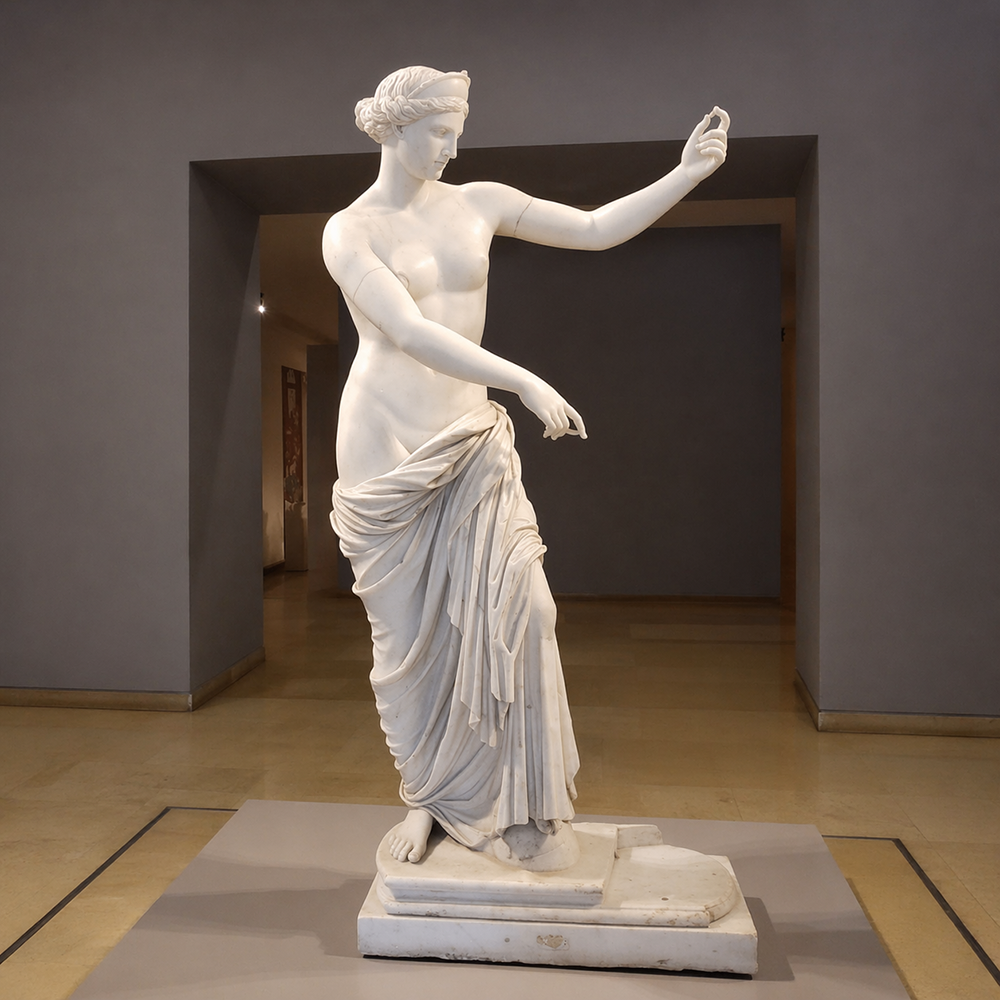
Appearance: The Capuan Venus statue depicts Aphrodite standing, her upper body bare, while her lower body is draped in clothing, which forms layered folds at the hips and legs. The body is in a reverse standing posture, with a noticeable twist in the torso. Her arms are outstretched forward, originally thought to be holding the shield of the god of war and gazing upon its surface.
Narrative Greek Goddess Aphrodite Statue
Narrative Greek Goddess Aphrodite statues refer to works that center on mythological stories or interactions between figures. Unlike a single Venus figure, these sculptures usually include multiple figures, expressing specific plots through actions and relationships, emphasizing narrative and drama.
Venus and Mars Sculpture
- Period: Ancient Rome, circa 120–140 AD (Hadrian period)
- Material: Marble
- Dimensions: Approx. 173 cm
- Collection: Louvre Museum
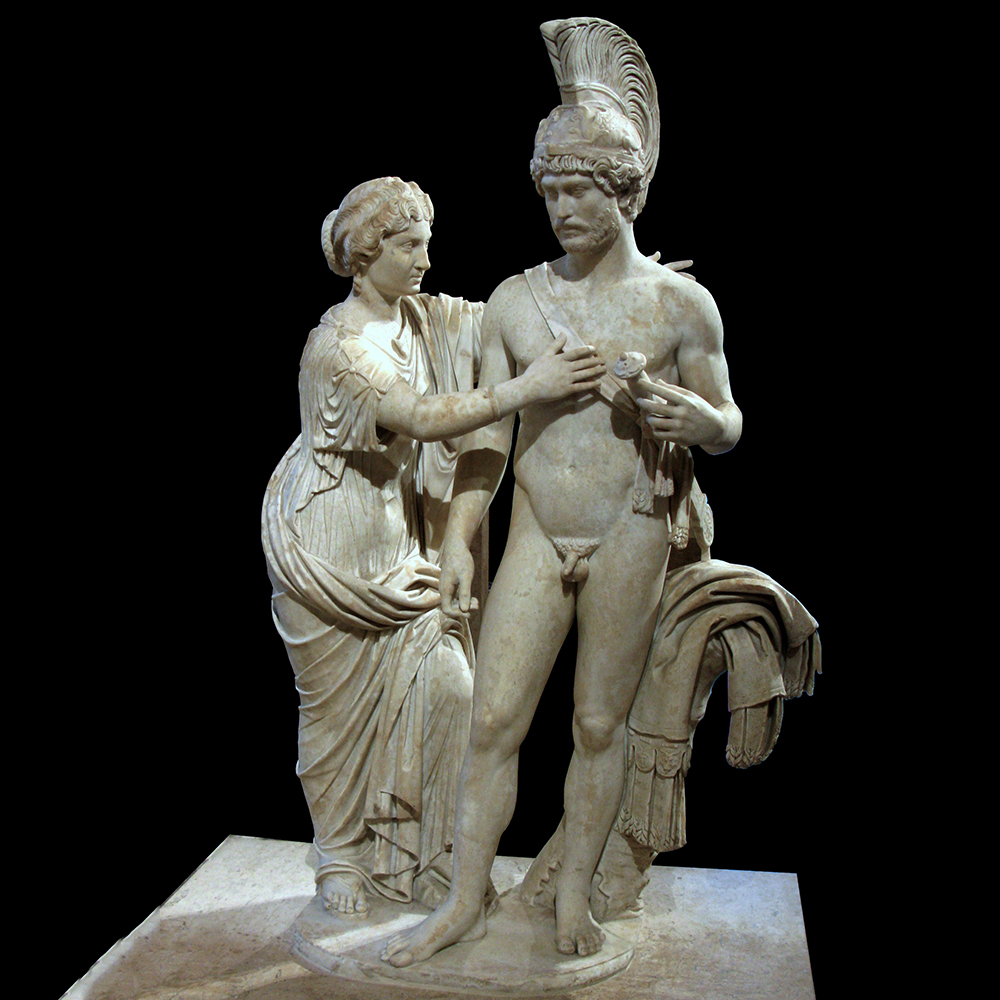
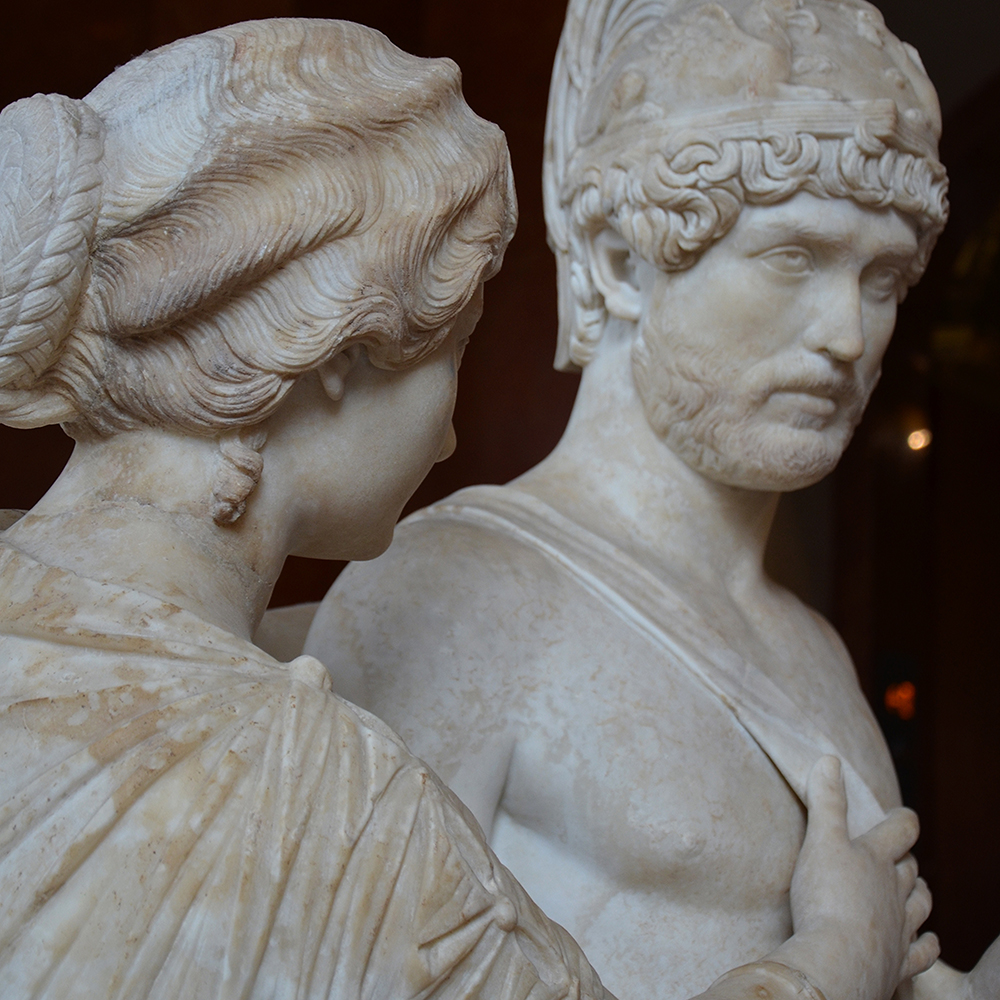
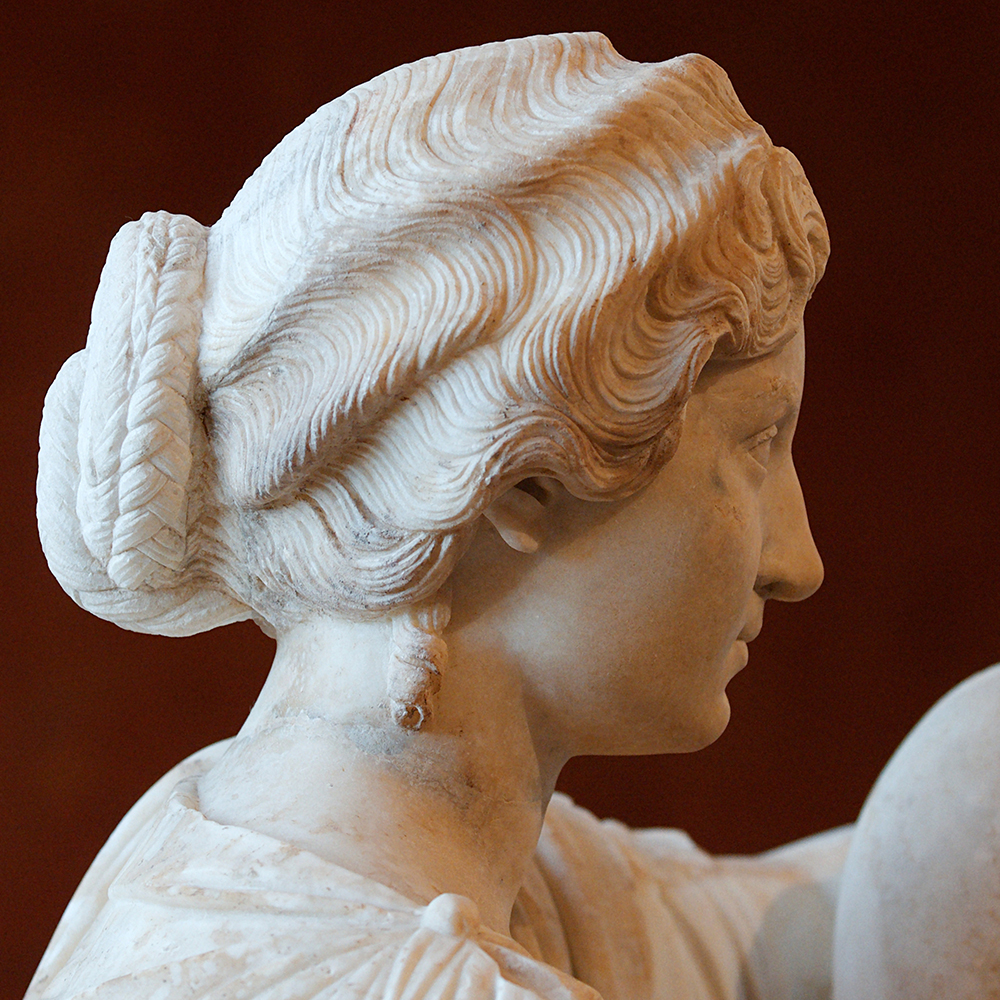
Appearance: The sculpture is a duo, with the female figure approaching the male in a Venusian pose, while the male stands as Mars, the god of war. Their bodies are in contact, conveying intimacy. The female figure is elegant and graceful, while the male figure is more powerful; the overall composition emphasizes the interaction and contrast between the figures. This Venus and Mars sculpture is not merely a mythological reenactment, but rather a deification of the Roman Emperor Hadrian and his wife Vibia Sabina as Mars and Venus, a typical example of “imperial portrait deification” sculpture.
Venus and Cupid
- Period: Ancient Rome, circa 2nd century AD (based on a Greek prototype)
- Material: Marble
- Collection: Louvre Museum
- Height: 187 cm
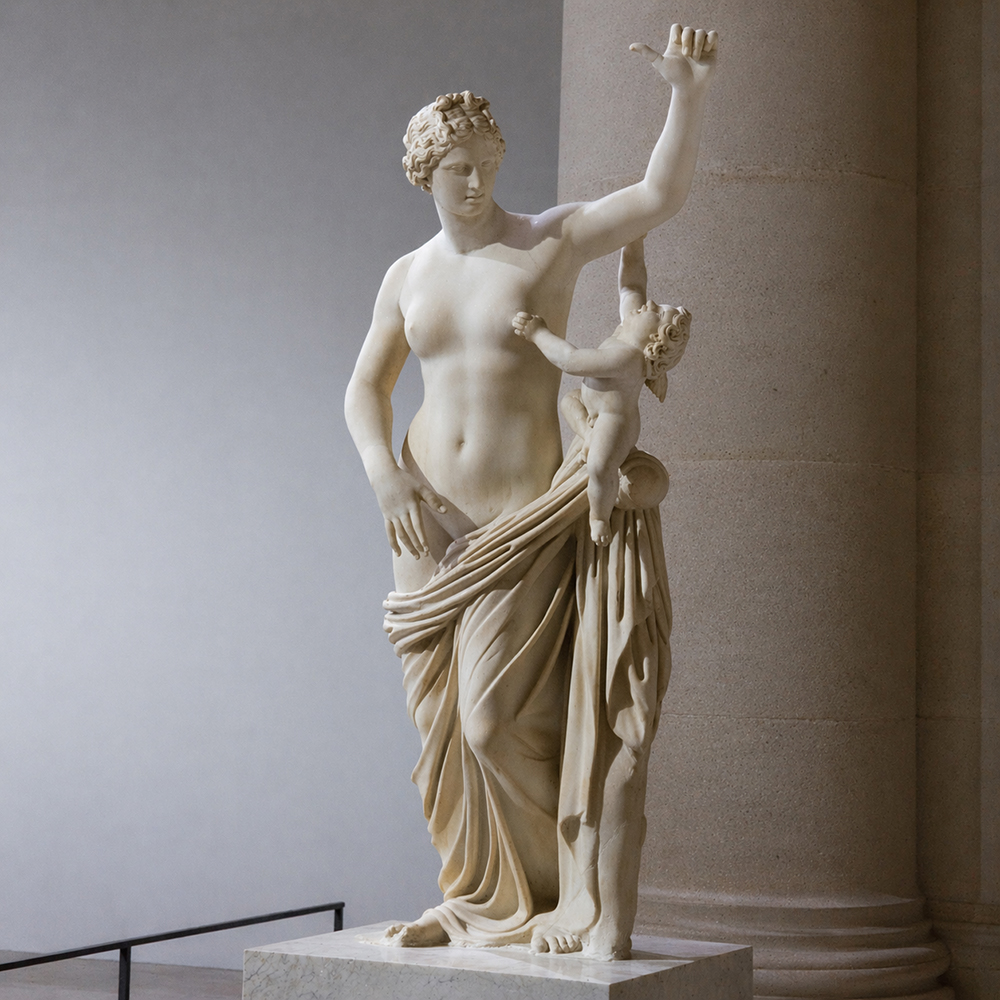
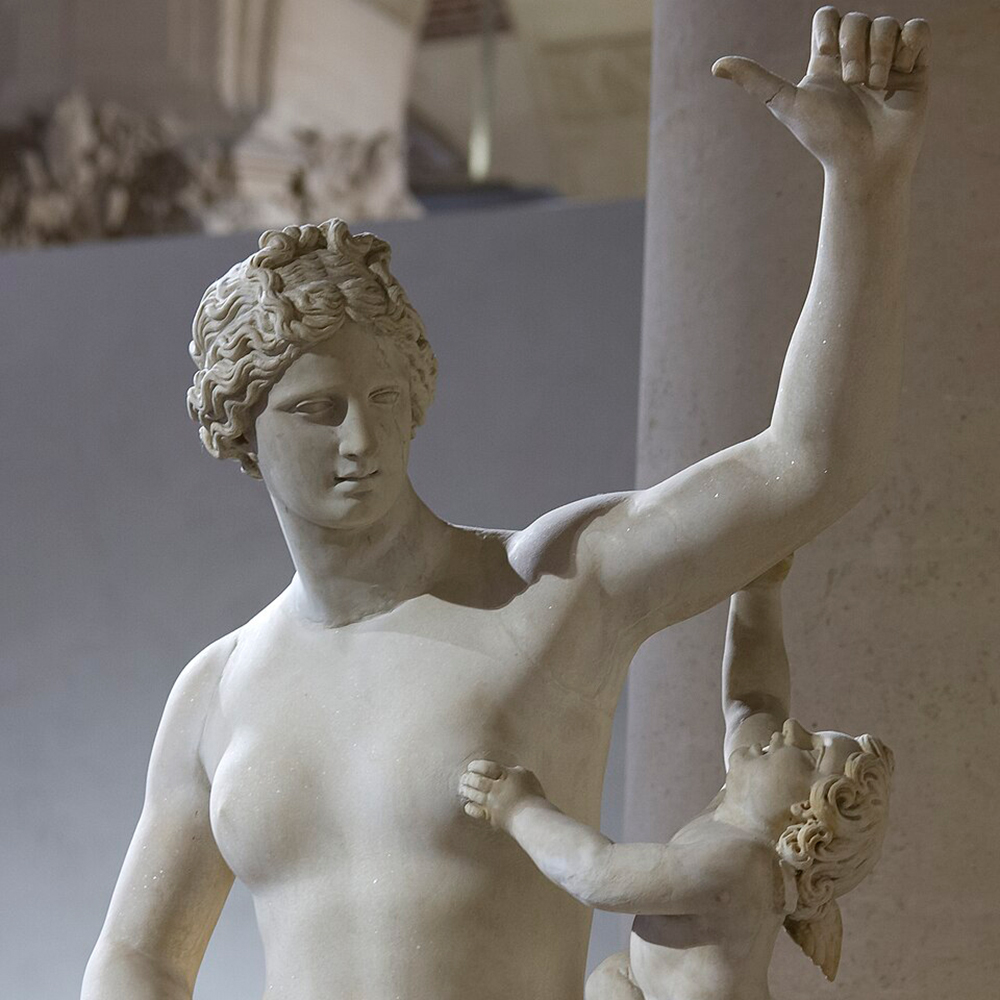
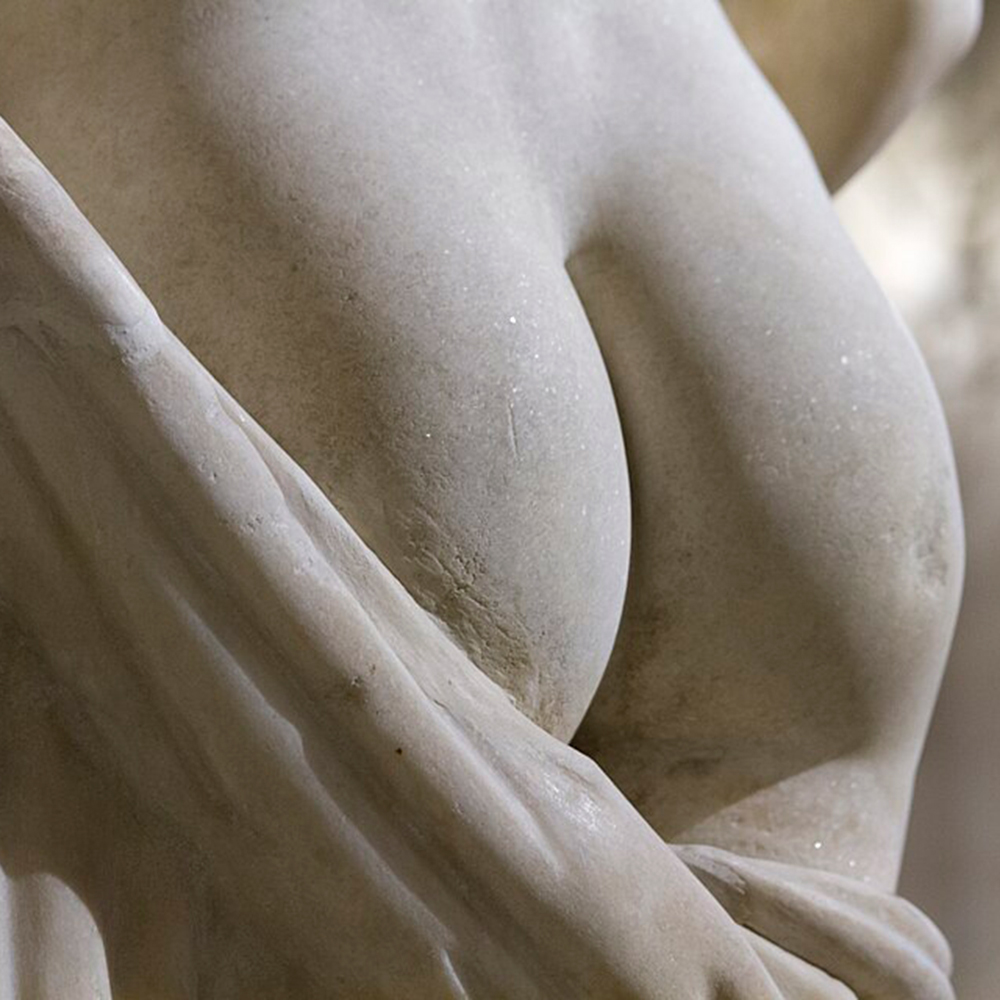
Appearance: This Venus and Cupid sculpture depicts Venus in an elegant standing posture: her upper body is bare, while her lower body is draped in soft, flowing fabric, the folds of which naturally accumulate at her hips and legs, creating rich layers. The body adopts a typical opposing stance, with one leg bearing weight and the torso slightly twisted, the lines flowing smoothly and stably. One hand hangs naturally, while the other is raised, enhancing the overall sense of vertical extension.
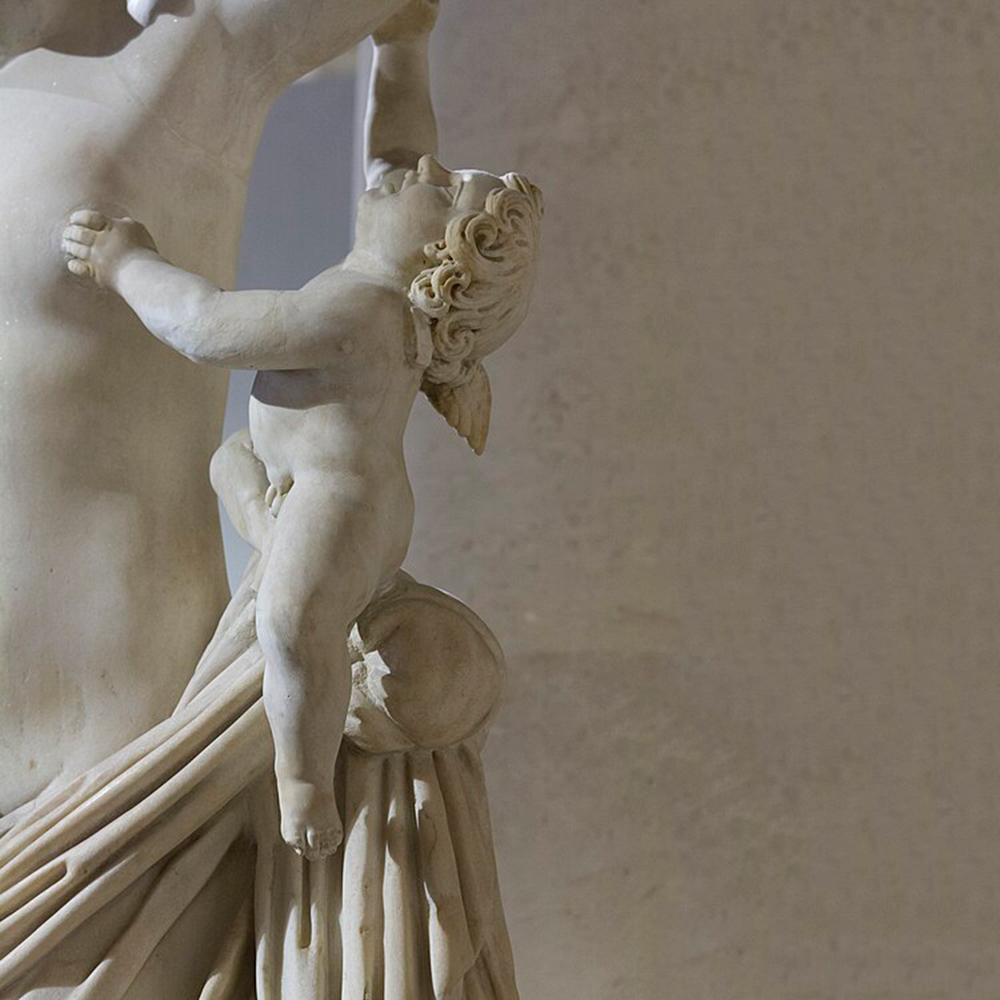
Cupid, depicted as a winged child, clings to Venus’s side, his body reaching upwards, one hand touching Venus’s body, creating an intimate interaction.
Group of Aphrodite, Pan and Eros
- Type: Marble Group Sculpture
- Creation Time: Circa 100 BC (Hellenistic Period)
- Location: Delos, Greece
- Collection: National Archaeological Museum of Athens
- Figures: Aphrodite (Goddess of Love and Beauty)
Pan (Half-man, half-goat god of nature)
Eros (God of Love)
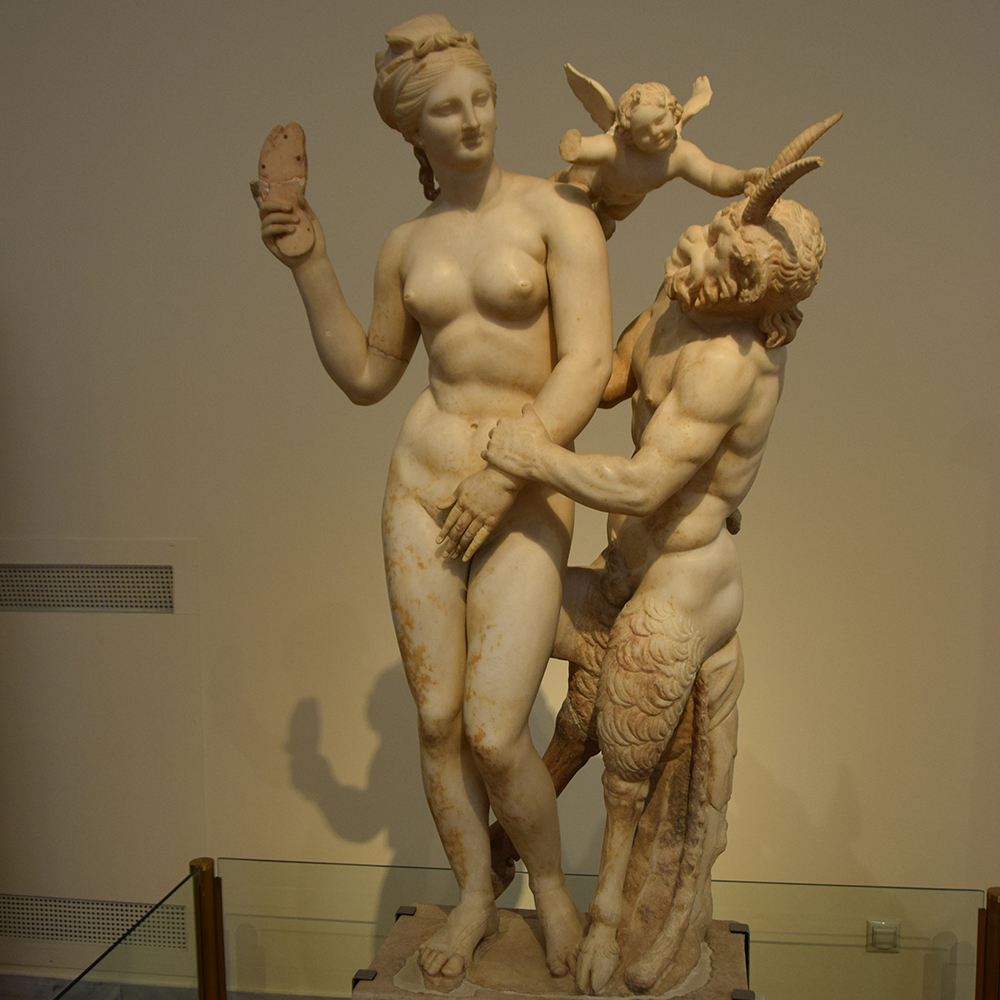
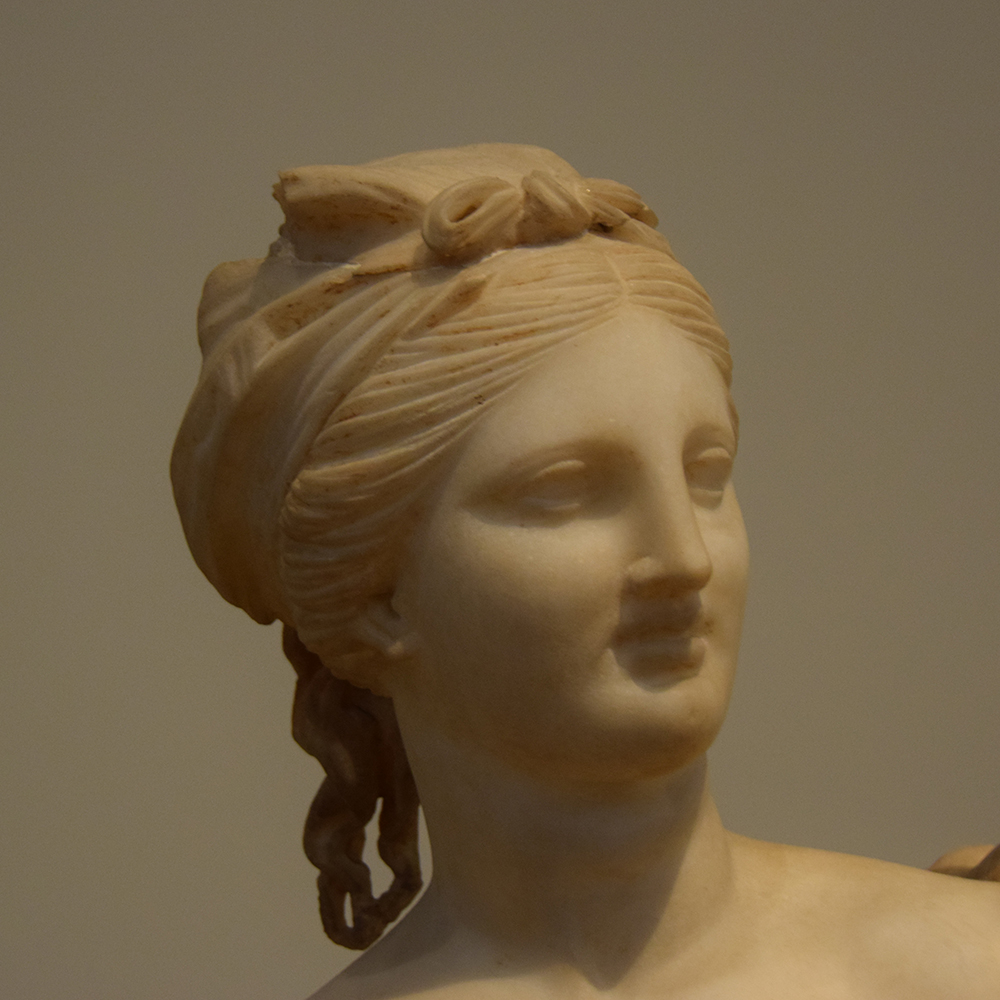
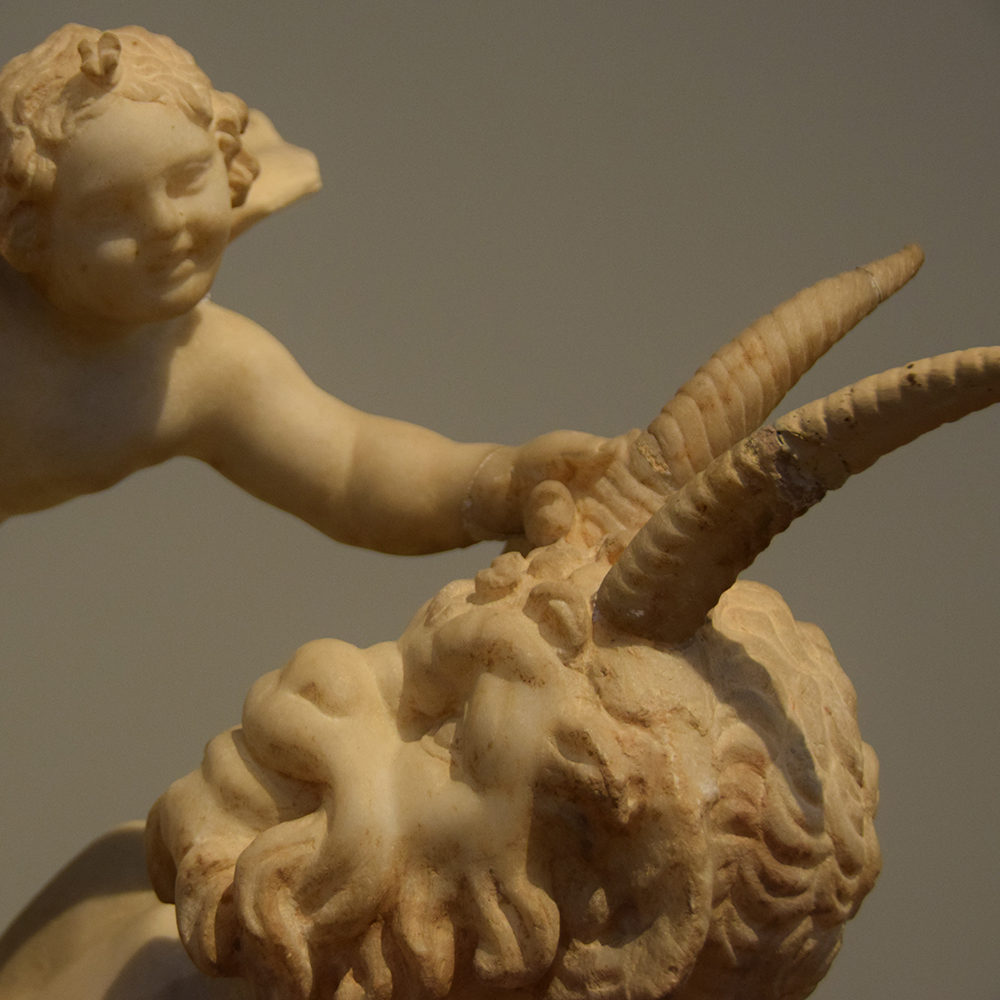
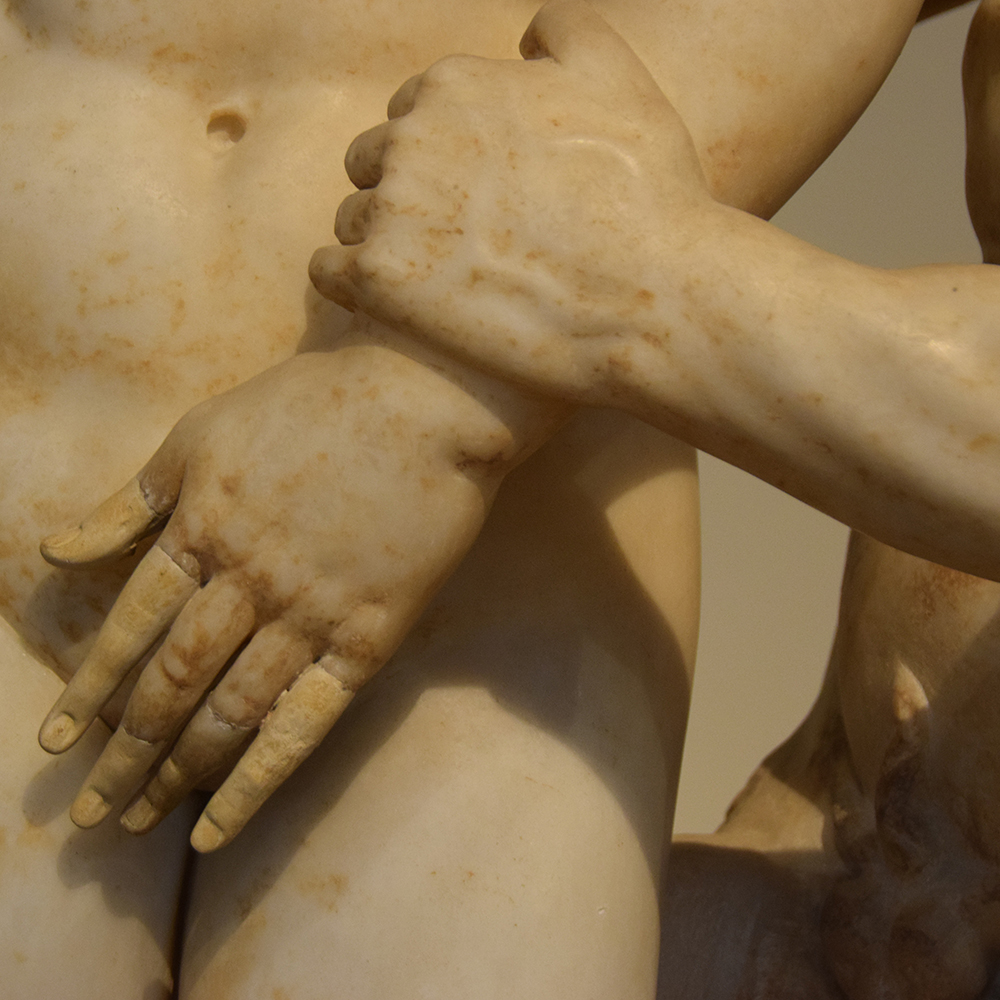
Appearance: This sculpture presents a dramatic interactive scene: Aphrodite stands naked, one hand attempting to cover her body, the other raising her sandal in defense; Pan approaches from the side, clearly harassing her, leaning forward with exaggerated movements; Eros, meanwhile, leaps or intervenes, seemingly trying to stop or mediate. The three form a tight triangular composition, their actions echoing each other, giving the scene a strong sense of dynamism and narrative.
Symbolic Greek Goddess Aphrodite Statue
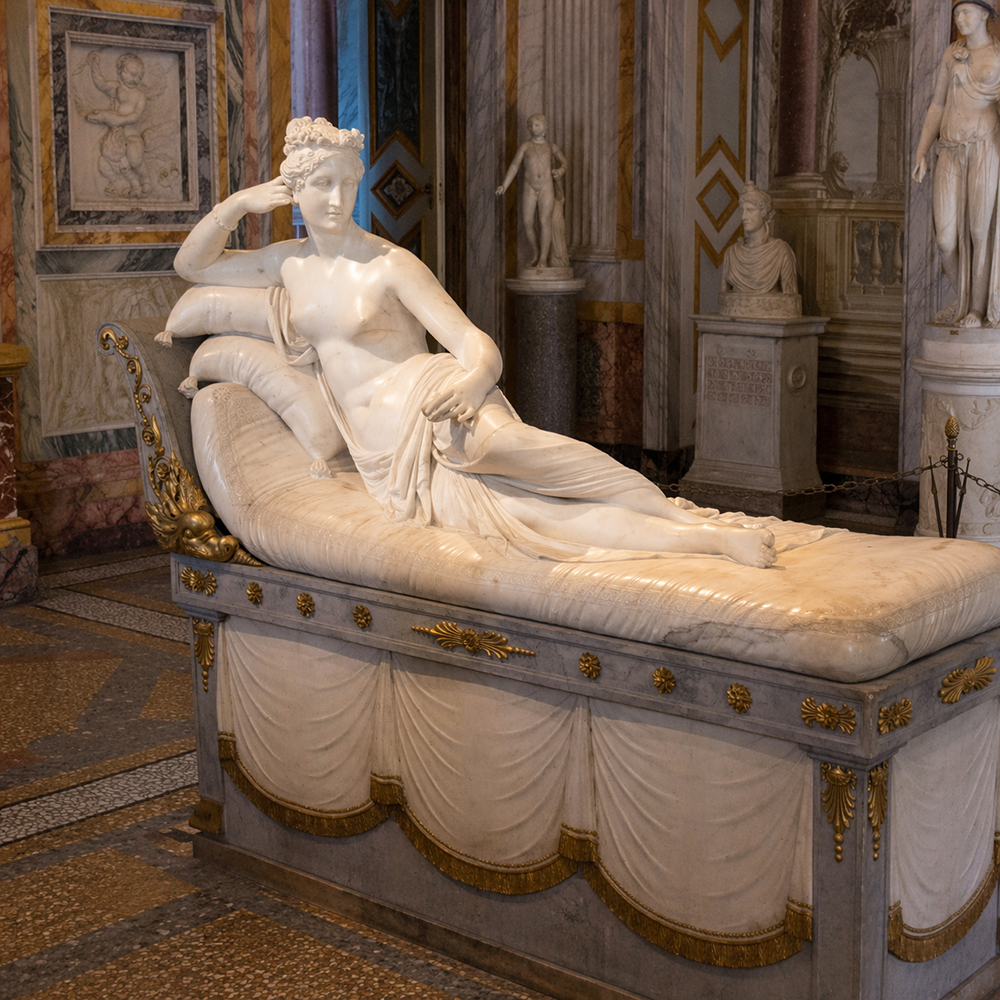
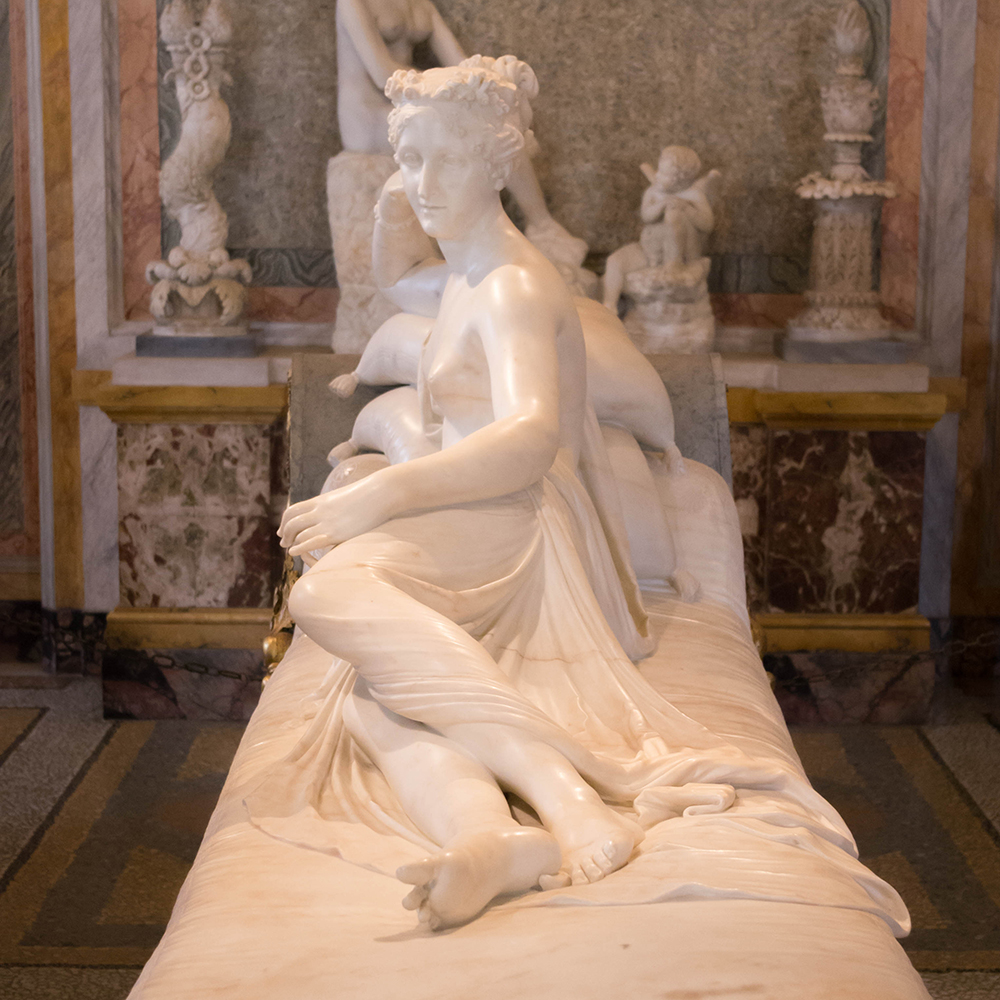
Venus Victrix(Canova)
- Artist: Antonio Canova
- Date: 1805–1808
- Type: Marble Sculpture
- Figure: Pauline Bonaparte (portrayed as Venus)
- Location: Galleria Borghese
- Dimensions: Approx. 160 cm (figure only, larger including the reclining couch)
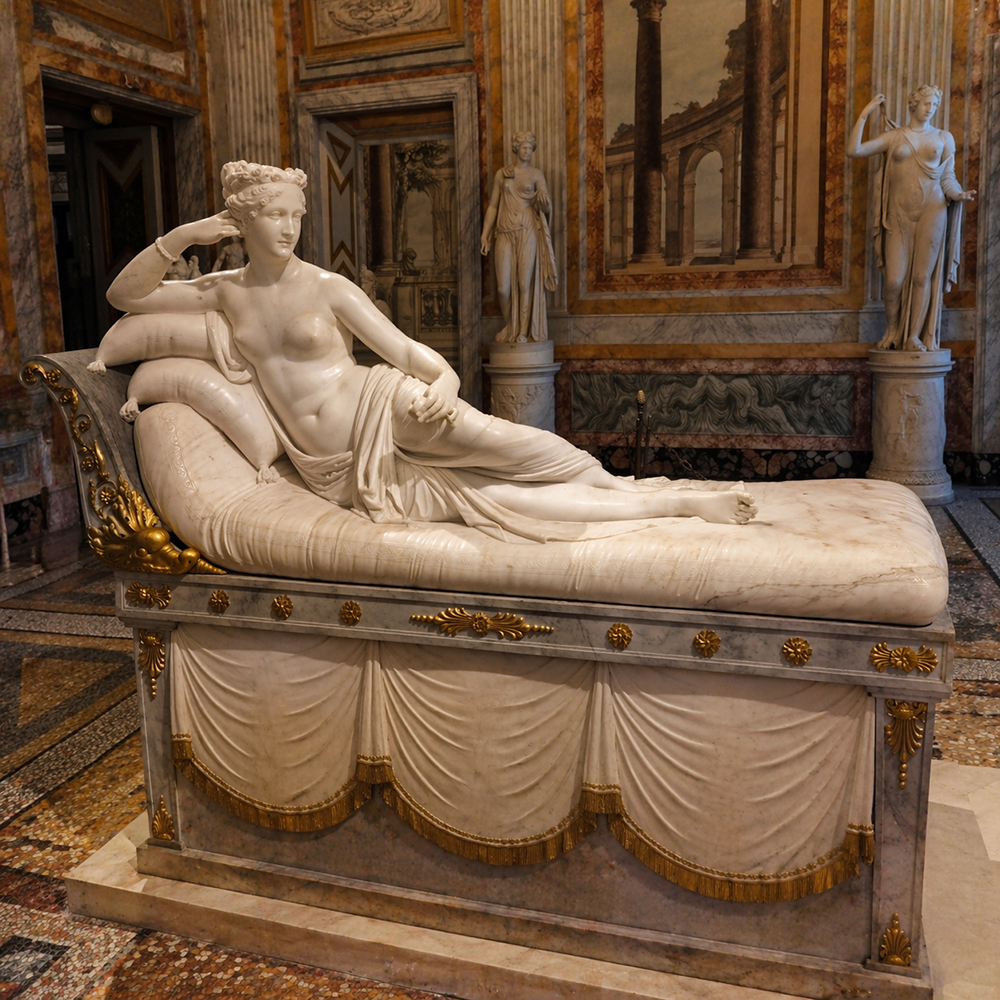
Appearance: This Venus Victrix sculpture depicts Venus reclining on a soft couch in a relaxed posture, her body slightly turned to the side. Her upper body is naked, while her lower body is covered by a light fabric. One hand supports her body, while the other holds an apple (symbolizing the victory of the “most beautiful”). The overall posture is relaxed and serene. The body lines are fluid and the proportions ideal. The skin is delicately and smoothly treated, contrasting with the soft fabric. The facial expression is calm yet distinctive, combining mythological imagery with a realistic figure. The overall composition is stable and elegant, reflecting Neoclassical inheritance of classical beauty while incorporating a more intimate and sensual quality.
Venus Victorious(Renoir)
- Artist: Pierre-Auguste Renoir (in collaboration with assistant Richard Guino)
- Date: circa 1914
- Material: Originally plaster (later bronze version)
- Location: Now in the Museo Soumaya
- Subject: Based on “The Judgement of Paris,” depicting Venus’s victory
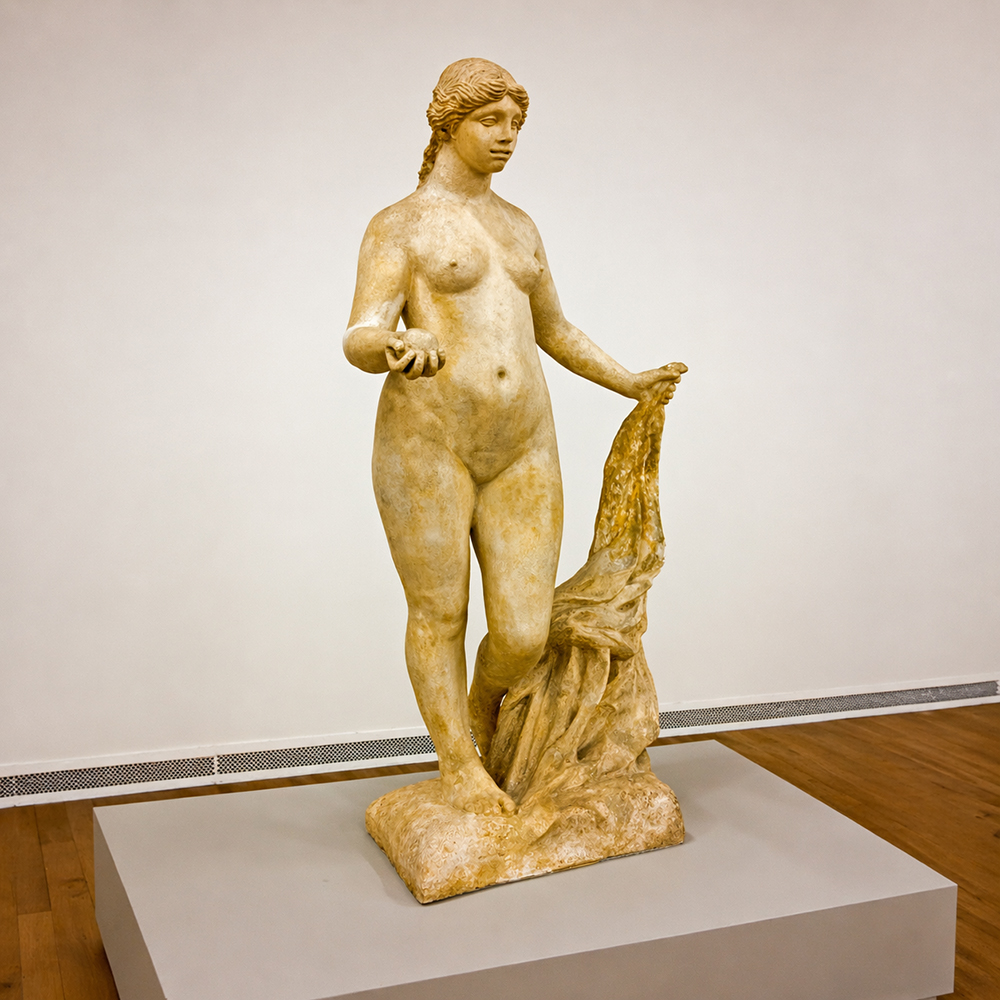
This Venus Victorious sculpture portrays Venus after her victory: she stands nude, her body slightly forward, one leg bearing weight, her posture relaxed and natural; one hand holds the golden apple symbolizing victory, while the other hangs down, lifting her fabric. The overall proportions are full, with a strong sense of volume, and the surface treatment is relatively soft, not pursuing the highly polished refinement of classical sculpture. The posture is both stable and slightly dynamic, with the clothing providing support and visual balance on one side. Compared to classical Venuses, this Greek Goddess Aphrodite Statue emphasizes sensuality and a natural state, showcasing Renoir’s later work of translating his painterly understanding of the human form into sculptural language.
Venus and Cupid
- Original Title: Love, The Most Beautiful Of Absolute Disasters
- Artist: Shane A. Johnstone
- Creation Time: 2005
- Location: Morecambe Bay waterfront
- Type: Contemporary Public Art Sculpture
- Material: Concrete structure + colored mosaic
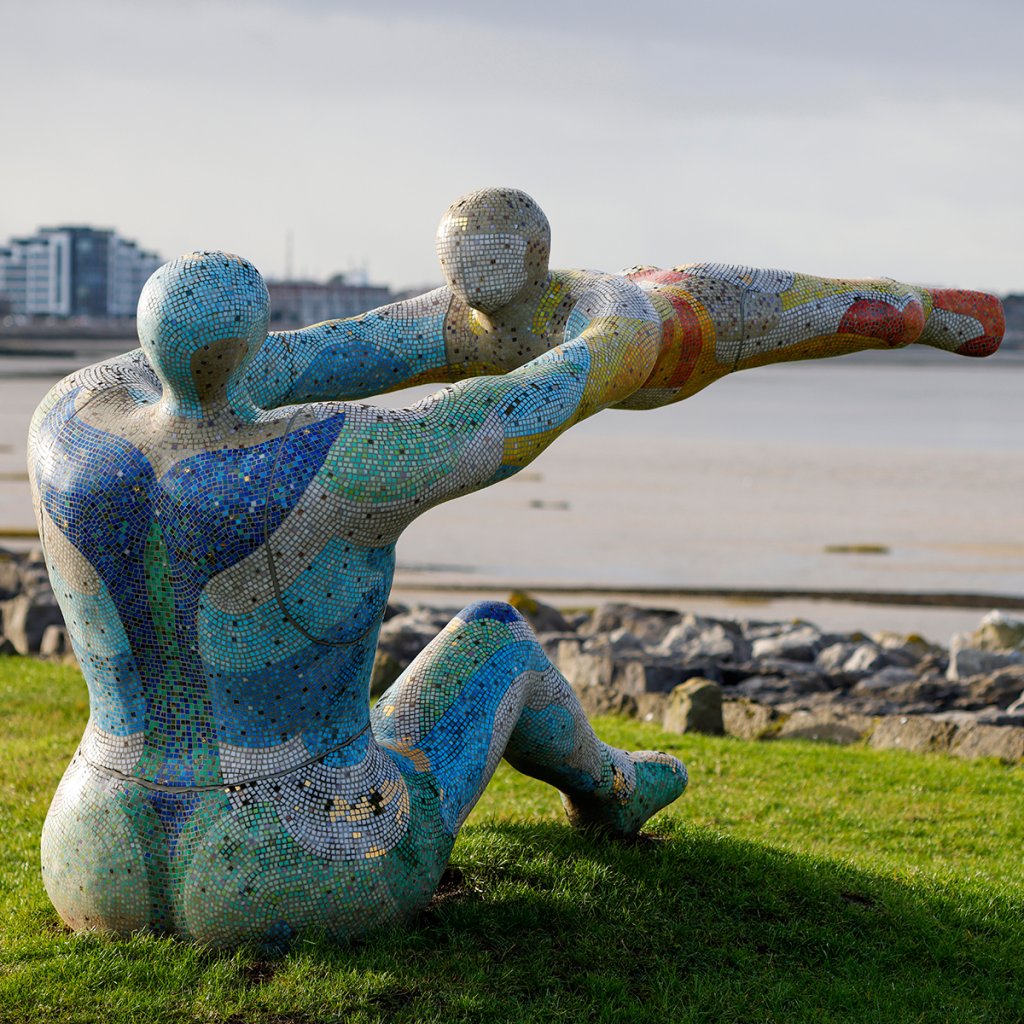
Appearance: This Venus and Cupid sculpture depicts a seated woman facing the sea, her hands holding the arms of a child, causing the child’s body to stretch out horizontally, as if being “swung” or suspended in the air. The overall form is simplified, with details of the figure downplayed, instead expressing the emotional relationship through large volume and dynamic posture.
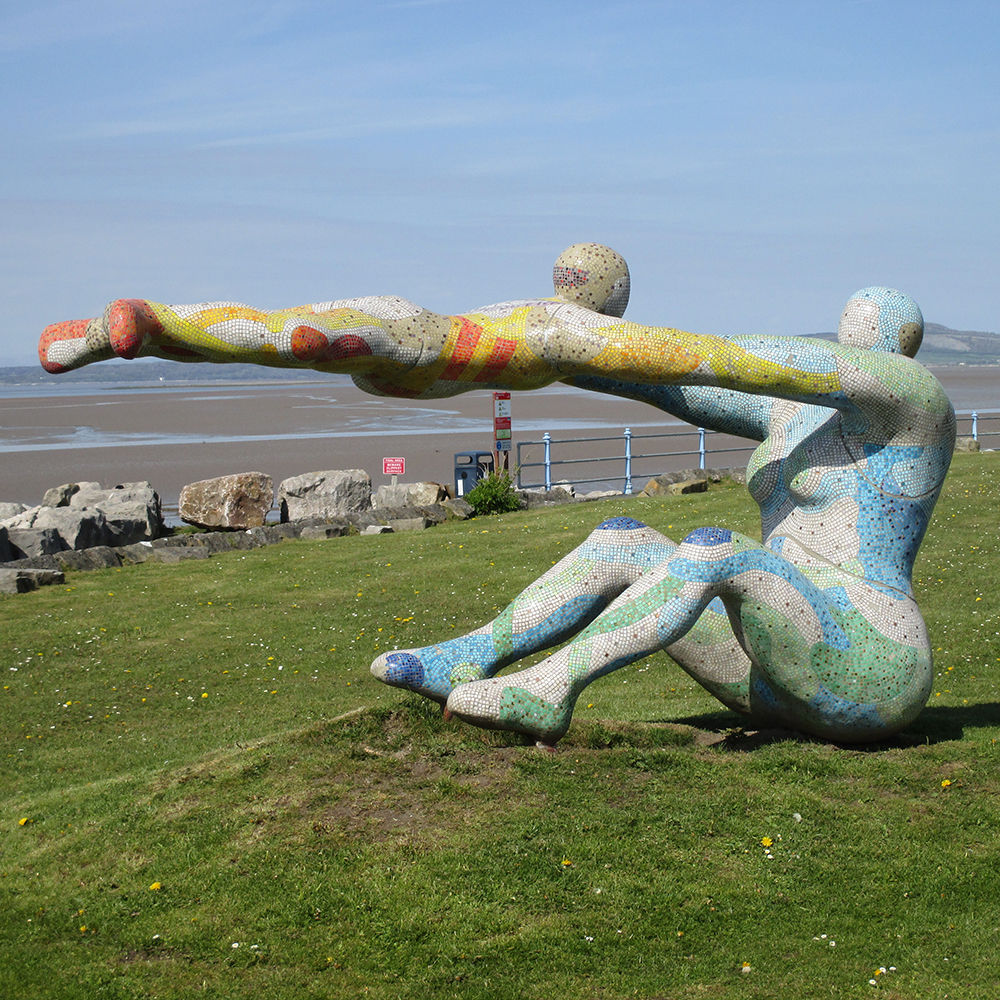
Background and Significance: This work is not only based on the classical motif of “Venus and Cupid,” but also has a clear contemporary commemorative significance: it commemorates the 2004 Morecambe Bay shellfish disaster. Therefore, this sculpture transforms the classical myth of “love” into a complex emotion in a contemporary context—encompassing care and connection, but also hinting at risk and vulnerability.
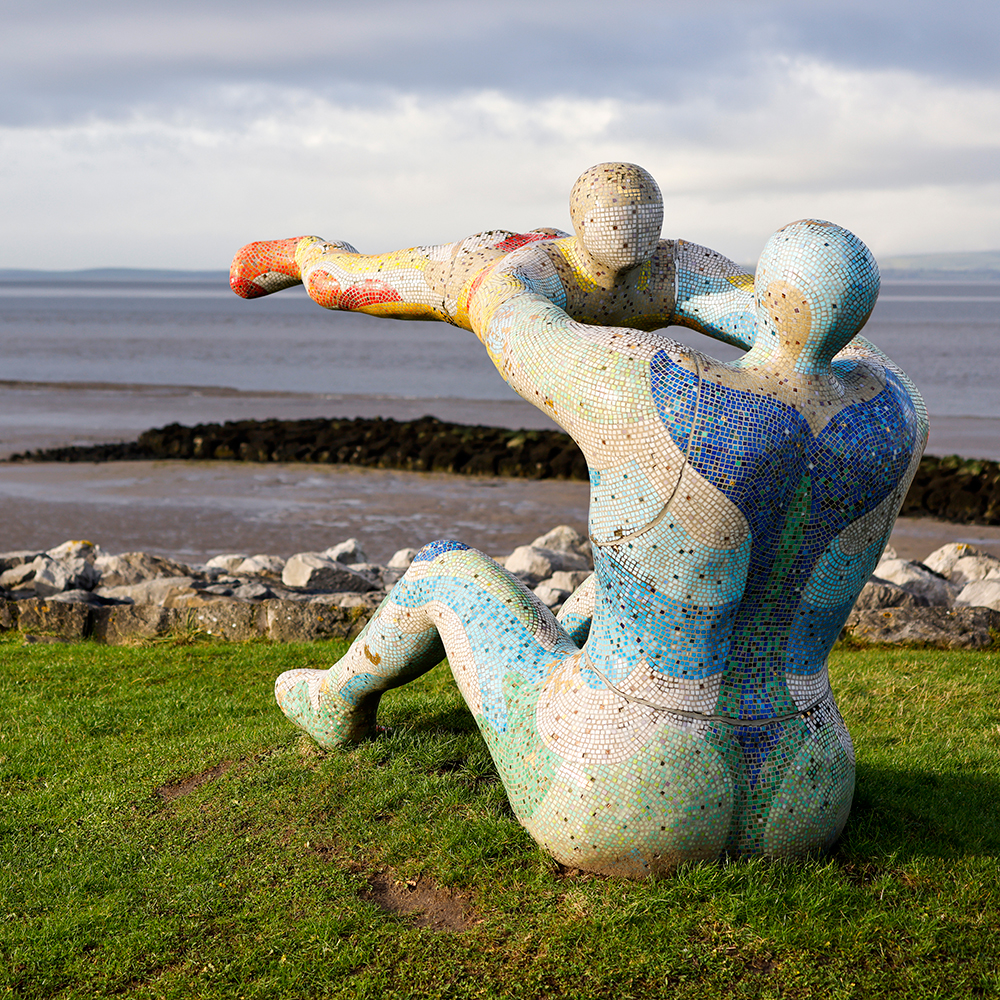
Meanwhile, in the later restoration, a method similar to “kintsugi” was used to repair the damaged mosaic with gold material, making the damage a visible part. This treatment further strengthened the work’s theme of “breakage and repair”.
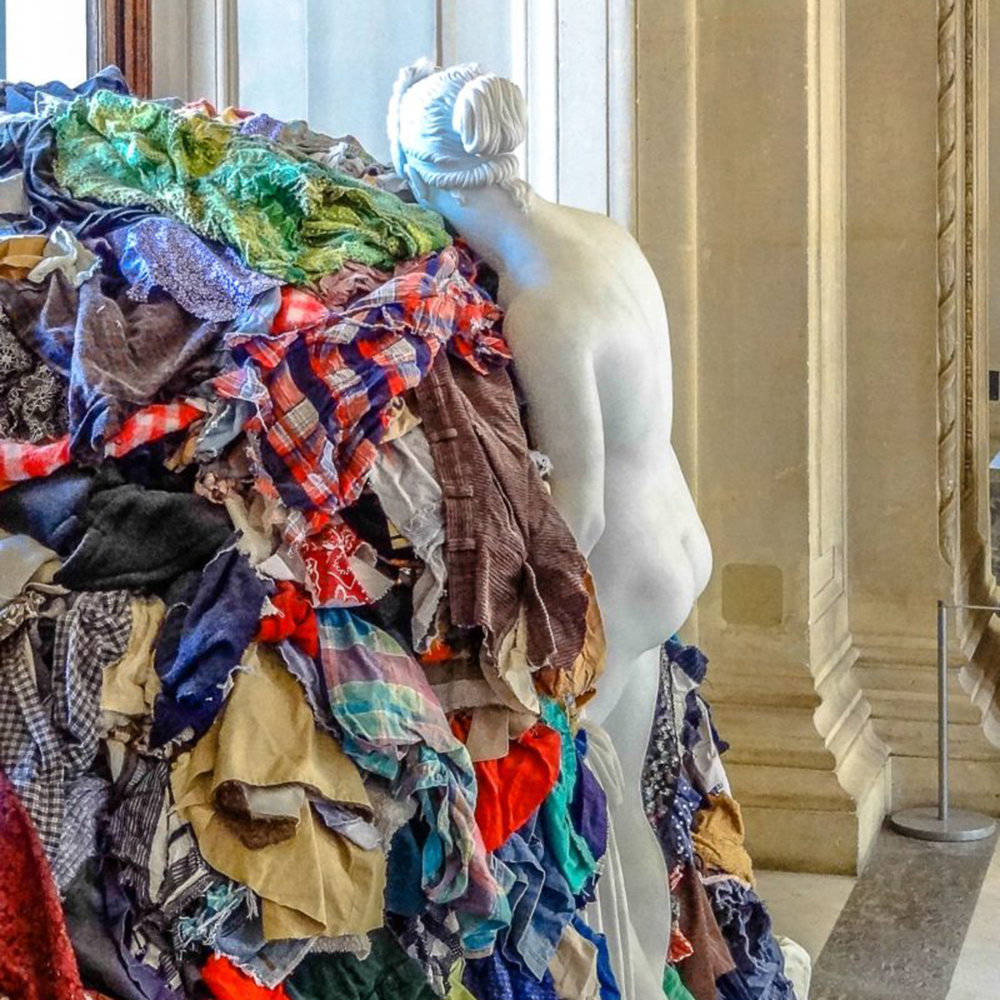
Venus of the Rags
- Original Title: Venere degli stracci
- Artist: Michelangelo Pistoletto
- Date: 1967
- Type: Contemporary Installation
- Art Movement: Arte Povera (Art for the Poor)
- Materials: Replica of a classical Venus statue + piles of old clothing

Appearance: The work consists of two parts: a classical Venus statue (usually a white replica similar to Venus de Milo) facing a pile of fabric, and a large pile of colorful old clothing. Venus faces away from the viewer, creating a confrontational relationship. The Venus of the Rags maintains a classically idealized elegant posture, while the pile of fabric presents disorder, accumulation, and traces of daily life, creating a strong visual contrast.
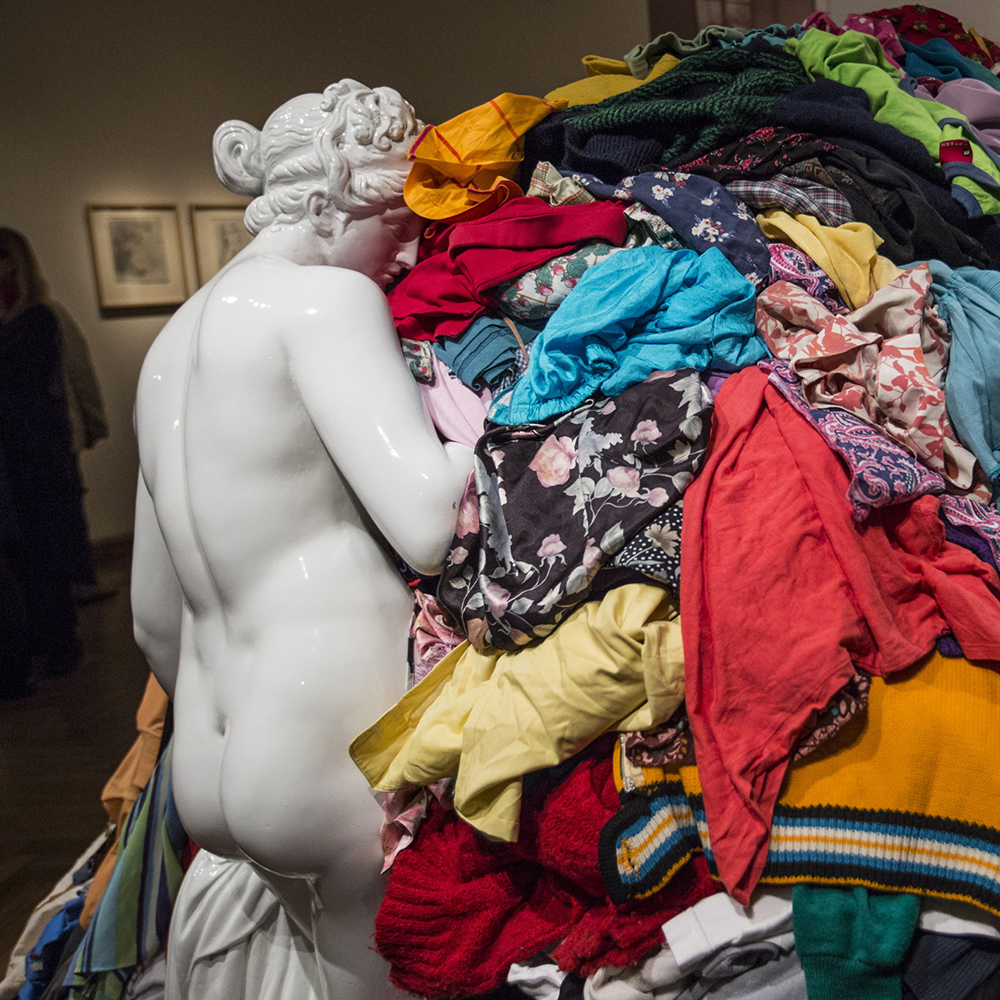
This Greek Goddess Aphrodite Statue originated within the context of the Italian “Arte Povera” movement. During this period, artists began to reflect on the relationship between consumer society and traditional aesthetics, attempting to challenge classical art forms with everyday and even discarded materials.
FAQ: Greek Goddess Aphrodite / Venus Statue
1. What is the difference between Aphrodite and Venus?
Aphrodite is the ancient Greek name, and Venus is the ancient Roman name; essentially, they refer to the same god of love and beauty.
2. Why are Aphrodite sculptures mostly nude?
In ancient Greek art, nudity symbolized idealized human beauty and divinity, rather than mere exposure.
3. What are some common types of Aphrodite sculptures?
These mainly include:
- Pudica (covered)
- Bathing (bathing)
- Anadyomene (emerging from water)
- Draped (draped)
4. Which Aphrodite sculptures are the most classic?
Common examples include:
- Venus de Milo
- Venus de Medici
- Capitoline Venus
5. Where are Greek Goddess Aphrodite Statues suitable for placement?
Suitable for courtyards, gardens, entrance spaces, or indoor displays, enhancing the overall artistic feel.
6. How to choose the right sculpture?
Mainly consider: whether the size, style, pose, and material match the space.
7. Can Aphrodite sculptures be customized?
Yes. Arturban Sculpture has a professional sculpture studio and production factory, providing flexible customization services, including adjustments to size, materials, and details, to better suit different spaces and design needs.
Send us your requirements now, we will reply to your email within 24 hours