
Botero-style horse sculptures are known for their exaggerated size and stable structure, enhancing their presence in space through enlarged proportions and simplified forms. This article will briefly introduce their artistic background and, using a case study of a bronze Botero Horse Sculpture, explain the thought process and process behind custom production.
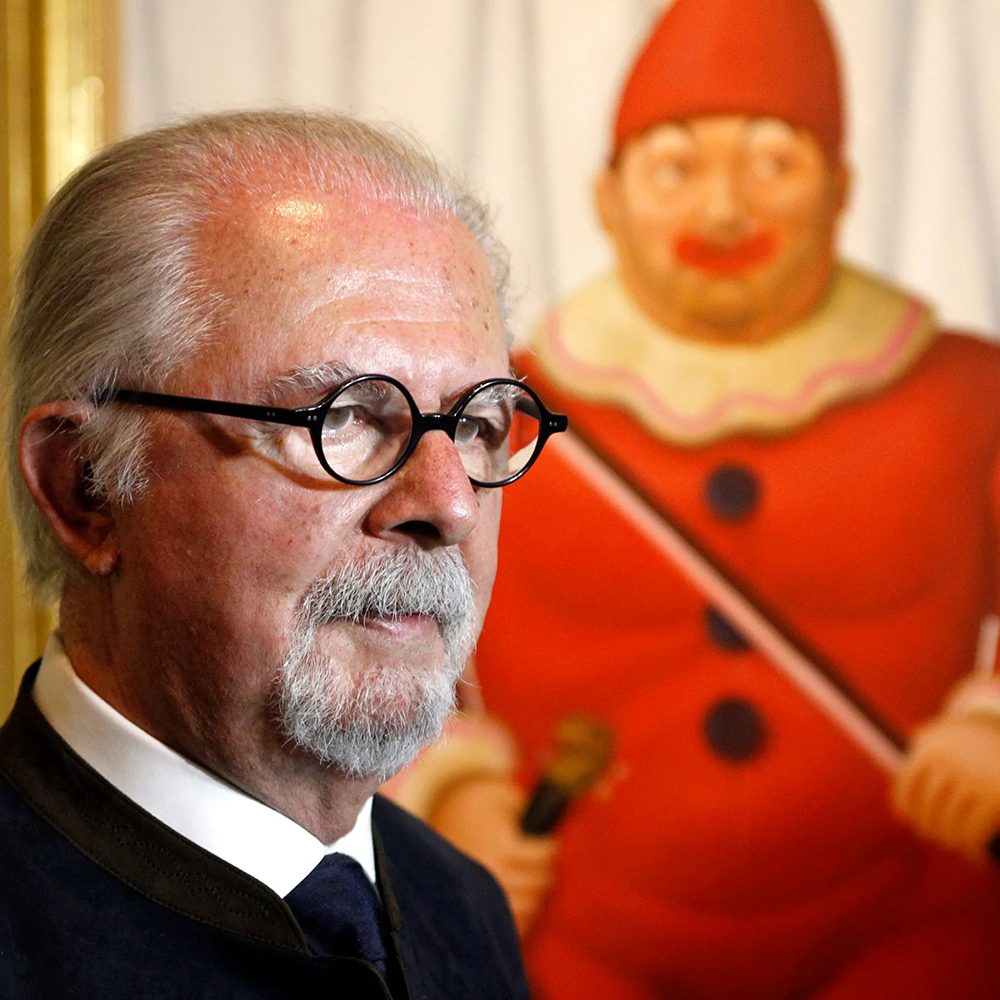
Who Is Fernando Botero?
Fernando Botero was born in Medellín, Colombia in 1932 into a family of modest means. He did not receive formal academic art training in his early years, instead entering the art world through copying and self-study. His exposure to bullfighting culture during his youth gave him an early understanding of power, volume, and ritual, which subtly influenced his later artistic language.
In the 1950s, Botero traveled to Spain and Italy to study and live, delving into the artistic expressions of proportion, structure, and volume during the Renaissance. Upon returning to Latin America, he gradually developed a unique style: figures and animals were uniformly enlarged, with simplified forms yet stable structures—a style later known as “Boterismo.” He repeatedly emphasized that this exaggeration was not about depicting obesity, but rather a continuous exploration of the expressive power of volume in visual art.
What Materials Are Botero Sculptures Most Commonly Made Of?
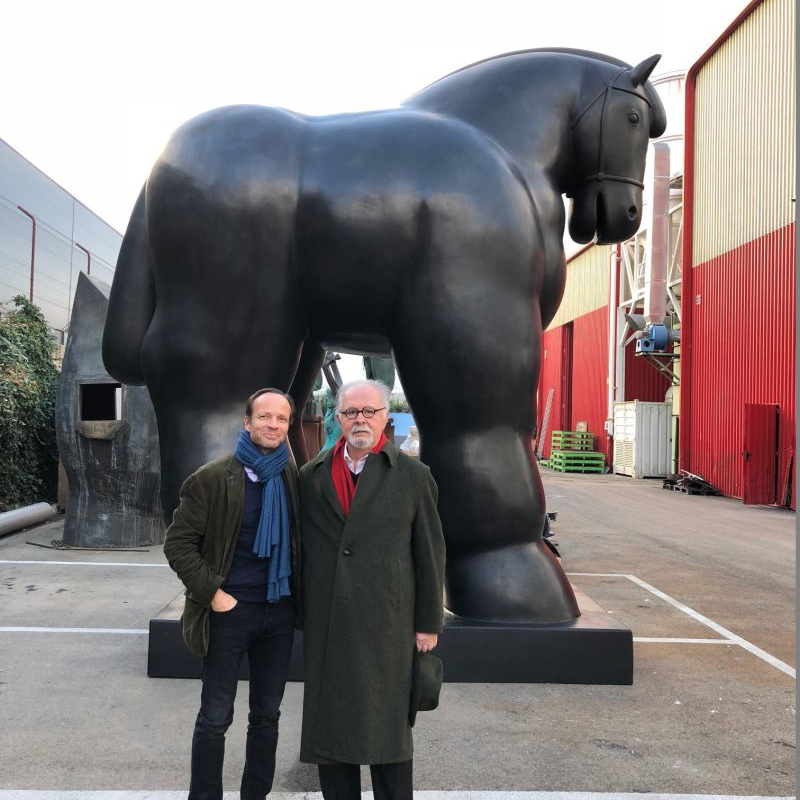
Fernando Botero’s sculptures are mostly made of bronze, especially his many large-scale public sculptures and famous works. Bronze is not only weather-resistant and suitable for outdoor display, but the traditional lost-wax casting process perfectly expresses his signature exaggerated volume and rounded shapes.
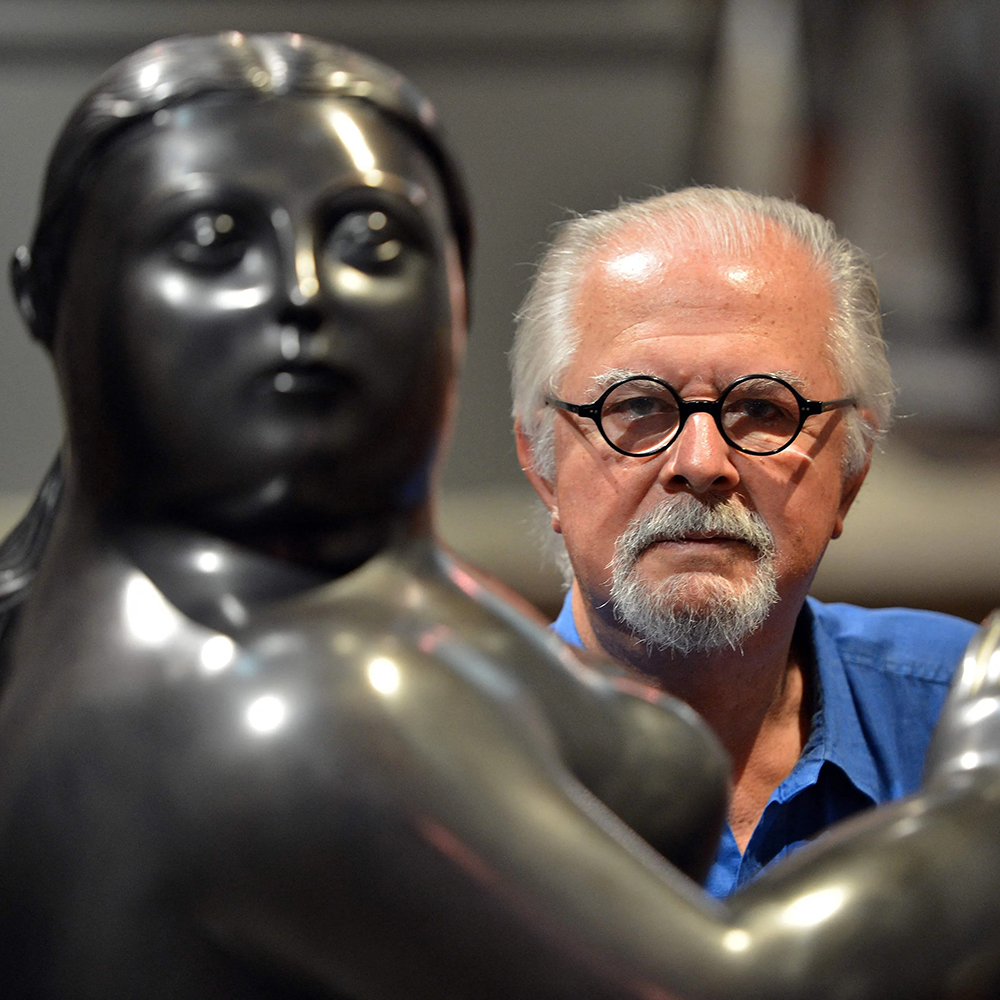
However, in his early sculpting attempts, due to limitations, he also used other materials such as resin and sawdust, but these early materials failed to become mainstream in his later sculptural work due to issues with quality and effect.
Why Fernando Botero’s Sculptures Are Often Finished in Dark Tones?
Botero’s sculptures are often finished in dark bronze or dark colors, a choice that combines art and material. The dark color not only helps to reinforce his stylistic language that emphasizes exaggerated volume, but is also closely related to the traditional coloring techniques of bronze sculpture. Through dark patina, light and shadow are more easily spread across the surface, making the sculpture’s volume and sculptural vocabulary appear fuller and more visually striking.
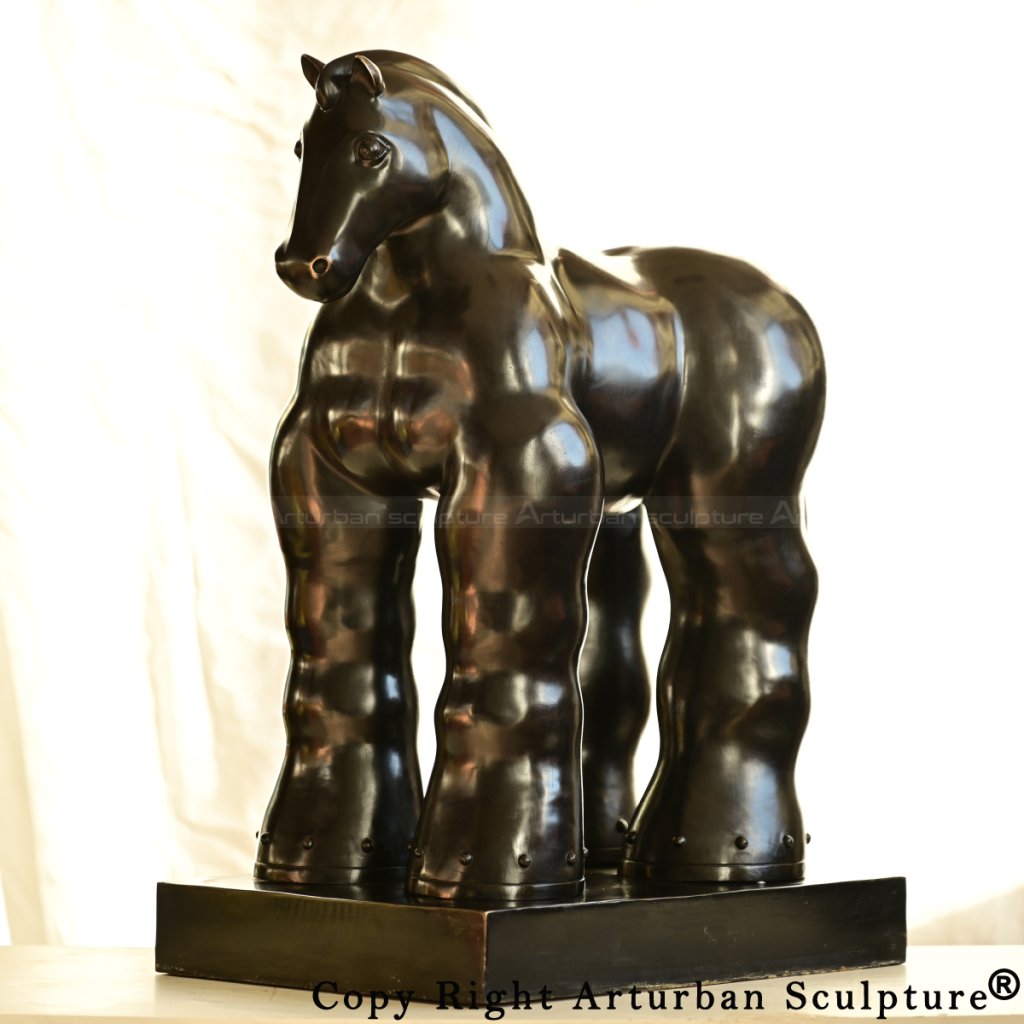
A Real Botero Horse Inspired Bronze Sculpture Case by Arturban Sculpture.
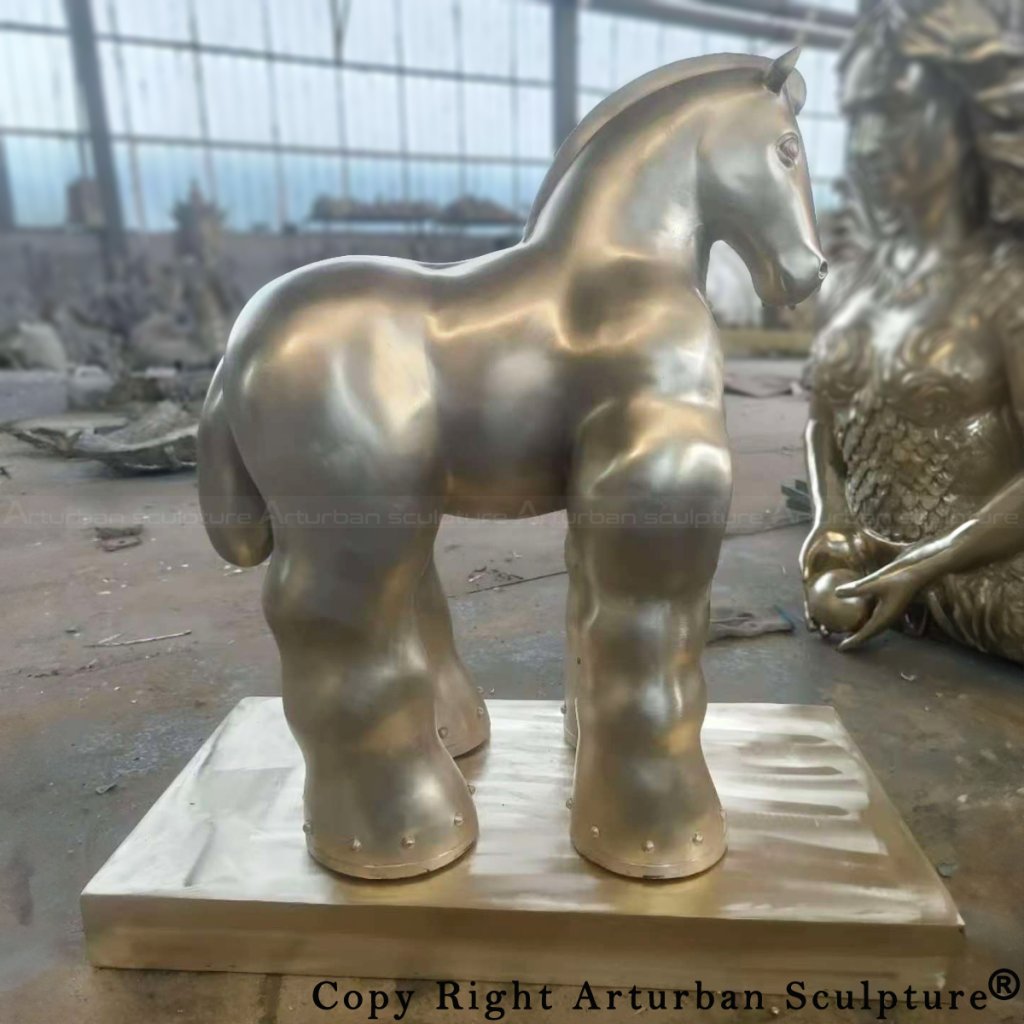
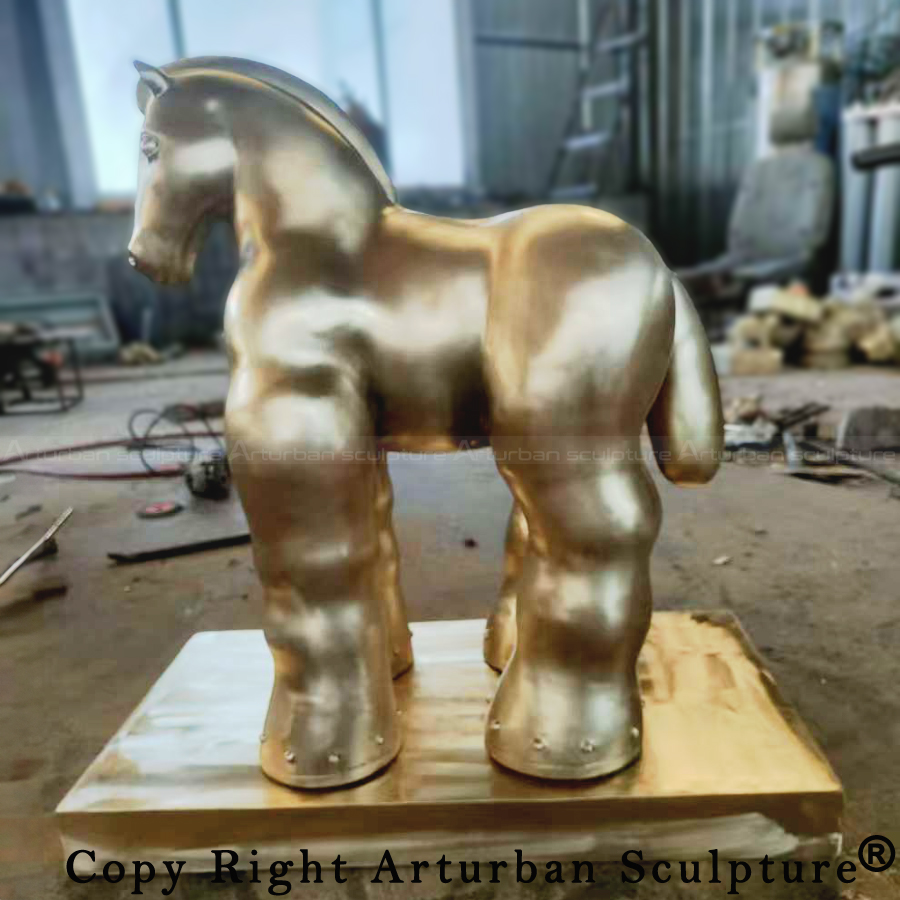
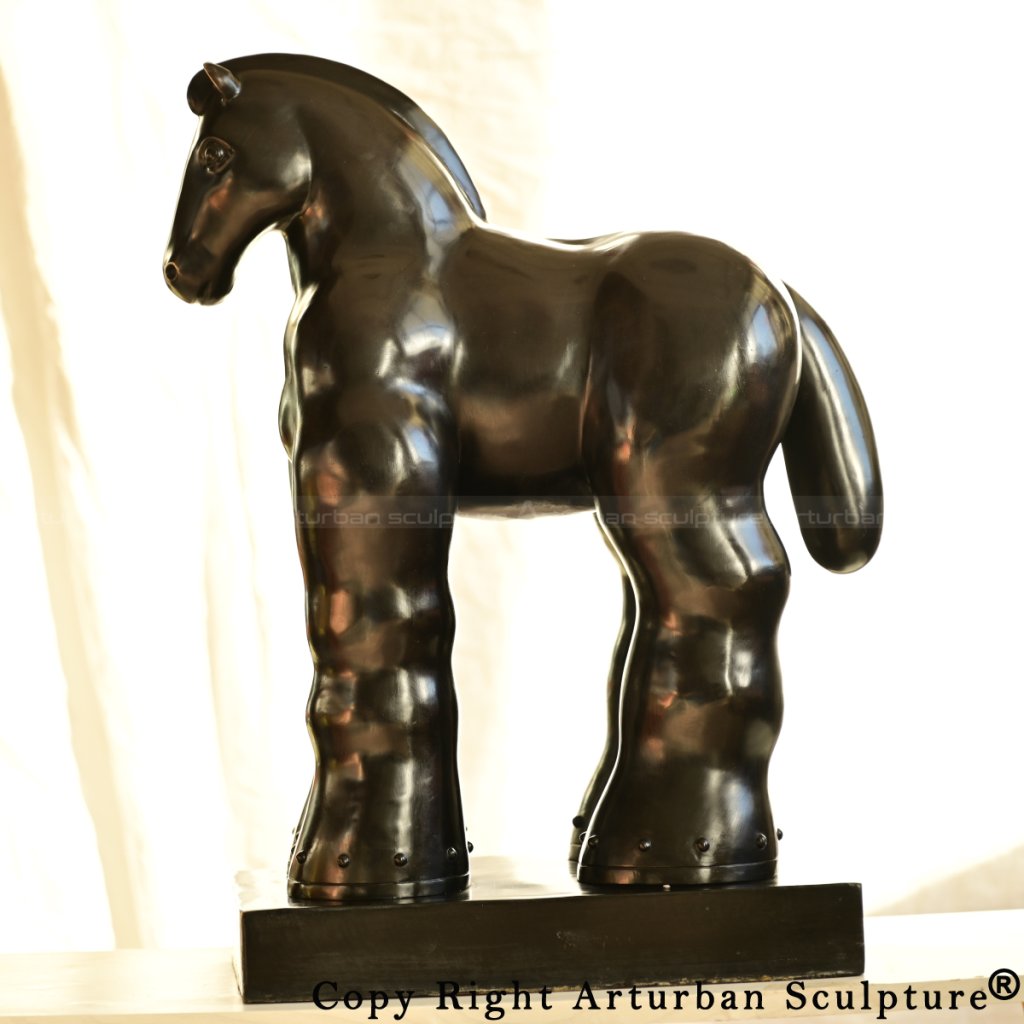
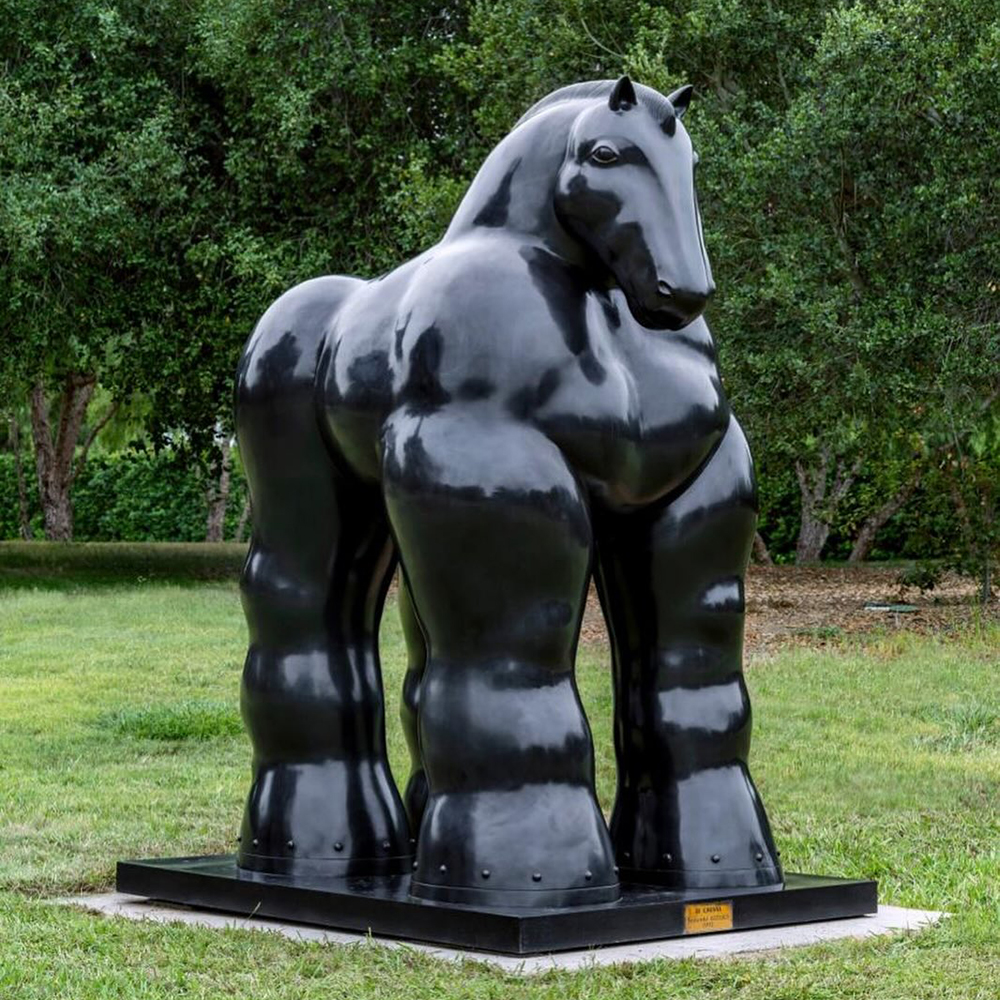
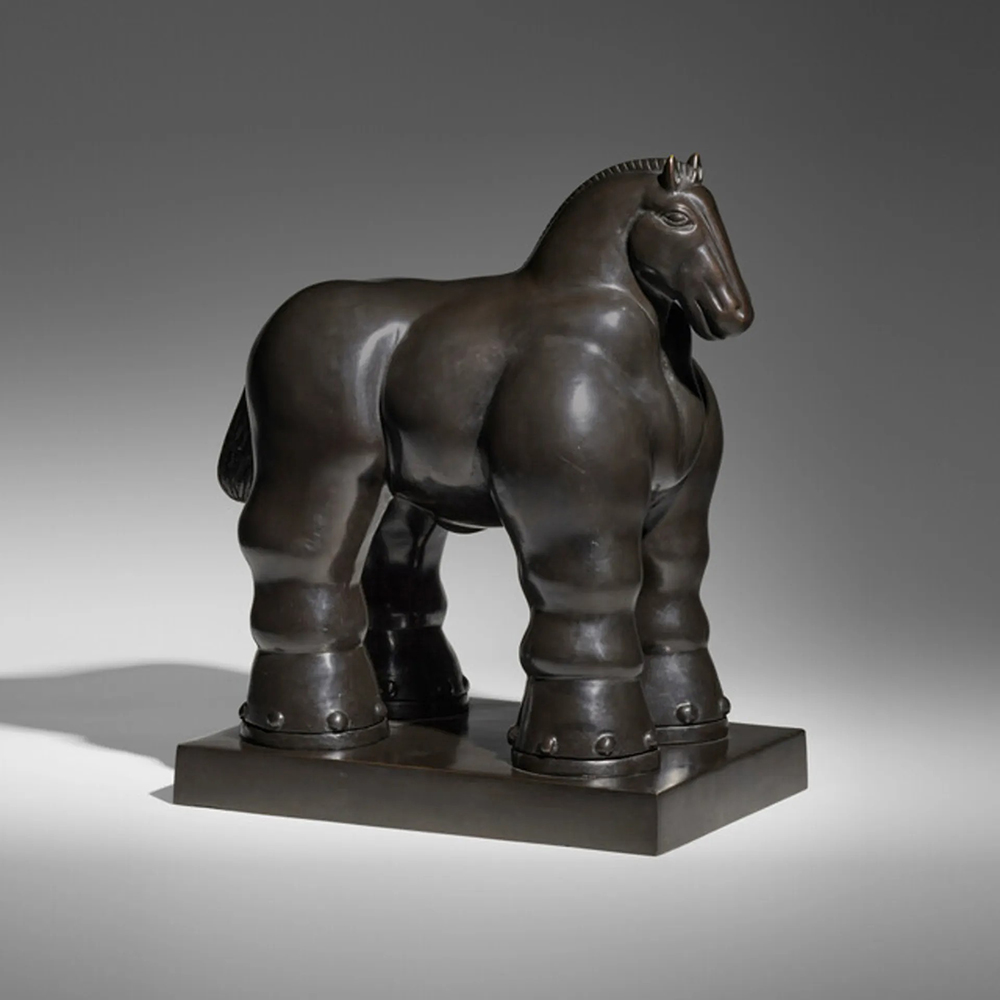
This Fat Horse bronze sculpture is a recent custom piece we completed for a client. The overall design of the Botero Horse Sculpture focuses on volume and structural stability.
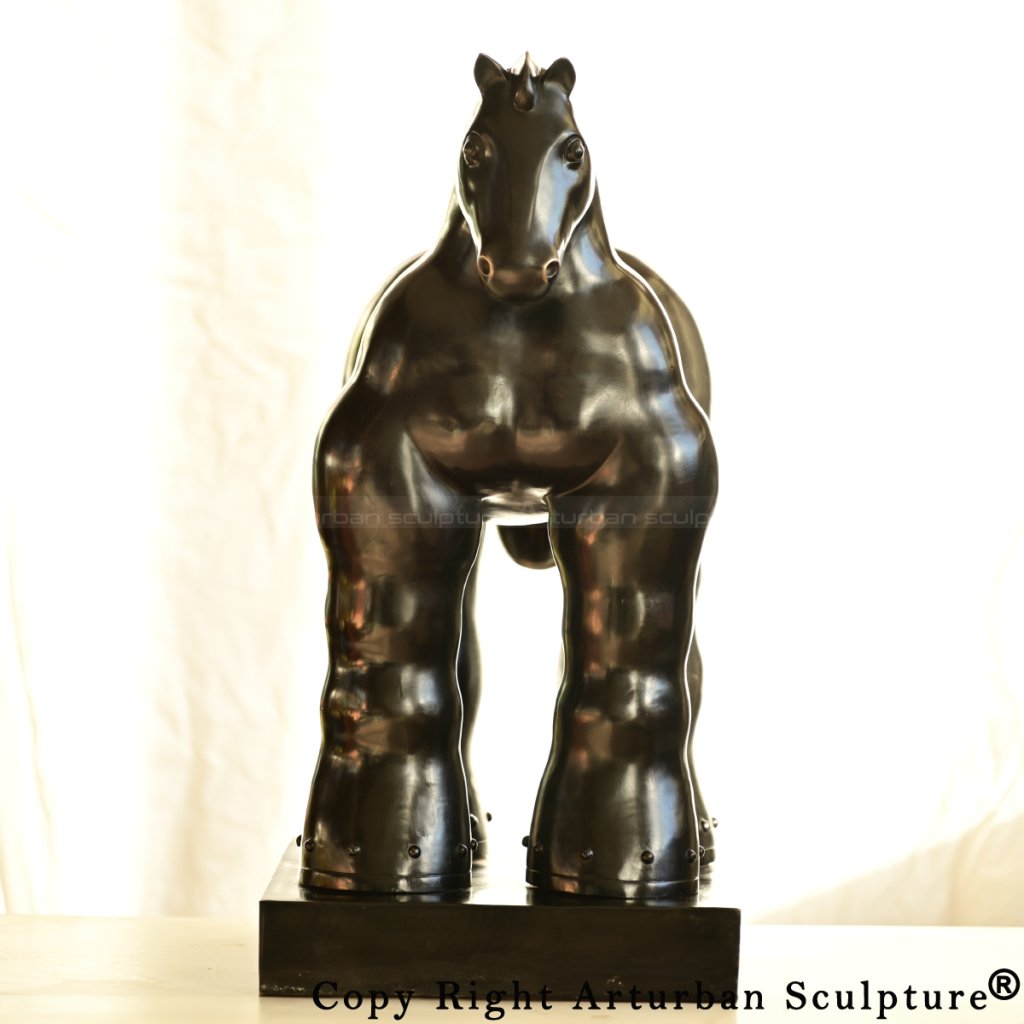
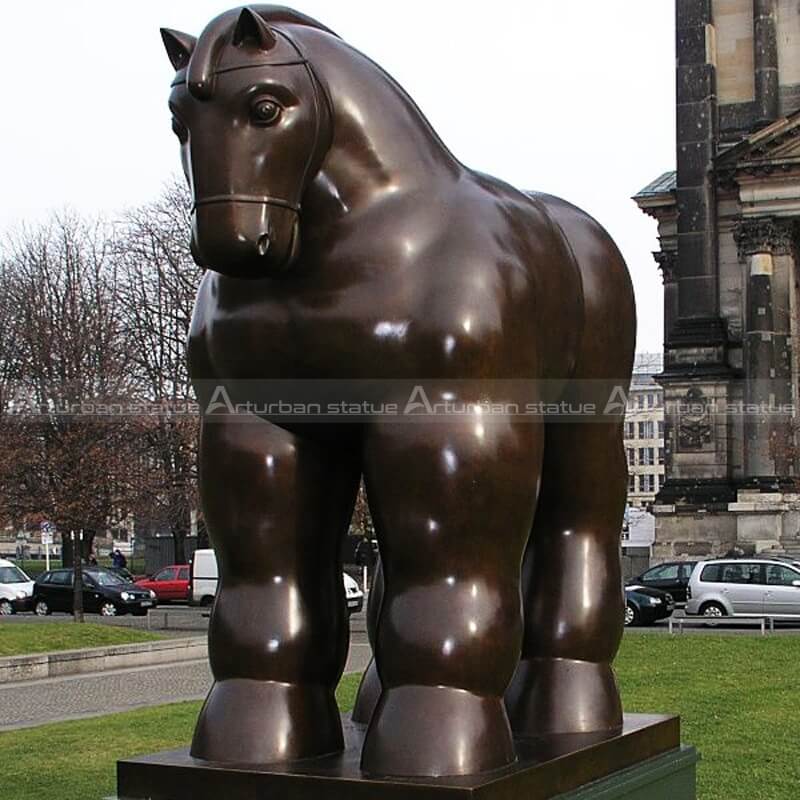
The horse’s proportions have been enlarged and adjusted, paired with a simple and stable base, presenting a weighty and stable visual effect. The limbs are particularly prominent, with their robust and vertical structure enhancing the sculpture’s support.
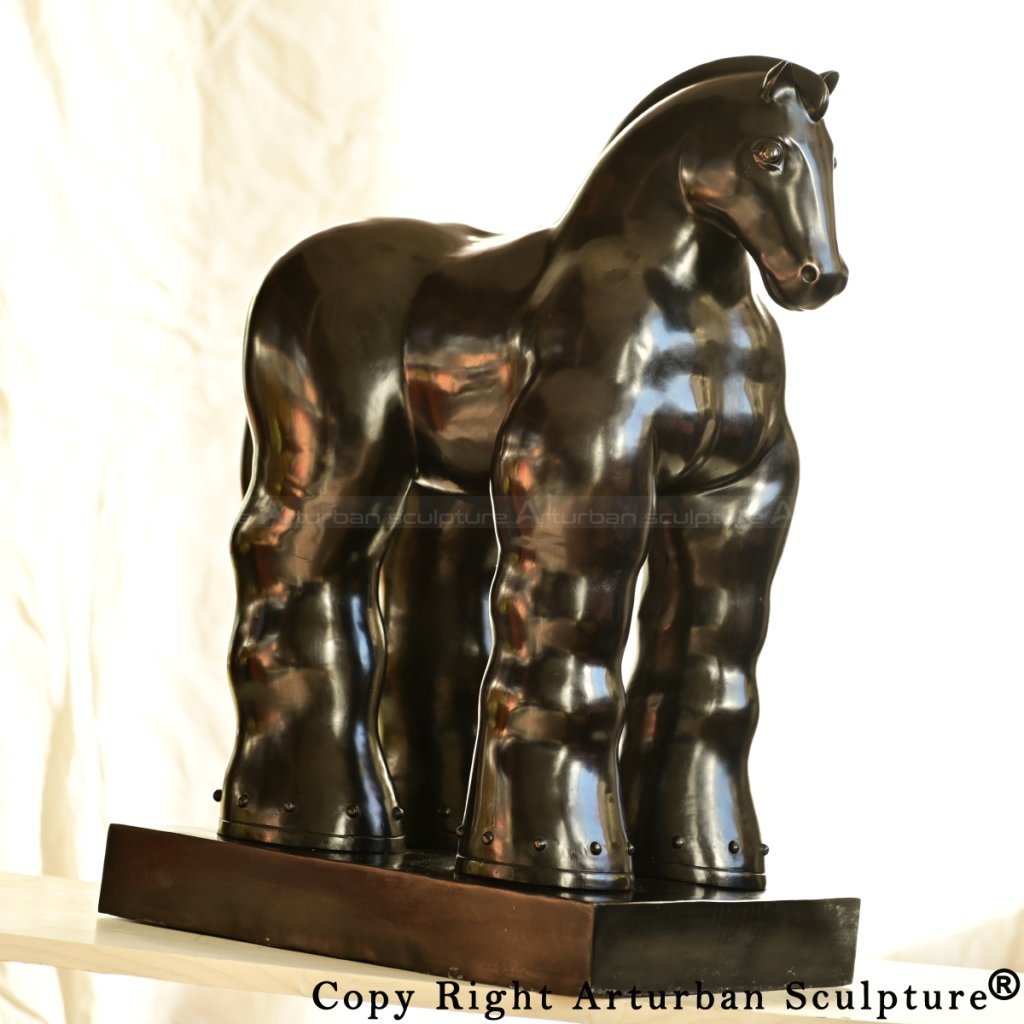
The torso muscles are expressed with rounded, blocky language, minimizing detail and emphasizing the continuous, undulating volumetric relationship, preserving the structural logic of the animal while possessing a distinct modern sculptural quality. The dark black bronze patina further enhances the work’s weight and overall unity.
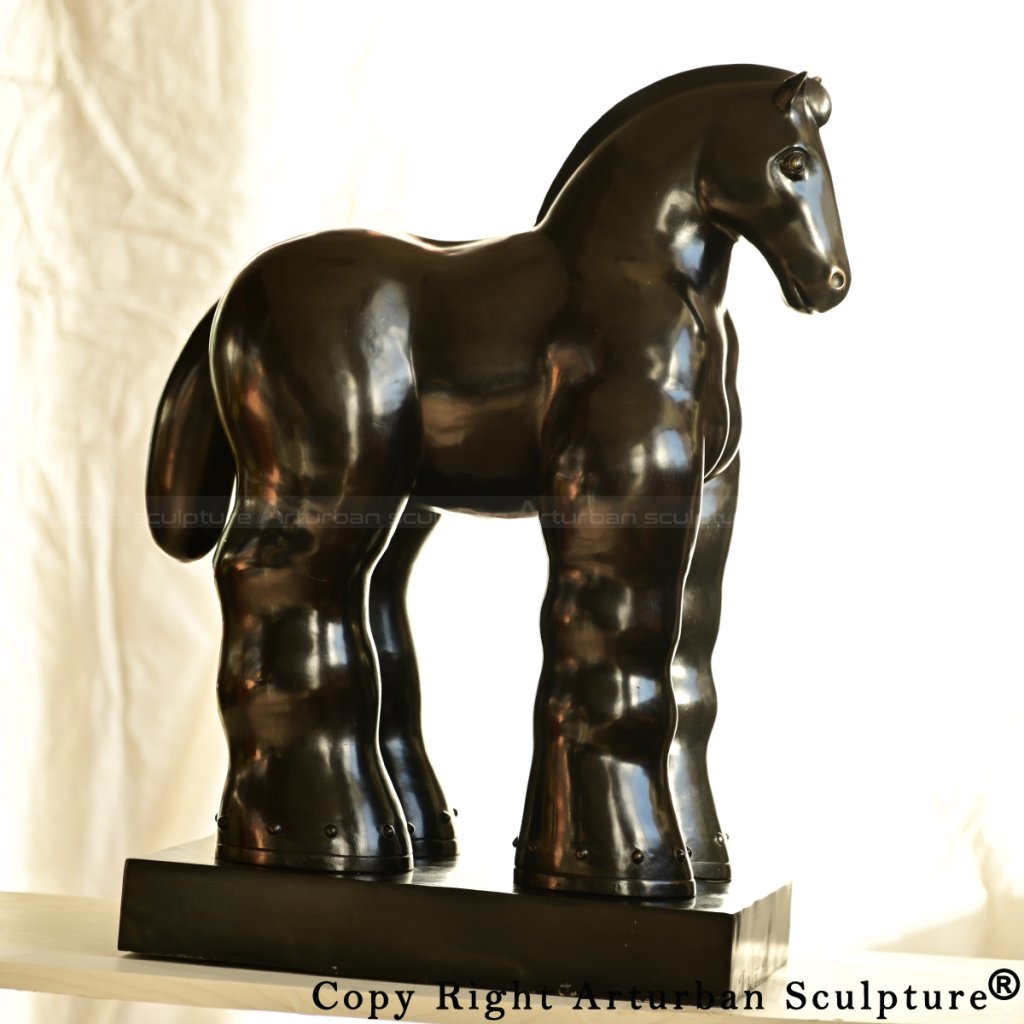
The Production Process of This Bronze Botero Horse Sculpture.
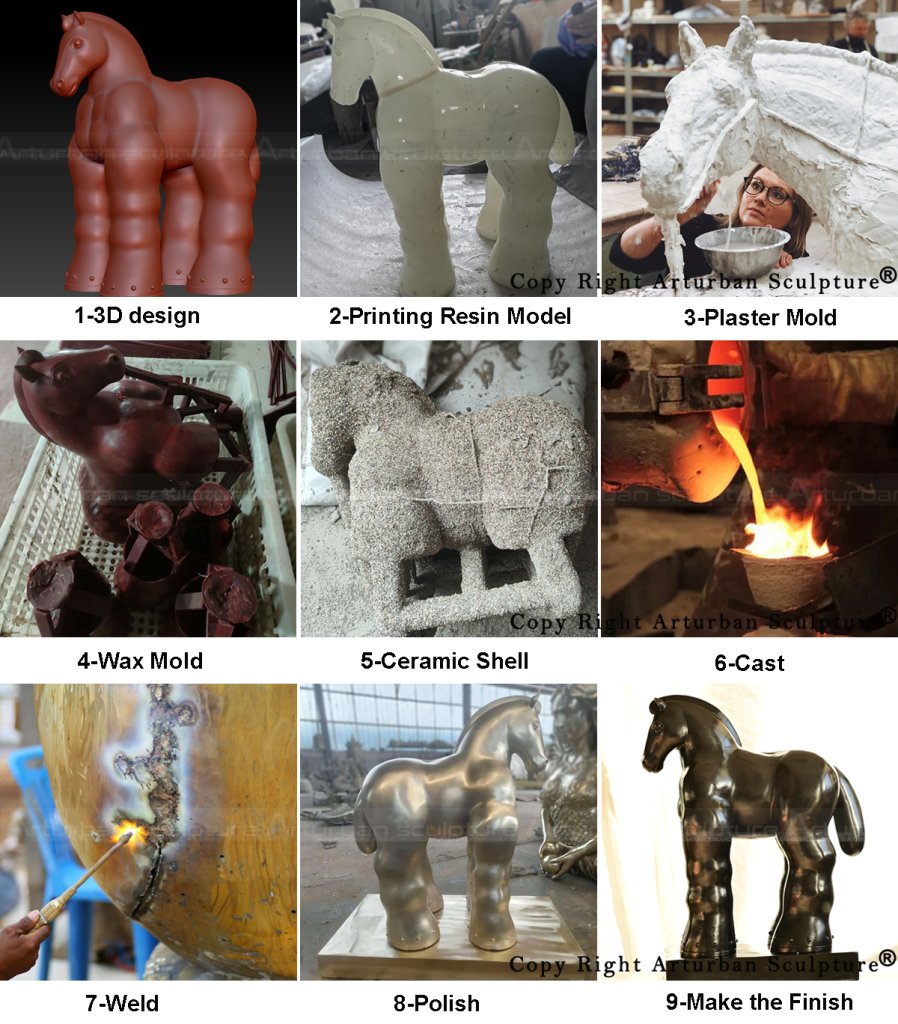
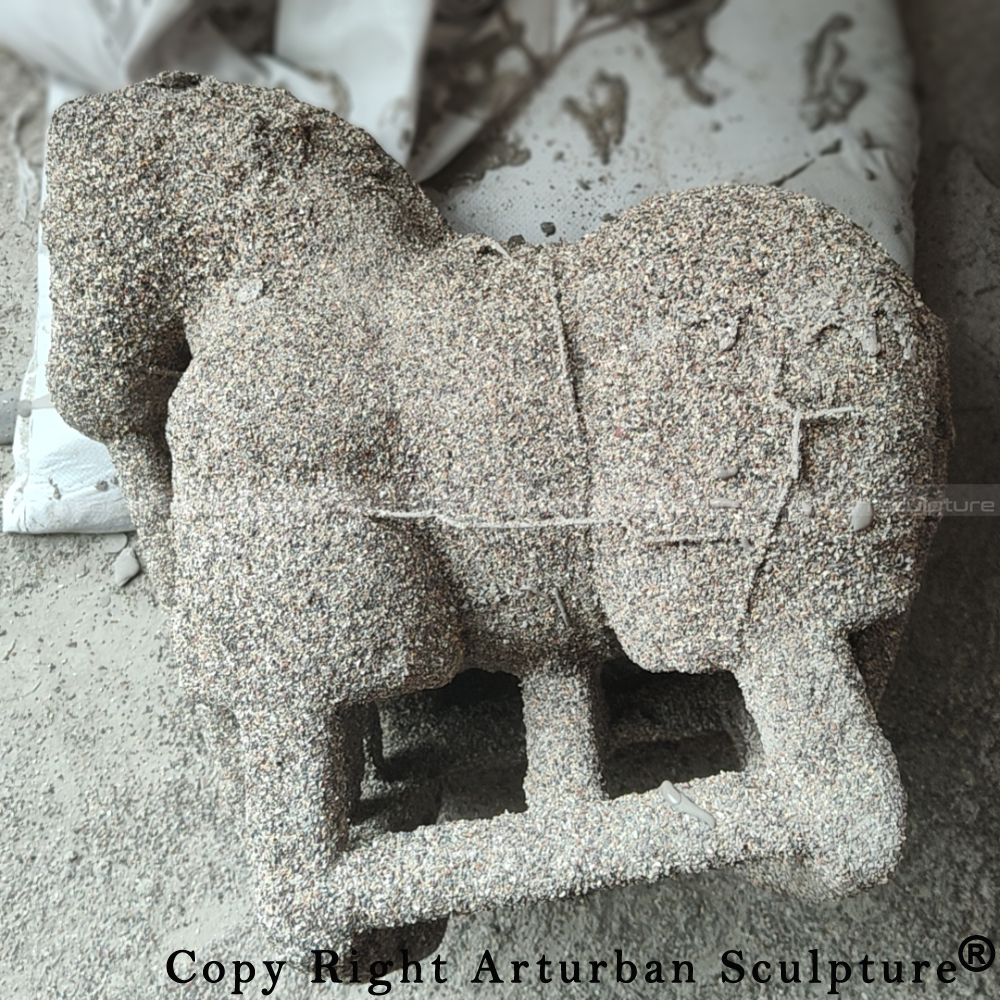
This bronze Botero Horse Sculpture is made using a customized process, starting with either 3D design or traditional clay sculpting. The process begins by determining the overall proportions and structure, confirming the form using a 3D printed model or clay model.
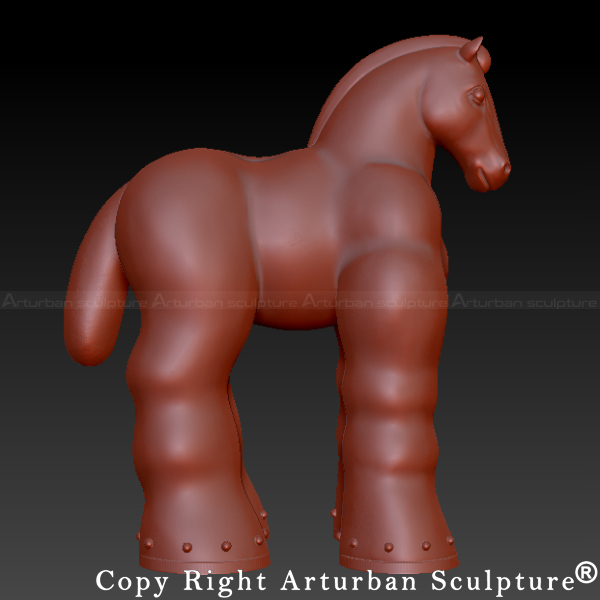
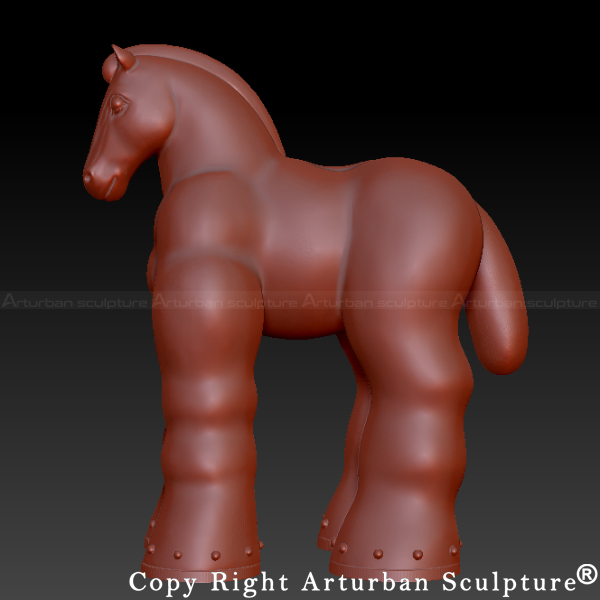
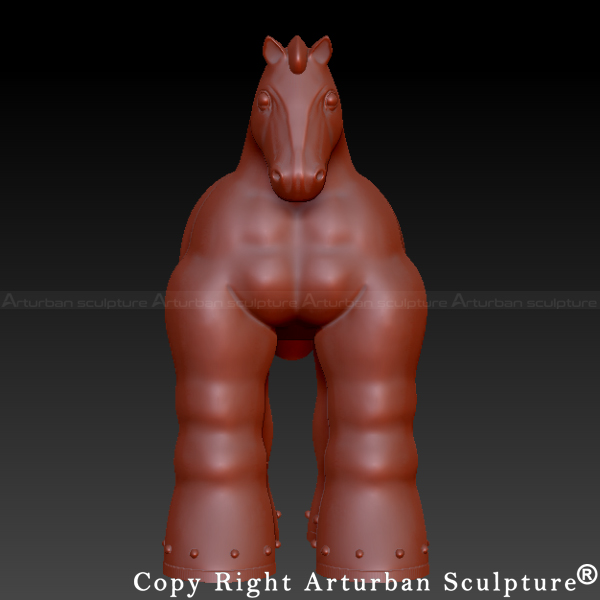
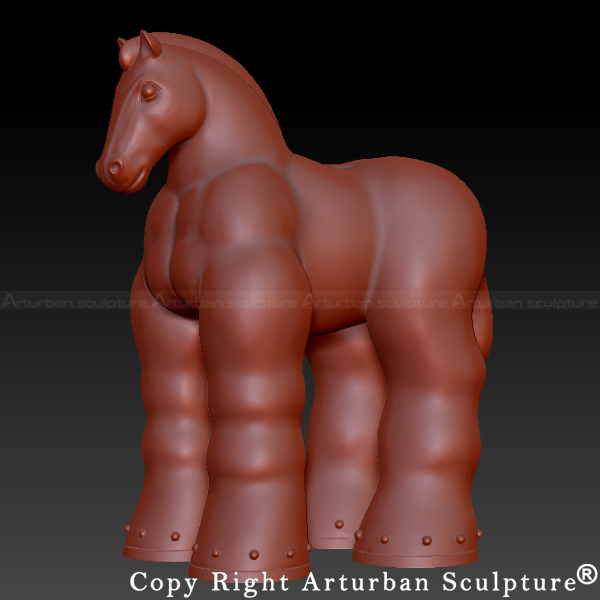
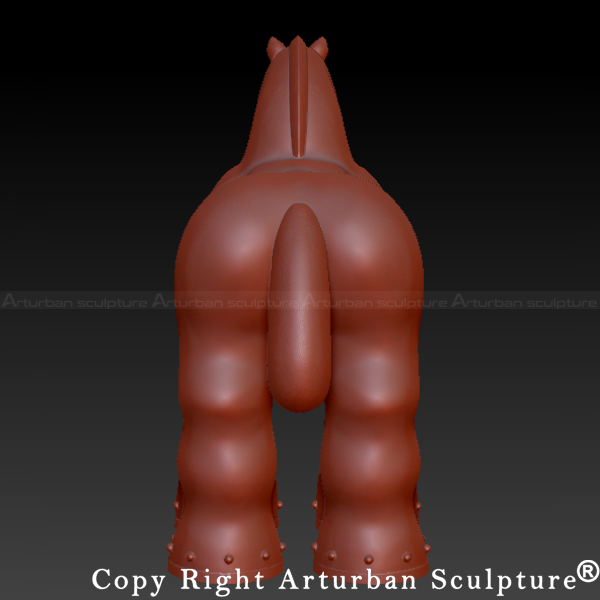
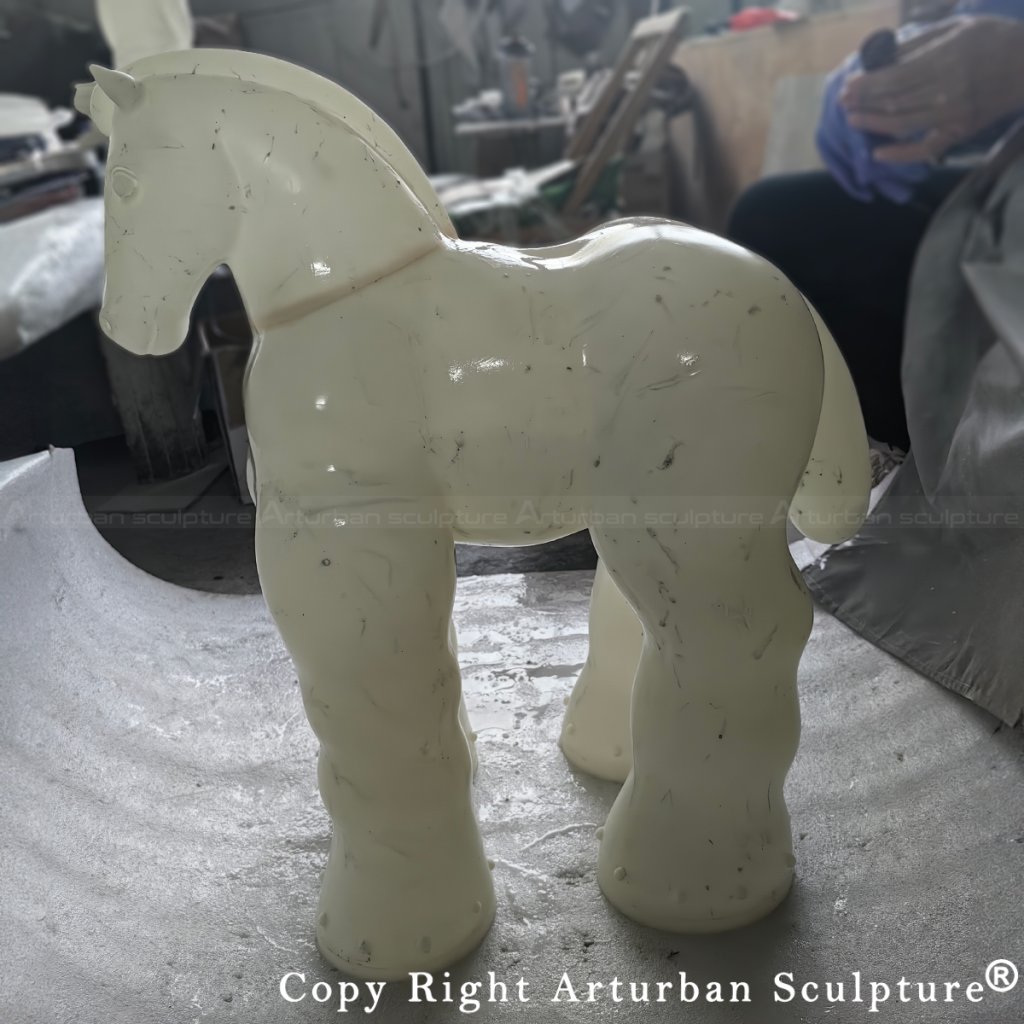
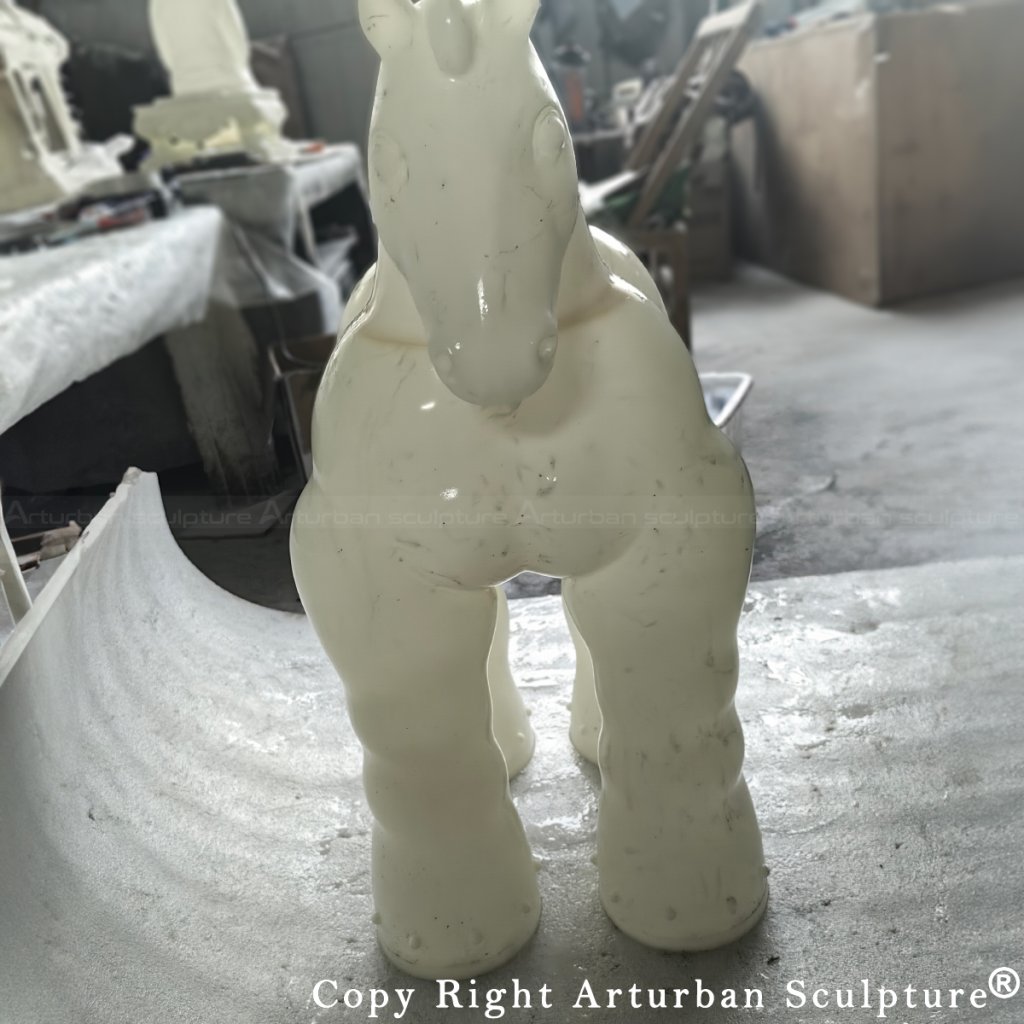
Next, plaster and wax models are created, and bronze casting is performed using the lost-wax method. After casting, the sculpture is welded, polished, and plated, resulting in a stable, uniform dark appearance suitable for long-term display.
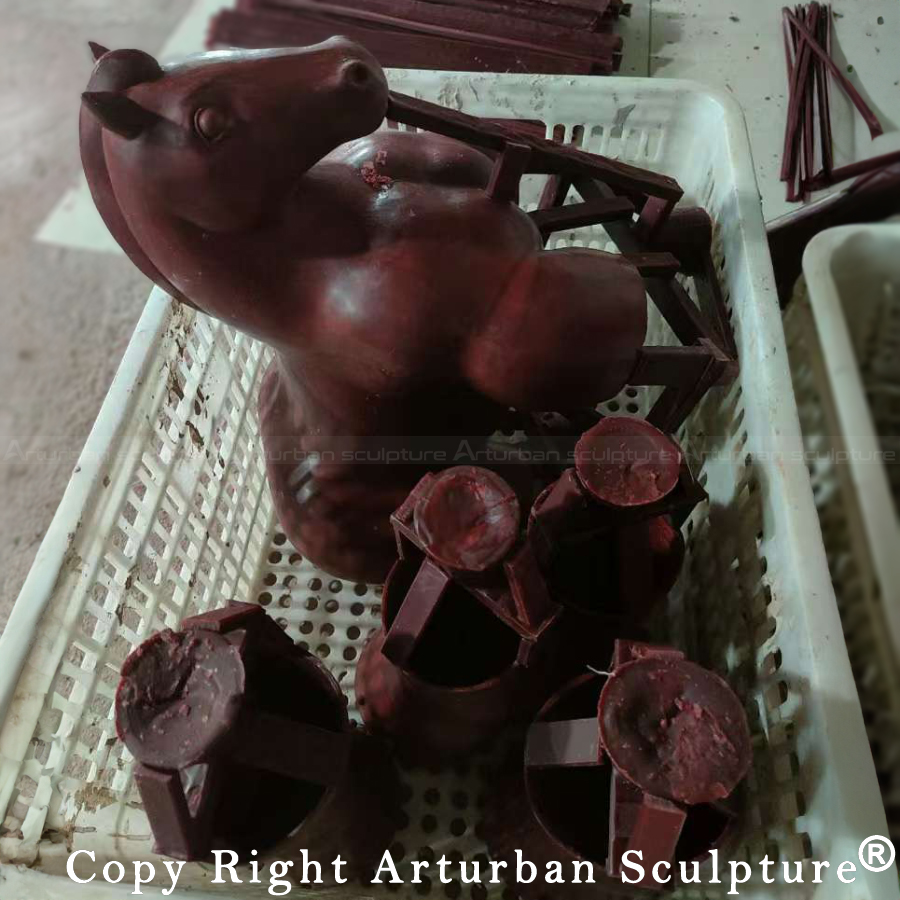
Custom Options for Fat Horse Statues?
As a custom sculpture project, Botero Horse Sculpture can be personalized in several dimensions according to client needs, primarily including:
- Custom Proportions: The overall volume, torso fullness, and limb thickness can be adjusted to emphasize different levels of power and stability.
- Custom Sizes: Supports a variety of size options, from small-scale display pieces to collector-quality works around 1 meter in size, referencing the original scale of Botte’s Roman sculptures, or even public art pieces exceeding 2-3 meters. Overall proportions and visual effects are optimized according to space conditions.
- Material Selection: A variety of materials are available, including bronze, fiberglass (FRP), stainless steel, and marble.
- Surface Finishes and Custom Colors: Different surface finishes can be customized based on the selected material, such as bronze patina, brushed or mirrored stainless steel, and painted fiberglass.
- Base and Mounting Structure: The base design, fixing method, and internal structure can be specially designed according to the placement location and environmental conditions to ensure overall stability and safety.
Arturban Sculpture provides flexible and professional custom sculpture solutions to meet diverse project needs.
Where to put Botero Horse Sculpture?
Botero-style horse sculptures are characterized by their large size and prominent visual presence. They are best placed in spacious environments that allow their form and proportions to be fully displayed. Common placement locations include:
- Public Spaces and City Squares: Large Botero Horse Sculptures are suitable for city squares, pedestrian streets, or public art areas, becoming visual focal points.
- Commercial Buildings and Hotel Entrances: Placing them at the entrances of commercial complexes, hotels, or office buildings can enhance the spatial image and improve the overall artistic atmosphere and recognizability.
- Courtyards and Landscaped Gardens: Medium-sized sculptures are suitable for courtyards, private gardens, or landscape nodes, creating a stable yet dynamic contrast with the surrounding environment.
- Indoor Public Spaces: Small or medium-sized works can be used in indoor areas such as lobbies, exhibition halls, and art spaces as decorative or collectible sculptures.
When choosing a placement location, the size of the sculpture, viewing distance, and the scale of the surrounding environment should be considered to ensure that the work’s volume and stability are fully presented.
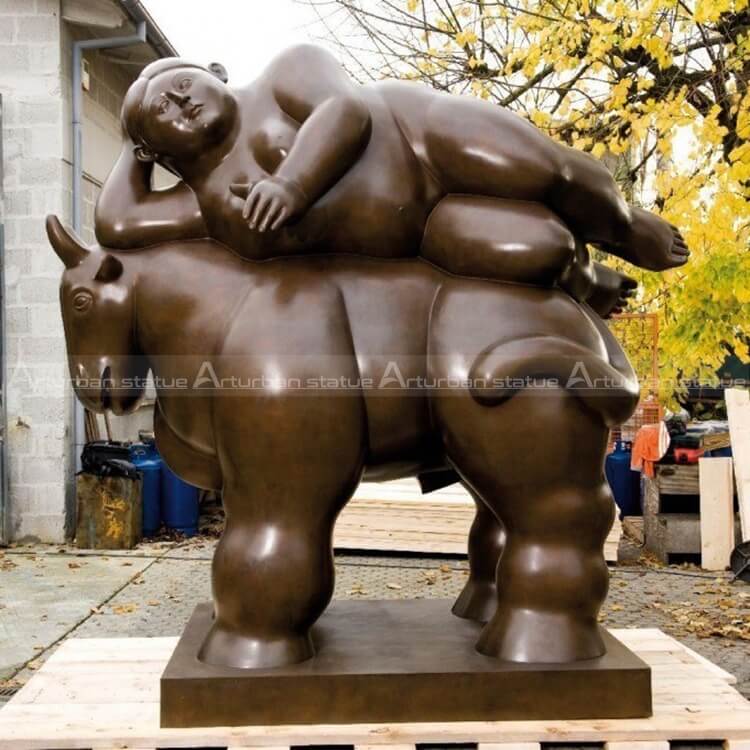
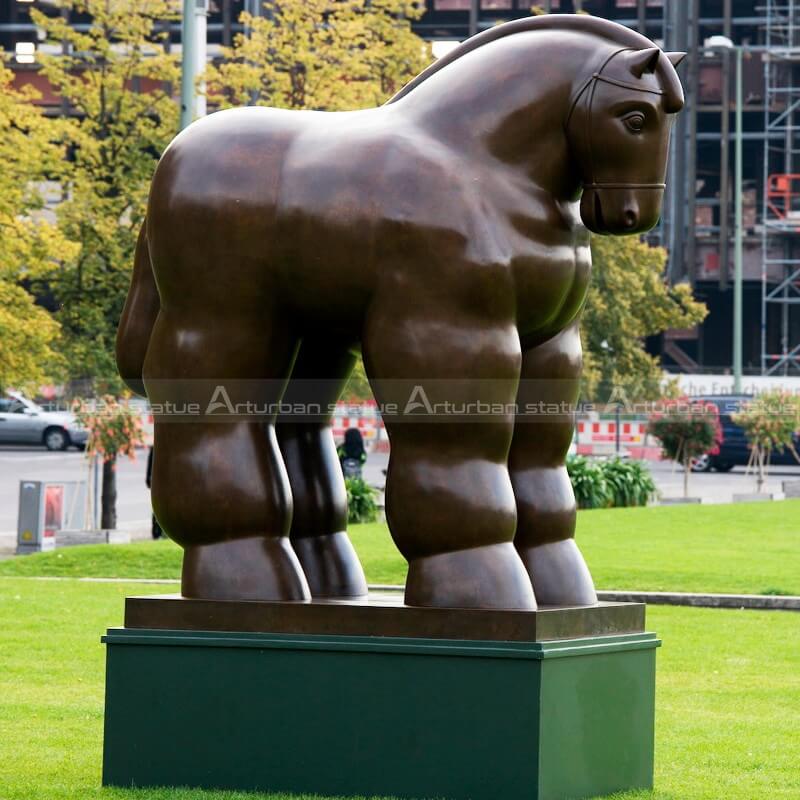
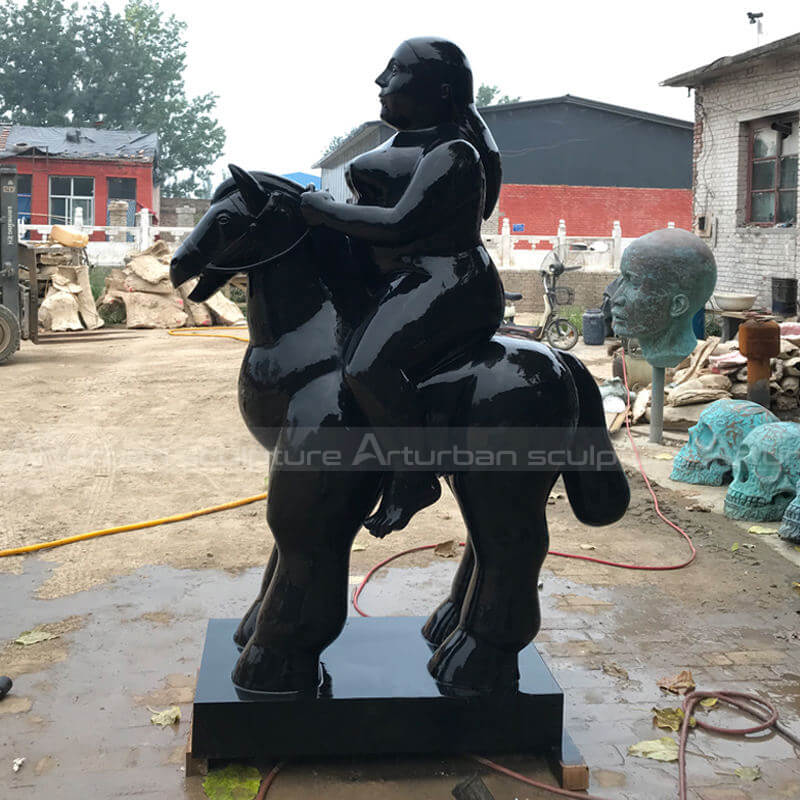
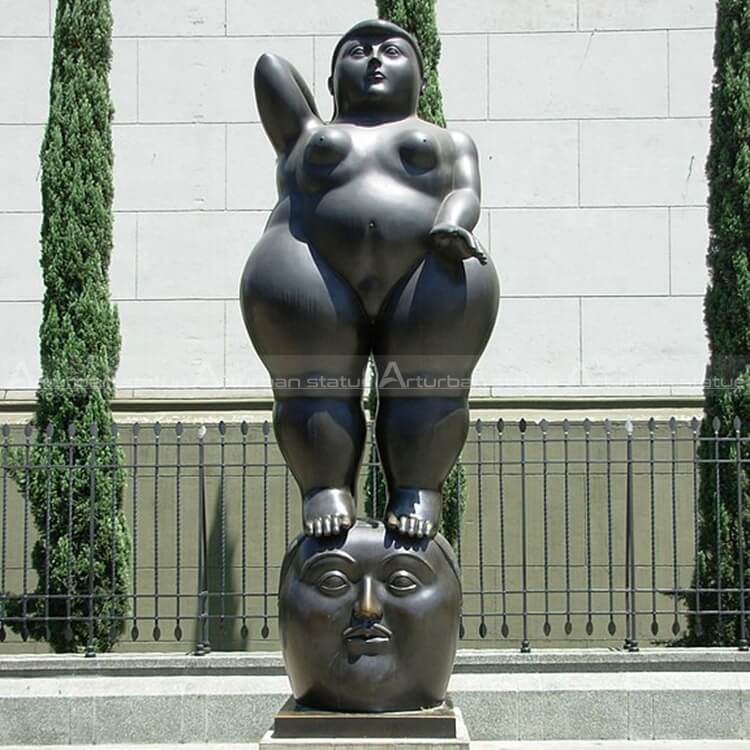
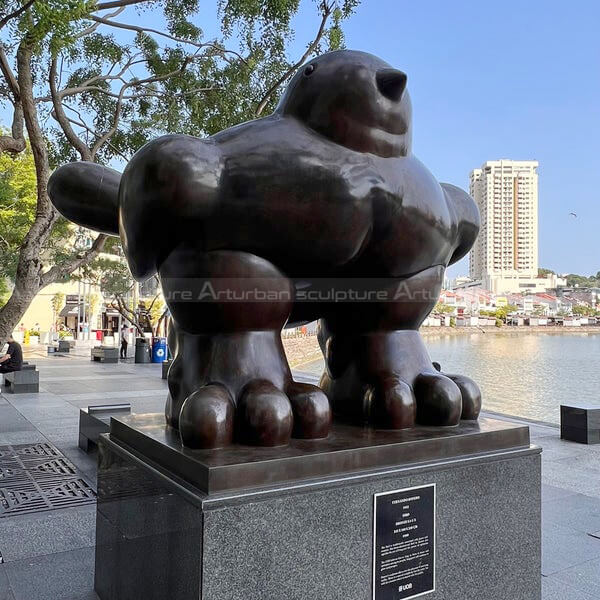
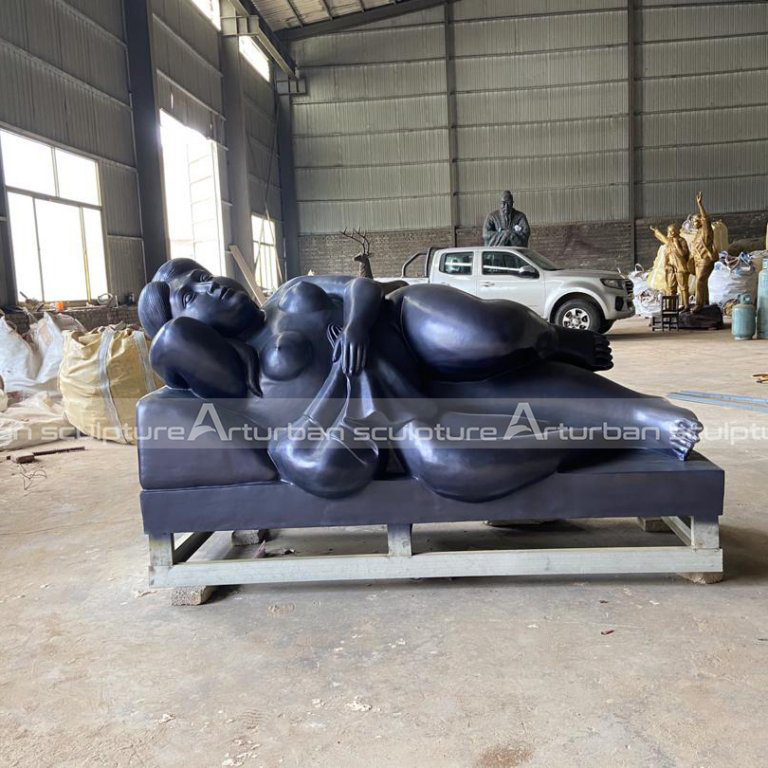
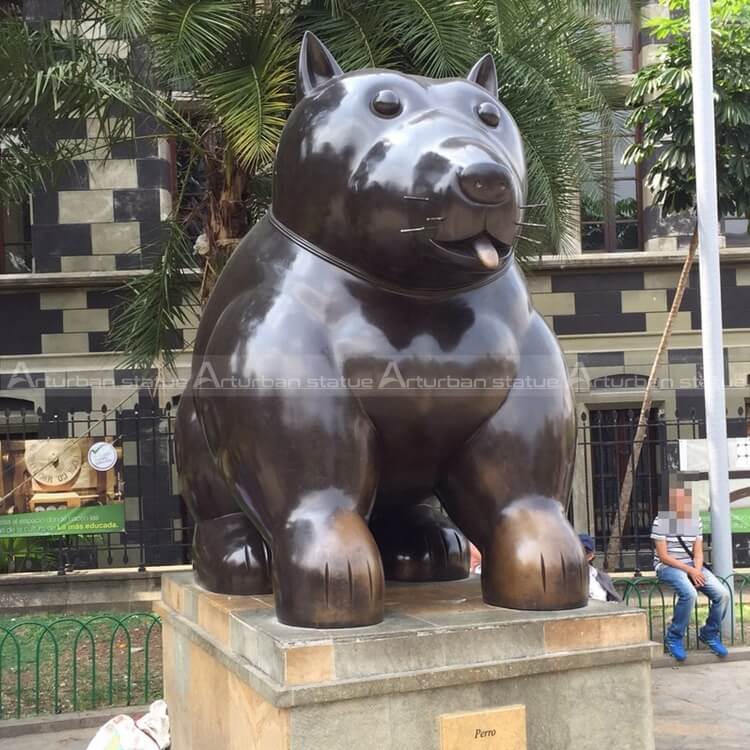
The sculptures below are presented as references, with custom options available to suit different spaces and project needs.

FAQ about Botero Horse Sculpture.
Q1: Can a Botero-style horse sculpture be custom made?
Yes. Sculptures can be originally designed based on their “mass aesthetics,” and customized in terms of proportions, size, materials, and surface finish to meet the needs of different projects.
Q2: What is the typical size of a Botero horse sculpture?
Botero-style horse sculptures range in size from small pieces suitable for indoor display to collector-quality sculptures around 1 meter tall, and even public art pieces exceeding 2-3 meters, depending on the placement space and design plan.
Q3: What materials are Botero horse sculptures usually made of?
Original Botero pieces are mostly made of bronze, but for custom projects, different materials such as bronze, fiberglass (FRP), stainless steel, or marble can be chosen to suit budget, style, and environment.
Q4: Why are Botero horse sculptures often dark in color?
Dark finishes are usually achieved through Patina (chemical coloring), which helps to enhance the sense of volume, reduce light reflection, and improve the sculpture’s visual stability and durability in outdoor environments.
Q5: How much does a custom Botero-style horse sculpture cost?
Custom prices typically depend on the size, material, complexity of the craftsmanship, and installation requirements. Smaller sizes, simpler designs, or fiberglass sculptures are relatively inexpensive, while larger bronze or stone sculptures are more expensive due to their longer production time and higher craftsmanship requirements.
Q6: Where is a Botero horse sculpture best displayed?
Botero-style horse sculptures are suitable for open spaces such as city squares, commercial building entrances, hotel atriums, and landscaped gardens. Smaller to medium-sized pieces are also suitable for indoor lobbies or art exhibition spaces.
Send us your requirements now, we will reply to your email within 24 hours